
Toyota Corolla for Export: Guide for Dealers and Fleet Buyers
A practical Toyota Corolla export guide for overseas dealers: compare trims, powertrains, pricing factors, shipping, compliance and live inventory.
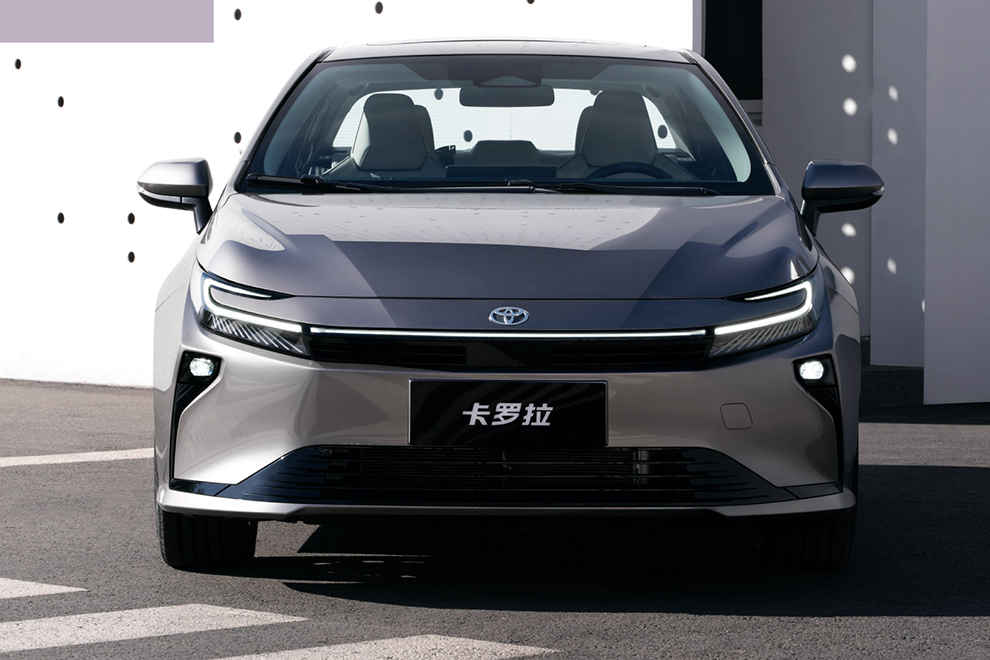
At a glance
- The Corolla is a mainstream compact sedan suited to retail, taxi and corporate fleet programs.
- Chinese export configurations span 1.2T, 1.5L, 1.6L, 2.0L and 1.8L hybrid powertrains.
- Trim labels vary by market, so equipment and VIN details matter more than badge names.
- New and used sourcing options serve different budget, warranty and risk requirements.
- Landed cost depends on unit condition, Incoterm, freight, exchange rates, duties and local compliance.
Why the Toyota Corolla matters for export markets
The Corolla occupies a useful middle ground in the compact-sedan segment: it is a mainstream Toyota rather than a niche model, but it is positioned below premium vehicles in price and expectation. For overseas dealers, that combination matters because Corollas are commonly evaluated for private retail, ride-hailing, company fleets and replacement-car programs. Toyota recognition can shorten buyer evaluation, while the model’s established fleet use supports expectations for durability, ease of maintenance and residual demand. Those points do not guarantee resale value in every country, but they make the Corolla easier to position than an unfamiliar compact sedan.
Global demand for the Corolla is supported less by one specification than by familiarity: buyers, regulators and service teams in many markets already understand the nameplate. That familiarity can influence fleet acceptance because drivers are more likely to know basic servicing needs, and it can help a dealer explain the vehicle without educating every customer about a new platform. Demand still varies with fuel prices, taxation, local model launches and the availability of Toyota workshops. An importer should therefore validate local Corolla demand and support coverage instead of treating overseas recognition as a guaranteed sales plan.
Chinese-market Corollas can broaden that proposition for export buyers, but they should be treated as a sourcing pool rather than a drop-in version of every foreign-market Corolla. Chinese specifications may include different engines, transmissions, equipment labels and grade structures from vehicles sold under the same name in Europe, Asia or North America. The export opportunity is strongest when a dealer maps a listed configuration to a clear local customer need, confirms parts and service compatibility, and verifies that the vehicle can be registered. Review the exact unit in the live Corolla inventory rather than assuming every nearby model or trim is equivalent.
- Mainstream compact-sedan positioning with broad fleet relevance.
- Strong name recognition does not replace local demand validation.
- Chinese-market specifications require destination-specific comparison.
Model range, trims and powertrain variants: how the lineup is structured and how to choose
The China-sourced Corolla range spans several distinct powertrain propositions. The listed line-up includes a 1.2-litre turbocharged engine with S-CVT, naturally aspirated 1.5-litre and 1.6-litre versions, a 2.0-litre version, and 1.8-litre hybrid derivatives using E-CVT or Dual Engine terminology. This breadth gives a dealer options for fuel economy, power delivery, purchase outlay and tax treatment. It also makes shorthand such as “Corolla hybrid” inadequate. The buyer should identify displacement, forced induction, transmission type, hybrid generation and model year from the exact listing before comparing operating costs or assuming equivalence with the destination-market version.
Trim naming is another layer of interpretation. The export range includes labels such as Pioneer, Elite, GL, GL-i, Smart and PLUS, sometimes combined with facelift or edition wording. These names describe market-specific equipment packages, not a single global hierarchy, so “Elite” in one source market may not be equivalent to “Elite” elsewhere. Compare the equipment list rather than inferring superiority from the badge: look at safety equipment, infotainment, upholstery, driver aids, wheel size and included accessories. The VIN and original build specification are more reliable than the marketing name when matching parts or explaining a vehicle to customers.
Selection should begin with the operating scenario rather than the newest or most expensive grade. A fleet carrying passengers or goods over many kilometres may prioritise a hybrid’s low-speed electric assistance, useful torque and fuel use, although real savings depend on speed, congestion, climate, payload and local fuel prices. A buyer seeking simpler long-distance operations may favour a naturally aspirated petrol model, while a turbocharged version can suit routes with heavier loads. Compare local tax bands, emissions rules and real-world consumption, not laboratory labels. Ask the seller for the precise engine, transmission, hybrid type and confirmed figures for the individual vehicle.
- Match engine and transmission to route, load and fuel economics.
- Treat Pioneer, Elite, GL and related labels as market-specific.
- Verify hybrid architecture and operating data for each unit.
New vs used Toyota Corolla: how export inventory is structured and how buyers choose
Export inventory for the Corolla generally falls into two decision categories: newer vehicles that may still be current or recently registered, and older used cars entering the market after local service or fleet use. Within each category, model year, trim, condition and documentation can differ substantially. This structure lets a dealer run a low-risk test with a single unit or build a more standardized fleet order. It does not mean every listing is suitable for the destination market, so the buyer should distinguish factory-new, demonstrator, unregistered or previously registered stock by checking the production date, registration documents and VIN history.
New inventory generally reduces uncertainty about wear, recent service and warranty eligibility, and it may offer a more current generation or hybrid system. The trade-off is a higher acquisition commitment and a potentially longer sourcing cycle if the required configuration is not readily available. A used Corolla can make the initial purchase more economical and may suit a dealer confident in reconditioning, inspection and resale. Its true economics depend less on age alone than on mileage, service history, accident repair, corrosion, component condition and how the car was used. Compare projected operating cost and expected resale over the planned holding period, not the purchase sticker alone.
For a used Toyota Corolla, pre-purchase inspection should be mechanical, documentary and destination-specific. Ask for an independent inspection covering cold start, engine and transmission operation, fluid leaks, brakes, tyres, suspension, air conditioning, body corrosion and evidence of repair. For a hybrid, request battery condition information, hybrid-system diagnostics and confirmation of any relevant recall or replacement work. For a new vehicle, verify that the VIN, production date and delivered specification match the invoice, and inspect for transport damage, missing equipment or dealer preparation. A clear title and traceable service record are as important as visible cosmetics.
- Separate factory-new, demonstrator and previously registered status.
- Compare total ownership cost over the planned holding period.
- Use independent inspection for every used vehicle.
How export pricing works: the factors behind a live listing price, and how to read one
A Corolla export price is the result of several interacting variables rather than a fixed model-level rate. Model year and production date affect depreciation and availability; trim, engine, transmission and hybrid equipment affect demand and cost; mileage, condition and history affect a used car; and exchange rates, freight, insurance, destination charges and the selected Incoterm affect the landed total. Local taxes and registration charges may sit outside the seller’s quote entirely. A buyer comparing two units should therefore confirm whether each price is an ex-works, FOB or another basis, and whether it includes export handling, documentation and transport insurance.
Read a live Corolla listing as a unit-level description, not just a model name. Confirm the exact VIN or SKU, model year, production date, factory trim, powertrain, transmission, steering configuration, exterior condition, mileage where relevant, options, tax status, warranty coverage and seller location. Check whether photographs show the actual vehicle and whether “new” means unused, demonstrator or unregistered. Then convert the asking price into a landed worksheet: vehicle cost, inland transport, origin handling, freight, insurance, destination fees, duties, taxes and a contingency for inspection or repairs. Ask which items are excluded and when the quoted terms expire.
The most reliable method is like-for-like comparison supported by a written quote. Hold model year, trim, powertrain, condition and Incoterm constant before judging one offer against another, because a lower vehicle price can be offset by a higher freight basis or a different warranty package. Currency movement and available vessel space can also change a quote before payment. On ChinaCarDirect, the live inventory shows current per-unit price, MOQ and availability; use a written quote to record configuration, destination, payment terms and all-in cost, and confirm binding figures before payment rather than inferring them from an older guide.
- Confirm the price basis and every included or excluded charge.
- Compare equivalent year, trim, powertrain and condition.
- Use the live listing for current per-unit figures.
MOQ, ordering and payment: single units vs consolidating a container
MOQ is the smallest order a seller will accept for a particular listing, and it should be read from the live product terms or stated in the written quotation. Corolla sourcing can support a cautious one-unit pilot, but there is no universal rule that every seller, trim or destination will accept the same minimum. Confirm whether the MOQ applies per model, trim, colour, specification or mixed shipment. Also establish whether the listed unit is reserved for an approved order and whether combining different model years or grades is allowed. The MOQ shown on a general catalogue page cannot substitute for the terms attached to the vehicle being bought.
Container consolidation changes the purchasing decision. A dealer may order several Corollas in one grade for fleet uniformity, or mix trims to serve different price points, but the freight plan must account for vehicle dimensions, weight distribution, securing requirements, port handling and cargo documentation. An unrelated mix of models may be operationally difficult, while a standardized batch can simplify inspection, parts planning and resale. A freight forwarder should confirm whether the planned quantity fits the selected service and provide the loading plan, origin charges, freight, insurance and destination costs. Vehicle procurement and shipping capacity should therefore be approved together.
A sound ordering workflow separates vehicle acceptance from payment release. After selecting a unit, request a pro forma invoice showing the vehicle description, price basis, MOQ, deposit, balance, warranty, Incoterm, estimated ready date and cancellation terms. Pay only through the agreed verified channel, preserve the contract and inspection evidence, and confirm whether the balance is due before loading, after inspection or at another contractual milestone. Sellers may use different arrangements, so the buyer should understand who holds title, which documents trigger release and what happens if the vehicle fails inspection or cannot be shipped. Written clarity is more important than assuming a standard payment sequence.
- Confirm MOQ, deposit and cancellation terms in writing.
- Match consolidation plans to dimensions, weight and documentation.
- Link payment milestones to inspection and shipping milestones.
Shipping, homologation and market compliance caveats: LHD/RHD and import rules by country
Corolla shipping can be arranged through specialist vehicle carriage or containerized transport when the vehicle and shipment qualify, with a forwarder confirming the practical method. Transit time and cost are not fixed properties of the model: they depend on origin and destination ports, sailing or ro-ro schedules, consolidation, available space, cargo handling, insurance, route disruption and the date the vehicle becomes ready. Request an all-in freight quotation with chargeable lines, validity period and transshipment assumptions. The buyer should also establish the document set, free-time periods at destination, terminal procedures and the party responsible for customs clearance.
Steering configuration is an early sourcing filter. Chinese-market Corollas are commonly encountered with left-hand drive, but the exact unit should not be assumed, and right-hand-drive availability is configuration- and market-dependent. Buyers serving RHD markets should state that requirement before selecting a vehicle, then verify the steering position, instrument specification and any market-specific equipment from the VIN and photographs. Converting steering later is not a routine export solution and can create cost, warranty and homologation problems. If an RHD example is not visible in the live inventory, a sourcing request may be more appropriate than ordering an unsuitable LHD car and attempting to resolve the issue after shipment.
Import compliance must be cleared before the vehicle is committed, because approval rules can vary substantially by country and even by local registration category. The importer should check VIN and title requirements, emissions or type approval, safety and equipment standards, customs valuation, duty and tax treatment, used-vehicle age or emission restrictions, and any fleet, taxi or commercial-use registration conditions. Local authorities may require modifications or supporting documents that a Chinese-market trim does not include. Use an experienced customs broker or local compliance adviser, provide the complete vehicle specification early, and condition the purchase contract on the agreed registration pathway where practical.
- Specify LHD or RHD before selecting the unit.
- Confirm destination approvals before making a binding purchase.
- Obtain an all-in freight quote and document responsibilities.
Who should buy the Corolla — and who should pick a different vehicle
The Corolla is a strong fit for overseas dealers that need a compact sedan for taxi, ride-hailing, corporate fleet or economical retail programs. Its Toyota nameplate is recognized, the model is familiar to many drivers, and available gasoline and hybrid configurations can suit different fuel-price environments. For a fleet buyer, the decision should center on uptime, fuel use, parts availability, residual values and the local service network rather than purchase cost alone. A Corolla is logical when the target customer values a familiar, practical sedan and when the importer can maintain a dependable parts and workshop channel.
A dealer can use the model to test a market with an order, then broaden the mix if registrations, customer feedback and workshop demand justify it. This approach is especially useful where a dealer already understands local compact-sedan buyers but is uncertain about the right powertrain or equipment grade. Track acquisition cost, registration lead time, fuel consumption, maintenance, insurance and realized resale rather than judging success on gross margin alone. A successful import also requires realistic spare-part stocking and a technician familiar with the exact transmission or hybrid generation delivered.
Choose a different vehicle when the mission exceeds a passenger sedan’s strengths. Buyers needing a larger cargo bay, higher ground clearance, seven seats, all-wheel drive, heavy-duty capability or premium comfort should consider an SUV, MPV, commercial van or premium model. A business with electrification plans and charging may obtain better operating economics from a battery-electric vehicle, although infrastructure and homologation must support it. Performance enthusiasts may prefer a model focused on handling or powertrain. The Corolla Cross is a different body style, so any search result using that name should not be treated as the sedan covered by this guide.
- Strong fit for compact-sedan retail and fleet programs.
- Requires reliable parts, servicing and local homologation.
- Poor fit for cargo, seven-seat, AWD or heavy-duty needs.
Main rivals and how the Corolla compares
The Honda Civic is one of the Corolla’s closest sedan rivals, but the match depends on the destination and specification. Civic versions available in a buyer’s market may emphasize a more driver-focused character or a different engine and transmission proposition, while the Corolla offers a mix of conventional and hybrid choices. Toyota’s reputation can help Corolla resale and fleet acceptance where buyers already recognize the brand, but service coverage and local tax treatment can reverse that advantage. Compare the exact local variants on purchase price, fuel use, equipment, warranty and homologation rather than assuming one model is inherently superior.
The Volkswagen Lavida is a relevant rival for China-based export buyers because it is also a compact sedan in the Chinese market. Depending on generation and trim, its packaging, powertrain choices and equipment emphasis may differ from the Corolla’s, and local taxes or fleet policies may favor one model. A Corolla buyer may prioritize Toyota’s hybrid visibility, familiar service proposition and broad trim ladder; a Lavida buyer may prefer the equipment, cabin treatment or commercial terms available on a Volkswagen. Both require a local compliance check, so the decisive factors are the listed vehicle and destination incentives rather than badge reputation.
The Hyundai Elantra is another credible compact-sedan alternative for buyers seeking a modern design, equipment presentation or a different value equation. Hybrid availability, transmission choice and support vary by market, so it is not enough to compare model names: an importer should match the Elantra derivative against the Corolla’s engine, hybrid system, safety package and certification. The Corolla may be easier to place with buyers who value Toyota’s reputation and fleet acceptance; the Elantra may be compelling when the specification offers stronger incentives or lower acquisition cost. Verify parts, warranty coverage and expected resale in the destination market.
- Civic: direct global sedan alternative.
- Lavida: relevant Chinese-market compact sedan.
- Elantra: alternative where equipment or incentives align.
Live Toyota Corolla export inventory
View all listings →Real units currently on ChinaCarDirect with per-unit asking prices and MOQ. Availability updates live from the catalogue.
How to buy a Toyota Corolla from China
-
1
Set the destination and compliance envelope
Specify the destination, intended use, steering side, tax regime and local homologation requirements before selecting a vehicle.
-
2
Choose the powertrain and trim
Compare the available gasoline and hybrid configurations against route conditions, payload, fuel economics and the expected local customer.
-
3
Review the live Corolla inventory
Open the live listings, filter by the relevant model and verify the body style because search results may also include the Corolla Cross.
-
4
Verify the individual vehicle
Check the VIN, production date, trim, transmission, condition, mileage, title, photographs, warranty and included equipment for the unit being considered.
-
5
Request a landed-cost quotation
Ask for the vehicle price basis, MOQ, Incoterm, freight, insurance, documentation and any destination charges, duties or taxes excluded from the quote.
-
6
Inspect and formalise the order
Use an independent inspection where appropriate, then record the specification, deposit, balance, inspection milestone, title transfer and cancellation terms in a pro forma invoice.
-
7
Arrange freight and registration
Confirm loading, transport, customs, insurance, port responsibilities and destination registration before the vehicle departs or the order is finally paid.
Corolla vs rivals
| Honda Civic | The Civic competes directly in the mainstream compact-sedan and fleet cost band, but available powertrains differ by market. It may suit buyers prioritizing a more driver-focused image, while the Corolla’s broad gasoline and hybrid selection and Toyota familiarity can favor fleet acceptance and resale. |
|---|---|
| Volkswagen Lavida | The Lavida is a particularly relevant China-sourced rival because it occupies the same mainstream compact-sedan segment. Depending on trim, buyers may prefer its equipment or packaging, whereas Corolla buyers may prioritize Toyota’s hybrid offering, familiar service proposition and established badge. |
| Hyundai Elantra | The Elantra competes for value-oriented retail and fleet buyers in the same segment. It may be compelling where the selected version offers stronger equipment or local incentives; the Corolla may be easier to place where Toyota recognition and established fleet acceptance outweigh badge-level value differences. |
Frequently asked questions
How is Toyota Corolla export pricing determined?
A Corolla’s live export price reflects model year, trim, engine and transmission, condition, mileage, exchange rates, freight, insurance, destination charges and the chosen Incoterm. Duties and registration taxes may be separate. Use the live listing for the current per-unit figure and request a written landed-cost quote before payment.
Which Toyota Corolla engine and hybrid options are available?
The sourcing range includes 1.2-litre turbocharged, 1.5-litre, 1.6-litre and 2.0-litre gasoline versions, plus 1.8-litre E-CVT and Dual Engine hybrids. For a hybrid, do not substitute a battery-electric range figure; fuel economy and driving range depend on the test cycle, traffic, climate, load and driving style. Confirm the exact configuration and figures on the selected listing.
Should I choose a new or used Toyota Corolla?
A new vehicle generally offers more predictable condition, recent production and clearer warranty coverage, while a used Corolla can reduce the initial acquisition commitment. A used unit carries more uncertainty around mileage, service history, corrosion, accident repair and component wear, particularly with hybrid systems. Choose according to your inspection resources, holding period and resale assumptions.
How does MOQ work for Corolla orders?
MOQ is set by the individual seller or listing rather than by the Corolla name alone. The live unit page may allow a single-unit purchase, but the applicable minimum, deposit and conditions must be confirmed in writing. For a multi-vehicle shipment, agree whether different trims or model years can be consolidated before payment.
What determines shipping time and cost for a Corolla?
Origin and destination ports, transport method, vehicle readiness, sailing schedules, available space, consolidation, cargo handling, insurance and route conditions all affect the shipment. Duties, terminal fees and customs services may be separate from freight. Request an all-in quote with validity and transshipment assumptions so the vehicle cost can be evaluated on a landed basis.
How are Toyota Corolla spare parts arranged?
Parts should be matched by VIN, generation, engine, transmission and market-specific trim because mechanically similar Corollas may use different components. Confirm Toyota parts-catalog references, expected lead times and local workshop support before ordering. Compatible alternatives may be possible, but they should be confirmed for safety, warranty and regulatory fit.
Is right-hand-drive Toyota Corolla availability guaranteed for export?
No. Right-hand-drive availability depends on the source configuration, model and destination, and it is not appropriate to assume every Chinese-market listing is suitable for an RHD market. State the requirement before vehicle selection and verify it from the VIN and photographs. If no suitable RHD unit is visible, make a sourcing request rather than relying on later conversion.
How do I order a Toyota Corolla from China?
Start with the live Corolla inventory, select an exact vehicle and send an RFQ stating the destination, configuration and delivery requirements. Review a pro forma invoice covering the MOQ, price basis, deposit, balance, warranty, Incoterm and cancellation terms. Complete inspection, payment, shipping and customs documentation before releasing the balance and taking delivery.
Ready to source the Toyota Corolla?
Review the live Corolla listings, then submit an RFQ with your destination and required configuration for a binding quote.
Request a quote