
Toyota Fortuner Export Buying Guide for Overseas Buyers
Export buying guide for the Toyota Fortuner, covering 2.7L editions, pricing logic, MOQ, shipping, compliance, used vehicles and rivals for overseas buyers.
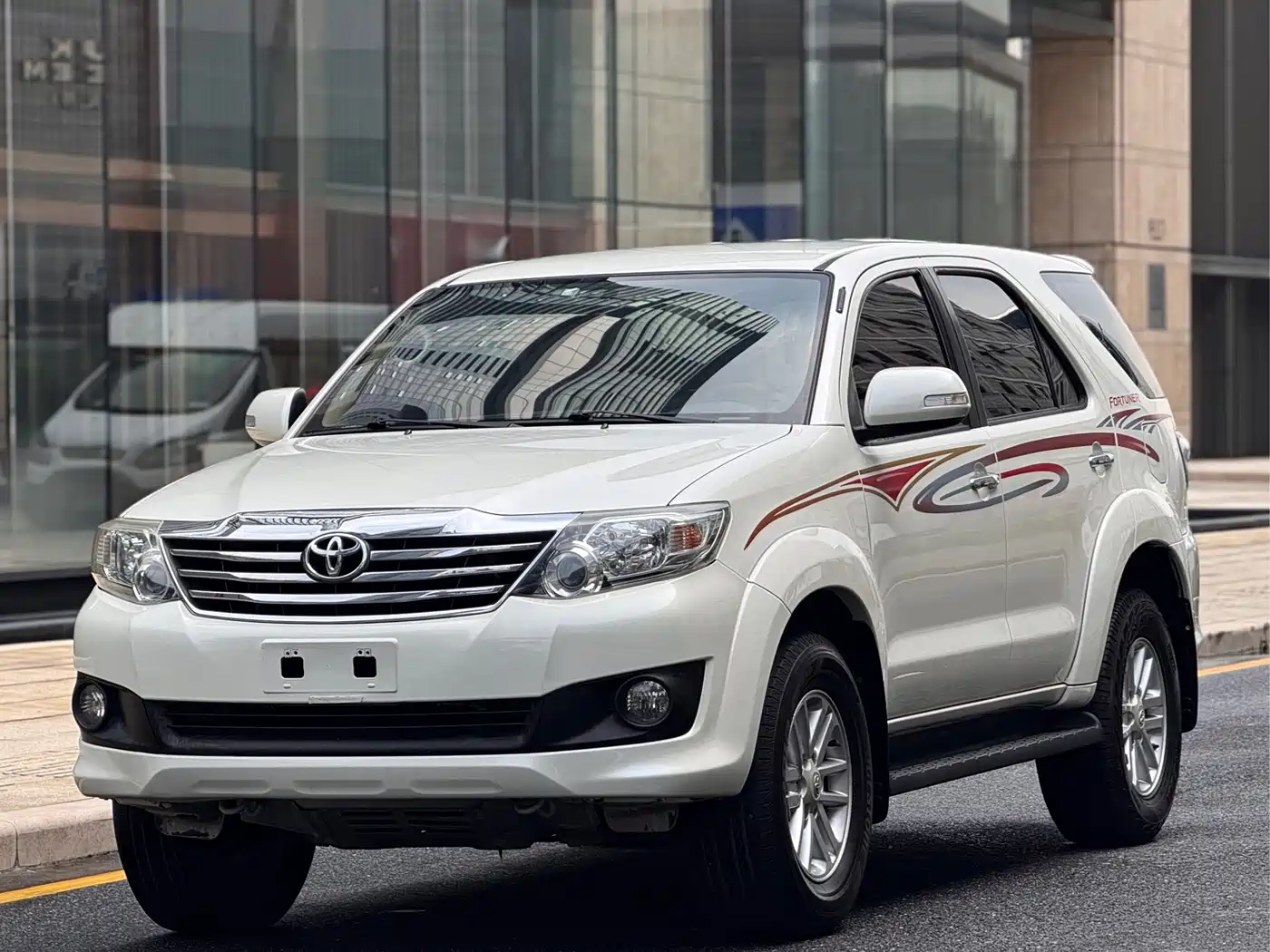
At a glance
- The Fortuner combines a seven-seat, body-on-frame SUV format with broad family and fleet utility.
- Represented export configurations center on 2.7L petrol editions, including Middle East and Standard versions.
- Steering side, drivetrain, condition and destination homologation can outweigh cosmetic trim differences.
- Export quotes vary with specification, age, mileage, freight, Incoterms, duties and market charges.
- New units reduce wear uncertainty, while used parallel imports require closer history and condition checks.
- Live listings provide the current per-unit price, availability and MOQ for each vehicle.
Why the Toyota Fortuner matters for export markets
The Fortuner occupies a useful middle ground between a family SUV and a body-on-frame utility vehicle. Its seven-seat layout, durable SUV format and ability to serve private, fleet and institutional buyers explain why it has sustained export relevance. Buyers typically value the combination of passenger space, road presence and all-weather utility, while still needing a vehicle that can be serviced and resold in their market. That balance makes model evaluation more important than simply chasing the best-looking unit or the broadest description in an advertisement, especially when vehicles are bought for long-term fleet use.
Demand is not created by one global specification. The Fortuner has been developed for different regions, so an importer may compare a Middle East Edition, a Standard Edition or a parallel-import vehicle assembled for another market. Those labels can signal different equipment levels and homologation histories, but they do not remove the need to inspect the exact vehicle. The export question is therefore not simply “Is it a Fortuner?” but “Is this Fortuner configured for my customers and legal market?” That distinction protects margin and reduces expensive rework before shipment and before funds commit.
For dealers and fleet operators, the model can cover passenger transport, site access and everyday family use without moving into a heavy commercial chassis category. For overseas buyers, the Toyota badge can aid recognition and resale, but service access, spare-parts continuity and software or emissions compatibility may matter more than badge alone. Importers should compare the imported specification with vehicles already operating locally, then assess whether their workshop, fuel network and target customers can support it. This makes a short local-market review more valuable than relying on generic model photographs when planning local operations.
- Seven-seat format suits passengers and fleets
- Market editions require specification-level comparison
- Serviceability and compliance affect import value
Model range, trims and powertrain variants: how the lineup is structured and how to choose
The export-visible range represented here is centered on 2.7-litre petrol Fortuner configurations. Buyers will encounter names such as 2.7L Middle East Edition, Model 2.7L Standard Edition and parallel-import Middle East specification. The represented vehicles are described as automatic and predominantly seven-seat, while at least one parallel-import listing explicitly states four-wheel drive. One example also records no sunroof, illustrating why trim names and equipment details should be read alongside the model designation. A badge that appears familiar to one market may not correspond to the same drivetrain, equipment or specification sold in another.
Fortuners have also been offered with different powertrain concepts in various global markets, including diesel and electrified versions, but those alternatives should not be inferred from a 2.7L petrol listing. An overseas buyer should first identify the engine, transmission, output class, fuel and emissions equipment actually fitted, then check whether the receiving market permits that combination. Engine choice affects fuel availability, tax treatment, noise, journey-planning expectations and workshop familiarity, so it is more than a catalogue preference. The exact listing and destination authority should settle the question before any contract is signed.
Choosing an edition should start with the operating brief: seven-seat availability, two- or four-wheel-drive requirements, road conditions, load, equipment, appearance and the buyer’s target resale market. Middle East and Standard labels are useful search terms, but they do not establish identical equipment across production periods. Request the VIN, model-year plate, drivetrain designation, steering position and a feature-by-feature photo set. Then compare the same attributes across shortlisted units, because a cleaner or better-equipped vehicle may still be the wrong market specification. That discipline matters before negotiating commercial terms with any supplier in writing.
- 2.7L petrol automatics anchor the range
- Middle East and Standard editions differ
- Verify seats, four-wheel drive, steering and roof
New vs used Toyota Fortuner: how export inventory is structured and how buyers choose
Fortuner export inventory can be divided into new dealer vehicles, nearly new demonstration units and used examples sourced through parallel import or local trade channels. A “new” label should still be checked against production date, odometer reading, delivery status and warranty start, while a used unit may have been lightly used or extensively operated. The relevant comparison is therefore condition and documentation, not simply the sales-status badge shown in an advertisement. For an importer, transparent history and consistent inspection evidence often separate a sound commercial purchase from a superficially attractive one.
Used Fortuners can suit buyers who prioritize acquisition cost, immediate model availability or a lower initial depreciation step. The trade-offs are condition uncertainty, wear on suspension, tyres, brakes and interior, and possible repair needs that emerge after delivery. Parallel imports may also lack a locally valid warranty or use a specification different from the local dealer network. Buyers should treat those uncertainties as items to price and inspect, not as reasons to assume either quality or incompatibility. A documented service history and a physical inspection reduce, but do not eliminate, these risks.
New or newer inventory can reduce uncertainty about wear and may make warranty, pre-delivery inspection and fleet handover easier to manage. Nevertheless, parallel-import origin can affect where warranty service is available, and a low-mileage claim must be verified rather than accepted from the listing title alone. Compare vehicles using a common checklist covering age, mileage, tyres, service records, accident indicators, paint, cabin condition, VIN, options and title documents. Then compare expected downtime and running costs with the likely resale position in the destination market. That total-cost view prevents false economy later in that market.
- Verify production date, mileage and warranty
- Used vehicles require condition and history checks
- Parallel imports may differ from local specifications
How export pricing works: the factors behind a live listing price, and how to read one
A live Fortuner export quote reflects the vehicle first and the transaction structure second. Vehicle-level drivers include model year, edition, engine and transmission, drivetrain, steering side, seating, equipment, mileage, condition, service history and documentation. New versus used status also changes risk and expected life. At transaction level, seller margin, exchange-rate movement, inspection or pre-delivery inspection, inland transport, export handling, insurance and freight can all affect how the final quotation is presented. A quote should therefore be read to a stated specification, not as a generic model price for each specific unit being offered.
The listing price and the landed cost are different concepts. Some asks may exclude export documents, inland movement, ocean or roll-on/roll-off freight, insurance, destination terminal charges, customs duties, taxes and registration. Incoterms define where responsibility transfers, but they do not eliminate every charge. Ask the seller to state the Incoterm, named place, payment schedule and validity period, then obtain an independent freight estimate. Compare only like-for-like vehicles, with the same year, engine, drivetrain, condition and included services. This prevents a cheaper vehicle from becoming a more expensive delivered purchase after freight and handling.
Read each live listing line by line and reconcile the title with the photographs and specifications. Confirm model year, exact edition, engine, automatic transmission, seven-seat layout, four-wheel-drive statement where applicable, steering position, sunroof or other options, odometer, condition and document status. For a used vehicle, ask for the VIN, service records, accident and paint information, underside images and a current inspection. Any unexplained difference should be resolved before a deposit is paid. ChinaCarDirect’s live Fortuner listings are the place to verify the current per-unit price and availability for that unit at that moment.
- Compare like-for-like year, edition and condition
- Separate vehicle price from landed cost
- Check Incoterm, validity and current unit price
MOQ, ordering and payment: single units vs consolidating a container
MOQ is a commercial term, and its practical meaning can differ between a single-unit sale and a consolidated vehicle order. Some live offers may be available as individual purchases, while fleet or container orders can carry a unit threshold, model mix requirement or seller-imposed allocation. Do not infer a universal Fortuner MOQ from the presence of several vehicles in one marketplace. Read the quantity field for each listing, ask whether identical specifications must be mixed and obtain the rule in writing before relying on it for budget or deployment planning. A wholesale buyer should treat the confirmed quantity rule as binding.
Buying one vehicle offers flexibility: it can be inspected more closely, aligned with a specific customer and shipped without carrying a large idle stock commitment. Consolidating several units can improve freight planning and may make inspection, documentation and destination clearance more efficient, but it also concentrates cash, timing and model-mix risk. Buyers should compare the additional handling cost of each unit with the saving or certainty gained from consolidation. For fleet programs, standardize core requirements while retaining acceptable options for local preferences and must align them with a realistic sell-through plan.
Before reserving a vehicle, agree on the sequence of inspection, deposit, production or stock confirmation, final payment, release and freight booking. The pro forma invoice should identify the unit or agreed specification, quantity, price basis, currency, Incoterm and payment conditions. A buyer should also establish cancellation, refund and delay provisions, documentary requirements, title ownership and what happens if inspection reveals a material discrepancy. Use verified business channels and beneficiary details, and avoid payment arrangements that leave the unit or documents inadequately protected. Review them with an experienced import adviser before payment or release.
- Confirm quantity rules per listing
- Weigh single-unit flexibility against container efficiency
- Document inspection, payment and refund terms
Shipping, homologation and market compliance caveats: LHD/RHD and import rules by country
Steering configuration is a critical first compatibility check. A Middle East-specification title does not by itself prove whether a vehicle is left- or right-hand drive, and parallel imports may originate from several markets. Buyers should verify the steering position from the VIN, photographs and vehicle documents, then confirm that the receiving country permits that configuration and traffic orientation. Fleet use may also require local registration rules for commercial passenger vehicles. Choosing the wrong steering side can limit usability even when the mechanical specification appears attractive before committing funds or arranging freight.
Import acceptance is controlled by the destination country, not by the vehicle’s origin or the fact that it carries a Toyota name. Relevant checks may include VIN and chassis identification, emissions, safety, noise, roadworthiness, customs classification, duty and tax, local registration and restrictions on used imports. Some destinations also apply age, category or conformity limits that can rule out a particular Fortuner. Obtain a written import assessment from a customs broker or destination specialist before committing, and avoid treating informal assurances as regulatory clearance for the exact configuration being imported into that market.
Freight planning starts with the vehicle’s confirmed dimensions, weight and packing requirements, then with pickup, pre-shipment inspection, secure loading and export-terminal handling. Depending on the carrier and port, a Fortuner may move in a vehicle carrier or by roll-on/roll-off service, so the forwarder should recommend the practical method rather than assume it. Obtain an all-in freight quotation covering origin charges, loading, documentation, insurance, destination terminal fees and likely handling. Transit time, route, consolidation, port congestion and customs clearance all affect the landed schedule and final cash requirement and contingency time for this shipment.
- Verify steering side and documents
- Seek destination-specific customs advice
- Price freight, terminal and clearance separately
Who should buy the Fortuner — and who should pick a different vehicle
The Fortuner is a strong candidate for buyers who need a seven-seat vehicle that can carry passengers, equipment and mixed road conditions without moving to a commercial van or pickup. It suits family-oriented importers, regional distributors, contractors, hospitality operations and institutional fleets that value a recognizable SUV format. The deciding factor is not appearance alone: buyers need a drivetrain and engine supported by their geography, a service network able to maintain the vehicle, and enough luggage or load flexibility for real trips rather than a paper specification or marketing claims for local operations.
It may be the wrong choice where a buyer needs maximum urban efficiency, a very low operating-cost profile, a commercial load bed or compliance with an electrified-vehicle mandate. A dealer focused on compact crossover customers should consider a smaller, more fuel-efficient model; a freight operator may prefer a dedicated commercial vehicle. Likewise, where right-hand-drive supply is scarce or local emissions rules are strict, another specification or market may serve better. Evaluate the Fortuner against the buyer’s real route, payload, tax regime and resale audience rather than against a generic SUV ranking.
Before committing, run a total-cost case over the intended holding period. Include acquisition, inland and international freight, insurance, taxes, registration, fuel, servicing, tyres, likely downtime and the cost of correcting an unsuitable specification. For fleet buyers, also model delivery timing against project mobilization and standardize the configuration to limit training and parts complexity. For dealer buyers, test likely resale against locally familiar Fortuner versions. If the landed economics or service support fail, a close rival may offer a better business case despite a different badge. The vehicle should fit the business, not just the brochure.
- Seven-seat format fits mixed family and fleet use
- Assess route, payload, fuel, compliance and downtime
- Model total ownership and local resale
Main rivals and how the Fortuner compares
The Mitsubishi Pajero Sport is one of the Fortuner’s closest conceptual rivals: both occupy the rugged, seven-seat SUV segment and are familiar to buyers across several international markets. The deciding differences are usually the exact powertrain, equipment, local tax treatment, service support and resale profile in the destination. A Pajero Sport may be attractive where its local-market configuration is better aligned or where buyers have a stronger parts and dealer network. It is not automatically a lower-cost substitute once freight, duty and specification differences are included in the landed comparison for that market.
The Nissan Terra competes in a similar family-and-fleet SUV role and is often considered when buyers want to compare an alternative nameplate, cabin packaging and market-specific equipment. Selection should focus on the number and usability of seats, luggage capacity, ride, powertrain efficiency, safety provisions and aftersales support rather than visual size alone. A Terra can suit buyers whose local market offers a better-equipped or more efficient version, while the Fortuner may be preferable where Toyota familiarity and the available specification fit the importer’s fleet better under local operating conditions and resale plans.
The Isuzu MU-X is another credible body-on-frame alternative for buyers who place greater emphasis on commercial utility and work-oriented positioning. It may appeal to contractors, regional fleet operators or distributors that prioritize load-carrying intent and rugged serviceability, while the Fortuner’s broad seven-seat family-SUV positioning can be more suitable for passenger-led use. Neither vehicle is automatically compliant, cheaper or better equipped in every destination. A proper comparison should use the same destination rules, route, payload, fuel assumptions, warranty terms and landed-cost calculation for each candidate on the same basis. This prevents a misleading badge-level comparison.
- Pajero Sport: closest rugged seven-seat alternative
- Terra: compare packaging, efficiency and support
- MU-X: consider for work-led fleets
Live Toyota Fortuner export inventory
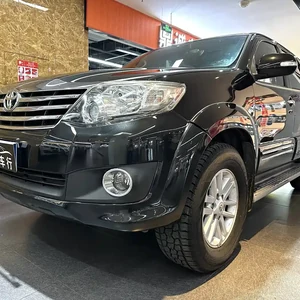
View all listings →Real units currently on ChinaCarDirect with per-unit asking prices and MOQ. Availability updates live from the catalogue.
How to buy a Toyota Fortuner from China
-
1
Define the destination and operating requirement
Record the destination country, steering preference, passenger count, route, load, fuel availability and local registration category. These requirements determine which Fortuner specifications can be imported and used commercially.
-
2
Shortlist Toyota Fortuners offered from China
Review the live Fortuner inventory and compare vehicles with the same model year, engine, drivetrain, seating and condition. Do not compare different editions solely through their listing prices.
-
3
Request a complete unit file
Ask for the VIN, model-year details, engine and transmission, drivetrain, steering side, equipment, odometer, service history and ownership documents. For a used vehicle, also request inspection photographs, underside images and evidence of any accident or flood exposure.
-
4
Verify condition and legal documents
Arrange an independent inspection and reconcile its findings with the seller’s description. Have a destination specialist check VIN, title, customs classification, emissions, safety and used-import restrictions before payment.
-
5
Obtain a written landed quotation
Request the per-unit price, MOQ, currency, Incoterm, named place, payment schedule, quote-validity period and included export services. Obtain separate estimates for freight, insurance, terminal handling, customs, duties, taxes and registration.
-
6
Agree order and payment safeguards
Put the selected specification, inspection conditions, deposit, balance, refund, cancellation and delay terms in the pro forma invoice. Verify the seller’s business and beneficiary details through trusted channels before transferring funds.
-
7
Release, ship and complete clearance
Confirm that the inspected unit matches the order, complete the agreed balance, secure export documents and book freight with a named forwarder. Track destination arrival, terminal charges, customs clearance and local registration without treating shipment as the end of the transaction.
Fortuner vs rivals
| Mitsubishi Pajero Sport | A direct seven-seat, body-on-frame alternative with comparable market positioning. The Pajero Sport may be stronger where its local specification, tax treatment or service network is better, while the Fortuner may suit buyers who prefer Toyota familiarity and the available equipment. |
|---|---|
| Nissan Terra | Another credible family-and-fleet SUV rival for buyers comparing cabin packaging, efficiency, safety equipment and aftersales support. Choose according to the destination-market specification and total ownership case rather than body size or badge alone. |
| Isuzu MU-X | A work-oriented, body-on-frame alternative that can appeal to contractors and regional fleets. It may fit load-led operations better, whereas the Fortuner’s seven-seat family-SUV positioning is often more natural for passenger and mixed-use deployments. |
Frequently asked questions
How is Toyota Fortuner export pricing determined?
The live price reflects the unit’s year, edition, engine, drivetrain, equipment, mileage, condition and documentation, together with currency, freight and the agreed Incoterm. Duties, taxes, registration and destination charges may sit outside the vehicle price. Check the live Fortuner listings for the current binding per-unit figure and request a separate landed-cost estimate.
Which engine and range should an overseas buyer expect?
The represented export examples center on a 2.7-litre petrol engine with an automatic transmission. Fortuners sold in other global markets may include diesel or electrified versions, but a buyer should not infer those from this range. There is no electric battery range for the petrol version; confirm the engine, fuel, transmission and drivetrain in the exact listing.
Is a new Toyota Fortuner always better than a used one?
A new unit generally reduces uncertainty about wear, while a used vehicle may offer a different acquisition and depreciation profile. A used parallel import still needs a VIN check, condition inspection, service-history review and confirmation of warranty and parts support. The better choice is the vehicle that meets the route and budget with the lowest credible total ownership risk.
How does MOQ work for a Toyota Fortuner order?
MOQ is set by the individual listing or negotiated wholesale order and may depend on model mix, allocation and shipping arrangements. A buyer should read the quantity field, ask whether mixed specifications are permitted and obtain the requirement in writing. Current per-unit MOQ terms are shown with the applicable live listing.
What determines Fortuner shipping time and cost?
Pickup location, pre-shipment inspection, vehicle dimensions, packing method, carrier, route, port congestion, consolidation and customs clearance all affect the schedule. Obtain a freight quote covering origin handling, loading, documentation, insurance, destination terminal fees and likely surcharges. The forwarder should recommend roll-on/roll-off or container handling after confirming the vehicle’s actual measurements.
Are spare parts available for imported Fortuners?
Parts support depends on the VIN, production period, specification and the destination dealer network, so buyers should confirm common wear items and trim-specific components before purchasing. Used imported vehicles may require longer sourcing lead times even when basic mechanical parts are accessible. Keep the VIN and build details with every service and parts inquiry.
Can I buy a right-hand-drive Toyota Fortuner from China?
Availability depends on the source market and the individual vehicle, and it should never be inferred from a Middle East or parallel-import title. Ask for clear steering-side photographs, the VIN and relevant vehicle documents, then confirm local registration requirements. If no suitable RHD unit is available, select another specification or source market rather than relying on an unverified description.
How do I order a Toyota Fortuner for export?
Shortlist the live inventory, request the complete unit file, arrange an inspection and obtain written terms for price, MOQ, Incoterm, payment, release and freight. After destination compliance is confirmed, complete the agreed payment and documentary process. Submit an RFQ with the destination, specification and required quantity to request a current export quotation.
Ready to source the Toyota Fortuner?
Submit your destination, required specification and quantity to request a current Toyota Fortuner quote for export.
Request a quote