
Toyota Hiace Export Buying Guide for Overseas Buyers
Buy a Toyota Hiace from China with practical guidance on trims, used inventory, export pricing, MOQ, shipping, compliance, parts, and direct rivals.
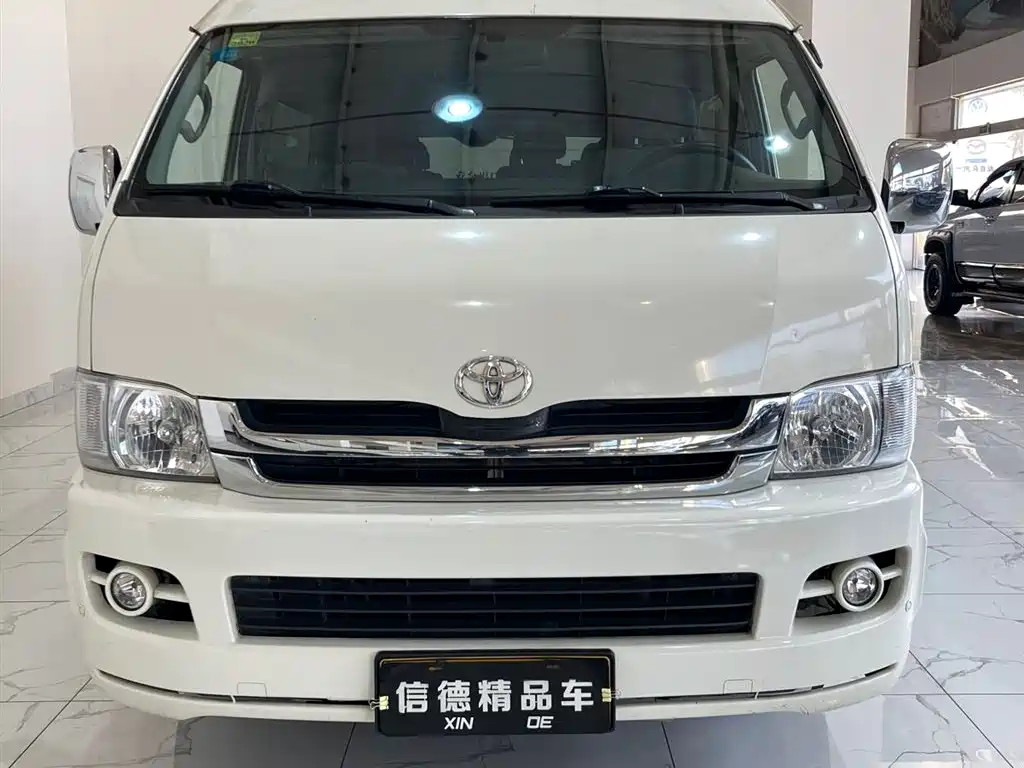
At a glance
- The Hiace suits airport, hotel, corporate and group passenger duties where a van-based layout is efficient.
- Evaluate body, seating, engine, transmission and steering configuration as a matched package.
- New and used channels offer different trade-offs in consistency, history and procurement risk.
- Export pricing moves with the vehicle, freight, Incoterm, exchange rates and destination charges.
- Confirm steering side, customs, registration and passenger-operation approval before committing funds.
Why the Toyota Hiace matters for export markets
Toyota Hiace occupies a useful middle ground between passenger vans and light-duty minibuses. Its van-based layout suits airport transfers, hotel shuttles, group travel, employee transport and other operations needing many seats without moving to a full-size bus. For overseas dealers and fleet buyers, this versatility makes the model easier to position than a one-purpose vehicle. The same platform can support commercial passenger service or a private executive shuttle, depending on derivative and registration category. The deciding issue is whether seating, access, luggage capacity, duty cycle and local rules align with the service.
Export demand follows a pattern: operators want to carry people or cargo efficiently, remain practical on crowded roads, and receive support from an established parts network. The Hiace's recognizable van format addresses that need, while derivatives with seating capacities let a buyer serve a shuttle, touring group or mixed business role. Its strongest export appeal is flexibility. Dealers can compare body, seat count, transmission and destination suitability within one model family, and specification discipline matters more than assuming one trim fits every operator across different customer requirements in each market.
That versatility does not eliminate market-specific trade-offs. A Hiace configured for one country may require another steering-hand arrangement, different documentation or revised equipment before use. Commercial buyers should assess loading access, aisle design, restraint equipment and daily utilization before treating capacity as revenue. In passenger work, utilization, comfort and regulatory classification often matter more than headline size. For importers, the model is attractive when demand is broad and units can be matched to specific roles, but less compelling when a buyer needs a factory configuration that is not offered.
- Shuttle and group-transfer fit.
- Validate derivative classification.
- Flexible passenger and light-commercial roles.
Model range, trims and powertrain variants: how the lineup is structured and how to choose
The Hiace range is best understood as a matrix, not one specification. Buyers must align body length, seating, engine, transmission and steering configuration with the destination market. Gasoline automatic derivatives represented for export include a 2.7-liter 13-seat version and a 3.5-liter six-seat Granvia derivative, although names and equipment vary by production source. A listing title is only a starting point. Request the VIN, engine code, seating plan, factory options and production details, and never assume dimensions, payload or equipment are identical across configurations or production years without evidence.
A 2.7-liter gasoline automatic derivative is the logical focus for buyers prioritizing a high-passenger layout, but the listing must identify whether it is standard, deluxe or another grade. A 3.5-liter gasoline automatic with six seats places more emphasis on a spacious passenger-carrier format. The larger-displacement unit may suit operators wanting a more relaxed road character, yet engine size alone does not settle suitability. Payload, gross vehicle weight, real-world fuel use and local taxation can outweigh displacement, especially where vehicles operate for long daily cycles. Confirm those figures and the approval basis instead of extrapolating them directly.
Because the derivatives use automatic transmissions, fleet managers can focus on operational fit rather than managing a manual gearbox. In markets where manuals are customary, availability may differ, so an imported automatic should be checked against fleet policy and driver expectations. Drive layout, gross vehicle weight, turning radius, fuel-tank capacity and dimensions should be confirmed from the live listing or manufacturer documents, not inferred from the model name. Also inspect seat material, climate equipment, safety systems, luggage accommodation and service access, because these details can differ more than the engine label.
- Match seats to passenger demand.
- Compare 2.7L and 3.5L engine briefs.
- Verify payload and dimensions per unit.
New vs used Toyota Hiace: how export inventory is structured and how to choose
New and used Toyota Hiace exports serve different procurement needs. Factory-new units suit buyers who prioritize configuration consistency, documented delivery and warranty terms where they remain valid. Used imports, including parallel-import vehicles, can suit operators seeking an economical acquisition or a seating and derivative combination that may not be offered by a local importer. The right route depends less on age alone than on provenance, document quality, mechanical condition and fit with the duty cycle. That makes inspection scope part of the purchase decision, not an afterthought from the outset.
For a used Hiace, first establish identity and history before negotiating condition. Obtain the VIN and verify that it matches the seller record, then review registration, import history, service evidence and inspection report. Inspect panel alignment, paint, glass, tires, underbody, brakes, suspension and engine bay for evidence of repair, accident damage, corrosion or inconsistent maintenance. Odometer reading and engine condition should be assessed together because a low reading alone does not establish mechanical integrity or lawful import status for the intended destination and operating role before payment or shipment.
Factory-new purchasing has different risks and controls. It can reduce uncertainty about wear and prior modifications, but the buyer should still confirm production date, factory specification, warranty terms, option codes and whether the vehicle is new or registered for parallel export. New does not automatically mean locally compliant. Seating restraints, emissions equipment, radio or safety provisions may still need to match the destination. Used units can therefore suit a tested operating role, while a new unit may suit a buyer establishing a uniform fleet specification from scratch with greater confidence.
- Used: verify identity, history and condition.
- New: confirm factory code, date and warranty.
- Both require destination compliance.
How export pricing works: the factors behind a live listing price, and how to read one
A Toyota Hiace export price should be treated as a structured quote rather than a universal model rate. The vehicle-side value reflects age or production period, trim, engine and seat configuration, mileage, condition, ownership or import provenance, and the seller's preparation work. On top of that come exchange-rate effects, payment terms, freight, insurance, port handling, documentation and the selected Incoterm. Destination taxes, duties, registration fees and compliance adjustments may sit outside the seller quote, so a buyer must establish whether the displayed figure is ex-works, FOB, CIF or another basis.
Read a live listing as an item-specific description, not a market-wide price guide. Confirm the currency, VIN, model year, engine, transmission, seat count, steering side, visible condition, stated defects and included documents. Check whether the price includes export preparation, loading, insurance or freight, and whether it is subject to quote validity or final inspection. The listing should indicate how a buyer can reserve the unit and what happens if its condition or documents differ from the description. Current per-unit prices and availability should be taken directly from the live inventory.
A useful comparison works backward from delivered operating cost. Start with two like-for-like Hiace specifications, then adjust for age, condition, seats, engine, options, origin and downtime. Add the destination, Incoterm, insurance assumption and compliance plan to both. A vehicle that looks cheaper at the listing stage may cost more after correction work, missing documents, higher freight or a delay that disrupts deployment. Request a written landed-cost scenario with exclusions identified, then reconfirm the binding figures at quotation and payment stages.
- Compare like-for-like specifications.
- Separate vehicle and landed costs.
- Record quote exclusions and validity.
MOQ, ordering and payment: single units vs consolidating a container
MOQ is a seller and transaction rule, not a fixed property of the Toyota Hiace. Some export listings may accept a single-unit order, while other offers may be structured for dealer lots, container loads or a minimum order. The requirement must be confirmed on the listing or in the quotation. For a first wholesale purchase, a single-unit order can reduce inventory exposure and allow the importer to validate configuration, service support and local demand before scaling. It can, however, leave the buyer without the freight advantages associated with consolidating several vehicles.
An ordering workflow identifies the unit before it creates a binding commitment. Ask the seller to confirm the exact vehicle, VIN, specification, condition, documents, price basis, payment schedule, inspection rights and release conditions. Then review the pro forma invoice, sales contract and transport instructions for consistency. Payment should follow an agreed sequence tied to inspection and documentation, using the seller's verified details and a protected method. Refund, cancellation and delay terms matter because export transit creates a long interval between payment, delivery and the buyer's ability to inspect the vehicle.
Container consolidation can improve freight efficiency and simplify receipt of a planned batch, but it should not be treated as automatic savings. Vehicles must be matched on configuration, document readiness, condition expectations and delivery timing, with each unit clearly identified and insured. A mixed batch can expose the importer to mismatched residual values, different inspection outcomes or storage charges if sales are slower than planned. Exporters may consolidate compatible vehicles under one booking, while importers or freight forwarders can combine several purchases. Either way, allocate costs, titles and responsibilities in writing before releasing funds.
- Confirm MOQ on the selected listing.
- Make VIN and payment terms binding.
- Match units before shipment consolidation.
Shipping, homologation and market compliance caveats: LHD/RHD and import rules by country
Steering configuration is one of the checks in a Hiace export. Left-hand-drive and right-hand-drive production are associated with different source markets, so a model name does not prove which side is available. The unit description and VIN should be checked before shipment is arranged. Import rules also vary by destination: customs classification, age limits, emissions, safety approval, passenger-carrier licensing, insurance and vehicle registration may all apply. A van that clears customs is not automatically approved for commercial passenger service, so local operating permits must be checked separately with a specialist.
The shipping method should fit the vehicle, quantity and urgency. Enclosed containers offer protection and can serve mixed cargo, while roll-on/roll-off or specialist vehicle carriers can handle compatible wheeled units more directly. The forwarder should confirm the booking method, securing requirements, loading plan, insurance, transit routing and destination charges. Timing begins with production readiness and includes inspection, documentation, port handling, sailing or trucking, customs clearance and inland delivery. Each stage can affect cost and delay, so the quote should state milestones rather than promise a single delivery date without qualification.
Used and parallel-import vehicles deserve scrutiny because prior registration, modifications and market-specific equipment may not match the importing country's rules. Check that the VIN, engine number, registration papers and import documents agree, and identify changes to seats, restraints, emissions equipment or bodywork. Establish whether used passenger vehicles are admissible and whether the intended configuration must be certified locally. Parts and service capability matters too: confirm technician familiarity, diagnostic access and availability of service items before committing to a large batch. Local repair support can materially affect downtime and operating cost.
- Verify steering side before payment.
- Clearance is not an operating permit.
- Separate insurance and compliance costs.
Who should buy the Hiace — and who should pick a different vehicle
The Hiace is a candidate for hotel and airport transfers, corporate employee transport, tour groups, event shuttles and other planned passenger services where a van-based layout is appropriate. A high-seat derivative can support a shuttle business, while a six-seat passenger-carrier format may suit executive or premium group travel. Buyers should match capacity to ticketed demand and luggage volume, because adding seats can reduce passenger space. The most economical Hiace is the one with the right layout, manageable operating costs and high daily utilization rather than simply the largest seating number.
Different work can call for a different vehicle. Heavy freight, frequent curbside loading or unusually bulky cargo may favor a dedicated panel van or cargo truck; rough-road duties may justify a high-clearance or four-wheel-drive design. Accessible transport, medical modification, executive luxury or very high passenger density each require specialized equipment and may be better served by a purpose-built conversion. The Hiace's flexibility helps, but flexibility cannot replace a platform designed for the load, terrain, climate or regulatory class. Buyers should commission a duty-cycle review in advance before ordering a batch.
For a fleet decision, compare the whole operating proposition. Driver familiarity, local technician access, spare-part lead time, fuel use under the real route, downtime tolerance and resale positioning all affect the result. Toyota's broad recognition can support confidence in many markets, but the buyer must still confirm local service coverage and parts availability for the specific model. A smaller, well-matched batch may lower risk if the route, tariff class or customer demand is unproven. A larger fleet makes stronger sense when standardization, financing and aftersales support are already in place.
- Best for planned passenger services.
- Reconsider for heavy or specialist work.
- Check parts support before scaling.
Main rivals and how the Hiace compares
The closest alternatives depend on market and mission, but the Ford Transit is a frequent direct comparison. Both are van-based people carriers and can be evaluated around seating, access, luggage capacity, local service familiarity and total operating suitability. Transit availability and configurations differ by country, so buyers should compare the exact derivative rather than generalize from the badge. The Hiace may offer a simpler procurement path for buyers seeking gasoline automatic derivatives, while Transit can be attractive where an importer already supports that brand and its broader van range.
The Hyundai H-1, sold under the Starex name in some markets, is another direct people-carrier competitor. Its van architecture and available passenger layouts make it relevant to shuttle and group operators, and diesel variants can be considered where fuel operating cost is a priority. The Hiace's 2.7-liter and 3.5-liter gasoline automatic derivatives provide a different procurement case, especially for buyers prioritizing automatic operation. Neither badge guarantees lower cost: local fuel prices, payload, maintenance arrangements, driver training and residual demand must be modeled for the intended route and planned holding period.
The Nissan Urvan, marketed as the Caravan in some regions, competes in the same shuttle and light group-transport territory. Its relevance depends heavily on local availability, parts support and the configurations offered in the importing country. The Hiace's decision case is not a universal specification advantage but the combination of gasoline automatic choices, multiple seating concepts and a familiar van format. A buyer should compare total acquisition, operating and exit requirements, then choose the model whose local support network best protects uptime and resale over the planned fleet life.
- Ford Transit: direct van-based rival.
- Hyundai H-1/Starex: close people-carrier rival.
- Nissan Urvan/Caravan: regional shuttle rival.
Live Toyota Hiace export inventory
View all listings →Real units currently on ChinaCarDirect with per-unit asking prices and MOQ. Availability updates live from the catalogue.
How to buy a Toyota Hiace from China
-
1
Set the operating requirement
Write down the destination country, passenger count, luggage or cargo needs, daily routes, steering side and any passenger-service permit requirement. These criteria narrow the right Hiace before you inspect inventory.
-
2
Shortlist the correct derivative
Use the live Toyota Hiace listings to compare body, 2.7L or 3.5L engine, automatic transmission, seat layout, year, condition and steering side. Treat each listing as unit-specific and verify the VIN before relying on its title.
-
3
Check identity and specification
Request the VIN, engine code, dimensions, gross weight, payload, factory options, ownership or import history, and matching registration and import documents. For used units, commission an inspection covering structure, engine, transmission, brakes, tires and evidence of repair.
-
4
Build a landed-cost quote
Ask for the per-unit vehicle price, freight, insurance, port charges, documentation, Incoterm, quote validity and destination taxes or duties. Normalize competing quotes to the same destination and Incoterm so exclusions do not distort the comparison.
-
5
Confirm MOQ and payment controls
Ask whether the selected listing accepts a single unit or requires a larger order, then document the deposit, balance, inspection, release, refund and delay terms. Use verified seller details and protect payments until the unit and contract are confirmed.
-
6
Book shipping and compliance work
Use a forwarder or customs broker to confirm the carrier method, securing, loading, insurance, transit milestones, customs and destination charges. Confirm local registration, passenger-operation permits, insurance and any used-import restrictions before release.
Hiace vs rivals
| Ford Transit | A direct van-based alternative, often attractive where the importer already supports Transit and wants a broad passenger or panel-van range. The Hiace can suit buyers prioritizing gasoline automatic derivatives and a compact minibus brief, but exact derivatives and local service should decide it. |
|---|---|
| Hyundai H-1 / Starex | A close people-carrier competitor, with diesel versions potentially relevant where fuel cost is important. The Hiace's 2.7L and 3.5L gasoline automatic options offer a different case, especially for fleets prioritizing automatic operation. |
| Nissan Urvan / Caravan | A regional competitor in shuttle and light group transport, with fit driven by local availability and parts support. Choose it when its configuration and service network fit better; choose the Hiace when gasoline automatic variants and the intended seating layout align more closely. |
Frequently asked questions
How is Toyota Hiace export pricing determined?
A live quote normally combines vehicle-specific factors such as year, trim, engine, seats, mileage, condition and provenance with exchange rates, freight, insurance, port charges, documentation and Incoterm. Duties and local taxes may fall outside the seller's figure, so request a landed-cost breakdown. Current binding per-unit prices and availability appear on the live Hiace listings rather than in a fixed model guide.
Which engine and powertrain options are available?
The export derivatives represented here are gasoline internal-combustion models: 2.7-liter and 3.5-liter units paired with automatic transmissions in the cited examples. Seating differs, including 13-seat and six-seat applications, so engine and capacity must be matched by VIN rather than assumed from the Hiace name. No battery, electric range or charging specification applies to these gasoline examples; confirm the exact powertrain on the live listing.
Should I buy a new or used Toyota Hiace?
A factory-new vehicle offers more consistency in condition and specification and may carry valid warranty terms, while a used or parallel-import vehicle can fit a tested operating role at a different acquisition profile. Used buying adds document, history and mechanical-condition risk, while new buying adds production, ordering and local-compliance checks. Choose from condition evidence and delivery requirements rather than age alone.
How does MOQ work for Toyota Hiace wholesale orders?
MOQ is set by the seller and transaction: some listings may accept one vehicle, while others may require a lot or consolidated shipment. Confirm the requirement on the specific live listing and in the written quotation. A wholesale buyer can consolidate compatible units, but should match VINs, configurations, documents and timing before combining them.
What affects shipping time and cost for a Hiace?
Mode, route, shipment size, vehicle readiness, documentation, port handling, insurance, fuel surcharges and customs clearance all affect the result. A container, roll-on/roll-off carrier or specialist vehicle service may suit different quantities and urgency. Ask the forwarder for milestones, origin and destination charges, and a quote that states what is included.
How should I plan spare parts and service?
Before ordering, confirm local Toyota service coverage, technician familiarity, diagnostic access and availability of parts for the exact 2.7L or 3.5L derivative. For a used vehicle, check whether wear items or imported accessories need replacement. Parts sourcing, service intervals and downtime should be included in fleet cost, while unusual conversions can create additional parts needs.
Can I get a right-hand-drive Toyota Hiace?
Right-hand-drive availability depends on the source market and the specific unit offered; the Hiace name alone does not confirm it. Review steering side, VIN and production details on the live listing and provide the destination country when requesting a quote. LHD and RHD availability also affects homologation and import planning.
How do I buy a Toyota Hiace from China?
Start with live listings, shortlist by configuration, and send the seller or RFQ team your destination, seating, condition and steering-side requirements. Review the VIN, documents, inspection rights, per-unit price, MOQ, payment schedule and landed-cost exclusions before paying. Then coordinate pre-shipment inspection, freight, customs and local registration or operating permits.
Ready to source the Toyota Hiace?
Request a written Toyota Hiace export quote with your destination, seating, steering-side, condition and Incoterm requirements.
Request a quote