
Toyota Alphard Export Buying Guide for Overseas Buyers
Buy a Toyota Alphard from China with guidance on hybrid and gasoline trims, used-vehicle checks, export pricing, MOQ, shipping, homologation, and rival options.
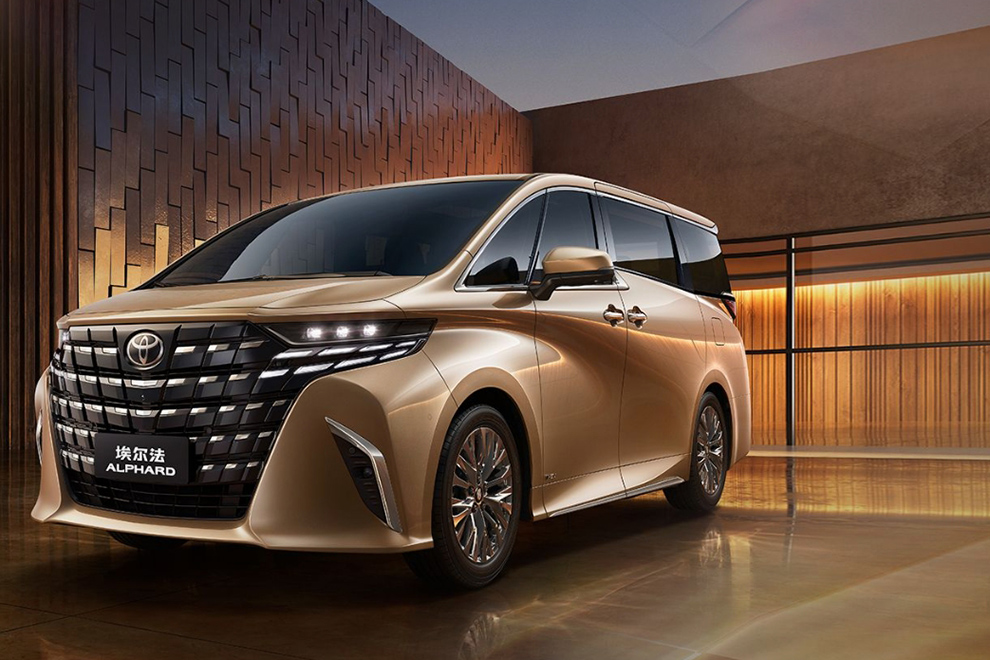
At a glance
- The Alphard is a premium MPV suited to family, executive, and hospitality passenger transport.
- The lineup spans 2.5-liter hybrid, 3.5-liter gasoline, and 2.4-liter parallel-import variants.
- New vehicles offer a clearer condition baseline; used vehicles require deeper history and condition checks.
- Export price varies by vehicle specification, condition, freight method, exchange rate, and Incoterm.
- Steering side, trim equipment, and destination-country compliance must be confirmed before shipment.
Why the Toyota Alphard matters for export markets
The Toyota Alphard sits between a family minivan and a premium people carrier, combining passenger space with a comfortable, driver-focused presentation. That positioning makes it relevant to dealers serving airport-transfer operators, hotel guests, business travelers, and families who need more usable space than an SUV. Its export appeal comes from cabin comfort, sliding-door access, and car-like driving manners without looking like a commercial van. For fleet buyers, this balance matters because one vehicle can serve VIP movements, transfers, and executive duty while presenting a premium image than a basic shuttle.
Although the Alphard is commonly associated with Japan and Asian passenger-car markets, buyers in other countries also encounter it through premium MPV use and chauffeur services. Familiarity supports confidence in its basic proposition, but it does not remove the need for market-specific checks. A right-hand-drive Alphard may be entirely natural in one destination and operationally wrong in another, so the steering side, local homologation, and service proposition should be confirmed before any fleet purchase order is approved. Engine choice, emissions rules, and import eligibility can also alter the final decision.
For export purchasing, the Alphard is best treated as a model family rather than a single interchangeable product. Chinese-market listings include 2.5-liter hybrid, 3.5-liter gasoline, and 2.4-liter parallel-import descriptions, with several equipment grades and facelift labels. Those names help define the shortlist, but they do not prove condition, specification, or local suitability. A buyer should compare the VIN, trim, powertrain, mileage, documents, and destination requirements before assigning a vehicle to a client or fleet. This is especially important when the model is sold in markets with different safety, tax, and emissions expectations.
- Premium family, executive, and hospitality use.
- Sliding doors and flexible passenger space.
- Verify steering, equipment, and legality.
Model range, trims and powertrain variants: how the lineup is structured and how to choose
The lineup divides into two buying groups: 2.5-liter gasoline-electric hybrid Alphards and 3.5-liter gasoline Alphards, plus a separate parallel-import category based on 2.4-liter cars. Within those groups, Premium, Luxury, Prestige, Ultimate, and named Ultimate editions indicate separate equipment tiers. Facelift labels appear on some 3.5-liter cars. Because trim names do not standardize every feature across model years or source markets, buyers should request the specification sheet rather than infer equipment from the badge alone. This matters especially when comparing a facelift 3.5-liter Premium with similarly named Luxury or Prestige examples.
The 2.5-liter hybrid is the more efficiency-oriented branch and uses electric assistance alongside the gasoline engine, particularly in normal town driving. It suits buyers who value lower fuel consumption and smooth low-speed progress but still require long-distance range without relying on charging infrastructure. The 3.5-liter gasoline branch is the alternative for operators prioritizing immediate power delivery, a simpler energy system, or a vehicle they regard as more conventional. Neither branch should be judged by the badge alone; inspect curb weight, test-drive behavior, and local fuel economics before final fleet selection.
The 2.4-liter parallel-import designation should be treated as a distinct sourcing and due-diligence category. Such a vehicle may come from a different market history than a China-market example, so provenance, age, service records, and equipment become especially important. For any branch, verify the battery or hybrid-system condition where applicable, engine and transmission labels, steering side, tire specification, and whether the listed trim includes the equipment your customer actually needs. The right choice is the one whose verified specification is legal, supportable, and economical in its intended market after landed costing.
- Hybrid 2.5L for efficiency; 3.5L for power.
- Parallel imports need stronger provenance checks.
- Verify trim equipment for each vehicle.
New vs used Toyota Alphard: how export inventory is structured and how buyers choose
New and used Alphards serve different procurement strategies. A new vehicle provides a clearer condition baseline and avoids uncertainty over prior fleet use, repairs, and wear, although the buyer still needs to confirm delivery mileage, factory status, warranty transfer, and whether the vehicle served as a demonstrator. New does not automatically mean untouched. Ask for the production date, prior-use declaration, inspection record, and keys and documents before treating it as fleet-ready. Used vehicles can offer another profile, but the saving must be tested against age, mileage, condition, and likely remediation.
A used Alphard makes most sense when the buyer has a clear usage plan and can validate its history economically. The review should cover cold starts, idle quality, transmission behavior, steering and suspension condition, brake wear, tire age, cabin wear, accident evidence, and the condition of hybrid components if applicable. Service records are valuable, but their absence should be treated as a risk rather than automatically disqualifying the vehicle. A lower acquisition outlay can be offset by near-term repairs, missing equipment, or materially increased freight cost for a damaged vehicle.
Export inventory can also mix recent factory-new cars, lower-mileage used cars, older examples, and parallel-import vehicles. That mix is useful because it supports different fleet budgets, but it makes direct comparison harder. A buyer should normalize each option by adding expected reconditioning, port charges, compliance work, finance cost, and residual-value uncertainty to the vehicle quote. For fleet programs, it is often better to standardize one or two approved configurations than to buy every apparent bargain and solve specification differences later. This also simplifies staff training, parts planning, and resale planning.
- New: verify status, warranty, mileage, and use.
- Used: inspect records, wear, damage, and condition.
- Standardize fleet specifications and parts.
How export pricing works: the factors behind a live listing price, and how to read one
An Alphard export quote is a negotiated vehicle price, not a complete international landed cost. Its foundation normally reflects model year, trim, hybrid or gasoline branch, mileage, condition, visible or disclosed damage, and the seller's assessment of that specific unit. Market variables then matter, especially the exchange rate applied to the seller's cost and the terms of any promotion. Because these inputs differ by vehicle and by time, the only reliable current figures are the vehicle price and availability displayed on each live ChinaCarDirect Alphard listing when planning a purchase.
To read a live listing correctly, first identify whether the quoted amount covers only the vehicle or combines it with freight, marine insurance, port handling, or destination charges. Also check the stated Incoterm, named port, payment schedule, and whether taxes and registration are excluded. Ask the supplier for the VIN, trim, engine, mileage, equipment list, and a pro forma invoice. A price that appears lower but uses a different delivery term is not directly comparable with one delivered under different responsibilities. The same rule applies even when model years match.
The useful comparison is a landed-cost worksheet shared by every supplier. Start with vehicle quote, then add freight method, insurance, origin charges, ocean or ro-ro transport, destination port charges, customs duty, taxes, inspection, registration, and financing. A worked decision can be simple: a 3.5-liter vehicle with a lower quote may cost more after freight and remediation than a hybrid priced slightly higher, while a used car can lose its apparent advantage once repairs and compliance work are included. Compare like with like, then use live listings for binding numbers.
- Compare like-for-like year, trim, and condition.
- Confirm freight, insurance, taxes, and Incoterms.
- Use live listings for current unit terms.
MOQ, ordering and payment: single units vs consolidating a container
Wholesale minimum order quantity is a seller and listing term, not a fixed characteristic of the Alphard. Some buyers may source an individual vehicle, while a supplier may impose a larger commitment for an allocation or shipment. ChinaCarDirect therefore treats the MOQ shown for each live unit as the applicable requirement. Ask for it in writing before reserving funds, and clarify whether the stated MOQ covers one model, mixed Alphard units, or a broader mixed-brand container. Never infer the requirement from the model name or a previous enquiry.
A container consolidation can improve freight efficiency when several vehicles share the same destination and purchasing deadline. The benefit is usually lower transport cost per unit and simpler arrival handling, but the buyer takes on capital, inventory, and market exposure. Mixed-trim consolidation may create challenge with colour, specification, and resale timing. If demand is not proven, a smaller shipment or shared-load option can reduce unsold-stock risk, although it may sacrifice freight efficiency. The right route depends on order size, delivery window, and how quickly fleet can enter service.
The ordering sequence is straightforward: shortlist vehicles, request a written quote, review the specification and documents, agree Incoterm and payment terms, make the agreed deposit, inspect before shipment, and release the balance against the agreed evidence. Deposit and balance structures vary by seller, so confirm what each payment covers and what triggers the refund or release. The pro forma invoice should identify each VIN, agreed options, unit price, MOQ, freight basis, ports, and expected shipment plan. Keep those terms aligned with the insurance and transport booking to avoid disputes later.
- Confirm listing-specific MOQ and conditions.
- Request a written pro forma invoice.
- Weigh freight savings against stock risk.
Shipping, homologation and market compliance caveats: LHD/RHD and import rules by country
Steering configuration is the destination check. Alphards are offered in left- and right-hand-drive forms in different markets, and a Chinese inventory listing does not guarantee that its steering position is suitable for the importer. Local road rules, driver familiarity, parking layouts, and registration rules can make an otherwise sound vehicle impractical. Do not plan to convert a left-hand-drive car for right-hand-drive use as a routine export measure; the cost, warranty, safety, and homologation effects can outweigh the vehicle purchase. Confirm the side on the exact unit and in seller photographs.
Alphards may move by ro-ro or enclosed container, subject to carrier routing and vehicle eligibility. Freight cost and transit time depend on origin and destination ports, sailing frequency, carrier space, vehicle dimensions, weight, customs schedules, congestion, insurance, and the delivery term. A forwarder should check safe stowage, lashing, battery or hybrid-system handling guidance, and the effect of any protective packaging. Obtain an all-in freight quotation that states charges included or excluded. Booking early does not guarantee a sailing, so build the vehicle’s commercial launch date around the confirmed logistics plan.
Import eligibility depends on the destination country and may involve emissions, noise, safety, VIN, age, customs-classification, and registration requirements. Used vehicles can face tighter age or inspection rules than new ones, while taxes and duties may depend on engine size, valuation, and classification. A Chinese trade invoice does not by itself establish road legality. Engage a destination broker or compliance specialist early, confirm the documentary checklist, and keep the homologation cost and lead time in the landed-cost model. For any modification, obtain written approval before authorizing work on the vehicle.
- Verify VIN, steering, engine, trim, and tires.
- Check emissions, safety, age, and registration.
- Compare ro-ro, container, and shared loads.
Who should buy the Alphard — and who should pick a different vehicle
The Alphard is a strong fit for buyers who put passenger comfort, privacy, and effortless entry ahead of cargo versatility or minimum operating cost. Premium families with three children or several adult relatives can use its flexible rows and sliding doors, while executive-transfer and hospitality operators benefit from a calm, premium cabin. The hybrid branch can suit high-mileage urban or regional use where frequent stops make efficiency valuable. These benefits matter only if the vehicle’s seating layout, luggage capacity, and local operating conditions meet the customer’s actual routine in detail.
It is a weaker choice for budget buyers whose priority is the lowest acquisition outlay, or for operators who need commercial payload, a cargo van body, or the ground clearance and travel focus of an SUV. The Alphard’s size can be troublesome in narrow streets, compact garages, and congested ports. A buyer needing a right-hand-drive vehicle should not order assuming a suitable unit is immediately available. Conversely, a buyer seeking a refined seven-seat passenger vehicle with less commercial-purpose harshness may find the Alphard better aligned than a utility-led alternative.
Before committing, compare total operating cost rather than vehicle price alone. Include expected fuel use, insurance class, maintenance, tire replacement, downtime for repairs, financing, and likely residual value in the destination market. For fleets, test whether the chosen trim can be standardized across drivers and maintained through local technicians. The strongest case is usually a premium passenger mission with predictable routes and a clear need for flexible seating. If the mission is mainly cargo, commuting economy, or off-road travel, a more specialized vehicle may deliver better lifetime value for the operator.
- Premium passenger and executive use fit best.
- Choose an SUV or van for utility.
- Reconsider when lowest cost dominates.
Main rivals and how the Alphard compares
The Honda Odyssey is the direct family-MPV comparison, with a similar three-row, sliding-door format aimed at private buyers and group transport. It is often considered from a functional family-hauler perspective, whereas the Alphard is commonly chosen for a premium lounge and executive-car presentation. The practical comparison should focus on usable third-row space, luggage room with passengers aboard, hybrid availability, seat comfort, service support, and compliance in the destination. Neither brand’s China sourcing automatically means better parts availability after import. Test both against the same duty cycle and budget.
The Buick GL8 is a closer China-market alternative because it competes in the large premium MPV category with multiple versions and established local recognition. It can be a sensible benchmark when an Alphard buyer is focused on Chinese sourcing support, family MPV packaging, and a different balance of comfort and equipment. Trim names are not directly interchangeable, however, and engine, seating, and feature comparisons should use current specifications. Compare after-sales reach in the export country, because a model familiar in China may still need specialist parts or service planning elsewhere.
The Mercedes-Benz V-Class is the premium-lounge alternative for buyers who prioritize brand presentation, executive appointments, or a more upscale cabin. It competes for the same passenger-car and chauffeur use cases, but ownership cost, insurance, and maintenance demands can differ substantially from those of an Alphard. The Alphard may offer a more mainstream route into a high-end MPV, yet the comparison should be based on verified equipment, local technician access, and total cost rather than badges. For fleet tenders, present both against the same passenger load, route profile, and service standards.
- Compare seating, luggage, equipment, and support.
- Benchmark equal loads, routes, and budgets.
- Check homologation for every alternative.
Live Toyota Alphard export inventory
View all listings →Real units currently on ChinaCarDirect with per-unit asking prices and MOQ. Availability updates live from the catalogue.
How to buy a Toyota Alphard from China
-
1
Define the operating brief
Set the passenger load, route profile, luggage needs, destination country, budget, and required steering configuration before selecting an Alphard.
-
2
Shortlist live inventory
Compare model year, hybrid or gasoline branch, trim, mileage, condition, and current availability on the live Alphard listings.
-
3
Request unit-level evidence
Ask for the VIN, specification sheet, photographs, equipment list, service or production records, and ownership or import documents.
-
4
Confirm MOQ and obtain a quote
Verify the listing-specific MOQ, whether mixed units are permitted, the Incoterm, named ports, payment stages, and what each quote includes.
-
5
Inspect before releasing funds
Use an agreed inspection scope for exterior condition, interior wear, tires, fluids, starts, warning systems, and hybrid components where fitted. Release the balance only against the agreed inspection evidence.
-
6
Arrange compliant export logistics
Book ro-ro, container, or shared-load transport through a freight forwarder and confirm safe stowage, insurance, export documents, and destination compliance work.
-
7
Complete import and handover
Use a destination broker for customs classification, duty and tax estimates, inspection, registration, and final delivery documentation.
Alphard vs rivals
| Honda Odyssey | A direct family-MPV alternative with a similar three-row sliding-door format. It may suit buyers prioritizing practical family transport, while the Alphard leans more toward a premium lounge and executive use. |
|---|---|
| Buick GL8 | A large China-market MPV rival with multiple versions and established local brand recognition. It is particularly relevant to buyers comparing Chinese sourcing support, passenger comfort, and equipment, although trim names are not directly equivalent. |
| Mercedes-Benz V-Class | A premium-lounge competitor for chauffeur, executive, and upscale passenger transport. It may carry a different ownership-cost and service-support profile, so the Alphard should be judged against verified equipment and total operating cost. |
Frequently asked questions
How is Toyota Alphard export pricing determined?
Export pricing reflects the vehicle’s year, trim, hybrid or gasoline branch, mileage, condition, exchange rates, freight, insurance, and the selected Incoterm. Current vehicle price and availability appear on the live ChinaCarDirect inventory. Landed cost still depends on destination charges, customs duty, taxes, port handling, inspection, and registration.
Which Toyota Alphard powertrain should I choose?
The range includes 2.5-liter hybrid, 3.5-liter gasoline, and 2.4-liter parallel-import descriptions. The hybrid emphasizes efficiency and electric assistance; the 3.5-liter gasoline branch favors conventional power delivery. Battery capacity and electric-only range are not stated for every vehicle, so confirm them in the live listing.
Is a used Toyota Alphard suitable for fleet purchase?
A used Alphard can suit buyers with a firm operating plan who can validate condition and history. Compare service records, mileage, cold starts, accident evidence, wear, and hybrid-system condition against expected repair and compliance costs. A new vehicle offers a clearer condition baseline, but delivery status, warranty transfer, and prior use should still be verified.
What is the MOQ for a Toyota Alphard order?
MOQ is a listing-specific term rather than a fixed model rule. Some sellers may accept an individual vehicle, while others require a larger allocation; the current MOQ appears on each live inventory record. Confirm the requirement, whether mixed units are allowed, and the consequences of changing quantities before payment.
How long does shipping take and what does it cost?
Shipping time and cost vary with origin and destination ports, carrier frequency, ro-ro or container availability, vehicle dimensions and weight, customs schedules, congestion, insurance, and Incoterm. Ask a freight forwarder for a written, all-in quotation tied to the chosen vehicle and named ports. Avoid relying on a generic transit estimate until the booking and documentation plan are confirmed.
Can I source Toyota Alphard spare parts from China?
Alphard parts should be matched to the VIN, model year, powertrain, and trim rather than ordered from the vehicle badge alone. Chinese-market and parallel-import descriptions may not map directly to destination-market part numbers, so confirm original-equipment references and fit before ordering. Parts planning should also allow for shipping, customs, and local service compatibility.
Is right-hand-drive Toyota Alphard availability guaranteed?
Right-hand-drive availability varies by source market and individual Alphard listing. Do not assume a China-sourced unit is RHD or already compliant with the destination’s traffic, emissions, and registration rules. Confirm steering side, VIN, engine specification, and approval requirements before paying.
How do I order a Toyota Alphard from China?
Start with the live Alphard inventory, compare complete specifications, and request a written quote for the exact vehicle. Agree MOQ, Incoterm, payment stages, inspection, and release conditions before sending funds. After pre-shipment verification and document checks, the vehicle can be booked for freight and prepared for destination customs and registration.
Ready to source the Toyota Alphard?
Send your preferred Toyota Alphard configuration, destination, and purchase quantity to ChinaCarDirect for a current vehicle-level quote.
Request a quote