
Toyota Avalon Export Buying Guide for Dealers and Fleet Buyers
Buy a Toyota Avalon from China with guidance on trims, hybrid choices, export pricing, MOQ, shipping, homologation and key vehicle alternatives.
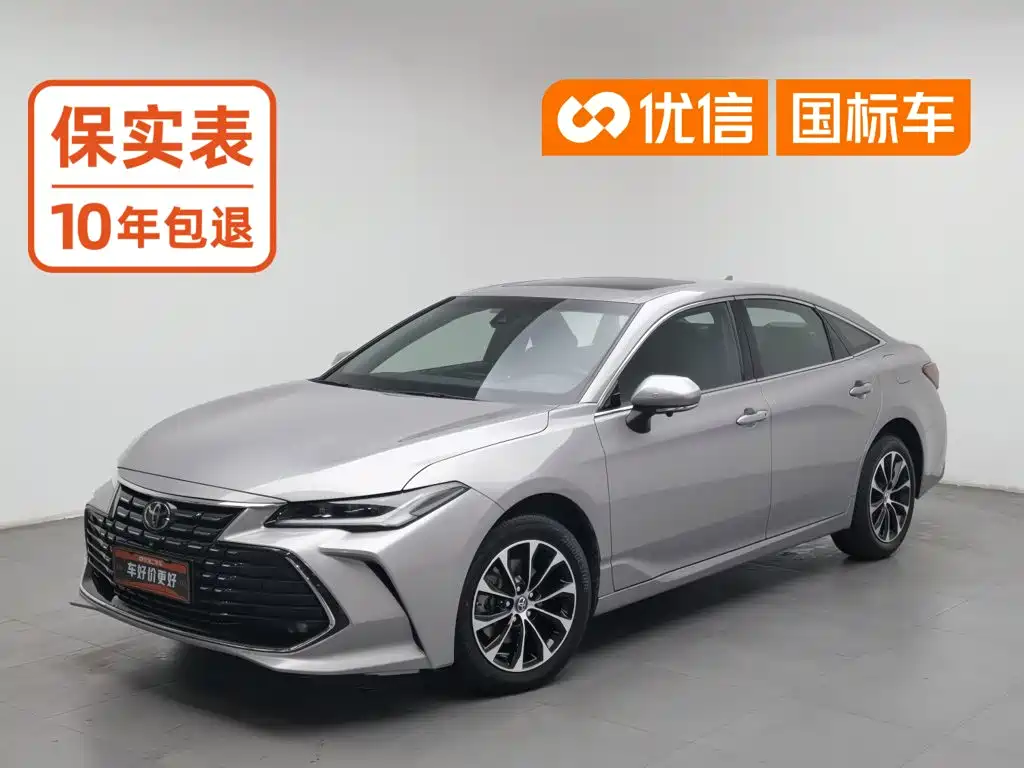
At a glance
- The Avalon is a full-size Toyota sedan positioned between mainstream sedans and luxury-brand executive cars.
- The export-relevant lineup spans 2.0L and 2.5L gasoline plus 2.0L and 2.5L hybrid versions.
- Trim names include Luxury, Progressive, XLE Premium, XLE Prestige, Touring Premium, Premium Selection and Aspiration.
- New supply is easier to standardize; used sourcing requires condition, document and hybrid-battery checks.
- Landed price depends on vehicle specification, freight, Incoterm, duties, taxes and destination charges.
- Confirm RHD requirements, homologation, parts support and current live listing terms before ordering.
Why the Toyota Avalon matters for export markets
The Toyota Avalon occupies a useful position in the full-size sedan market: it offers more cabin room and executive-car presence than a compact sedan, while remaining below the cost and image of a luxury marque. For overseas buyers, that middle ground is attractive for airport transfers, hotel fleets, executive transport, and ride-hailing operations where passengers notice ride quality more than a small trunk. Toyota's reputation for durability and established service networks adds credibility, although actual parts support still depends on the destination market. This balance supports broad interest from overseas fleet buyers and makes the Avalon a practical export candidate rather than simply a large specification list.
International buyers should, however, distinguish market appeal from export readiness. A China-market Avalon may carry equipment, grade names, and China VI emissions specifications that differ from models sold in Europe, North America, or Japan. Those differences can affect parts identification, regulatory paperwork, and expected resale positioning. The right question is not whether the sedan is popular in China, but whether its configuration can be registered, maintained, and resold profitably in the intended market. That review should happen before negotiating a vehicle-level price or committing funds to freight or importer deposits.
A correctly chosen Avalon can serve buyers who want a large, comfortable Toyota without moving into a luxury-brand budget. It offers a useful balance of cabin space, powertrain choice, and brand familiarity, particularly for fleets that need passenger comfort rather than commercial payload. Yet the sourcing decision should be based on total operating logic: expected fuel use, availability of parts, local homologation, resale prospects, and the ability to service vehicles across several markets. The same model can be a poor fit when those support conditions are weak or uncertain at the outset.
- Full-size comfort and fleet use
- Toyota support versus local rivals
- Destination compliance is essential
Model range, trims and powertrain variants: how the lineup is structured and how to choose
Avalon listings are organized around two engine families and a broad trim hierarchy. The available names identify 2.0L and 2.5L gasoline versions, plus Hybrid 2.0L and Hybrid 2.5L variants. Grades seen across the range include Luxury, Progressive, XLE Premium, XLE Prestige, Touring Premium, Premium Selection, and Aspiration editions; some entries also carry China V or China VI designations. These labels are useful for initial screening, but they are not a substitute for a unit-level equipment and options sheet. Compare the same trim across model years only after confirming that its naming and equipment have remained consistent.
For a gasoline-focused buyer, displacement and grade should be evaluated together. The 2.0L option generally serves fleets prioritizing purchase cost and operating economy, while the 2.5L version provides more conventional performance headroom for executive or premium assignments. Luxury, Touring, and Premium-oriented names may signal higher equipment levels, but naming conventions differ by year and market. Buyers should verify seating, infotainment, safety aids, wheels, and chassis equipment on the exact vehicle rather than infer them from the badge. A trim-name comparison without the option list can therefore lead to an unsuitable purchase.
Hybrid buyers face a more useful trade-off than the badge alone suggests. Both 2.0L and 2.5L hybrid versions appear in the lineup, allowing a choice between a lower-output configuration and one better suited to stronger performance expectations. Because hybrid battery capacity, certified range, equipment, and model year are not uniformly stated in the available trim data, request those details for each candidate. Treat China VI as an emissions identifier, not proof that the vehicle satisfies your destination's rules. Local registration, tax treatment, and resale rules can still require separate verification.
- 2.0L and 2.5L options
- Hybrid versions at both sizes
- Verify each vehicle's equipment
New vs used Toyota Avalon: how export inventory is structured and how buyers choose
ChinaCarDirect presents Avalon supply primarily as new-vehicle inventory, so importers can compare factory-fresh cars with consistent presentation and avoid the early condition uncertainty attached to used imports. That structure is particularly attractive to dealers building a launch order or fleet operators standardizing a model. It does not mean new is automatically cheaper after all duties, taxes, freight, and local charges are included. The decisive comparison remains the landed cost of each configuration against expected utilization and resale value. Start with the operating profile and then narrow the vehicle age and specification.
A used Avalon can make sense when the buyer values a known history, lower acquisition spending, or immediate availability from a local used-car channel. The risks are equally concrete: mileage, service records, accident repair, paint condition, interior wear, battery degradation on hybrid cars, and the possibility that imported parts are unavailable. A used unit should be supported by a VIN check, documents, maintenance evidence, and an independent inspection. Ask for battery health information rather than assuming hybrid age tells the whole story. That evidence is essential for fleet depreciation planning.
Neither route should be selected solely by purchase price. New cars generally simplify warranty administration and reduce wear-related uncertainty, while used cars may expose the buyer to more immediate repair and compliance risk. For a hybrid, evaluate battery condition, hybrid-system warnings, fuel-use records, and the availability of diagnostic support in the destination country. For fleet buyers, also compare financing, residual-value assumptions, and service intervals with the vehicle's expected duty cycle. A disciplined total-cost worksheet prevents a lower entry figure from masking higher downstream fleet expenses over the planned ownership period.
- New vehicles reduce condition risk
- Used cars require strong evidence
- Check hybrid battery health
How export pricing works: the factors behind a live listing price, and how to read one
The price attached to a live Avalon listing is the starting point for a transaction, not a universal export-price guide. It normally reflects a particular model year, trim, engine or hybrid configuration, condition, and seller terms. Exchange-rate movements can alter the displayed value, while freight, insurance, port charges, customs duties, taxes, and destination handling sit outside or alongside it depending on the agreed Incoterm. Buyers should therefore compare like with like and avoid treating two differently scoped quotes as equivalent. Request a written breakdown before placing any deposit.
When reading a listing, first confirm the year, exact trim, powertrain, transmission, mileage, and condition. Then check whether the price covers the vehicle only, domestic preparation, documentation, and inland transport, or extends to a named port under an Incoterm. A buyer who ignores this scope can mistake a lower figure for a better deal. Save the SKU and ask the seller to reconfirm all commercial terms against that same unit, since a live listing can change as inventory is sold. Always use the current live listing as the commercial reference.
The most useful landed-cost worksheet separates vehicle cost, international freight, insurance, port and terminal charges, import duties, taxes, registration, inland delivery, and expected preparation or modification. It should also include financing, exchange-rate assumptions, and a realistic residual value. Fleet buyers can use different duty cycles to compare trims, while dealers should consider whether slow-moving equipment colors create a holding-cost disadvantage. Current per-unit prices and terms should always be taken from the live inventory and confirmed in the final quotation. This avoids planning around an outdated marketplace observation, generic estimate, or stale forecast.
- Compare identical vehicle specifications
- Confirm freight inclusion
- Calculate full landed cost
MOQ, ordering and payment: single units vs consolidating a container
Some Avalon sellers accept a single-unit order, which is useful for a dealer test, a corporate chauffeur vehicle, or a small fleet. The live listing should be checked for its stated minimum order quantity, but the buyer should not assume that every seller will release a vehicle immediately or combine different SKUs without approval. For one car, clarify the reservation process, deposit, balance trigger, production or stock status, inspection window, documentation fee, and the point at which title and shipping risk transfer. All terms should appear in a written agreement.
Consolidating several Avalons can improve freight efficiency and reduce repeated fixed transaction costs, but it also concentrates capital and resale risk in one shipment. Mixed trim orders may be possible if the seller can allocate compatible units; however, buyers should avoid assuming that a container can be filled instantly from the live catalogue. Confirm every SKU, production status, color, homologation specification, and shipping deadline before authorizing the balance. More metal in a container is efficient only if those vehicles are sellable in the intended market and quickly deliverable to buyers.
A sound order workflow is inquiry, specification confirmation, written quotation, reservation or deposit, inspection, balance payment, export preparation, and release for shipment. The pro forma invoice should identify the vehicle or allocation, Incoterm, payment milestones, document set, inspection standard, and cancellation terms. Keep all approvals tied to the same SKU and revision of the offer. If financing or exchange-rate exposure is material, set an approval deadline and require a refreshed pro forma invoice before payment. This discipline reduces the chance of buying the wrong trim before freight is committed.
- Single units suit small buyers
- Containers require confirmed allocations
- Document payment and risk transfer
Shipping, homologation and market compliance caveats: LHD/RHD and import rules by country
Steering configuration is one of the first checks for an imported Avalon. Vehicles sourced from the Chinese market are commonly configured for left-hand drive, so buyers needing right-hand drive should not assume local availability or add a conversion after shipment. Confirm the configuration directly in the listing and ask the seller for a VIN, photographs, and any evidence of prior alteration. Steering conversion is not a substitute for a compliant right-hand-drive build: safety, visibility, controls, lighting, and homologation can all be affected. Confirm this before paying the vehicle balance or releasing funds.
Standard sedans are commonly moved by roll-on/roll-off vessel or grouped within containerized transport, depending on carrier availability and the seller's loading plan. Transit time and cost vary with origin and destination ports, vessel schedule, container configuration, fuel surcharges, insurance, terminal handling, customs clearance, inland haulage, and delivery appointment. A shipping quote must state the route, Incoterm, chargeable weight, included services, and exclusions. Allow extra planning time for inspections, document corrections, congestion, weather, and port delays rather than treating the sea leg as the entire delivery period at the destination country.
Import compliance must be checked against the destination country's current rules, not inferred from the China VI label. Depending on the market, authorities may require a VIN check, emissions approval, safety equipment, customs valuation, proof of ownership, age restrictions, a Certificate of Conformity, or modifications such as lighting and catalyst changes. Hybrid vehicles can face additional battery, environmental, or used-vehicle restrictions. Use a local customs broker or compliance specialist before dispatch and compile every original document required for registration, warranty, and resale. Any alteration should be declared accurately to customs or conformity specialists.
- Confirm steering before dispatch
- China VI is not approval
- Use local compliance advice
Who should buy the Avalon — and who should pick a different vehicle
The Avalon is a strong candidate for an overseas buyer who wants a full-size Toyota sedan, substantial passenger space, and the option of a self-charging hybrid powertrain. It suits corporate chauffeur programs, hotel and airport transport, executive fleets, and dealer customers who value a recognizable marque without moving to a luxury brand. It can be particularly logical where many units must share one support model and where Toyota familiarity already exists. The decisive question is whether that positioning is supported locally by fuel, parts, diagnostics, and resale demand. It is less compelling where compact dimensions, low operating costs, or local-brand familiarity outweigh those benefits for the target duty cycle.
A different vehicle is usually wiser when the primary requirement is minimum operating cost, cargo volume, all-terrain access, or a model already supported by dense dealer and parts networks. A compact sedan can be easier to run in congested cities; an SUV may be necessary for poor roads or equipment; and a locally mainstream model can simplify spare-parts sourcing. Buyers should also avoid the Avalon if their destination requires right-hand drive but compliant inventory is not available, or if premium full-size residual values are unlikely to support the import case.
Before committing, compare total cost per mile or kilometer over the planned ownership period rather than acquisition cost alone. Include expected fuel consumption, insurance, tires, scheduled maintenance, downtime, hybrid-system or battery risks, registration, and likely resale proceeds. For a dealer, test one or more trims against local customer demand and financing partners; for a fleet, compare utilization and passenger loads. The right Avalon is the one whose size, powertrain, equipment, and support requirements produce a repeatable operating advantage in the buyer's market and can be supported by reliable suppliers locally.
- Strong for executive and hotel fleets
- Weak for tight-budget urban use
- Local support affects resale
Main rivals and how the Avalon compares
The closest segment alternatives include the Honda Accord, Nissan Teana, and Volkswagen Passat, each presenting a different reason to reconsider an Avalon. The Accord is a familiar large-sedan choice with a strong hybrid identity; the Teana emphasizes comfort and value in many Asian markets for fleets; and the Passat offers a more European-oriented driving and ownership profile. None is an automatic substitute because equipment, homologation, aftersales support, and resale conditions differ. The meaningful comparison is the one made for the destination market with verified destination-market versions and landed costs.
For a hybrid fleet buyer, the Avalon competes on the combination of large-car space, Toyota identity, and two hybrid displacement options. The Accord may be attractive where its hybrid system, dealer network, and local familiarity are stronger; the Passat may fit buyers who prioritize its road character or regional brand prestige; and the Teana may make sense for comfort-led passenger transport. Because published economy figures can vary by test cycle, trim, and driving conditions, evaluate real-route consumption and total running cost rather than comparing headline figures alone for each candidate and route.
Dealers should test the Avalon against locally proven rivals using actual option sheets, landed-cost estimates, parts lead times, and expected resale demand. Toyota's badge can help, but a buyer may secure better availability or support from a rival that has a stronger local presence. Conversely, the Avalon can win where large sedan comfort, hybrid choice, and a consistent Toyota product image align with the customer profile. Confirm steering, emissions, and equipment locally, then negotiate with the seller using the same specification and Incoterm for every candidate to make a valid comparison.
- Accord offers strong hybrid familiarity
- Teana targets comfort-oriented buyers
- Passat has European ownership appeal
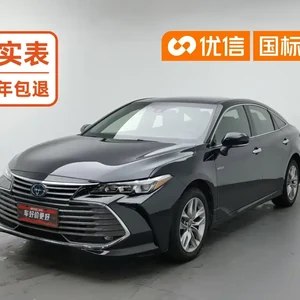
Live Toyota Avalon export inventory
View all listings →Real units currently on ChinaCarDirect with per-unit asking prices and MOQ. Availability updates live from the catalogue.
How to buy a Toyota Avalon from China
-
1
Define the destination and duty cycle
Specify the destination country, steering requirement, passenger load, daily mileage, and expected ownership period. These requirements determine which trims and homologation route are relevant.
-
2
Shortlist the powertrain
Compare the 2.0L and 2.5L gasoline options with the available 2.0L and 2.5L hybrids. Consider route conditions, fuel availability, performance needs, and local hybrid support.
-
3
Review the exact live listing
Check the model year, trim, engine, transmission, equipment, photos, emissions designation, documents, and seller terms. Save the SKU so every inquiry and quotation remains tied to the same vehicle.
-
4
Request a landed quotation
Ask for the vehicle price, freight method, Incoterm, insurance, port charges, duties, taxes, registration, and inland delivery separately. Obtain written payment milestones and a valid pro forma invoice.
-
5
Verify import compliance
Give the VIN and proposed configuration to a customs broker or destination-market compliance specialist. Confirm emissions, safety, lighting, documentation, and any right-hand-drive requirements before shipment.
-
6
Reserve and inspect
Follow the agreed reservation process, then complete the specified pre-shipment inspection before the balance payment. Record any condition discrepancy and confirm the approved export preparation.
-
7
Release, ship and track
After payment and document approval, monitor export preparation, vessel booking, insurance, shipping documents, customs clearance, and final delivery. Reconcile the received vehicle against the inspection and invoice records.
Avalon vs rivals
| Honda Accord | A close large-sedan alternative, especially for hybrid buyers seeking strong brand familiarity. The Accord may be preferable where its local dealer network, parts coverage, and hybrid recognition outweigh the Avalon's Toyota identity and full-size positioning. |
|---|---|
| Nissan Teana | A comfort-oriented sedan that can appeal to passenger-transport and fleet buyers. It is worth considering where local Teana familiarity, parts availability, or fleet relationships are stronger, subject to destination-market homologation. |
| Volkswagen Passat | A more European-oriented ownership and driving alternative that may suit buyers already familiar with Volkswagen. The Passat can be a stronger choice where local dealer support and desired road character matter more than the Avalon's specific model positioning. |
Frequently asked questions
How is Toyota Avalon export pricing determined?
A live listing price is tied to the model year, trim, powertrain, condition, seller terms, and quote scope. Freight, insurance, duties, taxes, exchange rates, and destination handling determine the final landed cost. Check the current live Avalon inventory on ChinaCarDirect and request a written quotation for the exact unit.
Which Toyota Avalon engines and hybrid options are available?
The lineup includes 2.0L and 2.5L gasoline versions, with Hybrid 2.0L and Hybrid 2.5L variants also appearing in the available trim range. Battery capacity and certified range are not consistently stated in the trim summaries, so check the live unit listing and supporting documents. China VI identifies an emissions standard but does not guarantee destination-country approval.
Should an overseas buyer choose a new or used Toyota Avalon?
New vehicles reduce initial condition uncertainty and simplify warranty administration, while used vehicles may offer a lower acquisition cost but greater repair, documentation, and degradation risk. A used hybrid requires particular attention to battery condition, service history, VIN, and diagnostic evidence. Compare landed cost, support, and expected resale rather than purchase price alone.
Is there a minimum order quantity for a Toyota Avalon?
Minimum quantities and seller allocation policies can vary by listing and transaction, so confirm the requirement before reserving a vehicle. A single-unit purchase may suit a test or small fleet, while container orders can improve freight efficiency but concentrate financial and resale risk. Put the accepted quantity, allocation, and cancellation terms in writing.
What determines shipping time and cost for an Avalon export?
Shipping time and cost depend on the loading method, origin and destination ports, vessel schedule, container configuration, fuel surcharges, insurance, terminal handling, customs clearance, and inland delivery. The sea leg is only one part of the total delivery period. Request a quote that clearly states the route, Incoterm, included charges, and exclusions.
Are Toyota Avalon spare parts available in the destination country?
Parts availability depends on the destination's Toyota network and whether the vehicle is a China-market configuration with region-specific parts. Before ordering, ask local dealers to confirm support using the VIN and request a list of likely service items. Include any specialist sourcing or extended lead times in the operating-cost model.
Can I buy a right-hand-drive Toyota Avalon from China?
Right-hand-drive availability should not be assumed because China-market vehicles are commonly left-hand drive. Confirm the steering configuration on the exact live listing and obtain VIN-level evidence before paying. If no compliant right-hand-drive unit is available, consider an appropriate specialist conversion only after local safety and homologation requirements have been assessed.
How do I order a Toyota Avalon through ChinaCarDirect?
Choose a candidate from the live Avalon listings, then send the destination, required trim, powertrain, quantity, and preferred Incoterm in your inquiry. The seller should confirm the allocated SKU, specification, commercial scope, and pro forma invoice. Pay only against agreed milestones and complete the stated inspection, payment, and export-document process.
Ready to source the Toyota Avalon?
Send ChinaCarDirect your destination, required trim, quantity and Incoterm for a current Toyota Avalon quotation.
Request a quote