
Toyota Bozhi 7 Export Buying Guide for Dealers
Plan a Toyota Bozhi 7 export purchase with verified trim guidance, pricing methodology, MOQ, shipping, compliance checks and practical rival comparisons.
At a glance
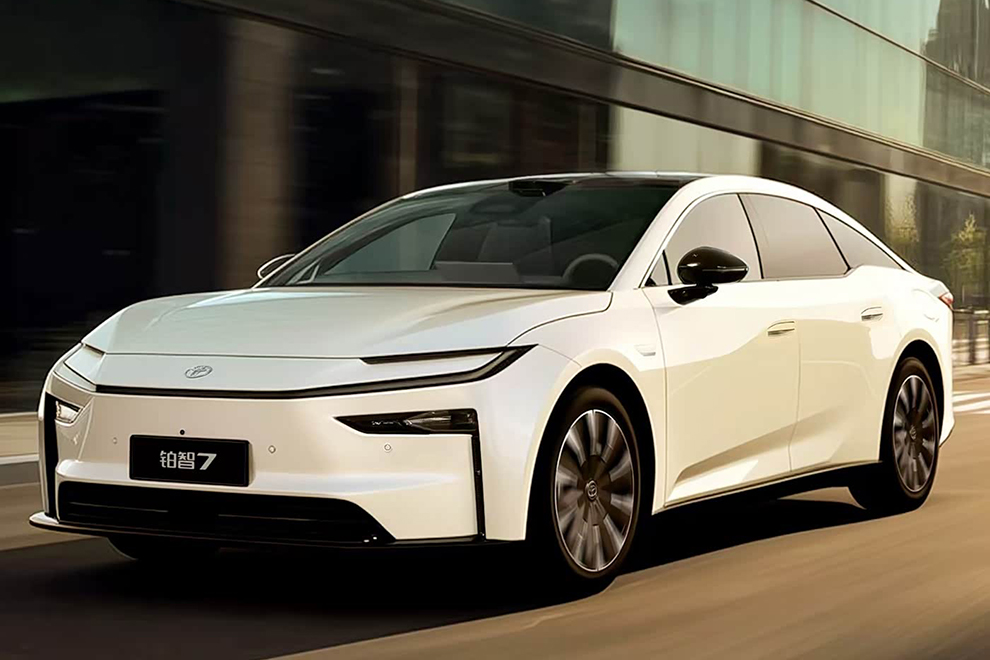
- The Toyota Bozhi 7 is a China-built, Toyota-badged mid-size battery-electric SUV suited to export-oriented dealers and fleet buyers.
- The 600 Pro, 700 Max and LiDAR-labelled grades make trim, equipment and verified range central to vehicle selection.
- New units offer the clearest configuration and warranty path; used units require specialist battery and provenance checks.
- Live export pricing must be compared on the same Incoterm, destination and equipment basis.
- Local homologation, charging, driving side, parts and software support determine real marketability.
Why the Toyota Bozhi 7 matters for export markets
The Toyota Bozhi 7 is relevant to overseas buyers because it combines a Toyota-badged, China-built electric SUV format with the range-oriented product structure common in China’s competitive EV market. It is not simply a rebadged petrol Toyota: this model line is battery-electric, so dealers are evaluating a different vehicle category, duty cycle and support plan. For importers, that makes the Bozhi 7 a test of whether Toyota’s brand recognition can be matched by local EV servicing, charging compatibility and credible parts supply in the importing country over the vehicle's working life.
The model’s strongest export proposition is not a single universal specification. The 600 Pro, 700 Max and 700 Max LiDAR Edition names in the export catalogue show that buyers can work through a hierarchy based on range class and driver-assistance hardware, while some records use the shorter bz7 designation. That variation makes market fit more important than badge familiarity alone. A distributor should establish whether its country rewards long-range capability, advanced assistance or straightforward fleet economics before committing to a grade and whether the selected configuration can be homologated without extensive modification.
Global demand should be assessed at the importer and end-customer level rather than inferred from the Toyota name. Corporate fleets may value a modern electric crossover for urban and regional deployment, while private buyers may focus more on range, charging and residual-value confidence. In both cases, the deciding evidence is operational: confirmed charging system, service access, software support and parts logistics. Where those foundations are weak, a more established rival with deeper local support may be easier for a distributor to sell and own over a normal three-to-five-year ownership period.
- Best for EV-ready importers.
- Verify grade and compliance.
- Confirm local EV support.
Model range, trims and powertrain variants: how the lineup is structured and how to choose
The line-up is best read as a range-and-equipment ladder, not a family of mechanically unrelated versions. Model 600 Pro is the lower-labelled grade, Model 700 Max sits at the upper range-oriented level, and Model 700 Max LiDAR Edition adds a distinct sensor-equipped specification. The bz7 entries may be less granular catalogue names. Because trim labels alone do not disclose battery capacity, motor output, charging architecture or homologated range, treat every grade as a separate configuration to be verified against the seller’s official specification sheet and VIN before any deposit is paid.
Range-oriented naming helps a buyer form a shortlist, but it must not replace comparable test data. China-market range figures may rely on CLTC conditions and can differ from WLTP or local homologated figures; the live listing should be checked for the exact standard used. Compare usable battery capacity, real-world consumption assumptions, charging curve and likely route conditions together. A vehicle with a higher label can still be the weaker choice if the destination’s charging network is sparse or if its premium equipment adds little fleet value for the intended operating cycle.
The LiDAR Edition should be evaluated as an assisted-driving configuration, not as a promise of autonomous operation. Confirm whether the vehicle has the advertised sensor, what functions are enabled in its software, whether language and map support are appropriate for the destination, and whether the seller can provide the hardware and software status at delivery. Also check whether non-driver-assistance equipment differs materially between grades. For fleet buyers, device management, privacy compliance and the availability of updates can be as important as the sensor itself. This can reduce costly surprises after delivery.
- 600 Pro: lower-labelled grade.
- 700 Max: upper-labelled grade.
- LiDAR: verify sensor, software and updates.
New vs used Toyota Bozhi 7: how export inventory is structured and how buyers choose
Export inventory for the Bozhi 7 should be read as a configuration market, not simply a used-car auction. New units provide a defined factory condition, a clearer warranty path and easier comparison of options, whereas used imports bring a separate assessment of age, mileage, battery health and prior ownership. A distributor should also confirm whether stock is already prepared for export, left- or right-hand drive and homologated. Those facts belong in the unit record and quotation, not in assumptions based on the model name or a generic Toyota product page.
For a new-unit purchase, the buyer should match the exact trim, factory paint, options, production period and delivery condition, then obtain written confirmation of battery warranty, software entitlements and service scope. Photograph the vehicle at handover where practical, and record VIN, odometer, charging equipment and included accessories. The key advantage of buying new is not simply a low mileage reading; it is a traceable starting point that reduces disputes over condition and makes the commercial terms easier to reconcile across units and the original sale documentation for local registration purposes.
If a used Toyota Bozhi 7 becomes available, treat the inspection as specialist EV due diligence rather than a conventional used-car walk-around. Ask for battery state-of-health evidence, a documented charging test, software and hardware status, accident and flood history, title documents and evidence of remaining factory warranty. Compare the battery report with the vehicle’s age and usage pattern, and have the seller explain any warning messages or replaced components. A lower purchase price can be offset by uncertainty, unforeseen battery work or weaker resale confidence in the destination market. That risk belongs in the acquisition model.
- New: defined condition and warranty.
- Used: battery and provenance checks.
- Both: verify VIN, side and export preparation.
How export pricing works: the factors behind a live listing price, and how to read one
A Toyota Bozhi 7 export price is the result of several variables, not a permanent model-level price. The year, exact trim, equipment package, battery or motor specification, mileage, condition, production status and available volume all influence the seller’s ask. Currency movements and the logistics terms can change the commercial outcome just as much. Because the catalogue can mix differently configured vehicles, compare like with like and ask for a written price for the VIN or precise grade you intend to purchase rather than relying on a model-level headline alone.
When opening a live listing, first establish the currency and whether the amount is an ex-warehouse, FOB, CIF or other basis. If shipping, export documentation, insurance, duty, taxes, port charges or commissioning are excluded, the headline is not the landed cost. Check whether the seller will hold the unit after payment, how long the quote remains valid and what triggers a repricing. A binding pro forma invoice should identify the vehicle, service scope and Incoterm, with any charge that cannot yet be calculated clearly labelled as an estimate or quotation.
Availability is equally unit-specific. A model may be listed under bz7 or a full grade name, and two vehicles carrying the same name can differ in production details or preparation. Use the live inventory as the source for current per-unit pricing and availability, then confirm the unit identifier with the seller. For a wholesale buyer, ask whether the supplier can allocate a specific vehicle, hold it for inspection, provide a packing list, and combine compatible orders. These answers matter more than an arbitrary catalogue-level minimum or a previously advertised price.
- Compare identical configurations.
- Confirm currency and Incoterm.
- Check live unit price and availability.
MOQ, ordering and payment: single units vs consolidating a container
MOQ means the minimum quantity a seller is willing to transact under its stated commercial terms. For an individual vehicle, the relevant question is whether that exact listing can be ordered as one unit; for a container programme, it is how many units of a compatible specification must be committed. These are different purchasing problems. A low nominal minimum can still carry a high total commitment once freight, taxes, compliance and unsold stock are included. Always obtain the MOQ for the selected listing rather than infer it from the model category.
Buying a single Bozhi 7 suits a dealer testing demand, a fleet buyer placing a defined order, or an importer combining vehicles from several approved sellers. It reduces inventory exposure but may leave the buyer paying more per unit in freight and handling than a consolidated container. Consolidating compatible units can improve transport efficiency and simplify administration, but it increases capital at risk and requires accurate specifications, matching condition standards and a realistic sales plan. Neither route should be selected solely on the advertised minimum quantity shown in the catalogue.
A sound order process starts with a written vehicle specification, then a pro forma invoice showing the unit price, deposit, balance, payment method, Incoterm and expected production or dispatch point. Confirm the beneficiary details independently and understand whether a payment secures a specific chassis rather than only a production slot. For larger shipments, consider milestone payments tied to inspection, documentary release or shipping evidence. Any credit terms, escrow or letters of credit should be offered only through verified channels, with the legal recourse stated in the contract for the importing jurisdiction.
- Confirm listing-specific MOQ and payment.
- Consolidate only compatible, saleable units.
- Use verified payments and written remedies.
Shipping, homologation and market compliance caveats: LHD/RHD and import rules by country
Before shipping, the importer must separate transport compliance from market approval. A battery-electric vehicle can require dangerous-goods handling, a battery test summary, charging restrictions and carrier approval in addition to standard vehicle documents. These requirements apply to the battery and shipment; they do not prove that the vehicle is road legal at the destination. The importer should confirm the exact packing list, transport category, state-of-charge handling and document set with the carrier and freight forwarder rather than assuming a standard car procedure is sufficient for an electric vehicle cargo.
Market homologation is country-specific and should be investigated before the vehicle is paid for. Depending on the jurisdiction, the importer may need local type approval, VIN and registration compliance, safety and emissions approvals appropriate to an EV, radio and connected-car approvals, cybersecurity or data rules, and evidence for charging equipment. A Chinese-market configuration may need changes even when the vehicle looks identical to an approved version. Use an experienced local conformity specialist to define the evidence, responsible party and timeline for the target market before choosing the trim or market.
Driving-side availability is a separate commercial issue. Most Chinese production is left-hand drive, but a right-hand-drive Bozhi 7 should not be assumed without a specific factory-conversion or market-prepared unit. Steering, controls, display functions, safety equipment and service procedures can all be affected, and a late conversion may create homologation, warranty and residual-value problems. Tell the supplier the required side before ordering. Also budget for route choice, vessel space, port handling, battery logistics, insurance and any destination modification rather than comparing freight alone or overlooking hidden costs that may appear later.
- Confirm battery cargo documents.
- Complete local homologation.
- Specify factory LHD or RHD early.
- Model all destination charges.
Who should buy the Bozhi 7 — and who should pick a different vehicle
The Bozhi 7 is a strong candidate for a dealer or fleet buyer already prepared for Chinese electric vehicles and able to support them locally. Its appeal lies in a Toyota-badged SUV proposition, a range-led model hierarchy and technology-focused higher grades, which can be persuasive where buyers want a modern EV without moving outside the Toyota brand family. It also suits a distributor testing how customers respond to a locally built Chinese EV. That advantage depends on disciplined sourcing and realistic after-sales preparation, not on brand recognition alone. It is not, by itself, a substitute for proven local EV support.
It is a weaker choice for buyers who require a mature, widely stocked right-hand-drive model, established residual-value data or a service network already present in every target city. Those priorities may favor a Toyota hybrid SUV, a globally familiar EV or another Chinese model with stronger local parts coverage. The Bozhi 7 can also be unsuitable where charging access is unreliable, software features depend on an unsupported regional service, or the fleet route carries heavy loads without enough range margin. Choose the powertrain and logistics before the badge alone.
A disciplined purchase decision uses four gates. First, the vehicle must fit local safety and charging rules. Second, the exact grade must earn its price through range, equipment and fleet utility. Third, the landed commercial model must support a realistic margin after freight, duty, tax, warranty and marketing. Fourth, the seller must provide traceable documents and a credible parts pathway. If any gate fails, a cheaper trim or a different rival may be safer. If all four pass, a test order can build local knowledge before scaling the shipment.
- Strong for EV-ready channels.
- Weak without RHD, parts or software support.
- Test charging and route economics.
Main rivals and how the Bozhi 7 compares
Comparing the Bozhi 7 requires more than headline range or trim names. Because export versions can differ from vehicles sold at home, buyers should compare each rival’s body and cargo layout, certified range standard, charging compatibility, driver-assistance hardware, software support, warranty and local service access. For the Bozhi 7, verify the exact 600 Pro, 700 Max or LiDAR-equipped configuration and whether it has been prepared for the destination. The strongest choice is the model whose total operating and compliance burden best matches the market rather than the most feature-rich badge.
Against the BYD Sea Lion 07 EV, the Bozhi 7 offers a different brand proposition: Toyota recognition and a range-led trim structure versus BYD’s established electric-SUV identity and broad market familiarity. Neither should be selected from badge recognition alone. Compare verified dimensions, cargo volume, battery and range data, charging, driver assistance, service coverage and resale prospects in the importing country. The Sea Lion may be easier for some buyers to understand; the Bozhi may better fit channels already built around Toyota or seeking a distinct import proposition for their market.
Against the XPeng G6, the decision moves toward software ecosystem, assisted-driving feature availability and the depth of local support for each brand. The Bozhi 7’s LiDAR-labelled grade gives buyers a sensor-equipped option to investigate, but the actual functions and update path must be verified rather than inferred. The G6 may appeal to audiences already familiar with XPeng’s technology positioning. Choose between them using a documented test drive, confirmed feature map and service commitments in the destination market rather than a comparison of headline trim names alone before any purchase.
Against the Volkswagen ID.4, the Bozhi 7 offers a newer, more technology-forward Chinese-EV proposition, while the Volkswagen can benefit from a more established international model identity and broader familiarity with its ownership systems. That advantage does not remove the need to check the exact Chinese-market ID.4 specification being exported. A buyer prioritizing conservative brand recognition, standardized service processes or a straightforward resale proposition may prefer the Volkswagen; one seeking newer equipment and a differentiated Toyota-badged source may prefer the Bozhi after a like-for-like destination-market assessment of both vehicles in practice.
- Sea Lion: BYD brand familiarity.
- XPeng: software ecosystem comparison.
- ID.4: global ownership familiarity.
- Normalize range and landed cost.
Live Toyota Bozhi 7 export inventory
View all listings →Real units currently on ChinaCarDirect with per-unit asking prices and MOQ. Availability updates live from the catalogue.
How to buy a Toyota Bozhi 7 from China
-
1
Define the destination and use case
Record the importing country, delivery port, LHD or RHD requirement, charger standard and typical operating route. Use those constraints to screen out non-compliant configurations before discussing price.
-
2
Choose the exact grade
Shortlist Model 600 Pro, Model 700 Max or Model 700 Max LiDAR Edition, but request the factory specification sheet behind each name. Confirm battery, motor, charging, dimensions, assistance hardware and warranty because trim labels alone are insufficient.
-
3
Inspect the live unit record
Use the live Bozhi 7 listings to identify the unit, grade, condition and current availability. Request the VIN, production details, photographs and any discrepancies in writing rather than relying on a model-level headline.
-
4
Request a comparable landed quotation
Specify the destination and desired Incoterm, then ask for vehicle price, freight, insurance, documentation, tax and duty assumptions, and other charges separately. Confirm quote validity and listing-specific MOQ in the response.
-
5
Complete the local compliance review
Ask a destination-market specialist to review type approval, registration, safety, radio, cybersecurity, charging and battery-document requirements. Resolve driving-side and software-feature suitability before paying.
-
6
Contract, pay and inspect
Use a written pro forma invoice and independently verified beneficiary details, with refund and remedies stated. Pay through an agreed protected method where available and tie final settlement to the documented handover and pre-shipment inspection.
-
7
Release and ship
Approve the inspection, packing list, battery transport papers and insurance before dispatch. Compare consolidation and single-unit logistics, then track customs clearance and inland delivery against the agreed Incoterm.
Bozhi 7 vs rivals
| BYD Sea Lion 07 EV | Both compete in the China-built electric-SUV arena; the Bozhi leans on Toyota identity and range-led grades, while the Sea Lion offers familiar BYD electric credentials. Prefer the Sea Lion where BYD service and resale recognition are stronger, and the Bozhi where channels are already aligned with Toyota. |
|---|---|
| XPeng G6 | The G6 may suit buyers already confident in XPeng’s software ecosystem, while the Bozhi provides a Toyota-badged alternative and a distinct LiDAR-labelled grade. Validate local software, assistance availability, diagnostics and parts support for either model. |
| Volkswagen ID.4 | The ID.4 offers a more established global ownership identity, whereas the Bozhi presents a newer China-built Toyota-badged EV proposition. The ID.4 may fit conservative fleet buyers; the Bozhi may suit importers seeking newer equipment and a differentiated source. |
Frequently asked questions
How is Toyota Bozhi 7 export pricing determined?
The price reflects the vehicle year, exact trim and equipment, battery or motor version, mileage, condition, currency movements, freight and the selected Incoterm. A headline listing may exclude shipping, insurance, duty, taxes and port handling, so request a complete landed breakdown. Exact current per-unit prices and availability are shown in the live Toyota Bozhi 7 inventory on ChinaCarDirect.
Is the Toyota Bozhi 7 electric, and what range should buyers expect?
The Bozhi 7 is a battery-electric SUV. The line-up includes 600 Pro and 700 Max labels, with a Model 700 Max LiDAR Edition, but those trim labels do not replace the certified range figure for the actual vehicle. Request the battery capacity, motor output, charging specifications and range test cycle for the unit being considered.
What are the main trade-offs between new and used Toyota Bozhi 7 units?
A new unit provides a defined configuration, clearer warranty path and documented handover condition. A used vehicle requires battery state-of-health evidence, charging tests, accident and flood checks, title verification and confirmation of remaining warranty. The apparent purchase-price difference should be weighed against uncertainty and likely resale risk.
How does MOQ work when ordering a Toyota Bozhi 7 from China?
MOQ is transaction-specific rather than a permanent model-wide rule. Ask whether the selected listing can be purchased individually and confirm the seller’s stated minimum in writing. A container programme may require a larger quantity of compatible grades, so consolidation terms should be negotiated separately from a single-unit request.
What affects Toyota Bozhi 7 shipping time and cost?
Origin and destination ports, vessel schedules, transshipment, customs processing, battery handling, documentation, insurance, port charges and inland delivery all affect the result. There is no universal shipping duration or freight amount, and the forwarder should quote the route and battery cargo requirements against the specific VIN or shipment.
Are spare parts available for the Toyota Bozhi 7?
Do not assume that a Toyota badge guarantees local EV parts depth. Confirm support for high-voltage components, charging equipment, driver-assistance sensors, diagnostic software and warranty claims, including lead times and recommended import channels. Price a minimum spares package and identify local fallback parts before committing to fleet volume.
Is a right-hand-drive Toyota Bozhi 7 available for export?
A right-hand-drive unit should not be assumed for this China-market model. State the required driving side before requesting a quotation and require the seller to confirm factory preparation, VIN documentation and compatibility with local type approval. A later conversion should be treated as a separate engineering and compliance project, not routine export preparation.
How do I order a Toyota Bozhi 7 from China?
First identify the destination, driving side and required grade, then review the live inventory and request a unit-specific RFQ. Confirm the specification, Incoterm, MOQ, payment milestones, refund terms and inspection process in writing before paying. After local compliance approval, complete pre-shipment inspection, transport documentation, insurance, booking and customs clearance.
Ready to source the Toyota Bozhi 7?
Send an RFQ for the exact Toyota Bozhi 7 grade, destination, driving side and Incoterm you need.
Request a quote