
Toyota Bz3 Export Guide for Dealers and Fleet Buyers
Buy Toyota Bz3 from China with clear guidance on trims, pricing factors, MOQ, shipping, homologation, rivals and the best use cases for each buyer.
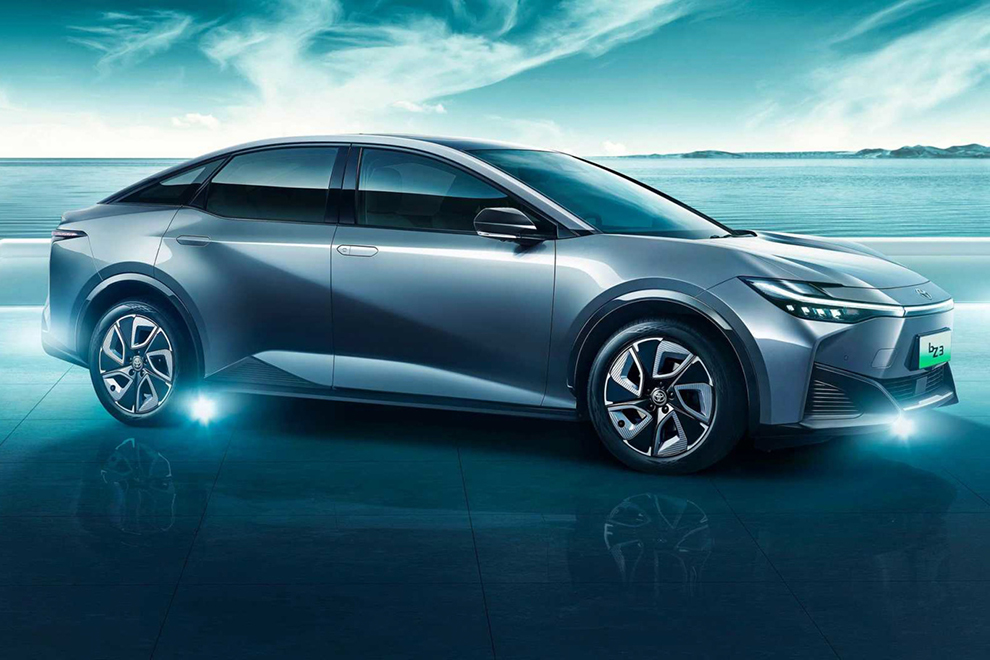
At a glance
- The Bz3 is a compact, five-door battery-electric sedan positioned for dealers, company fleets and urban operators.
- The export-facing range centers on 517 km Elite PRO and 616 km Long Range Premium configurations with CLTC headline ranges.
- Charging access, destination-market homologation and parts support should be resolved before a vehicle is committed.
- A live quote must be read with trim, condition, Incoterm and destination charges separated rather than treated as a universal export price.
- Single-unit sourcing and consolidated container buying require different controls for payment, documentation, freight and risk.
Why the Toyota Bz3 matters for export markets
The Toyota Bz3 occupies a useful position in the compact battery-electric sedan segment: a four-door car with a relatively low-drag shape, a practical five-seat cabin and Toyota branding, but without the footprint or running costs of a large premium saloon. For overseas distributors, that combination can be easier to position than a premium import because it targets company-car, ride-hailing and local fleet buyers who want recognizable ownership credentials without moving into luxury-brand pricing. The model also gives Chinese export channels a clear alternative to combustion sedans and to higher-priced crossover EVs.
For buyers evaluating demand, the Bz3 is most relevant where compact size, electric operating costs and a trusted badge meet a clear fleet use case. It can suit company-car pools, airport and municipal fleets, hotel operations, or ride-hailing businesses with predictable routes and dependable charging. The sedan format also preserves familiar loading and passenger arrangements for operators migrating from combustion vehicles. Rather than relying on broad EV enthusiasm, dealers should model demand around depot mileage, dwell time, charger utilization and the availability of technicians trained for electric vehicles and local parts supply.
Importing a China-built Bz3 also means evaluating the model as a destination-market product, not simply as a Toyota sold everywhere. Local rules, charging interfaces, software language, warranty administration and technical support can differ from those in China. A familiar Toyota badge may improve customer recognition, but it does not by itself confirm that every overseas buyer will receive the same parts, diagnostic processes or service experience. Export buyers should therefore test the complete ownership chain from homologation to workshop support before committing marketing or fleet volumes in the destination country.
- Compact five-door battery-electric sedan.
- Toyota-badged fleet proposition.
- Charging and support decide fit.
Model range, trims and powertrain variants: how the lineup is structured and how to choose
The export-facing Bz3 lineup is organized around two clear configuration labels: the 517 km Elite PRO and the 616 km Long Range Premium. Those names pair a trim designation with the headline range figure, helping buyers compare vehicles before requesting detailed documents. Because the displayed distances are CLTC-based, they should be treated as a consistent Chinese homologation reference rather than a promise of the same real-world distance in another country. The longer-range label is useful for initial segmentation, but it does not reveal every equipment difference, option, or market-specific variation.
Choosing between them should start with the duty cycle rather than the larger number. The 517 km version is a logical candidate for urban fleets, commuting programs and buyers whose vehicles return to a base regularly, especially where charger power is limited. The 616 km Long Range Premium may suit higher daily mileage, longer regional routes or customers who place greater value on headline range. Weather, speed, load, elevation and driving style can all narrow the gap, so route modelling and local charging maps are more useful than extrapolating the certified figure.
Trim names should not be interpreted as complete equipment lists. Overseas buyers should request the build sheet, confirmed battery and motor ratings, charging specification, standard equipment, software version and steering position for the exact unit being sold. The Bz3’s rear-wheel-drive layout and single-speed transmission suit its compact-sedan positioning, but output and charging figures should come from the unit being sold rather than another trim. For procurement, a detailed signed configuration sheet is more valuable than a marketing label because it prevents range, drivetrain and equipment assumptions from entering the landed-cost calculation.
- 517 km Elite PRO configuration.
- 616 km Long Range Premium configuration.
- CLTC needs local interpretation.
New vs used Toyota Bz3: how export inventory is structured and how buyers choose
Export inventory appears as unit-specific listings, so new and used Bz3 vehicles require separate procurement channels. A factory-new export unit offers the clearest expectation for mileage, paint, wear and warranty commencement, and it allows the buyer to specify trim and equipment before production or dispatch. It also ties up more capital and may expose the operator to model-year, battery-version or specification changes while the vehicle is in transit. The relevant question is therefore not simply whether the car is new, but whether the agreed build and delivery terms are adequately controlled in a written contract.
Used examples can make sense for pilots, rental pools, demonstrations or buyers with limited initial capital, provided inspection is more rigorous. Electric vehicles add specific checks beyond paint, tyres and interior condition: battery state of health, evidence of fast-charging use, charging faults, warning messages, accident repair and software status all affect value and downtime. Ask for diagnostic reports, service records, title documents and an explanation of warranty transfer. A lower acquisition price can be offset by battery uncertainty, near-term maintenance or a harder resale case when re-entering the local market later.
For fleet buyers, the best comparison is risk-adjusted total cost over the intended holding period. New vehicles usually simplify initial handover and warranty administration, while a well-documented used unit may lower entry cost and shorten acquisition time if supply is constrained. Neither category automatically offers the lower operating expense, because insurance, energy tariffs, tyre wear, service access and residual value can dominate. Buyers should compare like-for-like configurations, build a validation matrix for each candidate and keep the final acceptance conditional on physical inspection and document verification before final payment release.
- New units support controlled rollouts.
- Used units require diagnostic scrutiny.
- Compare lifetime cost and risk.
How export pricing works: the factors behind a live listing price, and how to read one
A live Bz3 export price is the outcome of several variables, not a fixed market tariff. The model year and trim matter, as do the 517 km or 616 km range configuration, factory options and the condition of a used vehicle. Mileage, service history, paint condition and battery health can materially change a used asking price. Exchange-rate movements also affect a seller’s cost and pricing decisions, while market demand, inventory age and the seller’s required margin influence the final number shown to buyers in the live catalogue at the time of quotation.
The Incoterm determines what the quoted price actually includes. An EXW-style figure may begin at the seller’s premises, while FOB and CIF place different obligations around export handling, carriage and insurance. Destination port charges, customs duty, VAT or sales tax, registration, inland transport and dealer margin are separate cost layers in many markets. A buyer comparing two offers should rebuild each as a landed cost, using the same destination, tax assumptions and service scope; otherwise the lower visible listing price may simply omit more obligations from the seller or their quotation.
Read each live listing as a unit-specific commercial offer. Confirm the vehicle identity, trim, range version, production year, condition, mileage where relevant, steering position, currency, price validity, MOQ, payment schedule, warranty and Incoterm. Check available photographs, the specification sheet and inspection evidence, and ask what is excluded. Current per-unit prices and availability must be taken from the live Toyota Bz3 inventory rather than remembered from an earlier catalogue. If a quote looks unusually favorable, verify the seller, vehicle and payment instructions before transferring funds or presenting it as a firm market benchmark.
- Price follows trim, range and condition.
- Incoterm defines delivery obligations.
- Verify current unit details online.
MOQ, ordering and payment: single units vs consolidating a container
MOQ is a seller transaction rule, not a permanent attribute of the Bz3 model. One listing may permit a single-vehicle order, while another may require a batch, a mixed-model allocation or a full-container commitment. Check the MOQ field on each unit and obtain written confirmation of whether the stated quantity applies to one trim, the range version or the mixed order. For wholesale or new-vehicle tenders, ask whether the seller can allocate the requested configuration rather than substituting whatever is physically available at the requested price and delivery date, without changing the commercial terms already agreed.
A single-unit purchase supports market validation, dealer demonstration or a small fleet pilot and lets the importer test charging, registration and aftersales processes without creating a large unsold-stock exposure. Before paying, use a pro forma invoice that identifies the vehicle, price, currency, Incoterm, production or dispatch window, payment milestones and cancellation terms. Common practice is a deposit followed by balance payment against agreed evidence, such as inspection and shipping documents, but the actual sequence must be negotiated. Escrow, documentary credit or another protected method may suit a larger or first-time transaction.
Consolidating several vehicles can improve freight and handling efficiency per unit, but it changes the risk profile. The importer must coordinate model consistency, VIN allocation, titles, homologation, insurance, inspection, terminal handling and delivery schedules across sellers. Mixed configurations may create later parts and remarketing complexity, while a shared shipment can reduce unit freight cost but not necessarily remove fixed charges. Model total cost under each Incoterm, define responsibility for damage in transit, and agree how claims, missing documents, failed inspections and cancellation by one buyer will be handled in writing.
- MOQ is seller-specific.
- Single units support pilots.
- Consolidation needs document control.
Shipping, homologation and market compliance caveats: LHD/RHD and import rules by country
Shipping a Bz3 from China begins with choosing a carriage method and defining where responsibility transfers. Vehicle carriers, roll-on/roll-off services and containerized transport have different handling patterns, and battery-electric vehicles require carriers that can follow the relevant dangerous-goods and vehicle-handling rules. Secure the booking only after the VIN, declared configuration, destination port, delivery window and Incoterm are confirmed. Freight cost and transit time depend on route, port congestion, seasonality, cargo volume, insurance cover and inland delivery—not just the distance between China and the destination country and any transshipment points.
Steering configuration is a critical sourcing check. LHD and RHD are not interchangeable for every buyer because local traffic rules, registration documents, insurance and customer expectations may favor one, while charging equipment and accessory arrangements can also vary. Do not assume a destination country’s RHD requirement means an RHD Bz3 is readily available from China; availability changes with the live inventory and producer supply. Require the seller to state the steering position in the vehicle record, and verify it through photographs, VIN documents and the build sheet before payment or shipment.
Import and market compliance must be settled by a qualified local importer or homologation specialist. Depending on the country, requirements can cover VIN and customs documentation, type approval, emissions, battery safety evidence, charging connection and software, local-language materials, recall systems, insurance and registration. The exporter’s declaration or a Chinese approval is not automatically sufficient for local road use. Ask for the exact documents available, confirm who will apply for approval, and budget for any modifications before treating a vehicle as approved for road use and deliverable in that destination market. Also confirm that the local repair network can access the exact battery, high-voltage and software components before accepting the model.
- Confirm LHD or RHD early.
- Route and Incoterm shape freight.
- Homologation precedes road delivery.
Who should buy the Bz3 — and who should pick a different vehicle
The Bz3 best fits a buyer who wants a compact electric sedan, accepts Toyota’s sedan proportions and can build dependable charging into normal operations. It is particularly relevant to company fleets, hotel and airport transfers, rental operations, municipal procurement and dealers serving urban EV buyers. For these users, predictable energy use, familiar vehicle controls and straightforward passenger access can matter more than maximum cargo volume. A business that can depot-charge overnight and maintain a disciplined replacement cycle is better positioned to exploit the model than one buying vehicles mainly for infrequent, unpredictable travel.
It is a poorer fit for buyers who need a large SUV or van-like load bay, more than five seats, serious off-road ability or towing beyond the vehicle’s approved limits. Long-distance operators without dependable charging should not choose it on headline range alone, and markets with harsh winter conditions require careful study of battery heating, recuperation and real-world consumption. Drivers needing a seven-seat family vehicle should compare purpose-built crossovers or MPVs, while high-mileage operators with uncertain infrastructure may favor a plug-in hybrid or combustion model with broader route flexibility instead.
Before choosing, compare total cost, not purchase price alone. Include energy, insurance, tyres, maintenance, charging, residual value and compliance support; for fleets, also include downtime and depot utilization. Review the destination-country Toyota network and parts channels, because reliable aftersales confidence can outweigh a marginal specification advantage. If charging is unreliable, the service network is thin, or a larger cabin is essential, select another model. If the operating profile is stable and the Bz3’s compact format is valued, its range and trim hierarchy provide a credible procurement base over the long term.
- Best for charge-managed urban fleets.
- Unsuitable for large or seven-seat needs.
- Charging and support determine fit.
Main rivals and how the Bz3 compares
The closest alternatives depend on destination-market positioning, but three useful benchmarks are the Tesla Model 3, BYD Seal and Hyundai Ioniq 5. The Model 3 is a direct electric-sedan comparison for performance, efficiency and brand visibility; the Seal is a closer Chinese-export rival with its own range hierarchy and equipment logic; the Ioniq 5 trades sedan-like simplicity for a crossover body and more adaptable cargo space. Local taxes, incentives and homologation can shift their position, so none should be selected from a brand badge or headline range alone.
Compare rivals on the same dimensions: cabin and boot space, rated range under a common test standard, charging architecture, thermal management, safety equipment, software, warranty, service access and resale prospects. The bZ3’s strengths are a compact Toyota-badged sedan format, a clear 517 km versus 616 km range choice and a straightforward rear-wheel-drive layout. A rival may offer a different balance: one may be more dynamically focused, another more spacious, and another more widely serviced locally. Because destination specifications differ, request each model’s build sheet rather than relying on global promotional data.
For an importer, the best vehicle is one that can be sold and supported with low risk. Compare verified specifications, landed cost, charging, parts lead time, homologation and expected resale in the relevant target fleet segment, not just range. The Bz3 is competitive when compact sedan packaging, Toyota recognition and efficient charging fit the buyer; it is weaker when a competitor’s larger body, stronger local support or broader homologation removes an operational obstacle. Use rivals to test fit, then return to the live Bz3 listings for the exact binding unit details.
- Model 3: direct sedan benchmark.
- BYD Seal: close export alternative.
- Ioniq 5: crossover utility alternative.
Live Toyota Bz3 export inventory
View all listings →Real units currently on ChinaCarDirect with per-unit asking prices and MOQ. Availability updates live from the catalogue.
How to buy a Toyota Bz3 from China
-
1
Define the destination and duty cycle
Identify the destination country, steering requirement, daily mileage, charging access and expected holding period. Separate urban fleet use from long-distance or all-season requirements.
-
2
Shortlist live Bz3 inventory
Review the live Toyota Bz3 listings by trim, range version, steering position and vehicle condition. Use the listing as the starting point, not as the complete specification or final landed quote.
-
3
Request the unit-specific build file
Ask the seller for the VIN, build sheet, battery and motor ratings, charging details, equipment list, software version, service history and title documents. Confirm that the photographed vehicle is the one being offered.
-
4
Validate homologation and charging
Have a local importer or homologation specialist check type approval, customs, registration, charging compatibility and safety-document requirements. Verify that workshop support and spare-parts channels can support the exact configuration.
-
5
Agree price, MOQ and payment terms
Request a written quote showing currency, validity, Incoterm, MOQ, payment milestones and cancellation conditions. Compare the vehicle price and estimated landed cost on the same destination-cost basis.
-
6
Approve inspection and export documents
Inspect the vehicle or commission an independent pre-shipment inspection, including battery condition for used units. Release the final payment only after agreed inspection evidence and export documents are satisfactory.
-
7
Book freight and complete import
Confirm the carrier, route, insurance, loading requirements, delivery window and customs responsibilities. Track the VIN through dispatch, arrival, clearance, pre-delivery inspection and local registration.
Bz3 vs rivals
| Tesla Model 3 | A direct battery-electric sedan benchmark with strong global brand recognition and a performance-focused proposition. It may suit buyers prioritizing established EV positioning, provided its local homologation, charging support and service footprint outweigh the Bz3’s Toyota-badged compact-sedan benefits. |
|---|---|
| BYD Seal | A closely aligned Chinese-export electric sedan with a comparable need to compare range variants, equipment and local support. It is a natural alternative for buyers already comfortable with BYD, while the Bz3 is preferable for Toyota brand preference and Toyota-badged fleet positioning. |
| Hyundai Ioniq 5 | A compact electric crossover alternative offering more versatile cargo space and SUV-style access. It fits buyers who prioritize cabin utility and crossover packaging over the Bz3’s lower-roof sedan format, subject to local pricing, homologation and support. |
Frequently asked questions
How is Toyota Bz3 export pricing determined?
Export pricing reflects the vehicle year, trim, 517 km or 616 km range version, options, mileage, condition, battery health for used vehicles, exchange rates, seller margin, freight and Incoterm. The binding figure is the per-vehicle price in the live Toyota Bz3 listings, including its currency, validity and included services; confirm that quotation before paying.
What powertrain and range options does the Bz3 have?
The Bz3 is a battery-electric compact sedan with rear-wheel drive and a single-speed transmission. Export configurations include the 517 km Elite PRO and 616 km Long Range Premium, using CLTC headline figures; destination range depends on weather, speed, load and driving conditions. Battery capacity, motor output and charging details should be checked on the live listing.
Should an overseas buyer choose a new or used Bz3?
A new vehicle generally provides clearer mileage, condition and warranty expectations, while a used vehicle can reduce entry cost but requires closer inspection. For used examples, prioritize battery state of health, diagnostic reports, accident history, service records, title documents and warranty transferability.
What is the MOQ for a Bz3 order?
MOQ is set by the individual seller and listing; it is not a fixed attribute of the model. Some offers may accept a single vehicle, while others require a batch or consolidated shipment. Check the MOQ field on each live listing and obtain written confirmation of how it applies to trims, range versions and mixed configurations.
How long does Bz3 shipping take and what affects the cost?
There is no fixed international transit time or freight charge for every order. Route, carrier, booking availability, port congestion, seasonality, cargo volume, insurance, Incoterm and inland delivery all affect timing and cost. Confirm the planned schedule, freight inclusions and risk-transfer point in the booking and pro forma invoice.
How are spare parts and service support handled?
Parts support depends on the destination, exact model specification and local Toyota network. Before ordering, ask how battery, charging, thermal-management, high-voltage and software parts will be sourced, which warranty claims can be reimbursed, and what diagnostic support is available for imported vehicles.
Is a right-hand-drive Bz3 available for export?
An RHD Bz3 may be suitable for RHD markets, but availability cannot be assumed from the model name or destination requirement. Check each live listing for steering position and obtain seller confirmation against the VIN and build sheet, since production and export availability change.
How do I order a Toyota Bz3 from China?
Start with the live Toyota Bz3 listings or submit an RFQ with the destination, trim, range version, steering position, quantity and delivery requirements. Request a written quotation and vehicle documents, agree MOQ and payment milestones, complete inspection and homologation checks, and then book freight and import clearance.
Ready to source the Toyota Bz3?
Request a live Toyota Bz3 quotation and verify the exact vehicle, landed cost and export documentation with ChinaCarDirect.
Request a quote