
Toyota Bz5 Export Buying Guide for Overseas Buyers
Plan a Toyota Bz5 export purchase with guidance on trims, pricing drivers, MOQ, shipping, homologation, rivals and live inventory checks for overseas buyers.
At a glance
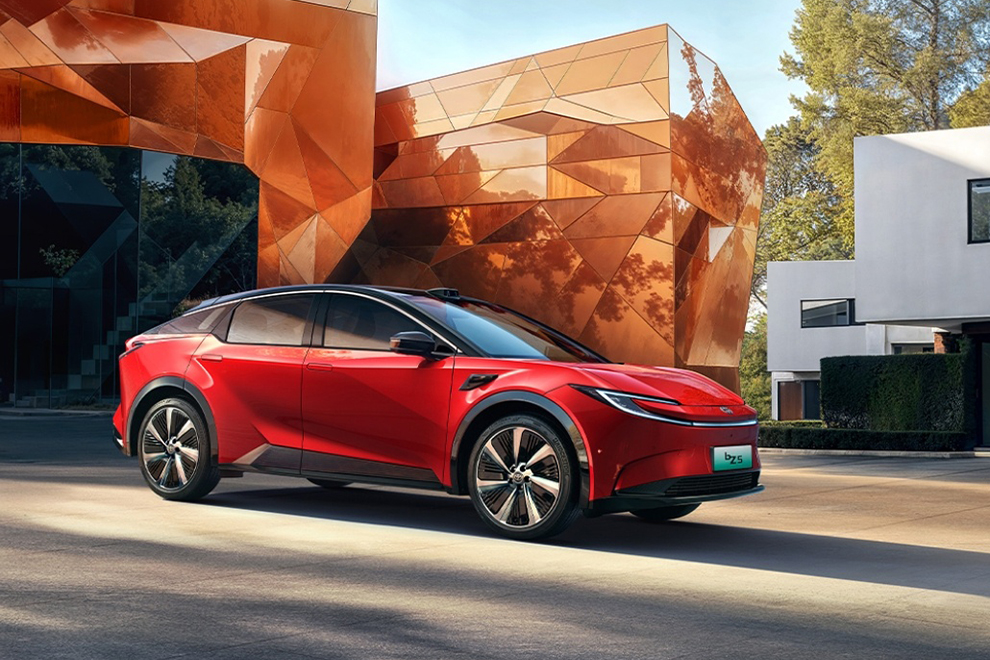
- The Bz5 is a China-market, five-door battery-electric sedan suited to dealers and fleets that can support imported EVs.
- The lineup is organized around 550 and 630 range designations; compare the exact destination-approved range rather than assuming equivalence.
- New units offer cleaner condition and clearer warranty positioning, while used units require battery, mileage and fault-history checks.
- Compare the same trim, battery, condition, destination and Incoterm before judging any live export quote.
- Live listings provide the current per-unit price, MOQ and availability; an RFQ should confirm the complete landed scope.
Why the Toyota Bz5 matters for export markets
The Toyota Bz5 matters to overseas buyers because it brings a Toyota-badged, battery-electric sedan from the Chinese market into a segment where sedans compete with EVs and lower-cost combustion models. Its appeal is not simply an electric Toyota badge: buyers are evaluating a China-developed product against local service familiarity, homologation, residual-value support and parts access. For dealers, that makes the Bz5 a test of whether an imported EV can be sold as a mainstream sedan rather than a niche novelty. It is most relevant to importers with a compliant market strategy and after-sales planning.
The strongest business case is likely in markets where Chinese vehicle channels are established, charging infrastructure is usable and importers can provide after-sales support. Fleet and company-car buyers may value sedan packaging, electric operating costs and Toyota branding, while private buyers may focus more on software, driver assistance and build consistency. Global demand should not be inferred from the badge: road conditions, tariffs, electricity prices, insurance categories and local charging standards can change the proposition. The Bz5 is therefore a market-by-market export opportunity, not a universally exportable specification without proper market validation.
For a buyer evaluating Toyota Bz5 for export, the important question is not whether the name creates demand by itself, but whether the exact vehicle can be homologated, supported and priced competitively after freight, duties and retail costs. Dealers should examine brand recognition, model history, parts logistics and total cost of ownership in the target country. Importers should use a controlled pilot unless demand is verified through pre-sales, local partnerships and test registrations. That discipline turns the Bz5’s China-market origin into an opportunity without overlooking the burden of introducing another EV line.
Model range, trims and powertrain variants: how the lineup is structured and how to choose
The referenced lineup is organized around Model 550 and Model 630 families, with 550 PRO, 550 PRO Smart Edition, 550 JOY and Model 630 MAX Smart Edition represented. For an export buyer, these names should be treated as configuration identifiers rather than a complete global trim sheet. The numerals align with the model’s range-oriented naming, but they do not guarantee the same usable range after destination homologation, local test-cycle conversion or real-world conditions. Compare each trim’s battery version, motor output, charging equipment and standard features on the individual listing before ordering.
Buyers choosing a 550-family car are typically optimizing for a lower purchase commitment, simpler specification or a use pattern where daily routes can be covered reliably and charging is planned. That can suit urban company fleets and regional distributors, provided the quoted vehicle carries the expected battery and equipment. The 630 MAX Smart Edition is the more range-oriented and upper-spec branch in this lineup, so it may suit higher-mileage operators, longer regional routes or buyers who prioritize driver technology. The decision should come from route profiles and charging plans, not badge prestige.
Start with the commercial use case, then work down to the exact unit. Map typical daily and weekend mileage against destination-certified range, reserve capacity for heating, air-conditioning, towing load and road gradients, and confirm overnight charging. Next compare seating, luggage capacity, curb-weight limits and assistance features against fleet rules. Smart Edition and MAX labels can signal higher equipment levels, but export versions may differ from China-market descriptions. Ask the seller to reconcile trim, battery version, motor, charging interface, VIN, production date and options in writing before treating quotes as comparable.
- 550: assess lower-commitment, shorter-range use cases.
- 630 MAX: assess longer routes and higher equipment needs.
- Verify trim, battery, motor, charging and VIN.
New vs used Toyota Bz5: how export inventory is structured and how buyers choose
Export inventory for the Toyota Bz5 can be structured in several ways: new factory vehicles sold directly by dealers or exporters, low-mileage demonstrator units, and used vehicles sourced through domestic used-car channels. The same model badge does not make every unit equivalent. Production date, odometer reading, previous registration history, battery condition and cosmetic treatment all affect value and risk. A buyer should therefore classify status from the VIN, title or registration documents, inspection report and seller’s declaration rather than from photographs or the word “new” alone before placing an order.
A new Bz5 is generally the cleaner choice for a dealer building a repeatable sales proposition: wear is easier to define, warranty handling should be clearer, and the buyer can compare like-for-like specifications. It does not eliminate uncertainty. Confirm the manufacturing date, delivery mileage, tire condition, production specification, software region and the start and geographic scope of warranty. Also check whether the vehicle has been registered, displayed or prepared as a demonstrator, because those facts can affect condition and the manufacturer’s warranty position, especially for an imported vehicle before dispatch.
Used Toyota Bz5 can make sense when the buyer values a lower acquisition commitment or a known vehicle more than factory-new cosmetics. The inspection must go beyond paint and interior condition: request the certified mileage, service and repair history, accident evidence, battery state-of-health report, charging test, fault-history extraction and confirmation that software and key functions work. Compare remaining warranty and expected battery or electronics risk with the purchase decision. For fleet use, a serviceable history is often more valuable than the lowest asking quote once all comparable vehicles are assessed.
- New: verify date, mileage, warranty and demo status.
- Used: inspect battery, mileage, repairs and faults.
- Both: reconcile VIN, title, options and inspection.
How export pricing works: the factors behind a live listing price, and how to read one
A Toyota Bz5 export price should be read as a vehicle quote plus transaction variables, not a permanent model price. The vehicle side is driven by production date, 550 versus 630 family, exact trim, battery version, motor output, factory options, mileage, condition and whether the unit is new or used. The transaction side changes with the seller’s terms and destination. Currency movements, freight space, insurance, port handling, documentation, inland delivery and customs can move the landed total. For a meaningful comparison, ask every supplier to quote the same specification, condition, destination and Incoterm.
When reading a live Bz5 listing, separate the listed vehicle amount from total acquisition cost. Check whether the price is FOB, CIF or another Incoterm, and whether it includes export documentation, transport insurance, terminal charges, customs clearance, inland haulage and import taxes. Verify currency, validity and repricing triggers. Read trim and options carefully: units may differ in battery, motor, charging hardware or Smart Edition equipment. A low headline number can be outweighed by higher freight or compliance work, while a higher-priced unit may cost less to import if its specification and documents are complete.
Only the current per-unit record provides the binding asking price, seller terms, MOQ and availability. Open the live Toyota Bz5 inventory on ChinaCarDirect, filter for the intended range family and condition, then save the specification and quote terms needed for comparison. Ask what is included, whether a deposit is refundable and what documents accompany payment. Fleet buyers should model landed cost per vehicle and month, including local taxes, charging, insurance, warranty reserve and resale. The most defensible quote is not necessarily the lowest displayed one; it is the one whose scope can be verified and repeated.
- Vehicle: date, trim, battery, motor, options and condition.
- Trade: FX, freight, insurance, tax and Incoterm.
- Binding data: use each live listing.
MOQ, ordering and payment: single units vs consolidating a container
An MOQ is the seller’s minimum order quantity for a particular listing or sales program, not a permanent model attribute. A Toyota Bz5 wholesale offer may be structured for one vehicle, while bulk sellers may require a lot, model mix or container allocation. The MOQ shown in a live listing is therefore the figure to negotiate against. A buyer needing several units should confirm whether the supplier will mix 550 and 630 trims, accept different Smart Edition specifications, or reserve a named VIN. Ask whether the minimum applies to units, models, colors, production batches or the total transaction value.
A single-unit purchase can suit a dealer testing demand, a company adding one vehicle, or an importer consolidating with another model. Consolidation lowers the freight burden per vehicle, but it introduces coordination risk: units may have different production dates, options, battery families, document sets or delivery timing. One damaged or non-compliant unit can also hold up a shared shipment. For a container program, define the vehicle-mix rule and inspection gate in advance, then reconcile every VIN before release. Freight savings should not come at the expense of specification control or local homologation work.
Payment and release should follow a controlled sequence matching the risk. Confirm the seller’s legal entity, vehicle ownership, export eligibility, VIN and bill of sale before paying a deposit; agree on the balance trigger, inspection rights, refund terms, insurance and the point at which risk passes. International transfers can expose both sides to currency movement, bank charges and intermediary fees, so specify currency and method in the pro forma invoice. Retain the signed contract, pro forma invoice, export documents, inspection evidence and vehicle list. Ask the RFQ team to escalate a clause that leaves documents, title or condition unresolved.
- Check the listing’s current MOQ and unit mix.
- Pilot: set deposit, inspection and refund terms.
- Container: control specifications, documents and release.
Shipping, homologation and market compliance caveats: LHD/RHD and import rules by country
The Bz5 must be transported as a high-value, battery-equipped vehicle, and the route affects cost and timing. Shipments may move in vehicle containers or on roll-on/roll-off vessels, depending on origin, destination, handling capability and cargo planning. Beyond freight, account for loading or discharge surcharges, port and terminal fees, insurance, storage, inland haulage, customs brokerage and battery-transport documentation. The shipping quote should identify the Incoterm, port pair, container or vessel type, estimated routing and what happens if the vessel rolls or a unit fails inspection. Delivery estimates remain planning windows, not guarantees.
Steering configuration is a critical early check. The Toyota Bz5 should be ordered in the left-hand-drive or right-hand-drive arrangement required for its intended registration, and the exact configuration must be confirmed before production or shipment. Do not assume a Chinese-market car is automatically available in the needed configuration. A right-hand-drive conversion can affect parts, software, safety equipment, insurance, warranty and resale, and may create additional approval or integration issues. Tell the supplier the destination and steering side at the RFQ stage, then match that instruction to the VIN, build sheet and customs documents.
Import approval belongs to the destination market, not to the vehicle’s presence in China. Depending on the country, the importer may need a certificate of conformity, customs clearance and tax payment, a VIN check, roadworthiness testing, insurance, local safety approval, charging-interface compliance, battery transport evidence and data or cybersecurity review. For battery-electric cars, zero-emission rules do not remove these obligations. Obtain the applicable requirements in writing from a customs broker or homologation specialist before committing a vessel. Warranty, software language, data privacy and spare-parts support can also determine whether the car is commercially sellable after arrival.
- Confirm steering side against VIN and build sheet.
- Allow freight, insurance, terminals, customs and inland delivery.
- Verify approval, roadworthiness, charging and data rules.
Who should buy the Bz5 — and who should pick a different vehicle
The Bz5 suits an overseas buyer who wants a five-door battery-electric sedan and can operate it where charging access is reliable. It is particularly relevant to company-car managers, regional fleets, charging-aware dealers and importers with a service plan for a China-built EV. The conventional sedan format should appeal to buyers who value passenger room and a three-box profile more than the seating height or cargo flexibility of a crossover. For these users, the key consideration is the combination of potential operating-cost benefits, recognizable branding and practical body style, subject to local electricity, insurance and maintenance economics.
It is a weaker fit for buyers who require seven seats, a high-riding utility body, heavy-duty towing, or operation in remote areas without dependable charging. It may be a poor value if the destination has a premium-EV market dominated by locally supported brands and the importer cannot justify Chinese-brand parts and software support. A combustion sedan or hybrid may be more rational where charging is sporadic, long-distance travel dominates, or fuel availability is more dependable than electricity. Buyers focused on residual value should compare support and homologation confidence, not assume the Toyota name guarantees an international resale advantage.
A disciplined buyer can decide with a simple scorecard. First, confirm that the exact export configuration is legal, serviceable and suitable for the route. Next, calculate operating cost with realistic energy consumption, charging losses, insurance, tires, maintenance and battery-related downtime. Then test the business case through pre-sales or a pilot before committing to a larger consignment. Weigh acquisition price against the cost of holding inventory where the Bz5 may be an unfamiliar resale product. If these checks pass, the Bz5 can be a credible, value-oriented EV sedan; if not, a better-supported rival may carry less risk.
Main rivals and how the Bz5 compares
Among the closest alternatives, the BYD Seal is the most direct sedan-shaped comparison: it also comes from China and is aimed at buyers comparing an imported electric sedan with the Bz5. The choice turns on battery and range configuration, charging, equipment, software, homologation and local after-sales support. Both can make sense to a dealer with an established Chinese-brand channel. The Bz5 may be preferable for buyers who prioritize Toyota positioning, while a Seal quotation may offer a different equipment balance. Compare the same destination-approved specification before drawing conclusions from the badges.
The Tesla Model 3 competes for the same broad EV-sedan buyer, especially where charging access and brand awareness are mature. Its global product identity and charging ecosystem can reduce perceived adoption risk, while the Bz5 offers an alternative for importers seeking a China-sourced Toyota-badged car. The trade-off is not reducible to one brand: assess range efficiency, ride, equipment, service coverage, insurance, parts and destination compliance for the precise vehicle. A Model 3 may be the lower-friction choice where manufacturer presence is strong; a Bz5 may create a more distinctive proposition for a dealer serving Toyota or Chinese-brand demand.
The Hyundai Ioniq 5 is a useful rival when priorities shift from saloon driving position to crossover packaging. Its higher roof, hatchback utility and charging-oriented layout suit families and mixed fleets, although it is not a direct body-style substitute for the Bz5. The Bz5 offers a conventional sedan profile and a China-export purchasing route; the Ioniq 5 may have a more familiar global support proposition. Compare certified range, cargo flexibility, rear-seat access, charging, safety equipment and local warranty. Choose the model whose verified configuration serves the duty cycle, not the newest badge.
- BYD Seal: closest China-made electric sedan.
- Tesla Model 3: global EV-sedan benchmark.
- Hyundai Ioniq 5: crossover utility alternative.
Live Toyota Bz5 export inventory
View all listings →Real units currently on ChinaCarDirect with per-unit asking prices and MOQ. Availability updates live from the catalogue.
How to buy a Toyota Bz5 from China
-
1
Define the market and duty cycle
Record the destination country, required steering configuration, typical routes, charging access, passenger and cargo needs, and fleet restrictions. These inputs determine whether the sedan format and 550 or 630 family fit.
-
2
Choose a range family and trim
Compare the 550, 550 PRO, Smart Edition, JOY and 630 MAX configurations using the live specification. Prioritize usable range, charging, motor performance, equipment and local operating needs rather than trim labels alone.
-
3
Review the live Bz5 inventory
Open the live Toyota Bz5 listings and record the per-unit asking price, MOQ, availability, trim, battery version, motor, options and condition. Save comparable units before requesting a formal quotation.
-
4
Request the vehicle dossier
Ask for the VIN, production date, build sheet, ownership or title documents, equipment list, charging data, condition report and warranty terms. Confirm that the documents identify the same vehicle and configuration being quoted.
-
5
Build a landed-cost and compliance quote
Ask for freight, insurance, port charges, customs brokerage, taxes, inland delivery and homologation work under one defined Incoterm. Obtain destination-specific approval requirements from a qualified broker or homologation specialist.
-
6
Agree MOQ and payment controls
Confirm the live listing’s MOQ, permitted trim mix, deposit, inspection rights, balance trigger, refund terms and risk-transfer point. Put the agreed vehicle list and documentary conditions into the pro forma invoice and contract.
-
7
Inspect, release and track
Complete a pre-shipment inspection, reconcile every VIN against the payment and shipping list, and confirm insurance and export documents before release. Track the shipment through the stated ports and coordinate customs clearance and inland delivery.
Bz5 vs rivals
| BYD Seal | The Seal is the closest China-made electric-sedan alternative, competing directly on equipment, range and pricing methodology. The Bz5 may suit buyers attracted to Toyota branding, while the Seal offers another equipment and battery mix to compare. |
|---|---|
| Tesla Model 3 | The Model 3 is a global EV-sedan benchmark with broad brand recognition and a mature charging proposition in many markets. It may be the lower-friction option where manufacturer support is strong; the Bz5 is more relevant to importers seeking a China-sourced Toyota-badged alternative. |
| Hyundai Ioniq 5 | The Ioniq 5 trades sedan driving position for crossover packaging, a higher roof and more versatile cargo use. It can suit mixed fleets, while the Bz5 is the more conventional sedan choice for buyers prioritizing a China-export purchasing route. |
Frequently asked questions
How is Toyota Bz5 export pricing determined?
The live asking price reflects the exact unit’s production date, trim, battery and motor version, options, mileage and condition, plus the seller’s commercial terms. Freight, insurance, port charges, customs, taxes, exchange rates and the selected Incoterm can change the landed total. Compare supplier quotes only after normalizing those elements.
Where can I check the current Bz5 price, MOQ and availability?
Open the live Toyota Bz5 listings, where each unit shows the current asking price, seller MOQ and availability status. Treat those details as the starting point, then request a written quote because a listing may not include every freight, tax or documentation item.
What powertrain and range variants does the Bz5 have?
The referenced Bz5 lineup is a battery-electric sedan, with Model 550 and Model 630 range designations across PRO, Smart Edition, JOY and MAX versions. The exact battery capacity, motor output, charging system and homologated destination range should be checked on the specific live listing; a model badge does not guarantee one range figure across markets.
Should I buy a new or used Toyota Bz5?
A new vehicle is generally easier to standardize for resale and gives a clearer starting point for warranty and condition discussions. A used unit can suit a buyer seeking a lower acquisition commitment, but it should pass battery-health, certified-mileage, repair-history, fault-code and functional checks before payment.
How does MOQ work when ordering the Bz5?
MOQ is specific to the listing and seller; some offers may accept a single vehicle, while others require a batch, model mix or container allocation. Check the current MOQ shown with each live unit and negotiate the permitted trim mix and production timing. It is not a permanent rule for the Bz5 model.
How long does export shipping take and what drives the cost?
Transit time depends on the origin and destination ports, vessel schedule, port handling, customs clearance, inland transport and any delay or inspection issue. Freight cost is also affected by the shipping method, insurance, terminal charges, documentation and the selected Incoterm, so compare complete landed quotations rather than freight alone.
Are spare parts available for an exported Toyota Bz5?
Parts availability depends on model support, the parts catalogue and distributor coverage in the destination market, which should be confirmed before importing. Chinese-built vehicles can require cross-border ordering for body, charging or electronic components, so request VIN-based parts pricing, lead-time methods and warranty-return procedures. Distributors should also secure diagnostic access, software support and technical training.
Can the Toyota Bz5 be supplied in right-hand drive, and how do I order?
Do not assume right-hand-drive availability; specify the destination and steering side before requesting a quotation. The supplier should confirm whether the vehicle has the correct factory configuration or will require conversion, and explain the effects on approval, insurance, warranty and parts. Review the live listing, then submit the selected unit and requirements through the RFQ process for written confirmation.
Ready to source the Toyota Bz5?
Send your destination, required steering side, preferred trim and quantity to ChinaCarDirect for a current Toyota Bz5 quotation.
Request a quote