
Toyota C-HR Export Buying Guide for Overseas Dealers
Buy a Toyota C-Hr from China with a clear view of trims, hybrid choices, export pricing, MOQ, shipping, compliance and rival models for overseas dealers.
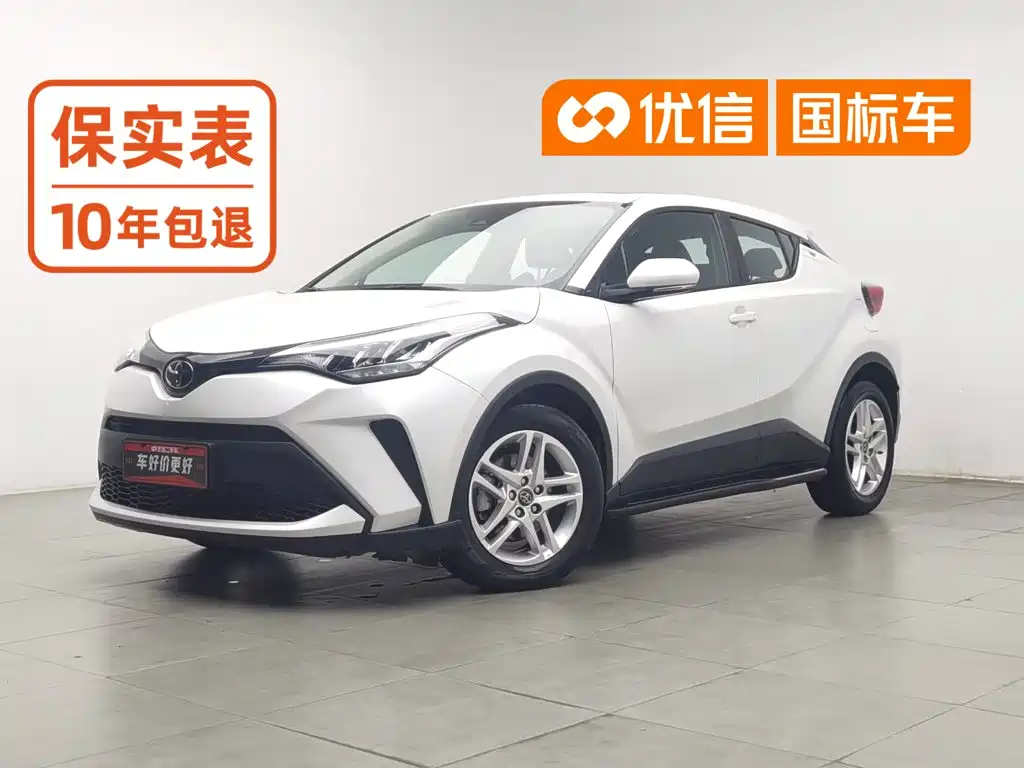
At a glance
- The model family spans 2.0L gasoline versions and a 2.0L Dual Engine hybrid with E-CVT.
- Comfort, Leading, Luxury and sunroof labels help define equipment, but each unit still requires specification confirmation.
- Buyers seeking a Toyota C-Hr for export should compare destination-approved specifications, not domestic trim names alone.
- New vehicles suit fleet consistency, while used vehicles require detailed condition, history and electronic fault checks.
- Export prices move with configuration, condition, exchange rates, freight, Incoterms and destination charges.
- Live listings provide the current per-unit price, MOQ and availability for each selected vehicle.
Why the Toyota C-hr matters for export markets
The Toyota C-HR occupies a useful middle ground between a compact hatchback and a larger family SUV. Its coupé-like crossover shape appeals to urban drivers, yet Toyota recognition can reduce buyer-acquisition effort for overseas dealers. For export channels, that combination supports demand among private buyers, company-car programs and fleet managers seeking a manageable vehicle with a mainstream marque. Positioning, however, depends on presenting the C-HR as a compact crossover rather than a premium SUV. Its appeal depends on confirming that Chinese specifications, equipment and emissions documentation suit the destination market.
Global interest is strongest when a buyer values easy-to-understand branding, efficient packaging and the availability of a hybrid alternative to conventional gasoline power. The C-HR’s visual design is distinctive enough for showroom appeal, while its footprint can suit dense urban markets. Toyota’s hybrid engineering gives an importer a story beyond appearance: lower fuel use can matter to high-mileage customers. That claim should remain conditional because real economy, range and operating costs depend on the exact powertrain, driving conditions and local energy prices. Confirm those benefits with homologated destination-market test data.
For an export business, demand should be built around a precise proposition: a fashionable Toyota compact SUV offered with transparent condition reporting and realistic ownership costs. Dealers should compare the C-HR with locally popular crossovers in the same footprint and price bracket, rather than relying on its global badge alone. They should consider whether Chinese-market variants match local expectations for safety equipment, infotainment, spare parts and servicing. A well-specified unit can broaden the buyer pool; a mismatched specification can create expensive rectification before the vehicle reaches customers in the destination country.
- Compact format for urban fleets.
- Distinctive design aids differentiation.
- Match specifications to local rules.
Model range, trims and powertrain variants: how the lineup is structured and how to choose
Toyota C-Hr specs are best decoded when export naming separates trim, powertrain and emissions version. The available trim vocabulary includes Comfort, Leading and Luxury, with separate sunroof editions. Listings may also carry China V or China VI identifiers, which refer to the Chinese emissions designation attached to that version. These labels help narrow the unit, but they do not reveal every item an overseas buyer needs. Confirm engine output, transmission, equipment, tyre specification, VIN and production details on the individual listing before treating a trim name as a complete specification.
The combustion-engined branch centers on a 2.0L gasoline engine. Trim choice then becomes a balance between equipment, appearance and preservation of a consistent fleet specification. Comfort can suit a value-focused buyer, Leading adds a higher equipment position, and Luxury is aimed at customers expecting more visual and comfort content. Sunroof editions can be attractive at retail but may carry a higher acquisition cost and more replacement risk. For fleet buyers, standardize on one trim and one options list where possible, because mixed interiors and equipment complicate resale, parts planning and driver familiarization.
The hybrid branch is identified in the range as a 2.0L Dual Engine with an E-CVT, offered here in a Luxury naming line. Buyers choosing it should focus less on trim cosmetics and more on duty cycle, fuel economics and local hybrid support. The battery capacity, motor arrangement, output and certified range are not established by the trim name, so they must be checked against the unit’s specification sheet. If local hybrid servicing is uncertain, a conventional C-HR may be easier to operate even when the hybrid better fits high-mileage use.
- Comfort, Leading and Luxury hierarchy.
- China V/VI emissions-version identifiers.
- Verify hybrid battery and output.
New vs used Toyota C-hr: how export inventory is structured and how buyers choose
New and used C-HRs serve different export strategies, and the live inventory should be reviewed as a changing sales channel rather than a fixed catalogue. A new unit offers clearer model-year consistency, documented equipment and a simpler initial warranty story, although its acquisition cost may be higher. A used unit can improve entry economics and provide a more readily available specification, but condition becomes a central risk. The correct comparison is therefore total expected selling cost, not simply the amount payable before freight, duty and rectification in the destination market.
For a new C-HR, ask for a binding model-year and trim sheet, factory option list, VIN, delivery mileage, tyre and paint details, plus photographs of every panel and interface. Confirm whether the vehicle is current stock, a parallel import or arranged to order, because each route changes lead time and documentation. Dealer fleets benefit from repeatable configuration, while a used C-HR may meet a narrow price-sensitive campaign. Used purchases should include an independent inspection, service-history review, scan for electronic faults and a clear policy for resolving discrepancies found after delivery.
Availability should be judged by the sales plan, not a model-year headline. If launching a new C-HR range, breadth of trims and consistent finish can matter more than the lowest purchase cost. If testing demand with a small batch, a carefully selected used unit may reduce exposure to unsold stock and reveal which equipment buyers value. None of these decisions justifies skipping inspection or document checks. Use live inventory for the unit, condition, year and minimum order quantity, and request confirmation before building a landed-cost model or advertising the vehicle.
- New vehicles favor fleet consistency.
- Used vehicles require detailed inspection.
- Check current availability and MOQ.
How export pricing works: the factors behind a live listing price, and how to read one
A live C-HR export price is a starting point in a transaction, not the buyer’s final landed cost. The model year, trim, sunroof or equipment, gasoline versus hybrid powertrain, mileage, condition and ownership history can change the comparison. For used units, paintwork, tyres, service records and detected faults may affect value. For new units, production timing, stock status, optional content and manufacturer or seller margin matter. Currency movements also matter when the listing and destination invoices use different currencies. Always confirm the quote currency and validity period on the listing.
Freight is determined by transport mode, origin and destination ports, sailing schedule, cargo dimensions, securing requirements and the carrier’s capacity at the time of booking. Insurance, export documentation, terminal handling, local customs clearance, taxes or duties, registration and inland delivery may sit outside the vehicle price. Incoterms define where responsibility transfers, so ask whether the seller’s figure is ex-warehouse, FOB, CIF or another basis. Obtain a written pro forma showing every included and excluded charge; otherwise two apparently low quotes may produce different real costs before either shipment is authorized.
To read a live listing consistently, record the unit identifier, model year, exact trim, powertrain, steering side, condition and mileage alongside the displayed amount. Then check the photographs against that description, review the seller’s terms and calculate a destination estimate for freight, duty, tax, handling, insurance and dealer margin. Compare like with like rather than ranking listings by headline price alone. The binding amount is the one shown for the selected vehicle in the current ChinaCarDirect inventory, refreshed at inquiry; treat earlier messages, screenshots or ranges as non-binding until reconfirmed.
- Compare configuration and condition.
- Confirm currency, validity and Incoterm.
- Add freight, duty, tax and handling.
MOQ, ordering and payment: single units vs consolidating a container
MOQ determines how many vehicles a seller will release under one order and whether pricing is treated as a retail unit purchase or a batch transaction. A live C-HR listing may accept one vehicle, while a dealer program may require several or a mixed-model container allocation. Do not infer a C-HR MOQ from model-level information: check the quantity field on the selected listing and include volume in the written quotation. If buying one unit for resale, request a serial-numbered invoice, photographs and a separate commitment covering that exact vehicle.
Consolidating several C-HRs can improve shipment planning and give a dealer stronger commercial terms, but it also concentrates risk. Similar model years, trims, paint colours and steering sides simplify stock control and resale. A mixed container may achieve better space utilization, yet it can create uneven retail appeal and complicate spare-parts forecasting. Ask whether the seller can reserve units for a defined period, coordinate quality inspection before loading, and identify every vehicle by VIN and listing number. Never let a provisional allocation replace a final inspection and signed condition record.
A secure ordering process separates commitment stages. Review the live listing, request a written quote and ask for payment milestones, accepted method, beneficiary details and cancellation terms. Pay against a contract identifying the C-HR by VIN or allocation rule, stating inspection rights and explaining when ownership documents are released. Keep the deposit, invoice, transport document and correspondence together. Balance payment should follow the defined trigger—inspection or shipment evidence—rather than an informal promise. The established RFQ channel reduces ambiguity and creates a clear, auditable record.
- Check each listing’s MOQ.
- Use a VIN-specific contract.
- Define payment and document triggers.
Shipping, homologation and market compliance caveats: LHD/RHD and import rules by country
Chinese C-HR vehicles may be offered with left- or right-hand drive, but the steering side cannot be inferred safely from a model photograph or trim name. Confirm it from the VIN, steering-wheel position, instrument cluster and vehicle documents. A left-hand-drive unit is not automatically usable in a right-hand-drive market: local rules may require equivalent safety systems, and changes to the steering system, controls, lighting or pedals can affect conformity, warranty and residual value. Right-hand-drive demand should therefore be handled as a separate sourcing requirement, not as a last-minute conversion request.
China V and China VI labels describe the emissions version for the Chinese market; they do not constitute approval for another country. Homologation may cover emissions, vehicle type approval, safety equipment, lighting, noise, crash-related measures, software settings, tires and local registration categories. Governments can also impose tariffs, quotas, age limits, emissions penalties or incentives based on the powertrain. Buyers should obtain a written destination-country assessment from a customs broker or vehicle-homologation specialist before paying a balance. Their conclusion should identify whether the exact VIN can be registered without prohibited modifications.
Freight planning should begin before payment is released. The export team must decide between container, Ro-Ro or another approved method, then confirm loading requirements, port cutoffs, insurance, cargo securing and destination receiving arrangements. Ro-Ro can suit finished vehicles, while containerization may suit a consolidated program with suitable cargo dimensions and handling access; neither is automatically cheaper. Obtain the bill of lading or shipping receipt, export declaration and other agreed documents, and verify their consistency with the contract. Delay at either origin or destination can create demurrage, storage and inspection costs.
- Verify steering side through VIN.
- China V/VI is not local approval.
- Check homologation, duty and registration.
Who should buy the C-hr — and who should pick a different vehicle
The C-Hr is a candidate for dealers serving city drivers, young professionals, ride-hailing or company-car buyers who value a distinctive compact SUV and a recognized Toyota badge. The 2.0L model can be easier to source, explain and service where hybrid demand or support is limited. The Dual Engine hybrid is more compelling for high-mileage operators that value fuel efficiency, provided local homologation, fuel availability and hybrid maintenance capability are suitable. Buyers should match the powertrain to annual utilization rather than selecting the more novel version simply because it is newer.
Choose a different vehicle when the mission requires passenger space, substantially more luggage capacity, seven seats, serious off-road ability or a lower acquisition cost than its positioning allows. A conventional compact SUV may be easier for fleets to standardize, while a larger crossover gives families more room and a different proposition. Buyers focused on electric range should select a plug-in hybrid or battery-electric model with verified range and charging access, not treat the C-Hr hybrid as an EV. Dealers should check local availability because buyer familiarity can outweigh brand prestige.
Commercial viability should be tested with a cost model. Include acquisition, inland transport in China, export handling, freight, insurance, duty, tax, registration, pre-delivery work, dealer margin and expected remarketing or utilization risk. For fleet bids, compare the C-Hr with the preferred local alternative after fuel, maintenance, tyre and downtime assumptions. For retail sales, stage the launch around one or two specified configurations and reserve budget for pre-delivery inspection, equipment checks and transport-damage repair. The best export choice is the version a buyer can support and resell, not the highest trim.
- Suits urban buyers and fleets.
- Hybrid needs suitable use and support.
- Choose other vehicles for different needs.
Main rivals and how the C-hr compares
The Honda HR-V is a close functional rival because it also targets compact crossover buyers who prioritize cabin practicality, efficient powertrains and everyday usability. Its local trim and hybrid mix differ by market, so the fair comparison is between equivalent destination-approved versions rather than headline grades. An HR-V dealer may appeal more to buyers seeking a conventional family-crossover image, while a C-Hr dealer can emphasize its more distinctive design and Toyota identity. Test the competing model against the C-Hr’s dimensions, equipment, safety content and landed cost in the intended market.
The Hyundai Kona competes with assertive styling and a mix of gasoline and electrified versions in many markets, subject to local approvals. It can be a stronger fit for buyers who prioritize sporty styling, available technology or a specific powertrain strategy. The C-Hr’s advantage may instead be Toyota’s dealer recognition and the appeal of its sharply styled crossover package. Neither brand guarantees affordability after tax, freight, incentives or running costs. Compare the exact destination specification, warranty assumptions, parts support and the expected retail price before deciding which one to stock.
The Nissan Juke rivals the C-Hr for buyers attracted to a coupé-like roofline, expressive styling and compact footprint. It can attract customers who find the C-Hr less distinctive or want a different badge and design character. The Juke’s engine, equipment, safety package and availability can differ by country, so overseas buyers should not rely on international trim labels. If both models are homologated, compare rear-seat usability, luggage fit, visibility, fuel choice, service access and dealer margins. The C-Hr is competitive when design, Toyota confidence and trim planning outweigh differences there.
- HR-V: practicality and hybrid options.
- Kona: styling and powertrain breadth.
- Juke: design, usability and support.
Live Toyota C-hr export inventory
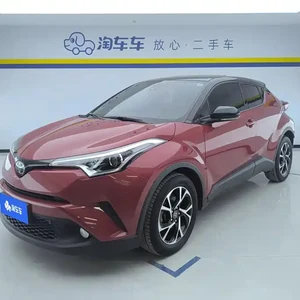
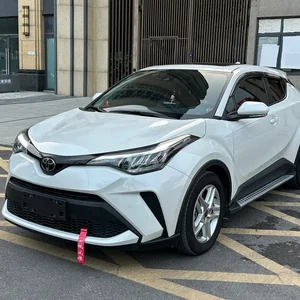
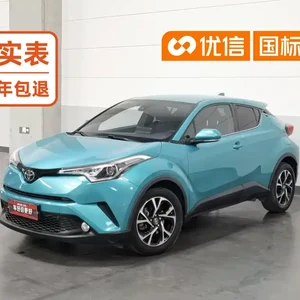
View all listings →Real units currently on ChinaCarDirect with per-unit asking prices and MOQ. Availability updates live from the catalogue.
How to buy a Toyota C-hr from China
-
1
Set the destination and duty cycle
Define the destination country, required steering side, annual mileage, buyer profile and acceptable powertrain. This determines which local rules, services and range expectations must shape the shortlist.
-
2
Compare exact live listings
Review the current Toyota C-Hr inventory and compare model year, trim, powertrain, steering side, condition, mileage, price and MOQ. Confirm that the photographs and description match the particular vehicle.
-
3
Request a landed quotation
Ask for a written quote showing the vehicle price, currency, Incoterm, freight basis, payment milestones and included export services. Request a separate estimate for destination duty, tax, handling, registration and inland delivery.
-
4
Verify homologation and VIN
Provide the VIN to a customs broker or homologation specialist in the destination country. Confirm type approval, emissions, safety equipment, steering configuration and any restrictions before committing the balance.
-
5
Contract and pay in milestones
Use a contract identifying the vehicle or allocation rule, inspection rights, cancellation terms and document-release triggers. Keep the invoice, payment record, correspondence and transport documents together for audit and customs purposes.
-
6
Inspect, load and track
Complete or authorize a pre-shipment inspection, record condition and verify secure loading. Follow the export declaration, bill of lading or shipping receipt, destination clearance and final delivery process through to the receiving dealer or customer.
C-hr vs rivals
| Honda HR-V | The HR-V is a close practical alternative for buyers prioritizing conventional crossover packaging and locally familiar hybrid options. The C-Hr is more likely to appeal through its distinctive design and Toyota identity, but equivalent destination-approved versions should be compared. |
|---|---|
| Hyundai Kona | The Kona can be stronger for buyers attracted to bold styling, available technology or a broader powertrain strategy. Choose the C-Hr where Toyota recognition, design character and a planned trim mix offer better commercial fit. |
| Nissan Juke | The Juke competes directly in the coupé-like compact-crossover style segment and may attract buyers seeking a different design or badge. The C-Hr remains competitive when Toyota confidence, planned equipment and dealer support outweigh differences in usability and local availability. |
Frequently asked questions
How is the Toyota C-Hr export price determined?
A quote reflects model year, trim, powertrain, mileage and condition, plus shipment variables such as exchange rates, freight, insurance, duties and Incoterms. Used units also require adjustment for wear, service history and faults. Check the selected vehicle’s current price and terms in the live ChinaCarDirect listings; only a unit-specific written quotation is binding.
What are the Toyota C-Hr specs for export?
The export naming includes 2.0L gasoline C-Hr versions and a 2.0L Dual Engine hybrid with E-CVT. China V and China VI denote Chinese emissions versions. Because output, gasoline transmission, battery capacity, equipment and dimensions can differ by unit, use the live listing and technical documents to confirm the exact specification.
Should an overseas buyer choose a new or used Toyota C-Hr?
New vehicles generally provide better model-year and equipment consistency and a clearer initial warranty position. Used vehicles may cost less or fill a specification gap, but buyers should inspect condition, mileage, tyres, service history, electronic faults and repair history. Choose from total expected ownership and resale risk rather than purchase price alone.
What is the MOQ for a Toyota C-Hr order?
MOQ is set per listing or negotiated order, not by the model alone. A live listing may allow a single vehicle, while a dealer or container program may require several units. State the required quantity and obtain a written quotation confirming the minimum, allocation method, payment terms and cancellation conditions before paying.
What determines Toyota C-Hr shipping time and cost?
Shipping time and cost depend on the origin and destination, vessel and booking availability, transport method, cargo handling, insurance, documentation, port charges and exchange rates. Request a pro forma with the Incoterm and all included or excluded charges. Customs clearance, inspections, storage and inland delivery should also be allowed for separately from ocean transit.
Are spare parts available for an imported Toyota C-Hr?
China-spec C-HRs may use parts, electronics, software or trim-specific components that are not interchangeable with every global-market C-Hr. Before purchase, ask for VIN-based parts guidance and compare critical service items with local Toyota dealer support. Include lead times and possible retrofit requirements in the ownership model.
Is right-hand-drive Toyota C-Hr availability a problem?
Do not assume a Chinese-market C-Hr is right-hand drive; verify the steering side through the VIN, photographs and vehicle documents. Right-hand-drive availability can change, so request the correct market specification or obtain a homologation assessment before committing. A conversion may affect safety approval, warranty and residual value.
How do I order a Toyota C-Hr wholesale from China?
Start with the live C-Hr inventory, select a vehicle or send the required year, trim, powertrain, steering side and quantity in an RFQ. Ask for a written quotation showing the unit price, MOQ, payment milestones, Incoterm and estimated freight. Confirm the VIN or allocation rule, inspection rights and shipping documents before releasing the balance.
Ready to source the Toyota C-hr?
Send your destination, trim, powertrain and quantity requirements to ChinaCarDirect for a current Toyota C-Hr quotation.
Request a quote