
Toyota Camry Export Buying Guide for Overseas Dealers
Buy a Toyota Camry from China with confidence. Compare trims, hybrids, used options, export pricing, MOQ, shipping, compliance and key rivals for overseas dealers.
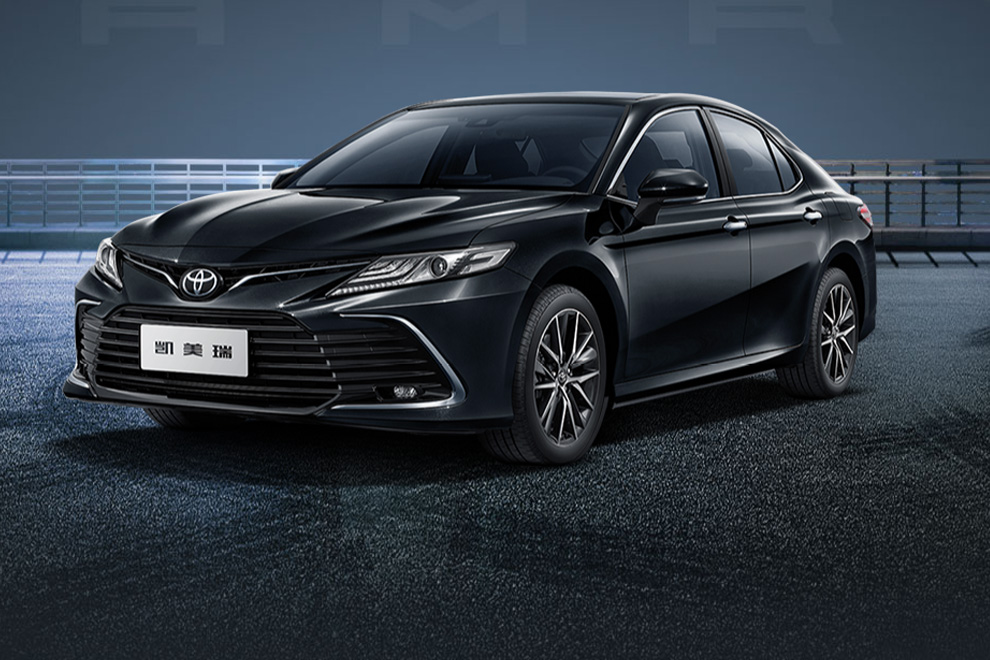
At a glance
- The Camry occupies the mainstream midsize-sedan segment, combining a familiar format with gasoline and self-charging hybrid choices.
- Chinese-market trim codes require careful decoding because G, E, S, VP and GVP labels are not universal.
- New cars offer cleaner histories, while used Toyota Camry imports demand rigorous inspection and documentation.
- Export pricing is unit-specific and should be compared on a landed-cost basis under the same Incoterm.
- MOQ, shipping method, homologation and parts support must be confirmed before a fleet purchase is approved.
Why the Toyota Camry matters for export markets
The Toyota Camry for export occupies the midsize-sedan segment, where buyers balance cabin comfort, fuel economy, reliability and a professional appearance. Its global name recognition can make it easier to value and resell than an unfamiliar model, especially for company-car and airport-transfer fleets. It is not a premium performance sedan; its appeal lies instead in predictable ownership, a comfortable ride and a size that suits executive and family duties without feeling oversized. Export buyers should still compare local alternatives, because strong brand recognition does not remove taxes, compliance work or fuel-cost differences.
The Camry is particularly relevant to dealers and fleet managers that need a road-going sedan rather than a niche model. Airports, hotels, corporate transport and regional distribution can benefit from a restrained design, a practical cabin and a powertrain range that includes conventional and hybrid choices. A hybrid may suit stop-heavy routes, while a gasoline model can be simpler where hybrid-system familiarity is limited or operating economics do not justify the hybrid. That makes trim a duty-cycle decision rather than a badge-driven one, especially when vehicles will operate for years.
Vehicles sourced from China are specified for Chinese roads and customers, so export buyers should separate the Camry’s global strengths from China-specific equipment. Emissions labels, infotainment, driver-assistance functions, connected services and regional comfort equipment may not match another market even when the model badge and dimensions look familiar. Treat each listing as a market-specific vehicle: confirm model year, trim, powertrain, equipment and documentation before assuming it is interchangeable with a local-market Camry. This diligence is especially important for hybrids, where battery age and local service capability can affect the business case.
- Strong corporate-fleet fit.
- Match powertrain to routes.
- Review Chinese-specific equipment.
Model range, trims and powertrain variants: how the lineup is structured and how to choose
China-market Camry naming is extensive, so the first task is to decode the trim rather than assume that a letter code carries the same equipment as in another country. The range includes 2.0G, 2.0E and 2.0S versions, 2.5G and 2.5S versions, and GVP or VP-labelled cars. These designations identify model families, but they are not a simple luxury ranking. Compare the written equipment list, especially safety, infotainment, upholstery and driver aids. Also verify facelift status, because a facelifted model may use revised exterior and interior details without changing the familiar Camry badge.
The powertrain choice is more consequential for fleet economics. Conventional models use 2.0-litre or 2.5-litre gasoline engines, while the range also contains 2.5HG, 2.5HGVP and 2.0HXS hybrid variants. These are self-charging gasoline-electric hybrids: they recover energy through the vehicle, but they do not require a cable or behave like plug-in hybrids. That distinction matters when importers assess local fuel availability, tax treatment and driver expectations. Ask each seller for the fuel type, transmission arrangement and consumption data for the listed year, rather than extrapolating from the trim name alone. That protects the landed-cost model from an avoidable specification error.
A practical selection sequence starts with load, route and ownership horizon. A 2.0 model generally offers a lower purchase tier and adequate capacity for many business users, while 2.5 variants can suit heavier loads, faster routes or buyers wanting more effortless performance. Hybrid versions are worth comparing when stop-start mileage dominates. Then compare the live unit’s equipment, condition and local running costs; engine capacity alone should not decide the purchase. Before approval, obtain a written specification sheet, production or model-year confirmation, and photographs of every option relevant to your intended market.
- Decode market-specific trim labels.
- Hybrids are self-charging, not plug-in.
- Match engine size to workload.
New vs used Toyota Camry: how export inventory is structured and how buyers choose
Export inventory can include new vehicles, registered cars and older used examples, but each category creates a different evidence and risk profile. A new vehicle should offer the condition trail and straightforward comparison between advertised specifications, physical condition and documents. A used vehicle may cost less because it has absorbed depreciation, but that discount should be evaluated against age, mileage, service history, wear and the availability of model-specific support. For fleet procurement, the relevant question is not whether a car is technically new, but whether its history can be documented consistently.
Used Camry imports are most attractive to buyers who can assess condition accurately. Request high-resolution images of each panel, wheel, window and dashboard area; ask for an odometer photograph; and seek records of registration, ownership, maintenance and repair. Pay attention to hybrid battery health, warning messages, body gaps, paint mismatch and signs of accident work. These checks matter because the badge can cover different generation, trim and condition quality. A pre-purchase inspection by an inspector familiar with hybrid systems can reduce uncertainty, although travel and inspection costs belong in the landed budget.
New and used Camry purchases differ in negotiation and delivery timing. A new unit is easier to standardize across a fleet, which can simplify training, spare-parts planning and resale. A used unit may offer an immediate supply option or a historic trim, yet condition disputes can delay release if documents or inspection results are incomplete. Before paying a non-refundable deposit, define acceptance criteria in writing and require the seller to correct or disclose discrepancies. This protocol should specify photographs, documents, inspection timing and the remedy if the vehicle does not match.
- New cars offer cleaner histories.
- Used cars demand rigorous inspection.
- Define acceptance criteria in writing.
How export pricing works: the factors behind a live listing price, and how to read one
A Toyota Camry export price is not a fixed manufacturer figure; it is the outcome of variable inputs. Model year, trim level, powertrain, new-or-used status, mileage and cosmetic condition shape the vehicle’s starting value. Currency movements can alter the local-currency quote, while the Incoterm determines how much of inland transport, export handling, loading, freight and insurance sits inside or outside the seller’s price. Compare like with like before treating two listings as equivalent. Origin charges, destination handling, customs, taxes and registration are additional costs for many importers and must be modelled separately.
When reading a live Camry listing, separate the vehicle price from its commercial terms. Check whether the displayed amount is the seller’s asking price, whether it is negotiable, what deposit structure applies, and which documents are included. Identify the port or pickup location, the Incoterm, the payment currency and quote validity. A low number can produce a high landed cost if freight, insurance, clearance and compliance work are omitted. Ask the seller to state all exclusions in the quotation, including documentation, securing, terminal charges and destination-side services not covered by the Incoterm.
The useful comparison is a landed-cost worksheet, not the smallest number on the screen. Convert each quote into the same delivery currency, add the same freight, insurance, duty, tax, port and registration items, then divide the relevant costs by the vehicle being purchased. For fleets, extend the calculation over the intended service period and include expected fuel, maintenance and downtime. Current binding prices and availability are shown on each live listing, so a written quote should be treated as the controlling offer. A valid quotation should remain valid through your approval deadline.
- Compare equivalent vehicles and conditions.
- Confirm Incoterm and quote validity.
- Calculate landed and lifecycle costs.
MOQ, ordering and payment: single units vs consolidating a container
MOQ is a commercial term that must be confirmed on each Toyota Camry wholesale offer. A seller may accept one vehicle for an export, while a factory or consolidator may require a larger batch for a vehicle-level price or production slot. Do not infer permission from a marketplace search result. Ask for the MOQ stated in the quotation, and confirm whether units of different trims, colours or model years can be combined without changing the commercial terms. Any claimed one-unit flexibility should appear in the pro forma invoice, not only in a chat message.
Ordering one vehicle gives buyers flexibility over trim and colour, but it exposes that buyer to the full fixed logistics cost of an export movement. Consolidating compatible Camry units can spread port, documentation and freight costs across more vehicles and may improve terms. It also creates complexity: check that every unit has the intended specification, reconcile the manifest against the purchase documents, and avoid accepting a mixed batch merely to reach a quantity threshold without sufficient resale demand. That commercial threshold should reflect real orders, not an unsupported forecast of future buyers.
A controlled purchase follows a clear sequence: shortlist the live inventory, request a specification and landed-cost quotation, verify the unit or production details, accept a pro forma invoice, pay through the agreed channel, complete inspection, and approve release for shipment. The deposit and balance stages should be stated in the invoice, along with the inspection window, remedy for non-conformity, document set and cancellation terms. Keep revision in writing so the unit identifier, price and terms remain traceable. Payment channels should be independently verified, and the account beneficiary should match the contracting seller.
- Confirm written MOQ.
- Consolidate only ordered units.
- Put release terms on invoices.
Shipping, homologation and market compliance caveats: LHD/RHD and import rules by country
Transport method should follow the vehicle quantity, urgency and handling risk. Container shipping is common for export batches, while Ro-Ro can suit vehicles and smaller movements; roll-on/roll-off vessels still require securement and port coordination. For either method, agree the loading point, terminal, destination, booking party and responsibility for pre-delivery inspection. The Camry should be checked for leaks, exposed glass, loose panels and battery-related warning indicators before it leaves the yard. Confirm whether the hybrid battery should be transported in a particular state or disconnected for safety, using the manufacturer or carrier’s instructions.
The steering-hand side is another early filter. China-market Camry examples are commonly left-hand drive, while some destination markets require or strongly favor right-hand drive. Never treat a left-hand-drive listing as right-hand-drive stock; conversion or sourcing another production variant changes cost, lead time and parts planning. Confirm the steering side, instrument and infotainment language, electrical equipment and regional equipment package in the current live listing and the written sales contract. Compliance should be confirmed before commitment because vehicle approval, insurance assumptions and parts availability can all depend on the destination-market configuration.
Import requirements vary by destination rather than model name. The destination authority may impose age restrictions for used vehicles, emissions limits, safety and type-approval rules, customs valuation, VAT and local registration or inspection procedures. A China VI badge indicates compliance with a Chinese emissions framework; it does not establish approval in the importing country. Give the VIN or vehicle documents to a customs broker and authority before paying charges. Verify that the seller’s documents match the unit, and determine who is responsible if the vehicle is refused at the border.
- Verify steering side and equipment.
- China VI does not ensure overseas approval.
- Check local age, emissions and tax rules.
Who should buy the Camry — and who should pick a different vehicle
The Camry is a strong candidate for an overseas buyer that values a conventional, comfortable sedan and predictable operating support. Dealers can stock a recognizable model with broad appeal to company-car customers, taxi or ride-hire operators, and families seeking more space than a compact car. Fleets can benefit from choosing both gasoline and hybrid variants to suit different routes. The case is where local technicians know Toyota sedans, spare-part channels exist and the vehicle will be used for many kilometres. Under those conditions, comfort, fuel choice and residual familiarity can outweigh a lower purchase price alone.
It is a weaker fit for buyers who prioritise sporty handling, premium cabin materials, extensive off-road ability or plug-in electric range. The Camry’s design brief is mainstream comfort and efficiency rather than performance or rugged utility. It may also be unsuitable where emissions rules make an older gasoline import uneconomic, where right-hand-drive supply is essential, or where a fleet operator lacks hybrid maintenance capability. In those situations, a rival aligned with the duty cycle may be more economical. Any savings on acquisition can disappear if compliance, fuel and repair assumptions were incomplete.
A structured buy/no-buy test prevents badge loyalty from replacing analysis. Write down the route profile, annual distance, passenger requirement, charging or fuelling access, service coverage and resale market; then test the selected trim against a locally registered alternative on purchase, fuel, maintenance, insurance and downtime. If the Camry’s benefits remain after those comparisons, it is usually a rational fleet choice. If they do not, switch models rather than negotiating a weak specification. Record the assumptions behind every figure and mark which ones require written confirmation from the seller, broker or insurer.
- Best for comfort-led, long-service fleets.
- Reconsider for performance or plug-in needs.
- Compare complete local operating costs.
Main rivals and how the Camry compares
The Nissan Teana is a comparison because it targets comfortable, front-drive midsize sedans and is familiar across Asian export markets. A Camry buyer may prefer the Toyota for badge recognition and the option of a hybrid family, while a Teana comparison should focus on the exact generation, safety equipment, hybrid availability and local parts support. Neither name removes the need to price the destination-market specification and import process. Where the two are close on price and equipment, fleet servicing history and expected resale demand can be more decisive than badge preference.
The Honda Accord is a credible benchmark for buyers seeking a midsize sedan, where Toyota and Honda service networks are established. The Accord offers an equipment and hybrid proposition in each market, so compare the precise powertrain, dimensions, safety suite and after-sales support rather than a generic model badge. For a Camry buyer, the decision comes down to which brand has better local residual values, parts delivery routes and technicians trained on the exact powertrain. Availability should be checked because the relevant market may not offer the same engine and trim mix.
The Volkswagen Passat is an alternative for European-market buyers who value a long-distance sedan and may have Volkswagen servicing arrangements. Its purchase and ownership logic can differ from the Camry because equipment, diesel availability, tax bands and parts structures vary by country; the comparison must use a homologated local model rather than an overseas catalogue. The Camry offers a familiar hybrid choice in this context, but neither brand provides cheaper compliance, insurance or parts. Confirm the rival’s engine, tax class and parts support before including it in a fleet tender.
- Teana: direct Asian-market comfort rival.
- Accord: established service-network alternative.
- Passat: relevant where Volkswagen support exists.
Live Toyota Camry export inventory
View all listings →Real units currently on ChinaCarDirect with per-unit asking prices and MOQ. Availability updates live from the catalogue.
How to buy a Toyota Camry from China
-
1
Define the destination and operating use
Record the destination country, steering-side requirement, route profile, annual mileage, passenger needs and any used-vehicle age or emissions restrictions before selecting a vehicle.
-
2
Shortlist equivalent Camry listings
Compare the same model-year band, trim, powertrain, condition and equipment level in the live inventory. Treat materially different trims or facelift versions as separate comparisons.
-
3
Request a specification and landed quotation
Ask the seller to confirm the engine, transmission, hybrid status, dimensions, equipment, documents, MOQ, payment currency, Incoterm, named port and quotation validity.
-
4
Verify condition and ownership records
For used vehicles, obtain panel photographs, an odometer record, registration and ownership documents, service history and evidence of accident repairs. Include hybrid battery inspection when applicable.
-
5
Accept a written pro forma invoice
Ensure the invoice identifies the unit or agreed batch, deposit and balance stages, inspection window, remedy for non-conformity, shipping responsibility and cancellation terms.
-
6
Inspect, release and complete import
Approve the vehicle only after inspection, retain the agreed release record and coordinate with a customs broker on freight, insurance, duty, tax, registration and destination-market compliance.
Camry vs rivals
| Nissan Teana | A close Asian-market midsize-sedan benchmark with a similar comfort-led role. Choose according to the exact hybrid and equipment package, local parts support and expected resale demand rather than badge familiarity. |
|---|---|
| Honda Accord | A credible rival for buyers with established Honda servicing. The Camry may appeal where its hybrid choice and local parts network are stronger, while the Accord can offer different equipment and residual-value strengths. |
| Volkswagen Passat | More relevant where Volkswagen service infrastructure already exists, particularly for European fleets. The Camry’s familiar hybrid option can be an advantage, but local tax, diesel availability and parts costs may reverse the decision. |
Frequently asked questions
How is the Toyota Camry export price determined?
The live asking price is shaped by model year, trim, gasoline or hybrid powertrain, mileage, condition, currency movements and the commercial terms attached to the unit. Freight, insurance, origin handling, destination charges, duty, tax and registration may sit inside or outside that figure. Compare equivalent vehicles in ChinaCarDirect’s live inventory, where current per-unit prices and availability are shown, and obtain a written landed-cost quotation before approval.
Which Toyota Camry engine and hybrid options are available?
China-market examples include 2.0-litre and 2.5-litre gasoline applications, plus hybrid designations such as 2.5HG, 2.5HGVP and 2.0HXS. These hybrids are self-charging gasoline-electric models, not plug-in vehicles requiring a cable. Confirm the exact engine, transmission, output and drivetrain in the unit listing because specifications change by year and trim.
Should an overseas buyer choose a new or used Toyota Camry?
A new Toyota Camry generally offers a cleaner ownership and condition record and easier fleet standardisation. A used Toyota Camry can suit buyers seeking a lower acquisition tier or an older trim, but age, mileage, accident repair, service history and hybrid battery condition require evidence. Inspect the vehicle and document acceptance criteria before releasing the balance payment.
What is the MOQ for a Toyota Camry order?
MOQ depends on the seller, vehicle source and commercial offer; it is not a universal Camry rule. Some offers accept a single unit, while factories or consolidators may set a batch requirement. Confirm the MOQ and whether mixed trims or colours qualify in the written quotation or pro forma invoice, then check the current terms on the live listing.
How long does Camry shipping take and what does it cost?
Shipping time and cost depend on origin and destination ports, vessel schedules, container or Ro-Ro method, cargo handling, insurance, customs and destination charges. Quote validity and booking conditions also matter. Ask who pays each charge and whether the estimate includes loading, securing, freight and arrival-terminal costs rather than relying on a generic transit estimate.
How should I plan Toyota Camry spare parts?
Start with the exact model year, trim, engine and VIN or chassis reference rather than the Camry badge alone. Some parts may be shared across markets, while wear items, electronics and body parts can differ. Confirm catalogue compatibility, lead time and packaging with the seller or local distributor before shipment so the vehicle has an adequate support plan.
Is a right-hand-drive Toyota Camry available from China?
Most China-market Camry vehicles are left-hand drive, and a left-hand-drive unit is not right-hand-drive stock. Buyers needing RHD should request a confirmed example or price a conversion separately, including labour, parts, inspection and compliance effects. Availability changes by origin and production batch, so verify each live listing rather than assuming a search filter guarantees a suitable configuration.
How do I order a Toyota Camry from China?
Start with the live Camry listings, shortlist an equivalent unit or batch, and send an RFQ stating destination, quantity, trim, powertrain, steering side and budget. Request a specification, landed-cost quotation, MOQ and pro forma invoice, then complete the agreed inspection and payment stages before release. Keep all revisions in writing so the unit identifier, price and terms remain traceable.
Ready to source the Toyota Camry?
Send ChinaCarDirect your destination, required Camry trim and quantity for a current specification, pricing and export quote.
Request a quote