
Toyota Corolla Cross Export Buying Guide for Dealers
Buy a Toyota Corolla Cross from China with practical guidance on trims, hybrids, export pricing, MOQ, shipping, homologation, and rival models.
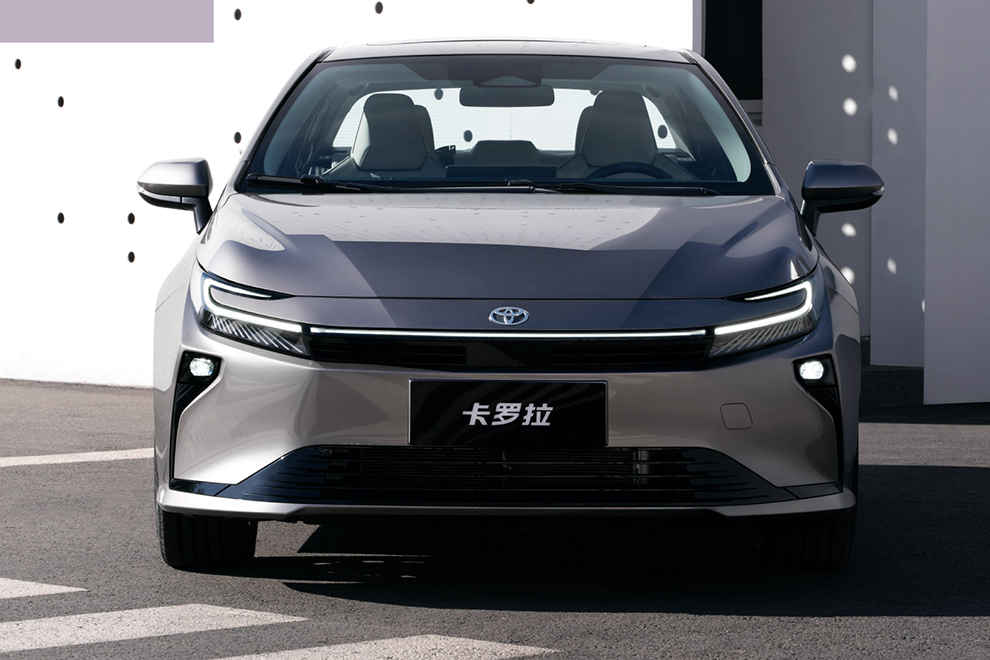
At a glance
- The Corolla Cross is a compact Toyota crossover suited to distributors and fleets wanting more practicality than a passenger car without moving into a larger SUV class.
- Export listings include 2.0-litre petrol and Toyota Dual Engine hybrid variants, with editions such as Pioneer and Elite.
- Buyers should compare each live unit’s year, condition, specification, MOQ, document package and Incoterm rather than rely on a general price range.
- New units simplify condition assessment and warranty onboarding, while used units require mileage, service, damage and hybrid-system checks.
- LHD or RHD configuration, destination-country homologation, freight terms and after-sales support determine whether a promising unit is actually importable.
Why the Toyota Corolla Cross matters for export markets
The Toyota Corolla Cross occupies a useful middle ground for export buyers: it carries the Corolla name and familiar Toyota ownership proposition, but its raised crossover body adds more cabin height, luggage usability and everyday versatility than a conventional compact car. That positioning makes it relevant to distributors serving urban families, company-car programs and ride-hailing fleets that want SUV visual appeal without moving into a larger, less economical vehicle class. Chinese-built examples also give overseas dealers access to a model with a well-established global badge and an increasingly important hybrid choice.
For international demand, the appeal is not simply the Toyota badge. Buyers are comparing usable space, fuel consumption, expected resale strength, serviceability and the likelihood of sourcing a familiar parts and safety architecture. The Corolla Cross can score well where those priorities combine with a moderate vehicle footprint, especially for mixed urban and regional use. However, its business case still depends on local fuel prices, import duty, road taxes, insurance, homologation and the availability of an established Toyota service network; a model that looks competitive in China may not be the cheapest to operate after arrival.
When assessing a Toyota Corolla Cross for export, treat the model as a sourcing platform rather than assume every overseas specification matches the Chinese catalogue. The domestic lineup centers on 2.0-litre petrol and hybrid derivatives, while equipment, infotainment, safety assistance, trim names and left- or right-hand-drive availability can vary by production batch and destination. Dealers should therefore shortlist the live inventory, verify each vehicle’s configuration in writing and avoid promising a market launch until the exact unit has passed a document and compliance review before committing to an import order or advertising it to customers.
- Compact crossover, broad use cases.
- Verify destination-market specifications.
- Check live unit configurations.
Model range, trims and powertrain variants: how the lineup is structured and how to choose
Chinese-market Corolla Cross listings are built around a 2.0-litre engine family and divide into conventional petrol versions and Toyota hybrid versions. Edition names include Pioneer, Elite, Flagship and Luxury, while some unit names add Model as a listing convention. These labels help identify a starting grade, but they are not a substitute for a VIN-linked equipment list. A buyer should request the exact equipment, safety, seating and infotainment contents because similar-looking units may differ in production date, optional hardware and market software. Confirm the contents for the intended destination market before calculating expected resale value.
The powertrain decision is more important than the edition badge for many buyers. A conventional 2.0-litre petrol model is straightforward to evaluate for fleets that want a familiar mechanical layout and the lowest acquisition complexity. The 2.0-litre hybrid entries, including those described as Hybrid or Smart Hybrid Dual Engine, are more relevant where fuel consumption, stop-start driving and urban efficiency matter. Do not infer plug-in charging capability, electric-only range, battery capacity, transmission or drive layout from the trim name; confirm those specifications on the live unit and its documents before purchase or shipment.
A sensible selection process starts with the operating brief: daily route, annual mileage, fuel availability, passenger load, cargo needs and the service coverage in the destination market. Then compare each shortlisted edition on total cost rather than sticker price alone, including likely fuel use, duty, insurance, maintenance, warranty treatment and residual demand for that particular body style. If two units appear close, prioritize a documented specification, clean provenance and factory-supported configuration over minor trim cosmetics. For fleet procurement, standardization can simplify training, parts stocking and eventual resale across the destination market.
- Multiple 2.0-litre editions.
- Petrol and hybrid choices.
- Confirm equipment per VIN.
New vs used Toyota Corolla Cross: how export inventory is structured and how buyers choose
Export inventory should be understood as a set of individual vehicles, not an interchangeable model-year product. For the Toyota Corolla Cross, a new unit is assessed by model year, edition, powertrain, factory specification, production or delivery status, warranty and the completeness of its export documents. A used Toyota Corolla Cross requires a different diligence process: mileage, service history, accident repair, paint and interior condition, remaining warranty, wear items and title status become central. The condition label on a live listing should therefore be treated as the start of verification, not the conclusion.
Factory-new examples generally offer the cleanest buyer proposition for distributors who need consistent specification, known delivery status and straightforward warranty onboarding. They reduce uncertainty around wear and prior use, although the buyer still needs to inspect the vehicle, verify that the promised equipment is present and check whether the warranty is valid in the destination country. A used crossover can make sense where the budget is driven mainly by acquisition cost, depreciation is already absorbed and the importer can document its mechanical and cosmetic condition. The economic comparison must be made at the same total-cost level, not by comparing new and used listing prices alone.
Hybrid units require an additional layer of inspection because the petrol engine, electric motor, high-voltage battery and control systems must work together. Ask for battery health information, recall and campaign history, charging or self-charging clarification, and evidence that the hybrid system has been assessed. Also inspect underbody exposure, impact marks and service invoices; hybrid status does not remove ordinary corrosion or accident risk. Whichever condition is chosen, use a pre-shipment inspection and reconcile the VIN, production date, option list and documents before releasing the final payment or booking freight in advance.
- New units reduce condition uncertainty.
- Used units need service evidence.
- Inspect hybrid systems thoroughly.
How export pricing works: the factors behind a live listing price, and how to read one
A Toyota Corolla Cross export price guide should separate the vehicle’s live selling price from the buyer’s landed cost. The first is shaped by model year, edition, petrol versus hybrid configuration, optional equipment, mileage and condition, production or delivery status, seller margin and purchasing volume. Currency movements also matter because Chinese sourcing and overseas sale may use different currencies. Freight, marine insurance, inspection, export handling, destination port charges, customs duty, taxes and registration belong in the landed calculation, but only if the live listing or quotation states whether they are included.
Read each live listing line by line rather than using the headline as a complete offer. Confirm the model year, exact edition, engine and hybrid status, condition, mileage where relevant, VIN availability, manufacturing location, stated MOQ, warranty, option list, shipment location and Incoterm. Check whether the displayed figure is a unit price, a deposit, or an indicative amount, and how long the quotation remains valid. For a multi-vehicle purchase, request an itemized wholesale quotation showing vehicle-level differences; for a single unit, obtain written confirmation of the complete sale scope before transferring funds.
Worked comparison: suppose two otherwise similar units differ by model year, hybrid system and optional equipment. The newer hybrid specification may command a different live price, but the cheaper petrol unit could still produce the better landed result if freight is identical, fuel use differs, duty treatment changes and local resale values are stronger. A disciplined buyer therefore asks for the same assumptions across quotes—same destination, Incoterm, inspection standard, document set and payment timing—then models operating cost over the planned holding period. Current binding numbers belong on the live unit page, not in a generic market article.
MOQ, ordering and payment: single units vs consolidating a container
Minimum order quantity is a seller and transaction term, so a buyer should not infer it from the model name or assume that every marketplace unit follows the same rule. The current MOQ shown against each live Corolla Cross listing is the relevant starting point, and an RFQ should confirm it in the final quotation. Some transactions may release one vehicle; others may require a batch or a shared booking. That distinction matters because a single-unit purchase can simplify selection and cash flow, while a consolidated order can reduce repeated freight, inspection and documentation cost per vehicle.
Container consolidation is attractive when several buyers need related vehicles, but it adds allocation, coordination and timing risk. Each unit must have a VIN, condition report, option list and document pack that matches the buyer’s order; mixing editions is possible, yet it can complicate loading plans, parts standardization and later resale. The organizer should define how the freight charge, inspection, port fees, insurance and any taxes will be apportioned. Dead freight, demurrage and storage caused by delayed paperwork can erase the saving, so appoint one party to control the shipping schedule and maintain a unit-level handover record.
A typical ordering sequence begins with a specification request, followed by a written quotation and pro forma invoice that fixes the vehicle, price basis, MOQ, payment milestones, Incoterm and delivery estimate. After a deposit or other agreed payment, the seller should make the unit available for inspection and document review; the balance is normally linked to satisfactory handover and shipment. Payment method and buyer identity should be verified, and funds should stay within a documented commercial transaction. Do not send an unrestricted balance based only on photographs, particularly for a used vehicle or one being shipped through an intermediate consolidator.
- MOQ varies by transaction.
- Consolidate with written allocation rules.
- Tie balance to inspection.
Shipping, homologation and market compliance caveats: LHD/RHD and import rules by country
Steering configuration is an early gating item. A Chinese-market Corolla Cross may be offered with a left- or right-hand-drive configuration, but the correct arrangement cannot be assumed from the listing origin or the model name. Importers for RHD markets should request confirmation of factory RHD production, VIN, steering position and associated equipment rather than plan on conversion as the default. A conversion can alter cost, lead time, warranty and safety compliance, and may leave a finished vehicle that is harder to homologate. If factory RHD supply is not confirmed, compare locally sourced RHD alternatives before committing.
Import rules are determined country by country and can include VIN and title checks, emissions and type approval, safety or software requirements, customs valuation, duty, VAT or sales tax, quotas, importer licensing and restrictions based on vehicle age or category. The factory Certificate of Conformity may help, but it does not automatically replace local registration or roadworthiness procedures. Buyers should appoint a customs broker or compliance specialist, provide the exact vehicle description early, and confirm all permits before the final payment. The same unit can be straightforward in one market and unsuitable in another even when its mechanical specification is identical.
Sea freight is usually the practical default for completed vehicles, with roll-on/roll-off and container options depending on origin, carrier and destination capacity. The booking should follow inspection and document approval, not precede them. Transit time and cost are functions of port pairs, transshipment, vessel schedule, seasonality, congestion, cargo value, insurance, fuel surcharges, terminal handling and inland delivery; there is no meaningful universal quote. Use marine insurance appropriate to the agreed value, photograph the vehicle before loading, record container or vessel details and inspect again at discharge. Damage claims depend on complete evidence and timely notice.
- Confirm factory steering configuration.
- Check country-specific import rules.
- Approve freight after inspection.
Who should buy the Corolla Cross — and who should pick a different vehicle
The Corolla Cross is a strong candidate for an overseas buyer who wants a relatively compact crossover, Toyota recognition, a petrol option and a hybrid alternative in the same model family. It suits distributors that need multiple body styles or powertrains, mixed fleets, and motorists who prioritize predictable ownership, fuel choice and straightforward dimensions over off-road ability. It can also suit ride-hailing or company-car programs where a higher roof and more practical cabin improve everyday utility. The decisive question is whether a factory-supported Toyota in the buyer’s preferred steering and equipment configuration is worth the import effort.
It is a less convincing choice for buyers who need the largest possible boot, maximum passenger space, heavy towing, serious off-road capability or a vehicle that can be registered without substantial modification. Large family-haul operations may prefer a larger crossover, while urban buyers with minimal space needs may find a smaller hatchback easier to own. Commercial operators should also consider payload ratings, durability evidence, parts lead times and whether a hybrid’s battery warranty is recognized locally. A low acquisition price alone cannot compensate for a long parts delay, poor residual demand or an unsupportable homologation path.
The right comparison is a total-cost and operational fit exercise. Model the purchase price, freight, duty, taxes, insurance, fuel, maintenance, warranty support and expected holding period on the same basis, then test sensitivity to fuel prices and resale assumptions. For a dealer, compare realistic turn times and the mix of editions likely to sell locally; for a fleet, compare driver uptime, fuel consumption and servicing intervals. If those calculations favor a rival, do not force the Corolla Cross simply because of Toyota recognition. If they favor it, use a VIN-specific purchase order and compliance plan to preserve the expected economics.
Main rivals and how the Corolla Cross compares
The Nissan Qashqai is a natural benchmark for mainstream family-crossover buyers because it competes for similar space, road use and fleet suitability. It may be attractive where its local dealer network, specification balance or cargo packaging is a better match, but the Corolla Cross brings a particularly relevant Toyota badge and a clear petrol-versus-hybrid choice. The deciding factors are verified equipment, landed cost, fuel use, service access and residual demand. Neither brand name guarantees the better vehicle in every market, and the Qashqai should be compared using the same VIN-level, destination-specific process.
The Honda HR-V, also sold under Vezel in some markets, targets compact crossover buyers with efficient powertrain choices and urban-friendly packaging. It can be a persuasive alternative for a distributor whose local Honda demand and aftersales network are stronger, or for a buyer who places greater value on its hybrid proposition. The Corolla Cross may instead be easier for some Toyota loyalists to support and offers a broader edition mix in the Chinese export catalogue. Compare real test-drive impressions, luggage usability, safety equipment, warranty coverage and compliance documents rather than relying on regional badges or launch memories.
The Hyundai Kona represents the more compact, style-led end of the segment and can suit buyers who prioritize easy urban maneuvering, efficient engines and a lower footprint. It may offer more agile handling in city use, whereas the Corolla Cross generally emphasizes a more practical family-crossover brief. A fleet buyer should compare payload, boot volume, fuel consumption, service intervals and parts support, while a dealer should compare equipment expectations and resale prospects in the intended segment. The strongest choice is not fixed: select the model whose verified specification, compliance route and operating economics best match the destination market.
- Qashqai: compare space and support.
- HR-V: compare hybrid and packaging.
- Kona: compare size and efficiency.
Live Toyota Corolla Cross export inventory
View all listings →Real units currently on ChinaCarDirect with per-unit asking prices and MOQ. Availability updates live from the catalogue.
How to buy a Toyota Corolla Cross from China
-
1
Define the destination and operating brief
Record the destination country, required LHD or RHD configuration, fleet or retail use, annual mileage, passenger and cargo needs, and preferred delivery date.
-
2
Shortlist relevant live units
Review the current Toyota Corolla Cross listings and compare model year, edition, 2.0-litre petrol or hybrid configuration, condition, equipment and VIN availability.
-
3
Request documents and a written quotation
Ask for a Toyota Corolla Cross wholesale quotation when ordering multiple units, with the unit price, MOQ, Incoterm, payment milestones, warranty, document set and quote validity stated separately.
-
4
Confirm MOQ and payment protection
Confirm whether the selected transaction can release one vehicle or requires consolidation. Use a documented payment method and tie the balance to satisfactory inspection and handover.
-
5
Complete pre-shipment inspection
Verify the VIN, production date, option list, condition, service history and hybrid-system status. Check for damage, corrosion, outstanding recalls and mismatched documentation.
-
6
Clear compliance and freight planning
Engage a destination-market customs broker to confirm duty, taxes, VIN requirements, type approval and registration. Approve the shipping method, route, insurance and handover terms only after inspection and document approval.
-
7
Release the balance and track delivery
Approve the final payment against the agreed milestones, retain inspection photographs and shipping records, and arrange destination inspection and customs clearance before vehicle handover.
Corolla Cross vs rivals
| Nissan Qashqai | The Qashqai is a close mainstream family-crossover alternative and may better suit buyers focused on local space, specification or Nissan support. The Corolla Cross is the stronger choice where Toyota recognition and a clear petrol-versus-hybrid strategy are priorities, subject to landed cost and destination-market demand. |
|---|---|
| Honda HR-V / Vezel | The HR-V is particularly relevant for urban buyers and distributors with an established Honda hybrid and after-sales network. The Corolla Cross offers a broader edition mix in the Chinese export catalogue and may be more familiar to Toyota-oriented fleet customers. |
| Hyundai Kona | The Kona is a smaller, style-oriented crossover suited to buyers focused on urban maneuverability and efficiency. The Corolla Cross generally presents a more practical family-crossover brief, making it the stronger option when passenger and cargo utility outweigh compact styling. |
Frequently asked questions
How is the Toyota Corolla Cross export price determined?
A live price reflects the specific unit’s year, edition, petrol or hybrid configuration, options, condition, mileage, availability and the seller’s commercial terms. Exchange rates, freight, insurance, inspection, port charges, duty, taxes and Incoterms can change the landed cost. ChinaCarDirect shows the current unit-level figure on its live Corolla Cross listings, while an RFQ should confirm the binding quote and included charges.
Which Toyota Corolla Cross engine and hybrid options are available?
The export range represented here includes conventional 2.0-litre petrol versions and 2.0-litre hybrid versions listed as Hybrid or Smart Hybrid Dual Engine. Edition names include Pioneer, Elite, Flagship and Luxury. Battery capacity, electric range, transmission, drivetrain and charging details must be checked on the selected live listing rather than inferred from the trim.
Should I buy a new or used Toyota Corolla Cross?
A new unit is easier to standardize and usually carries cleaner ownership, warranty and condition records. A used unit may lower acquisition and depreciation exposure, but it needs mileage, service, accident, corrosion and hybrid-system checks. Base the decision on total cost, local demand and the quality of the individual inspection.
What is the MOQ for a Toyota Corolla Cross order from China?
MOQ is set by the seller and transaction, so there is no dependable model-wide rule. Read the MOQ on each live listing and ask the RFQ team to confirm whether one unit can be released or whether several units must share a booking. For consolidated shipments, specify allocation and freight-cost responsibilities before payment.
What determines shipping time and cost for a China export vehicle?
Origin and destination ports, vessel schedule, transshipment, roll-on/roll-off or container method, seasonality, congestion, cargo value, insurance, fuel surcharges, terminal handling and inland delivery all affect the movement. Freight should be quoted for a defined Incoterm and route. Local charges, customs clearance and final delivery can change the total independently of the sea booking.
Can spare parts be sourced for an imported Corolla Cross?
Parts can be ordered through Toyota channels or the aftermarket, but buyers should first confirm the exact vehicle specification and VIN-linked part numbers. Check local dealer support before importing a high-demand item, and compare landed cost with the risk of long delays for body, electronics or hybrid components. For hybrid parts, use qualified suppliers and appropriate high-voltage handling procedures.
Is right-hand-drive Toyota Corolla Cross availability guaranteed from China?
No. Steering configuration is unit-specific and must be confirmed before purchase. Factory RHD supply is preferable because conversion can add cost, delay, warranty limitations and homologation problems. If no factory RHD unit fits, compare a locally sourced RHD crossover or have a specialist assess conversion before committing.
How do I order a Toyota Corolla Cross from China?
Start with the live Corolla Cross inventory, choose the closest configuration and submit an RFQ with destination, steering requirement, quantity and expected delivery market. Compare the written quotation, MOQ, Incoterm, payment milestones, documents, warranty and delivery estimate, then approve inspection before releasing the balance. Use a customs broker and freight forwarder for import clearance and handover.
Ready to source the Toyota Corolla Cross?
Send ChinaCarDirect your destination, preferred edition, LHD/RHD requirement and quantity for a current unit-level quote and export plan.
Request a quote