
Toyota Crown Kluger Export Buying Guide
Compare Toyota Crown Kluger trims, powertrains and export pricing, then plan ordering, shipping, compliance and parts for an overseas purchase.
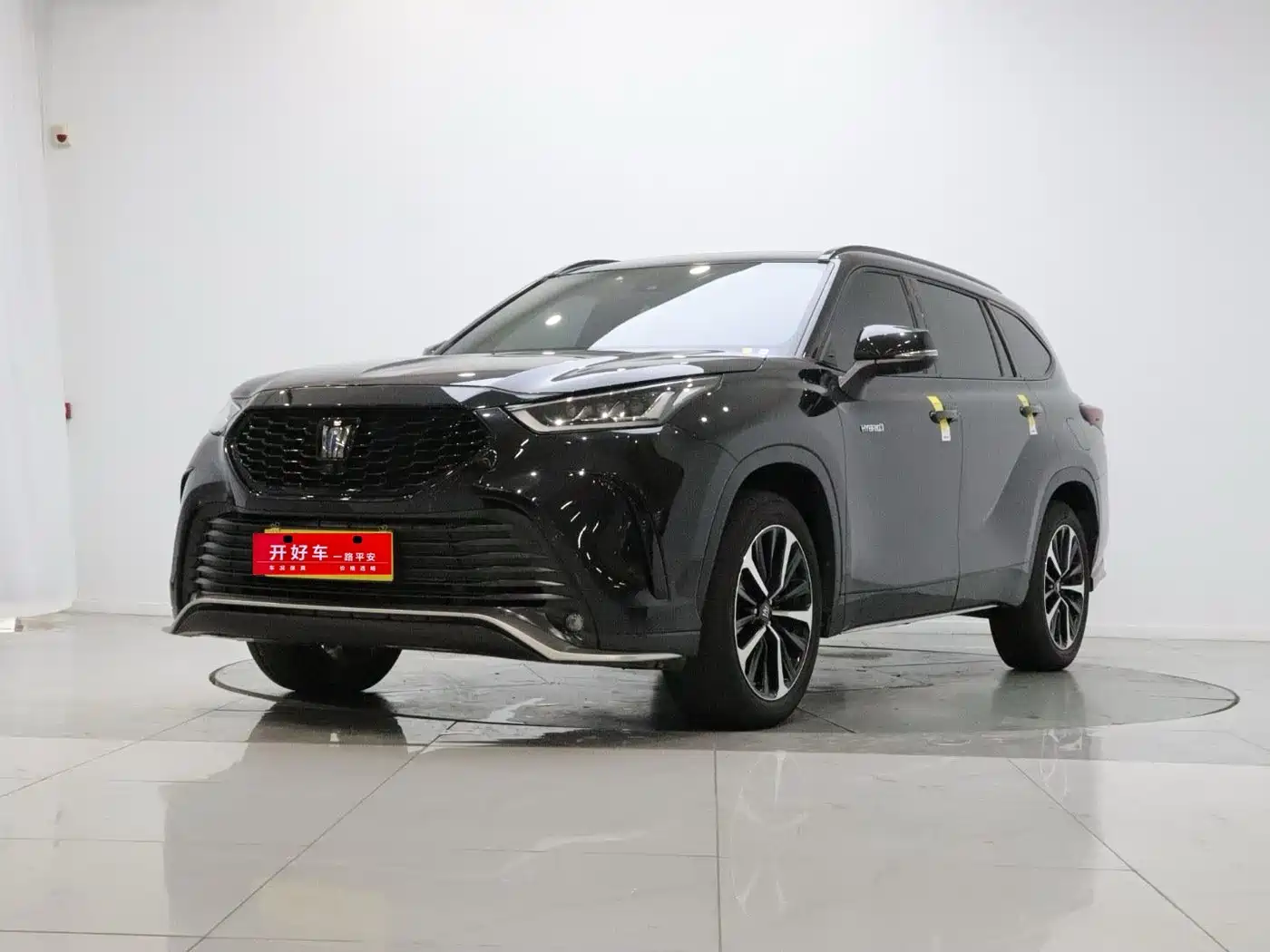
At a glance
- Toyota Crown Kluger pairs Toyota hybrid efficiency with a more premium SUV presentation than a standard family crossover.
- The range spans 2.5L HEV and 2.0T turbo petrol powertrains, with FWD/2WD and AWD/4WD choices by trim.
- Trim selection should follow verified equipment, axle layout, route profile and local aftersales support—not the badge alone.
- ChinaCarDirect live listings provide the current per-unit price, MOQ and availability for each export offer.
- Drive side, destination homologation, freight, duty and insurance must be settled before an order is released.
Why the Toyota Crown Kluger matters for export markets
Toyota Crown Kluger occupies an unusual position in the export SUV market: it combines Toyota's hybrid engineering with a more luxurious, comfort-led presentation than the marque's mainstream family SUVs. Built around the Crown name, the model is aimed at buyers who want premium features, a substantial road-going body and efficient petrol-electric operation without moving to a full luxury marque. That positioning gives overseas dealers a useful alternative when a local high-end SUV range is thin. It can broaden a front-range offer without importing the badge expectations and ownership costs associated with European luxury models.
For fleet and dealer buyers, the appeal is the combination of familiar Toyota serviceability and a higher-grade cabin. The model is primarily a comfort and utility vehicle rather than a hardcore off-roader, so its strongest fit is with premium taxis, executive shuttles, hotel and company fleets, and family-oriented retail buyers. A buyer seeking commercial-duty toughness, a long flat-floor load bed, or the lowest possible acquisition cost should not assume the Crown badge changes those requirements. Its platform and powertrain should still be matched to load, route and local operating-cost requirements.
Demand in export markets is likely strongest where fuel efficiency, premium SUV image and established Japanese-brand familiarity overlap. The Crown Kluger gives importers a model that feels more upscale than a standard Toyota crossover while retaining hybrid fuel-saving credentials. Its appeal can be especially strong for urban and mixed-road fleets, where drivers repeatedly encounter congestion, stop-start traffic and long paved distances rather than severe off-road terrain. That does not remove the need to check local service coverage, parts planning and residual-value expectations before committing to a sizeable wholesale vehicle order.
Model range, trims and powertrain variants: how the lineup is structured and how to choose
The lineup should first be read as two powertrain families. The 2.5-litre HEV entries combine a petrol engine with electric assistance and are offered in two-wheel-drive/front-wheel-drive and all-wheel-drive/4WD forms, depending on trim and naming convention. The 2.0-litre turbo petrol models appear in Dynamic-oriented versions, generally paired with a driven front axle and a higher-output character. Because grade labels and axle terminology can change across model years, buyers should compare the mechanical description rather than relying on the badge alone. The live listing should confirm engine, transmission, axle and standard equipment together.
Within the HEV family, names such as Premium, Progressive, Luxury, Elite and Flagship indicate different positioning rather than different basic energy systems. As a rule, the higher labels concentrate more comfort, visual distinction and convenience equipment, while entry-oriented trims concentrate on the essentials. Do not infer a precise equipment package from the words alone: compare the standard-equipment sheet, optional equipment, upholstery, infotainment, driver aids and wheel specification in the live listing or request a written specification for the exact unit. A trim badge can also change between production periods, so model year matters.
For buyers choosing between the HEV and turbo, route profile and fleet operating priorities usually matter more than output-sheet excitement. The hybrid prioritises seamless efficiency and low-speed electric assistance, while the turbo version is for buyers who prefer stronger overtaking response and conventional petrol-only operation. The HEV pairs engine and motor through a power-split e-CVT, whereas turbo variants use a conventional stepped automatic in the versions represented by this lineup. Neither is a plug-in model: economy and usable range depend on fuel, traffic, speed, load and test cycle, so verify quoted figures on the exact listing.
- Confirm gearbox, axle and grade.
- Verify trim equipment.
- Check test-cycle labels.
New vs used Toyota Crown Kluger: how export inventory is structured and how buyers choose
Chinese export inventory for this model is a mixed sourcing channel rather than a single factory programme with one global specification. Units may come from dealer stock or vehicles prepared for export from the Chinese market, and their age, registration history and paperwork can differ by unit. A new vehicle normally offers the cleanest ownership chain and strongest factory-warranty route; a used unit makes sense only when its mechanical, cosmetic and regulatory history is evidenced. Judge condition from inspection records and photographs, not the listing title alone, before releasing final payment.
Used Toyota Crown Kluger purchases demand a different diligence process. Ask for the VIN, registration documents, service history, accident and flood evidence, battery or hybrid-system condition where disclosed, photographs of body and interior, and an independent inspection. For a hybrid, confirm that any battery warranty remains transferable and that the high-voltage system has not been improperly stored or repaired. Mileage alone is not proof of care; provenance and inspection findings should drive the decision. For import use, local age and emissions restrictions may further limit eligibility in the destination market.
For most professional importers, new is the lower-risk default when the vehicle will enter service quickly: condition is easier to define, warranty handling is clearer, and the buyer can select the desired trim before committing. Used stock can improve affordability or provide a rare specification, but savings must be weighed against repair uncertainty, parts availability, remaining life and a weaker resale proposition. Compare total acquisition cost after freight, duty, taxes, inspection and first-year maintenance rather than comparing vehicle stickers alone. For a trial vehicle, an inspected low-use unit may be useful.
- Compare landed costs.
- Inspect used provenance.
- Check warranty transfer.
How export pricing works: the factors behind a live listing price, and how to read one
A live export price is the starting point of a transaction, not the buyer's final landed cost. Its main drivers are model year, trim, HEV versus turbo, driven-axle arrangement, equipment, production or registration status, mileage and condition for used units, and the seller's commercial terms. Currency movements can also alter the displayed figure. The price should therefore be compared only with like-for-like vehicles, while freight, insurance, duty, taxes, port charges, inland transport and compliance work belong in a separate landed-cost calculation because destination treatment can change the commercial comparison substantially.
When reading a listing, establish whether the displayed price is FOB, CIF, EXW or another basis, and whether the vehicle is located in China or already at an export port. Check the model year, exact trim name, engine, gearbox, axle, mileage, condition, VIN availability, options, and whether the seller is quoting one identified unit or a representative stock vehicle. Ask for the same fields in writing for every candidate; two Crown Kluggers carrying different grade labels may not be equivalent products. A screenshot is not a substitute for a current pro forma invoice.
The best way to manage price uncertainty is to request a written quote that separates vehicle cost, domestic China charges, export documentation, freight basis, insurance, and destination expenses. Provide the destination port or city, preferred Incoterm, annual route profile, and required documents before comparing seller responses. This makes offers comparable and exposes costs hidden behind a headline figure. Current binding numbers must always be taken from the live Toyota Crown Kluger listings on ChinaCarDirect or a confirmed RFQ, rather than from an old catalogue, another buyer's transaction, an assumed discount or an informal market estimate.
- Match exact specifications.
- Confirm quote inclusions.
- Use live unit prices.
MOQ, ordering and payment: single units vs consolidating a container
MOQ is the seller's minimum order quantity for a stated commercial arrangement, and it should never be inferred from the fact that the vehicle is a ready-stock item. Some export listings may accept a single-vehicle purchase, while others may set a batch requirement, a mixed-model quantity, or a payment condition tied to available units. Read the price, MOQ and unit-availability fields on each ChinaCarDirect live listing, and have the supplier confirm them in the quotation. If a seller describes a minimum, ask whether it applies to one trim, one model year, or the consolidated shipment.
For a dealer filling a container, consolidation can improve purchasing efficiency, but it introduces allocation, specification and cash-flow risks. Group vehicles only after confirming each VIN, year, trim, condition and axle layout, then reconcile the final packing list against the commercial invoice and shipping documents. Mixed HEV and turbo units can share freight capacity, yet their market positioning and expected residual values may differ. Avoid filling space with a vague instruction such as 'similar Premium'; document the exact permitted substitutions in writing. A smaller consolidated order may also change negotiating leverage.
A disciplined transaction separates vehicle selection, payment milestones, inspection, release and shipment. After selecting a unit, request the pro forma invoice, VIN or stock number, vehicle photos, export-eligibility information and agreed Incoterm. Pay only through the seller's verified business channel, with deposit and balance terms linked to written milestones; avoid informal third-party accounts and unexplained overpayments. Before release, confirm inspection results, document names, export declaration, the vehicle's right to export and the responsibilities for original keys, manuals, tools and accessories for the receiving port and customs broker in writing beforehand.
- Read each listing's MOQ.
- Approve exact substitutions.
- Tie payment to documents.
Shipping, homologation and market compliance caveats: LHD/RHD and import rules by country
After the commercial terms are agreed, the importer must select a shipping method that suits the vehicle and the destination. RoRo can suit complete SUVs, while a container or flat-rack arrangement may be necessary where loading rules, securing standards or vehicle dimensions are more suitable. Freight quotations depend on route, port pair, vessel space, cargo category, insurance, terminal handling and the Incoterm. Transit time is not the only variable: origin handling, inspection, customs clearance, inland delivery and any demurrage can materially extend the overall schedule. Request dates by milestone, not just sailing time.
Drive-side configuration is one of the most important pre-order checks. The Chinese-market Crown Kluger is commonly encountered in left-hand-drive form, but right-hand-drive availability must never be assumed or created by an informal conversion. Ask for the steering-wheel position, pedal arrangement, dashboard, lighting and equipment configuration, and require it in the contract. Converting drive side can affect safety, software, warranty, spares and homologation. If RHD is essential, source a native RHD example and verify its documents rather than buying on the assumption that a conversion is straightforward and properly approved for local use.
Import rules are determined by the destination country, not by the vehicle's Toyota badge or the fact that it is advertised as export stock. Check local age limits, emissions and type-approval requirements, safety and equipment standards, customs valuation, tariff classification, VAT or sales tax, and any local registration or emissions certificate. A Chinese-market plate, Chinese-language materials or non-approved equipment may complicate inspection, and a broker may request a specific certificate or modification. Give the VIN early to the destination authority or customs broker and confirm what can be registered before paying the balance.
- Contract steering side.
- Check destination rules early.
- Plan inland delivery.
Who should buy the Crown Kluger — and who should pick a different vehicle
The Crown Kluger is most suitable for an importer or fleet operator that wants a premium Toyota SUV with a strong comfort bias, efficient hybrid option and enough drivetrain choice for different road conditions. It can suit executive transport, hotel and corporate shuttle programmes, premium ride-hailing, and family retail customers who value cabin presentation over commercial carrying capacity. The deciding evidence should be the exact unit's equipment, seat layout, ride quality and local running-cost case, rather than the Crown name alone. A test drive and sample VIN inspection are worthwhile.
Buyers should choose another vehicle when the brief prioritises low purchase cost, a true commercial load platform, seven-seat capacity regardless of trim, severe off-road work, or local service with guaranteed parts coverage. Those needs may be better served by a mainstream Toyota SUV, a van-based people carrier, a body-on-frame utility or a premium crossover already established in the destination market. The Kluger's road-oriented luxury adds weight in some operating cases and should deliver a measurable business benefit before selection. Do not pay for status without a resale plan in writing.
For dealers, the strongest case is a mixed retail-and-fleet proposition that can use the HEV as the volume anchor and selectively offer the turbo derivative for customers prioritising performance. Start with one clearly defined specification, confirm that spare parts and service procedures are supportable locally, and model the vehicle's depreciation against realistic residual demand rather than the launch trim hierarchy. A new unit suits an immediate full-utilisation launch; a carefully inspected used unit may suit market testing, but the pre-purchase inspection should be treated as part of the acquisition cost.
- Prioritise comfort and efficiency.
- Test load capacity.
- Model residual demand.
Main rivals and how the Crown Kluger compares
Toyota Highlander is the closest like-for-like alternative for many buyers because it offers a familiar Toyota family-SUV proposition with hybrid and all-wheel-drive choices in many markets. Its main advantage is a more established international ownership and parts footprint, which can reduce uncertainty for fleets. The Crown Kluger differentiates through a more luxurious Crown-badged presentation and a China-specific model identity. Highlander is usually the safer operational choice where local service expectations dominate; the Kluger is more relevant when differentiation and premium positioning justify that risk with adequate parts planning already in place.
Lexus RX, particularly its hybrid version, competes for buyers who want a premium road-going SUV and may be more familiar to luxury-SUV customers in certain regions. It offers a clearer luxury-brand proposition than the Crown Kluger and can benefit from Lexus service recognition, although local model availability, taxation and specification differ by country. The Kluger's attraction is that it combines premium intent with Toyota branding and a potentially distinctive domestic-market specification. Neither should win automatically: compare the actual quote, drivetrain, warranty, dimensions and aftersales pathway for the destination market first.
Mazda CX-8 is a credible midsize-SUV alternative for buyers who prioritise a simpler petrol drivetrain, a long-established model name and, where specified, a larger passenger layout. It does not offer the Crown Kluger's hybrid-led fuel-efficiency story or its distinctive premium positioning, and equipment availability varies by market. The CX-8 can therefore be attractive where fleet familiarity and straightforward servicing matter more than hybrid operating benefits. For the Kluger, the deciding test is whether its stronger brand presentation converts into enough demand to offset parts and residual-value complexity in the local market.
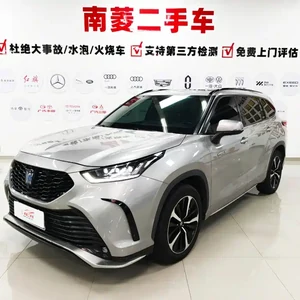
Live Toyota Crown Kluger export inventory
View all listings →Real units currently on ChinaCarDirect with per-unit asking prices and MOQ. Availability updates live from the catalogue.
How to buy a Toyota Crown Kluger from China
-
1
Define the market and vehicle brief
Set the destination, passenger or load profile, annual route, fuel availability and aftersales expectations. Decide whether the priority is HEV operating efficiency, turbo performance, premium specification or all-wheel-drive capability.
-
2
Review live units and request documents
Open the live Toyota Crown Kluger listings and compare model year, trim, engine, gearbox, axle, mileage and condition. Request the VIN or stock number, detailed photographs and the seller's export documentation for shortlisted units.
-
3
Verify specification and compliance
Obtain a written equipment list and confirm steering side, seat layout and model-year differences. Give the VIN to the destination broker early so age, emissions, type-approval and registration issues can be assessed before payment.
-
4
Build a comparable landed quote
Request quotes using the same Incoterm and destination, with vehicle cost, freight, insurance, documentation, duty, tax and inland charges separated. Compare equivalent units rather than headline prices attached to different specifications.
-
5
Confirm MOQ, payment and consolidation
Check the MOQ and availability fields on each live listing and confirm them in the quotation. If consolidating vehicles, approve exact substitutions, reconcile the packing list and tie payment milestones to inspection and documents.
-
6
Inspect, release and ship
Complete the agreed inspection before releasing the balance and confirm export documents, keys, manuals, tools and accessories. Book freight under the agreed Incoterm, insure the vehicle and track customs and inland delivery separately from sailing time.
Crown Kluger vs rivals
| Toyota Highlander Hybrid | The Highlander offers a more established international Toyota ownership and parts footprint, making it the safer fleet choice where service familiarity is decisive. The Crown Kluggér provides a more premium, distinctive SUV identity and is better suited to importers seeking differentiation. |
|---|---|
| Lexus RX 350h | The RX has a clearer luxury-brand proposition and may enjoy stronger recognition among premium-SUV buyers in some markets. The Crown Kluger combines similar premium intent with Toyota branding, but its China-specific identity and local parts pathway require more careful planning. |
| Mazda CX-8 | The CX-8 is a simpler petrol-powered alternative with familiar fleet servicing and, in some specifications, a larger passenger layout. The Crown Kluger is the stronger choice for buyers prioritising hybrid operating benefits and a more luxurious presentation. |
Frequently asked questions
How is Toyota Crown Kluger export pricing determined?
Price is influenced by model year, trim, powertrain, drivetrain, equipment, condition, mileage, seller terms and currency movements. Freight, insurance, duty, taxes, port charges and inland transport form part of the landed cost rather than the vehicle price. Check the current per-unit figure in the live listings and request a written RFQ quote for the destination.
Which engine and powertrain options are available?
The range includes 2.5-litre HEV and 2.0-litre turbo petrol versions. The HEV uses a power-split e-CVT, while turbo versions use a conventional stepped automatic. Neither is a plug-in model, so quoted fuel economy and usable range depend on fuel, traffic, load, speed and the applicable test cycle.
Should I buy a new or used Toyota Crown Kluger?
A new vehicle generally offers a clearer condition history, warranty pathway and ownership chain, making it the lower-risk option for immediate fleet deployment. A used unit can suit market testing or a rare specification, but buyers should verify the VIN, registration, service and accident history and inspect the hybrid system. Compare total landed and operating costs rather than vehicle price alone.
How does MOQ work when ordering from China?
MOQ is a seller-specific commercial condition that may apply to a single vehicle, a batch or a consolidated shipment. A single-vehicle purchase may be possible, but the requirement must be checked on the individual listing and repeated in the written quotation. Buyers should never assume that ready-stock status automatically means unrestricted ordering.
What determines shipping time and cost?
The route, port pair, vessel space, cargo category, loading method, insurance, terminal handling and Incoterm all affect freight quotations. Sailing time is only one part of the schedule because origin inspection, customs clearance, inland delivery and demurrage can extend the total timeline.
How do I source spare parts for an imported Crown Kluger?
Use the VIN and exact trim specification to identify compatible service and high-voltage parts. A local Toyota network may hold more items than a model-specific imported parts channel, so compare lead times and counterfeiting risks before ordering. Keep the Chinese-language manuals, maintenance records and component identifiers with the vehicle file.
Is right-hand-drive Crown Kluger availability guaranteed?
No. Right-hand-drive availability depends on the individual vehicle, seller and export programme, and it should be verified in the live listing. A drive-side conversion can affect safety, software, warranty, parts and homologation, so importers requiring RHD should secure a native example and confirm approval before payment.
How do I order a Toyota Crown Kluger from China?
Select a suitable live unit, request a written specification and pro forma invoice, and confirm the Incoterm, MOQ, payment milestones and export documents. Complete inspection and documentation before release, then coordinate freight through the agreed logistics route. Use the RFQ channel when the destination, trim, drive side or consolidation plan requires customisation.
Ready to source the Toyota Crown Kluger?
Send your destination, preferred powertrain, trim and required Incoterm to request a current Crown Kluger quote and export plan.
Request a quote