
Toyota Granvia Export Buying Guide for Overseas Dealers
Toyota Granvia export guide for overseas dealers: compare hybrid trims, understand live pricing, MOQ, shipping, compliance and rival options for importers.
At a glance
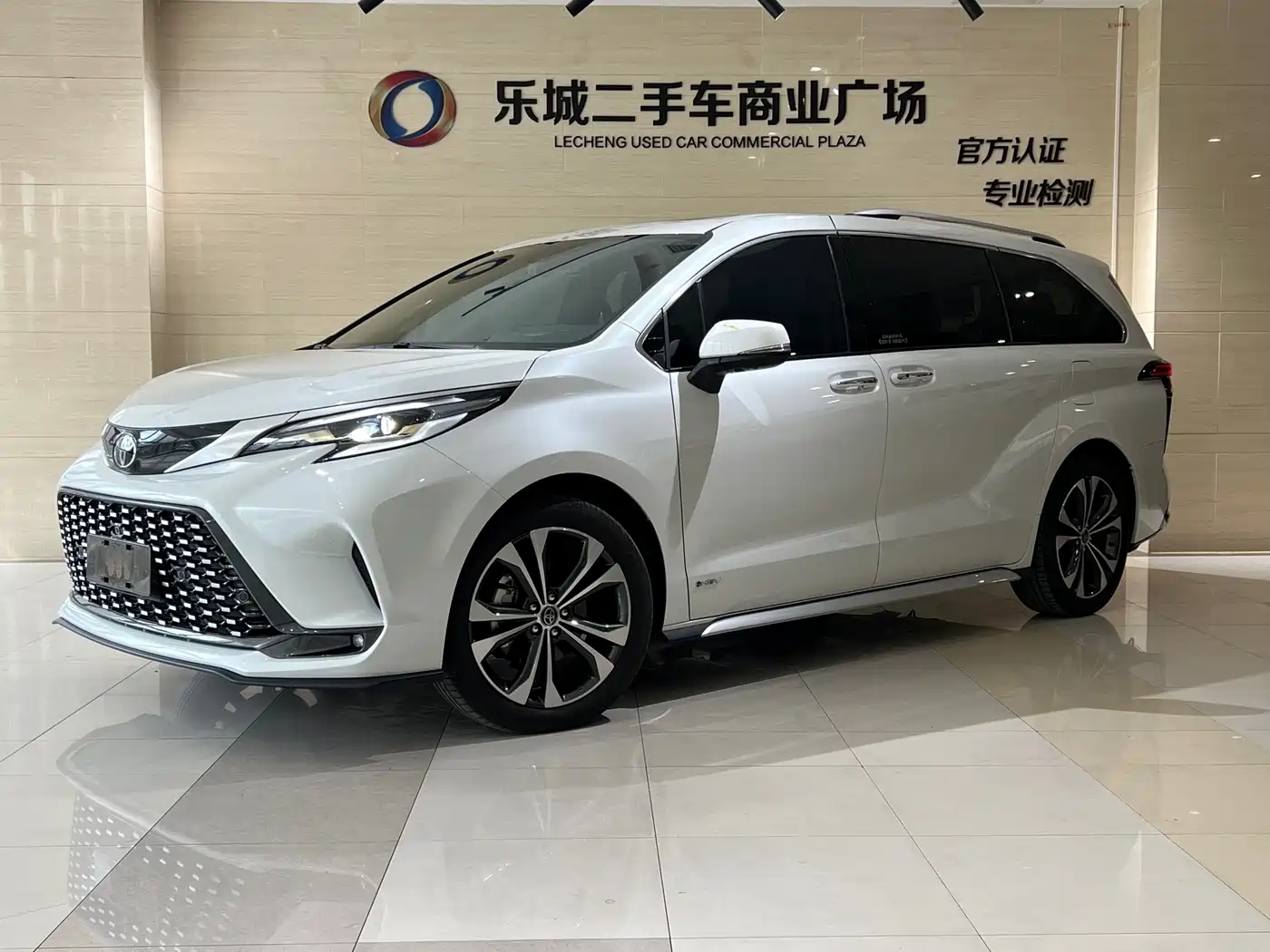
- The Granvia is a premium large MPV suited to executive transport, hotels, airport transfers and group travel.
- The principal export range uses a 2.5-litre self-charging hybrid, with selected four-wheel-drive trims and some petrol parallel imports.
- Trim choice should follow passenger capacity, equipment requirements, operating conditions and local resale expectations.
- Live export pricing varies with model year, grade, condition, origin, freight, exchange rates and the selected Incoterm.
- Verify steering configuration, homologation, VIN history and local hybrid service support before importing.
Why the Toyota Granvia matters for export markets
The Toyota Granvia sits at the premium end of the large people-carrier segment, combining generous passenger space, a low floor and car-like driving manners with substantial equipment. For overseas dealers, it is more useful as a high-value passenger import than as a basic airport shuttle. Chauffeur services, executive transport, premium tour operators, hotels and executive-housing programs are natural customer groups. The Granvia’s hybrid-led positioning also responds to markets seeking lower fuel consumption, although the business case depends on local fuel prices, taxation, duty treatment and the ability to support hybrid systems after sale.
The model is particularly relevant when buyers want a coherent premium image rather than the lowest possible operating cost. Its swept body and upscale cabin distinguish it from utilitarian panel-van derivatives, while multiple seating and luggage arrangements can serve executive, family and group-transfer demand. Export demand is therefore strongest where road travel distances are substantial and passengers expect comfort, quietness and a driver-friendly image. The Granvia should not be judged only against other minibuses: compare its occupancy, luggage flexibility, fuel use, warranty network and resale prospects with the specific duty cycle your fleet will actually operate.
For export planning, origin is a critical nuance. The Granvia is principally associated with the Japanese market, and vehicles offered through China-based export channels may be Japanese-spec new stock or parallel imports rather than mainland-China production. That distinction affects documents, emissions compliance, parts support, warranty coverage and the import rules of the destination country. A buyer looking to buy Toyota Granvia from China should therefore verify the vehicle’s country of origin, first registration, steering position and history before treating the listing as equivalent to a locally manufactured model. Transparent provenance is more valuable than a nominal low headline price.
- Best positioned as a premium passenger MPV, not a cargo van.
- Priority uses include executive transport, hotels, airport transfers, tours and executive mobility.
- Assess route length, fuel economics, service coverage and residual demand alongside purchase cost.
- Confirm origin because units may be Japanese-spec new stock or parallel imports sold through China-based channels.
Model range, trims and powertrain variants: how the lineup is structured and how to choose
The Toyota Granvia range is organized around a 2.5-litre petrol-electric hybrid system, with the hierarchy expressed through Comfort, Premium, Prestige, Luxury, VIP, Flagship and Supreme-type labels. Exact grade names and equipment can change between model years and source markets, so “Toyota Granvia specs” must be read from the individual vehicle record rather than assumed from the badge. The practical hierarchy is easier to understand as a progression from fleet-ready basics to higher-grade cabin, convenience and driver-assistance equipment. Buyers should map those differences to customer expectations and likely resale demand at the time of purchase.
The core drivetrain combines the 2.5-litre hybrid powertrain with Toyota’s electronically managed, continuously variable multi-mode transmission, commonly described as e-CVT. Most Granvia configurations are front-wheel drive, while selected Premium PLUS-type grades add an all-wheel-drive system. This is a self-charging hybrid: it uses petrol and recovers energy through regenerative braking, but does not require connection to an external charger for normal operation. Older or parallel-import inventory may include a 3.5-litre petrol automatic six-seat vehicle, making powertrain verification essential when comparing a used listing with a hybrid vehicle in the same export channel.
Choosing a trim should start with deployment, not top-level branding. For commercial transfer work, a Comfort or comparable entry grade may offer the simplest ownership case; Premium and Prestige grades suit customers who notice restraint, infotainment and convenience equipment; Luxury, VIP, Flagship or Supreme variants make more sense for chauffeur and hospitality use. Four-wheel drive can improve route confidence and all-weather traction, but adds purchase and running considerations. Confirm seating count, seat adjustment, luggage capacity, air conditioning and optional equipment on the live listing because the same trim label may not mean the same specification across production years.
- The 2.5-litre self-charging hybrid is the principal new-system choice, with e-CVT supporting smooth operation.
- Front-wheel drive fits normal road use, while selected four-wheel-drive grades suit harsher routes.
- Comfort-type grades target fleet simplicity; Premium, Prestige and upper grades add premium equipment.
- A used 3.5-litre petrol automatic six-seat parallel import is a different purchase proposition.
New vs used Toyota Granvia: how export inventory is structured and how buyers choose
Export supply should be understood as a mixed sourcing channel rather than a single factory programme. New Granvia examples are commonly recent-model Japanese-market vehicles offered for export, while used stock can include low-mileage fleet vehicles and parallel imports with different histories and specifications. The range of model years, trims and drive layouts can therefore be broad, so the individual unit matters more than a general model-year label. Buyers should ask whether a unit is dealer-owned, manufacturer-supported, parallel imported or being consolidated by an exporter, because each route can affect title documents, warranty, homologation and after-sales support.
New Toyota Granvia inventory is generally the cleaner route for importers that need predictable specification, presentation and a clearer start to the vehicle’s commercial life. It reduces uncertainty around wear, repainting, battery degradation and unresolved repairs, and may make customer handover more straightforward. However, the buyer pays for that reduction in risk, and depreciation begins as soon as the vehicle enters service. A used Toyota Granvia can make more economic sense for a tested fleet, a lower-cost airport shuttle or a buyer who accepts maintenance uncertainty, provided the inspection is more rigorous and the import history is fully verified.
For a used vehicle, the inspection should go beyond paint and mileage. Obtain the VIN, registration and service documents, then check that the VIN matches the seller’s description and the unit’s import eligibility. Review hybrid-system warnings, brake condition, tyres, suspension, underbody corrosion, cabin wear and accident-repair evidence. Cold-start the vehicle where possible and confirm that every warning clears normally. For any used Toyota Granvia export purchase, unresolved title issues, local emissions restrictions or missing service evidence can outweigh an attractive asking price, so independent inspection and written condition disclosure should precede payment.
- Separate new dealer-supported vehicles from parallel imports and mixed-history used units.
- For used vehicles, verify the VIN, service records, title, hybrid warnings and accident-repair evidence.
- New inventory reduces wear uncertainty; used inventory can reduce acquisition cost and suit proven routes.
- Treat model year and condition as separate decisions because a newer vehicle is not automatically better value.
How export pricing works: the factors behind a live listing price, and how to read one
A Toyota Granvia export price is the result of several interacting variables rather than one fixed catalogue amount. Model year, trim, hybrid versus petrol powertrain, front- or four-wheel drive, mileage, condition and source route all influence the vehicle’s value. A parallel import with older documentation or a different specification may carry different risk from a recent dealer unit. Exchange-rate movement, vehicle-carrier freight, marine insurance, port handling, inland transport and the chosen Incoterm can change what the buyer pays. The useful question is therefore what each live number includes, not whether it resembles a remembered market average.
Buyers should distinguish vehicle price from landed cost. An FOB quotation normally places more responsibility on the buyer from the named port, while CIF can include freight and insurance to the destination port; EXW and other terms shift risk at different points. Neither term includes destination customs duty, VAT or GST, port charges, demurrage, inland haulage, registration or local compliance work. Ask for a written quotation that identifies the exact vehicle, currency, payment deadline, documentation scope and delivery term. This prevents a low vehicle amount from being compared with a higher all-in offer that includes services a supplier will charge.
To read a live listing, open the specific unit rather than relying on a search-page headline. Confirm model year, grade, powertrain, drive layout, mileage, condition, VIN availability, steering position, origin and every stated inclusion. Check whether the displayed amount is the seller’s asking price, whether it is marked FOB or another term, and what documents or services are excluded. Ask the seller to refresh the quote because exchange rates and freight can move before a deal closes. Current per-unit prices are shown in the live ChinaCarDirect inventory and should be treated as the binding reference for the vehicle being negotiated.
- Compare model year, trim, powertrain, drive layout, mileage, condition and source route.
- Separate the vehicle amount from freight, insurance, duty, taxes, port charges and inland delivery.
- Confirm currency, Incoterm, included documents, quote validity and whether a vehicle-specific VIN is allocated.
- Use the live listing for the current unit-level price, then obtain a written landed-cost quote.
MOQ, ordering and payment: single units vs consolidating a container
The minimum order quantity is a seller and transaction rule, not a permanent property of the Granvia model. Some units may be sold individually, while sellers may set a batch minimum, reserve matching units or require a full container. Check the MOQ shown against the selected listing and repeat it in the quotation. If a single-unit purchase is important, ask whether the seller can release one VIN from mixed inventory, what payment deadline applies and whether the unit can be inspected before the balance is due. Never infer container capacity or MOQ from the number of vehicles visible on a marketplace.
A full-container wholesale programme can improve unit economics through consolidated freight and handling, but it also concentrates risk in model-year age, trim mix and remarketing. A container combining entry trims for shuttle work and upper trims for premium hire may serve different customers more effectively than a single-spec shipment. Before loading, agree on the allocation list, permitted substitutions, colour and interior preferences, and the process for rejected or damaged units. Use the container plan to negotiate landed cost and simplify vehicle movement; do not use it to disguise weak demand by loading unsuitable high-spec vehicles that will sit for months.
Payment structure should follow control of the vehicle and verification of its documents. A workable sequence normally separates a deposit from the balance, with the latter linked to satisfactory inspection, document handover and an agreed shipping milestone. The buyer should identify the beneficiary, currency, bank charges, refund conditions and the exact party responsible for customs and delivery under the selected Incoterm. Escrow terms, if offered, must be confirmed rather than assumed. For Toyota Granvia wholesale purchasing, traceability from VIN to inspection report, payment record and transport document reduces the chance of paying for the wrong vehicle or incomplete paperwork.
- MOQ belongs to the seller and transaction; verify it on the selected unit and quotation.
- Single-unit purchases may suit trial importers, while container programmes suit proven-volume operators.
- For containers, agree allocation, substitutions, inspection and rejection rules before loading.
- Tie final payment to document verification, inspection and the agreed shipping milestone.
Shipping, homologation and market compliance caveats: LHD/RHD and import rules by country
Steering configuration is one of the first checks in any export order. A left-hand-drive Granvia suits markets with left-side traffic, while right-hand-drive is the normal choice in the United Kingdom, Japan and other right-side-traffic jurisdictions. The Granvia’s native market history makes configuration especially important, and availability can differ by trim and source. Do not assume a live unit can be converted economically: conversion can affect certification, warranty, steering components, visibility and insurance. State the required hand before payment, request photographic confirmation of the steering wheel and instrument layout, and include the requirement in the purchase contract.
Import rules are national, so the destination country must be checked before a unit is committed. Relevant issues can include VIN and age restrictions, emissions standards, noise requirements, safety or type approval, customs valuation, duty, VAT or GST, emissions-zone access and limits on used or parallel-imported vehicles. Dealer, fleet and private-import categories may have different treatment. Local registration advice should also cover inspection, insurance and modification rules. The supplier can explain the vehicle and its documents, but the importing entity remains responsible for confirming that the Granvia will be lawful and roadworthy in the destination market.
Transport planning should match the vehicle’s size and the buyer’s risk tolerance. A specialist vehicle carrier or RoRo service is often more practical than forcing full-size MPVs into a conventional container, while consolidation may still reduce per-unit handling cost. Compare routes, sailing frequency, securement, insurance and the amount of buyer responsibility under the Incoterm. Complete a pre-shipment inspection, photograph the VIN and loaded condition, verify export and customs paperwork, and retain proof for the original port of shipment. Transit duration and cost depend on origin, destination, sailing schedules, congestion, fuel surcharges and inland delivery—not just the distance shown on a map.
- Specify left- or right-hand drive before payment and verify the actual steering position.
- Check destination VIN, age, emissions, type-approval, duty and VAT or GST rules.
- Clarify who handles customs, port charges, inland delivery and registration under the Incoterm.
- Use a specialist vehicle carrier where appropriate and complete a documented pre-shipment inspection.
Who should buy the Granvia — and who should pick a different vehicle
The Granvia is a strong fit for importers serving premium passenger transport, corporate mobility, hotels, airports, tour groups and family executive use. It is especially attractive where buyers want more presence and refinement than a compact people carrier but do not need a van-based cargo platform. Fleets should value the smooth hybrid powertrain, comfortable driving position, flexible seat-and-luggage planning and lower visual profile of a passenger vehicle. The strongest business case is a market that can charge for comfort and reliability, has credible long-distance routes, and can maintain the vehicle through Toyota-capable workshops or qualified hybrid specialists.
It is a weaker choice for buyers whose priority is the lowest purchase price, maximum cargo volume, rough-road durability or minimal servicing complexity. A light commercial van may offer a lower-cost seating platform and easier fleet standardization, while a purpose-built off-road people carrier may be more appropriate for demanding terrain. Heavy urban use with frequent stop-start traffic can also make operating costs and residual values more important than cabin prestige. Be cautious if the intended market has limited hybrid support, strong restrictions on Japanese imports or customers who expect the lowest-cost shuttle rather than a premium travel experience.
Before ordering, build a weighted decision matrix rather than choosing the highest trim or lowest quote by reflex. Score exact-grade availability, seating and luggage needs, hybrid support, expected duty and operating cost, service access, resale prospects and compliance effort. Test the Granvia against the actual route load, passenger profile and local competitive set. If the vehicle will be sold on hire, a readily understood specification may outperform a more elaborate one; if it is a director’s vehicle, privacy equipment, refined ride and quietness may justify a higher grade. Choose the Granvia whose benefits can be monetised or appreciated in its target market.
- Strong fit for premium passenger transport, executive mobility, hotels, airports and tours.
- Weak fit for lowest-cost shuttles, maximum-cargo work, rough terrain or markets without hybrid support.
- Compare acquisition, duty, fuel, maintenance, downtime, resale and compliance as weighted criteria.
- Match the trim to customer willingness to pay rather than simply selecting the highest grade.
Main rivals and how the Granvia compares
The Nissan Serena is the closest broad alternative for many importers: it offers a similarly substantial people-carrier format and is easier for some buyers to recognise in fleet markets. The Granvia generally has a more premium, lower-slung road-car character, while the Serena places greater emphasis on cabin utility and packaging. Choose between them by local brand familiarity, passenger ambience, aftersales access and the exact derivative. A used Serena may also appeal to budget-conscious operators, but buyers should compare condition, hybrid availability and total running cost rather than assume one model is cheaper in every market.
The Honda Odyssey represents the mainstream premium-MPV alternative in markets where it is officially sold, with a familiar powertrain and established family or executive-transport use. The Mercedes-Benz V-Class is a closer direct premium rival where available, usually emphasizing a taller van-derived cabin and broader configuration choices. The Granvia differentiates itself through a lower, more car-like profile and hybrid-led range. It is the better fit when Toyota hybrid smoothness and prestige matter; the Odyssey may be easier to source where Honda support is deep, and the V-Class may suit buyers prioritizing modular interior volume.
Comparison should use verified equivalents, not badge value. Put the proposed Granvia’s exact drive layout, seating, equipment and source against a rival unit with comparable condition, warranty and destination compliance. Check total cost over the intended service life, including purchase, taxes, fuel, insurance, maintenance, downtime and expected resale. The Granvia’s advantage is its combination of upscale presentation, hybrid-led range choice and flexible premium MPV packaging; its disadvantage may be higher acquisition cost, narrower parts reach or less obvious commercial value than mainstream alternatives. A written comparison of the actual candidate vehicles is more reliable than a generic model-to-model claim.
- Nissan Serena provides similar size and packaging but is generally more mainstream and utility-focused.
- Honda Odyssey is an established premium-MPV option where Honda has stronger local support.
- Mercedes-Benz V-Class is a closer premium and modular alternative where available.
- Compare verified equivalents on total cost, compliance, equipment and resale rather than badge value.
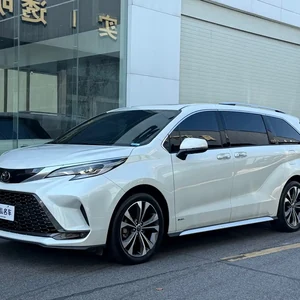
Live Toyota Granvia export inventory
View all listings →Real units currently on ChinaCarDirect with per-unit asking prices and MOQ. Availability updates live from the catalogue.
How to buy a Toyota Granvia from China
-
1
Define the destination specification
Specify steering side, seating layout, climate requirements, road conditions, budget and customer profile before choosing a trim.
-
2
Shortlist exact live units
Review the live Granvia inventory and compare individual vehicles by model year, grade, powertrain, drive layout, mileage, condition and origin.
-
3
Verify provenance and compliance
Request the VIN, registration and export documents, then confirm age, emissions, type-approval, duty and import eligibility for the destination country.
-
4
Request a written quotation
Ask for the unit price, currency, MOQ, payment schedule, Incoterm, freight scope, included documents and quote-validity period in writing.
-
5
Inspect before final payment
Use an independent inspection for used vehicles, verify condition and title records, and connect final payment to satisfactory inspection and documentation.
-
6
Arrange shipping and registration
Book the agreed transport method, complete customs and pre-shipment checks, and confirm local registration, insurance and post-delivery service arrangements.
Granvia vs rivals
| Nissan Serena | The Serena offers comparable people-carrier packaging with a more mainstream, utility-focused image, making it relevant to fleet buyers prioritizing familiarity and operating simplicity. The Granvia is the stronger choice for premium road comfort and executive presentation. |
|---|---|
| Honda Odyssey | The Odyssey is an established premium MPV option in markets with a strong Honda dealer network, which can simplify parts and service support. The Granvia generally presents a more premium, lower-slung character and offers a broader visible trim hierarchy. |
| Mercedes-Benz V-Class | The V-Class is a direct premium alternative where available, with a taller, modular van-derived cabin that can appeal to buyers needing flexible interior volume. The Granvia emphasizes a more car-like profile, Toyota hybrid operation and a potentially simpler route to premium passenger transport. |
Frequently asked questions
How is Toyota Granvia export pricing determined?
Price is driven by model year, trim, hybrid or petrol version, drive layout, mileage, condition, origin and exchange-rate movement, then affected by freight, insurance, duties, taxes and the selected Incoterm. Compare the vehicle amount with the landed-cost scope because a listing may exclude destination charges. Current binding prices are shown on the live ChinaCarDirect Granvia listings and should be confirmed for the exact unit before payment.
What engine and powertrain does the Toyota Granvia use?
The principal new range uses a 2.5-litre self-charging petrol-electric hybrid with an electronically managed e-CVT transmission, normally driving the front wheels, with four-wheel drive on selected grades. It does not require external charging for normal use. Some used parallel imports use a 3.5-litre petrol automatic and six-seat configuration, while hybrid battery capacity and certified consumption vary by market and model year.
Is a new or used Toyota Granvia better for export?
New vehicles reduce uncertainty over wear, condition, specification and unresolved repairs, while used vehicles may offer lower acquisition cost for buyers with an established route. A used purchase requires stronger inspection of the VIN, service history, hybrid system, accident repairs, title and import eligibility. The better choice depends on the buyer’s risk tolerance and destination-market requirements.
How does MOQ work when buying a Toyota Granvia?
MOQ is set by the individual seller and transaction rather than by the model itself. A live unit may be available separately, but some sellers require matching vehicles, a batch or a full-container commitment. Check the MOQ on the selected listing and repeat it in the written quotation, especially when consolidating several grades.
What determines shipping time and cost?
Transit time and cost depend on the vehicle’s origin and destination, sailing schedule, port congestion, fuel surcharges, cargo handling, insurance and inland delivery. Vehicle-carrier or RoRo services may suit large MPVs, while consolidation can reduce per-unit handling expense. The Incoterm determines which party bears costs and risk at each stage.
Are Toyota Granvia spare parts readily available overseas?
Parts support depends on the destination country, the vehicle’s exact specification and whether Toyota maintains local support for imported units. Before ordering, provide the VIN, build information, engine type and steering configuration so the supplier can identify compatible parts. Distinguish genuine Toyota parts from aftermarket alternatives and confirm local workshop capability for hybrid systems.
Is right-hand-drive Toyota Granvia availability limited?
Right-hand-drive availability can vary by trim, source and export route because the model is closely associated with the Japanese market. State the required steering side before payment and request confirmation from the VIN and photographs rather than relying on the listing title alone. Do not assume a conversion is practical or compliant in the destination market.
How do I order a Toyota Granvia from China?
Begin with the live inventory, shortlist the exact configuration and submit an RFQ with the destination, steering side and required documents. Obtain a vehicle-specific quotation, MOQ, Incoterm and payment schedule, complete inspection and title verification, then arrange shipping, customs and registration. Keep the VIN, inspection report, payment record and transport documents together for traceability.
Ready to source the Toyota Granvia?
Request a written Toyota Granvia quotation against a live unit, including the exact specification, MOQ, Incoterm, documentation and shipping scope.
Request a quote