
Toyota Land Cruiser (Import): Export Buyer’s Guide
Compare Toyota Land Cruiser (import) trims, V6 and V8 options, export pricing, MOQ, shipping and compliance before buying from China with confidence.

At a glance
- The Land Cruiser (import) is built for buyers prioritizing durability, four-wheel-drive access and long-term serviceability.
- Export-relevant choices center on a 4.0-litre V6 or 4.6-litre V8, with Middle East equipment grades requiring careful comparison.
- New, new-old-stock and used units present different maintenance, documentation and residual-risk profiles.
- Live export pricing must be evaluated as landed cost under a stated Incoterm, not as the vehicle asking price alone.
- MOQ, steering side, destination homologation, parts support and shipping terms need confirmation before funds are committed.
Why the Toyota Land Cruiser (import) matters for export markets
The Toyota Land Cruiser (import) matters to export buyers because it combines a full-size body-on-frame platform with a strong reputation for durability, four-wheel-drive capability and serviceability. It is particularly relevant to dealers, contractors, NGOs and fleet operators working beyond paved urban roads, where a rugged chassis, straightforward mechanical layout and access to parts can matter more than premium comfort. For a Toyota Land Cruiser (import) for export, the buying case is therefore operational rather than purely aspirational. Its value also lies in broad international recognition, which can simplify resale planning for importers with an established customer base.
That reputation should not replace a vehicle-level inspection. A Land Cruiser may have spent years in demanding service, and imported units can carry wear that photographs do not reveal. Buyers should examine frame and body condition, axle and steering wear, cooling system condition, driveline seals, brake condition and evidence of off-road use. The relevant question is not simply whether the 4.0-litre V6 or 4.6-litre V8 starts, but whether the complete vehicle is mechanically sound for the intended load, climate and service interval. Ask for dated photographs, an inspection report and a clear statement of any repaired damage.
For overseas demand, the strongest opportunities usually sit where the model's durability, towing ability and parts recognition offset its size and operating cost. Fleet operators may value uptime, while private buyers entering the import market often want a proven off-road vehicle with a documented history. Export examples may be Middle East specification vehicles rather than the newest model sold in Europe or North America, so the correct approach is to compare equipment and suitability market by market, then verify the exact unit rather than assume domestic trim parity for safety.
- Full-size body-on-frame SUV utility
- Four-wheel-drive capability for harsh routes
- Strong international recognition for resale
- Operational value beyond urban comfort
Model range, trims and powertrain variants: how the lineup is structured and how to choose
The relevant export lineup is organized around two petrol engines: a 4.0-litre V6 and a 4.6-litre V8. The 4.0L V6 appears in Middle East Limited Edition and Low Configuration Edition forms, while the 4.6L V8 is associated with the Middle East Limited Edition. These labels describe a market-specific trim structure, not a universal global catalogue. Buyers comparing Toyota Land Cruiser (import) specs should therefore verify engine, gearbox, steering side, equipment and condition on the individual listing. They should also confirm whether any aftermarket changes have been made and whether the described accessories were factory fitted.
Engine choice should follow operating priorities rather than output headlines alone. The V6 is the more restrained option for buyers balancing load, fuel consumption and mechanical simplicity, while the V8 gives greater torque reserve for heavy towing, high temperatures or sustained load. Exact output figures and drivetrain details vary by market and should be checked in the live record. For fleet use, compare payload and towing requirements, service intervals, local fuel availability and the cost of parts that technicians already know before finalising the model and trim for a particular duty cycle.
Limited Edition generally signals a higher equipment level than Low Configuration Edition, but buyers should not assume a standard equipment template across countries or production batches. Ask for a VIN-linked photo set, factory option list and confirmation of items such as infotainment, seat materials, climate equipment, underbody protection and spare-wheel arrangement. A low-configuration unit can still be suitable when the buyer values core capability and straightforward ownership; a limited unit earns its premium only when its equipment reduces operating friction or supports the intended market rather than simply carrying a higher asking price.
- 4.0L V6: balanced fleet option
- 4.6L V8: greater load and towing reserve
- Limited versus Low Configuration equipment
- VIN-linked trim verification is essential
New vs used Toyota Land Cruiser (import): how export inventory is structured and how buyers choose
Export inventory can contain new vehicles, used vehicles or new old stock, so the label “new” should be interpreted carefully. A new unit may be an older production vehicle held in stock rather than a recent model year. When buying a Toyota Land Cruiser (import), confirm whether it has been registered, the odometer reading, delivery status, factory warranty coverage and whether the vehicle has been started, moved or stored. These details affect first-service planning, consumable replacement and the confidence a buyer can place in the seller's description before purchase.
Used Toyota Land Cruiser (import) units can make sense for a buyer with a firm maintenance plan and the ability to assess wear. The acquisition price may be lower than that of an untouched vehicle, but the likely costs of suspension, tyres, fluids, brakes and other deferred service must be included in the comparison. A used vehicle also needs stronger identity checks: request the chassis or VIN, registration documents, service records, photographs of the underbody and an independent inspection. Disclosure is only useful if it is specific and verifiable on-site.
The right new-versus-used decision is therefore based on residual risk, not age alone. For a working fleet, uptime, known service history and predictable handover can outweigh the attraction of a pristine vehicle. For an individual buyer, a well-documented used example may offer better value if the inspection supports it. New old stock can reduce that uncertainty, but the model year and equipment still matter. Review the live inventory for the unit currently offered, because vehicle condition, location and commercial terms can change over time and should never be inferred from a model-level page.
- New does not necessarily mean recent
- Used vehicles demand condition evidence
- Compare residual risk, not age alone
- Inspect and verify every unit
How export pricing works: the factors behind a live listing price, and how to read one
A Toyota Land Cruiser (import) export price guide should separate vehicle economics from transaction logistics. The live asking price is shaped by model year, engine and trim, production market, condition, mileage where applicable, equipment, ownership history and currency movements. Freight, insurance, inspection, port charges, duties and taxes may sit outside that figure. The most useful comparison is therefore landed cost under one Incoterm, with every fee visible, rather than the lowest headline number on the screen. This approach also prevents an apparent saving from disappearing after destination charges and corrective work.
Read each live listing line by line. Confirm the VIN or chassis number, model year, engine, trim name, steering side, odometer status, condition grade, colour, factory options and whether accessories are included. Check the stated currency, Incoterm, port or pickup location, quote-validity period and payment conditions. Ask why unusually similar vehicles differ in price; it may reflect a meaningful equipment or condition difference, but it can also be an error that should be corrected before a contract is issued. A clear written specification is essential when several vehicles share the same commercial name.
For wholesale buyers, separate the vehicle price from the cost of making it sale-ready in the destination market. A lower-priced unit may need repairs, tyres, cosmetic work, documentation or emissions modifications; those requirements should be established before the unit is selected. Conversely, a higher-priced vehicle with complete records and suitable equipment may have a lower total acquisition cost. Use current per-unit prices and availability on ChinaCarDirect's live Land Cruiser (import) listings, then request a written quotation for the exact specification and destination. That quote should state which charges are included and which remain the buyer's responsibility. Current price, MOQ and availability should be verified on the individual live listing and confirmed in the written quote.
- Separate vehicle price from landed cost
- Engine, trim and condition drive value
- Incoterm determines included charges
- Confirm live terms before contracting
MOQ, ordering and payment: single units vs consolidating a container
MOQ means the minimum quantity a seller requires for a transaction, and it must be read from the individual listing or agreed quotation rather than inferred from the model name. Some vehicle offers can be purchased unit by unit; others are intended for volume trade. When you buy Toyota Land Cruiser (import) from China, ask the seller to state the minimum, whether mixed trims are allowed and how payment and shipment are allocated. A single-unit order is not automatically disadvantageous, but it may not receive the same freight priority or commercial terms as a consolidated purchase.
Consolidating several Land Cruisers in one container or shared shipment can reduce freight cost per vehicle and simplify procurement, but it adds coordination risk. Units may differ in trim, condition, documentation and destination-ready requirements, so load planning must prevent damage, moisture exposure and mismatched inventory. Grouping models with similar dimensions can improve loading efficiency, yet the buyer should compare savings against handling, storage and demurrage exposure. For smaller orders, shared-container or groupage options may be more practical than trying to fill a dedicated unit alone without overstating the final saving.
A sound ordering process starts with a written specification and ends with reconciled shipping documents. Review the selected listing, request a pro forma invoice and sales contract, and confirm the deposit, balance milestone, payment method, inspection point and release conditions. For larger transactions, a secure documentary payment arrangement may be appropriate; for a single unit, the protection and dispute process should be understood before funds are sent. The buyer should also agree who is responsible for export clearance, terminal handling, insurance, taxes and delivery beyond the named port during transit.
- Read MOQ on each listing
- Single-unit purchases may suit importers
- Consolidation can reduce freight cost
- Use written milestones and release conditions
Shipping, homologation and market compliance caveats: LHD/RHD and import rules by country
Shipping method is chosen around vehicle dimensions, urgency, consolidation and the carrier's port handling capability. Depending on the route and available service, a Land Cruiser may move by roll-on/roll-off vessel or as a secured vehicle in a container; professional exporters also arrange specialist vehicle transport. Cost and transit time respond to origin and destination ports, sailing frequency, terminal charges, fuel and freight surcharges, insurance, documentation and congestion. Quote the final inland destination, because charges from the arrival port to the buyer can materially change the delivered cost and lead time.
Steering configuration is a critical sourcing point. Middle East export vehicles may be left-hand drive, while some destination markets require right-hand drive or have different rules for imported used vehicles. Never infer the configuration from the trim name or photographs. Ask the seller to confirm the steering side and provide a clear cabin view, VIN-linked options list and any market-conversion history. If a conversion is required, assess local rules, cost, warranty effect and whether the buyer would be better served by sourcing a natively configured example from the start of the project.
Import rules are not standardized across countries. The vehicle may need customs valuation, emissions compliance, safety or roadworthiness checks, a certificate of conformity, VIN/chassis verification, duty and tax payment, and registration in the destination's LHD or RHD configuration. Age restrictions and documentary treatment can differ for new and used imports. Before paying, have a customs broker or trade specialist review the VIN, engine, specification, shipping documents and planned use. Pre-clearance reduces the risk that a vehicle arrives but cannot be registered or used legally at the intended point of sale or operation.
- Confirm LHD or RHD before purchase
- Compare RoRo and container options
- Pre-clear destination import rules
- Verify VIN and shipping documents
Who should buy the Land Cruiser (import) — and who should pick a different vehicle
The Land Cruiser (import) best fits buyers who place durability, all-weather access and long service life ahead of minimum purchase price or urban efficiency. Mining, agriculture, construction, utilities, humanitarian work and remote fleet operations can justify its full-size chassis, towing capacity and four-wheel-drive system. Dealers may also choose it for customers who already trust the model and want a familiar maintenance proposition. The strongest buyers are those with a clear duty cycle, access to suitable servicing and a realistic route to regular inspections rather than buyers attracted only by its name.
Buyers focused on urban fuel use, compact parking, premium cabin refinement or the newest driver-assistance technology should consider alternatives. A large petrol Land Cruiser can be costly to operate where fuel taxes, congestion charges or narrow roads dominate. Organisations with no off-road requirement may obtain better efficiency and easier handling from a smaller SUV, crossover or commercial vehicle. Dealers should also check whether local emissions rules, fleet policies or charging infrastructure make a different energy type more suitable. The Land Cruiser is a capability tool, not automatically the lowest-cost choice.
Ownership economics should decide as much as capability. Compare expected fuel use, insurance class, tyre and brake costs, scheduled servicing, parts lead time, downtime and residual demand. A dealer with strong Toyota support and a customer base requiring overland capability may benefit more than a fleet minimising acquisition cost; another buyer may prefer a newer model with a shorter service history. Test the purchase against real operating routes, local technician capability and resale expectations. If those checks do not support the use case, choose a rival rather than accepting the model's reputation as a substitute for due diligence.
- Best for demanding fleet operations
- Strong for remote and off-road work
- Weak fit for urban cost priorities
- Require local service support
Main rivals and how the Land Cruiser (import) compares
The closest segment alternatives include the Toyota Land Cruiser Prado, Mitsubishi Pajero/Montero and Nissan Patrol. All are large, body-on-frame-capable SUVs with four-wheel-drive credentials, but their positioning differs. The Prado is a closely related Toyota option that can appeal where a newer or slightly more road-oriented package is preferred. The Pajero/Montero offers another body-on-frame route with market-dependent powertrain choices, while Patrol is a direct full-size rival with strong petrol V8 variants and a comfort-focused brief. For an importer, local homologation, diesel access, parts support and customer preference may matter as much as headline capability.
Against the Prado, the full-size Land Cruiser generally offers a heavier-duty and more traditional utility character, whereas the Prado may be easier to specify as a modern family or expedition vehicle. Against the Pajero/Montero, the Land Cruiser's stronger international recognition can simplify resale planning, although tax bands, diesel restrictions and local dealer coverage may reverse that advantage. Against the Patrol, the choice often comes down to Land Cruiser durability reputation versus Patrol's comfort and equipment presentation. None should win on brand alone; compare the precise year, trim, equipment and service record.
The most practical comparison table should include dimensions, kerb or payload information, fuel type, steering side, warranty position, parts lead time, homologation status and delivered cost in the same destination. Verify those items for the exact vehicle, because model names can cover several drivetrains and equipment levels. Toyota support can be an advantage, but the importer still needs local technicians, correct software and replacement parts. A Land Cruiser (import) purchase is strongest when the buyer values that rugged platform and can support it properly; otherwise, the closest rival may deliver a lower total cost with less operational complexity.
- Compare Prado for modern family use
- Compare Pajero for diesel alternatives
- Compare Patrol for comfort and V8
- Evaluate local parts and homologation
Live Toyota Land Cruiser (import) export inventory
View all listings →Real units currently on ChinaCarDirect with per-unit asking prices and MOQ. Availability updates live from the catalogue.
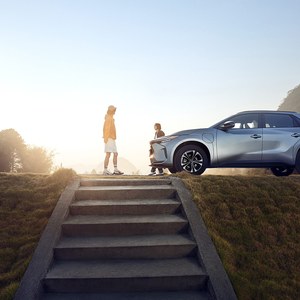
Toyota Land Cruiser (Import) 2015 4.0L V6 Middle East Limited Edition
Toyota Land Cruiser (Import) 2015 4.6L V8 Middle East Limited Edition
Toyota Land Cruiser (Import) 2015 4.6L V8 Middle East Limited Edition
Toyota Land Cruiser (Import) 2015 4.0L V6 Middle East Limited Edition
How to buy a Toyota Land Cruiser (import) from China
-
1
Define the operating requirement
Set the destination, load, towing needs, climate, road conditions and preferred steering configuration. Use those requirements to identify the appropriate engine and trim before comparing individual vehicles.
-
2
Review the live inventory
Open the current Land Cruiser (import) listings and compare the stated engine, trim, condition, equipment and commercial terms. Treat availability and the displayed per-unit price as live information requiring confirmation.
-
3
Verify the selected vehicle
Request the VIN or chassis number, dated photographs, factory option list, service history, ownership documents and inspection evidence. Check that the description matches the unit rather than relying on the trim label alone.
-
4
Request a landed quotation
Ask for a written quote covering the vehicle, MOQ, Incoterm, freight, insurance, inspection, port charges, taxes, payment milestones and quote validity. Confirm which destination costs are excluded.
-
5
Contract and inspect
Review the pro forma invoice and sales contract, then use an independent inspection if the vehicle is not locally available. Make final acceptance conditional on the agreed condition, documents and inspection findings.
-
6
Pay and prepare the export
Release funds only against the agreed milestones and secure payment arrangements. Verify the export declaration, invoice, VIN details, insurance, shipping instructions and customs documents before vehicle release.
-
7
Ship, clear and receive
Track the shipment through the agreed route and inspect the vehicle again after arrival. Complete customs clearance, registration and local service preparation before releasing it to the end customer or fleet.
Land Cruiser (import) vs rivals
| Toyota Land Cruiser Prado | The Prado is a closely related Toyota SUV that can be a better fit for buyers wanting a more modern, road-oriented package. The full-size Land Cruiser generally places greater emphasis on heavy-duty utility, so the choice depends on load, local service and the exact imported specification. |
|---|---|
| Mitsubishi Pajero/Montero | The Pajero/Montero is a genuine body-on-frame alternative with market-dependent diesel and petrol versions. The Land Cruiser can benefit from stronger global recognition and parts familiarity, but tax bands, diesel access and local dealer support may favor the Pajero. |
| Nissan Patrol | Patrol is a close full-size rival with strong petrol V8 options and a comfort-led presentation. The Land Cruiser's reputation for ruggedness may suit demanding fleets, while Patrol equipment, pricing and local support should be checked directly. |
Frequently asked questions
How is the Toyota Land Cruiser (import) export price determined?
The live price can reflect model year, engine, trim, condition, mileage where applicable, equipment, production market and currency movements. Freight, insurance, duties and other destination charges may be separate. Check the current per-unit price and availability on the live listings, then request a written quotation for the exact vehicle and destination.
What engine and range options should I consider?
The relevant export-oriented choices are the 4.0L V6 and 4.6L V8 petrol engines, with the V6 generally offering a more restrained operating proposition and the V8 greater load reserve. This is a combustion vehicle, so battery capacity and electric range do not apply; driving range depends on fuel use, payload, conditions and driving style.
Should I choose a new or used Toyota Land Cruiser (import)?
A new unit reduces certain history and condition risks, although an older new-old-stock vehicle still requires inspection. A used example can offer better value when its service history, identity documents and mechanical condition are well documented, but tyres, suspension and deferred maintenance should be included in the comparison.
How does MOQ work for a Land Cruiser order?
MOQ is set for the individual listing or agreed quotation and is not a permanent model-wide rule. Ask whether one unit can be purchased, whether mixed trims are accepted and how freight is allocated. Consolidation may reduce per-vehicle shipping costs but adds handling and inventory-coordination risk.
What determines shipping time and cost?
Shipping time and cost depend on the origin and destination ports, vessel or specialist vehicle service, sailing frequency, cargo dimensions, insurance, terminal charges, documentation and inland delivery distance. A quote should state the Incoterm and delivery point so that freight, duties, taxes and destination charges are not confused with the vehicle price.
Are spare parts available for the Land Cruiser (import)?
Toyota and Land Cruiser parts are generally available, but the exact parts depend on the VIN or chassis number, engine, trim, build date and steering side. Confirm part numbers and compatible suppliers before relying on a local stock, and check the lead time for any specialist or long-lead items.
Is a right-hand-drive Land Cruiser available for export?
Right-hand-drive examples may be available from some source markets, but availability must be confirmed on the individual live listing rather than assumed from the model name. Ask for a VIN-linked cabin view and build information, then confirm that the steering configuration complies with the destination's registration and import rules.
How do I order a Toyota Land Cruiser (import) from China?
Start with the live inventory, select the closest unit and request an RFQ with the required specification and destination. After document and condition verification, agree a pro forma invoice, MOQ, Incoterm, payment milestones, inspection point and shipping plan before funds are released.
Ready to source the Toyota Land Cruiser (import)?
Send ChinaCarDirect your destination, required specification and quantity to request a current Land Cruiser (import) quote and export plan.
Request a quote