
Toyota Prado Export Buying Guide for Overseas Buyers
Compare Toyota Prado trims, engines, seating and used options, then learn export pricing, MOQ, shipping, compliance and ordering for overseas buyers.
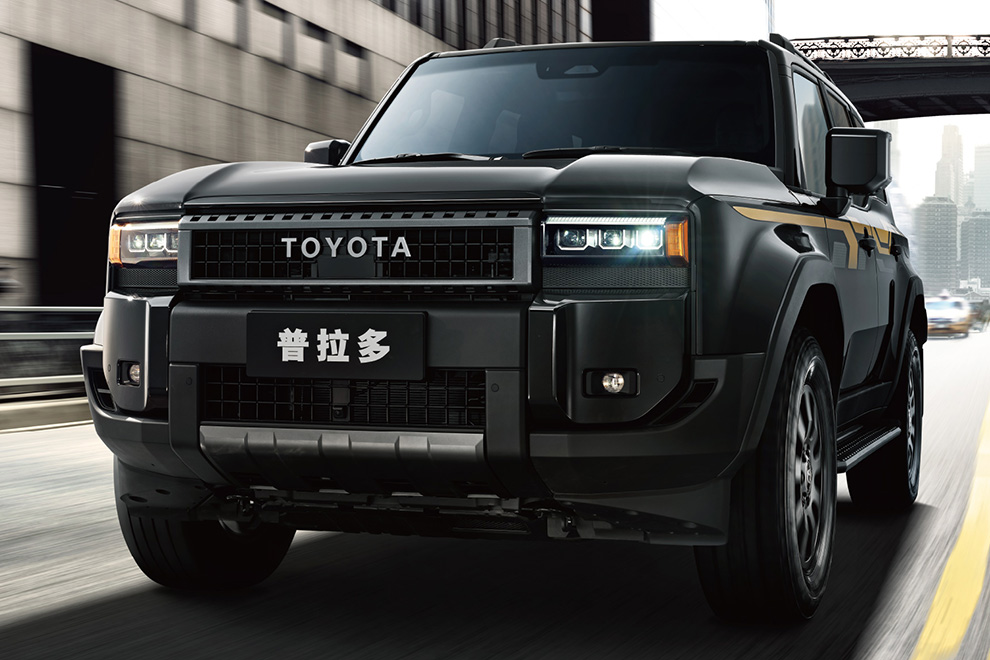
At a glance
- The Prado combines four-wheel-drive utility with family-friendly space and automatic transmission availability.
- Engine choices span 2.4-litre turbocharged and 2.7-, 3.5-, and 4.0-litre petrol units.
- Five- through eight-seat configurations suit passenger, family, NGO, and fleet requirements.
- Used imports can reduce acquisition cost but add condition, maintenance, and documentation risk.
- Landed cost depends on specification, condition, freight, compliance, and Incoterm, not the listing headline alone.
- Current per-unit prices and availability must be confirmed through live listings.
Why the Toyota Prado matters for export markets
The Toyota Prado occupies a useful middle ground in the export SUV market: a body-on-frame, four-wheel-drive vehicle with genuine off-road positioning, automatic transmission availability, and enough passenger and cargo flexibility for family, NGO, and fleet use. It is not simply a rugged utility truck; higher trims add comfort and convenience. For overseas dealers, that combination makes the Prado easier to place than a specialist off-roader while remaining more substantial than a compact crossover. Its long-running model family also helps buyers compare trims and replacement-part strategies across model years for local support planning.
Demand for Toyota Prado for export often starts with a practical question: can one vehicle handle poor road surfaces, long-distance travel, and a seven- or eight-person load without becoming cumbersome in ordinary use? The Prado's four-wheel-drive architecture, selectable off-road modes on equipped variants, and family-friendly cabin address that brief. For dealers, the appeal is broad: fleet operators value durability, while private buyers may prioritize ride comfort, luggage capacity, and the confidence created by a long-established SUV nameplate. It therefore competes on capability, comfort, and ownership confidence rather than purchase price alone.
A global buyer should still resist choosing the badge before defining the job. Urban taxi use, executive transport, remote-site staffing, and family resale each reward different equipment, seating, and tyre choices. A Prado listing may represent a China-market specification, an imported version, or a conversion assembled elsewhere. That distinction affects steering position, emissions documentation, spare-wheel arrangement, onboard equipment, and the availability of compatible service parts. The Toyota brand hub is therefore a starting point for comparing genuine Prado configurations, not a substitute for reading each unit's documents and condition file.
- Off-road capability with family usability
- Relevant to fleet and regional distribution
- Configuration varies by source market
Model range, trims and powertrain variants: how the lineup is structured and how to choose
Toyota Prado specs vary enough that the trim name alone is not a complete buying brief. The export-facing lineup includes 2.7-litre, 3.5-litre, 4.0-litre, and 2.4-litre turbocharged petrol engines, generally paired with an automatic transmission. Names seen across source markets include Standard, TX, VX, TX-L, NAVI, and Wild WX, sometimes with an edition or spare-wheel qualifier. Treat these names as version identifiers: confirm the engine, seating count, equipment list, and production origin on the individual listing before comparing vehicles. A similarly named car may differ in axle hardware, cooling, trim equipment, or regional type approval.
Engine choice should follow the destination and operating load rather than the largest badge. A turbocharged 2.4-litre may suit buyers who prioritise a smaller displacement, while 2.7-, 3.5-, and 4.0-litre petrol versions offer alternatives where fuel quality, towing demand, heat, or premium-tax treatment affects the decision. Do not assume a badge in another market delivers identical output or economy. For Toyota Prado wholesale purchasing, obtain the homologated power, torque, emissions, and fuel-consumption documents, then compare realistic fuel availability and service support locally. These checks prevent an unsuitable import from being chosen on appearance.
Seating configuration is equally important for importers. Prado variants are listed in five-, six-, seven-, and eight-seat forms, with the rear arrangement affecting passenger comfort, luggage flexibility, and fleet conversion options. Some editions place the spare wheel on the rear door, while other body configurations use a different arrangement; that choice changes tailgate access, rear visibility, and packaging. For a family buyer, test seat folding and row comfort. For a fleet buyer, document every seat, restraint, and floor fixing before agreeing to convert the vehicle. Photos alone can hide wear.
- Four petrol engine families represented
- Automatic transmissions on listed trims
- Five to eight seats by configuration
New vs used Toyota Prado: how export inventory is structured and how buyers choose
Export inventory is structured around both newly sourced vehicles and used imports, but the two categories require different due diligence. New examples may be current-model Chinese-market machines, parallel-import versions, or stock carried under a particular trim programme. Used examples can represent earlier model years imported from another country and may retain that origin's specification. The practical question is not simply whether a listing says new or used; it is whether the drivetrain, steering side, emissions standard, seats, options, and paperwork are acceptable in the destination market and local support.
A used Toyota Prado can make sense where the buyer values the underlying vehicle more than factory-new condition and the lowest possible specification. Its acquisition cost may be lower, but that saving should be weighed against mileage, service history, accident repair, suspension wear, interior condition, corrosion, and the risk of deferred maintenance. Ask for chassis identification, maintenance records, independent inspection, and clear ownership and export documents. For an older imported example, verify that software, cooling equipment, fuel-system details, and spare parts correspond to the stated origin before final payment is released.
New inventory generally reduces uncertainty about wear and remaining factory life, yet it does not remove import risk. A buyer may still face the wrong steering position, a seating layout unsuitable for local rules, unavailable trim parts, or an emissions standard that does not match the destination. Used vehicles offer more model-year and price-point choice, which can be valuable for importers with a clear resale segment. The strongest decision is a total-cost comparison covering purchase, inspection, compliance, shipping, financing, likely maintenance, and resale, not a simple new-versus-used label by itself.
- New vehicles reduce wear uncertainty
- Used imports expand model-year choice
- Condition must outweigh the label
How export pricing works: the factors behind a live listing price, and how to read one
Toyota Prado export price guide comparisons should begin with like-for-like vehicles, because year, trim, engine, seating, condition, mileage, options, and source market can all affect the ask. Exchange rates also influence how a China-based quote is translated into an overseas budget. Beyond the vehicle itself, freight method, route distance, port charges, insurance, taxes, customs handling, and the selected Incoterm determine the landed cost. A lower vehicle figure is not necessarily a cheaper import once every mandatory and operating cost is included. Compare two vehicles only after making this adjustment explicit.
When reading a live listing, separate the seller’s vehicle price from the complete landed-cost estimate. Check whether the displayed amount includes export preparation, insurance, inland transport, documentation, and marine or Ro-Ro freight, and whether it is delivered under FOB, CIF, or another term. Confirm the currency, quote validity, payment schedule, deposit treatment, and what happens if a pre-shipment inspection identifies an unresolved discrepancy. These details matter more than a headline price because two Prado listings can describe materially different obligations for the importer. Ask for the exclusions in writing before any deposit.
A disciplined buyer should build a spreadsheet with the vehicle price, inland haulage, freight, insurance, duty and tax estimates, port fees, inspection, registration, and expected preparation or repair. Request a written quotation tied to the chassis number and exact specification. If a Prado is ordered through a distributor or reseller, compare the margin and after-sales obligation, not only the amount payable to the seller. ChinaCarDirect’s live Prado inventory is the correct place to check current unit-level prices and availability; treat any budgeting range as an estimate until refreshed on request.
- Compare equivalent specifications only
- Add freight, duty, tax, and port costs
- Confirm Incoterm and quote inclusions
MOQ, ordering and payment: single units vs consolidating a container
Minimum order quantity is a property of the offer and transaction, not a universal characteristic of every Prado. A dealer may be able to place an order for one vehicle, while a container plan normally groups several units with compatible specifications. Buyers wanting wholesale volumes should agree target quantities, trim mix, model-year tolerance, inspection standard, and allocation timing before instructing the supplier. Consolidating too many similar vehicles creates resale and stock risk; mixing an unsuitable specification merely to fill space can create compliance problems and slowing sales for the importer.
The normal ordering sequence starts with live inventory, followed by a written specification and RFQ. The seller should confirm the chassis number, engine, transmission, seats, steering side, exterior condition, options, and document set before a deposit is accepted. The buyer then pays under agreed terms, allows any agreed inspection, receives final shipping documents, and settles the balance according to the contract. If a vehicle is still in production or transit, agree milestone dates and remedies; if it is already assembled, verify that the photographed unit is the one being allocated.
Payment controls should match the transaction’s risk. Use a traceable method through the agreed seller or broker, reconcile the payee with the contract, and understand how deposits, cancellation, amendments, and refunds are handled. Avoid full settlement before an inspection and document review unless a separately negotiated structure provides equivalent protection. Keep correspondence, the vehicle specification, inspection findings, invoices, and transport records together. This creates an audit trail if a buyer later needs to resolve a condition, payment, registration, or freight dispute with the relevant parties and in the agreed jurisdiction.
- MOQ depends on the individual offer
- Single units suit smaller importers
- Container plans need compatible specifications
Shipping, homologation and market compliance caveats: LHD/RHD and import rules by country
Left- and right-hand drive must be verified before shipment, not inferred from the word Prado. Vehicles sourced for China are commonly seen with left-hand drive, but parallel imports and destination-market conversions may differ, and every listing should be treated as configuration-specific. Steering side affects local registration, road familiarity, visibility, and access to regional spare parts. Ask for clear photographs of the dashboard, steering wheel, pedals, and VIN plate, and require the seller to state the configuration in the contract and export documents. Any mismatch can make an otherwise suitable vehicle unusable.
Import compliance is destination-specific and can involve emissions, roadworthiness, noise, safety equipment, VIN or type approval, age limits, customs valuation, duty, VAT or sales tax, and local registration. A Chinese-market Prado may not automatically satisfy every requirement in Europe, the Gulf, Africa, or Latin America, and regulations can differ by emissions standard or vehicle class. Before committing funds, provide the VIN and destination to a qualified customs broker or regulatory adviser, request a document checklist, and confirm that the exact configuration can be registered and driven in the intended market.
Shipping method should match value, urgency, and risk tolerance. A Prado can move in a secure vehicle carrier or as a break-bulk or container shipment, subject to dimensions, securing points, port handling, and route availability. Container carriage gives greater physical separation from other vehicles but requires correct lashing and access; Ro-Ro can simplify handling but exposes paint and interior areas to more contact. Allow time for pre-shipment inspection, customs preparation, booking, loading, transit, discharge, and destination clearance, and verify insurance coverage and the responsible party for damage at every stage.
- Confirm steering side and VIN
- Obtain destination-specific approval checks
- Match shipping method to risk tolerance
Who should buy the Prado — and who should pick a different vehicle
The Prado is a strong candidate for overseas dealers and fleet buyers that need one vehicle to cover ordinary road use, mixed surfaces, and occasional demanding terrain. Its seven- and eight-seat versions suit passenger transfers, mobile teams, site supervision, and family use, while five- and six-seat configurations may be easier to equip for specialist work. Four-wheel drive and automatic transmission make it approachable for a broad driver base. For such users, the key question is whether local fuel, servicing, tyres, and recovery support match the operating environment before the purchase.
Other vehicles are often better when the mission is narrower. A compact crossover may be easier to fuel, park, and operate in a city, although it may offer less ground clearance, load flexibility, and severe-weather confidence. A commercial van can be cheaper for moving cargo, but it will not serve mixed passenger-and-recovery duties. A battery-electric or hybrid SUV may fit buyers with reliable charging and local emissions incentives, but charging access, range assumptions, payload, and service capability need independent checking. The right alternative is the vehicle whose costs and constraints match the actual route.
Before committing to a Prado, map the annual mileage, towing and load needs, number of seats, driver profile, road surface, fuel choice, service radius, and expected resale market. Check whether parts and technician training exist before the vehicle reaches the destination, and model downtime rather than assuming every repair can be completed locally. For a dealer buying Toyota Prado from China, the most profitable unit is not necessarily the most expensive or newest; it is the specification that customers in that market repeatedly request, with documentation and support that reduce the risk of unsold or non-compliant stock.
- Strong for mixed passenger and terrain use
- Weaker for urban-only cost-sensitive use
- Alternatives depend on cargo and charging
Main rivals and how the Prado compares
Toyota's Fortuner is the closest practical alternative for buyers who want a related Toyota SUV but do not need every Prado attribute. It is generally positioned below the Prado in cabin size, refinement, and off-road-focused equipment, while offering a more accessible route into the seven-seat 4x4 segment. That can make it attractive to fleet buyers prioritising purchase efficiency, familiar Toyota servicing, and urban usability. The Prado should win where additional space, higher-grade off-road hardware, towing capability, or a more premium cabin matter, but exact equipment still depends on the market and model year.
The Mitsubishi Pajero Sport is a genuine rival when the priority is a midsize seven-seat SUV with a strong value proposition. It competes directly for family, NGO, and distributor customers who need four-wheel drive and durable platform design but may not justify a Prado's more substantial positioning. The Prado generally offers greater cabin and luggage capacity, a broader selection of petrol engines and upper trims, and a stronger premium badge in many markets. Pajero Sport can be the rational choice where lower operating complexity and a lower acquisition outlay matter more than refinement or premium resale positioning.
The Land Rover Defender is the closest premium, off-road-led alternative for expeditions and buyers who value a more overtly rugged identity. It shares the Prado's ability to combine passenger space with serious off-road use, but the two brands approach durability, refinement, technology, and ownership costs differently. Defender may appeal where its design and off-road character are central to the customer proposition, while the Prado offers several petrol engine and seating choices. Compare local parts access, warranty handling, and real operating costs rather than assuming either is automatically more dependable.
- Fortuner: lower-positioned Toyota alternative
- Pajero Sport: value-oriented midsize rival
- Defender: premium expedition-focused option
Live Toyota Prado export inventory
View all listings →Real units currently on ChinaCarDirect with per-unit asking prices and MOQ. Availability updates live from the catalogue.
How to buy a Toyota Prado from China
-
1
Define the destination and operating requirement
Confirm the import country, steering side, fuel availability, required seating, expected road surfaces, and local registration rules. This prevents a commercially attractive but unsuitable Prado from being purchased.
-
2
Shortlist comparable live units
Review current inventory and compare vehicles with matching year, engine, trim, seating, condition, and equipment. Use the VIN or chassis number to distinguish one configuration from another.
-
3
Request a written RFQ
Ask for a chassis-specific quotation showing the vehicle price, included services, Incoterm, payment schedule, lead time, and required export documents. Confirm the MOQ for that specific offer.
-
4
Verify and inspect the vehicle
Review ownership records, equipment, condition, and discrepancy reports, and commission an independent or pre-shipment inspection where practical. Tie every agreed change or repair to the contract.
-
5
Agree MOQ and payment controls
Decide between a single-unit purchase and a container consolidation, then document trim mix, tolerances, inspection requirements, deposit terms, and final settlement conditions. Pay only through the agreed, traceable process.
-
6
Arrange freight and destination clearance
Select the appropriate carrier or container method, confirm insurance and securing arrangements, and appoint a broker for customs and registration. Retain the shipping, customs, and vehicle handover records.
Prado vs rivals
| Toyota Fortuner | The Fortuner is a lower-positioned Toyota alternative for buyers seeking a practical seven-seat 4x4 with lower acquisition outlay and urban usability. The Prado is generally stronger where additional cabin and cargo space, a more premium interior, and greater off-road-focused capability are priorities. |
|---|---|
| Mitsubishi Pajero Sport | The Pajero Sport competes directly for value-conscious family, NGO, and distributor buyers seeking a midsize four-wheel-drive SUV. The Prado generally offers more space, additional petrol engine and upper-trim choices, and stronger premium positioning. |
| Land Rover Defender | The Defender is a premium and expedition-focused alternative with a more overtly rugged identity. It may appeal to buyers focused on off-road design and brand character, while the Prado offers several engine and seating configurations for a broader mix of export uses. |
Frequently asked questions
How is Toyota Prado export pricing determined?
Live pricing is set for each vehicle and can vary with year, trim, engine, seating, mileage, condition, source market, options, and currency conditions. Freight, insurance, duties, taxes, port charges, and the Incoterm affect the landed total, so compare like-for-like vehicles and separate those costs. Check the current binding amount on the live ChinaCarDirect listing and request an itemized RFQ for the intended chassis.
Which Toyota Prado engines and transmissions are available?
Prado listings cover 2.4-litre turbocharged, 2.7-litre, 3.5-litre, and 4.0-litre petrol engines, generally with automatic transmission and four-wheel drive. Outputs, fuel consumption, and emissions vary by source market and trim, so use the homologated documents for the exact chassis rather than general vehicle reviews.
Is a new or used Toyota Prado the better export choice?
A new vehicle generally reduces uncertainty about wear and remaining factory life, while a used import may offer a wider selection of model years and acquisition levels. Used purchases require more scrutiny of mileage, accident history, condition, maintenance, corrosion, ownership, and source-market documentation. Choose based on total cost, resale demand, and compliance rather than the condition label alone.
How does MOQ work for Toyota Prado orders?
MOQ is determined by the individual listing and the negotiated transaction rather than by the model name. Some offers can be purchased as individual units, while container orders require an agreed vehicle mix and quantity. Confirm the minimum for each offer before placing a deposit, especially when consolidating several trims or model years.
What determines Toyota Prado shipping time and cost?
The vehicle's dimensions, selected carrier or container method, origin and destination ports, route availability, handling charges, insurance, and Incoterm all affect the quotation. Pre-shipment inspection, customs preparation, documentation, and destination clearance also affect the total timeline. Obtain a freight quote tied to the confirmed chassis and destination.
Are spare parts available for imported Toyota Prado vehicles?
Parts availability depends on the model year, engine, trim, source market, and spare-wheel arrangement. Before purchase, match the VIN or chassis and engine code to the seller's parts information and verify a supply route in the destination market. Confirm whether original, aftermarket, or locally converted components will be needed before calculating maintenance costs.
Can I find a right-hand-drive Toyota Prado from China?
RHD availability cannot be inferred from Prado or import in a listing title. China-sourced examples are commonly left-hand drive, while parallel imports may differ, so require dashboard photographs and a written steering-side statement tied to the VIN. Confirm local registration and regional parts compatibility before paying a deposit.
How do I order a Toyota Prado through ChinaCarDirect?
Start with the live inventory, select a suitable unit, and submit an RFQ with the destination, engine, seating, steering side, condition, and Incoterm requirements. Review the chassis-specific documents, inspection terms, MOQ, payment schedule, and freight quotation before paying. After clearance and handover, retain the signed contract, inspection report, invoices, and transport documents for future maintenance or resale support.
Ready to source the Toyota Prado?
Send a Prado RFQ with your destination, preferred engine, seating, steering side, and budget, then compare current per-unit quotes on ChinaCarDirect.
Request a quote