
Toyota Sienna Export Buying Guide for Overseas Buyers
Buy a Toyota Sienna from China with practical guidance on hybrid and gasoline trims, export pricing, MOQ, shipping, compliance, rivals and live inventory.
At a glance
- The Sienna combines three-row minivan utility with Toyota hybrid and gasoline choices for importers serving families, shuttles and fleets.
- Trim labels vary by source market, so buyers should compare drivetrain, seating, equipment and VIN-level details rather than grade names.
- Hybrid grades fit high-mileage operators where fuel efficiency matters; gasoline grades may suit buyers focused on conventional operation.
- Used units can reduce entry cost, but provenance, hybrid-battery condition, service records and destination compliance demand close scrutiny.
- Live listings carry the binding per-unit price, availability and MOQ, while landed cost also depends on freight, taxes, insurance and Incoterms.
Why the Toyota Sienna matters for export markets
The Toyota Sienna occupies a distinctive position in the large family MPV segment: it combines minivan packaging, three-row flexibility and a Toyota powertrain reputation with a design aimed at private, shuttle and executive-transport buyers. Its global name recognition makes it easier to compare against established alternatives, while the availability of hybrid and gasoline versions lets importers address markets with different fuel-tax, charging and duty structures. For overseas purchasers, the Sienna is not simply a large MPV; it is a practical test of whether fuel economy, cargo flexibility and residual value justify its size.
That positioning matters in export markets because buyers often work with constrained budgets and uncertain local rules. A dealer can serve families, airport-transfer operators, hotels, corporate transport fleets and mixed-use rental programmes, but each has a different balance between acquisition cost, fuel use, maintenance, luggage capacity and uptime. The Sienna’s strongest case is where a single vehicle must cover school runs, airport duty, regional travel and occasional cargo without the operating complexity of a large commercial van. Its weaker case is where buyers need a lower-cost cargo platform or a compact vehicle for dense cities.
Demand is not driven by one universal trim. Hybrid grades suit buyers who prioritise fuel economy and predictable operating cost, especially where gasoline is heavily taxed. Gasoline versions can be easier to understand for fleet managers and may offer different acquisition economics, but they do not provide the same efficiency case. A cross-border importer should therefore begin with duty, expected annual mileage and the local fuel mix, not with the badge or the most richly equipped listing. The Sienna succeeds in export when its configuration matches those local operating conditions.
Model range, trims and powertrain variants: how the lineup is structured and how to choose
The export lineup should be read as a market-mixed catalogue rather than a single global trim sheet. Names visible for the Sienna include 2.5L Hybrid Comfort, Premium, Platinum, Ultimate and Luxury editions, plus hybrid grades carrying 4WD or AWD wording. The catalogue also includes 3.5L two-wheel-drive and four-wheel-drive versions, including L, LE and parallel-import descriptions. Trim labels can reflect the source market rather than one global hierarchy, so Comfort on one unit may not equal Comfort on another. Compare drivetrain, seating, equipment and homologation, not the grade name alone for each unit.
For powertrain selection, the 2.5L hybrid is the most important export decision. Its hybrid system is designed to prioritise efficiency in normal driving, while the 3.5L gasoline choices cater to buyers who prefer a conventional powertrain or have a use case that places less value on fuel consumption. Do not infer battery capacity, electric-only range or economy figures from the engine label: these vary by market, equipment and test cycle. Ask the supplier for the exact hybrid battery version, rated capacity, warranty and consumption data for the specific vehicle being considered.
Next, choose between two-wheel drive and four-wheel drive, then resolve seating and equipment. AWD or 4WD can improve confidence in poor weather and on unfinished roads, but tyre cost, availability and repair complexity may matter more to a fleet than the badge suggests. Seven-seat configurations are generally easier to live with when the third row is used occasionally; eight-seat listings may suit commercial passenger work but can be less versatile. For comfort-oriented buyers, inspect second-row mechanisms, luggage floor, power outlets and rear climate equipment on the exact unit before shipment.
- Confirm hybrid or gasoline powertrain before comparing trims.
- Verify 2WD, 4WD or AWD by VIN.
- Match seating and luggage needs to the exact unit.
- Request battery version, warranty and consumption data.
New vs used Toyota Sienna: how export inventory is structured and how buyers choose
New and used Sienna inventory should be treated as two different procurement strategies. A new vehicle offers a clearer condition history, current model-year features and potentially more straightforward warranty handling, although its acquisition cost and depreciation profile require evaluation. A used vehicle can make a fleet programme more economical and may provide a lower-entry point into hybrid or eight-seat configurations. The decisive issue is whether the apparent saving survives the extra inspection, reconditioning, homologation and uncertain-history costs required by the destination market. That calculation belongs directly in the landed-cost model.
Used Sienna units may carry a more complicated provenance. Some are described as parallel imports, and older examples can arrive with service records that are incomplete or in a different format from local records. Buyers should request the VIN, production year, import history, accident and repaint disclosures, maintenance invoices, recall completion, and evidence of hybrid-system or battery condition where applicable. A lower purchase price is not the same as a lower delivered cost if parts, technician support or compliance work become harder later and warranty support becomes less predictable for the operator.
For a new purchase, ask whether the vehicle is current stock, a parallel import, a demonstrator or an ex-fleet unit, because these categories can carry different warranty and cosmetic assumptions. The listing year alone does not prove mileage or condition. Whichever route you choose, use a pre-purchase inspection, reconcile the VIN against the listing, photograph the vehicle, and obtain written confirmation of repairs. For used hybrids, a battery health report and a cold-start road test are especially valuable because the catalogue data may not show degradation or inconsistent charging-system use.
- Verify VIN, import provenance and service records.
- Inspect condition before committing to a used unit.
- Check hybrid-system condition where applicable.
- Compare landed cost, not asking price alone.
How export pricing works: the factors behind a live listing price, and how to read one
A live Toyota Sienna export price is a unit-level asking position, not a universal Sienna price. The first drivers are model year, trim, powertrain, drivetrain, seating and source-market specification. New versus used status, mileage, exterior condition, service history, colour, optional equipment and the quality of a hybrid battery can all affect the comparison. Because trim names are not standardised across export sources, two similarly named units can represent materially different packages. Read every specification line before treating their quoted figures as directly comparable in the same destination market and currency.
Market and logistics variables sit on top of the vehicle price. Exchange-rate movement, origin-port charges, freight method, marine insurance, destination handling, customs brokerage and the selected Incoterm can change the landed result. Taxes and duties may be assessed by the destination authority rather than the exporter, so the listed vehicle price may not answer your true budget. Ask for a written quotation that separates the vehicle, inland transport, export documentation, freight, insurance and any destination charges that can be estimated at the time of sale before you formally commit.
To compare quotes consistently, normalise the same things: exact unit, condition, trim, drivetrain, seat count, source specification, currency, payment timing and delivery scope. Confirm whether the price is FOB, CIF, CFR or another term, and whether insurance, commissioning, export documents and destination charges are included. A lower asking figure may be outweighed by stronger after-sales support or simpler documentation. ChinaCarDirect’s live Sienna listings are the correct place to verify the current per-unit price and availability for any vehicle you shortlist. The final screen can still change once a supplier confirms condition and trade terms.
- Normalise year, trim, powertrain and condition.
- Confirm currency and unit-specific payment terms.
- Check the stated Incoterm and included services.
- Separate vehicle cost from freight and insurance.
MOQ, ordering and payment: single units vs consolidating a container
Minimum order quantity is a commercial term that should be confirmed for the selected listing, not assumed from the fact that the Sienna is an export model. Some suppliers may accept a single-vehicle purchase for test orders or small fleet requirements, while others set a lot minimum or require a larger allocation for export handling. The quantity stated on a live product page should be treated as a starting point for negotiation. Ask the supplier what quantity applies to that exact vehicle, whether mixed trims can share one shipment, and whether payment or shipping commitments change with volume.
For a single-unit order, the buyer typically pays the agreed vehicle price, export preparation and shipping charges, while documentary, bank and insurance costs may be itemised separately. Before paying, the parties should confirm the vehicle, price, currency, deposit and balance schedule, refund conditions, bill of lading or shipping document, inspection rights and the point at which risk and title pass. A written pro forma invoice and sales contract should match the live listing’s VIN or SKU. Avoid transferring funds against an informal summary that omits the unit-specific terms and milestones.
Container consolidation can improve freight efficiency when several compatible Siennas are ordered, but it creates a different risk profile. Different trims, seat counts, colours and destination requirements may complicate loading, documentation and customer allocation. One damaged vehicle can also create a dispute about how a shared loss is apportioned. Decide whether the commercial saving is worth the coordination effort, request a vehicle-level allocation plan, and use a clear inspection and claims process before the vehicles depart. For an importer testing the model before a wholesale commitment, a trial unit may offer more useful information than a large blind commitment.
- Confirm MOQ for the selected listing.
- Tie the contract to a VIN or SKU.
- Compare consolidation savings with added risk.
- Agree inspection, allocation and claims rules.
Shipping, homologation and market compliance caveats: LHD/RHD and import rules by country
Exportability does not equal legal importability. A Toyota Sienna sourced through China may be a parallel import or carry the specification of another market, and the receiving country may impose separate rules for VIN, emissions, safety, roadworthiness, seat belts, lighting, radio equipment and vehicle age. There is no universal homologation certificate that makes a vehicle compliant everywhere. Before contracting, identify the exact destination regulations and ask a customs broker or local authority to review the vehicle documents and identification numbers for the intended use before payment or dispatch is committed.
Steering configuration is a separate sourcing choice. Left-hand-drive vehicles suit many markets, while right-hand-drive examples are required in markets such as the United Kingdom, Japan, Australia and New Zealand, subject to local rules. The export catalogue may not consistently label steering side for every unit, so do not infer it from the trim title or seller’s location. Specify LHD or RHD in the purchase request and require photographs of the steering wheel and driver controls. Converting a vehicle later is expensive and can create certification, warranty and insurance issues for the operator.
Budget for destination-side compliance and inspection, including registration, customs duty, VAT or sales tax, emissions charges, port fees, modifications and local certification where applicable. Used vehicles can face additional age, emissions or roadworthiness restrictions, while imported hybrids may require documentation for battery-related systems. Insurance can also depend on import status and local homologation. Neither a clean-looking listing nor successful export from China proves that a vehicle is ready for registration. Make compliance an explicit line in the RFQ and obtain written broker or authority guidance before dispatching the vehicle to the destination.
- Check destination VIN and safety requirements.
- Specify steering side in the RFQ.
- Seek written broker or authority guidance.
- Model duty, tax, insurance and certification.
Who should buy the Sienna — and who should pick a different vehicle
The Sienna is a strong candidate for a dealer, airport-transfer operator, hotel shuttle, executive-transport provider or family-focused rental business that needs three-row capability with a mainstream Toyota service proposition. It is also logical for an importer buying several units to cover different customer budgets, provided each unit has a clear market. The strongest business case combines high annual mileage, meaningful luggage demand and a local fuel and duty profile that rewards hybrid efficiency. Dealer economics still require a full landed-cost model and a credible route to resale or fleet placement.
A different vehicle is better when the mission is primarily cargo, urban parking or minimum acquisition cost. A panel van or commercial MPV may offer more usable load space and lower operating cost, although it may not provide the Sienna’s passenger comfort or ride. A smaller MPV or SUV can be easier to operate in crowded cities and on narrow roads. Buyers needing a plug-in hybrid, diesel, long-range electric option or a specific commercial certification should compare the Sienna with models actually offered in their market rather than assuming one global configuration is available.
Used Sienna ownership can suit a budget buyer who accepts ageing-vehicle risk, but it is less suitable for an operator that cannot absorb downtime, unexpected repair or administrative delay. A new hybrid generally makes more sense for high-utilisation fleets that value predictable operating cost, while an older gasoline unit may suit a lower-mileage shuttle with straightforward repair expectations. The right choice depends on total cost per kilometre, downtime, insurance, passenger comfort and resale. Test one unit or a local Sienna before scaling a multi-vehicle import programme, rather than extrapolating from showroom impressions alone.
Main rivals and how the Sienna compares
The Honda Odyssey is the closest conventional alternative for buyers who want a large, family-focused minivan and may value a broadly available hybrid option in their market. It offers the same core formula—three rows, sliding rear access and a car-like driving position—so the decision often comes down to local service coverage, equipment, fuel consumption, import eligibility and the landed package. Neither brand is automatically cheaper after duties and freight. Compare quoted units on equivalent warranty, condition and destination support, then decide with local operating data rather than badge recognition alone.
The Kia Carnival presents a different MPV proposition, with availability varying significantly by country and the ability in some markets to offer multiple powertrains, including diesel. That can be useful where high-torque efficiency, commercial passenger work or a different taxation policy dominates. Sienna buyers may prefer the more established Toyota hybrid proposition and its familiar service network, but local parts access and technician availability can outweigh that preference. Verify actual Carnival specifications in the destination country; global model pages do not guarantee local delivery or the availability of a specific trim.
The Chrysler Pacifica is another relevant rival for private buyers and passenger fleets, with hybrid or plug-in-hybrid availability depending on market. It can be compelling for buyers seeking a more car-like or premium-oriented cabin, while the Sienna’s case rests on its large-MPV identity, hybrid lineage and broad trim logic. Again, no rival wins automatically: compare seat layouts, luggage, fuel use, safety equipment, warranty, parts supply and import compliance in the destination market. The best vehicle is the one whose verified configuration has the strongest residual-cost outlook for the local market.
- Compare equivalent configurations, not badge alone.
- Check local parts and technician support.
- Validate seating, luggage and regulatory equipment.
Live Toyota Sienna export inventory
View all listings →Real units currently on ChinaCarDirect with per-unit asking prices and MOQ. Availability updates live from the catalogue.
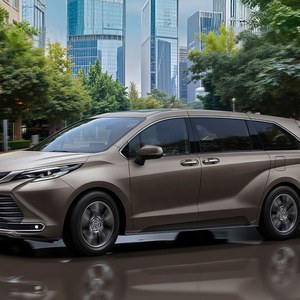
Used Toyota SIENNA GAC Toyota Sienna 2009, parallel import, 7-seater.
How to buy a Toyota Sienna from China
-
1
Set the operating requirement
Define annual mileage, passenger count, luggage needs, fuel preference, road conditions and operating budget before selecting a trim.
-
2
Confirm destination rules
Establish LHD or RHD requirements and check VIN, emissions, safety, vehicle-age and import restrictions with a local broker or authority.
-
3
Review live Sienna inventory
Shortlist relevant Toyota Sienna listings, then compare the exact powertrain, drivetrain, seat count, source-market specification and condition.
-
4
Verify the individual vehicle
Reconcile the VIN or SKU with the year, trim, mileage, service records, import provenance and hybrid battery report.
-
5
Request a unit-level RFQ
Ask for written terms separating the vehicle, inland transport, freight, insurance, documentation, destination charges, Incoterm and applicable MOQ.
-
6
Complete inspection and payment
Use a third-party pre-purchase inspection, then align the pro forma invoice, payment milestones, inspection rights, refund conditions and title transfer with the contract.
-
7
Ship, clear and register
Confirm export documents and the shipping method, track port handover, complete customs and registration, and inspect the vehicle on arrival before release.
Sienna vs rivals
| Honda Odyssey | The Odyssey competes directly with the Sienna through a similarly spacious three-row minivan format and hybrid offering in many markets. The better choice often depends on local service access, equipment, import eligibility, fuel costs and the verified landed package rather than the badge. |
|---|---|
| Kia Carnival | The Carnival is a close MPV alternative, with market-dependent seating, equipment and powertrain choices that may include diesel. It can suit buyers prioritising commercial passenger capability or a different powertrain, while Sienna buyers may value Toyota’s established hybrid positioning and local support network. |
| Chrysler Pacifica | The Pacifica is a credible rival for private and fleet buyers seeking a large minivan, with hybrid or plug-in-hybrid versions in some markets. Its more car-like cabin appeal contrasts with the Sienna’s large-MPV identity, so seating, luggage, parts support and import compliance should decide the fit. |
Frequently asked questions
How is the Toyota Sienna export price determined?
A live asking price reflects the exact vehicle’s year, trim, powertrain, drivetrain, condition, source specification and, for hybrids, battery-related condition. Freight, insurance, exchange rates, duties, taxes, port fees and the Incoterm affect the landed cost but may sit outside the displayed vehicle price. Check the current per-unit figures in the live Sienna listings and request a written RFQ for the complete purchase.
Which Toyota Sienna powertrain should an overseas buyer choose?
The export range includes 2.5L hybrid and 3.5L gasoline variants, with two-wheel-drive and four-wheel-drive or AWD choices across selected grades. For a hybrid, battery capacity, electric-only range and economy depend on the exact market version and must be checked on the live listing rather than assumed from the engine label. Fuel costs, annual mileage and road conditions should guide the final choice.
Are used Toyota Sienna models a good option?
A used Sienna can reduce entry cost and provide access to older hybrid or eight-seat configurations, but it adds uncertainty around condition, service history, wear and import provenance. A new vehicle generally offers a clearer condition record and more straightforward warranty assumptions, although its acquisition and depreciation profile must be considered. Inspect the individual unit and compare total landed cost rather than choosing on year alone.
What is the MOQ when buying a Toyota Sienna from China?
MOQ is supplier- and shipment-specific rather than a fixed model-wide rule. A live listing may support a single-unit test order or a larger wholesale lot, but the unit page and written RFQ must confirm the applicable quantity. Ask whether mixed trims can share one consignment and how the quantity changes payment, documentation and freight arrangements.
How long does shipping take, and what affects the cost?
Transit time and freight cost depend on the origin and destination ports, vessel or trailer availability, cargo method, port handling, customs clearance, insurance and the selected Incoterm. Seasonal congestion and the need for special handling can also affect the shipment. Ask for a current freight quotation and delivery schedule tied to the specific vehicle and destination.
Can spare parts and after-sales support be arranged?
Parts and technical support may be arranged through the supplier or Toyota channels, but lead times and local service coverage depend on the destination and production market. Provide the VIN and exact trim when requesting parts so suppliers can identify compatible items. Confirm workshop support, warranty handling and expected parts availability before importing a vehicle that may use a non-local specification.
Is right-hand-drive Toyota Sienna availability an issue?
Availability varies by source market and individual listing, so buyers should state their required steering configuration before placing an order. The catalogue may not consistently identify steering side for every vehicle, and the trim name is not sufficient evidence. Require photographs and VIN confirmation, and avoid late conversion because it can create certification, warranty and insurance complications.
How do I order a Toyota Sienna from China?
Start with the live inventory, select a shortlist and verify the VIN-level specifications before requesting a quote. The RFQ should state the destination, steering side, quantity, condition and Incoterm, followed by a written sales contract, inspection, payment and export-document process. After shipment, complete destination customs, compliance checks and registration before releasing the vehicle to customers.
Ready to source the Toyota Sienna?
Send ChinaCarDirect your destination, powertrain, seating and quantity requirements for a unit-level Toyota Sienna export quote.
Request a quote