
Toyota Tundra Export Guide for Overseas Dealers and Fleets
Buy Toyota Tundra from China with a clear view of trims, engines, used-versus-new choices, export pricing, MOQ, shipping, and market compliance.
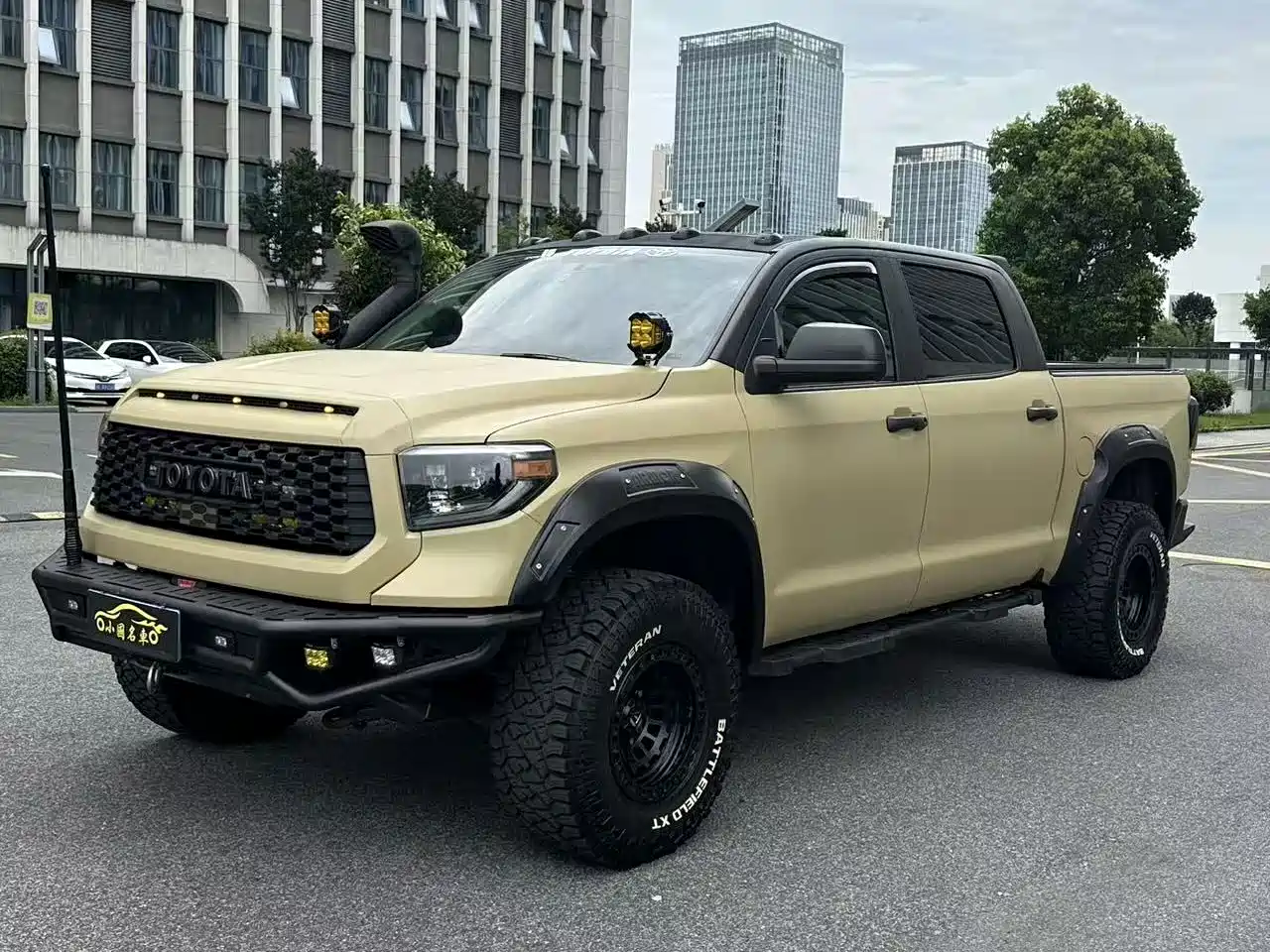
At a glance
- The Tundra is a full-size gasoline pickup suited to towing, trades and rural fleet work.
- Toyota Tundra specs center on 5.7-liter V8 trims and 3.5-liter V6 parallel imports.
- The 1794 Edition, TRD Pro and Standard Model serve different comfort, off-road and fleet roles.
- New units favor standardized handover, while used units require detailed VIN and condition checks.
- Export prices move with specification, condition, Incoterm, freight and exchange-rate movements.
- Confirm destination homologation, steering side, MOQ and live availability before ordering.
Why the Toyota Tundra matters for export markets
The Toyota Tundra occupies the full-size pickup segment, combining heavy-duty work capability with the durability and resale reputation associated with Toyota. For overseas dealers, it is relevant where buyers need towing capacity, payload resilience and a proven truck platform rather than a compact utility vehicle. Its scale also makes it especially relevant to fleet operators in construction, agriculture, utilities and remote-site work, where a robust chassis and straightforward serviceability can outweigh urban maneuverability. Because parts, insurance and regulation vary by destination, it should be treated as a market-specific import, not a universal model.
Export appeal is also shaped by model identity. The 5.7-liter 1794 Edition carries the upscale, comfort-oriented character of a full-size American pickup, while TRD Pro is aimed at buyers who prioritize off-road ability and rugged visual and mechanical specification. Standard Model examples serve a more basic fleet or work-truck brief. These labels help segment the market, but they do not replace checking the exact year, drivetrain, seating, equipment and condition of each unit. Parallel-import designations add another layer, indicating an imported vehicle route rather than a simple domestic-market trim ladder.
For buyers searching for a Toyota Tundra for export, the strongest proposition is a full-size American truck sold through an import channel. That distinction matters because local official distribution, service coverage, software, emissions equipment and spare-parts arrangements can differ from the destination market. A Tundra that is attractive in one country may require steering conversion, certification or modification elsewhere. The sensible buying question is not simply which trim is best, but which configuration is supportable and road-legal after arrival. Check local homologation, servicing capacity and resale assumptions before committing funds.
- Full-size work and towing.
- Distinct 1794, TRD Pro and Standard roles.
- Parallel imports need local approval.
Model range, trims and powertrain variants: how the lineup is structured and how to choose
The visible Tundra range spans three main 5.7-liter offerings—the 1794 Edition, TRD Pro and Standard Model—plus parallel-import examples with a 3.5-liter engine. For most buyers, engine choice is the first technical decision. The 5.7-liter V8 generally favors maximum towing and payload work, while the 3.5-liter V6 can suit fleets that prioritize operating cost, everyday drivability and fuel economy over maximum load capability. Exact performance varies by year, drivetrain and specification, so ratings should be checked against the vehicle’s official build information. A badge or photograph is not a substitute for that document.
Trim should be read as an equipment and use-case decision. The 1794 Edition is oriented toward a more refined cabin, convenience and appearance; TRD Pro emphasizes off-road hardware, utility and a tougher setup; the Standard Model provides a simpler basis for commercial or fleet use. Because parallel-import units can come from different source markets, trim names are not always arranged in a uniform global hierarchy. Treat the listing’s year and equipment list as controlling, then compare axle, seat, wheel, towing and technology packages directly. A build sheet resolves remaining ambiguity.
The sample range also includes automatic transmissions, four-wheel-drive examples, five-seat bodies and a four-seat parallel import. For an importer, seating capacity and cab layout affect registration, insurance and market appeal, while four-wheel-drive suitability depends on axle design and equipment rather than the badge alone. Compare towing limits, payload, axle ratio, ground clearance and factory options on the specific vehicle. If a listing does not disclose a material figure, request the build sheet or VIN-based verification before calculating fleet economics. A trim photograph alone cannot establish mechanical condition, option completeness or factory status.
- 5.7 V8 favors maximum work.
- 3.5 V6 suits fleet economics.
- Verify cab, seats, axle and options.
New vs used Toyota Tundra: how export inventory is structured and how buyers choose
New and used Toyota Tundra inventory serve different commercial purposes. A new vehicle is easier to describe when fleet buyers need predictable condition, known mileage, available warranty status and standardized specifications. It may also be easier to secure a consistent batch of similar vehicles. A used truck can be more practical when acquisition budget matters more than appearance, or when a particular factory configuration is difficult to source new. The correct comparison is total cost of ownership over the planned service life, not simply the amount paid at purchase.
For a used Tundra, ask for the VIN, registration title or import documents, service history, odometer reading, accident disclosure and photographs of the underside, bed, cabin and engine bay. Check cold starting, automatic-shift behavior, brake condition, frame and suspension corrosion, fluid leaks, tire age and wear, and whether replacement parts are genuine or remanufactured. Also verify that the seller’s description, trim label and engine match the VIN. A parallel import can be either new or used, so that phrase must not be treated as a condition grade or compliance status.
For new units, focus on configuration control and handover. Agree on model year, engine, cab, seat count, drivetrain, factory options, paint, warranty and documentation before payment. Confirm that the vehicle is not a damaged, repaired, demonstration or previously registered unit marketed simply as new. For mixed fleets, separate the buying criteria for work trucks and premium vehicles: uptime, payload and maintenance may matter more than cosmetic consistency, while executive or hospitality buyers may place greater weight on cabin condition and presentation. Condition reporting should be part of the sales record.
- New units support standardized handover.
- Used units require VIN checks.
- Parallel import is not a condition grade.
How export pricing works: the factors behind a live listing price, and how to read one
Toyota Tundra export price is not a fixed rate for the model name. The live quote should reflect model year, trim, engine and drivetrain, mileage and condition, factory options, import history, and whether the seller is offering a single unit or a grouped shipment. Seller location and the route to the destination also matter. Currency movements can alter the displayed amount, while insurance, inspection, documentation, inland transport, port charges and export fees can either be included in the quoted landed total or shown separately. Transparency about inclusions prevents false comparisons.
The Incoterm is central to reading any listing. Under an EXW-style arrangement, the buyer assumes more of the origin process; under FOB or CIF, responsibilities shift to the named port and, for CIF, include the agreed freight and minimum insurance. Other terms allocate loading, export clearance, terminal handling and delivery differently. Ask for a written quotation that states the vehicle price, payment currency, valid period, documentation charge, origin charges, freight method, insurance level, destination charges and any tax or duty treatment that is explicitly excluded before the balance is released.
A responsible buyer also tests the price against condition rather than accepting the lowest headline figure. An older high-mileage Standard Model, a used 3.5-liter parallel import and a highly equipped 5.7-liter TRD Pro are not equivalent products. Use the live Tundra inventory to compare comparable vehicles, then request a per-unit quote that includes the exact VIN or SKU and the intended destination. Current price, minimum order quantity and availability are binding only when confirmed on the relevant live listing or in a written quotation. Also record confirmation date and currency.
- Compare like-for-like vehicles.
- Confirm Incoterm and cost inclusions.
- Use live listings for current figures.
MOQ, ordering and payment: single units vs consolidating a container
Minimum order quantity depends on the seller, vehicle and shipment plan. A listing may accept one unit, while a Toyota Tundra wholesale program can require a stated quantity. The quantity rule is therefore an attribute to verify on each live offer, not a universal Tundra condition. One-unit buying is practical for a test vehicle, a dealer trying a new niche or a fleet pilot; larger volume can improve freight planning and buying control but also concentrates capital in aging stock and specific configurations. State MOQ and break points clearly in writing.
When consolidating a container, align model year, trim, engine, drivetrain, seat configuration, paint and condition where possible. Mixed loads can improve flexibility, but they complicate fleet standardization, spare-parts planning, insurance and customs documentation. Ask for a packing list showing each VIN, the corresponding SKU, condition, declared options and any existing damage. Confirm whether tyres, 12-volt battery, battery saver, tools, owner manuals and service records are included; omissions can create surprise costs after the vehicle leaves its origin and can delay handover when replacement parts or customs paperwork must be resolved locally.
Payment and title control should follow the same sequence. Typical mechanics are an agreed deposit to reserve the VIN or SKU, inspection or documentary verification, balance payment before release, and shipment against agreed transport terms. Confirm available payment methods, currency, fees, refund conditions and who is the named seller and exporter. Never rely on a generic product photo: put the VIN, condition, options, price, MOQ, Incoterm and release milestone in the purchase record. A clear written sequence reduces disputes and delays. All milestones should appear in the signed purchase contract.
- MOQ varies by seller and shipment.
- Standardize mixed-container specifications.
- Link payment to release milestones.
Shipping, homologation and market compliance caveats: LHD/RHD and import rules by country
Compliance begins with destination-country rules, not with the vehicle badge. Import rules can cover engine emissions, age, safety equipment, steering side, vehicle type, insurance, customs value and local inspection. A parallel import may not carry the same approvals as a locally distributed model, and a conversion can create certification or insurance problems. Before committing, ask a destination-market import specialist to confirm eligibility, taxes, documents and whether the exact configuration can be registered. Seek confirmation from local legal and tax advisers before payment or shipment. This remains essential for every target country.
Steering configuration deserves early attention. LHD examples can suit markets where vehicles normally arrive on the left; RHD examples are generally more relevant to Australia, New Zealand, Japan, Singapore and other right-hand-drive jurisdictions, subject to local rules. The Tundra range in the source market includes both US-origin and parallel-import examples, but steering side must be verified per unit rather than inferred from trim. Do not assume a RHD conversion will satisfy registration, safety inspection, insurance or parts-supply expectations in every country. Ask for photographs and documents that establish the configuration.
Transport method should follow dimensions, destination infrastructure and urgency. Enclosed vehicles are generally less exposed to weather and road damage during ocean transit, while open shipping can reduce cost but raises exposure to corrosion, contamination and handling damage. Ask the forwarder to confirm route, securing method, lashing points, insurance and restrictions at the destination port. Road transport may be practical over shorter distances, but oversized loads can require permits, escorts or special trailers. Obtain all original clearance documents and keep the vehicle identity linked to every customs and transport record.
- Check import, tax and inspection rules.
- Verify steering side before contracting.
- Match transport protection to cargo.
Who should buy the Tundra — and who should pick a different vehicle
The Tundra is a strong fit for buyers who need full-size capability and value Toyota’s established truck reputation. It suits construction and trades fleets, towing operators, rural users, off-road enthusiasts and importers serving markets where large pickups are practical. TRD Pro may appeal where suspension, off-road equipment and rugged use matter; the 1794 Edition may suit customers wanting pickup utility with a more comfortable and upscale cabin. The Standard Model can make sense for fleet buyers focused on basic utility, provided condition and operating costs are checked carefully before purchase.
It is a weaker fit for urban buyers with tight parking, operators whose routes cannot accommodate a full-size truck, or fleets whose fuel and maintenance budgets cannot support a large pickup. Buyers moving light cargo may find a midsize truck easier to run, while those requiring commercial towing should match the vehicle to certified load and towing limits rather than infer capability from displacement. Electric fleets should not treat this gasoline-powered Tundra as a battery-electric alternative, and buyers needing a commercial workhorse may prefer one designed around local payload duty cycles.
Operating fit matters as much as purchase fit. A full-size pickup consumes more fuel and occupies more curb and depot space than a compact or midsize alternative, and parts can take longer to arrive where Toyota service coverage is limited. Confirm workshop capability, tire and fluid specifications, insurance categories, telematics compatibility and expected resale before scaling an order. A small pilot can reveal parts delays, registration friction and real fuel use more reliably than a large speculative shipment. That staged approach is especially sensible for a new importer entering the segment.
- Best for towing, trades and rural fleets.
- TRD Pro favors off-road capability.
- 1794 Edition favors cabin refinement.
Main rivals and how the Tundra compares
The Ford F-150 is the closest broad rival because it competes directly with the Tundra across work, fleet, luxury and off-road trims. It often offers extensive powertrain and configuration choice, so buyers focused on diesel availability, towing technology or a particular commercial setup should compare local-market options carefully. The Tundra’s counterargument is Toyota’s durability reputation and the focused character of the 1794 Edition and TRD Pro, although actual reliability and service support should always be judged by model year and market. A badge alone does not settle the decision between them.
The Chevrolet Silverado is another direct full-size competitor, with broad work-oriented and higher-end versions plus multiple engine choices in many markets. It may appeal where dealer familiarity, towing technology or a specific fleet configuration is readily available. The Tundra instead emphasizes a simpler decision set for some buyers: the 5.7-liter V8 is central to its performance identity, while the 3.5-liter parallel-import examples create a lower-complexity operating option. Compare registered payload, towing equipment, fuel use and after-sales support rather than brochure outputs on equivalent test standards and real-world ownership data available locally.
The Ram 1500 competes on towing capability, powertrain breadth and premium cabin technology, often presenting a strong alternative for buyers focused on ride comfort and equipment. The Tundra generally appeals to buyers who prioritize Toyota’s truck reputation, the 1794 Edition’s refinement or TRD Pro’s off-road identity. In all three comparisons, local homologation, tax treatment, fuel availability, parts supply and dealer support can outweigh small differences in specifications. For a cross-border purchase, the right rival is the model that can be imported, serviced and resold most easily in the destination market.
- F-150 offers broad configuration choice.
- Silverado combines work and technology.
- Ram 1500 rivals towing and comfort.
Live Toyota Tundra export inventory
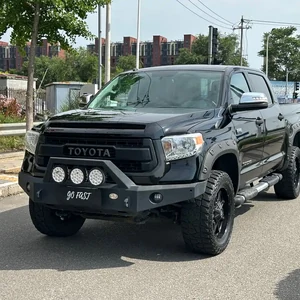
View all listings →Real units currently on ChinaCarDirect with per-unit asking prices and MOQ. Availability updates live from the catalogue.
How to buy a Toyota Tundra from China
-
1
Set the destination and operating brief
Specify the destination country, intended port, steering-side requirement, cab layout, expected payload and towing duties. Separate fleet work vehicles from premium or off-road purchases so the shortlist is not diluted by unsuitable configurations.
-
2
Build a like-for-like shortlist
When you buy a Toyota Tundra from China, compare only vehicles with similar year, trim, engine, drivetrain, seating and condition. Use the live listings for the current per-unit price, MOQ and availability.
-
3
Request unit-level verification
Ask for the VIN, engine and transmission designation, axle, factory options, ownership or import documents, service history and clear photographs. Confirm that the trim description corresponds to the vehicle rather than only the listing title.
-
4
Build the landed-cost comparison
Request a written quotation stating the unit price, currency, payment terms, origin charges, freight method, insurance, Incoterm, documentation and destination charges. Keep taxes and duties clearly identified as included or excluded.
-
5
Confirm wholesale MOQ and payment milestones
Check the supplier’s MOQ, price breaks, currency, deposit, balance and refund conditions. Put the selected VIN or SKU, condition, options, release milestones and shipping responsibility into the purchase record.
-
6
Complete inspection before release
Use an agreed inspection process to verify condition, mileage, matching documents, keys, tools and included accessories. Release the balance only when discrepancies are resolved and ownership documents are complete.
-
7
Ship, clear and register
Use a forwarder that understands full-size pickup transport, cargo securing and insurance. Confirm customs clearance, destination inspection, registration, insurance and local service support before the vehicle is released into service.
Tundra vs rivals
| Ford F-150 | The F-150 is a like-for-like full-size rival with broad powertrain and trim choice, including options some markets prioritize for diesel or commercial work. The Tundra is the stronger fit for buyers placing weight on Toyota’s truck identity, the 1794 Edition or the off-road-focused TRD Pro. |
|---|---|
| Chevrolet Silverado | The Silverado competes directly through work-oriented versions, technology and multiple engine choices in many markets. The Tundra offers a more focused 5.7-liter range, while a 3.5-liter parallel import may provide a simpler operating proposition for selected fleets. |
| Ram 1500 | The Ram 1500 is a credible alternative for buyers prioritizing towing capability, powertrain breadth and premium cabin technology. The Tundra favors buyers who value Toyota’s reputation, the 1794 Edition’s refinement or TRD Pro’s off-road identity. |
Frequently asked questions
How is Toyota Tundra export pricing determined?
The live price reflects the individual vehicle’s year, trim, engine, drivetrain, condition, mileage, options and import route. Freight, insurance, documentation, exchange-rate movements, destination charges and the selected Incoterm can change the landed total. Check the live Toyota Tundra listings for the current per-unit figure and request a written quotation for the intended destination.
Which Toyota Tundra engines and powertrain variants are available?
The represented range includes 5.7-liter V8 versions in 1794 Edition, TRD Pro and Standard Model roles, plus 3.5-liter V6 parallel-import examples. Automatic transmissions and four-wheel-drive examples are available, but the exact engine, axle, seating and equipment package must be verified per unit.
Should an overseas buyer choose a new or used Toyota Tundra?
New vehicles are easier to standardize for fleet handover and generally offer more predictable condition and mileage. Used trucks can broaden configuration choice and reduce acquisition pressure, but require VIN verification, service-history checks and a detailed condition inspection. A parallel-import description identifies the sourcing route, not whether a vehicle is new or used.
What is the minimum order quantity for a Toyota Tundra?
MOQ depends on the seller, vehicle and shipment arrangement. Some offers may accept a single unit, while wholesale or containerized programs can require a stated quantity. Confirm the applicable MOQ and any price breaks on the live listing and in the written quotation before paying a deposit.
How long does Tundra shipping take and what does it cost?
Transit time and cost depend on the origin and destination ports, transport mode, vehicle dimensions, route availability, handling, insurance and market demand. Ocean, road and specialist trailer options have different cost and protection profiles. Ask the forwarder for a door-to-port or door-to-door quotation under the agreed Incoterm.
Are Toyota Tundra spare parts available for export vehicles?
Parts availability depends on the destination’s Toyota dealer network, the vehicle’s VIN, production market and whether the required component is model-specific. Common service items may be easier to source than TRD or market-specific parts, while some components may require specialist or remanufactured alternatives. Check part numbers and interchangeability before ordering a mixed fleet.
Is a right-hand-drive Toyota Tundra available for export?
RHD availability depends on the source market and the individual vehicle; a parallel-import label does not guarantee steering configuration. Confirm whether the vehicle is factory RHD or converted, and whether that configuration satisfies local registration, safety inspection, insurance and service requirements.
How do I order a Toyota Tundra through ChinaCarDirect?
Select a candidate from the live Tundra inventory and send the destination, required configuration, quantity and Incoterm for a current quotation. After verifying the VIN, condition, documents, MOQ and payment milestones, complete the agreed inspection and release process. The forwarder then coordinates transport, customs clearance and destination handover.
Ready to source the Toyota Tundra?
Send ChinaCarDirect your destination, target trim, engine, quantity and Incoterm for a current per-unit quotation and availability check.
Request a quote