
Venucia M50v Export Buying Guide for Overseas Dealers
Compare trims, source new or used M50v units from China, and plan pricing, MOQ, shipping, homologation and compliance with confidence for overseas dealers.
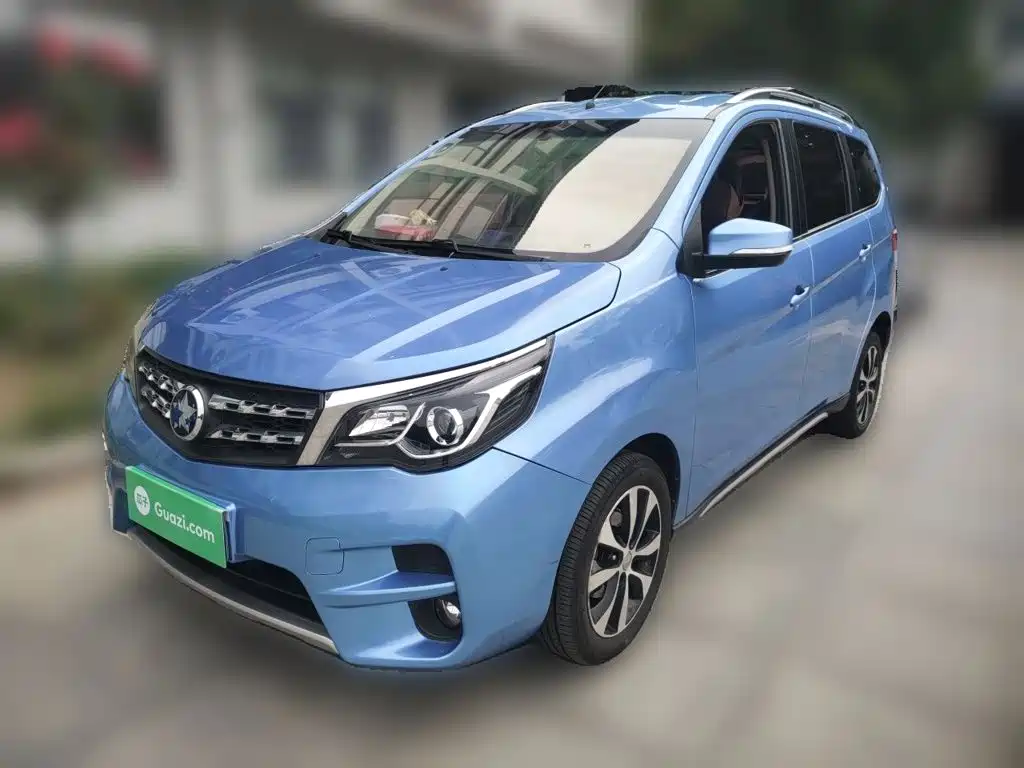
At a glance
- The M50v is a compact petrol SUV offered with 1.5L and 1.6L engines.
- Manual and CVT transmissions appear across XL and XV naming groups.
- New and used sourcing require different checks for warranty, condition, history and residual risk.
- Export pricing changes with specification, condition, market costs and Incoterm.
- MOQ, current unit price and availability must be confirmed on each live listing.
- LHD/RHD status and homologation must be checked for the destination country.
Why the Venucia M50v matters for export markets
The Venucia M50v matters in export markets because it combines a compact SUV format with small-displacement petrol engines, manual and CVT options across equipment grades. That combination makes it relevant to importers serving cost-conscious passenger-car segments where buyers want a raised, practical body without moving into larger or more expensive vehicles. It is an internal-combustion model, so charging infrastructure does not affect ownership. For overseas dealers, its attraction is operational: clear powertrain choices, manageable servicing considerations and a class widely familiar to many fleet and private buyers in their markets.
The model is most relevant to dealer groups that need a vehicle for city use, regional travel and mixed road conditions. Manual versions can suit drivers comfortable with straightforward gear operation, while CVT versions reduce stop-and-go workload for business users and family fleets. Venucia is a China-focused marque, so the export decision depends less on badge recognition and more on price competitiveness, local aftersales support, spare-parts access and the importer’s ability to certify each vehicle. This makes the M50v a candidate to evaluate, not a model every market should carry.
Global buyers should separate the value of the underlying vehicle from the cost and risk of bringing it into service. A compact SUV can simplify product planning for importers that already handle Chinese brands, yet each destination has its own rules on emissions, safety, vehicle age, registration and used-car imports. The most defensible approach is to define the target customer first, then select the powertrain and grade that can be homologated, serviced and resold in that market without relying on assumptions from another country or on a generic export catalogue.
- Petrol compact-SUV platform
- Manual and CVT choices
- Local support and compliance matter
Model range, trims and powertrain variants: how the lineup is structured and how to choose
The M50v range is organized around 1.5-litre and 1.6-litre petrol engines, with manual and CVT transmissions appearing across different grade combinations. Visible listings include the 1.5L XL Manual Comfort, 1.5L XV Manual Elite, 1.6L XL CVT Luxury, 1.6L XV CVT Deluxe and a 1.6L CVT Flagship naming pattern. Edition suffixes such as Comfort Edition, Luxury Edition or Flagship Model can distinguish market or model-year variants, so a buyer should compare the full descriptive title rather than rely on the XL or XV badge alone without an equipment or specification sheet.
Choosing between the manual and CVT should begin with the operating environment and the workshop network. A manual can be attractive where drivers are used to it, where simplicity is valued and where a transmission specialist is easier to find. A CVT may suit higher-mileage urban work, frequent congestion and customers who prioritize smooth, low-effort progress. Neither transmission should be selected on the badge alone: confirm the actual gearbox fitted, its condition on a used car, service history, fluid requirements and the spare-part support available locally in the destination country.
Engine displacement is a key decision, but it should not be reduced to a performance assumption. The 1.5L and 1.6L versions occupy different listing and trim combinations, and they should not be treated as interchangeable without checking the seller’s specification sheet for that market. Ask for the engine code, output rating, emissions information, cooling and climate equipment, and confirmation of the transmission type. Then assess the grade names as equipment packages, verifying features and condition from photographs rather than inferring them from words such as Luxury or Flagship for that model year.
- Match gearbox to duty cycle
- Compare complete trim titles
- Verify each unit specification
New vs used Venucia M50v: how export inventory is structured and how buyers choose
The export market for the M50v includes both new examples and used vehicles, and the two categories should be compared on total financial exposure rather than purchase price alone. A new vehicle generally avoids wear and uncertainty around prior use, but it carries a larger working-capital requirement and may involve production, transport and homologation lead times. A used vehicle can reduce initial capital and provide an immediately saleable compact SUV for a test market. Neither category is automatically cheaper after freight, duty, tax, insurance, inspection and expected preparation are included.
For a used M50v, the buying process should be more forensic because the same model title can hide different maintenance histories and condition. Verify the VIN, production details, registration documents, odometer reading, service records and ownership history. Inspect cold starting, idle quality, oil leaks, coolant condition, transmission behavior, brake condition, tire age, suspension noise, underbody damage and evidence of accident repair. Treat an unusually attractive live quote as a reason to request more evidence and, if the evidence remains incomplete, to walk away from the transaction without making a commitment.
For a new example, confirm whether it is factory-fresh, demonstrator or previously registered, because those descriptions can affect warranty, resale expectations and local registration treatment. Obtain the production or invoice date, complete option list, VIN, delivery status, warranty terms and pre-delivery inspection record. Compare expected delivery timing with the importer’s stock plan and test-drive schedule. The practical choice is the category whose downtime, financing cost and residual-value uncertainty best match the dealer’s cash cycle. Small launch volumes reduce risk before local market demand, taxes and aftersales economics have been proven.
- New units reduce wear uncertainty
- Used units need forensic inspection
- Align exposure with launch timing
How export pricing works: the factors behind a live listing price, and how to read one
A Venucia M50v export price is not a single fixed factory figure. It reflects model age, trim and equipment, engine and transmission combination, mileage, condition, ownership history, production or registration status, and the seller’s commercial terms. Market conditions also matter: the exchange rate, freight, marine insurance, port charges, inspection, documentation, destination taxes and the chosen Incoterm can change the landed total. Compare quotations only after confirming whether each price covers the vehicle alone, domestic handling, export clearance or delivery to the buyer’s nominated destination. This distinction prevents misleading headline comparisons.
New and used listings should be read differently even when their headline figures look similar. For a new vehicle, verify production date and option consistency; for a used vehicle, price movement may reflect condition, remaining service life, refurbishment needs or documentary completeness. The same trim name can conceal market-specific equipment changes, so a buyer should normalize every quote by year, engine, gearbox, grade, mileage and condition. That normalization is essential before presenting a price to a customer, negotiating volume or deciding whether a containerized shipment creates meaningful savings for buyers.
On ChinaCarDirect, use the live M50v listings as the binding source for current per-unit price, availability and MOQ. Open each record rather than relying on a search-result summary, then check the vehicle description, photographs, identifiers and seller contact information. If the page does not state what is included, request a written pro forma quotation naming the Incoterm, payment milestones, documentation, inspection rights, freight assumptions and validity period. Treat the displayed listing as the starting point for a transaction, not as a substitute for the signed order confirmation or final invoice.
- Normalize like-for-like quotations
- Separate price from landed cost
- Confirm Incoterm in writing
MOQ, ordering and payment: single units vs consolidating a container
MOQ for a Venucia M50v wholesale order is set by the seller, so buyers should read the live listing rather than assume a catalogue-wide rule. Some sellers may accept a single vehicle; others may offer a better structure for several units or a mixed container. A one-unit order suits market testing, a dealer with limited cash or a customer requiring a particular specification. Consolidating several compatible vehicles can improve freight efficiency, but it also increases inventory risk, storage exposure and the number of specifications that must be sold before dispatch.
The ordering sequence should be controlled from the start. Select a unit from the live inventory, request its VIN and full specification, negotiate the price and Incoterm, and obtain a written pro forma invoice. Ask when the vehicle is reserved, what deposit is refundable, when the balance is due, and what conditions permit cancellation. Before final payment, commission the agreed inspection and verify the vehicle identity and documents. The balance should normally follow satisfactory inspection and contractually defined release, with the precise sequence agreed expressly in writing before dispatch occurs.
Payment and container decisions should be made together. Bank transfer is common for vehicle transactions, while larger orders may use documentary credit or another protected instrument. Verify the beneficiary details against the invoice, use a traceable payment channel and independently confirm bank changes before sending funds. For a consolidated shipment, budget not only freight but also terminal handling, storage, insurance, inspection, export paperwork and the risk of holding unmatched vehicles. A lower per-vehicle purchase price can be outweighed by slower sell-through, so model the complete landed cash requirement before committing.
- Read each listing’s MOQ
- Single units enable market testing
- Consolidation creates inventory risk
- Protect deposit and final payment
Shipping, homologation and market compliance caveats: LHD/RHD and import rules by country
Export shipping for an M50v is arranged as a vehicle shipment within a full container or as a less-than-container load, depending on order size and sailing capacity. The quotation should state the origin and destination terminals, cut-off dates, loading method, freight charge, insurance, documentation and any yard or handling fees. Transit time is quote-specific and changes with port congestion, transshipment, sailing schedules and customs clearance. Neither the booking confirmation nor the production date alone guarantees a delivery date, so buffer the dealer’s launch plan without assuming a fixed transit timetable.
Homologation is a country-specific legal step. Depending on the destination, an importer may need evidence of emissions compliance, safety requirements, type approval, VIN identification, roadworthiness, customs classification and payment of duty or taxes. Connected-vehicle software and cybersecurity update requirements may also apply in destination markets under local law. The M50v should be treated as left-hand drive unless the unit is confirmed otherwise. If local rules or customers require right-hand drive, secure a documented RHD source or use only a certified conversion that has been assessed for safety, registration and insurance.
Used vehicles can face additional restrictions or scrutiny, including age limits, emissions testing, proof of prior registration, inspection standards or bans on certain used-car imports. Before contracting, the importer of record should confirm the model’s eligibility, calculate taxes from the classification and engine description, and identify who handles port clearance and delivery. Also verify that steering, lighting, restraint and equipment requirements match the destination. A vehicle that is roadworthy in China is not automatically road-legal elsewhere, so local approval must be completed before the unit is marketed as fully compliant.
- Compare container and LCL options
- Confirm driving side before contracting
- Complete local approval and customs review
- Allow for port and clearance delays
Who should buy the M50v — and who should pick a different vehicle
The M50v can suit independent importers, small dealerships and fleet buyers that need a compact SUV for urban and regional mobility, particularly where petrol infrastructure is established and the buyer values operating simplicity. It is also a sensible candidate for launching a new Chinese-brand line in modest volumes because the range provides distinct manual, CVT and comfort-oriented choices. The strongest fit is a buyer willing to build a proper parts and service plan, verify each specification and price the vehicle on a realistic landed and retail basis, not on a headline figure.
It is a weaker choice for an importer whose market is moving rapidly toward electrified fleets, requires all-wheel drive for sustained poor-road access, or expects premium-brand levels of residual value and brand recognition. It may also suit buyers poorly if they need a specific right-hand-drive factory build, heavy towing capacity, a large cargo bay or advanced driver-assistance features that are not confirmed for the sourced trim. Rather than forcing the M50v into those roles, compare a locally supported rival that better matches the use case and overall ownership expectations.
Before placing an order, create a short weighted scorecard covering purchase and landed cost, expected resale or utilization period, service accessibility, parts lead time, fuel use appropriate to local conditions, warranty support and certification effort. Test-drive the exact transmission and grade where possible, and inspect a used unit in person or through an independent inspector. The vehicle’s suitability depends on whether its strengths survive the destination market’s taxes, labor costs, road conditions and customer expectations. That check is more useful than choosing blindly on displacement, trim name or badge alone.
- Suits value-focused importers and fleets
- Requires a credible parts plan
- Unsuitable for electric mandates
- RHD must be confirmed
Main rivals and how the M50v compares
Among Chinese-brand compact SUVs, the JAC S3 is a close alternative because it occupies a similar vehicle class and has been exported with small-displacement petrol engines and manual or automated transmissions. For a dealer, the deciding questions are not badge or brochure hierarchy but equipment, local parts coverage and landed cost. The M50v may present a more attractive sourcing proposition where the intended grade is well represented and support is established; the S3 may be easier for a buyer whose destination already has a stronger and more accessible JAC service network.
The Chery Tiggo 7 offers a broader alternative within the compact-SUV class, with a model family and export footprint that buyers in many markets recognize. It is relevant when a dealer values a broader parts and residual-value ecosystem or wants more powertrain and trim choices than the M50v market offers. The M50v can still make sense for buyers prioritizing a compact, straightforward package and negotiating with a listing. Neither should be selected without checking crash, emissions and tax treatment in the destination, because local approval can alter the practical ranking.
The Zotye T300 is a useful lower-size benchmark: it is a subcompact SUV that competes for first-time-brand buyers and price-sensitive importers rather than buyers needing maximum cabin or cargo space. Compared with the M50v, it may better serve a compact brief, while the M50v’s wider mix of manual and CVT comfort-oriented grades can be relevant to a dealer wanting varied stock. The deciding variable is local after-sales resilience: select the model whose parts, technician knowledge and residual demand are most likely to remain workable after the vehicles reach the market.
- JAC S3: closest class alternative
- Chery Tiggo 7: broader familiarity
- Zotye T300: smaller buyer brief
- Local support decides the outcome
Live Venucia M50v export inventory
View all listings →Real units currently on ChinaCarDirect with per-unit asking prices and MOQ. Availability updates live from the catalogue.
How to buy a Venucia M50v from China
-
1
Define the target specification
Write down the destination country, required driving side, engine, transmission, grade, use case and maximum total cost. This prevents a low purchase price from masking taxes, conversion, freight or compliance costs.
-
2
Review live M50v listings
Open the live Venucia M50v inventory to check each unit’s current price, availability, MOQ and photographs. Treat a displayed listing as the starting point, but reconfirm its status with the seller before transferring funds.
-
3
Request unit-level evidence
Ask for the VIN, complete specification sheet, option list, service history where applicable and clear photographs. For a used vehicle, request documents that support mileage, registration and ownership history.
-
4
Build a landed-cost comparison
Normalize competing quotes by engine, transmission, grade, condition and age. Add freight, insurance, port charges, inspection, duties, taxes and inland delivery according to the proposed Incoterm.
-
5
Agree commercial terms in writing
Confirm the MOQ, deposit, balance schedule, cancellation conditions, inspection rights, included documents and quotation validity in the pro forma invoice. Verify beneficiary details independently before making any payment.
-
6
Inspect before final release
Use an independent inspector for the selected used vehicle and verify the VIN against the invoice. Final payment should follow the agreed inspection and document-verification milestones.
-
7
Arrange shipping and import steps
Book the freight method, confirm cargo documents and instruct the importer of record on customs clearance and local homologation. Allow for port, sailing and regulatory variability rather than relying on a fixed delivery promise.
M50v vs rivals
| JAC S3 | Both occupy the compact-SUV value segment and can appear with small-displacement petrol engines and manual or automated gearboxes. Choose the M50v when its exact grade and sourcing terms are stronger; choose the JAC S3 where an established local JAC parts and service network reduces ownership risk. |
|---|---|
| Chery Tiggo 7 | The Tiggo 7 is a broader, more familiar compact-SUV alternative that may offer wider trim and powertrain choice for destination fleets. The M50v is the more focused purchase for buyers seeking a simpler compact package and direct unit-level sourcing, provided certification and support are secured. |
| Zotye T300 | The T300 sits lower in size and price positioning, so it can suit buyers wanting a smaller subcompact footprint. The M50v may be the better fit where a dealer needs a broader selection of manual and CVT comfort grades; the final choice should favor stronger local parts and technician support. |
Frequently asked questions
How is Venucia M50v export pricing determined, and where can I see the live price?
Live export pricing reflects the vehicle’s age, trim, engine, transmission, mileage or condition, options and the seller’s commercial terms. Exchange rates, freight, insurance, port charges, taxes and the selected Incoterm affect the landed amount. Current binding price and MOQ are shown on each live ChinaCarDirect M50v listing, while a written quotation should confirm inclusions and validity.
What engine and transmission options does the Venucia M50v have?
The range uses 1.5L and 1.6L petrol engines, paired with manual or CVT transmissions depending on grade. The M50v is an internal-combustion vehicle rather than an electric variant, so there is no battery capacity or electric range to compare. Confirm the engine code, output, transmission and equipment for the exact unit.
Should an overseas buyer choose a new or used Venucia M50v?
A new example reduces wear and history uncertainty but normally requires more capital and may involve production and transport lead time. A used M50v can offer a lower initial commitment but needs a detailed inspection, document verification and a realistic repair allowance. Choose the category that fits the buyer’s cash cycle and confidence in local aftersales support.
How does MOQ work for a Venucia M50v wholesale order?
MOQ is set by the individual seller and stated against the applicable listing or quotation. Some sellers may accept one vehicle, while others may offer terms for several units or a mixed container. Buyers should not assume a catalogue-wide quantity and should secure the MOQ, deposit and cancellation terms in writing before paying.
How long does M50v shipping take, and what affects the cost?
There is no fixed transit time or universal freight charge. Port congestion, transshipment, sailing schedules, customs clearance, insurance, documentation and handling fees all affect the shipment. Compare container and less-than-container quotations that state the route, cut-off dates, Incoterm and included services.
Can spare parts be ordered for the Venucia M50v?
Spare parts can often be sourced from Chinese suppliers using the vehicle identification and original part numbers, but availability and lead time vary by item. A buyer should confirm the supplier’s catalogue, cross-reference numbers and compatibility before relying on a part for launch stock. Serviceable consumables, workshop manuals and technical support are also worth checking.
Is a right-hand-drive Venucia M50v available for export?
Do not assume right-hand-drive availability from the model name; Chinese-market examples are generally left-hand drive unless the unit is confirmed otherwise. Buyers requiring RHD should search the live inventory and request documentary confirmation from the seller. A lawful conversion may be possible, but it must be assessed for safety, registration and insurance before shipment.
How do I buy a Venucia M50v from China?
Start with the live M50v listings, select a suitable unit and request a written quotation covering specification, Incoterm, MOQ and payment milestones. Verify the VIN and documents, complete the agreed inspection and satisfy the balance conditions before release. The importer of record should then arrange freight, customs clearance and destination-market homologation.
Ready to source the Venucia M50v?
Send an RFQ for a current Venucia M50v specification, with MOQ, Incoterm, inspection and shipping options confirmed in writing.
Request a quote