
Venucia R50 Export Guide: Trim, Pricing and Buying Advice
Buy a Venucia R50 from China with confidence: compare trims, manual and automatic options, export pricing, MOQ, shipping, compliance and key rivals.
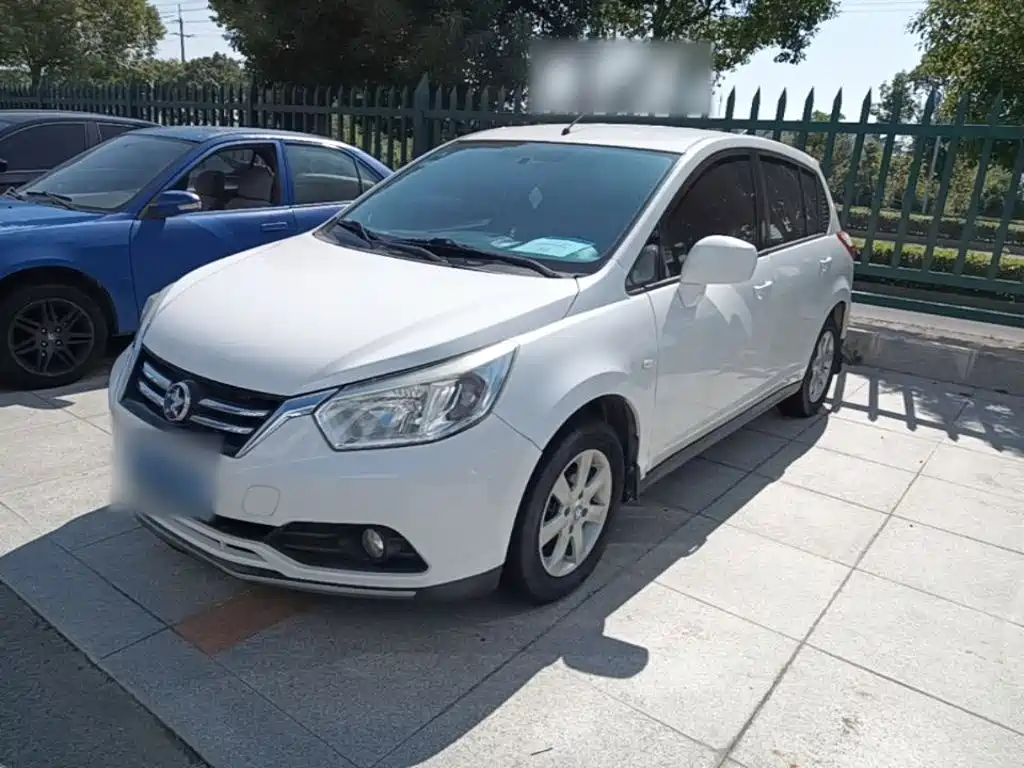
At a glance
- The R50 is a compact 1.6-litre gasoline hatchback positioned for value-focused urban and fleet use.
- Manual and automatic versions span Fashion, Exciting, Luxury and Elite names, while R50X derivatives also appear in export naming.
- New, older-model stock and used examples call for different evidence around age, mileage, registration and condition.
- Export prices and MOQs are unit-specific; written quotations and live listings provide the binding commercial terms.
- Steering side, destination-country compliance and local parts support must be confirmed before an order is funded.
Why the Venucia R50 matters for export markets
The Venucia R50 is a compact hatchback aimed at buyers who prioritize packaging efficiency, straightforward ownership and a lower acquisition position than newer small cars. For export markets, its value is practical rather than prestige: it suits independent importers, small rental operators and company-car buyers seeking an easy-to-manage vehicle for urban and regional duty. The model’s format also gives buyers something different from a rebadged sedan, with a compact footprint that can be useful where parking space and operating costs are tighter in commercial areas and cities, particularly where parking is limited.
Global demand for this type of car is strongest where the brief is economical transport rather than long-distance luxury. The R50’s small-car dimensions, gasoline powertrain and choice of manual or automatic transmission make it relevant to a broad set of markets, although the exact configuration and roadworthiness must be checked for each destination. Its strongest export appeal comes from combining a Chinese-brand alternative with familiar hatchback utility, service requirements and the possibility of purchasing without committing to a fleet order when one vehicle is operationally sufficient for the application and planning is straightforward.
The R50 should not be confused with a supermini or a crossover simply because its badge is unfamiliar abroad. It represents a value-oriented market proposition, so buyers who value engineering simplicity and a low purchase threshold may find it compelling, while those prioritizing the newest safety architecture, electric propulsion or a developed local aftersales network may not. Export demand is strongest among distributors and fleet buyers who can assess parts support and compliance costs before committing to a destination market, particularly where regulatory work or recurring fleet downtime could erase the value advantage.
Model range, trims and powertrain variants: how the lineup is structured and how to choose
The export-facing R50 line is built around a 1.6-litre gasoline engine, with manual and automatic transmissions appearing across the range. Trim naming includes Fashion, Exciting, Luxury and Elite, sometimes with the body designation R50X attached. Rather than treating those names as an equipment ladder, compare each vehicle on the same dimensions: transmission type, trim equipment, production year, condition and whether the seller can document the history. A higher trim does not automatically mean a better export proposition if its equipment is less relevant to local use or support for the destination market.
Manual versions make sense for buyers who are comfortable with driver involvement and want the simplest drivetrain concept for mixed urban use. Automatic versions are usually more attractive to shared fleets, novice drivers and operators who spend the day in traffic, although the gearbox type and operating characteristics must be confirmed in the listing. Because tax bands, fuel use and insurance can differ by transmission and market, the decision is to model total operating cost locally rather than choose the automatic for convenience in daily use or to flatter the vehicle’s resale image.
The R50 and R50X labels need careful interpretation. R50 denotes the standard compact hatchback, while R50X is used for a related raised-body or crossover-styled derivative in the export naming seen for this model. Buyers should not assume that the X version offers the same dimensions, ground clearance, loading capacity or regulatory treatment as the standard car. Request the specific model designation and applicable dimensions for the vehicle being quoted, then check whether local tax, insurance and parking rules make the derivative practical for the intended duty cycle rather than relying on model family assumptions.
- Confirm whether the listing is R50 or R50X before comparing equipment or dimensions.
- Compare manual and automatic choices against local fuel, tax and insurance assumptions.
- Treat Fashion, Exciting, Luxury and Elite as trim labels, not guarantees of export equipment.
New vs used Venucia R50: how export inventory is structured and how buyers choose
R50 export supply is commonly organized as new, older-model stock rather than as an established used-car market. A vehicle can therefore be described as new while carrying an earlier production year, which is normal for a mature export programme. The important distinction is whether it has been registered, driven or otherwise altered. Ask for the production date, odometer reading, prior-registration documents and any evidence of storage or pre-delivery movement because those details determine whether “new” is commercially useful to the importer or simply a catalogue classification without supporting records from the supplier.
Used R50 vehicles can be more attractive where the buyer needs an operating history, wear and a lower acquisition point, but they introduce more uncertainty. Mileage alone is not proof of condition; look for service records, repair history, accident evidence, VIN details and evidence that the engine, transmission, climate system and electrical equipment work as described. For fleet use, a well-documented used unit may reduce early teardown risk provided the inspection cost and expected refurbishment are included in the landed budget before the vehicle is firmly committed to the binding purchase order.
New, older-model inventory offers a distinct risk profile. It may avoid the repairs and accumulated wear associated with used cars, yet age can bring battery deterioration in the climate-control system, seal wear, fluid condition issues and storage-related faults. A pre-shipment inspection should be treated as essential even when the listing says new. The better choice depends less on a universal rule than on inspection evidence, documentation and intended service life in the destination market, rather than on the published sales label used by the exporter alone or the platform’s clearly stated listing category.
How export pricing works: the factors behind a live listing price, and how to read one
A live R50 export price is not a fixed manufacturer retail price. It is built from the vehicle’s production year, exact trim and transmission, body version, condition, odometer status, originality and supplier availability. Currency movements can alter the local-currency figure, while the final delivered total may also change with freight, insurance, handling, port charges, inspection, registration and the selected Incoterm. The listing price should therefore be read as one component of a landed-cost comparison, not the complete cost of ownership over the planned holding period, including financing and residual-value assumptions before funding.
When comparing two live listings, first normalize the comparison. Confirm whether each quote excludes or includes export documentation, marine insurance, inland transport and export taxes; do not assume two identical headline prices describe the same service. Then check the production year, trim, manual or automatic transmission, R50 or R50X body, condition wording and odometer disclosure. Ask for the quote validity period and whether the seller will hold the unit once a deposit is accepted. These checks reveal the commercial terms that a low headline figure may conceal from the importer before approval.
Buyers seeking a Venucia R50 wholesale should request a written quotation tied to a specific listing or SKU, not rely on a general market figure. The quote should state the vehicle identity, condition classification, currency, payment schedule, validity, Incoterm, destination and every charge that is included or excluded. Current binding prices and availability must be checked in the live R50 inventory at the moment of purchase. A provisional range is useful for budget planning, but only the unit-specific quote and sales terms should govern final approval within the buyer’s formal control process.
MOQ, ordering and payment: single units vs consolidating a container
The minimum order quantity is a seller-level commercial condition, not a fixed characteristic of the R50 model. Some listings may permit a single-unit purchase, while a supplier may set a higher MOQ for export orders, container loading or less favourable vehicle age and condition. Read the MOQ shown against the specific listing, but confirm it in the quotation because it can depend on trim, destination, payment method and shipping plan. Do not assume that a headline price remains available at the same MOQ after documentation, transport and insurance are confirmed in writing.
For a trial or small-business purchase, ask whether one vehicle can be reserved under the listing’s stated MOQ and whether the seller accepts an insured transport method suitable for that unit. Payment terms normally move from deposit to final balance against agreed documentary milestones, but the exact sequence must be negotiated. The buyer should specify who owns the goods in transit, when risk transfers, what documents are required for release and what happens if inspection, shipping or customs documentation fails to match the contract or is delayed at any stage before shipment.
Container consolidation can improve freight efficiency, but it changes the buying risk. One order may mix R50 variants or other vehicles only if the seller confirms loading dimensions, weight distribution, securing requirements and commercial acceptance of the combined shipment. Each unit should retain its own VIN, condition record and invoice line. Buyers consolidating stock should define the allocation method, photographic condition evidence, inspection sequence and procedure for replacing a unit that fails pre-shipment acceptance. This is more reliable than treating a full container as one undifferentiated product without prior agreement or suitable alternatives.
Shipping, homologation and market compliance caveats: LHD/RHD and import rules by country
Steering configuration is the first check when matching an R50 to a destination. Left-hand-drive and right-hand-drive markets have legal and practical requirements, and the badge does not establish which configuration a vehicle has. The live listing and supplier should confirm the steering position before a deposit is paid. If the required configuration is unavailable, ask about a conversion, but treat it as an engineering and regulatory work package with inspection, documentation and cost implications rather than assuming it is routine for the destination country, its road use and insurance arrangements for that market.
Import rules are determined country by country and can include vehicle age restrictions, customs valuation, taxes, emissions requirements, safety or equipment checks, VIN and document verification, insurance, registration and roadworthiness testing. A left-hand-drive vehicle may also face restrictions in right-hand traffic markets even where private imports are otherwise possible. The importer should confirm current requirements with a licensed customs adviser or authority before committing. ChinaCarDirect can help identify the vehicle and export documents, but it should not be treated as a substitute for destination-country approval or legal responsibility for clearance before dispatch.
Shipping method should be selected after the destination rules and vehicle condition are known. Ro-ro, container and flat-rack approaches each affect cost, security, loading requirements and the number of vehicles that can be grouped, while inland transport adds another variable. Secure the vehicle against movement, verify the VIN and export documents before loading, and photograph loading and discharge. Incoterms define the handover point, but the buyer still needs defined inspection, claims and damage-notification procedures because sale terms do not replace insurance or cargo handling by the appointed carrier or local freight agent.
- Confirm steering side, VIN and model designation before payment.
- Obtain destination-country import, tax, insurance and registration guidance before dispatch.
- Agree inspection, loading-photo, claims and risk-transfer procedures in writing.
Who should buy the R50 — and who should pick a different vehicle
The R50 is a candidate for urban dealers, small fleet operators, driving schools, campus shuttle planners and budget-conscious importers that need a compact gasoline hatchback rather than a prestige product. It can suit urban routes, light regional travel and applications where a smaller turning circle and straightforward powertrain are useful. Its appeal is strongest for buyers able to source parts and maintain vehicles in-house or through a local workshop, rather than for operators who expect warranty coverage in every market without a planned import support plan or established workshop network.
The case becomes weaker when the vehicle must meet a modern emissions mandate, provide electrified operation, carry a larger family or trade payload, or deliver the refinement and perceived brand prestige of a newer mainstream model. A buyer needing highway comfort, advanced driver assistance or a transferable manufacturer warranty should compare current-generation alternatives rather than relying on the R50’s value. The same caution applies to commercial operators whose downtime cost from parts availability or diagnostic complexity outweighs the initial acquisition benefit and where downtime must be minimized across fleet operations and uncertain resale.
Before buying, match the R50 to the duty cycle rather than a generic low-cost label. A manual car may suit a buyer who values control and simplicity; an automatic can reduce driver workload in stop-start traffic. Standard R50 and R50X bodies should be separated according to cargo and parking needs. Most importantly, run a compliance and aftersales budget alongside the vehicle quote. If local homologation, parts stocking and inspection cannot be handled responsibly, a readily supported vehicle may be the lower-risk commercial choice even if its purchase price is higher before the order is placed.
Main rivals and how the R50 compares
The Suzuki Swift is a segment rival because it is a compact global hatchback, but it generally represents a more current engineering and ownership proposition. Buyers prioritizing newer platform development, established international parts support or a stronger modern retail image may prefer the Swift, while value-focused importers may assess the R50 on another basis. The comparison should be made on the exact year, transmission, equipment, condition and landed support in the destination, plus local homologation outcomes after import work and tests, before signing any purchase order rather than on badge or body size alone.
The Hyundai i20 is another small-hatchback competitor, generally presenting a newer generation, refined road manners and a familiar international model image. That can make it easier to support and sell in markets where buyers recognize the Hyundai name. The R50’s counter-argument is its older-model value proposition, but that advantage should be tested against depreciation, insurance and servicing. Neither model should be assumed compliant or supportable in a destination until local requirements are checked with the importer and relevant authorities before any vehicle is ordered or shipped and the selected shipping terms are confirmed.
The Nissan March is the most direct technical and format comparison because the R50 is closely related to the March design. A buyer can therefore use March equivalents to understand expected space, packaging and service familiarity, but should not assume every engine, transmission, trim or equipment item is identical across Venucia and Nissan versions. Check the exact model code, dimensions and parts interchangeability. Against the March, the R50 may offer a China-market badge and different equipment value, which can suit a particular importer but may not help retail recognition abroad or in the export dealer channel.
Live Venucia R50 export inventory
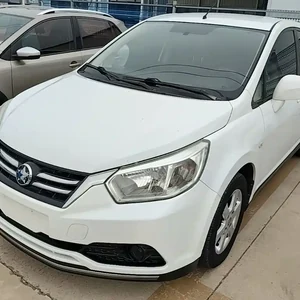
View all listings →Real units currently on ChinaCarDirect with per-unit asking prices and MOQ. Availability updates live from the catalogue.

How to buy a Venucia R50 from China
-
1
Set the market brief
Record the destination country, left- or right-hand traffic, intended route, passenger or cargo needs and whether manual or automatic is acceptable. This determines which R50 and R50X variants can be shortlisted before compliance work begins.
-
2
Filter the live inventory
Use the live R50 listings to compare production year, trim, transmission, body designation, condition wording and odometer disclosure. Treat every listing as a specific vehicle rather than a generic model price.
-
3
Request unit documents
Ask for the VIN, production date, engine and transmission description, equipment list, condition photographs and export-document details. Verify the vehicle identity and condition against what the seller will invoice.
-
4
Build a landed quotation
Request an itemized quote covering unit price, currency, MOQ, payment milestones, Incoterm, freight, marine insurance, destination charges and quote validity. Confirm every item that remains excluded.
-
5
Complete local approval
Have a local customs or roadworthiness adviser check age, emissions, safety, taxes, VIN, insurance, registration and steering-side rules. Approve only after the required homologation pathway and budget are clear.
-
6
Inspect before loading
Use an agreed independent or appointed inspection covering the VIN, exterior, interior, engine bay, underbody, road test and fluid checks. Document discrepancies and agree a remedy before shipment.
-
7
Consolidate and dispatch
For a multi-vehicle order, confirm allocation, securing, photographs, export documents, insurance and risk transfer. After loading, retain condition evidence, shipping documents and arrival tracking.
R50 vs rivals
| Suzuki Swift | The Swift is a close segment alternative with a more current global engineering and ownership proposition. Choose it where newer platform development, international parts support or stronger retail recognition matters; consider the R50 where its older-model value proposition can offset less direct local brand recognition. |
|---|---|
| Hyundai i20 | The i20 is another small-hatchback alternative, generally offering a newer generation, more refined road manners and more familiar international branding. It may suit buyers prioritizing modern ownership, while the R50 is more relevant to importers who value an established alternative and can support it locally. |
| Nissan March | The March is the closest technical and format comparison because the R50 is closely related to the March design. Compare exact model codes, equipment, dimensions and parts interchangeability, while accounting for badge recognition and any differences in service support. |
Frequently asked questions
How is the Venucia R50 export price determined?
The live price reflects the individual vehicle’s year, trim, transmission, body version, condition, mileage and supplier terms, plus the selected currency and Incoterm. Freight, insurance, port charges, taxes and destination registration can change the landed total. Use the live R50 listings for current unit prices and request a written, destination-specific quote before paying.
What engine and driving range does the Venucia R50 have?
The R50 is an internal-combustion model rather than an EV: export listings center on a 1.6-litre gasoline engine with manual or automatic transmissions. It has no battery-electric driving range; usable road range depends on fuel capacity, route, load, driving style and local refuelling. Verify the exact engine and transmission in the unit listing before ordering.
Are new and used Venucia R50 vehicles different for export?
New R50 stock is generally older-model inventory, so “new” may mean unworn or unregistered rather than current production. Used cars can provide operating history but add maintenance, accident and documentation uncertainty. Compare inspection evidence, VIN, production date, odometer status and service records rather than relying on the category label.
Can I buy one Venucia R50 from China?
A single-unit purchase may be possible if the selected listing permits it, but MOQ is set by the seller and may vary with vehicle age, trim and shipping plan. Read the listing’s current MOQ and include it in the written quotation. For container consolidation, confirm allocation, documentation and replacement procedures.
How long does shipping take and what does it cost?
Transit time and cost depend on origin and destination ports, mode, carrier schedule, vehicle count, fuel surcharges, insurance, handling and customs or inland charges. Older compact hatchbacks may fit standard vehicle-carrier arrangements, but the shipping agent must confirm actual dimensions, securing and capacity. Ask for an itemized delivered or port-cost quotation under a stated Incoterm.
Are spare parts available for the Venucia R50?
Parts availability depends on the exact R50 or R50X variant and the importer’s access to Venucia and related Nissan components where applicable. Before purchase, identify common wear items, confirm part numbers with the supplier and estimate lead time for items not held locally. A local workshop and planned parts buffer are especially important for an older model.
Is an RHD Venucia R50 available for the UK and other RHD markets?
Do not infer steering side from the model name or assume a particular country has RHD examples. Ask the supplier to verify the VIN-specific configuration and, if it does not match, request a formal cost and compliance assessment for conversion. Local import, inspection and insurance rules must also be checked.
How do I order a Venucia R50 through ChinaCarDirect?
Start with the live R50 listings, shortlist by body version, transmission, trim, year and condition, then request an RFQ for the specific unit or container plan. Confirm the MOQ, Incoterm, payment milestones, export documents, inspection standard and freight allocation in writing. A deposit should be paid only after the vehicle identity and sales terms are unambiguous.
Ready to source the Venucia R50?
Request a unit-specific Venucia R50 quotation and confirm the MOQ, specification, Incoterm and shipping options through ChinaCarDirect.
Request a quote