
Venucia T90 Export Buying Guide for Dealers
Plan a Venucia T90 export purchase with practical guidance on trims, pricing, MOQ, shipping, compliance and live inventory quotes for overseas buyers.
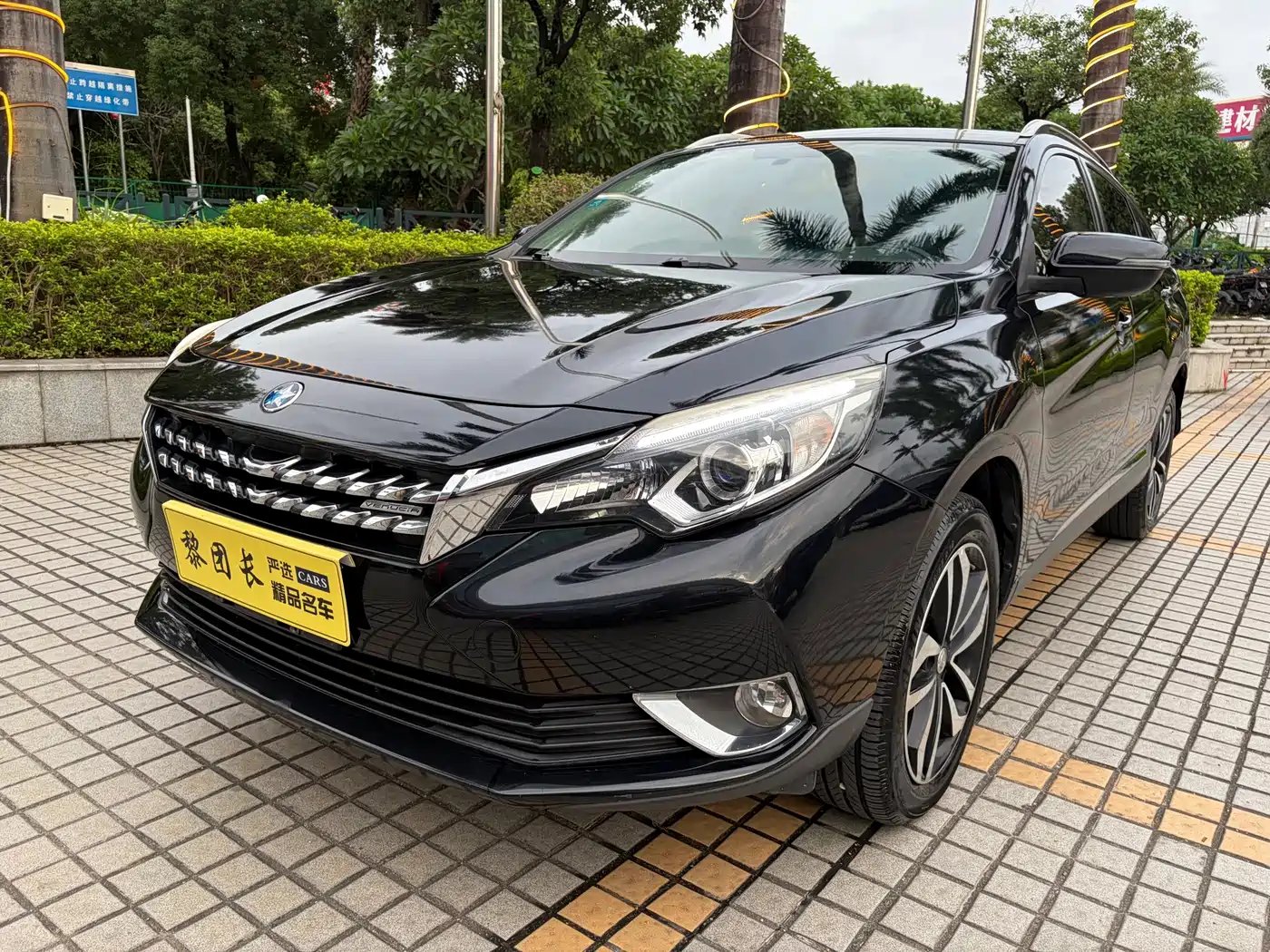
At a glance
- Venucia T90 is a China-market compact crossover from the Nissan-affiliated Venucia marque.
- The named range includes 2.0L gasoline CVT and manual versions plus a 260T mild-hybrid automatic.
- China V and China VI trim labels do not replace destination-country homologation.
- Live prices move with model year, trim, condition, specification and logistics.
- The T90 best fits value-focused buyers with a credible parts and compliance plan.
Why the Venucia T90 matters for export markets
The Venucia T90 occupies a useful middle ground in China’s vehicle market: a compact crossover with more cabin height and luggage flexibility than a conventional sedan, but a less commercial footprint than a large SUV. That positioning makes it relevant to overseas dealers looking for an accessible, road-oriented family vehicle rather than a premium model. Its appeal is strongest where buyers value practicality, visual size and everyday equipment over brand prestige or the lowest possible acquisition cost. The Nissan-affiliated Venucia marque can also help buyers who recognise the wider Dongfeng-Nissan relationship, although badge recognition varies by country.
Demand for the T90 in its segment should be understood as a value proposition, not as evidence of a universally strong international franchise. Compact crossovers suit buyers who want SUV seating, moderate ground clearance and flexible carrying space without moving into the fuel and ownership cost of a larger vehicle. For fleet operators, the combination can be useful where a five-seat passenger derivative fits the duty cycle. For dealers, however, local fuel economics, road conditions, tax bands and parts support matter more than headline equipment alone at point of sale locally.
Export planning must separate product desirability from legal deployability. A vehicle that is popular in China may still need destination-specific approval for safety, emissions, radio equipment, data or connected services. The T90 should therefore be positioned as a sourcing candidate whose success depends on careful variant selection and early regulatory screening. Buyers who verify documents, steering configuration, serviceability and landed economics before committing will get a more reliable result than those who order solely on appearance or catalogue nomenclature. That discipline is especially important for first-time importers entering a tightly regulated market.
Model range, trims and powertrain variants: how the lineup is structured and how to choose
The T90 range is easiest to understand through its named editions. Export-facing configurations include the 2.0L CVT Smart Edition, Smart Connected Premium Edition China VI, Smart Connection Intelligent and Fashion editions China V, Smart Connect Smooth Edition, 2.0L manual Smart Edition and Trend, plus the 260T Mild Hybrid Auto Smart Connect Smooth Edition. Because these labels originated in China, buyers should not assume every similarly named car has identical equipment. The live specification and photographs should control the individual-unit decision. Ask the seller to reconcile the English trim name with the original configuration sheet.
Transmission choice provides the first practical branch. CVT-equipped cars suit drivers who prioritise straightforward automatic operation and consistent delivery across mixed traffic; manual versions can suit buyers with local manual-driving demand or a lower-spec fleet brief. The 260T mild-hybrid edition adds a distinct mild-hybrid operating proposition without turning the T90 into a battery-electric vehicle. It should not be judged by BEV range figures: fuel consumption, battery condition, driveability and local fuel availability are the relevant checks. Confirm whether the hybrid hardware remains warranted and whether spare parts can be sourced regionally.
Connected, Intelligent, Fashion and Premium wording signals different feature bundles, but translated names alone are not a reliable equipment audit. Compare infotainment, phone integration, driver-assistance functions, upholstery, climate control, wheel design and luggage capacity against a written requirement. For fleets, prioritise uptime, ease of cleaning, replacement-part cost and standard equipment over cosmetic naming. For dealer launches, a Smart base car may be easier to explain, while a higher equipment grade may need stronger pricing and residual-value support. A live listing should support those conclusions with clear images, documents and an itemised specification.
- CVT, manual and mild-hybrid paths.
- Verify edition names against documents.
- Match equipment to fleet needs.
New vs used Venucia T90: how export inventory is structured and how buyers choose
Export inventory should be read by condition, model year and specification rather than by the word “new” alone. New-old-stock vehicles can carry earlier production dates yet remain unregistered, while showroom or demonstration cars may have very low mileage under a different sales status. Used vehicles add a visible service history and known wear, but may also bring fleet use, accident repairs or deferred maintenance. Ask each seller to define the condition precisely rather than assuming a common category across the catalogue. The distinction can materially affect depreciation, warranty and buyer confidence.
For a dealer testing demand, a recent model year can simplify positioning and consumer-finance comparisons, although exact availability changes over time and compliance still requires verification. For a budget fleet, an older unregistered example may offer a more practical acquisition equation if its condition, documents and remaining life are sound. Mileage is not meaningful by itself on a vehicle sold as new: production date, first-registration status, road-tax status and warranty commencement can be more important. These points should be reconciled across the invoice, identification papers and dispatch documents before any payment is released.
Used T90 purchases are most defensible for buyers who can inspect and service the vehicle, verify its history and price the necessary refurbishment as part of the landed cost. They are less attractive to first-time importers who lack inspection access in China or a local technician familiar with the model. For either condition, request high-resolution images of the VIN plate, odometer, engine bay, underside, wheels, cabin and damage areas. A pre-shipment inspection is particularly valuable when several cars in a planned group differ in age or history before release of funds.
- Verify production and registration status.
- Reconcile invoice and inspection records.
- Budget carefully for refurbishment.
How export pricing works: the factors behind a live listing price, and how to read one
A T90 export price is not one fixed number attached to the model name. It changes with model year, edition, engine and transmission, condition, mileage where applicable, production or registration status, and the level of support included by the seller. Currency movements also affect the quote, while destination taxes, insurance, documentation and transport can change the final payable amount. Buyers should therefore separate the vehicle’s commercial terms from the landed cost of putting it into service. This distinction prevents a seemingly attractive listing from becoming expensive after charges that were not stated in the same currency or scope.
Read each live listing as a quotation subject to confirmation. Check the currency, quantity, model year, exact trim, condition, VIN or stock reference, and whether the displayed figure covers the vehicle alone or includes export preparation. Then identify the Incoterm and its named place, since the party responsible for loading, insurance, clearance and delivery changes under different terms. Ask for a written quotation with validity, payment milestones and exclusions. Do not infer that an ex-works price includes ocean freight, destination charges or duties. Those distinctions protect comparisons made across suppliers properly.
The fairest comparison uses the same specification and the same trade term. Start with the live T90 listings, shortlist the configurations that meet the technical brief, and request refreshed per-unit quotes before making a decision. A current quote should state exact price, currency, available unit, production year, condition and delivery basis, with the order deadline. ChinaCarDirect shows current per-unit pricing and availability in its live T90 inventory; treat that listing as the starting point, then obtain written confirmation of the final commercial package before transferring funds or reserving production slots in advance.
- Compare like-for-like Incoterms.
- Confirm currency and all exclusions.
- Check live listings for current figures.
MOQ, ordering and payment: single units vs consolidating a container
The relevant MOQ is the minimum a particular seller or offer will accept, not a permanent characteristic of the T90. Some vehicle listings may be available as single units, while a seller may require a larger order for a particular production, color, specification or shipment plan. A pilot purchase of one or several vehicles can reduce exposure to an unfamiliar model and local demand. The buyer should still confirm that the unit is held for that buyer, how the deposit works and what happens if the chosen configuration becomes unavailable or changes.
Container consolidation changes the commercial logic. Combining several T90s in the same or compatible specifications can improve freight efficiency and give a dealer better purchasing scale, but it also locks more capital into ageing stock and creates storage risk if sales are slower than expected. Mixed model years or equipment grades may require separate descriptions, spare-parts planning and marketing. Any saving should be compared with warehousing, insurance, financing and demurrage exposure rather than treated as an automatic gain. The consolidation plan should also align with expected local sales velocity and the ability to re-market each vehicle.
Payment terms should be documented before any money moves. A typical workflow is a pro forma invoice, deposit, inspection or production confirmation, balance payment, and release against agreed shipping documents. The buyer should state which party holds the title, whether payment is made to the seller or an intermediary, what bank charges apply, and the refund or cancellation conditions. Use a verifiable business account, preserve correspondence, and tie the final balance to evidence that the vehicle matches the contract rather than relying on a verbal description or an implied promise in the contract.
- Confirm MOQ and reservation terms.
- Match consolidation to demand.
- Link balance payment to contract evidence.
Shipping, homologation and market compliance caveats: LHD/RHD and import rules by country
Start with the destination market’s type-approval and import requirements. The China V and China VI references visible in some edition names describe Chinese emissions categories; they do not by themselves establish approval in another country. Buyers may need a VIN check, customs paperwork, proof of ownership, safety and emissions compliance, radio approval, and permission for connected-car data functions. Local taxes and fees can also depend on engine displacement, power, weight, fuel and emissions class. These checks should be completed before committing to an unsupported configuration in the target country before contracting.
Steering configuration is a separate sourcing issue. Do not assume that a China-market T90 is right-hand drive or that a conversion is automatically acceptable. Confirm the steering-wheel position from the VIN and photographs, then ask whether the destination permits the vehicle in that configuration or requires an approved conversion. A conversion can affect insurance, warranty, safety inspections, parts planning and residual value. Where right-hand-drive production is unavailable, a locally supported model may be more rational than accepting hidden conversion and compliance costs. That decision should be made before the vehicle is shipped.
Transport planning must match the vehicle and route. Depending on dimensions and availability, a RoRo vessel or container may be used, with the booking confirmed against the actual model, VIN and loading constraints. Secure lashing, moisture protection and export handling reduce in-transit risk, but insurance and freight depend on route, season, carrier capacity and Incoterm. The importer should also confirm destination port, terminal, customs broker, unpacking, inspection, registration and delivery responsibilities. Freight quotations need a defined route and charge scope, not just a port-to-port headline or an all-in landed estimate in writing.
- China labels are not local approval.
- Verify steering position early.
- Define Incoterm, route and charges.
Who should buy the T90 — and who should pick a different vehicle
The T90 is most logical for an independent dealer or small fleet that wants a practical, lower-segment crossover and can support it locally. It may suit a country where petrol is the normal road fuel, roads are generally suitable for a road-oriented SUV, and importers have the capability to handle Chinese vehicle documentation. A staged purchase is sensible for testing service parts, consumer feedback and residual demand. The strongest case is operational: the vehicle meets the route, load and driver needs at a sustainable total cost, rather than simply looking larger than a sedan.
Dealers in markets with mature Toyota, Nissan or other global-brand support should compare the T90’s weaker or less certain brand recognition against the resale advantage of an established rival. Buyers needing high towing capacity, heavy-duty commercial durability or a model certified for regulated fleet or public-transport use should select a vehicle with documented capability. Urban buyers subject to strict local emissions restrictions may also prefer a hybrid or battery-electric product if their duty cycle fits. In those cases, the T90’s familiar footprint does not offset the compliance or operating mismatch.
The decision should include parts and warranty capability, not just acquisition. Before ordering, identify likely service items, check whether the seller can support remote diagnostics or supply wearing parts, and ask which components are covered by warranty in the destination. A distributor should clarify technician training, workshop tools and parts lead times. If the vehicle will serve as a demonstrator, company fleet or ride-hailing platform, consider uptime, interior durability, cleaning and telematics expectations. Where no credible support plan exists, a more familiar rival may protect the business better over time commercially.
- Best for dealers and focused fleets.
- Demand destination warranty support.
- Choose rivals for specialised duties.
Main rivals and how the T90 compares
The closest badge-based comparison is the Nissan Kicks, because it competes for the same compact-crossover buyer with a more familiar Nissan identity in many markets. The Kicks may be easier to explain to consumers and may benefit from broader brand recognition, but the actual Chinese-export specification can differ from vehicles sold elsewhere. Compare the T90 on documented equipment, fuel economy, safety provisions, warranty and delivered price rather than assuming the badges make the cars mechanically equivalent. The T90 can make sense where its delivered commercial package is more attractive overall.
The Toyota Corolla Cross is a strong mainstream alternative for buyers who prioritise Toyota’s established dealer network, market confidence and a straightforward ownership proposition. It may also be the safer choice where used-car residual expectations are strongly established, although local availability and pricing decide the commercial outcome. The T90’s case is different: it can offer a more value-oriented entry into the compact SUV segment, but the importer must compensate for less familiar badge recognition by demonstrating quality, documentation, warranty and after-sales support. Those service commitments matter at resale and maintenance time.
The JAC JS3 is a closer China-market value alternative and can be useful when the importer already knows JAC’s dealer and parts network. It competes for buyers seeking a small SUV with contemporary styling and a broad equipment focus, but export support can vary significantly by country. A side-by-side purchase decision should include warranty coverage, spare-parts stocking, software and connected features, engine servicing, road-test quality and the ability to sell several related units. Neither brand should be assumed to have automatic homologation in the destination market.
Live Venucia T90 export inventory
View all listings →Real units currently on ChinaCarDirect with per-unit asking prices and MOQ. Availability updates live from the catalogue.
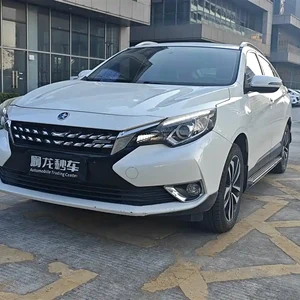
Venucia Venucia T90 2018 2.0L CVT Smart Connected Premium Edition China VI
How to buy a Venucia T90 from China
-
1
Define the destination and operating brief
Record the destination country, expected route, driving side, passenger or load requirement, fuel availability and local compliance constraints. Include aftersales capability in the brief rather than treating vehicle price as the only decision.
-
2
Filter the live T90 inventory
Use the live T90 listings to identify configurations that match the required body style, transmission, equipment level and condition. Treat the displayed figures as the starting point and request a refreshed per-unit quote.
-
3
Verify the exact vehicle and documents
Request the VIN or stock reference, production date, registration status, original trim description, emissions marking and ownership documents. Confirm that steering position and physical equipment match the intended market.
-
4
Request a comparable landed quotation
Ask sellers to quote the same configuration under a named Incoterm and state which charges are included. Separate vehicle cost, export handling, freight, insurance, destination customs, taxes and registration.
-
5
Agree MOQ and payment terms
Confirm whether the offer accepts single units or requires a group order, how the vehicle will be reserved and what deposit and balance terms apply. Put the specification, delivery basis, inspection conditions and refund rights into the contract.
-
6
Inspect before releasing final payment
Use a qualified inspector to check the VIN, odometer, engine and transmission, bodywork, underside, wheels, cabin, warning lights and export preparation. Record any discrepancies before the balance payment and shipment release.
-
7
Book freight and complete the import
Confirm the loading method, route, insurance, lashing, export documents, destination broker and delivery scope. Track customs clearance, inspection, registration and handover rather than treating port arrival as the end of the transaction.
T90 vs rivals
| Nissan Kicks | The closest badge-based alternative for a compact-crossover buyer who values familiar Nissan branding. The T90 may be more commercially attractive when its export configuration and delivered terms are stronger, but buyers should compare warranty, parts support and real market recognition. |
|---|---|
| Toyota Corolla Cross | A mainstream rival that often appeals to buyers prioritising an established dealer network, ownership confidence and used-car demand. The T90 offers a value-oriented alternative, but its importer must build credibility through documentation, quality checks and after-sales support. |
| JAC JS3 | A direct Chinese value competitor for buyers seeking a small SUV with modern styling and a broad equipment focus. It is especially relevant where JAC already has dealer or parts coverage, so compare local support and homologation rather than assuming either brand is automatically easier to export. |
Frequently asked questions
How is the Venucia T90 export price determined?
The live price is driven by model year, trim, engine and transmission, condition, registration status, currency movements and the seller’s included services. Freight, insurance, destination taxes and customs may sit outside that figure, so request a written quotation under a named Incoterm. Current per-unit prices and availability appear in the live Venucia T90 listings on ChinaCarDirect.
What engine, transmission and range options does the T90 have?
The named range includes 2.0L gasoline vehicles with CVT or manual transmission, plus a 260T mild-hybrid automatic. It is not a battery-electric model, so BEV driving-range figures do not apply. Check the live specification for final engine output, fuel consumption, tank details and the condition of any hybrid components.
Should an overseas buyer choose a new or used Venucia T90?
A new-labelled vehicle may be unregistered, low-mileage stock, while a used example may offer a visible history but require more inspection and possible refurbishment. Compare production date, registration status, documents, warranty and condition rather than relying on the category label alone. Include any required work in the landed budget.
How does MOQ work when buying a T90 from China?
MOQ is set by the individual seller or offer and may allow a single vehicle or require a larger order for a specific configuration. A small pilot shipment reduces exposure, while consolidation can improve freight efficiency but increases inventory and storage risk. Confirm the MOQ, reservation method and group compatibility in writing before paying a deposit.
What determines Venucia T90 shipping time and cost?
Transit time depends on the origin port, sailing schedule, transshipment, congestion, customs, transport mode, weather and final delivery arrangements. Cost depends on the route, vehicle dimensions, fuel surcharges, handling, insurance and Incoterm. Request a freight quotation with a named route and a clear list of included and excluded charges.
How should a buyer plan for T90 spare parts?
Before ordering, identify fast-moving service items and ask the seller for compatible part references, photographs, packaging information and regional support. Confirm whether parts can be shipped separately and whether local technicians can service the selected transmission and mild-hybrid components. A dealer with no credible parts plan should consider a better-supported rival.
Is a right-hand-drive Venucia T90 available for export?
Do not assume that a China-market T90 is right-hand drive; confirm the steering position from the VIN, listing photographs and seller documentation. Where an approved RHD unit is unavailable, a local conversion may affect safety approval, insurance, warranty, parts and resale. The steering requirement should be resolved before shipment.
How do I order a Venucia T90 from China?
Begin with the live T90 listings, shortlist vehicles that meet the specification, and request a written per-unit quote with the Incoterm and all charges stated. Agree the MOQ, reservation, inspection, payment and cancellation terms in the contract. Complete the pre-shipment inspection, freight booking, export documents and destination import process before releasing the vehicle for delivery.
Ready to source the Venucia T90?
Send your destination, required T90 configuration and intended quantity to request a current unit quotation and export plan.
Request a quote