
Volkswagen Tiguan Export Guide for Overseas Buyers
Buy a Volkswagen Tiguan from China with a clear guide to trims, powertrains, export pricing, MOQ, shipping, compliance and rival models for overseas dealers.
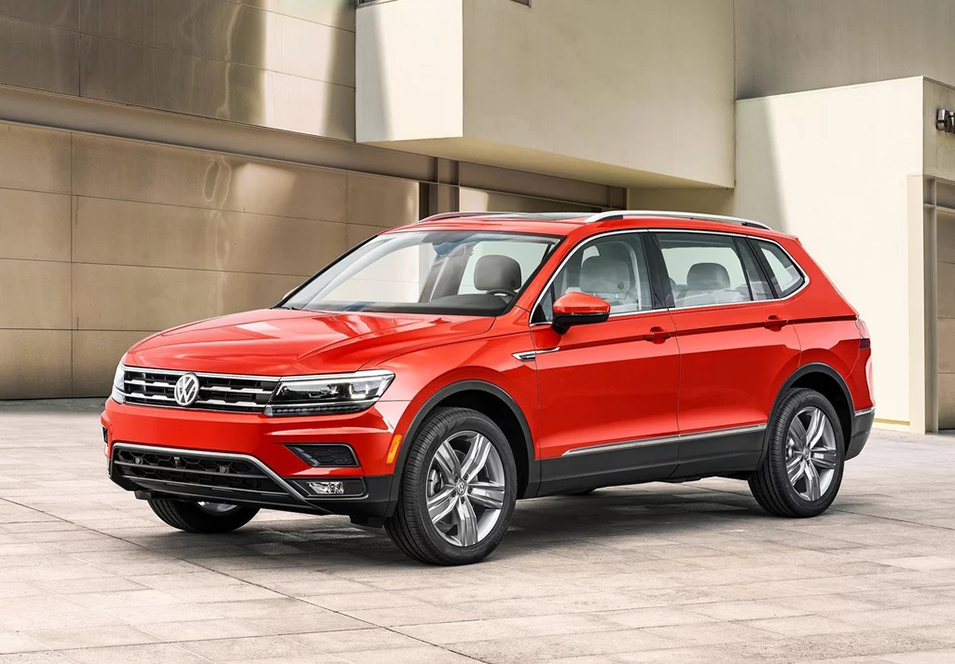
At a glance
- The Volkswagen Tiguan combines a recognised compact-SUV format with petrol and plug-in hybrid choices for varied export programs.
- Chinese trim codes and editions require VIN-level translation because engine, drivetrain, equipment and emissions details can vary.
- New units suit standardised fleet and dealer programmes, while used Tiguans can suit value-focused buyers after rigorous inspection.
- Live export quotes vary by vehicle specification, condition, exchange rate, freight and Incoterm, making like-for-like comparison essential.
- Steering, homologation, taxes, charging access and aftersales support must be checked before payment or shipment.
Why the Volkswagen Tiguan matters for export markets
The Volkswagen Tiguan is a compact SUV with a useful export proposition: it combines a familiar global nameplate, a versatile body format, and a choice of petrol and plug-in hybrid applications. That combination appeals to importers serving family-oriented retail, company fleets and replacement buyers who want one model to cover city commuting, highway travel and practical luggage. Its value proposition is not extreme off-road capability or van-like cargo capacity; it balances packaging, drivability, equipment and brand recognition. For overseas buyers, that balance can simplify range planning compared with choosing among very different vehicle types.
Demand is supported by the Tiguan’s long-standing position in the compact SUV segment, where buyers often want a higher seating position and a more adaptable cabin than a saloon without moving into a large off-road derivative. Volkswagen’s recognition in many markets can help dealers communicate that positioning even when a buyer has not seen the exact Chinese specification. Recognition is useful, but not a substitute for local aftersales planning: parts catalogues, diagnostic tools, technician familiarity and residual-value support can vary by destination. Compare those services before committing to a wholesale order.
For export buyers, the important distinction is between the Tiguan and the longer Tiguan L. Listings may represent different body lengths, seating arrangements and equipment, including seven-seat applications. Treat them as separate configurations for quotation and compliance purposes rather than assuming every Tiguan has identical space or equipment. A dealer serving family and fleet customers can use the standard SUV for fleet breadth and the longer version where passenger capacity matters, provided the destination market accepts the body format and the buyer can support its parts and service needs locally, including warranty support.
- Recognisable global compact-SUV positioning.
- Standard Tiguan and Tiguan L differ.
- Verify local aftersales support.
Model range, trims and powertrain variants: how the lineup is structured and how to choose
Chinese-market Tiguan naming is dense but can be decoded in layers. The 280TSI, 300TSI, 330TSI, 380TSI and 1.8TSI names identify turbocharged-petrol applications, while 430 PHEV identifies a plug-in hybrid family. The numerical labels are model identifiers, not a substitute for the homologation sheet. Automatic transmissions appear across the main 2WD and 4WD applications. Edition labels such as Dragon, Silk Road, Luxury, Flagship, R-Line and Highline describe market-specific positioning, not a universal global hierarchy. Compare the complete trim designation, not simply the engine family and the listed option package on the actual unit.
The practical split is 2WD versus 4WD. Two-wheel-drive variants usually make sense for urban fleets, paved routes and buyers who prioritise operating simplicity, while four-wheel-drive applications can suit regions with wet roads, snow or rougher secondary roads. Four-wheel drive does not turn the Tiguan into a dedicated off-roader, and the added hardware affects fuel use, tyre cost and service planning. Check the driven wheels, tyre specification and ground clearance on the live unit. A 4WD badge, R-Line appearance package or market assumption alone does not prove off-road capability, nor does it reveal the vehicle’s actual condition.
The 430 PHEV route changes the operating proposition because the vehicle can use electrical energy for some journeys while retaining a petrol engine for longer trips. Buyers should compare charging access, real-world energy use, battery condition on used vehicles and the destination’s tax treatment of plug-in hybrids before choosing it over a conventional TSI. Battery capacity, electric-only range, charging connector and charging time are configuration-specific and must be checked in the live listing. For fleets without dependable charging across multiple depots and regions, a non-plug-in petrol version may be easier to deploy.
- Match 2WD or 4WD to roads.
- Compare TSI with 430 PHEV.
- Check battery, range and charging.
New vs used Volkswagen Tiguan: how export inventory is structured and how buyers choose
New and used Tiguans serve different commercial strategies. A new vehicle gives the buyer a defined production configuration, current equipment, known mileage and a clearer route to manufacturer or seller warranty support. It is usually the cleaner choice for a dealer building a launch programme, a company establishing a fleet standard or an importer who wants to avoid wear-related uncertainty. The trade-off is the larger acquisition commitment and the exposure to how the destination market values that specification once it is registered. No residual value is guaranteed for the importer after delivery.
A used Volkswagen Tiguan can make more sense where the buyer values established depreciation, a lower entry commitment or access to a particular 4WD configuration. The apparent purchase economy disappears if an engine, automatic transmission, chassis or plug-in hybrid battery needs unplanned work. On a used PHEV, battery health and whether the vehicle has been charged regularly deserve the same scrutiny as the petrol engine. For any used unit, request service records, inspect underbody and accident repair evidence, verify VIN and production date, and understand whether remaining warranty is transferable.
Live export inventory can mix current-production vehicles with earlier Tiguan and Tiguan L examples, so model age and body version must be read from each unit rather than the model family alone. Condition and configuration—not merely the words new or used—should drive the decision. A late-model Tiguan L may offer a different cabin, drivetrain or seat count from an earlier standard Tiguan, and a low-mileage vehicle can still have suffered hard use. Ask for a condition report, photographs of the engine bay and underside, tyre and glass condition, diagnostic results, title or registration documents, and proof of the stated emission specification. For a mixed wholesale order, separate showcase vehicles from higher-mileage fleet units.
- New: known configuration and mileage.
- Used: inspect condition and history.
- Used PHEV: check battery health.
How export pricing works: the factors behind a live listing price, and how to read one
A Volkswagen Tiguan export price guide should explain the calculation rather than publish a fixed number that will age quickly. The vehicle’s year, exact trim, TSI or PHEV version, drivetrain, mileage, condition and equipment all influence its commercial value. Exchange rates affect the purchase commitment, while freight, marine insurance, port handling, documentation and the selected Incoterm determine what the buyer must add. Local duty, tax, registration and compliance work are separate from the supplier’s vehicle quote; the importing party should budget them before committing to the vehicle in writing.
When reading a live listing, first establish what the displayed amount includes. Is it an ex-works vehicle price, a port or FOB basis, or a delivered estimate? Does it cover export documentation, inspection, loading, insurance and destination charges? Confirm whether the quote is for one specified vehicle or a consolidated shipment, and whether it remains valid after exchange-rate or freight movements. Ask for a written pro forma invoice that repeats the VIN, trim, condition, currency, payment term and Incoterm. Any verbal estimate should be treated as an enquiry, not a binding landed cost.
The best comparison is like-for-like: the same body version, powertrain, drivetrain, equipment level, condition and delivery basis. A 330TSI 2WD and a 380TSI 4WD are not interchangeable budget lines, and a used unit should be compared with another of comparable age and condition. Vehicle-by-vehicle prices, availability and seller MOQ are shown in the live Tiguan inventory, where each quote can be checked against the buyer’s destination and Incoterm. For a mixed fleet, request separate line items for vehicle purchase, inland transport, port charges, freight, insurance and tax, so savings in one stage are not hidden by another.
- Compare identical trims on one Incoterm.
- Separate vehicle, freight, insurance and tax.
- Use the written VIN-specific quotation.
MOQ, ordering and payment: single units vs consolidating a container
MOQ is a commercial condition attached to a particular quotation, not a fixed feature of the Volkswagen Tiguan model. A single-unit purchase can suit a test-car importer, a small retailer or a buyer validating demand; a seller’s live unit page should state whether one vehicle is accepted. For a fleet, a larger quantity may unlock supplier terms or shipment consolidation, but it also concentrates risk in one specification and delivery window. Do not assume that the minimum shown for one listing applies to every trim, seller or destination; obtain written confirmation before agreeing a volume.
Container consolidation is most attractive when several buyers need compatible vehicles and can accept a common specification. Mixed 2WD, 4WD, petrol and PHEV units can fill available space, yet they create different documentation, loading, compliance and aftersales requirements. The consolidator should identify who owns each vehicle, reconcile the shipment list to the commercial invoice, and confirm that all units meet the destination’s rules. If buyers need different handover dates or specifications, separate shipments may be more economical than forcing a mixed container into one schedule. Agree responsibility for delays and damage before loading.
A disciplined payment sequence protects both sides. Request the seller’s legal identity, pro forma invoice and agreed payment account; verify that the beneficiary matches the named counterparty; then use the written inspection, documentation and balance-payment milestones. For an unfamiliar cross-border transaction, ask what buyer protection or inspection arrangement applies and where disputes are handled. The release file should connect the VIN to the invoice, export declaration, shipping document, inspection evidence and any battery or emissions paperwork. These controls are especially important when a deposit or balance is tied to a future vessel booking.
- Confirm MOQ on each seller quotation.
- Match loads to specification and handover needs.
- Tie payment releases to inspection and documents.
Shipping, homologation and market compliance caveats: LHD/RHD and import rules by country
Shipping starts with the vehicle’s exact dimensions and weight, not the Tiguan badge. Depending on specification, an exporter may use roll-on/roll-off or container transport if the unit can be safely secured within the available configuration. Compare route, sailing frequency, port handling, securing, insurance and the risk of congestion or damage; also establish whether the supplier’s delivery term stops before loading or continues through the named port. Confirm the destination’s discharge, customs and inland-haulage responsibilities so a low freight quote does not create an unexpected charge at arrival. Name every excluded cost.
Many China-built vehicles are configured for left-hand drive, but steering configuration must be checked for every unit. Right-hand-drive destinations need a factory RHD vehicle or a lawful, professionally executed conversion, followed by checks of steering, pedals, lighting, visibility and safety equipment. Conversion can affect insurance, warranty, residual value and type approval, so it should never be treated as a cosmetic preference. Local rules also govern emissions, noise, cybersecurity or connected features where applicable, and a China VI label does not by itself prove acceptance in another country without official destination-specific verification.
Before releasing the vehicle, confirm the destination authority’s age and emissions restrictions, homologation or type-approval requirements, import permits, customs valuation, duty, VAT or GST, and registration requirements. Rules differ for private importers, commercial dealers and fleet buyers, and incentives for PHEVs may be conditional on ownership, charging or local residency. Confirm spare-parts identification, software support, roadside assistance and warranty repairability as part of market entry. ChinaCarDirect can help locate a candidate unit, but the importer remains responsible for checking the current legal and tax position directly in the destination country.
- Verify steering configuration before shipment.
- Check destination approval, taxes and registration.
- Name every freight and port exclusion.
Who should buy the Tiguan — and who should pick a different vehicle
The Tiguan is a strong candidate for an overseas dealer that wants a recognisable compact SUV, a choice between 2WD and 4WD, and petrol or plug-in hybrid applications under one model family. It also suits company fleets needing a comfortable, road-oriented vehicle with useful passenger and luggage capacity, provided the chosen drive system matches local roads. For an importer testing a new model or trim, one carefully selected unit can be more informative than a speculative large order. The commercial case is strongest when local servicing, parts and residual demand are understood before shipment.
A different vehicle is usually better when the brief is specialised. Choose a true off-roader for severe terrain, a commercial van for maximum load volume with minimal rear-seat demands, or a dedicated battery EV where zero-emission operation and charging infrastructure outweigh the Tiguan’s petrol flexibility. Luxury buyers may prefer a model with a higher-grade rear-seat and digital experience, while very small urban fleets may minimise acquisition and fuel costs with a compact hatchback or smaller SUV. A plug-in Tiguan also needs infrastructure and tax eligibility, so it is not automatically the most practical choice.
The decision should be based on total operating and ownership fit rather than badge alone. Compare the buyer’s annual mileage, route conditions, loading pattern, charging access, tax regime, expected resale market and local service network. Include insurance, fuel or electricity, tyres, maintenance, depreciation and the cost of holding spare parts in the business case. For a used Tiguan, condition and remaining service life can matter more than a small equipment difference. For a new Volkswagen Tiguan wholesale programme, test one configuration in each important trim group before committing the balance of the order.
- Choose Tiguan for versatile brand-led demand.
- Use specialist vehicles for specialised duties.
- Evaluate operating and resale fit.
Main rivals and how the Tiguan compares
The Toyota RAV4 is a direct benchmark for buyers prioritising global name recognition, hybrid familiarity and established fleet support. The Tiguan counters with a broad Chinese-market TSI and plug-in hybrid selection, including R-Line-styled and 4WD versions that may give some importers a broader specification set. RAV4 may have the easier service proposition where Toyota support is already established, while the Tiguan may offer more choice for buyers seeking Chinese domestic trims. Compare local homologation, parts lead times and residual support rather than assuming either model is cheaper after all charges.
The Honda CR-V competes with the Tiguan on family packaging, road comfort and efficient powertrain choices for mainstream buyers. The Tiguan’s distinction is the breadth of Chinese editions, including 2WD and 4WD petrol configurations and the 430 PHEV, which can appeal where buyers want a domestic-market specification. The CR-V may be easier to support in markets with a strong Honda dealer network, and its established ownership profile can influence resale. Evaluate insurance classification, parts availability and tax treatment for petrol and electrified versions in the destination rather than relying on reputation.
The Hyundai Tucson is another credible competitor, often appealing to buyers who prioritise distinctive styling, rich equipment and a broad mix of conventional and hybrid offerings. A Tiguan buyer may prefer the Volkswagen’s established corporate identity, R-Line visual programme and choice of PHEV versus non-plug-in petrol applications. Conversely, the Tucson may have a more convenient parts and residual-value ecosystem in some destinations. For any of these rivals, compare the exact imported specification, not the brochure model: emissions hardware, steering, software, warranty and charging provisions can materially change the proposition.
- RAV4: compare hybrid familiarity and choice.
- CR-V: compare packaging, support and ownership.
- Tucson: compare equipment and aftersales support.
Live Volkswagen Tiguan export inventory
View all listings →Real units currently on ChinaCarDirect with per-unit asking prices and MOQ. Availability updates live from the catalogue.
Volkswagen Tiguan L 2024 Outstanding 330TSI Auto 2WD R-Line Dragon Glory Edition
How to buy a Volkswagen Tiguan from China
-
1
Define the destination and operating brief
Specify the destination country, steering side, road conditions, passenger or cargo needs, charging access and ownership horizon. These requirements determine whether 2WD, 4WD, TSI or PHEV is the appropriate starting point.
-
2
Shortlist live Tiguan inventory
Use the live Tiguan listings to identify standard Tiguan or Tiguan L bodies and the relevant trim families. Record the VIN or listing reference so every enquiry concerns a specific vehicle.
-
3
Verify the exact specification
Check engine, transmission, drivetrain, seating, steering, emissions label, dimensions and condition against the unit page. For a PHEV, request battery-capacity, range and charging information.
-
4
Request a comparable quotation
Ask for the vehicle price and logistics as separate line items, with the currency and Incoterm stated. Compare equivalent vehicles using the same delivery basis rather than combining different specifications.
-
5
Confirm MOQ and payment controls
Ask the seller to confirm the MOQ for the selected quotation and whether one unit is accepted. Agree the payment milestones, inspection rights, document requirements and release conditions in writing.
-
6
Complete inspection and export documentation
Inspect the actual vehicle and reconcile its VIN with the invoice, condition report, registration records and export file. Resolve discrepancies before the balance payment or vessel release.
-
7
Book freight and complete import formalities
Confirm the shipping method, insurance, port responsibilities, customs broker and destination charges. Check homologation, taxes, registration and local charging or fuelling compatibility before vehicle arrival.
Tiguan vs rivals
| Toyota RAV4 | The RAV4 is a strong alternative for buyers prioritising hybrid familiarity and established fleet support. The Tiguan offers broader Chinese-market TSI and PHEV selection, including more 2WD and 4WD trim choices, but local parts and aftersales support should be compared. |
|---|---|
| Honda CR-V | The CR-V competes on family packaging, road comfort and efficient powertrain choices for mainstream buyers. The Tiguan stands out through its wider selection of Chinese domestic editions and the 430 PHEV, making it attractive where a specific imported specification is required. |
| Hyundai Tucson | The Tucson is a credible rival for buyers prioritising distinctive styling and rich equipment. The Tiguan provides a more established corporate identity and a choice between non-plug-in petrol and PHEV applications, while ownership support and residual prospects remain destination-specific. |
Frequently asked questions
How is the Volkswagen Tiguan export price determined?
The price is determined vehicle by vehicle according to model year, trim, powertrain, drivetrain, equipment, mileage, condition and market demand. Freight, insurance, port charges, exchange rates, Incoterm and local taxes can change the final landed cost. Check the current vehicle-specific amount and delivery basis in the live Tiguan inventory.
Which Volkswagen Tiguan powertrains are available for export?
The range includes TSI petrol applications and 430 PHEV plug-in hybrid versions, with 2WD and 4WD options across different trims. Exact displacement, output, battery capacity, electric-only range and charging time vary by configuration and must be checked on the live unit. Treat 430 as a model label rather than a quoted battery or range figure.
Should an overseas buyer choose a new or used Volkswagen Tiguan?
A new Tiguan provides a defined configuration, known mileage and a clearer route to warranty support. A used Volkswagen Tiguan may offer a lower entry commitment and access to a particular 4WD or body version, but condition, service history, accident repair and PHEV battery health require careful verification.
What is the MOQ for Volkswagen Tiguan wholesale orders?
MOQ is set by the seller and quotation rather than by the model itself. A single-unit purchase may be suitable for a test-car importer, while fleet buyers can request consolidated terms; check the minimum on each live unit and obtain written confirmation with the pro forma invoice.
What determines shipping time and cost?
Vehicle dimensions and weight, transport method, route, sailing frequency, port congestion, handling, securing, insurance and documentation affect both time and cost. The Incoterm determines where the supplier’s responsibility ends, while customs, discharge and inland-haulage charges may remain with the buyer.
Can spare parts be ordered for a Chinese-market Volkswagen Tiguan?
Parts should be matched by VIN, engine, build date and trim because Chinese-market versions may use different identifiers from vehicles sold elsewhere. Before shipment, confirm access to electrical, body and PHEV battery components, acceptable substitution parts and the expected local sourcing route for a fleet.
Are right-hand-drive Volkswagen Tiguan vehicles available?
RHD supply may exist, but it must be confirmed for each unit rather than assumed for China-built vehicles. A factory RHD vehicle generally presents a simpler homologation case than a conversion, while a conversion requires professional work and destination approval. Review current RHD options in the live listings.
How do I order a Volkswagen Tiguan from China?
Start with the live inventory or submit an RFQ stating the destination, quantity, trim, powertrain, steering side and preferred Incoterm. Request a VIN-specific pro forma invoice, MOQ, payment milestones, inspection plan and freight basis. After approval and payment under the agreed terms, complete inspection, export documents, shipping and destination import formalities.
Ready to source the Volkswagen Tiguan?
Send your destination, trim, quantity and Incoterm to ChinaCarDirect for a current vehicle-by-vehicle quote and export checklist.
Request a quote