
Volkswagen Cc Export Buying Guide for Overseas Buyers
Buy a Volkswagen Cc from China with guidance on TSI trims, liftback versus Shooting Brake, export pricing, MOQ, shipping and destination-market compliance.
At a glance
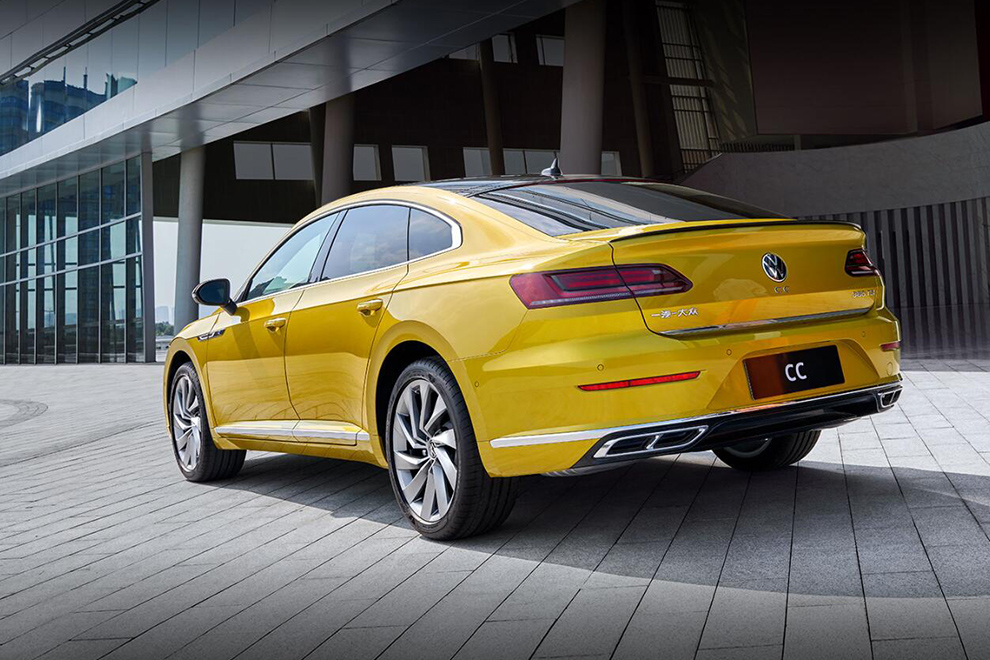
- The China-built Volkswagen Cc combines a coupé-like four-door liftback with a more practical Shooting Brake variant.
- Volkswagen Cc specs include 1.4, 1.8 and 2.0 TSI labels, but the live listing controls the exact configuration.
- New cars simplify fleet specification; a used Volkswagen Cc requires history, condition and local eligibility checks.
- A live listing must be read for vehicle price, Incoterm, freight, documentation and the applicable MOQ.
- LHD/RHD configuration and destination-country homologation should be settled before loading.
Why the Volkswagen Cc matters for export markets
The Volkswagen Cc occupies a useful middle ground for overseas buyers: it offers a low, coupé-like four-door profile with the practical access of a saloon rather than the limited rear access of a two-door coupé. Built in China by FAW-Volkswagen, the model combines a four-door cabin with a liftback-style tail, while selected versions take the Shooting Brake form for buyers who want a sportier estate. That combination gives it a clearer use case than a conventional family saloon, especially for dealer groups seeking distinctive design and a broad mix of saloon and estate derivatives for fleet and retail programmes.
Global demand is less about a universal nameplate appeal and more about how the Cc fits local dealer economics. In markets that favour left-hand-drive vehicles, it can act as a premium-looking alternative to mainstream family sedans, with more visual distinction and a higher-grade cabin. The Shooting Brake derivatives broaden that proposition because they combine car-like road manners with a larger load opening and more versatile luggage capacity. For importers, this can make the model easier to merchandise as a lifestyle model than an anonymous high-volume fleet saloon in mixed retail portfolios.
Demand should nevertheless be treated as market-specific rather than assumed from China’s domestic mix. Buyers in Europe, the Gulf, Latin America and other left-hand-drive regions may value Chinese manufacturing, modern equipment and the Cc’s styling, but they will also compare it with established models from Volkswagen, Kia, Peugeot and other mainstream brands. Local preferences for fuel economy, rear-seat room, software, servicing and financing can outweigh the visual appeal. The strongest export case is therefore a dealer that has already identified a clear customer segment and can support the model after sale.
- Liftback and Shooting Brake distinction
- LHD dealer programmes fit best
- Local aftersales support is essential
Model range, trims and powertrain variants: how the lineup is structured and how to choose
The China-market lineup is organized around TSI petrol powertrains, with 1.4TSI, 1.8TSI and 2.0TSI designations recurring across different trim records. It also uses the higher 330TSI and 380TSI labels for certain variants, while editions such as Eye-catching, Charming Appearance, Luxury, Shining and Hunter’s Heart describe market-specific equipment packages. These names are useful for locating a starting point, but they should not be read as a universal equipment dictionary. Ask the seller for the original Chinese specification sheet, build configuration and a clear photograph set before comparing vehicles or assuming trim equivalence abroad.
Engine choice should reflect the buyer’s priorities rather than the badge hierarchy. The 1.4TSI option is generally the efficiency-oriented end of the range, the 1.8TSI sits between that and the larger 2.0TSI, and the 2.0-litre unit is normally considered when stronger performance or relaxed high-speed cruising matters. Actual output, transmission, emissions tune and equipment can differ by model year and market. Treat the trim label as a shortlist filter, then verify the engine badge, gearbox type, drivetrain, tyres and major options in the live listing and seller documents for each candidate.
Body style is the second major decision. The liftback-style Cc is a four-door coupé-inspired saloon, whereas the Shooting Brake substitutes a longer, practical rear load area for some of that coupé profile. Dealers with stationery demand may prefer the Shooting Brake for luggage volume and roof-loading utility, while private buyers focused on appearance may prefer the liftback. Do not assume the two share identical dimensions, equipment or loading limits. Confirm kerb weight, cargo dimensions, towing provision and option packages from the listing for the exact body and trim being purchased.
- Match TSI to use case
- Trim names reflect China
- Compare body-load requirements
New vs used Volkswagen Cc: how export inventory is structured and how buyers choose
Live export inventory can contain both newer Chinese-market cars and previously registered examples, but the correct buying framework does not depend on how the stock is divided. A new vehicle is usually the simpler choice for fleet standardization because its drivetrain, specification and condition can be documented more consistently. It also avoids uncertainty over wear, accident repair and remobilization. The trade-off is depreciation and the possibility that some features and homologation status are specific to China, while warranty coverage may not transfer abroad.
A used Volkswagen Cc can suit a buyer seeking a known, lower-mileage basis for resale or a more restrained purchase cost, but “used” covers very different conditions. A carefully maintained dealer car with complete service records is not equivalent to an ex-fleet vehicle, former rental unit or vehicle imported for parts. Inspect paint thickness, panel alignment, tyres, brakes, cabin wear and underbody, then reconcile the odometer with service records and the vehicle history report. For any used export, verify ownership documents and the seller’s authority to transfer the vehicle before payment.
New does not necessarily mean ready for immediate overseas registration, and used does not necessarily mean unregistrable. Both routes require destination-market checks. For a new car, confirm production status, factory delivery mileage, VIN, equipment that may be optional, and whether the warranty transfers across borders. For a used car, establish the registration history, outstanding finance or liens, recall completion and whether it was designed for the same emissions and safety regime as earlier domestic use. These checks should be completed before a unit is loaded, not after it reaches the port.
- New simplifies fleet specification
- Used requires history checks
- Both need local compliance
How export pricing works: the factors behind a live listing price, and how to read one
A Volkswagen Cc export price is not one fixed national figure; it is the result of a vehicle-specific set of commercial inputs. Model year, body style, trim, engine designation, options, mileage, condition and whether the car is new or used usually matter first. Then the quote must absorb currency movements, inland transport, export handling, insurance, documentation, freight, port charges and the selected Incoterm. Duties and registration taxes may sit outside the seller’s quote and still form part of the buyer’s landed cost. Compare only quotations that use the same scope.
Read each live listing line by line rather than treating the displayed amount as a final delivered cost. Check the currency, whether sales or VAT is included, the named Incoterm, destination point, estimated freight and included documents. Confirm whether the quotation assumes one vehicle or consolidated shipment, because consolidation changes handling and unit logistics. The amount can change before payment if the specification, vehicle status, exchange rate or shipping assumptions change. A written quotation tied to a VIN and SKU is more useful than an informal estimate for that exact vehicle.
For a dealer, the most useful comparison is an all-in worksheet per vehicle. Start with the live listing amount, then identify inland transport, freight, insurance, handling, port charges, customs duty, VAT or sales tax, registration and modification costs. Divide the result by expected margin and monthly carrying cost rather than focusing on the purchase number alone. Also ask what happens if transit damage occurs or the delivered car differs from the agreed specification. Current per-vehicle prices and availability must come from ChinaCarDirect’s live Volkswagen Cc listings; freight assumptions must be confirmed in writing.
- Compare equivalent vehicles
- Separate price from landed cost
- Link quotes to VIN and SKU
MOQ, ordering and payment: single units vs consolidating a container
Minimum order quantity is a commercial field on each live vehicle record, not a permanent promise about the model. If a record shows a one-unit MOQ, that vehicle may suit a pilot purchase, subject to seller confirmation and destination-country rules. Other records or negotiated programmes may require several vehicles, while container consolidation can involve different sellers. Read the applicable MOQ on the specific listing and require the supplier to repeat it in the quotation and pro forma invoice. Never infer an MOQ from the model name; check the current binding per-vehicle MOQ in ChinaCarDirect’s live inventory.
A single-unit order can suit testing demand, validating compliance and establishing an aftersales process before committing capital. Trade-offs include potentially less favourable freight and handling economics, plus weaker leverage on inspection or remedy terms. Consolidating compatible vehicles into one container may improve logistics and simplify a launch, but the buyer must coordinate specifications, documents, payment dates, inspection access and delivery deadlines across sellers. Mixed body styles or engine variants complicate private-label allocation and spare-parts planning. Compare fully landed cost and risk; do not assume a full container always produces the best per-car outcome.
The normal order sequence is enquiry, specification confirmation, written quotation, payment, inspection, document release, and loading or handover under the agreed Incoterm. Payment often uses a deposit followed by balance, but the stage, method and refund conditions must be verified. Match the beneficiary to the verified contracting entity and invoice, scrutinize changed bank instructions, and avoid paying before the vehicle, VIN, options and export documents are defined. Obtain an RFQ tied to the selected listing, with a written remedy if the delivered vehicle differs from the agreement or lacks agreed equipment.
Shipping, homologation and market compliance caveats: LHD/RHD and import rules by country
Chinese-market Cc vehicles are commonly configured for left-hand drive, so buyers in right-hand-drive markets should not assume local availability. A right-hand-drive conversion can involve steering and instrument changes, while also affecting parts supply, electronics, safety equipment and insurance. Discuss it with the destination authority before shipping. Conversely, an LHD vehicle can suit many markets but may not meet local expectations. State the required driving side in the RFQ, have the seller verify the actual configuration, and treat conversion as a regulated modification rather than a routine trim choice for the destination market.
Transport choice should follow cargo volume, route, urgency and risk tolerance. Enclosed containers suit regular consolidated shipments and offer protection during handling, while roll-on/roll-off vessels can move finished vehicles more directly but require suitable port handling and securement. Individual cars may also travel through specialist breakbulk or vehicle-carrier arrangements. Freight depends on origin and destination ports, container or vehicle-space availability, carrier charges, insurance, customs routing and the season. The supplier’s Incoterm should state exactly where responsibility transfers, and the buyer should budget separately for destination charges, clearance and local delivery costs.
Homologation is separate from shipping and should be completed before committing the vehicle. Import rules vary by country and can cover VIN and title documents, emissions, safety, roadworthiness, age restrictions, customs valuation, duty, taxes and local type approval. A China V or China VI trim label is a Chinese emissions reference, not automatic permission to register the car elsewhere. Used vehicles can face age or conformity restrictions. Obtain a written view from a customs broker or compliance specialist, and check the model, body, engine, steering side and modifications against the intended registration.
- Confirm steering side early
- Define Incoterm responsibility
- Approve compliance before loading
Who should buy the Cc — and who should pick a different vehicle
The Cc is most suitable for a dealer serving private customers who value design, a low driving position and a four-door body more than maximum cargo efficiency. The liftback suits buyers wanting a coupé-style silhouette with rear-seat access, while the Shooting Brake attracts customers balancing car-like styling with estate utility. It can also suit corporate buyers seeking a distinctive executive vehicle for selected markets, provided fleet policy accepts petrol consumption and the dealer can support tyres, servicing and insurance. Position it as a lifestyle choice, not a generic budget sedan.
It is a weaker choice where minimum operating cost, a high ride height, heavy-duty capability or extensive cargo flexibility dominate. Dealers in markets with strong electrification mandates may find a petrol-only strategy difficult, although exemptions and charging conditions vary and must be checked. Buyers needing a straightforward, widely serviced family saloon may prefer simpler trim logic and a deeper local parts network. A business requiring right-hand drive without conversion should not pursue a China-only configuration casually. The Cc makes more sense when local marketing and aftersales capability can protect residual values.
Before committing, test whether the business case survives a realistic ownership scenario. Include purchase payment, finance, inbound freight, taxes, insurance, fuel, servicing, tyres, depreciation and the cost of holding unsold stock. If customers compare the Cc with the Arteon, Stinger or 508, explain why the Chinese-built model offers a better combination of styling, equipment and ownership cost in that market. Confirm spare-part lead times, technical training and diagnostic support. A car can still be a poor import if parts and compliance support remain unresolved after the vehicle reaches the destination.
Main rivals and how the Cc compares
The closest conceptual comparison is the Volkswagen Arteon, because it occupies a similar sleek four-door space and competes for buyers who want Volkswagen design without a conventional saloon shape. The Arteon generally offers a more premium marque image and a different model-specific feature set, while the China-built Cc may provide a different value equation. Trim, powertrain, equipment and local support must be compared directly; the badges alone do not establish the better purchase. Arteon availability and homologation will also vary by market. That makes it an essential benchmark for any serious buyer.
The Kia Stinger is another relevant liftback rival, pairing a sweeping rear design with a performance-oriented image and multiple powertrain choices across its global career. It can appeal to buyers who value a strong road presence and a distinctive boot, while the Cc offers an established Shooting Brake alternative and a different Volkswagen service identity. Direct comparison depends on the exact Chinese-spec Cc and the Stinger version available locally. Parts support, fuel or powertrain rules, insurance and resale expectations can matter more than brochure styling for the importing dealer involved.
The Peugeot 508, particularly the GT fastback and SW estate versions, competes on coupé-inspired design and an alternative premium-European badge. It can attract buyers wanting a distinctive French profile and practical estate option, but trim, engine availability and local servicing may differ from the China-market Cc. The Cc’s counterargument is Chinese manufacturing economics, a broad TSI-derived range and the choice of liftback or Shooting Brake. Conversely, a buyer with strong Peugeot support may find the 508 easier to own. The right rival depends on destination and aftersales coverage available locally.
- Arteon: closest VW sibling
- Stinger: liftback alternative
- 508: fastback and estate
Live Volkswagen Cc export inventory
View all listings →Real units currently on ChinaCarDirect with per-unit asking prices and MOQ. Availability updates live from the catalogue.
How to buy a Volkswagen Cc from China
-
1
Define the target configuration
Choose between liftback and Shooting Brake, specify the destination country and required steering side, and identify the buyer segment. This prevents a low-mileage or attractive-looking unit from being selected without matching local demand and registration needs.
-
2
Build a live-inventory shortlist
Review the live Volkswagen Cc inventory and compare model year, trim, engine label, condition, mileage, options and applicable MOQ. Request original photographs, a build plate and seller confirmation before treating a listing as a firm candidate.
-
3
Request specification and ownership documents
Ask for the VIN, factory specification, gearbox type, emissions information, maintenance history and title or registration documents. For a used car, add a vehicle-history report and independent inspection.
-
4
Validate destination compliance
Have a customs broker or local compliance specialist check eligibility, emissions, safety, duty, taxes, age rules and any modification requirements. Resolve RHD conversion before the vehicle is loaded.
-
5
Obtain a written landed-cost quotation
Request a VIN-specific quotation stating vehicle price, Incoterm, freight, insurance, documentation, destination charges, payment stages and remedy terms. Keep duty, VAT and registration costs on a separate landed-cost worksheet.
-
6
Verify the supplier and inspect the vehicle
Verify the seller’s legal entity, beneficiary details and pro forma invoice, then pay only through the agreed channel. Inspect the vehicle against the written specification before releasing the balance.
-
7
Arrange shipping, clearance and delivery
Release shipping documents after checks, arrange the agreed freight or consolidation, and track customs clearance. Use current live listing terms for price and MOQ; have the broker confirm destination costs and delivery responsibilities.
Cc vs rivals
| Volkswagen Arteon | The Arteon is the closest conceptual rival: another sleek Volkswagen four-door with a liftback-like profile. Its more premium positioning may attract badge-conscious buyers, while the Cc can offer a different China-manufactured value proposition; compare exact trim, equipment and local service rather than badges. |
|---|---|
| Kia Stinger | The Stinger is a credible liftback alternative with a performance-led image and a distinctive rear profile. It may suit buyers seeking a more overtly sporting character, while the Cc’s different engine labels and Shooting Brake choice create a different ownership proposition; local parts support and availability remain decisive. |
| Peugeot 508 GT and 508 SW | The Peugeot 508 GT fastback and SW estate are closest for design-led buyers who want an alternative premium badge and estate option. The Cc combines Chinese manufacturing economics with a TSI-derived selection, but a market with stronger Peugeot support may make the 508 easier to own. |
Frequently asked questions
How is Volkswagen Cc export pricing determined?
Export pricing starts with the vehicle-specific listing amount and is affected by model year, trim, engine, body style, condition, mileage, options, exchange rates, freight, insurance, handling and the chosen Incoterm. Compare the vehicle price separately from duty, VAT or sales tax, registration and inland delivery costs, which may sit outside the seller’s quotation. Current per-vehicle prices and MOQ must be checked in ChinaCarDirect’s live Volkswagen Cc listings, with final terms tied to the chosen VIN or SKU.
Which engines and range does the Volkswagen Cc have?
The Cc versions represented in this market use TSI petrol engines, including 1.4TSI, 1.8TSI and 2.0TSI labels and certain 330TSI or 380TSI editions. They are not electric configurations, so battery capacity and electric range do not apply; driving range depends on fuel consumption, tank capacity, conditions and load. Verify the exact engine, output, gearbox, emissions tune and equipment in the live listing.
What are the main new versus used Volkswagen Cc trade-offs?
A new car usually makes fleet standardization and condition documentation easier, while a used car may suit buyers seeking an established history or a more restrained acquisition basis. Used vehicles require title, odometer, service, recall and condition checks; new vehicles still require confirmation of delivery mileage, warranty portability and production status. Both routes must meet destination-market rules before shipment.
How does MOQ work for a Volkswagen Cc wholesale order?
MOQ is set per live vehicle record or negotiated programme rather than being a permanent model-wide rule. A listing showing a one-unit MOQ may support a pilot purchase, but the buyer should have the applicable figure repeated in the quotation and pro forma invoice. Container consolidation can involve several sellers, so specifications, payment dates, inspections and documents must be coordinated.
What determines shipping time and cost for a Volkswagen Cc?
Shipping time and cost depend on origin and destination ports, carrier schedules, container or vehicle-space availability, route, season, handling, insurance, customs routing and the Incoterm. The quotation should identify the loading and delivery points, freight basis, insurance and export documents. Destination charges, clearance and inland delivery may need to be budgeted separately.
Can spare parts for the Volkswagen Cc be ordered from China?
Parts support depends on the selected engine, trim and body style, and it may be less developed where the Cc has limited local recognition. Before ordering, request part identifiers, maintenance items, electronic-component support, diagnostic access and realistic lead times. Confirm aftersales arrangements separately for liftback and Shooting Brake units rather than assuming parts interchangeability.
Is a right-hand-drive Volkswagen Cc available for export?
China-market Cc vehicles are commonly left-hand drive, but right-hand-drive availability should be checked vehicle by vehicle rather than assumed. A conversion can affect homologation, electronics, safety systems, insurance and parts supply. State the required side in the RFQ and obtain confirmation from the destination authority or compliance specialist before ordering or shipping.
How do I buy a Volkswagen Cc from China?
Identify a suitable vehicle in the live inventory, then submit an RFQ referencing its VIN or SKU with the required body, engine, equipment and destination details. Obtain a written quotation, confirmed MOQ, pro forma invoice, inspection arrangements, payment terms, Incoterm and export-document list. Pay only to a verified beneficiary, inspect the vehicle against the agreement, release the balance and proceed with shipping and customs clearance.
Ready to source the Volkswagen Cc?
Request a VIN-specific Volkswagen Cc quotation with current live pricing, landed-cost assumptions, MOQ, compliance notes and shipping options.
Request a quote