
Volkswagen Magotan Export Guide for Overseas Buyers
Explore Volkswagen Magotan exports: compare trims and powertrains, understand live pricing, MOQ, shipping, compliance, and ordering for overseas importers.
At a glance
- The Magotan is Volkswagen’s China-developed midsize sedan for distributors, company fleets and executive transport.
- The lineup includes 280TSI, 330TSI, 380TSI, older 1.8TSI cars and a GTE plug-in hybrid.
- Many named TSI trims use DSG; older 1.8TSI cars require exact engine and gearbox verification.
- New cars generally offer newer design and warranty, while used cars require stronger condition and history checks.
- Export price, MOQ and availability are unit-specific; use live listings and a written quote for binding figures.
Why the Volkswagen Magotan matters for export markets
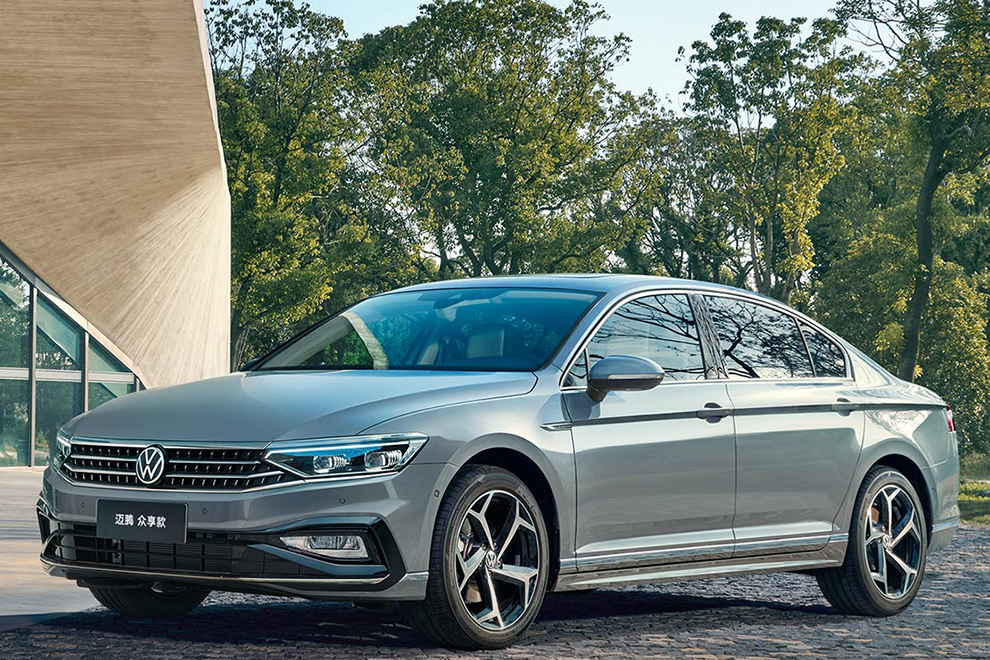
The Volkswagen Magotan is Volkswagen’s China-developed midsize sedan, positioned between practical family transport and executive-car comfort. For export buyers, that combination is important: it offers a familiar three-box-style profile, a practical four-door cabin and the established Volkswagen badge without moving into the cost and homologation territory of a full luxury saloon. The model is especially relevant to distributors, company-car programmes and fleet buyers that need a comfortable sedan with broadly understandable service requirements. Chinese-market equipment availability gives importers access to a model line overseas customers recognise as a credible long-distance car.
Global demand for the Magotan is strongest where buyers value a comfortable sedan, a recognised marque and a well-equipped car at a sensible fleet cost. Those priorities are common in company fleets, executive transport and distributor-led passenger-car retail, particularly in markets with established sedan habits. The vehicle is not a universal export earner: markets centred on compact crossovers or SUVs may find a taller body and higher seating position more commercially useful, while fuel-tax rules can alter the value of its powertrain choices. The same model can fit one country yet be slow-moving in another.
For overseas procurement, the Magotan’s value should be assessed as a complete operating proposition rather than by the trim badge alone. Buyers should ask whether Chinese-market infotainment, driver-assistance functions, voltage-dependent equipment and emissions versions meet local expectations, and whether the destination can support the exact vehicle. A dealer with an established Volkswagen workshop may find that familiarity valuable; a market with limited VW parts coverage may prefer a model whose components are locally better supported. A destination-specific parts list, service plan and complete import file remain essential before overseas contracting.
- Best for company fleets, distributors and executive transport.
- Requires destination-specific parts and homologation checks.
- Less suitable where crossovers dominate demand.
Model range, trims and powertrain variants: how the lineup is structured and how to choose
The Magotan line uses several powertrain families and equipment grades. Export-oriented listings include 280TSI, 330TSI and 380TSI petrol cars, older 1.8TSI versions, and a GTE plug-in hybrid. The TSI labels identify broad engine families rather than a single global specification: power, emissions tune, transmission, suspension and equipment can change between model years, special editions and facelifts. Buyers should therefore avoid selecting by badge alone and should compare the VIN-level build sheet. This matters when mixing trims in one fleet, because similar sedans may use different service parts, documents and software.
Within the petrol range, the 280TSI is generally the lower-cost entry point, the 330TSI sits in the middle of the mainstream hierarchy, and the 380TSI represents the higher-output side of the range. The hierarchy is a starting point, not a substitute for specifications. A fleet buyer focused on cost may prioritise a 280TSI or 330TSI, while drivers carrying executives or using the rear seats may prefer the performance and upper-level equipment associated with a 380TSI. Compare torque, fuel-use claims and warranty terms for each listing rather than assuming one label behaves identically across years.
The GTE version adds a different buying case because it combines a petrol engine with electric assistance and needs a plug-in charging workflow. Its appeal is strongest where charging infrastructure, company decarbonisation rules and tax treatment support plug-in hybrids, but those conditions vary sharply between export destinations. Ask for battery capacity, usable electric range, charging method, fuel-consumption data, battery warranty and the car’s history before comparing it with a conventional TSI. For older 1.8TSI cars, confirm the engine, gearbox and emissions version separately. Never buy on an incomplete powertrain description.
- 280TSI: value-oriented petrol option for cost-focused fleets.
- 330TSI: balanced option; verify equipment by model year.
- 380TSI: higher-output choice; GTE needs dedicated due diligence.
New vs used Volkswagen Magotan: how export inventory is structured and how buyers choose
A live Magotan export catalogue can contain both factory-new cars and previously registered vehicles, so the first decision is whether the brief genuinely requires a new car. New vehicles generally offer the newest model-year design, factory warranty subject to destination coverage, and a known delivery condition, which can simplify fleet onboarding. They may also carry infotainment, assistance systems and emissions versions that are newer than the used pool. The exact model year, production status and delivery timing must still be verified for the selected unit. A model name alone does not prove unused status.
A used Magotan can suit a buyer with a lower initial capital requirement, a defined replacement cycle or a need for an older generation that is easier to service locally. The trade-off is uncertainty: mileage, service history, accident repair, paint condition, interior wear, tax or insurance history and remaining manufacturer support may be less transparent. Request the vehicle identification number, maintenance records, inspection photographs and the registration documents, and commission an independent inspection before a substantial fleet commitment. For intensive use, condition matters much more than the lowest asking price.
The right new-versus-used choice is therefore an operating-cost decision, not merely an age preference. A company replacing cars every few years may value residual performance, predictable servicing and warranty support; a taxi, executive shuttle or long-distance fleet may prefer lower acquisition cost if downtime and maintenance are controlled. Compare purchase outlay, expected fuel use, likely parts overlap, downtime, insurance and resale over the intended service life. Always use the same calculation for every candidate, and do not assume that a newer car automatically has lower running costs in every market.
- New: stronger warranty and a known delivery condition.
- Used: lower entry cost, but greater condition and history risk.
- Compare full service-life cost, not acquisition alone.
How export pricing works: the factors behind a live listing price, and how to read one
An export price should be treated as a vehicle-specific commercial quote, not a fixed model price. The starting point changes with model year, trim, powertrain, mileage and condition for used cars, factory options, production status and the seller’s terms. It can then move with exchange rates, freight, insurance, port charges, documentation, inspection and the chosen Incoterm. Taxes and duties may sit outside the quoted vehicle price, so ask clearly whether the displayed figure is FOB, CIF or another basis before comparing listings. Identical trims can have different landed costs in practice.
A useful live listing should be read line by line rather than treated as a wholesale quotation. Confirm the year, trim, engine and gearbox, VIN, mileage, condition, colour, equipment list, registration status, seller location and whether the car is new or used. Check the photographs for damage, panel consistency, tyres and interior condition, then ask for documents that match the advertised vehicle. A listing-level price is for shortlisting, but the binding offer should be written against an identifiable unit, the agreed delivery terms and named charges, with a quote-validity date.
A disciplined buyer can compare options without relying on a fixed market range. For example, an older 1.8TSI, a newer 330TSI and a GTE should be assessed on the same basis: acquisition cost, expected annual kilometres, fuel or charging requirements, likely resale, regulatory suitability and local service costs. Put the vehicle subtotal, inland transport, export handling, international freight, insurance, destination charges and contingency into a worksheet. Then use the live Magotan listings as the source for current per-unit figures and request a written proforma for the final comparison before ordering.
- Compare year, trim, condition and equipment like-for-like.
- Confirm freight, insurance, tax and duty inclusions.
- Request a unit-specific written quotation with validity.
MOQ, ordering and payment: single units vs consolidating a container
MOQ is the minimum quantity a seller will accept for a particular order, and it should be confirmed for the selected vehicle rather than assumed for the model. ChinaCarDirect’s live listings may permit a single-unit purchase on selected offers, which suits a dealer testing demand or a fleet buying one vehicle. A larger wholesale programme is handled differently: the buyer specifies how many units are required, whether they must match, and whether they can be consolidated across model years or trims. The supplier then confirms the actual order quantity in the quotation.
Container consolidation can improve shipment efficiency, but it also creates specification and inventory risk. Vehicles intended for one fleet should share the buyer’s preferred powertrain, trim level, colour, equipment and documentation requirements; mixing too many variants complicates parts, registration and resale. Before release, agree the allocation rule if an exact unit is unavailable, set inspection requirements for every vehicle, and define how discrepancies are resolved. A smaller mixed shipment may be less efficient per unit, yet more appropriate when the buyer is still testing a model in a new market.
A normal purchase flow is to select a listing, request a formal quotation, confirm specifications and minimum order quantity, pay an agreed deposit, complete inspection, settle the balance under the stated terms, and release the cargo for export. Payment milestones and acceptable methods must be written into the contract; buyers should also define title transfer, refund triggers, document responsibility and the point at which risk passes. For larger orders, independent pre-shipment inspection and VIN-level reconciliation are essential because the descriptive name of a listing is not a substitute for the actual vehicle identity.
- One-unit demand may suit selected live offers.
- Container orders need matching specifications and allocation rules.
- Define inspections, payment milestones, title and risk transfer.
Shipping, homologation and market compliance caveats: LHD/RHD and import rules by country
Shipping method should follow the order size, route, vehicle condition. A full container can be economical for a consolidated batch, while RoRo is often relevant for smaller loads or vehicles that cannot be driven onto a container carrier. Export handling requires secure loading, lashing or rolling procedures, moisture and movement protection, and vehicle and customs documents. Freight cost is affected by origin and destination ports, carrier space, route distance, fuel and other surcharges, insurance, customs handling and the buyer’s Incoterm. Shipping time also depends on congestion, sailing schedules, customs and inland delivery.
China-market compliance does not automatically transfer to an export destination. China V or China VI labels in a trim name describe the Chinese emissions version, not approval for local registration elsewhere. The importer may need to satisfy local type approval, emissions, safety, radio, software, cybersecurity or charging rules, as well as customs classification, duty, tax and inspection requirements. Exact engine output, emissions control hardware and software can affect approval, so provide the VIN and full vehicle documents to the destination’s competent authority or specialist before committing. Approval should precede dispatch wherever possible.
Steering configuration is a frequent export constraint because China-market Magotans are predominantly left-hand drive. Some destinations require or strongly prefer right-hand drive, and a conversion can add cost, affect parts availability and may complicate warranty. Do not assume a steering conversion automatically makes a vehicle compliant. Ask whether a genuine right-hand-drive example is available, and if not, obtain a written local opinion on conversion, certification, wiring, safety equipment and insurance implications before paying for modifications. This is especially important when fleet tenders specify the driving position or local road standard in advance.
- China emissions labels do not replace destination approval.
- Verify LHD/RHD needs before purchase or conversion.
- Compare RoRo, container and consolidated freight terms.
Who should buy the Magotan — and who should pick a different vehicle
The Magotan is a strong candidate for distributors that recognise Volkswagen, private-company fleets replacing comfortable saloons, executive transport providers and rental operations in markets where sedans remain commercially relevant. Its appeal comes from the combination of model identity, rear-seat comfort, a broad equipment hierarchy and access to petrol and plug-in hybrid choices. It can also suit importers seeking a China-source vehicle for buyers who want more presence than a compact sedan without moving into a premium-brand programme. The decisive question is whether the destination can support and profitably absorb this specification.
A different vehicle is usually more sensible when the buyer requires a high-riding crossover, a load-carrying van, a compact footprint, an established right-hand-drive model or a powertrain unsupported by local charging and service networks. Buyers seeking a battery-electric-only product should choose an EV rather than assume the GTE plug-in hybrid meets their policy. Fleet managers focused on maximum uptime may prefer a locally serviced rival with simpler parts logistics. In these cases, the Magotan’s badge and equipment do not outweigh access to warranty, repairs and residual demand after initial delivery.
Before selecting the Magotan, rank four factors: total landed cost, local compliance, aftersales support and resale. If the vehicle passes all four, its China-specific character can be an advantage in a differentiated market. If any one fails, particularly homologation or parts support, the case may collapse even when the purchase price looks competitive. Ask the supplier to provide the exact vehicle documents, equipment list, service-item information and destination assumptions, then compare those findings with a locally supported alternative rather than comparing badges alone. This keeps the decision commercial and operational.
- Strong fit: company cars, fleets and sedan-focused retail.
- Choose another vehicle when SUV, EV or native RHD is essential.
- Pass tests for landed cost, compliance, support and resale.
Main rivals and how the Magotan compares
The closest sedan rivals are the Toyota Camry, Honda Accord and Nissan Teana, although local nameplates and powertrains vary by market. The Camry is a benchmark for buyers seeking a comfortable, mainstream business sedan with international recognition; the Accord competes through refinement, packaging and fleet acceptance; the Teana is a closer Nissan alternative in several Asian and emerging markets. All are choices, but the Magotan’s case rests on Volkswagen positioning and China-source availability; where offered, its GTE plug-in hybrid can add variety for a market with suitable charging and tax rules.
Against the Camry, the Magotan may appeal to buyers who prefer a Volkswagen-badged car, a broad TSI hierarchy and the option of locally sourced supply; the Camry has the advantage of a more visible international dealer and residual ecosystem, subject to the destination. Against the Accord, compare the exact engines, rear-seat space, equipment, fuel consumption and warranty rather than relying on brand reputation. An Accord may be easier for a buyer whose customers already know the model, while a Magotan can offer more specification choice when sourced directly from China.
The Teana is a comparable Nissan alternative because both were positioned around comfortable midsize sedans, ownership familiarity can decide the result. A Teana-led fleet may have simpler training, parts planning and resale channels; a Magotan-led fleet may gain a different badge, newer China-market designs and a mix of petrol and plug-in hybrid inventory. The final choice should be made after a destination-specific landed-cost calculation, compliance review and parts-support check, because no rival’s global reputation guarantees the economics of an export country. Match that choice to the buyer’s fleet rather than to a generic ranking.
- Camry: global familiarity and residual ecosystem advantage.
- Accord: familiar fleet alternative with an established product reputation.
- Teana: closer Nissan alternative in several Asian markets.
Live Volkswagen Magotan export inventory
View all listings →Real units currently on ChinaCarDirect with per-unit asking prices and MOQ. Availability updates live from the catalogue.
How to buy a Volkswagen Magotan from China
-
1
Define the destination and brief
Specify the destination, driving side, fleet use, quantity, fuel or charging needs and any local approval requirements. This creates a filter for suitable vehicles before quotations are requested.
-
2
Shortlist live vehicle listings
Compare model year, trim, engine, gearbox, condition, mileage, equipment and seller location in the live inventory. Treat the displayed amount as a current listing figure rather than a fixed model price.
-
3
Request a written proforma
Ask for a vehicle-level quotation showing the Incoterm, included freight and handling charges, payment milestones, quote validity and estimated shipping schedule. Identify the specific listing or VIN where possible.
-
4
Verify identity and compliance
Reconcile the VIN with the registration documents, production details, engine, gearbox and emissions version. Have the destination specialist confirm import, type-approval, safety, software and charging requirements.
-
5
Agree quantity and terms
Confirm whether the order is for a single vehicle or a consolidated shipment, and state matching and allocation rules for each unit. Put MOQ, inspection, title transfer, refunds and risk-transfer terms in writing.
-
6
Inspect before shipment
Use an independent pre-shipment inspection for the selected vehicle or every unit in a container order. Check VIN, odometer, panels, tyres, interior, equipment and export documents against the agreement.
-
7
Ship and complete customs
Settle the balance under the agreed terms, release the export file and track the chosen container or RoRo movement. Complete destination customs, taxes, registration and local delivery arrangements before releasing the vehicles.
Magotan vs rivals
| Toyota Camry | The Magotan offers a Volkswagen badge, broad TSI hierarchy and a GTE option where sourced; the Camry usually has the advantage of a more visible international dealer and residual ecosystem. Choose Camry where local support and familiar resale dominate, and Magotan where China-source choice and trim breadth are priorities. |
|---|---|
| Honda Accord | Both target midsize business and fleet use, but the Accord has stronger recognition in many Western and Asian markets. Compare the exact engines, rear-seat space, equipment, fuel use, warranty and local parts support; an Accord may be easier where customers already know it, while the Magotan offers a more distinctive China-source specification. |
| Nissan Teana | The Teana is a close Nissan alternative because both sit in the comfortable midsize sedan class. The Magotan can differentiate through newer China-market designs, Volkswagen identity and a GTE option, while Teana ownership familiarity may simplify parts planning and resale. |
Frequently asked questions
How is the Volkswagen Magotan export price determined?
Export pricing starts with the vehicle’s year, exact trim, powertrain, mileage or condition, options and seller terms, then reflects exchange rates, freight, insurance, handling and the selected Incoterm. The displayed live figure may exclude destination taxes, duties or inland transport, so ask what is included. Check the live Magotan listings for the current per-unit figure and request a written, unit-specific proforma for binding terms.
Which engine or powertrain should I choose for a Volkswagen Magotan?
The available families include 280TSI, 330TSI, 380TSI, older 1.8TSI cars and the GTE plug-in hybrid; outputs and equipment vary by year. For petrol cars, ask for engine output, torque, gearbox, fuel consumption and emissions version. For GTE, request battery capacity, usable electric range, charging method, fuel-use data and battery-warranty terms.
Is a new or used Volkswagen Magotan better for export?
New cars generally provide a newer design, factory warranty and known delivery condition, while used cars can lower the initial outlay. Used purchases demand more scrutiny of mileage, service history, accident repair, wear, title and residual support. Choose by full service-life cost, local repair capability and downtime rather than age alone.
Can I buy one Magotan, and how does MOQ work?
MOQ is confirmed per order and per selected live offer; some vehicles may be available as single-unit purchases, while container purchases may carry supplier or shipping conditions. State the required quantity and matching rules in the RFQ, then have the quotation confirm the accepted MOQ, allocation method, payment milestones and cancellation terms.
How long does Magotan shipping take, and what determines the cost?
Shipping time and cost depend on vehicle condition, container or RoRo method, origin and destination ports, carrier space, route, fuel surcharges, insurance, customs clearance and inland delivery. Consolidation can improve shipment efficiency, while mixed loads may create allocation risk. Ask the supplier for a current route-specific estimate and state the preferred Incoterm.
Can I order Volkswagen Magotan spare parts with the vehicle?
Parts can often be identified by model, trim, build date and VIN, but catalogue availability and export packaging must be checked for each market. Ask whether service items can accompany the vehicle or must be ordered separately, and obtain part numbers, lead times, shipping terms and local compatibility before including them in the order. This is especially important for China-specific electronics, software and emissions components.
Is a right-hand-drive Volkswagen Magotan available for export?
China-market Magotans are predominantly left-hand drive, and genuine right-hand-drive availability can be limited. Buyers requiring RHD should ask for a native example and confirm local approval; a conversion may affect parts, warranty, wiring and safety compliance. Never assume a steering conversion makes the vehicle eligible for registration.
How do I order a Volkswagen Magotan from China?
Start with the live Magotan listings, shortlist the year, trim, powertrain, condition and documents, then send a written RFQ stating destination, quantity, Incoterm and compliance needs. Review the vehicle-specific proforma, MOQ and payment terms, complete inspection and document checks, and release the shipment only after the VIN and condition match the agreement. Use ChinaCarDirect’s RFQ channel to request the current quote and export checklist.
Ready to source the Volkswagen Magotan?
Send ChinaCarDirect your destination, preferred trims, quantity and Incoterm to request a current vehicle-level quotation and compliance checklist.
Request a quote