
Volkswagen Phideon Export Buying Guide for Dealers
Buy a Volkswagen Phideon from China with guidance on trims, 380TSI and 480 V6 options, export pricing, MOQ, shipping, homologation and rivals.
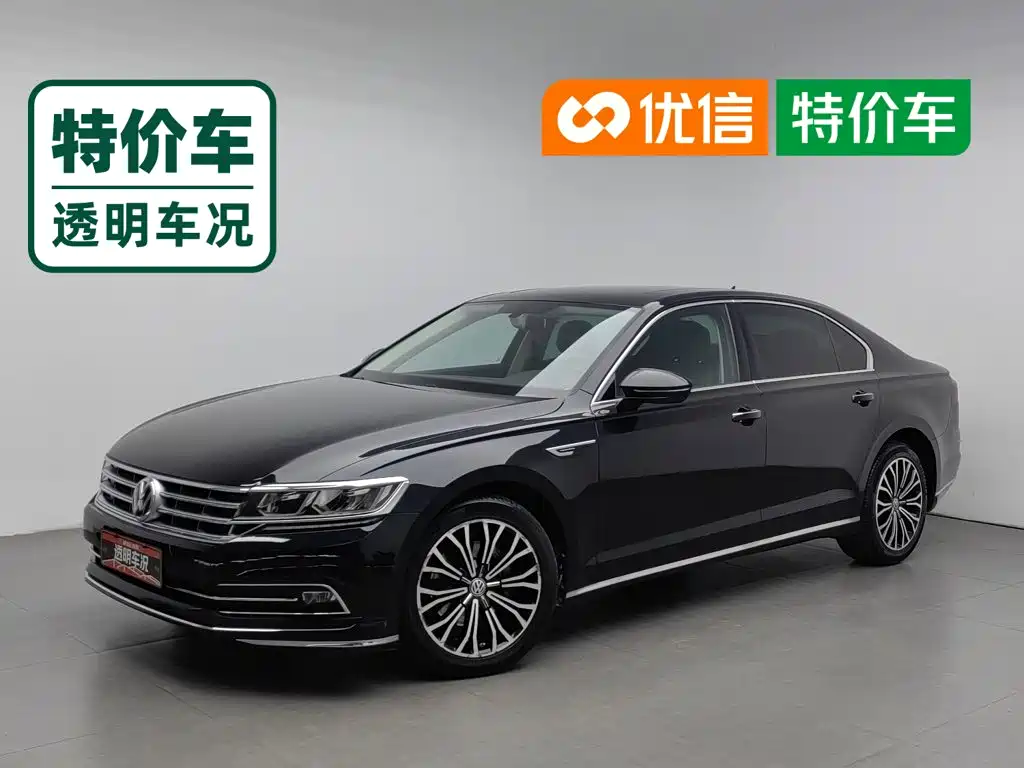
At a glance
- The Phideon is a large, China-origin executive sedan suited to chauffeur, VIP and executive-fleet use.
- The 380TSI pairs a turbocharged four-cylinder with a front-drive focus, while the 480 V6 combines a supercharged V6 with all-wheel drive.
- Business-oriented trims prioritize fleet value, while Luxury, Premium and Flagship versions add equipment and comfort.
- New does not necessarily mean current production; VIN, ownership history, condition and title status determine value.
- Compare landed cost, local homologation, parts support and serviceability before placing an order.
Why the Volkswagen Phideon matters for export markets
The Volkswagen Phideon occupies a distinctive position in the large-sedan market: it combines a Volkswagen badge with a long, spacious cabin and a more traditional executive-car format than Phideon’s compact SUV namesake. Built primarily for the Chinese market, it appeals overseas buyers who prioritize rear-seat room, road presence and executive-car equipment over the smaller footprint or lower running costs of a mainstream sedan. For fleet and VIP transport use, that emphasis can be more relevant than sporty dynamics. Export demand is selective rather than universal, strongest where importers understand Chinese luxury-sedan ownership and can support parts, servicing and local compliance.
Compared with locally manufactured executive sedans, the Phideon offers a different proposition: Chinese production, a formal specification and equipment at the upper end of the range. It is not simply a Volkswagen Passat with a longer body; the model has its own identity, including the flagship-oriented V6 derivative. That distinction matters to buyers seeking a ceremonial car or a distinctive model for chauffeur fleets. For an importer, however, badge familiarity does not guarantee easy resale. The Phideon has a smaller international footprint than European executive sedans, so test demand before committing to volume.
Export suitability depends less on headline specifications than on ecosystem. Buyers should establish whether replacement parts, diagnostic support and body repair can be sourced locally, whether the intended market accepts a China-produced sedan, and whether customers value the Phideon’s size and comfort. Where aftersales coverage is limited, a mechanically desirable vehicle can still be a poor fleet purchase. An importer or specialist service partner should review candidates before shipping. That review should include service intervals, tyre and trim availability, diagnostic capability and repair lead times, not merely whether basic consumables can be ordered.
- Large executive-sedan format
- Selective overseas demand
- Local aftersales support
Model range, trims and powertrain variants: how the lineup is structured and how to choose
The Phideon range is organized around two main powertrain families. The 380TSI pairing uses a turbocharged 2.0-litre gasoline four-cylinder and is associated with front-wheel-drive or 2WD business-oriented versions. The 480 V6 pairing uses a 3.0-litre supercharged V6 and appears with all-wheel drive in higher, flagship-led trims. Because model-year and facelift changes can alter equipment and tune, buyers should treat the trim name as a starting point rather than a complete specification. Confirm the engine, gearbox, axle layout and option sheet against the exact unit before placing any order or releasing payment.
Within the 380TSI family, Business Edition names emphasize fleet use, while Luxury, Premium and Flagship signal greater equipment and comfort. A facelift label may include a revised cabin, exterior and feature set. China V and China VI references relate to the source market’s emissions generation; they do not establish destination-country approval. For an export buyer, assess powertrain and drive first, then equipment needs, and finally the age and condition of the vehicle. A lower trim can be rational for fleet use when essentials exist, while a flagship may suit VIP buyers but adds systems to maintain.
Choice between the 380TSI and 480 V6 is a balance of operating priorities, not simply luxury versus economy. The four-cylinder version may be easier to service for fleet use, while the V6 offers a more relaxed performance character but requires parts planning, specialist knowledge and attention to fuel consumption. A test-drive and maintenance review should replace badge-based assumptions. Buyers should also ask whether their market values cabin refinement or all-weather traction more than acquisition simplicity. Because the Phideon is not offered in one uniform global specification, identical trim names may not mean identical equipment across production periods.
- 380TSI turbo four-cylinder
- 480 V6 supercharged powertrain
- China labels are not export approval
New vs used Volkswagen Phideon: how export inventory is structured and buyers choose
Export inventory for this model should be understood by condition labels rather than by the word new alone. A factory-new listing can be an unregistered, older model-year vehicle held in stock; it may never have been registered but can still show age and wear from storage or test preparation. Conversely, a used car may be mechanically sound but carry higher refurbishment, warranty and residual-value risk. The vehicle’s VIN, registration history, odometer reading and title status matter more than a marketing label. Always ask for documentary evidence rather than relying on photographs.
The Phideon is particularly well suited to a structured used-vehicle inspection because its major mechanical themes are identifiable. Check cold starts, oil leaks, coolant condition, transmission behavior, suspension noise and the operation of electronic systems. Examine body panels, paint consistency, wheel specification and interior wear against the stated year and trim. Ask whether maintenance records are available and whether any software, electrical or cosmetic work has been completed. Chinese-market vehicles may also have a different service history from vehicles supplied by the importer, so undocumented ownership should be treated as an unresolved commercial risk.
New or unregistered stock can reduce refurbishment needs and may preserve warranty cover if the seller honors it. It is not, however, an import with overseas type approval. A used Phideon may cost less but offset that saving through repairs, parts sourcing and a weaker warranty position. The better choice depends on fleet uptime, financing and resale assumptions, not the lowest purchase quote. Before comparing options, total preparation, transport, registration and downtime. Use the live inventory to request condition details and confirm whether a unit is new, used, imported or previously registered.
- New may mean aged stock
- VIN and history outrank labels
- Price preparation and downtime
How export pricing works: the factors behind a live listing price, and how to read one
A Volkswagen Phideon export price reflects several variables, not a fixed model-level rate. Year, trim, engine, mileage, condition, options and warranty position influence value. Administrative status also matters: a complete, clean-title vehicle is easier to trade than one requiring title repair, inspection or clarification of its import history. The live quote should therefore be treated as unit-specific evidence. When comparing similar sedans, ask the seller to reconcile every price difference against a detailed vehicle list. This prevents paying for a premium trim without receiving the equipment or condition that justified it.
Transaction costs move further when the vehicle travels from China to the buyer. Freight method, ports, insurance, handling, documents, exchange rates and the chosen Incoterm affect the landed total. Import duty, taxes and registration are additional destination-market costs and should be calculated by a licensed broker. A listing figure may exclude these items, so its inclusions must be checked before comparison. Exchange-rate movements can change a quote denominated in another currency when payment and delivery are separated in time. Request currency, validity period, payment stage and refund terms for the live price.
To read a live listing, begin with model and trim, then verify engine, gearbox, drive layout, mileage, condition, VIN and documents. Compare like with like and use the RFQ to request a breakdown from vehicle price through delivery terms. Exact prices and availability change with each unit, so binding figures must come from live Phideon listings on ChinaCarDirect rather than an old article or indicative range. Record the quote version and reconfirm before payment. Never assume a lower number includes shipping, taxes or clearance, or a higher number covers defects; inclusions must be explicit.
- Compare like-for-like units
- Check Incoterm and inclusions
- Live quotes control current numbers
MOQ, ordering and payment: single units vs consolidating a container
MOQ on the Phideon is transaction-specific, so separate the seller’s minimum order from the economics of shipping one car. A dealer or importer may purchase a single unit from a live listing, while a container-consolidation offer may require several vehicles. The minimum belongs to the quotation and must be confirmed in writing. It should never be inferred from a vehicle category or earlier transaction. This distinction matters for fleet trials: a one-unit test can be practical for an importer, but it may expose the buyer to a vehicle-shipping movement without consolidation savings.
Single-unit purchasing suits market testing, a VIP operator or an importer validating demand before scaling. Confirm whether the seller permits independent inspection, how the unit is secured before loading, and what happens if the vehicle differs from its description. Payment commonly progresses from deposit to balance against documents and inspection, but the sequence must be written into the contract. Escrow or a protected structure may be requested. Never release the balance solely because a photograph or video arrived; tie it to identity, condition, document and delivery milestones that can be verified.
Container consolidation can improve freight efficiency and offer model choice, but it raises coordination risk. Vehicles must be compatible in dimensions, weight, axle loads and handling requirements, and the buyer must decide who owns cargo insurance, port charges, customs clearance and storage caused by documentation delays. A consolidated order needs clear allocation so buyers receive the right VIN and vehicle. For multi-brand wholesale purchasing, the all-products catalogue helps compare alternative loads. Before committing, build a landed-cost sheet for vehicles and a shipping estimate, then test margin against local selling costs and holding time.
- MOQ is quotation-specific
- Single-unit buying suits pilots
- Consolidation needs VIN allocation
Shipping, homologation and market compliance caveats: LHD/RHD and import rules by country
Most China-origin Phideons are left-hand-drive, which narrows their immediate suitability in right-hand-drive markets. Importing a left-hand-drive car into a country that expects right-hand drive can involve conversion, local approval and changes to safety, visibility or equipment requirements. A purpose-built right-hand-drive conversion is preferable where feasible because the work is designed as a system. For private import or specialist fleet use, the destination authority must still confirm whether modification is permissible. Buyers should not treat steering configuration as a cosmetic preference. It can affect insurance, registration, parts availability and the vehicle’s practical acceptance by local operators.
Homologation is country-specific and often more demanding than clearing customs. The importer may need to address emissions, noise, lighting, brakes, occupant protection, software, cybersecurity, vehicle identification, recalls and type-approval documentation. A China VI trim designation describes the source vehicle; it is not a universal export certificate. Obtain a compliance assessment from an importer or homologation specialist before making a non-refundable commitment, especially for a fleet. The same caution applies to modifications, replacement lamps, wheels, infotainment and driver-assistance functions. A vehicle that imports successfully may still fail fleet registration if inspection identifies non-compliant changes.
Shipping method should follow quantity, urgency and budget. A single vehicle may travel by roll-on/roll-off or container service, while consolidation can improve cost efficiency; packed dimensions, weight and schedules must be confirmed with the forwarder. Sea freight takes longer than air or road alternatives but can suit a fleet launch. Incoterms determine where risk and cost transfer, so compare offers on the delivery basis and include insurance, ports, customs and charges. Allow time for inspection, export clearance, transit, customs, compliance and delivery. Arrival is not the same as registration and service readiness.
- Verify steering configuration early
- Homologation remains country-specific
- Compare identical Incoterms
Who should buy the Phideon — and who should pick a different vehicle
The Phideon suits buyers whose brief begins with space, formality and passenger comfort. It makes sense for chauffeur services, VIP transport, executive hospitality, airport transfers and fleets that prefer a large sedan with a recognizable but less conventional identity than a European executive car. The rear cabin, generous proportions and broad equipment hierarchy allow buying strategies from business-focused units to more luxurious flagships. It can also suit a distributor actively building a differentiated niche around Chinese-origin luxury, provided the importer accepts the realities of local parts support, residual values and model-specific marketing.
It is a weaker choice when priority is low operating cost, easy servicing or a global dealer network. The gasoline powertrains and vehicle mass work against fuel economy, while China-specific parts and electronics can take longer to source without local Phideon specialists. Buyers seeking right-hand drive, hybrid efficiency, compact dimensions or sporty handling should not force the model into a brief it was not designed to meet. Test the proposition with routes and loading. An executive car may justify its size for passenger work but become inefficient for high-mileage, rapid-turnaround fleet use.
Ownership structure matters as much as the vehicle. A company with technicians, import expertise and a plan for parts holding can manage the Phideon’s demands better than a buyer relying on dealer support. Before purchase, model running costs, technician training, tyre and fluid specifications, insurance classification and expected resale. If those checks fail, choose a widely supported executive sedan rather than expecting comfort to compensate for an incomplete ownership plan. The decision should reflect destination-market expectations: some buyers value exclusivity and rear-seat calm, while others want the lowest cost of moving executives.
- Suits VIP and chauffeur fleets
- Weak for low-cost fleet use
- Requires a credible parts plan
Main rivals and how the Phideon compares
The Audi A6L is the most direct Chinese-market comparison because it also emphasizes a long-wheelbase executive sedan and is sold locally in China. The Phideon offers a distinctive Volkswagen-based alternative and a notable V6 flagship route, while the A6L benefits from a broader local service and parts ecosystem. For an overseas buyer, the A6L may be operationally easier where officially supported; the Phideon may be more interesting where differentiation and equipment matter. Neither should be selected from badge alone: compare the exact destination-market version, after-sales coverage, registration treatment and fleet requirements.
The BMW 5 Series is another credible rival for private-company and executive use. It carries an internationally established identity and is easier to compare across dealer networks, while the Phideon can deliver a larger-feeling rear-seat environment and a formal character. The trade-off is ecosystem: a Phideon buyer must confirm local technician access and parts planning rather than assume Volkswagen trades will support the model. For a customer focused on driver engagement and global resale familiarity, the BMW may be safer; for rear-seat comfort and a different image, the Phideon has a clearer case.
The Mercedes-Benz E-Class completes the comparison with an executive benchmark known for comfort and global support. Local variants may offer a more predictable ownership experience than a China-specific Phideon, but the Phideon can appeal to buyers seeking larger dimensions, distinctive branding and a V6 specification. The choice should come from verified unit condition, landed cost and local serviceability, not prestige. Fleet buyers should calculate operating and downtime cost for shortlisted models. Private importers should test demand with the least costly compliant unit rather than ordering volume on the assumption that the format sells quickly.
- Audi A6L: closest local alternative
- BMW 5 Series: global benchmark
- Mercedes-Benz E-Class: comfort benchmark
Live Volkswagen Phideon export inventory
View all listings →Real units currently on ChinaCarDirect with per-unit asking prices and MOQ. Availability updates live from the catalogue.
How to buy a Volkswagen Phideon from China
-
1
Define the destination-market brief
List the required steering configuration, engine family, seating capacity, equipment, service support and total-cost priorities before comparing vehicles.
-
2
Search the live Phideon inventory
Compare current listings by year, trim, powertrain, drivetrain and condition, then shortlist like-for-like units rather than mixing unrelated configurations.
-
3
Verify documents and vehicle condition
Request the VIN, registration and title history, odometer reading, maintenance records, photographs and an independent inspection report. Reconcile every disclosed issue with the quoted condition.
-
4
Request a written landed quote
Ask for the unit price, currency, validity period, payment stage, Incoterm and a clear breakdown of freight, insurance, handling, customs, duty and registration costs.
-
5
Confirm MOQ and payment milestones
Establish whether a single-unit purchase is accepted, whether consolidation has a separate minimum and how deposits, inspection, document delivery and refunds are handled.
-
6
Complete the compliance review
Have a local importer or homologation specialist check LHD or RHD suitability, type approval, emissions rules, modifications, taxes and registration requirements before non-refundable payment.
-
7
Arrange shipping and final acceptance
Use a qualified forwarder for pre-shipment inspection, export documents, insurance, loading and tracking. Hold the final balance to the agreed identity, condition and delivery milestones.
Phideon vs rivals
| Audi A6L | The A6L is the closest Chinese-market executive-sedan alternative and may have easier local service support. The Phideon offers a more distinctive Volkswagen identity and a V6 flagship option, making it attractive to buyers prioritizing differentiation and rear-seat space. |
|---|---|
| BMW 5 Series | The BMW 5 Series benefits from stronger international recognition and broader dealer familiarity. The Phideon provides a more formal and distinctive character, but buyers should confirm local technician access and parts planning. |
| Mercedes-Benz E-Class | The E-Class is the comfort and ownership-support benchmark for many executive-fleet buyers. The Phideon can suit importers seeking larger dimensions, distinctive branding and a V6 specification, provided its China-specific service requirements are manageable. |
Frequently asked questions
How is the Volkswagen Phideon export price determined?
The live price reflects the specific vehicle’s year, trim, powertrain, condition, history, options and warranty status, plus any seller-specific terms. Freight, insurance, customs, duty and local registration can change the landed total, depending on the Incoterm. Check the live Phideon listings for the current unit price and request a written quote before paying.
Which engine and drivetrain options should I choose?
The 380TSI family uses a turbocharged 2.0-litre gasoline four-cylinder with front-wheel drive, while the 480 V6 uses a supercharged 3.0-litre V6 with all-wheel drive. Trim names and equipment vary by production period, so confirm the exact engine, gearbox, axle layout and option list on the live listing. There is no battery or charging specification because the Phideon is gasoline-powered.
Should I buy a new or used Volkswagen Phideon?
Factory-new or unregistered stock may reduce refurbishment needs, but it may be an older model-year vehicle and may not carry overseas type approval. A used Phideon can offer lower acquisition cost, offset by repairs, parts sourcing, warranty limits and downtime. Compare documents, inspection results and total operating assumptions rather than the label alone.
What is the MOQ for buying a Phideon from China?
MOQ is set by the seller and transaction, not by the model name. A live offer may accept one unit, while a consolidation shipment may require several vehicles and compatible configurations. Confirm the minimum, unit allocation and any mixed-model conditions in writing; do not assume a prior order’s terms still apply.
How long does shipping take and what affects cost?
Shipping time and cost depend on origin and destination ports, method, consolidation, packed dimensions and weight, insurance, handling, schedules and the Incoterm. Sea freight usually takes longer than air or road, but consolidated shipments can lower per-vehicle freight. Obtain a forwarder quote and include customs, compliance, port and destination charges in the landed-cost sheet.
Can I obtain Volkswagen Phideon spare parts?
Parts can often be identified by VIN and ordered through specialist or authorized channels, but Chinese-market Phideon components may not be identical to local Volkswagen versions. Confirm part numbers, interchangeability and lead times before importing, and hold suitable service consumables for vehicles with limited local support.
Is a right-hand-drive Volkswagen Phideon available for export?
Most China-origin Phideons are left-hand-drive, while right-hand-drive supply is not guaranteed. A destination-market importer should confirm whether a conversion is acceptable and how it affects registration, safety and insurance. Check current RHD units in the live listings, or plan a compliant conversion only after local authority approval.
How do I order a Volkswagen Phideon from China?
Start with the live Phideon inventory, where current per-unit price, MOQ and availability are shown. Shortlist like-for-like vehicles and request an RFQ for each unit, then verify VIN, history, condition, documents, payment milestones, landed cost and compliance before paying. The RFQ should record the chosen vehicle, delivery terms and evidence required for final acceptance.
Ready to source the Volkswagen Phideon?
Request a current Volkswagen Phideon quote with unit details, Incoterm and compliance checks through the ChinaCarDirect RFQ form.
Request a quote