
Volkswagen Sharan Export Guide for Dealers and Fleet Buyers
Buy a Volkswagen Sharan from China with guidance on trims, 1.8 TSI and 2.0 TSI engines, six- or seven-seat layouts, export pricing, shipping and compliance.
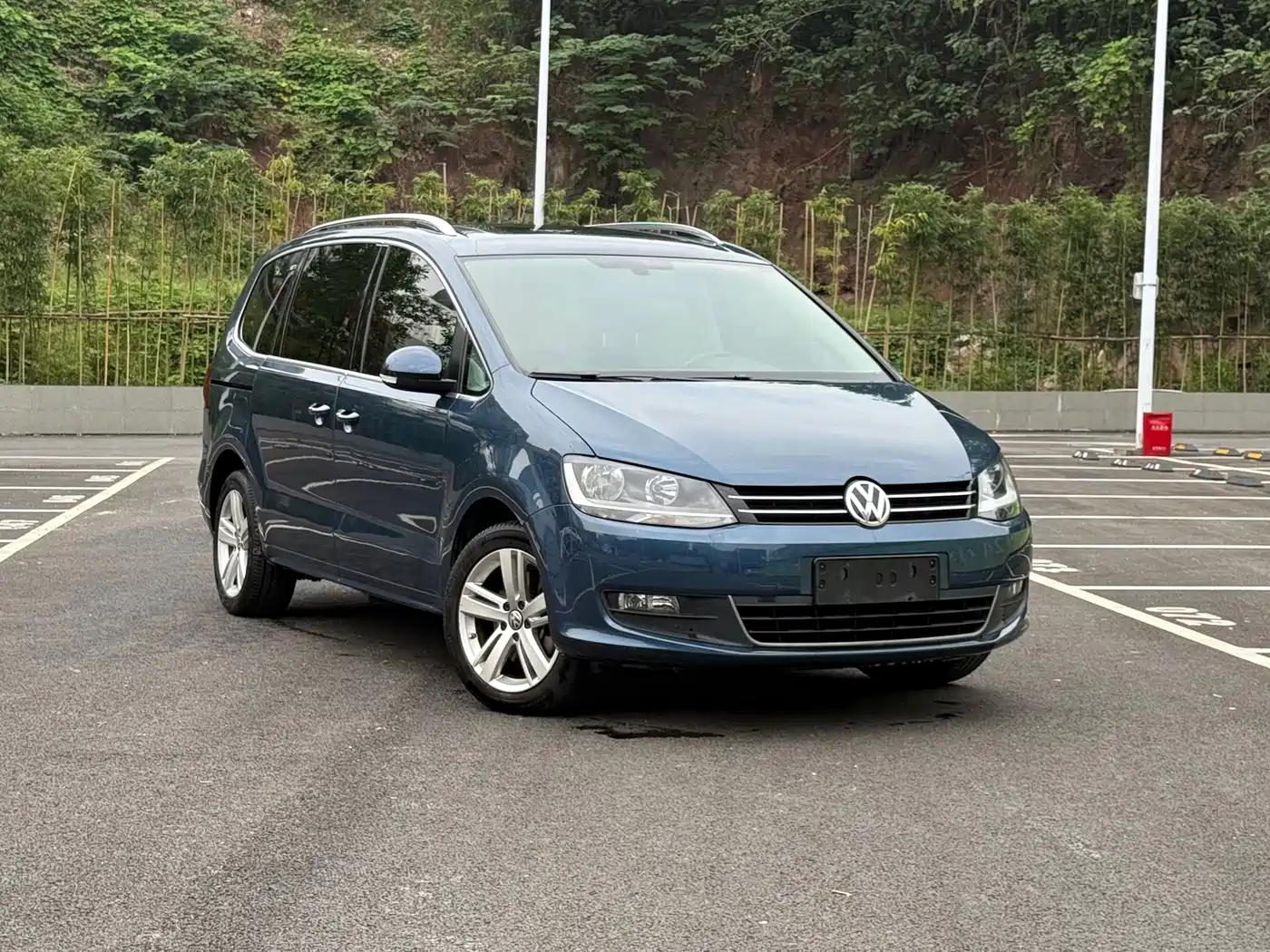
At a glance
- The Volkswagen Sharan is a multi-row gasoline MPV positioned for families, private-hire operators, hotels and group transport.
- The range includes 1.8TSI, 2.0TSI and 380TSI labels with Standard, Comfort and Premium equipment grades.
- Different seating layouts serve different passenger and luggage priorities, so usable space matters more than the seat-count badge.
- Used Sharan options can reduce acquisition outlay, but VIN-level inspection, service evidence and parts support determine their real value.
- Export pricing is unit-specific and changes with condition, trim, currency, freight, Incoterm and destination compliance costs.
- LHD or RHD fit, homologation and import treatment must be confirmed before an export order is placed.
Why the Volkswagen Sharan matters for export markets
The Volkswagen Sharan occupies a practical middle ground between a compact people carrier and a full-size minivan. Its multi-row layout, broad cabin and established Volkswagen engineering make it relevant to family importers, airport-transfer operators, hotels and other buyers who prioritize passenger capacity over sporty styling. For overseas dealers, that creates a use case than chasing a fashionable crossover: one vehicle can cover family, executive-shuttle and light group-transport duties while retaining Volkswagen service conventions. It also gives resellers a recognizable model with an established badge, although local demand still depends on road position, parts support and running costs.
Export demand tends to be strongest where buyers need more seats and luggage capacity than a saloon or compact MPV can provide. The Sharan is especially relevant to markets with large family groups, airport routes and private-hire fleets, where a driver can benefit from a high driving position and a spacious, enclosed passenger compartment. Its relative age in many export channels is not automatically a weakness; for a business buyer, lower acquisition outlay may matter more than having the newest model year. Buyers should assess the vehicle against local alternatives on total cost, not image alone.
The key export question is not whether the Sharan is a respected global name, but whether the exact version can be registered, serviced and used economically in the destination. Local fuel quality, spare-parts access, insurance categories and road-traffic rules can alter the proposition. A left-hand-drive car may be natural in continental markets or Africa, while right-hand-drive demand in the UK and other markets can change which Chinese-origin examples are suitable. Start with the operating market, then narrow the trim and condition. That sequence avoids choosing a low purchase cost that later disappears into compliance, repair and logistics expenses.
- Multi-row passenger focus
- Family and shuttle use
- Verify LHD or RHD
Model range, trims and powertrain variants: how the lineup is structured and how to choose
The live Sharan range is organized around 1.8TSI, 2.0TSI and 380TSI gasoline powertrains, with Standard, Comfort and Premium versions plus facelift designations. The 1.8 and 2.0 labels identify the nominal engine families, while TSI denotes Volkswagen’s turbocharged petrol technology. Some titles explicitly identify Euro IV versions, and the range also includes six- and seven-seat cars. Buyers should use those title fields as a shortlist rather than assume that a single global specification applies to every model year. For each candidate, confirm the engine label, seat count, transmission, steering side and emissions documentation against the VIN.
Equipment level is the second selection axis. Standard cars generally represent the cost-conscious base for resale or fleet use, while Comfort and Premium versions can add driver aids, cabin convenience and infotainment equipment, depending on model year. Because the equipment list changed over the Sharan’s life, a trim name alone cannot prove the presence of a camera system, leather, climate control or advanced safety functions. Request the vehicle’s equipment record, photographs and option list before treating two named examples as equivalent. This is particularly important when calculating the value of a fleet specification.
The seating decision is operational rather than cosmetic. A seven-seat car is usually more useful when the third row must be available on most journeys, whereas a six-seat layout can provide better second-row comfort and luggage flexibility. Buyers should test whether their passengers, child seats and baggage fit the intended configuration rather than assuming a nominal seat count describes usable space. The 380TSI designation is a higher-positioned Sharan label, but output, gearbox and equipment must still be confirmed for the individual vehicle; do not infer missing figures from the badge.
- 1.8TSI and 2.0TSI engines
- 380TSI trim label
- Six- or seven-seat layouts
- Confirm transmission and emissions
New vs used Volkswagen Sharan: how export inventory is structured and how buyers choose
China-origin Sharan export inventory can contain new and used vehicles from different ages and equipment grades, but the balance changes with the market. Used cars commonly offer the broadest selection and may make a fleet test economically sensible, especially when a buyer knows the maintenance history. New or newer examples may provide a standardized condition and, where applicable, a clearer warranty path, yet they are not automatically cheaper after freight, taxes, registration and financing. Compare the delivered cost of each vehicle, not its catalogue label. A used example with documented condition can be more predictable than a newer vehicle with sparse history.
For a used Sharan, condition should be decomposed into several checks. Review bodywork, paint, panel gaps, windscreen, tyres, brake condition, cabin wear and the condition of every powered seat or folding function. Ask for service records, the VIN, an ownership check and photographs of the engine bay and underside. A low mileage reading is useful only when supported by documents and a consistent maintenance history. For fleet work, inspect the cargo area, seat tracks and door hardware in addition to the passenger compartment. A pre-purchase inspection by an independent specialist should confirm what the listing cannot.
Newer vehicles are not a separate technology category: many Sharan versions use the same 1.8TSI or 2.0TSI engine families and familiar VW components, with changes expressed through model year, emissions, trim and facelisting. A buyer seeking lower operating risk may prefer the youngest available example with the clearest history. A value buyer may instead accept an older car after inspection and budgeting for near-term maintenance. The soundest decision links condition evidence to the buyer’s planned holding period and local workshop capability rather than relying on the model year printed in the listing title.
- Used cars broaden choice
- Inspection beats wording
- Newer cars reduce age risk
How export pricing works: the factors behind a live listing price, and how to read one
An export price is not one universal Sharan value. It results from the vehicle’s year, trim, engine designation, seat layout, mileage, condition, documentation and seller terms, then adjusted for currency movement and the logistics package chosen. A listing may show a vehicle-level price before the buyer adds inland transport, export clearance, ocean freight, insurance, port charges, customs duties, VAT or registration. The Incoterm defines the boundary: EXW begins at the seller’s premises, FOB ends at export-port handover, CIF adds international carriage and minimum insurance, while DDP places more delivery and import obligations on the seller. Confirm exceptions in writing.
To compare live Sharan listings fairly, first confirm that they refer to equivalent vehicles: same engine family, emissions version, seating, model year, condition and mileage band. Then build a like-for-like total under one Incoterm, including port-to-door charges and an allowance for destination taxes. Ask whether the displayed amount is negotiable, what is excluded and which party handles export customs. A cheaper listing can be better if it includes useful documentation or a clearer inspection record, while a higher figure may simply reflect a different service scope. Currency exposure and payment timing should also appear in the comparison.
Exchange rates, freight space, port congestion and the number of vehicles sharing a shipment all move final cost. That is why live availability and current per-unit figures should be checked on the inventory page rather than inferred from an old article or a remembered quote. Treat the listing as a structured starting point: record the SKU, ask for a written pro forma invoice, verify every exclusion, and confirm the validity period. Only a unit-specific quotation tied to an agreed Incoterm provides a dependable budget baseline. Reconfirm cost before payment because freight and currency can move during approval.
- Condition sets the base
- Incoterm changes total cost
- Compare equivalent vehicles
MOQ, ordering and payment: single units vs consolidating a container
Minimum order quantity is set at the listing or seller level, not by the model name. Some Sharan offers may permit a single-unit purchase, while other arrangements may require several units, especially when the seller is allocating a consolidated container. Buyers should read the stated MOQ on the live record and confirm it in the pro forma invoice. A one-unit test purchase can reduce exposure for an importer, but it may not deliver the freight economics available to a larger consolidated order; that trade-off should be compared with the dealer’s expected sales volume.
Container consolidation changes the risk profile. Combining compatible Sharan units can spread port and inland handling costs across more vehicles, but it also concentrates capital in one shipment and makes a single inspection or documentation problem more consequential. Buyers should agree on the vehicle mix, inspection standard, allocation method, and what happens if a unit is rejected. Mixing unrelated models or specifications can simplify loading but can also complicate customs classification, spare-parts planning and retail delivery. The cheapest freight rate per vehicle is not necessarily the cheapest overall business decision.
A controlled payment sequence protects both sides. After selecting a unit, verify the seller’s legal identity and payment beneficiary, request a pro forma invoice that matches the SKU and agreed terms, and understand the deposit and balance milestones. Release of the balance should be tied to satisfactory inspection and the agreed documents, while shipping evidence should be checked before ownership risk transfers. Buyers should also confirm who arranges export clearance, terminal handling and insurance. Keep the contract, photos, inspection report, invoice and shipping records together for registration, warranty claims and later resale.
- Listing-specific MOQ
- Single-unit market tests
- Container consolidation economics
Shipping, homologation and market compliance caveats: LHD/RHD and import rules by country
Start with steering position and destination rules before paying. The Sharan is offered in left- and right-hand-drive forms, but a Chinese-origin unit’s configuration is not selected by an export order like a factory option. Buyers must verify the steering side, then check local registration rules; changing a vehicle after shipment rarely offers the same economics as buying the correct configuration. The VIN, engine and emissions labels, roadworthiness documents, customs value and any local type approval or homologation evidence should be checked with an importer or broker before committing. Do not assume that a familiar VW badge removes local approval duties.
Emissions and age rules can be decisive. Some Sharan listings carry Euro IV designations, while others may represent different emissions or market treatments, and a destination may impose its own minimum age, inspection or emissions standard. Import duty, VAT or tax treatment also depends on the country and classification, so the broker’s estimate should be based on the VIN and intended use rather than on a generic Sharan description. Fleet, private-use and commercial classifications can be treated differently. Obtain written confirmation where the consequence of an incorrect classification is substantial.
Transport choice affects both cost and risk. Suitable Sharan vehicles may move by roll-on/roll-off vessel or within a container, depending on origin, destination and cargo plan; the forwarder should confirm that the vehicle’s dimensions, weight and securing points fit the chosen method. Compare port charges, inland haulage, insurance, customs brokerage, demurrage exposure and delivery timing. Do not mistake sailing time for total delivery time: origin handling, booking, inspection, customs clearance and final-mile transport can extend the route. Use a landed-cost schedule with named responsibilities, and confirm that the vehicle meets local insurance requirements before shipment.
- Verify steering side early
- Confirm local emissions rules
- Use a landed-cost schedule
Who should buy the Sharan — and who should pick a different vehicle
The Sharan is a strong candidate for a family importer buying one vehicle, a dealer testing a people-carrier segment, or an operator serving hotels, airports, groups and executive transfers. Its appeal comes from carrying several passengers in a car-based package, with a Volkswagen identity familiar to many motorists. It can be particularly attractive when passengers value a comfortable, enclosed ride and luggage must accompany them. A six-seat version may suit executive or premium shuttle work, while a seven-seat vehicle fits families and group transport more directly. The business case improves when planned utilization is consistently high.
It is a weaker choice for a buyer focused only on the lowest possible operating cost, minimal emissions, extensive off-road ability or a very small urban parking footprint. The turbocharged petrol engines require attention to fuel quality and service intervals appropriate to the exact version, and a large MPV will not match a smaller hatchback’s efficiency or ease of parking. Because the Sharan range described in this guide is gasoline-powered, buyers with firm zero-emission requirements should look at a suitable electrified alternative rather than assume a PHEV or battery-electric version is available in this export channel.
Before buying, match the vehicle to the mission using a total-cost worksheet. Include acquisition, finance, transport, tax, insurance, fuel, servicing, tyres and expected downtime, then test the seating and luggage plan with dimensions. Part availability can be decisive for an older example, especially for less common comfort or electronic components. If the operator needs commercial-duty capability, high ground clearance or a lower purchase outlay, a purpose-built van, smaller MPV or used crossover may be more appropriate. The Sharan deal is not the lowest sticker, but the vehicle whose total risk matches the use case.
- Family and shuttle fit
- Running-cost trade-offs
- Older-car parts risk
Main rivals and how the Sharan compares
The closest global alternatives are the Toyota Sienna, Kia Carnival and Chrysler Pacifica because each competes for large-family and group-transport buyers with a multi-row cabin. However, a fair comparison often crosses different eras and powertrain strategies. Sienna and Pacifica commonly emphasize hybrid efficiency and newer platform development, while Carnival combines a modern people-carrier format with additional seating options. Used examples can overlap economically with an imported Sharan, but fuel-system parts, software support and resale expectations differ by country. A Sharan buyer should compare the same route, passenger load and holding period.
A like-for-like comparison must account for different platforms and powertrains. Compare the Sharan with the exact used rival available in the destination, not automatically with the newest new derivative. A Sienna or Pacifica brings a modern hybrid approach, while a Carnival offers a newer people-carrier layout with flexible seating. Parts and diagnostic requirements can each differ from those of a Volkswagen. The Sharan’s petrol configuration and VW familiarity can be easier where local technicians know the model, although it lacks the latest efficiency and technology. Service access should therefore carry weight in the destination market.
For an overseas buyer, the Sharan’s strongest case is a sensible used MPV with transparent condition, familiar VW service parts and a configuration that matches local road rules. Its main weakness is age-related uncertainty and the absence of the latest hybrid efficiency offered by newer rivals. Compare VIN-level documentation, seat usability, fuel and service costs, parts access and landed compliance for every candidate. If the Sharan passes those checks, it offers a practical balance of space, driver familiarity and acquisition value that remains distinct from a premium van or a pure family minivan.
- Sienna: modern hybrid rival
- Carnival: flexible multi-row rival
- Pacifica: direct minivan rival
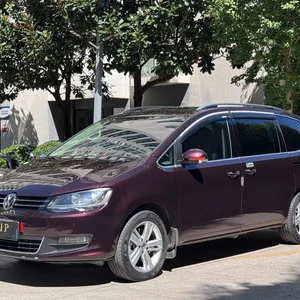
Live Volkswagen Sharan export inventory
View all listings →Real units currently on ChinaCarDirect with per-unit asking prices and MOQ. Availability updates live from the catalogue.
How to buy a Volkswagen Sharan from China
-
1
Set the destination and operating brief
Define the country, steering side, passenger count, luggage needs, ownership period and local rules before selecting a vehicle. This prevents a nominally attractive Sharan from becoming unsuitable after registration or shipping.
-
2
Build a specification shortlist
Use the live Sharan inventory to compare engine label, seating, year, condition, mileage, equipment and steering side. Shortlist units whose published details fit the brief, then save each SKU for direct follow-up.
-
3
Verify documents and condition
Request the VIN, engine and emissions information, service history, ownership details, photographs and an independent inspection report. For a used car, check bodywork, tyres, brakes, cabin wear and all seat functions rather than relying on trim wording.
-
4
Request a unit-level quotation
Ask for a written pro forma invoice tied to the SKU, with condition, options, current price, MOQ, payment milestones, Incoterm and a validity period. Identify every cost excluded from the displayed amount.
-
5
Compare landed cost and Incoterm
Normalize competing quotes under the same delivery term, adding origin handling, freight, insurance, customs, taxes and inland transport as applicable. Check the destination broker’s assumptions before treating either quote as a final budget.
-
6
Complete inspection and payment
Approve the physical or documentary inspection against the contract, confirm the beneficiary details, and tie the balance payment to agreed inspection and document milestones. Retain the contract, invoice, photographs and inspection report together.
-
7
Arrange shipping and registration
Book the forwarder, confirm roll-on/roll-off or container suitability, and review the bill of lading, insurance and customs documents. Complete destination import, type approval, inspection, registration and insurance before handover.
Sharan vs rivals
| Toyota Sienna | The Sienna is a close large-family MPV rival with newer hybrid versions and a more modern cabin. It suits buyers prioritizing current platform efficiency, while the Sharan may appeal where local technicians already know Volkswagen vehicles. |
|---|---|
| Kia Carnival | The Carnival provides newer multi-row architecture and flexible seating, appealing to families seeking current design and technology. The Sharan can be more attractive where local VW parts knowledge and a conventional petrol drivetrain are priorities. |
| Chrysler Pacifica | The Pacifica is another direct minivan rival, with modern hybrid packaging and strong family-hauling credentials. It may suit buyers valuing newer technology, while the Sharan offers a more conventional choice for importers focused on VW familiarity and petrol operation. |
Frequently asked questions
How is the export price of a Volkswagen Sharan determined?
The live price reflects the specific vehicle and seller package, including year, trim, engine, seat layout, mileage, condition, documentation and logistics terms. Currency, freight, insurance, customs and the Incoterm can change the landed cost, so ask which charges are excluded. Check the current amount and request a written unit-specific quote in the live Sharan listings.
Which Volkswagen Sharan engines are available for export?
The export range includes gasoline 1.8TSI and 2.0TSI versions, plus cars carrying the 380TSI designation. Exact output, transmission, emissions standard and equipment depend on the vehicle, so confirm those details from the listing and VIN. These are combustion vehicles, so electric range and charging specifications do not apply.
Is a used Volkswagen Sharan better than a newer example?
A used Sharan can offer lower acquisition outlay and more market-tested configurations, but age brings greater uncertainty over condition, maintenance and parts. A newer vehicle may reduce wear-related risk and provide clearer warranty coverage where one applies. Choose after an independent inspection and a holding-period cost comparison, not from the year or price label alone.
How does MOQ work when buying a Volkswagen Sharan from China?
MOQ is set for each listing and seller rather than for the model as a whole. Read the current MOQ on the live record and confirm it in the pro forma invoice; single-unit market tests and consolidated container orders have different capital and freight implications. Do not assume that one arrangement applies to every Sharan offer.
What determines shipping time and cost for a Volkswagen Sharan?
Shipping time depends on origin handling, vessel or container booking, port congestion, customs clearance, inland transport and final delivery. Cost also reflects the route, vehicle allocation, insurance, port charges, exchange rates and Incoterm. Ask the forwarder for a port-to-door schedule and landed-cost breakdown rather than relying on sailing time alone.
Can spare parts be sourced for an imported Volkswagen Sharan?
Volkswagen’s global identity can help with parts identification, but availability still depends on the exact engine, trim, model year and electronic components in the destination. Provide the VIN when requesting parts and ask the seller or importer to list common service items and likely alternatives. Treat rare components as a purchasing risk before buying an older car.
Is right-hand-drive Volkswagen Sharan availability limited?
Right-hand-drive availability depends on the source vehicle and live inventory, so it should not be assumed for every trim or model year. Check the current listings, confirm the steering side in photographs and the VIN record, and review local registration rules before paying. Converting a left-hand-drive example after shipment may create cost and compliance issues.
How do I order a Volkswagen Sharan from China?
Choose a suitable live listing, verify the SKU, specification, documents and condition, and send the seller or ChinaCarDirect an RFQ with your destination and required Incoterm. Agree the current price, MOQ, payment milestones, inspection standard and shipping responsibilities in writing. Complete the agreed inspection and payment process, then coordinate export clearance, freight, customs and destination registration.
Ready to source the Volkswagen Sharan?
Request a current Volkswagen Sharan quotation with your destination, seating needs, condition preference and required Incoterm.
Request a quote