
Volkswagen T-roc Export Buying Guide for Overseas Buyers
Buy a Volkswagen T-roc from China with confidence: compare trims, powertrains, pricing factors, compliance, shipping and rival options before purchase.
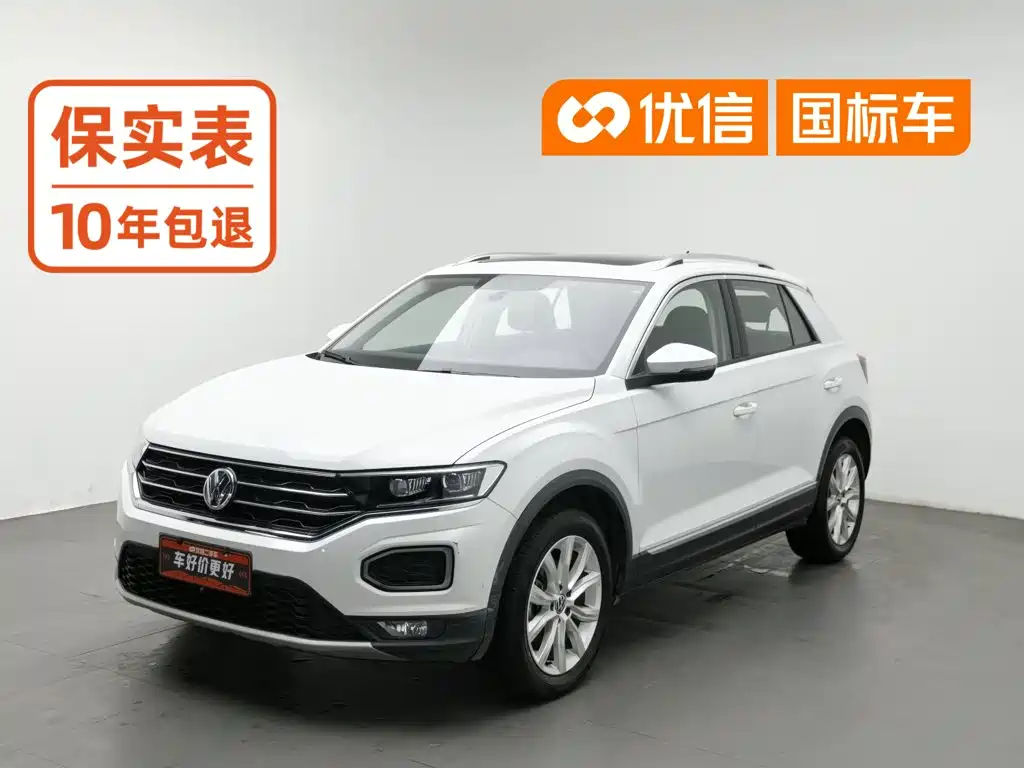
At a glance
- The T-roc combines a compact five-door footprint with a raised, sporty SUV format suited to private and fleet buyers.
- China-market trims span 230TSI, 280TSI and 300TSI petrol powertrains, generally paired with a DSG and two- or four-wheel drive.
- A like-for-like comparison must align model year, facelift, engine, drivetrain, trim and condition before judging a live export quote.
- New units suit fleet consistency, while used units require unit-specific inspection, history checks and a realistic initial-service budget.
- Import feasibility should be confirmed before payment, especially for RHD needs, local type approval, software support, taxes and spare parts.
Why the Volkswagen T-roc matters for export markets
The Volkswagen T-roc sits in the mainstream compact-SUV segment, combining a five-door hatchback-like footprint with the seating height, visual appeal and all-weather usability expected by crossover buyers. Its Volkswagen badge, DSG transmissions and mix of practical, R-Line and four-wheel-drive versions give overseas dealers a familiar product story. That positioning is especially useful in markets where buyers want a manageable vehicle for urban use but still expect a more substantial-looking alternative to a conventional hatchback. It also suits company-car programmes that prioritise brand image, easy operation and a broader equipment ladder without moving into the larger, costlier SUV classes.
Global demand for the T-roc is not driven by one specification, but by a clear use-case: a versatile family car with a moderate footprint. Dealer groups can serve private buyers, rental fleets and company-car customers from closely related derivative versions rather than building an overly fragmented catalogue. The model's familiar VW design language also helps showroom conversations, while facelift labels, connected-edition names and China V or China VI identifiers allow buyers to match age and specification more precisely than a simple model-name search would allow during an export procurement review.
The export case still depends on local context. A compact T-roc may be persuasive where parking is constrained, roads are paved and consumers prefer a raised, sporty design, yet buyers in high-emission or high-duty regions may focus on different powertrains or load capacity. Export buyers should therefore assess the T-roc against their own country's segment, not against headline specifications alone. Brand recognition, spare-parts planning and the ability to homologate each exact vehicle under current destination-country rules before contracting with the supplier and importer.
- Five-door compact SUV with a broad trim and drivetrain ladder.
- DSG, R-Line, connected and four-wheel-drive versions serve distinct needs.
- Export suitability depends on destination approval and after-sales support.
Model range, trims and powertrain variants: how the lineup is structured and how to choose
The China-market T-roc range is organised around 230TSI, 280TSI and 300TSI engine designations, with DSG transmissions throughout the named export trims. Most versions are front-wheel drive, presented in listings as 2WD or FWD, while selected 280TSI variants offer four-wheel drive. Trim ladders include Progressive, Comfort, Comfort PLUS, Elite, Elite PLUS, R-Line Pro and special editions such as Time Edition and Morning Light. Exact pairing changes by model year and facelift, so trim names should be read together with the VIN and production year, not treated as universal specifications for every market.
Engine choice is a balance of tax treatment, fuel use, performance and residual demand. The 230TSI versions can appeal where lower running cost and urban efficiency matter; the 280TSI name is associated with the higher-output 2WD and 4WD branches of this China-market range; and 300TSI appears on later Morning Light versions. These badges do not provide enough information to calculate tax, insurance or fuel economy for every country. Buyers should request the engine output, displacement and approved fuel-consumption figures attached to the exact listing before making a firm order.
Drivetrain selection should follow use rather than badge appeal. Two-wheel-drive versions are generally the simpler choice for paved-road urban and regional use, with lower mechanical complexity and usually a more attractive acquisition equation. Four-wheel-drive versions add traction-oriented capability and may suit buyers needing better stability in poor weather, on steep terrain or for towing. DSG serviceability, software support and parts supply for the destination market should also be checked: a familiar badge does not remove the need for a reliable maintenance network, particularly for high-mileage fleet deployments with predictable service intervals.
- Choose 230TSI, 280TSI or 300TSI against local tax and demand.
- Confirm front- or four-wheel drive on the exact vehicle.
- Verify DSG servicing and parts support before fleet deployment.
New vs used Volkswagen T-roc: how export inventory is structured and how buyers choose
Export inventory should be sorted by three separate questions: condition, age and specification. A new vehicle may be current production, dealer-stock or parallel-import stock, while used units can arrive through local trade channels, manufacturer schemes or approved used-vehicle exporters. The condition label alone does not tell you whether a car has been registered, repaired or modified. Ask for the production date, odometer reading, prior registration history, service records and VIN. Current availability is tied to each ChinaCarDirect live unit, not the model name, and similarly described vehicles can have very different residual values and risks.
A new T-roc is normally the stronger choice for fleet homogeneity, warranty administration and predictable presentation. It also gives a buyer the clearest factory condition and avoids uncertainty around wear, repainting and prior repair. The trade-off is that a China-spec new vehicle may not yet have destination-country type approval, local software support or a conventional dealer warranty. Those are logistics and homologation issues, not reasons to discount the car automatically, but they must be resolved contractually before delivery to fleet customers or a planned handover date to users there.
Used T-roc vehicles can make sense for a dealer seeking a lower acquisition outlay, an older registered example for a specific customer, or a model year with a desired pre-facelift appearance. The correct comparison is total landed cost, not the vehicle price alone: condition, remaining life, likely repairs, tyre age, battery or electronic-module condition, documentation and resale timing all matter. Inspect the exact unit, obtain a VIN-specific history and repair report where available, and budget for an initial service. Never infer mechanical condition from photographs, model-year labels or mileage alone.
How export pricing works: the factors behind a live listing price, and how to read one
A T-roc export price is not a fixed market value; it is the result of several variables attached to a specific vehicle and transaction. Model year, facelift status, 230TSI, 280TSI or 300TSI badge, front- or four-wheel-drive layout, trim, equipment, production condition and mileage for used units all influence the seller's asking position. Currency movements, financing, local demand and the seller's available volume can also change the quote. Comparing unlike search results therefore risks a false saving: first align year, engine, drivetrain and condition, then compare the commercial terms carefully side-by-side.
Next, determine what the displayed live figure actually covers. Some quotations may exclude ocean freight, marine insurance, export documentation, terminal handling, customs duties, taxes, registration and local delivery. Incoterms define the handover point, but they do not eliminate every destination cost. A buyer should ask whether the price is FOB, CIF, CFR or another basis, when it is valid, which documents are supplied, and whether payment milestones change with the shipping plan. The same vehicle can therefore look cheaper under one quote while creating a higher total landed cost ultimately.
The most disciplined way to read a live T-roc listing is to build a like-for-like worksheet. Record the VIN or SKU, production year, facelift, engine badge, DSG, driven wheels, trim, condition, mileage if applicable, listed price, currency, quote validity, Incoterm and exclusions. Add the known freight, insurance, duty, tax and registration assumptions to reach a landed estimate, then separate those from dealer margin and customer preparation costs. Use the current ChinaCarDirect live listings for binding numbers, and ask the seller to confirm any change in writing before paying any deposit.
- Align year, badge, drivetrain, trim and condition first.
- Confirm currency, Incoterm, quote validity and exclusions.
- Check binding figures in the live T-roc listings.
MOQ, ordering and payment: single units vs consolidating a container
Minimum order quantity depends on the seller and the sales route, so it should not be inferred from a marketplace search. A dealer may buy one vehicle for a customer, while a distributor order can require a model mix or container quantity. New vehicles are often consolidated by production period and specification to simplify homologation, documentation and spare-parts planning; used vehicles are more naturally bought unit by unit. Ask the supplier whether the quoted MOQ is per trim, per model, per shipment or negotiable, and whether mixed units can share freight. For a single-unit purchase, confirm that the seller accepts it before paying.
A container-consolidation purchase can improve freight planning and give a dealer stronger inventory control, but it increases exposure to slower-moving trims. The economics depend on the volume mix, loading plan, destination port, inland haulage and the time required to retail each specification. Rather than filling a container solely to obtain a lower unit rate, compare the landed cost of a focused mixed shipment with the expected holding cost of slow stock. Confirm whether the supplier handles export declaration, vehicle logistics, temporary import procedures and customs documents, or whether those responsibilities sit with a nominated freight forwarder.
The transaction should be protected through a documented sequence: identify the unit, confirm specifications, obtain a written quote, inspect the vehicle, reserve it, pay the agreed milestone, complete export preparation and release against shipping documents. Confirm the beneficiary name matches the contracting seller and that the invoice, VIN, production year, trim and agreed condition are consistent. The sales terms should state inspection rights, refund triggers, title transfer, document originals, delivery scope and dispute handling. Payment alone does not create the same protection as a clear, auditable order file for both sides.
- Confirm the seller's actual MOQ basis before ordering.
- Balance freight savings against slow-stock holding costs.
- Use a written quote and milestone-based payment terms.
Shipping, homologation and market compliance caveats: LHD/RHD and import rules by country
T-roc shipping cost and lead time depend on the vehicle count, route, sailing frequency, port congestion, season and Incoterm. A single vehicle or small mixed consignment may move as a unitised shipment, shared vehicle service or groupage, while a distributor allocation may use a car carrier or container. The quotation can include freight, insurance, terminal charges, customs brokerage, destination duties, port handling, inland transport and registration. Ask for the complete cost schedule and the latest estimated sailing and release dates rather than relying on a generic transit promise from the forwarder.
Steering-side configuration is a critical sourcing question. A China-origin vehicle is commonly encountered in left-hand-drive form, but a listing does not guarantee a drive-side choice for every unit, and factory-built right-hand-drive availability depends on the model year and source market. Do not assume a left-hand-drive car can be converted economically or that converted steering, safety systems and homologation will be accepted. Specify LHD or RHD before contracting, request evidence of the configuration, and treat a factory RHD unit as a distinct supply request with its own price, lead time and approval path.
Import compliance is destination-specific and cannot be completed by the China V or China VI badge alone. Those identifiers describe the vehicle's China-market emissions version; they do not automatically satisfy local type approval, emissions rules, safety requirements, VIN checks, cybersecurity or software requirements, recalls, taxation or registration. Confirm the exact vehicle can be registered before shipment, or make approval a condition of the contract. Also verify local-language materials, infotainment functions, mobile-app and connected-service compatibility, warranty coverage, roadside assistance and access to parts before promising the car to a fleet customer.
Who should buy the T-roc — and who should pick a different vehicle
The T-roc is a strong candidate for an overseas dealer serving urban professionals, small families, company-car buyers or rental fleets that want a recognisable Volkswagen product with a compact footprint. It is particularly useful when the customer values a raised driving position, a sporty appearance and a broad choice of equipment without stepping up to a large SUV. The DSG range and optional four-wheel-drive branches also let a dealer cover several use cases with one model family. The key is to match the trim's character to local demand rather than pushing the highest specification automatically.
Fleet operators should choose it when the vehicle will spend much of its life on paved roads and the total-cost case is supported by verified fuel use, insurance, servicing and residual values. A four-wheel-drive T-roc may be appropriate where weather, road surface or load conditions justify the added drivetrain. Dealers should also consider whether local customers need seven seats, a large cargo bay, heavy-duty towing or a commercial payload. The T-roc's strength is its balanced positioning; it is not the rational answer when any one of those utility requirements dominates.
Buyers seeking an electric vehicle, a plug-in hybrid, a three-row family SUV, a low-cost workhorse or a model with a simple, globally unified warranty should look elsewhere. Those requirements point to a different powertrain or product architecture, and forcing a China-spec T-roc into them can create expensive compliance, charging, software or warranty gaps. A T-roc buyer should also be comfortable with DSG servicing and model-year variation. If the priority is simple global parts commonality, long-established local variants may be easier for dealers to support than an imported vehicle with destination-specific preparation.
- Suitable for compact urban, family and company-car programmes.
- Consider 4WD where traction or operating conditions justify it.
- Choose another vehicle if electrification, seven seats or payload is essential.
Main rivals and how the T-roc compares
The closest alternatives depend on how the comparison is framed. For a mainstream five-door compact crossover sold to private buyers and fleets, the Hyundai Kona, SEAT Ateca and Nissan Qashqai are relevant peers because they combine similar everyday packaging, elevated driving positions and dealer-oriented model ranges. Exact generations and market equipment differ, so compare the Chinese export T-roc with the versions actually available in the destination country. Engine output, boot volume, safety systems, hybrid availability and warranty terms can vary even when the model names look directly comparable on paper.
Against the Hyundai Kona, the T-roc generally has a more conventional European-style presentation, a broad DSG-based China range and available four-wheel-drive versions. The Kona, depending on generation and market, may offer a sharper design and electrified choices that broaden its appeal for urban buyers. This is not an across-the-board verdict: compare the exact powertrain, dimensions, safety equipment and landed cost. For fleet use, whichever vehicle has the better-supported service network, parts plan and residual-value evidence in the destination market deserves priority; badge-level assumptions should not replace an imported-specification comparison in practice.
The SEAT Ateca is the closest conceptual rival because it shares Volkswagen Group engineering, packaging and a similar premium-compact-SUV brief, making trim-by-trim equipment and drive-system comparisons useful. The T-roc may be easier for some buyers to locate under the Volkswagen brand, but badge choice should not replace a proper parts and service assessment. The Nissan Qashqai tends to prioritise mainstream family practicality and a broad global footprint. Against it, the T-roc is generally the more driver-focused, style-led choice; against the Ateca, differentiation may come down to trim, finish, software and local support.
- Kona: sharper design and some market-specific electrified choices.
- Ateca: closest Volkswagen Group engineering and packaging comparison.
- Qashqai: mainstream family practicality and broad global familiarity.
Live Volkswagen T-roc export inventory
View all listings →Real units currently on ChinaCarDirect with per-unit asking prices and MOQ. Availability updates live from the catalogue.
Volkswagen Volkswagen T-ROC 2026 300TSI DSG 2WD Morning Light Edition
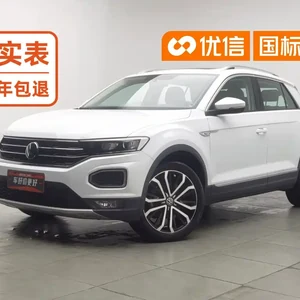
Volkswagen Volkswagen T-ROC 2021 280TSI DSG 2WD Comfort Smart Connect Edition
How to buy a Volkswagen T-roc from China
-
1
Set the destination requirements
Name the destination country, drive side, private or fleet use, passenger count and preferred engine or drivetrain. Separate must-have compliance items from desirable equipment before comparing vehicles.
-
2
Shortlist like-for-like live vehicles
Use live T-roc listings to compare production year, facelift, engine badge, DSG, driven wheels, trim and condition. Confirm the current per-unit price and availability on the chosen record rather than relying on a model-level summary.
-
3
Verify the exact vehicle
Request the VIN or SKU, build date, original equipment list, maintenance history and actual mileage for used examples. Resolve discrepancies and China V or China VI labels against destination requirements before paying.
-
4
Request a landed quotation
Ask for the currency, quote validity, payment milestones, Incoterm, freight, insurance, documentation, customs, duties, taxes, registration and inland delivery. Obtain a written quotation identifying which costs are excluded.
-
5
Complete compliance pre-clearance
Confirm local type approval, emissions and safety rules, VIN checks, software and connected-service compatibility, recalls, warranty and parts access. Make approval a condition if registration is not already assured.
-
6
Inspect and secure the unit
Arrange an independent inspection covering bodywork, tyres, fluids, warning lamps, mileage and service records, especially for used vehicles. Match the invoice and VIN to the seller and use refund-triggering payment milestones.
-
7
Ship, clear and deliver
Use a named forwarder, marine insurance, export documents and a pre-shipment inspection, then track freight through customs and port release. Complete local registration, handover, keys and service introduction before releasing the balance.
T-roc vs rivals
| Hyundai Kona | The Kona is a close compact-crossover peer with a more expressive design and, depending on generation and market, hybrid or electric alternatives. The T-roc's strongest counter-arguments are its conventional VW presentation, broad DSG-based China range and available 4WD; choose whichever has the better local service and residual-value case. |
|---|---|
| SEAT Ateca | The Ateca is arguably the closest technical and positional comparison because it is another Volkswagen Group compact SUV with similar packaging priorities. Compare equipment, software, drivetrain and service parts for the exact destination-market version, since Chinese export T-roc specifications may differ from locally sold Atecas. |
| Nissan Qashqai | The Qashqai is a mainstream family-crossover alternative that places greater emphasis on practicality and broad global familiarity. The T-roc generally presents a more driver-focused, style-led proposition, but the better choice for a fleet depends on verified space, running costs, parts support and residual values for the destination. |
Frequently asked questions
How is Volkswagen T-roc export pricing determined?
Export pricing starts with the exact vehicle's year, facelift, engine badge, drivetrain, trim, equipment and condition, then reflects currency, freight, insurance, Incoterm and destination charges. A buyer should compare like-for-like units and calculate a landed cost rather than treating the displayed figure as a universal market price. ChinaCarDirect's live T-roc inventory shows the current per-unit quote and availability; request written confirmation before a deposit.
Which engine and transmission options are available?
The named range includes 230TSI, 280TSI and 300TSI petrol engines paired with a DSG, with front-wheel drive common and selected 280TSI versions offering 4WD. Because model years and facelifts use different combinations, confirm the engine, transmission and driven wheels against the VIN. Exact output, displacement and approved fuel-consumption figures should be taken from the vehicle's specification sheet rather than inferred from the trim name.
Should I buy a new or used Volkswagen T-roc?
New vehicles are usually easier to standardise for fleets and to place under a clear warranty process, while used vehicles can offer a lower acquisition outlay but carry condition and history risk. Compare total landed cost, including likely initial service, repairs, tyres and documentation. Inspect the individual used unit and request its VIN-specific history; do not rely on photographs or a year-of-stock label.
What is the MOQ for Volkswagen T-roc wholesale orders?
There is no single catalogue-wide MOQ that should be assumed for T-roc wholesale buying. A dealer may purchase one unit, while a distributor may need a model mix or container allocation; the seller must confirm the basis for the quoted VIN. Check the MOQ shown on the live listing, ask about negotiable or mixed-unit orders, and obtain the answer in the written quotation before paying.
How long does shipping take and what affects its cost?
Shipping time and cost depend on the unit or container count, transport mode, route, sailing schedule, port congestion, insurance, customs and the agreed Incoterm. The forwarder should provide a cost schedule and estimated sailing and release dates for the actual booking. Destination duties, taxes, registration and inland haulage may sit outside the freight quote, so include them in the landed-cost comparison.
How are spare parts arranged for an imported T-roc?
Spare-parts support should be planned around the exact VIN, model year, engine badge and destination market, not only the T-roc name. Ask the seller for a parts list, identify a local Volkswagen dealer or parts supplier, and confirm availability of service items, tyres and electronic modules before committing. Parts ordered before shipment can reduce downtime, but customs responsibility and warranty coverage should be agreed in writing.
Can I buy a right-hand-drive T-roc from China?
Factory-built RHD availability depends on model year, source market and the seller's actual supply, so it must be confirmed for the requested configuration rather than inferred from a China-origin listing. Specify LHD or RHD before contracting and request evidence of the drive-side configuration. Do not assume that converting a left-hand-drive vehicle is economical or acceptable for local safety and type-approval rules.
How do I order a Volkswagen T-roc from China?
Start with the live T-roc inventory, shortlist vehicles by year, engine, drivetrain, trim and condition, then send an RFQ with the destination country and required drive side. Before payment, obtain a written quote with Incoterm, validity, payment milestones, documents, inspection rights and refund conditions, and complete destination-homologation checks. The final sequence should cover unit verification, secure payment, export preparation, shipping, customs clearance, registration and local delivery.
Ready to source the Volkswagen T-roc?
Send your destination country, required drive side, preferred trim and quantity to ChinaCarDirect for a current T-roc quotation and export checklist.
Request a quote