
Volkswagen Tayron Export Guide for Overseas Buyers
Plan a Volkswagen Tayron export purchase with clear guidance on trims, 2WD, 4WD, PHEV options, live pricing, ordering, shipping and market compliance.
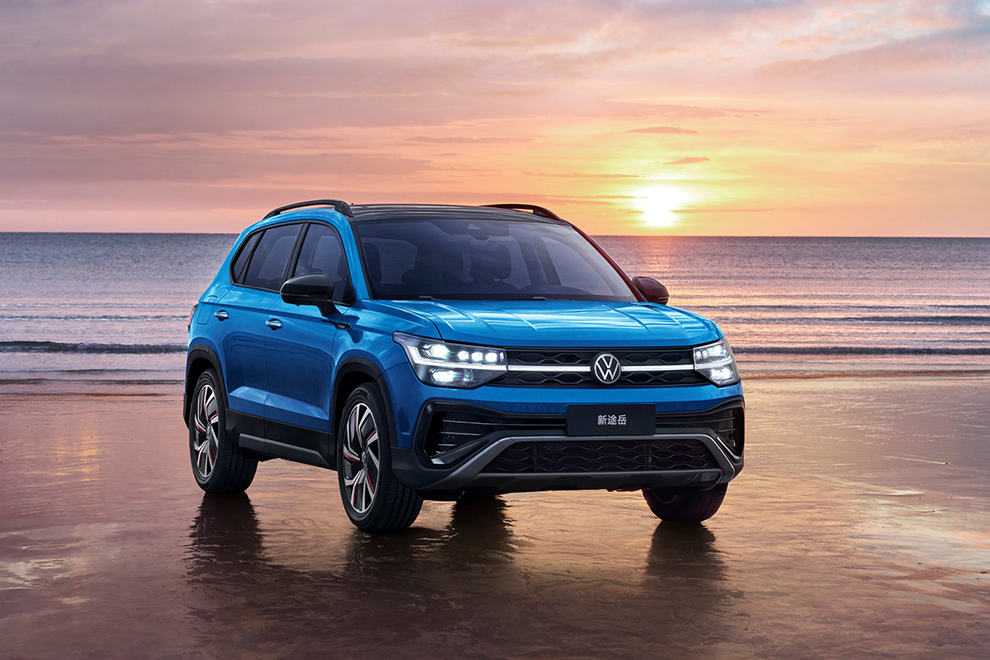
At a glance
- The Tayron is a China-spec midsize SUV for importers who want Volkswagen branding and a practical family-vehicle format.
- The petrol lineup spans 280TSI, 300TSI, 330TSI and 380TSI, with 2WD and 4WD options depending on trim.
- A GTE Plug-in Hybrid 1.4T broadens the range for markets with charging access and supportive regulations.
- New vehicles suit fleet standardization; used units require careful VIN, history and condition checks.
- Live listings determine current unit availability, seller MOQ and commercial terms.
Why the Volkswagen Tayron matters for export markets
The Volkswagen Tayron is a China-spec midsize crossover SUV that gives overseas importers a familiar Volkswagen product with a more spacious, practical format than a compact SUV. Its export proposition combines the brand's dealer-level recognition with petrol, four-wheel-drive and plug-in hybrid choices. That combination can suit importers building a general-purpose range rather than a single-car niche, provided each version is matched to the destination's homologation, equipment and aftersales expectations. Dealers can use the model to answer demand for a larger family SUV without moving into a full-size off-road vehicle for some buyers.
Demand for this model in export markets is driven by practical fit rather than one global configuration. Buyers may prioritize fuel-efficient two-wheel-drive variants for fleet use, four-wheel-drive versions for traction, or the GTE plug-in hybrid where charging access supports its operating model. Market interest depends on steering configuration, local emissions rules, parts support and whether buyers expect China-supplied equipment and software rather than another Volkswagen market. A model with strong showroom appeal in China may need modification, a different trim or careful positioning where local Tayron competition is already established.
The Tayron's value proposition should be assessed as a complete import package, not simply by comparing showroom badges. Importers should establish whether the China-market dimensions, infotainment, climate equipment, safety systems and service procedures suit their customers. They should also separate model-level strengths from variant-specific features, because Smart, Luxury, Luxury Plus, R-Line and special-edition names can change between model years. That verification prevents a vehicle from creating unexpected compliance or resale issues. This discipline applies to fleet specifications, where longevity, parts commonality and predictable servicing can matter more than cosmetic differentiation.
- Verify China VI destination approval.
- Compare software, parts and resale.
- 4WD and GTE widen buyer fit.
Model range, trims and powertrain variants: how the lineup is structured and how to choose
The China-market Tayron range is broad. Petrol-only listings use 280TSI, 300TSI, 330TSI and 380TSI designations, with two-wheel-drive and four-wheel-drive combinations appearing in different trims. The list also spans equipment families such as Luxury, Luxury Plus, Premium, Smart and R-Line, plus special editions. Buyers should treat the engine designation as a starting point: output, gearbox, suspension equipment, cabin technology and standard features can differ between model years and market trims, so the exact listing must be checked. A dealer quote that says only Tayron is not sufficient for comparison or approval.
For an importer, drivetrain is the first choice. Two-wheel-drive 280TSI, 300TSI and 330TSI versions can suit buyers prioritizing simplicity, urban running and lower mechanical complexity. Four-wheel-drive 330TSI and 380TSI cars better match destinations where wet roads, snow or variable surfaces make traction important. The GTE Plug-in Hybrid 1.4T adds a different proposition: buyers need reliable charging access, a clear understanding of electric-only capability and confirmation that its tax treatment and technical approval fit the destination. This is especially relevant to fleets, where operating routes can be mapped against charging availability.
Equipment grades then shape the commercial proposition. Luxury cars are likely to appeal to fleet and executive customers who value cabin comfort and presentation, while R-Line versions emphasize a sportier visual package for private buyers and showrooms. Smart editions may trade equipment for price, and special editions should not be assumed to add a consistent feature across years. Before ordering, request a written equipment list, VIN, model year, drivetrain, engine code, transmission, colours and option list. Use those details to compare like with like and avoid paying for labels without substance.
- Petrol: 280TSI, 300TSI, 330TSI, 380TSI.
- 2WD or 4WD depends on trim.
- Verify GTE charging and tax treatment.
New vs used Volkswagen Tayron: how export inventory is structured and how buyers choose
Export inventory for the Tayron is structured mainly around newer vehicles, reflecting the way Chinese manufacturers and trading companies commonly move current production into overseas channels. A smaller used-car channel can also exist, but its role is different: it offers immediate unit-level choice and potentially lower acquisition cost, while offering less predictable specification and condition. For buyers, this means the search should begin with the operating requirement—new or used—not with a presumed trim. Availability and the precise mix should always be confirmed against current individual listings at purchase.
A new Tayron offers a clear connection to factory specification and a clearer warranty and documentation pathway, although destination approval and territorial warranty coverage must be checked. It can be easier to standardize colours, drivetrains and equipment for a fleet. A used Tayron can reduce entry cost and provide a configuration, but buyers take on uncertainty about mileage, maintenance, wear, previous use and the durability of older software or hardware. The lower entry price should be compared with rectification, parts and resale costs. Service history may be thinner; warranty scope needs review.
For any used export unit, inspection should be treated as an evidence-based purchase decision rather than a walk-around. Match the VIN to the seller description, verify mileage against service records, examine tyres, fluids, body condition and interior wear, and ask whether the vehicle has been fleet, rental, demonstration or private use. Confirm that electronic functions work and obtain an independent report where the value justifies it. New vehicles are not automatically risk-free: check production date, tyre and paint condition, shipping damage, option consistency and the original manufacturer documentation before shipment.
- New: clearer warranty and standardisation.
- Used: verify history and condition.
- Compare total ownership cost.
How export pricing works: the factors behind a live listing price, and how to read one
A Volkswagen Tayron export price is not one fixed amount. The live asking price moves with model year, exact trim, engine and drivetrain designation, four-wheel-drive or R-Line content, mileage and condition for used cars, and the seller's commercial terms. The same trim can therefore appear at different asking prices because age, specification, history or documentation differs. Buyers should treat a displayed number as the seller's asking position for that unit, not as a universal Tayron price or a guaranteed landed cost. Confirm every quote against the VIN and current listing.
Import costs can move the number even when the vehicle price does not. Currency conversion, freight and insurance, destination charges, port fees, and the Incoterm all affect the commercial exposure. Some terms place limited responsibility with the seller; others extend it through delivery or documentation. Import duty, VAT or GST, registration, emissions charges and other local taxes may sit outside the vehicle quote entirely. An importer should ask for a written breakdown that separates vehicle cost, logistics, taxes and any compliance work, rather than comparing an incomplete headline price figure.
To read a listing, open the unit record and record the year, full trim name, engine, drivetrain, gearbox, mileage or production status, condition, VIN and included options. Then check whether the quoted commercial term is clear and whether the seller discloses prior use, repairs or damage. Confirm that photographs and documents correspond to the same unit, and ask for a fresh written quotation with validity and payment conditions. Current Volkswagen Tayron asking prices and availability are shown in the live ChinaCarDirect listings, which are the binding reference at the moment of enquiry.
- Price drivers: year, trim, condition.
- Freight and Incoterm affect landed cost.
- Use current VIN-level quotations.
MOQ, ordering and payment: single units vs consolidating a container
Minimum order quantity is a seller-level commercial term, not a fixed characteristic of the Volkswagen Tayron. Some vehicle suppliers will release a single unit, while others set a lot requirement or prefer container consolidation. The applicable MOQ appears on the live unit or seller offer and must be confirmed before payment. A buyer should not assume that one-unit availability, a multi-unit discount or a production allocation will remain until stock changes. That makes the MOQ field a starting point for negotiation, not a guarantee of current availability in your market.
A wholesale order should begin with a written specification request and destination details. The seller then identifies matching units and issues a quotation naming the VIN or production specification, price term, MOQ, payment schedule, document set, production or dispatch window and treatment of pre-shipment inspection. Payment terms should be agreed in writing, including any deposit, balance trigger, refund condition and governing parties. Buyers should understand what the platform or supplier actually owns or controls, and should use the agreed contract and available trade-assurance process rather than relying on informal promises.
Consolidating Tayrons into one consignment can reduce handling and freight inefficiency, but it also concentrates risk. Mixed model years, drivetrains, equipment levels and steering configurations can complicate customs, parts planning and resale. Agree units, VINs and shipping marks in advance, and require a pre-shipment inspection that verifies exterior condition, cabin condition, mileage or production status, option matching and fluid condition. Photograph the loading process and preserve packing records. If the consignment includes mixed variants, create a separate acceptance sheet for each VIN rather than relying on one blanket inspection note.
- Confirm each seller's MOQ.
- Single-unit terms vary by seller.
- Match every VIN before shipment.
Shipping, homologation and market compliance caveats: LHD/RHD and import rules by country
Shipping begins after the vehicle and documents are matched, not merely after payment. The route combines inland transport from the supplier or port, export handling, an ocean or roll-on/roll-off voyage, destination discharge, and delivery. Inspection and secure loading procedures matter because body damage, water exposure or missing equipment are hard to remedy after departure. Freight cost depends on route, season, container or vehicle-carrier capacity, fuel and port charges, while transit time depends on sailing availability, transshipment, customs clearance and inland handling. The seller should identify the intended Incoterm and responsible milestones.
Steering configuration is a critical sourcing check. China-market Tayrons can be left-hand drive, and right-hand-drive availability should never be inferred from the model name or trim list. A buyer requiring RHD must confirm the VIN-level factory specification with the supplier; otherwise, conversion is an engineering and regulatory project. Conversion can affect wiring, software, warranty coverage, insurance and residual value, so it should be planned before shipment and inspected after completion. For markets where imported used vehicles have age limits or roadworthiness rules, conditions should be checked before committing funds.
China VI markings on a listing identify the source-market emissions specification; they do not satisfy a destination's emissions, safety or type-approval regime automatically. The importer should verify VIN documentation, customs eligibility, tariff and tax treatment, registration rules, insurance, recall or software requirements, and local restrictions on used vehicles. Authorities may require a conformity assessment, emissions test, technical file or modification record. A language and feature gap can affect fleet deployment, driver training and resale. Treat homologation as a destination-specific workstream with professional advice, not as a checkbox completed by the exporter.
- Confirm factory steering side by VIN.
- China VI is not destination approval.
- Plan local compliance before payment.
Who should buy the Tayron — and who should pick a different vehicle
The Tayron is a candidate for importers that want Volkswagen brand recognition, a midsize SUV footprint and a choice between efficient two-wheel-drive layouts, four-wheel-drive versions and a plug-in hybrid. It can suit dealer groups diversifying beyond compact sedans, or fleet operators that need a more spacious vehicle and a familiar badge. It is especially attractive when the destination can support the China-spec equipment, software and parts ecosystem without extensive conversion. A pilot order can validate those assumptions before a larger rollout. This is a disciplined way to control landed-cost exposure.
Different buyers should choose differently. A price-sensitive importer may prefer a simpler or used vehicle, while a buyer seeking a plug-in hybrid needs dependable charging and a market that values it. Drivers who prioritize a smaller footprint, a different road feel or hybrid range may find the RAV4 or Tucson more suitable, and off-road requirements may point away from a road-focused crossover. Van operators may find a dedicated van more practical. The Tayron is not automatically cheapest to operate: fuel consumption, insurance, service, software and resale must be assessed against alternatives.
The best-fit buyer is therefore one who values a balanced decision rather than the lowest bid. Compare total acquisition and operating cost, expected local parts lead times, dealer training, telematics compatibility, insurance and likely local resale. For a fleet, verify that software, air conditioning, charging hardware and driver-assistance features work as intended in the operating country. For a dealer, check that parts, manuals and technical support are available. A chosen Tayron can then clearly serve as a credible premium mainstream product, provided the importer controls homologation, documentation and after-sales risk.
- Best for VW dealer and fleet programs.
- Consider rivals for size or charging needs.
- Pilot before scaling.
Main rivals and how the Tayron compares
The closest comparisons depend on how the Tayron is specified, but a Volkswagen-badged importer will usually shortlist the Volkswagen Tiguan, Hyundai Tucson and Toyota RAV4. The Tiguan is the most direct brand and segment comparator, making it useful for evaluating Volkswagen familiarity, cabin positioning and dealer expectations. The Tucson offers a strong alternative for buyers focused on mainstream SUV packaging and available equipment, while the RAV4 is a practical benchmark for durability perceptions, hybrid choice and broad international familiarity. None should be selected in practice on badge or headline price alone.
Against the Tiguan, the Tayron's strongest argument is its China-market positioning and range of powertrain and trim choices, especially where a buyer wants a specific four-wheel-drive or GTE configuration. The trade-off is that local brand familiarity and parts expectations may differ from a home-market Tiguan. Against the Tucson, the Tayron offers a conventional Volkswagen feature set and established-brand appeal, while the Tucson may suit buyers more familiar with its local distribution and equipment. Against the RAV4, compare hybrid availability, service reach, parts pricing and resale evidence rather than assume one is universally better.
A sound comparison starts with the same commercial brief. Define the destination, buyer, drivetrain, fuel or charging needs, warranty expectation and sales volume, then request VIN-level offers with the same Incoterm. Compare seating and cargo practicality, equipment, service intervals, parts lead time, software language and tax treatment. A test drive is valuable, but an importer should verify paperwork and after-sales access. Choose the Tayron when its China-market specification, powertrain breadth or dealer economics create an advantage; choose a rival when homologation, ownership cost or product fit is more clearly convincing.
- Tiguan: closest VW-family benchmark.
- Tucson: mainstream equipment alternative.
- RAV4: hybrid ownership benchmark.
Live Volkswagen Tayron export inventory
View all listings →Real units currently on ChinaCarDirect with per-unit asking prices and MOQ. Availability updates live from the catalogue.
How to buy a Volkswagen Tayron from China
-
1
Set the destination and operating brief
Specify the import country, LHD/RHD requirement, fleet or private use, route, charging access and budget categories for vehicle, freight, taxes and compliance. This prevents technically unsuitable or unapprovable trims from entering the shortlist.
-
2
Filter the live Tayron inventory
Review current unit records for model year, full trim, 280TSI, 300TSI, 330TSI, 380TSI or GTE designation, and 2WD or 4WD. Confirm the seller's stated MOQ, condition and commercial term before requesting detailed documents.
-
3
Verify the exact vehicle
Ask for the VIN, engine and drivetrain codes, gearbox, equipment list, production or mileage status, documents and disclosed damage or repair history. For GTE cars, request battery capacity, electric range and charging specifications rather than relying on the trim badge.
-
4
Request a landed quotation
Ask the seller to separate vehicle price from freight, insurance, origin handling and destination charges under a stated Incoterm. Request a written quote with VIN or production specification, quote validity, payment schedule and treatment of taxes or compliance work.
-
5
Confirm order and payment terms
Confirm the contract, MOQ, deposit, balance trigger, refund conditions, document set and dispatch window. Pay only against the agreed written terms and retain every invoice, VIN list and inspection record.
-
6
Inspect before loading
Use an independent inspection for a used or high-value unit and a pre-shipment check for every vehicle. Match each VIN to its condition and options, photograph loading, and document fuel or fluid levels, tyres, bodywork and packaging.
-
7
Ship, clear and homologate
Book freight under the agreed Incoterm, track export and destination handling, and prepare customs, tax, registration and conformity documents. Confirm RHD conversion or destination approval before shipment rather than after arrival.
Tayron vs rivals
| Volkswagen Tiguan | The closest Volkswagen-family benchmark, helping an importer compare brand expectations, packaging and service assumptions. Choose the Tayron when a specific China-market 2WD, 4WD or GTE configuration is required; choose the Tiguan when local-market specification and support are more important. |
|---|---|
| Hyundai Tucson | A mainstream SUV alternative for buyers who prioritize locally familiar equipment and Hyundai's manufacturer footprint. It may fit markets with stronger Tucson distribution, while the Tayron offers a distinct China-spec Volkswagen proposition for dealers seeking that badge and configuration. |
| Toyota RAV4 | A useful benchmark for hybrid selection, international familiarity and practical ownership expectations. The Tayron may suit importers committed to a Volkswagen-badged China-market vehicle, but compare local service reach, parts pricing, fuel use and resale before deciding. |
Frequently asked questions
How is the export price of a Volkswagen Tayron determined?
A live asking price reflects the unit's year, trim, engine and drivetrain, four-wheel-drive or R-Line content, mileage or condition, and the seller's commercial terms. Freight, insurance, exchange-rate effects, destination charges, Incoterm, duties and taxes determine how much the buyer ultimately pays. Check the current Volkswagen Tayron listings and request a written, VIN-level quotation with a validity period.
What powertrain and engine options should I expect?
The China-market line includes 280TSI, 300TSI, 330TSI and 380TSI petrol versions, with two-wheel-drive or four-wheel-drive depending on trim. A GTE Plug-in Hybrid 1.4T is also represented. Exact output, gearbox, PHEV battery, electric range and charging details must be checked for the selected listing rather than inferred from the trim name.
Is a new or used Volkswagen Tayron better for export?
A new unit is usually easier to standardize and offers a clearer stated warranty position, but territorial coverage and destination approval still require checking. A used unit may lower entry cost and make a specific configuration available sooner, but mileage, service history, prior use, condition and rectification risk need closer checks. Compare the total landed and ownership cost rather than the acquisition price alone.
What is the MOQ for a Volkswagen Tayron?
There is no single catalogue-wide MOQ that should be assumed; the seller's live listing states the requirement for that unit or offer. Some suppliers release one vehicle, while others require a lot or container quantity. Confirm MOQ, unit allocation, payment conditions and production or dispatch timing in writing before placing the order.
How long does export shipping take, and what drives the cost?
Transit time depends on inland handling, sailing frequency, transshipment, port congestion, customs clearance and final delivery. Cost is influenced by the route, season, container or vehicle-carrier capacity, insurance and origin and destination charges. The seller should state the Incoterm and shipping scope, while the importer obtains a freight quote for the actual VIN, destination and dispatch window.
How are spare parts handled for an exported Tayron?
Parts should be ordered against the exact VIN and China-market vehicle specification, not only by a generic Tayron name. Confirm whether manuals, diagnostic access, software support and warranty claims are available through the seller or Volkswagen channel in the destination country. Buyers should include critical service parts in the first shipment when carrying stock would improve downtime, but verify compatibility before loading.
Is a right-hand-drive Volkswagen Tayron available for export?
RHD availability must be confirmed at VIN level; a left-hand-drive China-market listing cannot be treated as RHD. If factory RHD is unavailable, local conversion is an engineering and regulatory project that may affect safety systems, insurance and warranty. Confirm steering-side requirements, imported-vehicle age rules and type approval before ordering.
How do I order a Volkswagen Tayron from China?
Start by defining the destination, steering side, powertrain, drivetrain, trim, quantity and target timeline. Then review the live unit record, request a VIN-level quote and written payment terms, complete any agreed inspection, and release payment only against the documented order. The importer remains responsible for freight, customs, taxes, registration and destination-market compliance.
Ready to source the Volkswagen Tayron?
Send ChinaCarDirect your destination, preferred Tayron powertrain, drivetrain, quantity and target timeline for a VIN-level export quote.
Request a quote