
Volkswagen Tharu Export Buying Guide for Dealers
Buy a Volkswagen Tharu from China with practical guidance on trims, 1.5L TSI powertrains, live export pricing, shipping, MOQ and market compliance.
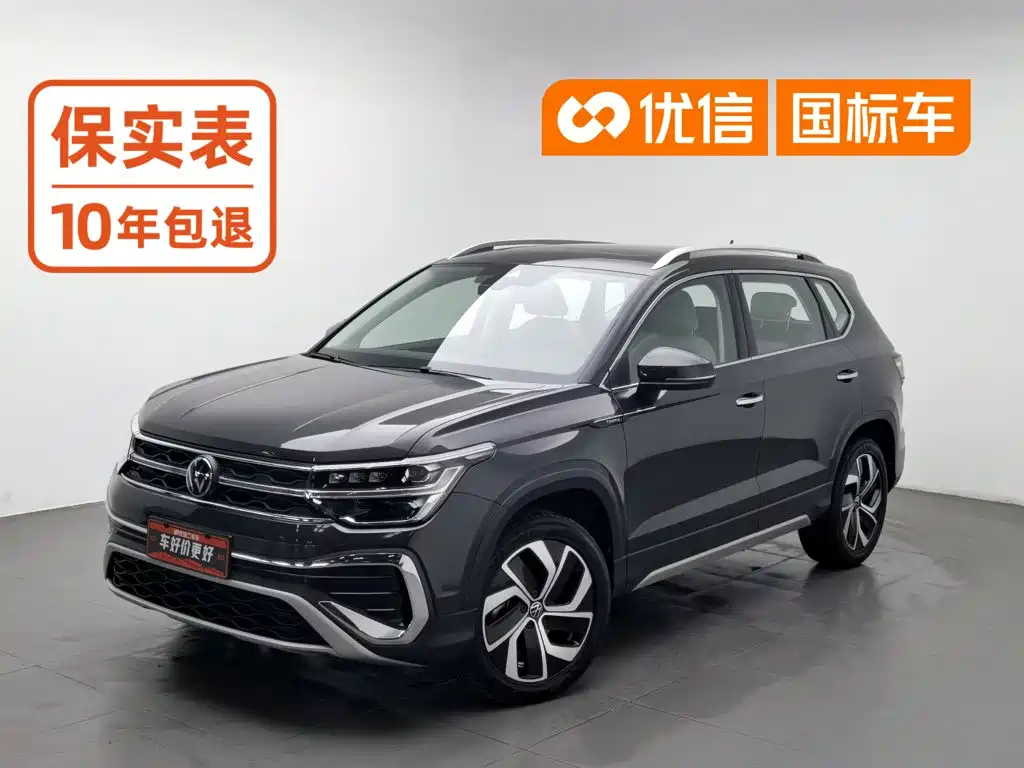
At a glance
- The Tharu gives overseas buyers a Volkswagen-badged compact SUV sourced from China, with trim and drivetrain breadth to compare.
- 280TSI, 300TSI and 330TSI names, plus FWD/2WD and AWD/4WD entries, provide a structured shortlist, but exact outputs and transmissions must be verified.
- New and used Tharu purchases involve different risks: factory condition and warranty clarity versus history, inspection and age-related compliance.
- Live export prices move with year, specification, condition, freight, exchange rates and Incoterm, so buyers should compare landed quotations.
- MOQ, payment milestones and document responsibilities are seller- and shipment-specific and should be confirmed before committing funds.
Why the Volkswagen Tharu matters for export markets
The Volkswagen Tharu occupies a middle ground in the export SUV market: it is a compact, five-door crossover carrying a recognizable Volkswagen badge, but it is sourced from China rather than from the factory network a European or North American importer may expect. That combination gives overseas dealers a familiar brand proposition with access to a China-origin trim catalogue. For buyers, the appeal is not novelty alone; it is the ability to compare equipment, front-wheel-drive and all-wheel-drive choices, and different grades within one model family for a particular destination market.
In the global compact-SUV segment, demand for the Tharu is best understood as a value-and-fit proposition. Dealers can serve customers who want a Volkswagen-badged compact SUV while sourcing from a market where trim and powertrain variants are often presented in greater detail than a simplified export brochure. Fleet and importer buyers may value consistent vehicle specifications across several units. Its relevance therefore depends less on any assumed global-sales ranking than on matching equipment, running-cost priorities and aftersales capability to the destination market before a purchase order is issued.
Before a buyer treats the Tharu as an export success, several commercial questions deserve attention alongside the vehicle itself. Is there an authorized or otherwise dependable repair network for Volkswagen products in the destination? Can the importer support the model’s software, safety systems and replacement parts? Will local taxation, insurance and registration favor the vehicle after freight and compliance costs are included? ChinaCarDirect makes it possible to compare live Tharu listings, but the final decision should combine those commercial checks with a destination-specific cost model instead of a headline specification alone.
- Confirm local Volkswagen service and parts support.
- Match FWD/2WD or AWD/4WD to operating conditions.
- Calculate total cost around freight, compliance and residuals.
Model range, trims and powertrain variants: how the lineup is structured and how to choose
The Tharu line-up is easiest to read by separating model identity, engine family, drivetrain and equipment grade. Confirm all four in writing. The catalogue includes 280TSI, 300TSI and 330TSI designations, with some trim names identifying a 1.5L engine. It includes FWD or 2WD entries and AWD or 4WD entries. These labels are clues, not a substitute for the specification sheet: output, transmission, equipment and market designation differ by trim and year. Do not infer engine output or gearbox from a badge alone, because edition names can differ within the same platform.
For an importer, drivetrain should be selected from the operating profile rather than from the most eye-catching trim name. Front-wheel-drive and two-wheel-drive variants are typically the simpler choice for paved urban use, shorter routes and fleets that prioritize predictable acquisition and maintenance planning. AWD and 4WD versions add a traction-oriented alternative for regions with wet roads, snow or uneven access roads. They may also carry different equipment and availability, so compare the live specification and landed quote rather than assuming the four-wheel-drive badge is the only difference between the versions.
Equipment grades and versions form a decision layer. The catalogue includes entries such as Trend, Comfort and Luxury, alongside versions like Full Moon, Rising Star, New Edge, New Sharp, Advance, Enjoyment and Panorama Premium. These names may signal an equipment bundle, but they are not universal trim standards. A buyer should request an equipment list and compare features for commercial use: cabin comfort, infotainment and connectivity, driver-assistance functions, luggage capacity, roof arrangements and warranty cover. The practical choice is the grade that matches the fleet’s actual needs, not automatically the highest-sounding edition.
- Use engine and drivetrain labels to build a shortlist.
- Verify output, transmission and equipment per listing.
- Treat edition names as market-specific bundles.
New vs used Volkswagen Tharu: how export inventory is structured and how buyers choose
A useful way to understand export inventory is to separate condition from configuration. ChinaCarDirect’s live Tharu results are organized around individual vehicle records, with model year, edition, engine/drivetrain wording and condition forming the first screening layer. Availability changes as vehicles are sold, allocated or replenished, so a screenshot or an old enquiry should never be treated as proof of supply. Buyers should open the live Tharu inventory and read the current record for each candidate, especially when planning a multi-vehicle order, and should reconfirm all commercial terms before payment is made.
New vehicles offer a different proposition from used imports. A new Tharu can provide a known delivery condition, factory configuration and clearer warranty pathway, which can simplify fleet standardization and customer presentation. The buyer should still confirm whether the vehicle has been registered, driven or prepared for export, and whether the warranty starts at production, delivery or a defined date. New does not automatically mean immediately compliant in the destination market; registration and type approval remain separate issues for the importing dealer and its customers before a local launch begins.
Used Tharu units can suit a buyer who accepts an established vehicle’s depreciation and is prepared to manage age-related risk. The saving should be evaluated only after a pre-shipment inspection, service-history check and a clear explanation of accident, flood, structural and mechanical condition. Mileage, maintenance records, tires, roadworthiness and the condition of electronic equipment all affect value and downtime. For used imports, also verify the destination’s age restrictions and emissions rules, because a lower acquisition price can be offset by rejection, repair or compliance expense or delayed customs clearance costs.
- Check live condition, model year and allocation.
- Verify PDI, registration and warranty commencement.
- Inspect used units for history and roadworthiness.
How export pricing works: the factors behind a live listing price, and how to read one
An export price is not a fixed property of the Volkswagen Tharu. The live listing price is shaped by model year, trim, TSI engine and drivetrain specification, equipment, condition and mileage, as well as currency movements and the seller’s commercial terms. Freight, marine insurance, origin handling, destination port charges, customs, taxes, registration and commissioning may sit outside the displayed vehicle amount. Incoterms determine where responsibility transfers, so two records can appear different even when their vehicles are comparable. The comparison is only meaningful if every quote uses the same scope.
To read a live Tharu listing correctly, start with the vehicle identity: year, edition, engine wording, drivetrain, condition, mileage where applicable and visible equipment. Then establish what the amount covers. Ask whether it is an FOB, CIF or another basis; whether export documentation, inland transport, insurance, port handling and local taxes are included; and whether the quote is tied to the individual vehicle or a negotiable catalogue range. Request a written quotation with the currency, validity period, payment milestones and any dealer commission stated clearly before a deposit is placed.
The useful comparison is a landed, like-for-like cost, not the smallest number shown on a page. Wholesale buyers should normalize the vehicle specification, then add the costs their Incoterm leaves open: origin transport, freight, insurance, inspection, customs brokerage, duties, taxes, port and terminal fees, destination delivery and local registration. Payment and exchange-rate terms also matter, especially when the quotation is valid for part of a transaction cycle. Use the live listings to find current per-unit prices and availability, then ask the seller for the binding quote that reflects the agreed scope.
MOQ, ordering and payment: single units vs consolidating a container
MOQ is a commercial term, not a permanent feature of the Tharu model. It can be set by the seller, vehicle, trim allocation or the way a shipment is organized, so an importer must confirm it on the live record and in the quotation rather than assume a catalogue-wide rule. A single-vehicle purchase may suit a dealer testing demand, a small fleet buyer or an importer combining the Tharu with another order. It also spreads freight and compliance costs over fewer units, making the per-unit economics especially important to review.
Consolidating a container can improve purchasing efficiency when several vehicles are available. A dealer might mix FWD and AWD Tharu trims, or combine model years, provided the seller permits that allocation and each vehicle’s paperwork remains traceable. The trade-off is flexibility versus immediacy: a mixed container can solve a fleet specification challenge, but it may delay a priority vehicle, complicate inspection records or require careful allocation at destination. Ask for a vehicle list rather than a quantity, and confirm who owns each unit before funds are released.
A sound ordering workflow separates commercial commitment from vehicle release. First obtain a pro forma invoice or quotation naming the vehicle, specification, Incoterm, validity, payment milestones, ownership structure and cancellation terms. Then confirm the deposit, inspection timing, balance trigger, export documents and refund process. Payment should go through the agreed seller or intermediary account, with the invoice and allocation record retained. A buyer should also establish who handles customs, insurance, damage claims and delivery acceptance, so a dispute does not become a gap between the dealer, freight forwarder and vehicle owner.
- Confirm MOQ, allocation, ownership and cancellation terms.
- Agree inspection, balance and refund triggers.
- Match consolidation to urgency and specification needs.
Shipping, homologation and market compliance caveats: LHD/RHD and import rules by country
Vehicle shipping is a chain of handoffs, and the route can influence both cost and delivery control. Depending on the destination and vehicle, an exporter may use roll-on/roll-off, container or flat-rack transport, with the vehicle prepared, inspected and documented before loading. The variables are vessel schedule, sailing frequency, port congestion, origin and destination charges, cargo handling, insurance, documentation quality and the time needed for customs clearance. Seasonal demand and disruptions can change the lead time, so a sailing date should be distinguished from the broader estimate shown in an enquiry.
Steering configuration is distinct from shipping method. Vehicles originating in the Chinese market are commonly encountered with left-hand drive, while a right-hand-drive Tharu may require a confirmed factory variant, regional sourcing or conversion. That distinction affects the steering wheel, instrument layout, lighting, controls, safety equipment and parts availability, and it can affect whether the vehicle is acceptable to the destination authority and buyer. Do not assume a listing can be converted economically or that a converted vehicle retains the same homologation; ask for the VIN, steering position and conversion record.
Import compliance is where attractive Chinese vehicles encounter their largest market-specific hurdle. A China V or China VI label appearing in a trim name describes the source-market emissions designation; it does not automatically satisfy the destination’s type approval, emissions, safety, cybersecurity, software, tax or registration rules. The importer should check VIN requirements, allowable vehicle age, emissions approval, certificate and customs documents, warranty arrangements and any local inspection or modification restrictions with the relevant authority and a customs broker before the vehicle is committed or funds are transferred to the seller.
- Verify RHD/LHD, VIN and conversion records.
- Quote freight, insurance, duties and terminal fees.
- Obtain destination authority confirmation before payment.
Who should buy the Tharu — and who should pick a different vehicle
The Volkswagen Tharu is a candidate for an overseas dealer that wants a recognizable marque, a compact SUV format and powertrain and equipment choices from a China-origin model. It suits a fleet buyer that can standardize a set of trims and has a plan for Volkswagen servicing, parts and residual-value management. Importers with compliance and logistics capability can use the model to serve customers who want a Volkswagen-badged vehicle instead of domestic supply. It fits where the destination accepts the configuration and the business can support the vehicle after delivery.
It is a less suitable choice for a buyer whose core requirement is a battery-electric range, a plug-in hybrid, a factory right-hand-drive variant, or a vehicle already certified for a tightly regulated market. It may disappoint a buyer focused only on the lowest possible acquisition cost, because freight, taxes, type approval, service and financing can outweigh the apparent saving. Drivers who need towing limits, off-road capability or a proven local residual-value record should verify those needs rather than assuming a compact Tharu trim can satisfy them without evidence in advance.
A disciplined buyer can evaluate the Tharu through a total-cost and operating-fit test. Start with the customer and duty cycle, then compare the relevant FWD or AWD trim, equipment and compliance path. Add the live vehicle amount to freight, insurance, duties, registration, service, parts and financing, and test the result against holding periods and resale assumptions. A pilot vehicle or mixed shipment may reduce risk, provided the seller confirms its terms. If the numbers work only when uncertain savings are assumed, the business case is not yet strong enough to scale.
- Best fit: dealers and fleets valuing Volkswagen branding.
- Validate service, parts, warranty and residual support.
- Choose another vehicle when EV or RHD is essential.
Main rivals and how the Tharu compares
The alternatives for a Tharu buyer will vary by country because compact SUVs are sold through different local portfolios. The Kia Sportage and Hyundai Tucson are size- and price-class comparisons for buyers seeking a mainstream family crossover; Toyota’s Corolla Cross is another relevant compact-SUV alternative for shoppers who prioritize a smaller footprint and different ownership proposition. These models should be compared as local offers, not as isolated badges. Dealer network, engine choices, safety equipment, warranty, software, parts and resale support can be as important as the vehicle’s dimensions or specific equipment list.
The Tharu’s comparative advantage for an export buyer is the combination of a recognized Volkswagen nameplate with a China-origin catalogue that exposes trim, TSI and drivetrain pathways. It can be attractive to a dealer who can source and is willing to manage import and after-sales obligations. The trade-offs are important: a Chinese-market vehicle may require more destination-specific compliance work, have different parts and software support from a locally built rival, and carry a residual-value case that is harder to forecast. Local-brand familiarity and service reach often favor established domestic alternatives.
The comparison depends on the buying scenario. A fleet manager can compare operating cost, warranty coverage, uptime and standardization; a retail dealer can compare customer demand, finance-ability, service parts and resale prospects; an importer can compare specification per unit against landed cost and compliance effort. Use live Tharu listings for the vehicle-side position, obtain local rival quotations on the same basis, and inspect vehicles where possible. If the Tharu wins on equipment or acquisition terms but loses on local support, an order may be rational while a substantial commitment is not.
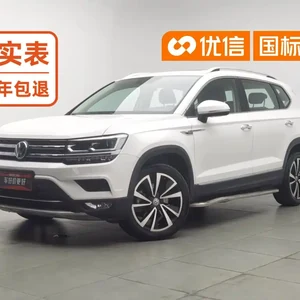
Live Volkswagen Tharu export inventory
View all listings →Real units currently on ChinaCarDirect with per-unit asking prices and MOQ. Availability updates live from the catalogue.
How to buy a Volkswagen Tharu from China
-
1
Define the destination and operating case
State the destination country, required steering position, road conditions, fleet utilization, servicing capability and expected holding period. These facts determine which Tharu configurations and import route are realistic.
-
2
Build a specification shortlist
Use the current Tharu inventory to compare model year, edition, engine designation, drivetrain, condition and visible equipment. Request the full specification because trim names alone do not establish output, transmission or standard equipment.
-
3
Verify condition and documents
For a new vehicle, confirm registration history, pre-delivery inspection, warranty commencement and factory documents. For a used vehicle, arrange a pre-shipment inspection and review mileage, service, accident, flood, structural and electronic condition.
-
4
Request a unit-specific landed quotation
Ask ChinaCarDirect to quote the selected vehicle with the destination, currency, Incoterm, freight basis, insurance, documentation, taxes, duties and destination charges clearly identified. Confirm the quotation’s validity and whether it applies to that individual unit.
-
5
Confirm MOQ, allocation and payment
Establish whether the seller permits a single-vehicle purchase or requires consolidated stock, and whether mixed trims or model years can be allocated within a shipment. Put the deposit, balance trigger, ownership, inspection point, cancellation and refund terms in writing.
-
6
Book shipping and confirm compliance
Use an experienced freight forwarder and customs broker to confirm the transport method, insurance, port charges, document set and destination homologation requirements. Do not treat a China V or China VI designation as automatic permission for local registration.
-
7
Inspect, receive and close the order
Complete or authorize the pre-shipment inspection, retain the vehicle identification and export records, and inspect condition at delivery. Release the balance through the agreed process only after acceptance, then arrange registration and warranty activation.
Tharu vs rivals
| Kia Sportage | A direct family-crossover comparison for buyers who prioritize a familiar local-market nameplate and established after-sales channel. The Tharu offers a different set of China-origin trim and drivetrain choices, but its landed compliance and parts support must be evaluated before choosing it. |
|---|---|
| Hyundai Tucson | Comparable in size and equipment positioning for fleet and retail buyers seeking a mainstream compact SUV. Choose according to total cost, local service and residual-value evidence rather than assuming the imported Tharu will match domestic support. |
| Toyota Corolla Cross | A relevant compact-SUV alternative for shoppers who want a smaller-footprint option and a different ownership proposition. The Tharu may suit buyers wanting a broader set of listed equipment and AWD/4WD choices, subject to destination approval and service arrangements. |
Frequently asked questions
How is Volkswagen Tharu export pricing determined?
A live price reflects the specific vehicle and its year, trim, engine and drivetrain, condition, mileage, options and seller terms. Freight, insurance, origin handling, customs, taxes, registration and the chosen Incoterm can change the landed total. ChinaCarDirect’s live Tharu inventory shows the current per-unit amount; ask for a written quote that states exactly what it includes.
What engine and range options does the Volkswagen Tharu have?
The export versions represented here are gasoline internal-combustion SUVs, not battery-electric vehicles, so electric range and battery capacity should not be applied to them. Trim names include 280TSI, 300TSI and 330TSI designations, with some entries explicitly saying 1.5L, and the range also includes FWD/2WD and AWD/4WD labels. Exact output, transmission and market-specific equipment should be checked in the live listing because the name alone is not a full specification.
Is a new or used Volkswagen Tharu better for export?
A new vehicle offers a more clearly defined delivery condition and factory configuration, which can help standardize a fleet, but confirm registration history, pre-delivery inspection status and warranty commencement. A used vehicle may reduce acquisition cost, but mileage, service history, accident or flood history, roadworthiness and electronic condition require verification. The destination’s vehicle-age and emissions rules can make either choice unavailable or uneconomic.
How does MOQ work when buying a Volkswagen Tharu from China?
MOQ is set by the seller, vehicle allocation and shipment plan rather than by the model name alone. Ask whether the quoted listing can be bought as a single vehicle, whether several trims may be combined in one container, and who owns each unit before paying. Put the MOQ, allocation list, payment milestones and cancellation terms in the quotation.
What affects shipping time and cost for a Volkswagen Tharu?
The main variables are the chosen transport method, sailing schedule, route, port congestion, origin and destination charges, insurance, cargo handling, paperwork and customs clearance. Season and disruptions can change the estimate, so distinguish a confirmed sailing or delivery window from a general lead-time statement. Have the freight forwarder quote the same Incoterm and service level used in the vehicle quotation.
Are spare parts available for an exported Volkswagen Tharu?
Parts depend on the exact vehicle, production period, market version and destination service network; a generic Tharu request is not enough for a reliable parts quotation. Before ordering, provide the VIN and ask the seller or importer to confirm engine, drivetrain, interior and electronic-component references, expected parts channels and warranty handling. For a new import, retain the factory documentation and confirm that local mechanics can support the vehicle’s software and electronic systems.
Can I buy a right-hand-drive Volkswagen Tharu for export?
Some Chinese-market vehicles are left-hand drive, while a right-hand-drive car may need a confirmed regional variant, factory production or a documented conversion. Steering position can affect lighting, controls, safety equipment, software and parts availability, and it does not by itself guarantee destination homologation. Ask the seller for the VIN, steering position and conversion or production record, then confirm acceptance with the importing authority.
How do I order a Volkswagen Tharu through ChinaCarDirect?
Search the live Tharu listings, shortlist the desired model year, trim, engine and drivetrain, and request the missing specifications and a unit-specific quote. Confirm the MOQ, ownership, deposit and balance terms, inspection point, export documents, warranty and refund process before paying. Then coordinate pre-shipment inspection, freight, insurance, customs clearance, destination registration and acceptance using the agreed Incoterm.
Ready to source the Volkswagen Tharu?
Send your destination, required Tharu trim, quantity and preferred Incoterm to request a current unit-specific quote and export plan.
Request a quote