
Volkswagen Tiguan L Export Buying Guide for Dealers
Buy a Volkswagen Tiguan L from China with clear guidance on trims, new and used options, export pricing, ordering, shipping and market compliance.
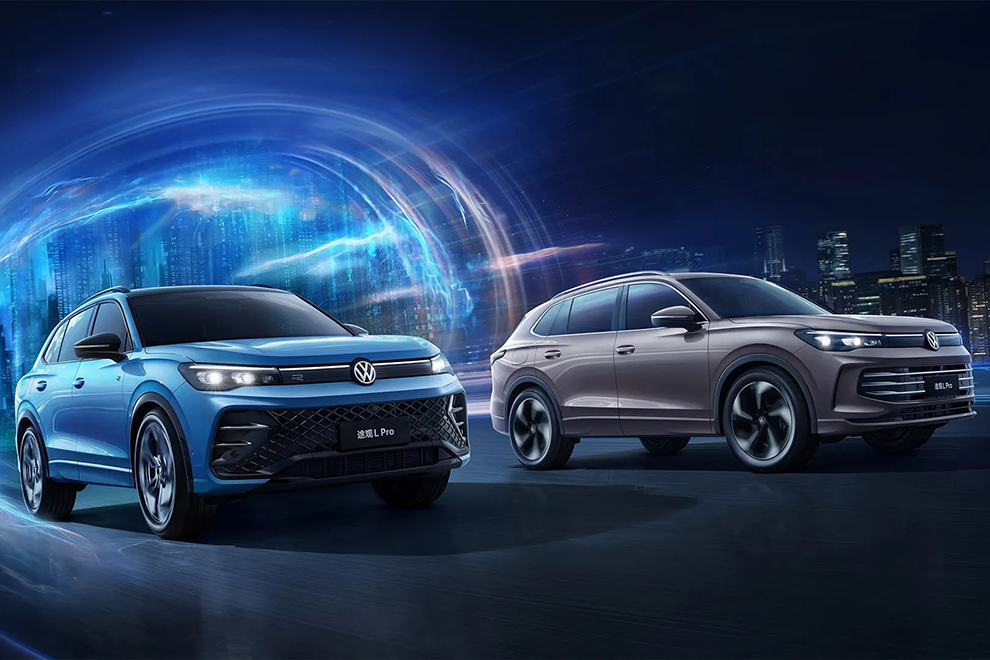
At a glance
- The Tiguan L combines compact-SUV packaging with a long-wheelbase, five- or seven-seat layout.
- The 280TSI, 330TSI and 380TSI gasoline versions cover 2WD and 4WD use cases.
- The 430 PHEV adds plug-in hybrid flexibility where charging is dependable.
- New vehicles simplify specification and warranty planning; used vehicles require condition evidence.
- Export pricing depends on the exact unit, condition, Incoterm, freight and destination charges.
- LHD/RHD configuration, homologation and parts support must be checked before ordering.
Why the Volkswagen Tiguan L matters for export markets
The Volkswagen Tiguan L occupies a middle ground between a compact crossover and a family SUV. Its long-wheelbase format prioritizes rear-seat room, luggage capacity and optional seven-seat flexibility, while the 330TSI, 380TSI and 430 PHEV labels give buyers a clear choice between front-wheel-drive petrol, four-wheel-drive petrol and plug-in hybrid applications. That combination makes it attractive to importers serving family-oriented retail and fleet customers who want Volkswagen identity without moving into a larger premium SUV. For overseas markets, its appeal depends less on badge recognition and more on packaging, equipment and serviceable parts in the destination country.
Export demand is strongest where buyers compare the Tiguan L with other spacious crossovers on usable interior space, road presence and total ownership considerations rather than purchase price alone. China VI versions can suit importers familiar with the domestic specification, but overseas success depends on translating those features into locally accepted equipment, software, safety and after-sales expectations. The model’s established Volkswagen mechanical architecture and understandable 2WD, 4WD and PHEV positioning help dealers explain the range clearly to customers. Importers should test whether local service networks and residual-value expectations support the proposition.
For fleet buyers, the key attraction is the ability to match drivetrain and seating to the duty cycle: two-wheel-drive petrol for efficient road use, four-wheel-drive petrol where traction is more important, and plug-in hybrid where charging access can support commuting. Dealers should treat global demand as a market-by-market proposition, not a blanket promise. A roomy compact SUV can win customers who need practicality more than sporty styling, while its size may be less suitable for narrow streets and dense parking. Local road conditions, parking demand and charger coverage should shape the market proposition.
- Long-wheelbase family utility.
- 2WD, 4WD, PHEV choices.
- Charging and parts matter.
Model range, trims and powertrain variants: how the lineup is structured and how to choose
When comparing Volkswagen Tiguan L specs, the China-market line-up is built around familiar powertrain labels. The 280TSI represents the entry point and is associated with two-wheel drive; 330TSI versions are predominantly two-wheel drive, often paired with an automatic gearbox and positioned around comfort, luxury or R-Line equipment. The 380TSI versions add four-wheel-drive capability and suit buyers who want traction or a higher specification. Buyers should read the trim description rather than assume every similar car has the same powertrain or equipment. Trim names change over model years and may include facelift or China VI wording.
The 430 PHEV is a different operating proposition. It combines a combustion engine with electric propulsion and an external charging connection, making it most relevant where drivers have dependable charging and can benefit from electric running in daily use. It should not be treated as a conventional petrol SUV with no operating-cost difference; economy, electric-only capability and charging performance depend on the exact battery, software and driving pattern. Confirm those points against the specific unit before including the model in a fleet proposal. Dealers should also compare local fuel and electricity prices.
Seating configuration is the second major choice. Some cars are five-seaters with a larger cargo area, while seven-seat versions prioritize occasional third-row access for larger families, airport transfers or shuttle work. A seven-seat model can be the more practical export choice where carrying capacity matters, but the added third row should not be confused with equal cargo space in every configuration. Compare seat-fold methods, loading lip, luggage volume and rear-seat comfort with the family or operator’s real travel pattern. For fleet use, test whether the third row is needed daily or only occasionally.
- 280TSI/330TSI: 2WD focus.
- 380TSI: 4WD focus.
- 430 PHEV: needs charging.
- Verify trim equipment.
New vs used Volkswagen Tiguan L: how export inventory is structured and how buyers choose
Export inventory can be understood in two broad layers rather than as a single homogeneous pool. New vehicles represent current or newer production, generally offering more predictable model-year, equipment and warranty documentation. Used vehicles add access to earlier model years and may make sense where a buyer values the basic vehicle, known service history or a lower acquisition outlay more than the latest cabin technology and factory warranty. The right comparison is total cost after transport, tax, likely preparation and first-year depreciation exposure, not vehicle sticker value alone for the importer.
A used Tiguan L can be attractive to budget-conscious dealers or fleet operators when mileage, service records, accident history and mechanical condition are well documented. The same age that reduces depreciation can increase uncertainty around wear, corrosion, replacement parts and electronics. Pay particular attention to the condition of the automatic transmission, engine mounts, suspension bushings, tyres and battery or charging hardware on PHEV units. A lower purchase figure does not compensate for an undocumented repair history. Request inspection evidence and a clear description of what has been repaired, replaced or disclosed.
For a mixed fleet, used petrol vehicles can cover lower-mileage duties while newer cars serve premium or higher-mileage assignments, but this should be deliberate rather than assumed. Compare whether the available unit is left-hand drive, has the required seats, and carries equipment that can legally and practically be used in the destination. New inventory usually provides a clearer model-year baseline for homologation; used units need closer inspection and may require replacement of consumables before sale. Align the age, specification and condition of every unit with the sales plan and expected warranty support.
How export pricing works: the factors behind a live listing price, and how to read one
There is no universal export price for a Tiguan L because each listing combines a different vehicle and commercial terms. The starting point is the unit’s year, trim, powertrain, drivetrain, seating and equipment. For a used car, mileage, service history, accident repair, paint condition and warranty status can move the result. For a PHEV, battery condition and charging functionality may matter. A quoted price therefore belongs to a specific vehicle, not merely to the model name. This is why a Volkswagen Tiguan L export price guide should explain variables rather than publish a single figure.
Commercial terms can be as important as the vehicle itself. The same unit can appear differently under EXW, FOB, CIF or another Incoterm because the seller may include or exclude inland transport, export handling, marine insurance, freight and destination charges. Exchange-rate movements also affect the final invoice. Read the currency, payment stage and tax status of every quote, then build a landed-cost worksheet that adds only the charges that apply to your route and Incoterm. Do not compare one seller’s delivered quote with another seller’s vehicle-only price as if they were equivalent.
On a live ChinaCarDirect listing, compare the vehicle identity, stated condition, images, trim description, seller location and quoted commercial basis before treating the displayed amount as your final obligation. Ask for a written quotation tied to the SKU or vehicle identity, a validity period and a breakdown of what is included. The live Volkswagen Tiguan L inventory is the correct place to obtain current per-unit numbers; treat them as quotes to verify, not as a promise that every car with a similar name is sold on identical terms for export.
- Quote the exact unit.
- Confirm currency and Incoterm.
- Calculate landed cost.
- Use live figures.
MOQ, ordering and payment: single units vs consolidating a container
MOQ is a commercial term that should be confirmed for the seller, trim and destination rather than assumed from the model name. A dealer buying for resale may start with one vehicle to test demand, validate specifications and build a marketing set before committing to container quantities. A larger fleet order may improve unit economics through consolidation, but it also ties up more capital and narrows the window in which you can correct an equipment, documentation or market-demand mistake. Written terms should distinguish a test order from a repeatable Volkswagen Tiguan L wholesale program.
When consolidating a container, agree the model mix before payment: unit count, allocation among trims, colour and options, whether keys and manuals are included, and whether every vehicle must meet the same age or specification band. Mixing carefully chosen trims can make inventory easier to sell, but it can also complicate pricing, parts planning and marketing. Sellers can prepare a volume quotation against a clear specification list; the buyer should compare the saving after freight and handling with the risk of carrying slower-moving stock. Approve the allocation in writing before the balance becomes due.
Payment mechanics should be documented before a deposit is sent. The pro forma invoice should identify the vehicle, total value, currency, deposit and balance schedule, payment method, cancellation terms, inspection period and Incoterm. Confirm how title, export declaration, original invoice and transport documents will be released. Use a payment channel and reconcile the beneficiary with the seller. If financing or staged payment is required, make inspection and document milestones explicit rather than relying on informal assurances. An order sheet should also state who bears risk once the vehicle leaves the agreed handover point.
- Start with a small order.
- Set volume mix early.
- Document inspection terms.
Shipping, homologation and market compliance caveats: LHD/RHD and import rules by country
China is predominantly a left-hand-drive production market, and export Tiguan L vehicles are commonly configured for that arrangement. Some importers need right-hand drive, so steering position is a gating requirement rather than a minor preference. Do not assume a Chinese-market listing includes a factory RHD conversion, and do not treat an aftermarket steering conversion as equivalent to an RHD homologated model. Ask for the configuration, relevant documents and confirmation that the vehicle can be registered and insured in the destination market. Availability should be verified before deposit rather than assumed from the model name.
Import rules vary by country and can cover emissions standards, roadworthiness, type approval, VIN and customs declarations, age or mileage restrictions, customs valuation, duties, taxes, port charges and insurance. A label such as China VI identifies the Chinese version’s emissions context; it does not automatically satisfy European, North American, Middle Eastern or African requirements. Some destinations require local testing, documentation or a certificate of conformity, while others apply age limits for used vehicles. Buyers should obtain a regulatory assessment before shipping, preferably from a customs broker familiar with the vehicle and destination.
Plug-in hybrid imports require attention because charging equipment, electrical safety, software, battery documents and emissions treatment may be regulated separately from the petrol version. Check whether destination rules favor, restrict or tax PHEVs differently from non-plug-in vehicles, and whether charging hardware is included. Plan port handling, inland transport, marine insurance and delivery inspection so that the vehicle is not left waiting without the correct customs or compliance documents. Confirm the battery warranty route and technical-support arrangement before using PHEV units in a fleet. Local high-voltage training and emergency procedures may also affect operator acceptance.
- Confirm LHD or RHD.
- Check local import rules.
- Review PHEV documents.
Who should buy the Tiguan L — and who should pick a different vehicle
The Tiguan L is a strong candidate for importers and dealers serving families, executive shuttle operators, hotel or airport transfer businesses, and fleets that value a conventional SUV shape with generous passenger space. The long wheelbase and flexible seating are especially useful when customers regularly carry five or seven people. For company-car users, the 330TSI front-wheel-drive format may be easier to justify operationally, while four-wheel-drive petrol and PHEV versions address more specialized duty cycles. Dealers should match these versions to verified customer demand rather than promoting one powertrain to every buyer.
It is less suitable for buyers with small parking bays, high urban kerb or maneuverability constraints, or a requirement for the lowest acquisition and running costs in a compact segment. A seven-seat vehicle also adds weight and consumes space that a five-seat crossover would otherwise use for luggage. PHEV buyers without dependable charging may see fewer benefits than expected. Operators should compare the Tiguan L with smaller models based on carrying need, not simply on the badge or prestige. The destination’s road, parking and tax conditions should be included in that decision.
A dealer should not order the model merely because long-wheelbase crossovers are popular in one country. Test local demand with accurate photographs, translated equipment descriptions and transparent pricing, while allowing for regional preferences that may favor established Japanese or Korean brands, hybrid systems or a different after-sales proposition. Volkswagen ownership can be attractive, but parts availability, technician familiarity and residual-value confidence still depend on the importer’s network. Those service realities should be part of the vehicle-selection decision. A modest test order can provide better evidence than a large speculative shipment.
- Strong space-and-seating fit.
- Weak tight-city fit.
- Service support matters.
Main rivals and how the Tiguan L compares
The closest alternatives depend on how the buyer frames the brief. For a long, family SUV with five- or seven-seat capability, the Skoda Kodiaq is a direct structural rival with a similar emphasis on cabin volume and modular seating. The Toyota Highlander is a comparator for buyers who prioritise a larger cabin and established hybrid choices. The Honda CR-V is a mainstream compact crossover that competes on efficiency, familiarity and ease of ownership, but it does not reproduce the Tiguan L’s long-wheelbase focus. Local availability and homologation can change which is the practical rival.
Against the Skoda Kodiaq, the Tiguan L offers a Volkswagen presentation and a range of 2WD, 4WD and PHEV choices, while the Kodiaq may appeal to buyers who prioritise a different badge, diesel options where available or a similar seven-seat layout. The Highlander sits higher in size and price territory in many markets, with hybrid technology that can suit high-mileage family use. The CR-V is shorter and easier to place in the compact-SUV class, but usually offers less third-row flexibility. Compare the locally registered versions rather than generic global specifications.
A comparison is rarely feature-for-feature, because drivetrain mix, equipment, safety certification and aftersales support vary by country. Build a shortlist using dimensions, seats, luggage capacity, fuel or charging pattern, safety equipment, warranty, parts lead time, certification and landed cost. Then verify every finalist in the destination’s live inventory and through a formal quote. This approach turns competitor research into a purchase decision rather than a generic brand-versus-brand argument. It also prevents a familiar rival name from obscuring local availability or compliance differences. The same method works for every model shortlisted for a given destination.
Live Volkswagen Tiguan L export inventory
View all listings →Real units currently on ChinaCarDirect with per-unit asking prices and MOQ. Availability updates live from the catalogue.
Volkswagen Tiguan L 2024 Outstanding 330TSI Auto 2WD R-Line Dragon Glory Edition
Volkswagen Tiguan L 2019 380TSI Automatic 4WD Intelligent Luxury 7-seater China VI
How to buy a Volkswagen Tiguan L from China
-
1
Define the destination and operating requirement
Identify the destination country, required steering position, seat count, urban constraints and typical annual mileage. This establishes which Tiguan L configuration can realistically be sold and used.
-
2
Shortlist the appropriate powertrain
Compare 2WD gasoline for road-focused use, 4WD gasoline where traction matters and the 430 PHEV where dependable charging supports the duty cycle.
-
3
Review exact live listings
Check the trim, model year, seating, equipment, condition, photographs and vehicle identity for each candidate. Do not assume similarly named trims have identical specifications.
-
4
Request a written commercial quotation
Ask for a vehicle-specific quote with currency, MOQ, payment milestones, Incoterm, validity period and an explanation of included freight or handling.
-
5
Verify condition and documentation
Review inspection evidence, service records, title, export declaration, invoice and vehicle identification documents. Tie the final payment to satisfactory inspection and correct documentation.
-
6
Pre-clear compliance and customs requirements
Ask a destination customs broker to confirm type approval, emissions rules, age restrictions, taxes, insurance and any special PHEV or RHD requirements.
-
7
Arrange transport and delivery inspection
Book freight and insurance under the agreed Incoterm, track the shipment and complete an arrival inspection before releasing the vehicle.
Tiguan L vs rivals
| Skoda Kodiaq | The closest structural comparator, with similar long-body and seven-seat positioning. The Tiguan L generally has the more premium Volkswagen presentation and a broader mix of 2WD, 4WD and PHEV choices, while local Kodiaq availability and drivetrains vary. |
|---|---|
| Toyota Highlander | A larger, more premium family SUV with strong hybrid relevance in many markets. Choose it for maximum cabin size and hybrid-focused ownership; choose the Tiguan L for a more compact footprint and broader petrol, 4WD and PHEV choice. |
| Honda CR-V | A shorter mainstream rival, often attractive for fuel efficiency and established ownership familiarity. The Tiguan L provides more rear-seat and three-row space, while the CR-V may suit buyers prioritizing maneuverability and a simpler five-seat layout. |
Frequently asked questions
How is Volkswagen Tiguan L export pricing determined?
Export pricing starts with the specific vehicle’s year, trim, powertrain, condition, mileage and equipment, then reflects commercial terms. Freight, insurance, exchange rates, taxes and destination charges can change the landed cost. Check live Volkswagen Tiguan L listings for the current per-unit quote, then request written confirmation tied to the vehicle or SKU and selected Incoterm.
Which engine and powertrain options are available?
The range includes 280TSI, 330TSI and 380TSI gasoline versions with 2WD or 4WD positioning, plus the 430 PHEV plug-in hybrid. Exact output, gearbox, battery capacity and electric-only range can vary by trim and year, so use the live listing and seller confirmation for each vehicle. PHEV suitability also depends on dependable charging access.
Should I choose a new or used Volkswagen Tiguan L?
New vehicles usually make model-year, specification and warranty planning easier. Used vehicles can reduce acquisition cost and may suit known-fleet history, but they need stronger evidence on mileage, service records, accidents, wear and mechanical condition. Compare total landed and preparation costs rather than purchase price alone.
How does MOQ work when buying from China?
MOQ is agreed for the seller and order rather than determined by the model name. A buyer may request a single-unit test order or a consolidated wholesale quotation, but should obtain the minimum, trim mix and batch conditions in writing. Use the terms for the selected inventory as the starting point, not as a guarantee of future volume.
What determines shipping time and cost?
Timing and cost depend on the loading port, carrier schedule, container plan, destination port, customs clearance, inland haulage and insurance. Ask for freight under a stated Incoterm and separate destination charges from the vehicle quote. Seasonal congestion, documentation errors and inspection needs can affect the schedule.
Are spare parts available for an exported Tiguan L?
Parts support depends on the exact China specification and trim. Electrical, software, lighting and interior components may not be interchangeable with Volkswagen versions sold in another country, and PHEV units need high-voltage support. Before purchase, ask about parts availability, diagnostic access and documentation, and confirm that routine consumables and mechanical items can be sourced locally or through the seller.
Is right-hand-drive Volkswagen Tiguan L availability confirmed?
China-produced Tiguan L examples are predominantly left-hand drive. Right-hand-drive availability must be checked for each listing and destination; do not assume that a steering conversion creates a homologated RHD vehicle. Confirm the steering position, registration route and insurance acceptance before paying a deposit.
How do I buy a Volkswagen Tiguan L from China?
To buy a Volkswagen Tiguan L from China, start with the live listings, select the closest trim and inspect the photographs and vehicle identity. Request a written quotation and MOQ, verify condition and export documents, agree payment milestones and the Incoterm, then appoint a broker or freight provider for customs and transport. Track the shipment and complete a delivery inspection before release.
Ready to source the Volkswagen Tiguan L?
Request a written Volkswagen Tiguan L quotation with the unit, trim, destination, Incoterm and document requirements through the ChinaCarDirect RFQ page.
Request a quote