
Volkswagen Viloran Export Buying Guide for Overseas Dealers
Buy a Volkswagen Viloran from China with practical guidance on 330TSI and 380TSI trims, export pricing, MOQ, shipping, homologation and rival alternatives.
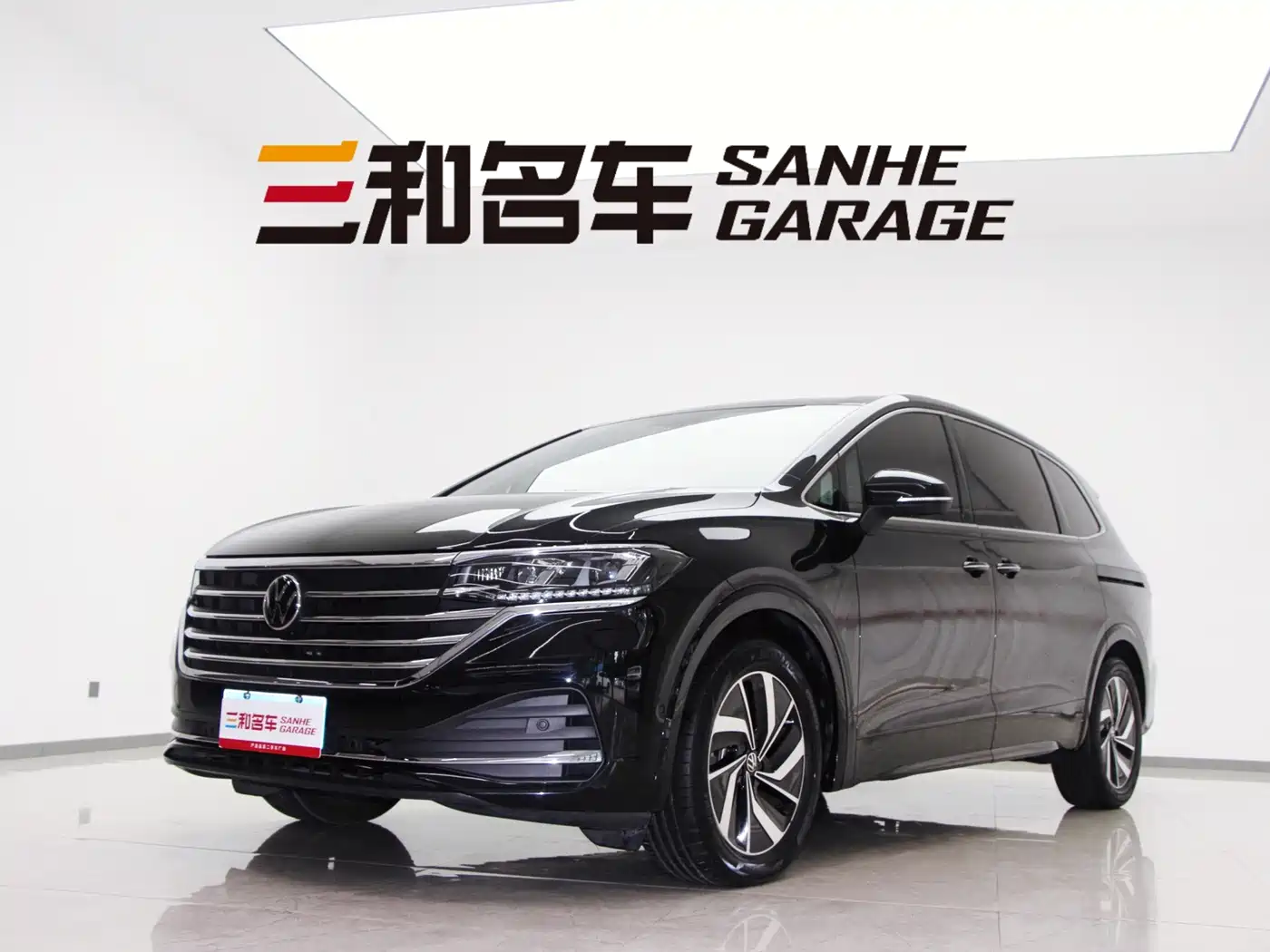
At a glance
- The Viloran is a China-built, seven-seat MPV suited to family, executive-shuttle and premium passenger transport.
- The export-relevant powertrain choice is between 330TSI and 380TSI 2.0-litre turbo petrol versions.
- Trim labels identify useful equipment tiers, but model year, facelift and the exact VIN define the actual specification.
- Export price should be assessed as a landed, Incoterm-specific quote rather than a standalone catalogue figure.
- LHD/RHD availability, homologation, spare parts and payment protection must be confirmed before ordering.
Why the Volkswagen Viloran matters for export markets
The Volkswagen Viloran is a China-built, seven-seat MPV designed around the space and comfort expected by family, executive-transport and premium-shuttle buyers. Its long body, three-row layout and sliding rear doors make it more versatile than a conventional sedan, while its Volkswagen branding gives overseas importers a familiar proposition. Unlike Volkswagen’s electric ID. Buzz, the Viloran is a combustion-engine model, so fleet planning should center on petrol availability, real-world consumption and duty cycle rather than battery range or charging infrastructure. For an overseas buyer, the key question is whether local rules and road conditions allow a large MPV to deliver a commercial advantage.
Export demand is strongest where a large people carrier can replace several lower-capacity vehicles or serve premium passenger duties. Airport transfers, hotel fleets, executive shuttles, family touring and expatriate transport are recurring use cases in parts of Southeast Asia, the Middle East, Latin America and selected African or European markets. However, “strong demand” is not a universal rule: vehicle taxes, fuel prices, road access, parking limits and local acceptance of large MPVs can decide the commercial case. A Viloran should therefore be tested against the destination fleet plan, not against headline model popularity.
The Viloran is a distinct China-market model, so its local suitability cannot be inferred from another Volkswagen sold in Europe. Chinese-market versions can offer a high level of cabin space and equipment for the segment, but buyers must confirm that spare parts, software, technical documentation and warranty support can be maintained locally. Volkswagen’s global identity helps, yet it does not automatically mean that a China-built Viloran is homologated, insured or serviceable in every country. The strongest export case is therefore for an importer with a clear route to registration and after-sales support, rather than for a first-time buyer treating the badge as proof of local readiness.
- Seven-seat, three-row MPV layout
- 330TSI and 380TSI petrol grades
- Local approval governs export viability
Model range, trims and powertrain variants: how the lineup is structured and how to choose
The Viloran range visible in export listings is structured around two 2.0-litre turbocharged petrol engines: 330TSI and 380TSI. Around the 330TSI, buyers will encounter names such as Business Edition and Luxury Edition; the 380TSI appears in Premium, Prestige and Flagship-related designations, with some naming differences across model years. These are meaningful buying signals, but trim labels are not a universal equipment list. A facelift designation can also change visible and interior details, so the model year and VIN should be checked against the specific unit rather than inferred from the badge alone.
Both powertrains use a front-mounted engine, front-wheel drive and a seven-speed dual-clutch automatic transmission in the versions commonly exported from China. The 330TSI is normally calibrated around 137 kW (186 PS) and 320 Nm, while the 380TSI is associated with roughly 162 kW (220 PS) and 350 Nm; exact calibration should be verified for the model year. The lower-output car is normally the efficiency and acquisition-cost compromise, whereas the 380TSI provides more reserve for full passenger loads, air-conditioning, hills and stop-start shuttle work. That distinction is more useful than trim prestige when the vehicle will work hard.
For buyers choosing between trims, the 330TSI Business and Luxury editions generally make sense when priority is efficient transport and core passenger comfort, while the higher 380TSI grades suit buyers who place more value on additional equipment, cabin refinement and power. Exact equipment can include infotainment, driver-assistance functions, seating and comfort features, but availability changes by year and market. Treat the live listing as the configuration record: request photographs of the dashboard, seat surfaces, wheels, boot, VIN plate and option labels before paying a deposit. This also helps avoid assuming that similarly named editions are identical across model years.
- 330TSI: lower-output efficiency grade
- 380TSI: stronger loaded-duty option
- Year and facelift change equipment
New vs used Volkswagen Viloran: how export inventory is structured and how buyers choose
Export inventory should be read as a set of individual vehicles rather than a uniform catalogue. A vehicle described as new may be unregistered, ex-stock or dealer-owned and can still be an earlier model year; the category does not guarantee that a unit is current-year or has never been displayed. Used Vilorans, when offered, may provide a different acquisition profile, but their year, trim, mileage, service history and condition must be assessed separately. The inventory filters and unit pages are therefore more informative than a general label such as “new Chinese MPV.” No general condition or year assumption should replace unit-level due diligence.
Choosing a new or near-new Viloran generally reduces uncertainty about wear, prior repairs and mechanical condition. It can simplify fleet presentation and make handover records easier to reconcile, although factory-warranty coverage may not transfer outside China and should never be assumed. A used example may make more sense when the budget is fixed, a lower acquisition outlay is more important than warranty, and the importer can inspect the vehicle thoroughly. The apparent saving should be compared with likely refurbishment, higher maintenance reserve, financing cost and weaker resale expectations for the importing market.
A practical selection framework should compare total delivered cost, expected uptime and risk. Review the VIN, production or model year, facelift status, odometer reading, engine and transmission condition, warning lights, service invoices, accident history, paint measurements, tyre age and evidence of previous commercial use. For a used car, an independent inspection and a mechanic’s report are more valuable than photographs alone. Then match the unit to your route: an executive shuttle with controlled mileage may suit a newer car, while a high-utilization fleet may accept an older example only if maintenance records are unusually strong.
- “New” may mean ex-stock
- Used units need condition evidence
- Compare landed cost and uptime risk
How export pricing works: the factors behind a live listing price, and how to read one
An export price is a negotiated or listed amount for one defined vehicle, not a fixed market-wide rate for the Viloran. The model year, 330TSI or 380TSI calibration, trim, facelift, factory options, mileage, condition, history and whether the vehicle is in stock or must be produced all affect the commercial basis. Currency movements also matter. For a used example, replacement risk, service records and cosmetic work can move the value materially; for a new example, order timing and specification lock-in matter more. Buyers should therefore compare like with like before treating one quote as a benchmark.
The vehicle price may be only one layer of the landed cost. Depending on the stated Incoterm, it may or may not include inland transport at origin, export clearance, terminal charges, ocean freight, marine insurance, destination handling, customs duty, VAT or GST and local delivery. EXW-style pricing can leave the buyer with more obligations, while a higher-level delivered or CIF term can reduce uncertainty but may not include import taxes and registration. Ask the seller and forwarder to separate each charge, because a lower vehicle quote can produce a higher total after freight and compliance work.
To read a live listing correctly, confirm the VIN or stock reference, model year, exact trim, engine, transmission, steering position, condition, mileage, options, currency, tax basis, Incoterm, payment terms and quote-validity period. Check whether images and the description agree, and ask what documents are included: export declaration, customs papers, manuals, service records and spare-parts support. ChinaCarDirect’s live Viloran listings are the correct place for the current per-unit price and availability; request a written quotation for the destination, number of units and preferred delivery term so that the comparison is binding rather than indicative.
- Confirm exact vehicle specification
- Separate price from landed charges
- Check currency, Incoterm and validity
MOQ, ordering and payment: single units vs consolidating a container
A single-unit purchase is a useful way for an importer to test product-market fit, validate homologation and preserve cash, but the quoted minimum order quantity must be confirmed on the selected unit. A one-unit order does not automatically mean a ready-to-ship car, a local warehouse stock item or a fixed production slot. Ask whether the unit is already completed, how long inspection and export preparation take, whether the price is tied to a VIN, and what happens if the vehicle fails inspection or cannot be registered in the destination country. Put those answers into the purchase agreement.
A wholesale program or multi-buyer consolidation can improve freight and handling efficiency, especially when several buyers share a shipment or one fleet order contains enough Vilorans to form a compliant load. It requires matching model years, trims, steering positions, colours and delivery deadlines, because mixing specifications can create resale or homologation problems. Actual unit capacity must be calculated from vehicle dimensions, packing method, axle limits, port restrictions and vessel capacity rather than assumed from a catalogue. A freight forwarder should confirm whether the shipment will move by roll-on/roll-off vessel, container or another permitted method.
Payment mechanics should be staged against verified milestones. Request a pro forma invoice naming the vehicle or production specification, deposit, balance trigger, beneficiary details, refund conditions and governing Incoterm. A common structure is a deposit to reserve the unit and a balance after inspection or against agreed export documents, but actual sequencing varies by seller and must be agreed in writing. Verify the seller’s legal identity and authority to sell, preserve every invoice and handover record, and ensure the payment method provides an appropriate audit trail. Avoid relying on informal messages to change a binding order.
- Confirm unit-specific ordering minimum
- Match configurations before consolidation
- Link payments to verified milestones
Shipping, homologation and market compliance caveats: LHD/RHD and import rules by country
Steering configuration is an early gating item. Most China-built Vilorans are supplied in left-hand-drive form, while right-hand-drive availability can be limited or dependent on production scheduling and destination approval. Do not assume a later conversion is equivalent to a factory RHD vehicle: conversion affects parts supply, instrument and infotainment compatibility, warranty, safety inspection and sometimes insurance treatment. State the required steering position in the RFQ, photograph the steering wheel and instrument cluster, and obtain written confirmation before deposit. If RHD is essential, build that requirement into the order rather than accepting it as a post-delivery fix.
Import rules are market-specific, and a Chinese-market Viloran should not be assumed to carry approvals for Europe, the Gulf, ASEAN, the UK, Australia or any other region. Before contracting, check VIN and type-approval documentation, emissions and noise requirements, lighting and safety equipment, customs classification, tariff and tax treatment, local registration categories and any used-vehicle or age restrictions. Some destinations require local conformity work, software or hardware changes, or prohibit particular powertrains or emissions standards. Engage an importer of record or local compliance adviser, and budget the engineering, inspection and registration work separately from freight.
Shipping cost and transit time depend on origin and destination ports, sailing frequency, vessel space, route, season, cargo category, terminal handling, insurance, customs clearance and inland delivery. Vehicles commonly travel by roll-on/roll-off service, while container or flat-rack options depend on the model’s dimensions and local carrier rules. Before loading, agree on a condition report, high-resolution photographs, VIN and option check, repair responsibility and documentation set. Confirm the release process, cargo insurance, demurrage exposure and destination receiving party, since these issues can delay handover even when the sea journey itself is straightforward.
- Specify LHD or RHD early
- Check destination approval rules
- Record condition before loading
Who should buy the Viloran — and who should pick a different vehicle
The Viloran is most suitable for buyers who need a spacious, comfort-oriented passenger carrier rather than a rugged utility vehicle or an emissions-free fleet option. Airport and hotel operators, executive-transport companies, family-touring businesses, premium ride-hailing fleets and destination-market resellers can benefit from its three-row packaging. Its long wheelbase and sliding rear doors help with frequent stops and passenger access, while the conventional car platform is easier for many drivers to adapt to than a large van. The strongest case is a route with frequent full loads where passenger space has measurable commercial value.
Operating the Viloran still requires disciplined matching. Seven-seat vehicles sacrifice some luggage space when all rows are occupied, and tall bodywork can be awkward in narrow car parks. Petrol quality, heat-management performance, tyre replacement, brake wear and DSG servicing should be assessed for the local duty cycle. For high-mileage shuttle work, calculate fuel consumption, scheduled maintenance and downtime under realistic load rather than relying on brochure figures. For executive buyers, evaluate rear-seat comfort, privacy, luggage needs and chauffeur policies. These checks often matter more than whether the model carries a premium badge.
Choose another vehicle if electrification is mandatory, the operating route is mostly rough or unsealed, compact parking dominates, or the commercial vehicle needs require a cargo van, ambulance conversion or certified specialty body. Low-volume urban use can also make a large MPV inefficient. Buyers with a strict total-cost ceiling may find a locally supported competitor or a used alternative more rational, while those needing guaranteed RHD production should consider a model already established in their market. In short, the Viloran fits passenger-volume and brand priorities, but it does not solve every fleet requirement or replace destination-market homologation.
- Best for passenger volume and comfort
- Unsuitable for mandatory-EV or rugged use
- Match seating to route and service
Main rivals and how the Viloran compares
There is no universal Viloran rival because import rules, local tariffs, brand familiarity and service coverage change the shortlist. The relevant comparison is the vehicle that can be registered and supported in the same market, has comparable seating and route requirements, and produces a competitive delivered operating cost. Consider passenger space, luggage volume, fuel type, powertrain response, maintenance access, warranty, residual value and the importer’s ability to source parts. A lower purchase quote is not decisive if the vehicle cannot be homologated or supported economically.
The Toyota Alphard is the established premium benchmark for large passenger MPVs, with strong recognition and mature import channels in many markets; the Viloran may offer a different acquisition proposition, but buyers should compare local parts support and the total cost of hybrid operation. The Hyundai Staria competes on a spacious, design-led seven-seat format and may appeal where Hyundai distribution is stronger, with diesel availability potentially useful for some routes. Neither alternative is automatically cheaper once taxes, fuel, service and residual-value assumptions are included. Availability in a particular country may outweigh theoretical equipment differences.
The GAC Trumpchi M8 is a more directly comparable China-built executive MPV and can be relevant to buyers seeking similar space and equipment from the same supply ecosystem. Its case may be stronger where GAC support is established and weaker where Volkswagen recognition carries more value. The Volkswagen badge can help with customer acceptance, yet it must be supported by aftersales planning. For any rival, request the same destination-specific landed quote and compare written equipment, inspection, compliance and warranty terms. The best choice is the model with the strongest serviceable, compliant package—not simply the most familiar name.
- Alphard: established premium benchmark
- Staria: design-led premium alternative
- Trumpchi M8: close China-built rival
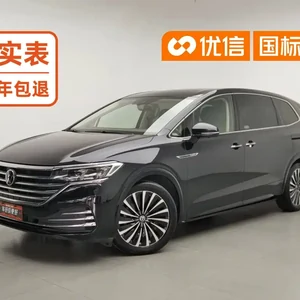
Live Volkswagen Viloran export inventory
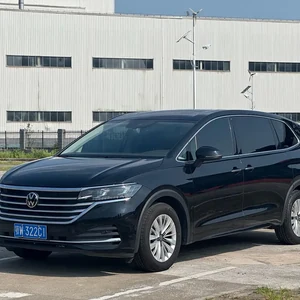
View all listings →Real units currently on ChinaCarDirect with per-unit asking prices and MOQ. Availability updates live from the catalogue.
How to buy a Volkswagen Viloran from China
-
1
Define the destination and operating case
Specify the country, port, annual mileage, passenger load, route surfaces and required steering position before selecting a trim. This narrows the shortlist before commercial negotiation begins.
-
2
Shortlist exact live units
Review current Volkswagen Viloran listings by year, 330TSI or 380TSI, trim, facelift, condition, mileage and documents. Treat the unit page and VIN as the source of configuration truth.
-
3
Request a specification pack
Ask for the VIN, model year, engine calibration, transmission, options, steering side, service history and photographs of any wear. Resolve omissions in writing before approving the order.
-
4
Build a landed quotation
Request a breakdown of vehicle price, origin handling, freight, insurance, destination charges, taxes if quoted and Incoterm. Confirm quote validity, payment milestones and which charges sit outside the vehicle price.
-
5
Check compliance and support
Have local rules checked for type approval, emissions, safety, tax, registration, LHD/RHD configuration, parts support and warranty. Use an importer of record where local law requires one.
-
6
Inspect and secure payment
Agree a pre-shipment inspection, repair responsibility and document set. Verify the seller’s identity, beneficiary details, pro forma invoice, deposit terms, refund conditions and balance-payment trigger.
-
7
Consolidate, ship and receive
For multiple units, match configurations and obtain a forwarder’s load plan, vessel booking, cargo insurance, condition report and destination-release plan. Reconcile each vehicle at unloading before final handover.
Viloran vs rivals
| Toyota Alphard | The Alphard is the established premium large-MPV benchmark, with mature local support in many markets and hybrid powertrains. The Viloran provides an alternative China-sourcing route, so buyers should compare Alphard parts availability, fuel costs and destination-specific landed costs rather than equipment labels alone. |
|---|---|
| Hyundai Staria | The Staria is a spacious, design-led seven-seat MPV that may have stronger Hyundai distribution and useful diesel availability in certain markets. The Viloran offers a more conventional Volkswagen proposition, but its local service case still depends on the destination and parts network. |
| GAC Trumpchi M8 | The Trumpchi M8 is a close China-built executive-MPV competitor with similar space and equipment ambitions. It may be the more practical choice where GAC support is established, while Volkswagen branding may improve customer acceptance in other markets. |
Frequently asked questions
How is Volkswagen Viloran export pricing determined?
Each live quote should identify the exact year, trim, engine, facelift, condition and options. The total also changes with mileage, currency, freight, insurance, terminal charges, taxes and Incoterm, so it is not a universal model price. Use the current Volkswagen Viloran listings for the unit price and request a written destination-specific landed quotation for binding terms.
Does the Volkswagen Viloran have electric range?
The China-market Viloran in the 330TSI and 380TSI lineup is a turbocharged petrol MPV, not a battery-electric version, so there is no battery range or charging cycle to evaluate. It normally uses a seven-speed DSG and front-wheel drive. Check the exact listing for engine output and model-year calibration before estimating fuel costs.
Should I buy a new or used Volkswagen Viloran?
New or near-new units reduce uncertainty about wear and repairs, but model-year age, warranty transfer and option consistency still require checking. Used units can reduce acquisition cost but should be bought only after VIN, service, accident, paint, tyre and mechanical inspection, with a maintenance reserve. The right choice follows from route, uptime budget and resale expectations, not the listing label alone.
Can I order one Viloran, or must I buy a container?
Some sellers may accept a single-unit order, but the minimum, production status and readiness must be confirmed for the selected vehicle. A container or consolidated shipment can reduce per-unit freight, yet it requires matching configurations and a load plan approved by the carrier. Treat the MOQ shown for the individual unit as the controlling term and confirm it in the RFQ and pro forma invoice.
What affects shipping time and cost from China?
Origin and destination ports, sailing frequency, route, vessel space, season, cargo handling, insurance, customs and inland delivery all affect the result. Roll-on/roll-off is commonly relevant for vehicles, while container or flat-rack feasibility depends on dimensions and carrier rules. Ask the forwarder for a door-to-door or port-to-port breakdown, including charges outside the vehicle quote.
Are spare parts and after-sales support available?
Parts can be ordered for China-market Vilorans, but availability, lead time and technical support vary by destination and are not guaranteed by the Volkswagen badge alone. Before purchase, identify the exact VIN and model year, ask for a recommended spare-parts list, and confirm local repair capability for the engine, DSG, electronics and body parts. A remote distributor may be necessary in some markets.
Can I buy a right-hand-drive Volkswagen Viloran?
RHD supply is more limited than the normal China-built LHD configuration and may depend on factory scheduling and destination approval. Do not assume a steering conversion will satisfy registration, safety inspection, warranty or insurance requirements. State LHD or RHD in the RFQ and secure written confirmation against the specific order before paying a non-refundable deposit.
How do I buy a Volkswagen Viloran from China?
Start with the live listings, shortlist the year, trim, powertrain and condition, then send an RFQ with your destination, quantity, steering position and preferred Incoterm. Obtain a pro forma invoice, documents list, inspection plan and payment schedule, and verify the vehicle or production specification before the balance payment. Finalize the order only after freight, customs and local compliance responsibilities are assigned.
Ready to source the Volkswagen Viloran?
Request an RFQ with your destination, preferred 330TSI or 380TSI trim, quantity and Incoterm for a current unit-specific quote.
Request a quote