
Volvo Em90 Export Buying Guide for Overseas Buyers
Volvo Em90 export buying guide for dealers and fleet buyers, covering specs, trims, pricing logic, MOQ, shipping, homologation and key alternatives.
At a glance
- The Volvo Em90 for export proposition is strongest in premium executive, hospitality and specialist fleet channels.
- Buyers seeking to buy Volvo Em90 from China must plan destination registration, charging access and aftersales support.
- Its dual-motor system and long CLTC range prioritize performance and range, but overseas real-world figures will vary.
- New units offer the cleanest warranty path; used purchases require battery, history and condition checks.
- Export cost follows vehicle configuration, Incoterm, freight, duties and local charges; use the live listing for current figures.
Why the Volvo Em90 matters for export markets
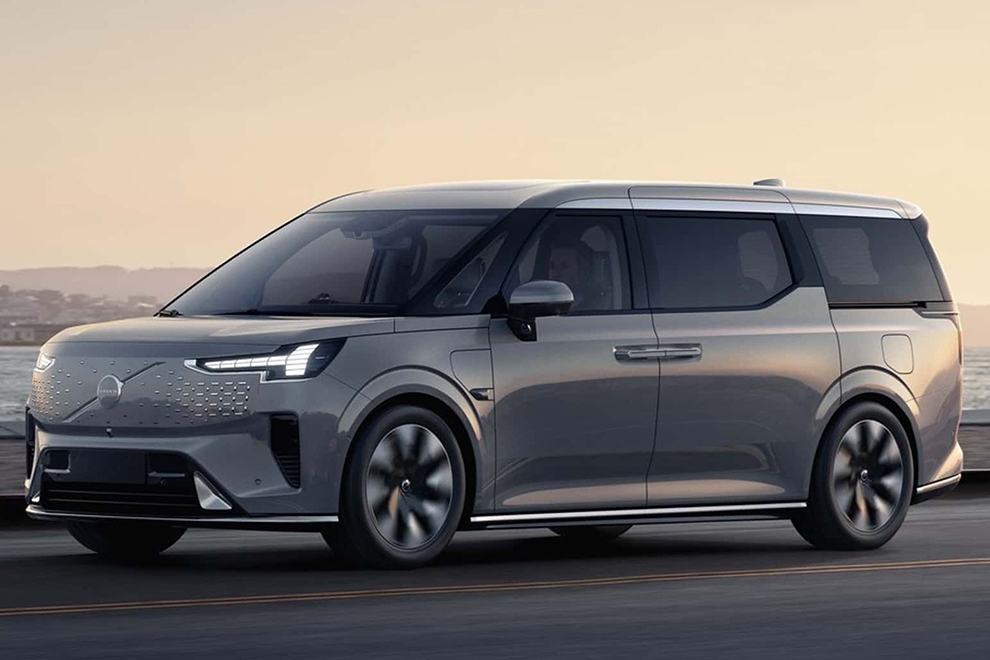
The Volvo Em90 occupies a rare corner of the export market: a full-size, six-seat luxury MPV with a battery-electric drivetrain and a China-built Volvo identity. Its long body and three-row packaging suit executive transport, hotel and airport transfers, premium family mobility and specialist chauffeur fleets. It is narrower than a mainstream SUV, but offers a high passenger-to-floor-space ratio for buyers who value a formal cabin over ruggedness or cargo versatility. For overseas buyers, the appeal is not volume alone; it is a distinctive premium product in a segment where few Western-brand MPVs are directly available.
Demand should be assessed by channel rather than assumed from the model’s premium badge. ChinaCarDirect’s Volvo Em90 listings are most relevant to importers and specialist dealers willing to handle local registration, charging-network assessment and aftersales planning. Because the Em90 is closely associated with China rather than a broad worldwide Volvo range, local consumers may initially need explanation of its origins, software environment, service provisions and charging expectations. A distributor should therefore test demand with one or two vehicles before committing to a wholesale programme and collect leads before expanding inventory.
The export opportunity is strongest where premium customers understand Chinese electric vehicles and where an importer can maintain a support network. Airport, tourism, diplomatic, corporate and hospitality accounts can all be relevant, provided fleet operators calculate energy availability and residual value realistically. Buyers should avoid buying merely for visual novelty: the business case must include access to replacement parts, software support, insurance acceptance and a clear path for servicing the vehicle throughout its operating life. A supplier able to document those answers is more valuable than a headline specification sheet.
- Premium executive and fleet channels.
- Plan registration and aftersales.
- Validate demand before expansion.
Model range, trims and powertrain variants: how the lineup is structured and how to choose
Volvo Em90 specs should be read as a China-market lineup, not as a global trim matrix that overseas buyers can assume will be available under the same names. The Em90 export range centers on an Ultra Six-Seater designation, making seating and equipment the first checks for each unit. Buyers should ask for the model-year specification sheet, option list and VIN-matched photographs, because equipment can differ even when two listings use the same marketing name. They should also ask whether the vehicle was built for export or for China’s domestic homologation.
The technical centerpiece is a dual-motor all-wheel-drive battery-electric system, with combined output commonly quoted at 1,160 kW and 1,850 Nm. A 140 kWh battery and a maximum claimed CLTC range of about 820 km position the Em90 as a long-range luxury MPV rather than a combustion MPV converted for electric use. Those ratings should not be treated as overseas real-world range: test cycles, weather, speed, load and charging standards vary by market. Confirm the VIN-matched configuration and usable battery capacity for the intended export market before signing any export order.
Range choice should be made from the destination duty cycle, not from the headline figure. The Em90’s published China specifications include a long-range configuration rated at up to 820 km CLTC and a performance-oriented version with a shorter rated range. For an airport or executive fleet, usable range under load and access to rapid charging may matter more than maximum range; for long-distance use, confirm charging-connector compatibility, route planning and whether the quoted test applies to the exact vehicle. Ask for consumption data and temperature assumptions with the range label.
- Verify Ultra Six-Seater options.
- Compare CLTC with real routes.
- Check seat and charging functions.
New vs used Volvo Em90: how export inventory is structured and how buyers choose
A live Volvo Em90 export listing can represent a new vehicle, a previously registered vehicle or a vehicle prepared for onward sale, and the status must be read from the individual record rather than inferred from the model name. New units are the simplest starting point for a first-time importer because their condition, warranty route and delivery history are easier to document. Used units make sense only when their savings exceed expected inspection, refurbishment, software and logistics work. Request a pre-shipment inspection and ownership history before paying the balance.
For a new Em90, the buyer should compare factory allocation, production date, paint, interior, wheel and option codes against the quoted specification. Confirm whether the warranty starts at production, shipment or local registration, because the start point and territorial coverage affect residual value. Also establish the delivery condition—on-road, rolled or otherwise prepared—and include a pre-shipment inspection, since a new vehicle can have transit damage or missing accessories. For fleet buyers, ask whether warranty administration, software updates and any battery-health record are included in the handover package in writing.
Used Volvo Em90 purchases demand a stricter evidence chain than a conventional used-car purchase. Obtain the vehicle history, ownership and registration documents, service records, odometer reading, accident and flood checks, battery state-of-health report where available, and photographs of the underbody, wheels and charging port. Confirm that software updates, connected services and owner-data settings can be reset or transferred lawfully, and investigate whether local inspectors will recognize the vehicle as altered or incomplete. A low purchase price can be deceptive if warranty, battery or cosmetic work becomes the importer’s long-term responsibility.
- New: verify warranty and delivery.
- Used: inspect battery and history.
- Match VIN before payment.
How export pricing works: the factors behind a live listing price, and how to read one
A Volvo Em90 export price guide should separate the vehicle’s commercial value from the total cost of bringing it into service. The displayed live price is the starting reference for that specific unit, but the landed cost may add ocean freight, insurance, terminal handling, customs duty, taxes, registration, compliance work and local delivery. Conversely, Incoterms can allocate some of those costs differently, so the buyer must establish exactly what the seller’s quote includes before comparing offers and whether destination-specific charges are included or payable separately at the named destination port.
Within a live listing, model year and specification are only the first price variables. The Ultra Six-Seater grade, any battery or range-rated version, factory options, production date, mileage, condition and colour can all affect comparability. Market conditions matter: the seller’s sourcing cost, currency movements, wholesale terms and the number of vehicles being consolidated can shift a quote. Compare like with like rather than treating different SKUs or preparation levels as equivalent, and ask what has changed since the listing was published so the buyer can request a revised quotation.
To read a live quote, confirm the unit price and currency, the Incoterm and named place, whether freight and insurance are included, the payment schedule, document charges, warranty coverage and whether the quotation is valid. Check whether taxes, duty, registration, port charges and inland delivery are buyer costs or explicitly excluded. ChinaCarDirect’s live Em90 inventory is the authoritative place for current per-unit figures, while an RFQ should be used to convert the visible listing into a destination-specific offer. Do not budget from screenshots, forwarded messages or historic marketplace posts.
- Compare trim, range and condition.
- Specify Incoterm and destination.
- Check payment terms and exclusions.
MOQ, ordering and payment: single units vs consolidating a container
MOQ is a commercial term rather than a permanent model specification, so a buyer should not assume either that every Em90 order needs a container or that every seller will release one vehicle without discussion. The relevant minimum may depend on the unit, payment method, documentation, shipping plan and supplier capacity. Treat the MOQ shown or accepted for the chosen live listing as the starting point, then ask whether a single-unit trial can be combined with scheduled orders. This protects an importer from assuming a fixed catalogue rule beforehand.
For a Volvo Em90 wholesale programme large enough to consolidate into a container, consolidation can reduce per-vehicle freight and handling, but it also concentrates capital, lead time and resale exposure in one shipment. A full container requires sufficient units, while LCL or specialist vehicle consolidation may suit a mixed-brand or lower-volume importer. The decision should include loading density, securing method, insurance limits, customs documentation and port capacity. Ask for a unit-by-unit allocation and serial-number schedule before the balance payment, so exceptions can be resolved and properly documented before loading starts.
The ordering workflow normally runs from enquiry to a written specification, destination-based quotation, pro forma invoice and deposit, followed by final inspection, balance payment and release against shipping documents. Payment methods and refund terms should be verified with the supplier, and the buyer should confirm the seller’s legal identity, export experience, title status and ownership of the vehicle. Any deadline, cancellation condition or remedy for non-conformity should appear in the contract rather than rely on chat messages. For used units, make inspection and document discrepancies explicit conditions of release.
- Confirm listing-specific MOQ.
- Request consolidation serial numbers.
- Contract inspection and balance release.
Shipping, homologation and market compliance caveats: LHD/RHD and import rules by country
Because the Em90 is a large, high-value passenger vehicle, transport planning begins with its dimensions, weight, loading access and battery transport documentation. Depending on the route and origin, a specialist vehicle carrier, Ro-Ro service or enclosed container may be used; roll-on/roll-off simplifies some loading procedures, while flat-rack or container transport requires careful securing and weather protection. The forwarder should confirm axle weight, clearance, lashing points, battery state and insurance coverage before accepting the vehicle. Never assume that a car deck or enclosed-container slot will be suitable for the exact model.
Steering configuration is a critical sourcing question because the Em90 is a China-origin model and buyers may encounter left-hand-drive vehicles in markets that drive on the left. A right-hand-drive conversion can alter visibility, controls and safety expectations, and it does not create factory RHD homologation. For RHD markets, request a factory RHD example or written confirmation of its source and approval status; do not assume that swapping the steering position is acceptable to local type approval, registration, insurance or fleet safety policies. For LHD markets, check controls and driver visibility.
Import eligibility depends on the destination country and cannot be settled from the vehicle’s China-market specification alone. The importer may need a VIN-specific certificate of conformity, UNECE or local type approval, customs classification and valuation, evidence of roadworthiness, battery and environmental documentation, cybersecurity or software compliance, and registration. Electric drive does not remove obligations around charger standards, appliance voltage, towing and modifications. Obtain a regulatory checklist from a customs broker or homologation specialist before committing funds. Market access should be confirmed vehicle by vehicle, not assumed from the Volvo marque.
- Verify factory LHD or RHD.
- Obtain destination compliance advice.
- Check insurance and battery handling.
Who should buy the Em90 — and who should pick a different vehicle
The Em90 is most credible for buyers with a clearly defined premium use case rather than a generic need for many seats. Executive chauffeurs, VIP transport operators, luxury hotels, airport services and affluent households can use its long wheelbase and formal six-seat cabin to justify the vehicle’s size and running costs. For these buyers, comfort, quietness, passenger space and brand presentation can outweigh the usual MPV compromises. A fleet operator should still test route energy use and charging turnaround with the actual duty pattern and obtain written sign-off before procurement.
It is less suitable for budget ride-hailing, small-business shuttle operations, buyers prioritizing the lowest cost per kilometre, or fleets without dependable charging and service access. The vehicle’s dimensions can complicate parking, while its premium hardware and large battery may increase insurance, repair and downtime exposure. Off-road users, towing-dependent operators and buyers who need frequent cargo-floor versatility should test the MPV format against a premium SUV rather than assuming a larger cabin solves every use case. For overseas markets, charging reliability and parts support should carry equal weight to styling credibility.
A disciplined buyer should score the Em90 against serviceability, charging, residual value, parts and finance as well as comfort. Compare the operating route, climate, annual distance, charging strategy, downtime and technician capability; then obtain written answers on parts sourcing, software support, warranty claims and insurance. If the destination cannot support those requirements, a simpler premium MPV or an established electric SUV may deliver a lower ownership risk even if its specification sheet looks less dramatic. The right choice is the vehicle whose operating environment, not its headline output, determines success.
- Best for premium executive fleets.
- Reliable charging and support required.
- Avoid budget, off-road and weak-service use.
Main rivals and how the Em90 compares
Against the Denza D9, the Em90 offers a more overtly premium, performance-focused expression of the large luxury MPV, while the D9 gives buyers a choice of plug-in hybrid and battery-electric formats that can ease adaptation where charging coverage varies. The Em90’s case rests on its high-output dual-motor system, six-seat executive presentation and Volvo identity; the D9 may be more practical for operators who prioritize powertrain flexibility, familiar China-market support or different acquisition economics. Neither should be assumed to clear every overseas market without local homologation and verified local type approval.
The Zeekr 009 is a closer format rival because it is also a China-made premium battery-electric MPV with a six-seat executive focus. Buyers should compare rear-seat layout, luggage capacity, motor output, charging, software support and the importer’s ability to maintain each vehicle, not assume that a shared body genre makes them interchangeable. The Em90 has the more overtly performance-led specification, while the 009 may offer a different balance of efficiency, comfort and market-specific feature availability. Confirm local availability, homologation and support for each before importing or ordering them in bulk.
The Tesla Model X is a premium-electric alternative for buyers who prioritise an established international service footprint, familiar charging and SUV packaging rather than a six-seat executive MPV. It does not reproduce the Em90’s long, formal passenger cabin, and availability, homologation and pricing in the destination must be checked separately. For an overseas dealer, the decisive comparison is not only product image but parts access, software continuity, technician training and resale confidence in the country of operation. The Em90 wins where passenger space and chauffeur presentation outweigh global-model familiarity.
- Zeekr 009: closest China-made electric MPV.
- Denza D9: large luxury MPV with powertrain flexibility.
- Tesla Model X: premium electric SUV alternative.
Live Volvo Em90 export inventory
View all listings →Real units currently on ChinaCarDirect with per-unit asking prices and MOQ. Availability updates live from the catalogue.
How to buy a Volvo Em90 from China
-
1
Define the duty cycle and destination
Map expected routes, passenger loads, charging locations, climate and local registration rules. Use these requirements to decide whether a six-seat luxury MPV fits the operating plan.
-
2
Compare live inventory
Use the live Volvo Em90 listings to check current per-unit price, MOQ and availability. Compare model year, range version, condition, factory options and delivery preparation on a like-for-like basis.
-
3
Verify the VIN and specification
Request VIN-matched photographs, the factory option list, battery and range information, charging hardware and steering configuration. Check that the description matches the exact vehicle being offered.
-
4
Request a destination-based quotation
State the destination port, Incoterm and intended transport method. Ask for freight, insurance, documentation, customs, duty, registration and inland-delivery assumptions to be clearly included or excluded.
-
5
Validate the seller and contract
Confirm the supplier’s legal identity, vehicle ownership, export history, warranty terms, payment methods and refund conditions. Put the specification, inspection criteria and balance-release conditions into the contract.
-
6
Prepare compliance and shipping
Engage a customs broker or homologation specialist to confirm the destination requirements. Give the forwarder the VIN, dimensions, weight, battery information, lashing requirements and required export documents.
-
7
Inspect before balance release
Complete a physical and functional inspection covering bodywork, wheels, interior, battery, charging, software and warning systems. Release the balance only after discrepancies and shipping documents have been resolved.
Em90 vs rivals
| Zeekr 009 | The closest China-made premium electric-MPV format rival; compare cabin design, output, charging and support, with the Em90 leaning harder on performance and Volvo presentation. |
|---|---|
| BYD Denza D9 | A large luxury MPV alternative with plug-in-hybrid and battery-electric choices; it may offer greater powertrain flexibility for routes with uneven charging access, while the Em90 is more performance-focused. |
| Tesla Model X | A premium electric SUV rather than an MPV, with a more familiar global brand ecosystem; buyers prioritizing service familiarity and SUV utility may prefer it over the Em90’s six-seat executive format. |
Frequently asked questions
How is Volvo Em90 export pricing determined?
Each live unit has its own commercial terms, and the visible figure may move with model year, trim, range or battery version, factory options, condition, mileage and currency movements. Freight, insurance, port handling, duty, taxes, registration and inland delivery should be added or allocated according to the Incoterm. Check current per-unit figures in the live Volvo Em90 listings and request a written destination-based quote for binding numbers.
What powertrain and range does the Volvo Em90 have?
The Em90 uses a dual-motor AWD battery-electric system commonly rated at 1,160 kW and 1,850 Nm, with a 140 kWh battery and up to 820 km CLTC range. CLTC is a Chinese test cycle, so it should not be treated as guaranteed real-world range in another country; verify the exact live vehicle and destination conditions.
Should I buy a new or used Volvo Em90?
New units usually provide the clearest factory condition, option history and warranty route. Used Volvo Em90 units may cost less to acquire, but buyers should price in battery-health uncertainty, accident or flood checks, software transfer, refurbishment and local registration scrutiny.
What is the MOQ for a Volvo Em90 order?
MOQ is agreed per live listing and seller rather than being a permanent Em90 rule. One-unit orders may be negotiable, but the minimum can change with payment, documentation and shipping plans; confirm it in the listing or RFQ before paying a deposit.
How long does shipping take and what does it cost?
Transit time and cost depend on origin and destination ports, sailing or carrier schedules, available vehicle space, handling method, insurance, customs and inland delivery. Ask the forwarder for a route-specific estimate and specify the Incoterm so vehicle freight is not confused with the full landed cost.
Are spare parts available for the Volvo Em90?
Spare-parts support for this China-origin model may require China-based sourcing or longer lead times, so ask the supplier for a parts reference, diagram and service process before purchase. Confirm compatibility by VIN and model year, especially for electronics, battery components and software-related faults.
Is a right-hand-drive Volvo Em90 available?
Do not assume a factory RHD Em90 is available; China-origin examples are commonly encountered in LHD form. A steering conversion is not factory RHD homologation and may affect registration, insurance and safety approval, so obtain destination-specific confirmation before ordering.
How do I order a Volvo Em90 from China?
Start with the live Em90 inventory, select a unit and request a written specification and destination-based quotation. After verifying the VIN, ownership, payment terms and inspection conditions, pay through the agreed method, complete balance approval and release funds against the required export and shipping documents.
Ready to source the Volvo Em90?
Request a destination-specific Volvo Em90 export quote with current unit details, Incoterm, freight and compliance assumptions.
Request a quote