
Volvo S90 Plug-in Hybrid Export Buying Guide
Buy a Volvo S90 Plug-in Hybrid from China with clear guidance on trims, pricing, MOQ, shipping, compliance, rivals and live export inventory.
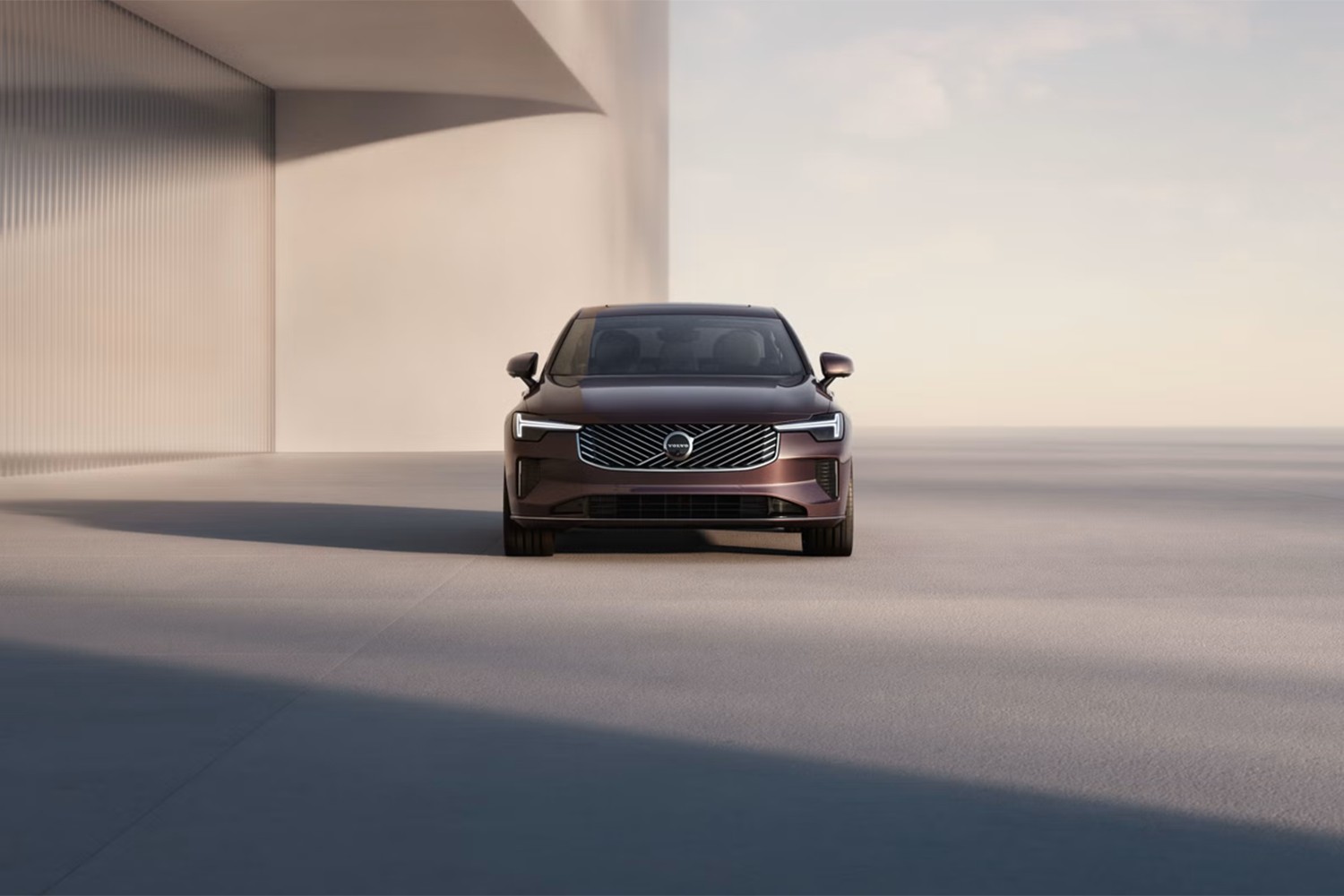
At a glance
- A large executive sedan combining petrol power, electric drive and rechargeable-battery flexibility.
- Chinese-market trim labels vary, so confirm drivetrain, range package, seating and equipment on each unit.
- Pricing depends on year, specification, condition, exchange rates, freight and Incoterm rather than one fixed catalogue figure.
- MOQ is seller- and route-specific; single-unit buying and container consolidation can suit different buyers.
- Destination-market approvals, steering configuration, charging compatibility and import taxes must be settled before payment.
Why the Volvo S90 Plug-in Hybrid matters for export markets
The Volvo S90 Plug-in Hybrid occupies the overlap between a large executive sedan and an electrified long-distance car. Its appeal for buyers is not simply “premium styling”: the combination of a combustion engine, electric drive and rechargeable battery can suit markets where charging infrastructure is developing unevenly. For dealers, it broadens the executive segment without requiring a battery-electric sales and service model. For fleet managers, it may offer a familiar refuelling option alongside electric operation. The result is a model that needs matching to local taxes, charging access and duty cycles.
Demand in export markets is likely strongest where buyers want premium identity and long-distance usability without depending entirely on charging. A plug-in hybrid can support electric driving for compatible journeys while retaining the refuelling network available to a combustion-powered car. That makes it relevant to fleets, transport operators and dealers serving mixed urban and regional routes. It is not automatically the cheapest way to electrify a fleet: tax treatment, fuel use, insurance and servicing can still determine the business case. Dealers should therefore qualify a market before committing display space.
For overseas positioning, the S90 is treated as a long-distance saloon rather than an off-road vehicle. Its strengths—executive cabin presentation, Nordic design and the option to charge—are recognizable to premium-car buyers, but road conditions, parking limits and taxation may favor other body styles. An importer should compare total operating requirements, not just the vehicle badge: charging access, service coverage, parts support and residual demand determine whether an attractive China-origin offer can be sold. The live S90 inventory should be treated as a sourcing pool, not a substitute for market planning.
- Premium executive plug-in saloon.
- Mixed-route charging flexibility.
- Premium service demands planning.
Model range, trims and powertrain variants: how the lineup is structured and how to choose
The China-origin lineup is presented through several overlapping naming systems. Listing titles can combine PHEV, T8, E-AWD or E-Drive with package descriptions such as Long Range, Momentum, Inscription, Elegance, Excellence, Intelligent Luxury and three-seater. These labels help identify a seller’s advertised configuration, but they should not be translated into European or North American trim equivalence without documents. A dealer should preserve the original unit name, production year and VIN, then compare the equipment list with the destination catalogue. That prevents a similarly named trim from being mistaken for identical specification.
Battery and range choice should be treated as a configuration decision, not inferred from the words “Long Range” alone. Request the battery capacity, electric-only range, charging connector, alternating-current charging rate, fuel-tank capacity and range, then verify them against the VIN or manufacturer documentation. Also compare engine output, electric-motor output, transmission, driven axles, suspension, tyres and braking equipment. For fleet use, payload, towing limits, boot volume and seat layout can matter as much as range, particularly where the China-market car is a three-seater or has equipment not offered in the buyer’s home country.
Drivetrain labels deserve careful treatment. The market titles include both AWD and E-Drive terminology, but the seller should explain the configuration in mechanical terms and identify which axle or motor powers the car. Buyers who require a wet climate, towing duty or launch performance may prioritise an all-wheel-drive variant; buyers focused on efficiency may prefer the version with the suitable electric range and charging specification. Luxury, driver-assistance and interior packages can then be selected without confusing them with the powertrain. The correct sequence is configuration, condition, documentation, and only then price.
- Match trims to VIN documents.
- Compare range and charging.
- Verify seats and equipment.
New vs used Volvo S90 Plug-in Hybrid: how export inventory is structured and how buyers choose
Export inventory should be read as a set of individual vehicles rather than a single interchangeable model. Each listing should disclose condition, production year, trim, mileage where relevant, seller location, options, VIN and available documentation. New vehicles need production and delivery checks; used vehicles need ownership, service and condition evidence. Because photographs may be shared across similar units, the buyer should request the VIN and fresh images before reserving funds. Current condition, unit price and availability must be confirmed on the live listing rather than inferred from the model name.
For a new car, the purchase file should connect the VIN to the production month, factory options, factory warranty and any dealer preparation. Confirm that the odometer reading is consistent with delivery status, that no accident or flood record is reported, and that battery, hybrid-system and high-voltage transport documents are present. For a business importer, PDI, customs and warranty eligibility should be checked before the vehicle leaves the origin country. Dealer invoices, type plates and option codes should agree with the physical car, reducing the risk of a disputed delivery.
A used S90 Plug-in Hybrid can make sense where the buyer accepts variability and wants a lower initial outlay, but it should be treated as a different asset class. Ask for service records, title and import history, recall completion, odometer evidence and an independent inspection covering high-voltage safety, battery state of health, charging faults and combustion-engine condition. Check whether software updates or hybrid-component replacements affect the remaining warranty. A professional valuation should allow for the repair uncertainty that comes with an ageing plug-in hybrid; photographs alone cannot establish battery health.
- Condition sets inspection depth.
- New: verify VIN and warranty.
- Used: test battery, history.
How export pricing works: the factors behind a live listing price, and how to read one
An export price is not a fixed number attached to the model name. It can move with production year, trim, range or battery option, factory equipment, mileage and condition, colour demand, and seller terms. Currency exchange also matters, as do export documentation, insurance, inland transport and freight. Premium versions may command more for equipment or drivetrain, while older inventory may trade differently with condition and warranty. The comparison is like-for-like: matching year, configuration, condition, destination and commercial term. Request a unit-level quote before using catalogue figures in the business case.
Incoterms determine where responsibility and cost pass between seller and buyer. EXW starts at the seller’s premises, FOB at the named origin port, CIF at the destination port with specified freight and insurance, and DDP extends the seller’s obligation toward the buyer’s address. Definitions can be misunderstood, so ask what is included, who handles export clearance, and which charges remain local. A landed-cost worksheet should add the vehicle price to inland haulage, origin handling, freight, insurance, destination charges, duty, tax, registration and delivery, then compare the result with expected operating cost.
Read a live listing as an offer, not as a final delivered price. Check the currency, unit identifier, condition, production year, trim description, mileage, seller location, warranty note and stated Incoterm, then ask whether the displayed amount can change and for how long it is valid. Separate vehicle acquisition cost from freight, insurance, customs, taxes, charging installation and local registration. Obtain a quotation for the exact unit and destination, and note exclusions. That process gives a buyer an auditable price; use the live listings for current per-unit price, MOQ and availability.
- Compare like-for-like units.
- Separate price from landed cost.
- Check current unit pricing.
MOQ, ordering and payment: single units vs consolidating a container
Minimum order quantity is a commercial term, not a property of the S90 Plug-in Hybrid. It depends on the seller, allocation, payment terms, shipping method and consolidation offer. A dealer may buy one unit for a trial or a customer order, while a full-container programme can improve freight efficiency but ties up capital. Do not infer a blanket MOQ from the model page; request the seller’s order conditions for the listing. If buying several vehicles, the quote should state whether the unit, mixed model set or consignment determines the minimum.
The ordering sequence should be controlled and documented. Select a specific unit or request a quotation by configuration, send the RFQ with destination, expected quantity, Incoterm and delivery requirements, then obtain the seller’s pro forma invoice and supporting vehicle details. Reconcile the VIN, production date, options, condition and price on that invoice before payment. Include inspection, document, warranty and refund terms, and require any balance to be linked to shipment milestones. A purchase contract reduces ambiguity, although it does not replace local legal advice or independent vehicle inspection before loading.
Single-unit purchasing and container consolidation should be compared beyond freight. A single unit lowers inventory exposure but may require vehicle transport or consolidation with other cargo. A mixed container can dilute freight cost across vehicles, but it introduces picking, damage, insurance and demurrage risk and can delay a customer’s priority model. Payment safety matters: use a traceable method, verify beneficiary and seller identity, understand deposit and refund conditions, and avoid transferring funds to an unrelated account. Confirm who holds title to the goods and when risk passes under the agreed Incoterm.
- Confirm seller-specific MOQ.
- Use unit-specific invoices.
- Weigh consolidation against risk.
Shipping, homologation and market compliance caveats: LHD/RHD and import rules by country
Shipping planning begins with the vehicle’s dimensions, weight, declared configuration and destination. The seller should provide the required origin documents and confirm whether the route uses an enclosed vehicle carrier, container or other specialist method. Freight quotations must specify collection point, port or terminal, mode, transit plan, insurance, booking party and charge inclusions. Transit time is only one variable: transshipment, customs clearance, port congestion, weather, documentation changes and inland delivery can extend the schedule. Treat the delivery estimate as a planned window and track milestones through the freight forwarder in writing.
Chinese-market emission labels, such as China V and China VI seen in some trim names, describe origin-market classifications; they do not prove approval in the destination country. The importer must check type approval, safety and emissions requirements, customs classification, duty, VAT or sales tax, and registration conditions. Items may include charging-equipment approval, high-voltage safety inspection and treatment of the battery during transport. The rules depend on the importing jurisdiction, so a Chinese vehicle should not be assumed compliant merely because it is sold by an export platform or bears familiar model badging.
Steering configuration is a separate sourcing check. A left-hand-drive car will not automatically satisfy a right-hand-drive market, and converting a vehicle can create safety, electrical, warranty and resale issues. Buyers should state the required configuration before ordering and confirm it from the VIN and photographs; where a suitable RHD example is unavailable, compare import from another origin with local conversion. Also verify the charging connector, voltage, onboard charger, local electrical supply, radio, lighting, software language, driver-assistance functions and roadside support. Pre-delivery inspection should occur before customs clearance and again after arrival.
- Origin labels lack approval.
- Verify LHD/RHD and charging.
- Check local import rules.
Who should buy the S90 Plug-in Hybrid — and who should pick a different vehicle
The S90 Plug-in Hybrid fits buyers who need a premium executive saloon, petrol refuelling and meaningful electric capability without committing to a battery-electric-only fleet. Company fleets, chauffeur services, sales teams and dealers can use it where controlled charging is available. It also suits a buyer testing plug-in hybrid demand with one selected vehicle rather than a programme. The business case combines a defined duty cycle, local incentives or tax treatment, sensible charging access and confirmed servicing support. Without those conditions, the model’s premium positioning may not translate into lower operating cost.
It is a weaker choice when priority is low purchase and maintenance cost, maximum electric-only range, large cargo capacity or seven seats. Fleets without workplace charging may obtain electric benefit while carrying the weight and complexity of two power sources. Buyers in extreme temperatures or high-mileage conditions should ask how the hybrid system, battery warranty and service interval behave over time. A sedan may be inconvenient where parking, road access or rules favour smaller vehicles. In these cases, a conventional hybrid, a non-plug-in model or a different body style may be rational.
A decision should compare the S90 against the buyer’s route, rather than against another sedan alone. Map charging locations, assess dwell time, estimate energy and fuel use, and include insurance, servicing, tyres, downtime and expected resale. For a dealer, local test-drive demand, homologation effort and parts stocking can be as important as the vehicle’s specification. For an importer, the VIN-level condition and documentary readiness may outweigh a trim advantage. The right choice is the configuration that can be registered, supported and resold in the intended market at an acceptable total cost.
- Strong fit for mixed-route fleets.
- Weak fit without charging access.
- Compare total ownership cost.
Main rivals and how the S90 Plug-in Hybrid compares
The BMW 530e Plug-in Hybrid is an executive-sedan comparison because it combines a combustion engine, electric drive and a premium-salon format. It may appeal to buyers who value a different badge, a driving character or established local service coverage, but the version should be selected by year and market rather than by model name alone. Compare electric range, charging, boot space, rear-seat layout, fuel economy, warranty and tax treatment. A Chinese-origin S90 should not be judged as cheaper until its exact specification and landed cost are matched against the relevant 530e derivative.
Mercedes-Benz’s E-Class Plug-in Hybrid, marketed under model designations that vary by market, competes in the premium executive segment. Its appeal lies in the brand’s cabin presentation and range, while a buyer must compare equipment, rear accommodation and hybrid performance rather than assume equivalent luxury. Familiarity, finance options and service access may favour the Mercedes in some countries; charging compatibility, steering configuration, tax rules and parts support may favour the Volvo in others. A like-for-like test should include the destination plug-in version, because charging and equipment differ across model years and markets.
The Audi A6 TFSI e is another large executive plug-in hybrid alternative, with a conventional saloon profile and electrified drivetrain. It can be persuasive for buyers focused on cabin technology, road presence or an established Audi service network, but the comparison must be made with the exact market version. The S90’s strongest case is its distinctive Nordic presentation and the configuration, condition and value of the China-origin unit being sourced. Neither badge guarantees easier import; compare homologation, charging, insurance, service intervals, parts and expected resale in the destination market before selecting.
- Compare destination versions.
- Match range, space, charging.
- Assess tax, service, resale.
Live Volvo S90 Plug-in Hybrid export inventory
View all listings →Real units currently on ChinaCarDirect with per-unit asking prices and MOQ. Availability updates live from the catalogue.
Volvo Volvo S90 Plug-in Hybrid 2019 T8 E-Drive Hybrid Inscription China V
Volvo Volvo S90 Plug-in Hybrid 2019 T8 E-AWD Hybrid Excellence Edition 3-Seater China VI
Volvo Volvo S90 Plug-in Hybrid 2019 T8 E-AWD Hybrid Inscription Edition China VI
Volvo Volvo S90 Plug-in Hybrid 2019 T8 E-AWD Hybrid Inscription Edition China VI
How to buy a Volvo S90 Plug-in Hybrid from China
-
1
Define the destination and operating requirement
Specify the destination country, steering configuration, charging access, passenger needs and expected duty cycle. Separate a private single-unit purchase from dealer or fleet wholesale requirements.
-
2
Review the live China inventory
Use the Volvo S90 Plug-in Hybrid listings to identify matching years, trims and configurations. Treat the displayed unit price, MOQ and availability as current information that must be reconfirmed with the seller.
-
3
Request a VIN-level vehicle dossier
Ask for the VIN, production date, option list, mileage, condition report, ownership history, warranty terms and available export documents. Do not rely on shared photographs or trim naming alone.
-
4
Build a unit-specific landed quote
Request the quotation under a stated Incoterm and destination, with freight, insurance, export handling, customs and local charges itemized. This prevents vehicle acquisition cost from being confused with the delivered cost.
-
5
Check homologation and import requirements
Have the destination importer confirm LHD/RHD suitability, emissions and type approval, charging compatibility, customs classification, duty, tax and registration conditions. Origin-market labels such as China V or China VI are not destination approval.
-
6
Inspect before completing payment
Arrange an independent pre-delivery inspection covering bodywork, mileage, hybrid system, high-voltage safety and charging function. Reconcile the VIN and condition with the pro forma invoice, inspection report, warranty and agreed payment milestones.
-
7
Book freight and complete the import
Use a forwarder experienced with plug-in hybrid vehicles and lithium-battery transport procedures. Track export release, customs clearance, arrival inspection, registration and the transfer of warranty or service arrangements.
S90 Plug-in Hybrid vs rivals
| BMW 530e Plug-in Hybrid | The 530e is a close executive-sedan rival with its own established service network in many markets. Choose between it and the S90 using the destination version’s electric range, charging, rear-seat and boot practicality, equipment, service coverage and landed cost. |
|---|---|
| Mercedes-Benz E-Class Plug-in Hybrid | The E-Class Plug-in Hybrid competes directly in the premium executive segment and may appeal to buyers seeking a particular cabin character or brand familiarity. The stronger choice depends on charging compatibility, rear accommodation, local tax treatment, parts support and the exact China-origin S90 specification. |
| Audi A6 TFSI e | The A6 TFSI e is a relevant large executive plug-in hybrid alternative for buyers focused on road presence, technology and Audi service coverage. Compare it with the S90 on range, charging, equipment, homologation, service intervals and expected resale rather than badge preference. |
Frequently asked questions
How is Volvo S90 Plug-in Hybrid export pricing determined?
Export pricing is affected by the unit’s year, trim, battery or range option, equipment, condition, seller terms, currency movement, freight, insurance and destination charges. The displayed vehicle price is not automatically the landed cost. Use the live listings for the current per-unit price and request a written quotation under the intended Incoterm.
What powertrain and range specifications should I expect?
The S90 Plug-in Hybrid combines a combustion engine, an electric motor and a rechargeable battery. Market titles use T8, AWD, E-AWD and E-Drive in different combinations, but these labels do not disclose usable battery capacity, certified electric-only range, charging rate or final output. Check the VIN-linked specification and live listing for those unit-specific figures.
Should I buy a new or used Volvo S90 Plug-in Hybrid?
A new vehicle is generally easier to reconcile with factory warranty, production records and delivery documentation. A used example may offer more attractive acquisition economics, but it requires scrutiny of the VIN, service history, high-voltage battery, charging faults, recalls and accident records. Compare the total inspection and warranty risk rather than assuming either condition is automatically better.
What is the MOQ for the S90 Plug-in Hybrid?
MOQ is set by the seller, vehicle allocation, payment arrangement and shipping route rather than by the model itself. A single-unit order may be possible where allocation and logistics allow, while buyers can also request a mixed-model consolidation quotation. Confirm the applicable minimum in the unit-specific RFQ and pro forma invoice.
How long does export shipping take and what determines its cost?
Shipping time and cost depend on origin collection, transport mode, route, transshipment, port congestion, customs clearance, weather, inland delivery and cargo documentation. A vehicle carrier or container may also affect the calculation. Freight forwarders should quote the collection point, destination, Incoterm, insurance, surcharges, exclusions and expected milestones.
Are spare parts available for an exported Volvo S90?
Parts can be ordered against the vehicle VIN, but availability and lead time depend on the China-market specification and whether an equivalent part exists in the buyer’s local Volvo network. Ask the seller or importer to identify body, hybrid, high-voltage, charging and electronic parts before shipment. Also confirm cross-border shipping procedures and whether warranty work must be completed in an authorized market.
Is a right-hand-drive Volvo S90 Plug-in Hybrid available for export?
RHD availability depends on the actual unit and its source market, so it must be confirmed from the VIN and current listing rather than assumed from the model name. Where no suitable RHD car is available, compare sourcing from another origin with professional conversion. Local conversion can affect safety, electrical systems, warranty and resale value.
How do I order a Volvo S90 Plug-in Hybrid from China?
Start with the live listings, select or describe the required vehicle, and submit an RFQ with destination, quantity, condition and Incoterm. Obtain a unit-specific pro forma invoice, arrange inspection and verify documents before completing the agreed payment stages. Release the vehicle only after the VIN, condition, invoice and shipping instructions have been reconciled.
Ready to source the Volvo S90 Plug-in Hybrid?
Request a unit-specific export quote and destination compliance checklist through ChinaCarDirect’s RFQ desk.
Request a quote