
Volvo Xc90 Export Buying Guide for Overseas Dealers
Volvo Xc90 export buying guide for overseas dealers, covering trims, petrol powertrains, live pricing, ordering, shipping, compliance and key rivals.
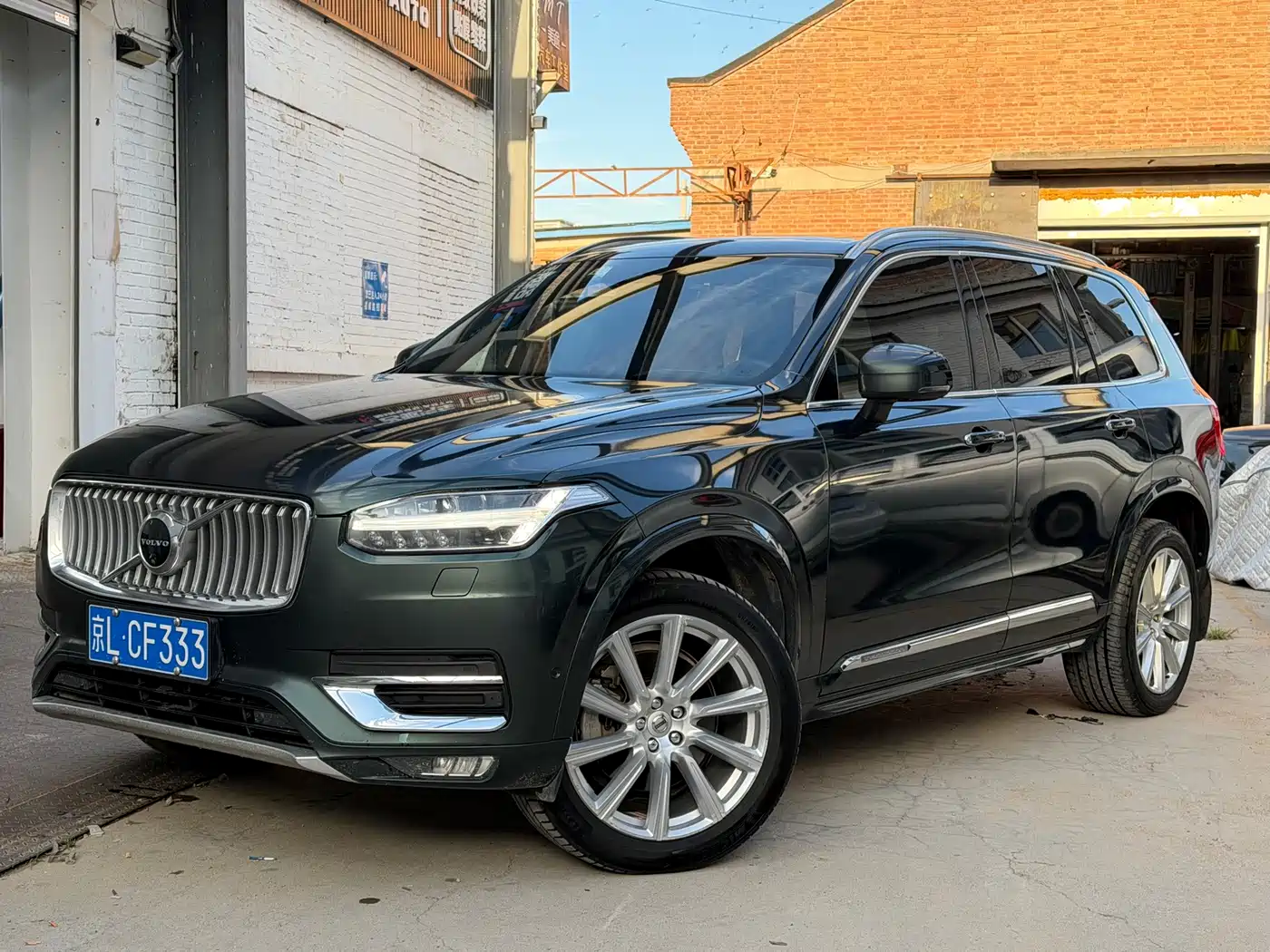
At a glance
- The Xc90 is a premium SUV offered in five- and seven-seat layouts, suited to family, executive and shuttle use.
- The export-visible range is petrol-based, covering T5, T6, B5 Smart and B6 Smart variants rather than a battery-electric portfolio.
- Current vehicle price and availability must be read from each live listing; year, trim, condition and Incoterm materially change the quote.
- Chinese-market cars are commonly left-hand-drive, so right-hand-drive buyers need destination-specific confirmation before ordering.
- China V or China VI labels describe source-market emissions categories and do not replace destination-country homologation.
Why the Volvo Xc90 matters for export markets
The Volvo Xc90 occupies a practical middle ground in the premium SUV market: it combines Scandinavian restraint with a high seating position, generous luggage capacity and optional seven-seat flexibility. That makes it relevant to overseas dealers serving families, executive transport and mixed corporate fleets rather than buyers seeking a compact crossover. Its understated design also ages more gracefully than some more assertive luxury rivals. For export channels, that combination supports a clear use case: carry passengers and equipment without moving into a full-size body, while retaining the safety-focused brand proposition buyers expect from Volvo.
Global demand for the Xc90 is supported by its ability to look premium without the visual bulk of the largest SUVs, while still offering the cabin and cargo versatility many markets expect from a premium family vehicle. The 5-seat versions suit markets where a third row is rarely needed; 7-seat versions suit larger families, shuttle operators and chauffeur fleets. Volvo's reputation for restraint and safety also helps the model occupy a less conspicuous position than some German premium SUVs. That makes trim and seating configuration more important than badge alone.
Export demand is not one market but many: importers compare right-hand-drive and left-hand-drive versions, petrol efficiency, emissions approval, parts support and the ability to replenish a model line from China. A buyer seeking a Volvo Xc90 for export should therefore start with destination rules and customer use cases, not assume that every Chinese-market trim is globally interchangeable. The live catalogue is best treated as a starting point for unit-level comparison, followed by document and homologation checks. This prevents an attractive vehicle description from becoming an unsellable import after arrival.
- Premium SUV, not full-size bulk.
- Five- or seven-seat layouts.
- Local approval follows local rules.
Model range, trims and powertrain variants: how the lineup is structured and how to choose
The lineup shown in the export channel is structured around T5, T6, B5 Smart and B6 Smart versions, with naming that combines an engine family with a grade of equipment and refinement. Seat configuration is a separate decision: Momentum and several other grades appear as five-seaters, while many trims are offered as seven-seaters. Buyers should compare the complete listing name rather than assuming that a badge determines seating, safety equipment or market origin. Model-year differences can also change standard equipment and the exact homologation package. That makes a trim-by-trim specification sheet essential before placing an order.
The Xc90 range represented here is petrol-based rather than a battery-electric portfolio. T5 and T6 denote the more conventional powertrain families, while B5 and B6 Smart versions belong to Volvo's electrified-assistance family and should be checked for their exact hybrid architecture. Across these versions, the typical mechanical package is a petrol engine, an automatic transmission and four-wheel drive. There is no conventional traction-battery driving range to quote, so fuel consumption and range should be assessed as petrol vehicle metrics rather than EV figures. The live listing should confirm the model-year specification.
For a buyer choosing between variants, T5 and B5 Smart are generally the efficiency and cost focus, while T6 and B6 Smart point toward stronger performance and higher equipment expectations. That is a useful starting hierarchy, not a substitute for checking output, torque, fuel-consumption ratings and option content for the exact model year. Compare also whether the second row is required, because five-seat versions can offer easier third-row removal and more usable rear cargo space. For fleet buyers, durability, parts availability and residual demand in the destination are often more valuable than a cosmetic trim difference.
- T5/B5: efficiency-led choices.
- T6/B6: performance-led choices.
- Five seats prioritize cargo flexibility.
New vs used Volvo Xc90: how export inventory is structured and how buyers choose
Chinese export supply for the Xc90 is centered on factory-new vehicles, including older and newer model generations and a range of trims. A used Volvo Xc90 can still be suitable for some overseas buyers, but it is not interchangeable with a new unit: age, mileage, service history and prior ownership can affect import eligibility, maintenance exposure and resale value. Buyers should describe their requirement as either a current factory configuration or an inspected used vehicle, rather than assuming a single “used” label provides enough information to support a sound purchase decision.
New vehicles are usually easier to compare because trim, model year and factory specification can be aligned with current destination requirements. They also reduce immediate wear concerns and can simplify initial presentation to customers. However, “new” does not mean homologated, export-approved or mechanically identical across markets. A buyer should still check production date, VIN, option list, emissions documentation and whether the vehicle has been used as a demonstrator or display unit. Ask for evidence rather than relying on the listing category alone, especially if vehicles will be sold under warranty.
A used Xc90 can make economic sense for a buyer with a defined budget and a clear maintenance plan, particularly where a newer import is disproportionately expensive after tax and freight. The trade-off is uncertainty: compare mileage against age, inspect for wear, check service records, confirm recalls and outstanding faults, and review whether replacement parts remain available. A used vehicle imported for resale also needs transparent condition grading and a history that can be transferred to the buyer. Treat any seller's “rare trim” claim as a reason for more verification, not a substitute for inspection.
- New: confirm exact factory specification.
- Used: inspect mileage and history.
- Check age-based import eligibility.
How export pricing works: the factors behind a live listing price, and how to read one
An export price is not a fixed rate for the Xc90 name. It is generated from the unit's model year, trim, powertrain, seating layout, production condition and the commercial terms selected. For a petrol Xc90, useful comparisons also include mileage for used vehicles, optional equipment, taxes or charges affecting registration, exchange-rate movement, ocean freight, insurance and local handling. A listing that appears cheaper before transport can be more expensive once all landed costs are allocated. Buyers should therefore distinguish the vehicle's quoted export value from the total cost of ownership on delivery.
Incoterms determine where responsibility transfers and what the seller includes in the headline figure. Under an ex-works structure, the buyer arranges collection, export clearance, main carriage and insurance. Under FOB, the seller typically handles delivery to the named port and export formalities, while the buyer arranges onward shipping. CIF and similar terms can add freight and insurance, but they do not remove destination customs, taxes, registration or inland delivery. Read the full quotation because two listings with similar vehicle descriptions may include different scopes of service.
To read a live Xc90 listing correctly, first identify the exact year, trim, seat count, powertrain, VIN and condition. Next compare the quote basis: is it FOB, CIF or another term, and are port charges, documentation and insurance included? After that, request a landed estimate using the destination port, importer of record and delivery location. The live listing is the source for the current per-unit price and availability; historical averages or remembered prices should not guide an export decision. Compare like with like before negotiating.
- Year, trim and condition set value.
- Incoterms allocate shipping responsibility.
- Live listings carry current unit figures.
MOQ, ordering and payment: single units vs consolidating a container
MOQ means the smallest quantity a seller will accept in one transaction, not necessarily the quantity that fits in a container. For buyers looking to buy a Volvo Xc90 from China, a dealer may want one vehicle for a customer, while a distributor may combine several units, different trims or destinations into larger purchasing plans. There is no responsible universal catalogue MOQ to assume. Treat the minimum shown or confirmed for the specific listing as binding, and ask the supplier how mixed configurations and partial allocations will be handled before placing any order.
For a single-unit purchase, specify the trim, model year, seat layout, VIN, condition, destination and required documents before requesting a firm quote. The normal sequence is to agree the specification, pay an agreed deposit, complete identity and payment checks, arrange export release and freight, then settle the balance against the agreed documents. The buyer should confirm whether the vehicle is reserved specifically for that order and what happens if stock, production or shipment changes. The order confirmation should state the exact commercial terms rather than relying on chat messages alone.
Container consolidation can improve freight efficiency and simplify supplier coordination, but it introduces allocation, configuration and payment complexity when several buyers share the movement. A distributor placing a Volvo Xc90 wholesale order may coordinate allocations with smaller dealers; each buyer still needs a clear unit identity, invoice, document set, delivery terms and customs responsibility. Payment should follow a written contract and agreed milestones, with bank charges and currency identified rather than assumed. Independent inspection before final payment is especially valuable for an unfamiliar market or a high-value consolidated shipment.
- MOQ is confirmed per listing.
- Lock specification in writing.
- Consolidation still needs unit allocation.
Shipping, homologation and market compliance caveats: LHD/RHD and import rules by country
Moving an Xc90 overseas involves more than booking a vessel. Depending on the vehicle dimensions, port handling capacity and consignor preference, a dealer may use roll-on/roll-off, container or breakbulk transport. The importer must define the origin and destination terminals, file the export and import documents, arrange customs brokerage, obtain cargo insurance and coordinate delivery after clearance. Roll-on/roll-off is often practical for vehicles, but container or breakbulk options may be appropriate depending on packing restrictions and equipment availability. Shipping time depends on route, sailing schedules, port congestion and handover milestones.
Steering configuration is one of the most important market-fit checks. Vehicles assembled for China are commonly left-hand-drive, so a buyer for a right-hand-drive market should not assume that every Chinese listing is already suitable. Some suppliers may offer market-specific production or a documented conversion, but conversion affects homologation, safety inspection, warranty, parts consistency and resale value. Confirm the VIN, steering position, pedal arrangement, lighting equipment and local type approval before paying. For a right-hand-drive market such as the UK, Australia or Japan, ask for evidence that steering and equipment match local approval. A right-hand-drive order may also carry a longer or more complex production and shipping lead time for that market.
Import rules are market-specific even when two vehicles share the same model and trim. China V or China VI labels on a listing describe the source-market emissions category, not automatic approval in the destination country. The importer may need a Certificate of Conformity, VIN and plate documents, customs declaration, proof of origin, tax payment and evidence that the model meets local emissions, safety and equipment rules. Duties, tax treatment, registration age limits and used-vehicle restrictions can change the economics, so obtain a broker's written assessment before committing to the vehicle.
- Choose freight mode by logistics.
- Confirm steering side before payment.
- Validate local homologation and taxes.
- Check VIN-specific parts support.
Who should buy the Xc90 — and who should pick a different vehicle
The Xc90 is a strong candidate for overseas dealers with customers who want a premium badge, comfortable long-distance seating and the option of seven seats without moving to a full-size luxury SUV. It is especially relevant to family importers, airport and executive transport operators, hotels with shuttle demand and corporate buyers that value a calm, spacious cabin over aggressive styling. The five-seat format can suit markets where a third row has little practical value. For a wholesale programme, it also helps to model demand by body style and seating rather than by a single prestige badge.
It is less suitable for buyers whose brief prioritizes the lowest acquisition cost, maximum cargo efficiency, electric zero-emission operation or a compact footprint. A used example may suit a lower-risk budget, but a high-mileage XC90 can still carry premium ownership costs in fuel, tyres, insurance and maintenance. For urban fleets with frequent short trips, a smaller premium crossover or a hybrid may be more efficient. Dealers should compare total operating cost and residual demand rather than copy the Xc90's image into a segment where it does not fit economically.
Before committing, define the target market, customer profile and operating conditions. Confirm whether local driving side, fuel availability, servicing capability and parts lead time support the model. If the vehicle will be sold under a warranty or repackaged as a long-distance tourer, factory condition and documented history are more important than the newest badge. On the other hand, if a buyer needs immediate delivery, low running cost or confirmed right-hand-drive availability, the Xc90 may be less practical than a locally sourced alternative. The right choice follows from a written brief, not brand image.
- Best for premium family and fleet use.
- Weaker for lowest-cost or EV briefs.
- Confirm fuel, service and parts support.
Main rivals and how the Xc90 compares
In the premium SUV segment, the Xc90's most relevant rivals are the BMW X5, Mercedes-Benz GLE and Audi Q7, rather than smaller luxury crossovers. All three can offer a premium cabin, strong road presence and seven-seat configurations on selected versions, while the XC90 differentiates with restrained Scandinavian design and a reputation for safety-focused engineering. The BMW X5 is a close alternative for buyers who prioritize a broad global dealer network and a broader selection of performance variants. Your choice should turn on availability, equipment, fuel use and the landed cost in your own market.
The Mercedes-Benz GLE is the more directly family-focused comparison, especially where five- and seven-seat layouts, generous cargo volume and a polished highway environment influence the brief. It may appeal to buyers who want a more conventional luxury-SUV presentation or a broader selection of rear-wheel-drive versions, depending on the destination market. Against the Xc90, the GLE often presents a different design and brand character, so the comparison should focus on total cost, option content and aftersales support rather than badge image. A test drive and a back-to-back equipment sheet can expose differences that photographs obscure.
The Audi Q7 competes through a spacious, more technical cabin and a design that some fleets may prefer. It also gives importers a strong alternative in the same broad premium SUV tier, but buyers should compare standard safety and convenience equipment carefully because option packaging can alter value. The Xc90 may be the better fit for a distributor seeking a distinctive European design with strong family credentials. Neither model is automatically cheaper after freight, duty, tax and dealer preparation. Compare locally homologated versions, service costs and expected resale demand before committing.
- BMW X5: performance-led alternative.
- Mercedes-Benz GLE: family-focused alternative.
- Audi Q7: technical, spacious alternative.
Live Volvo Xc90 export inventory
View all listings →Real units currently on ChinaCarDirect with per-unit asking prices and MOQ. Availability updates live from the catalogue.

How to buy a Volvo Xc90 from China
-
1
Define the destination-market brief
Specify the destination country, driving side, seat count, customer profile, fuel preference and compliance requirements before selecting a vehicle.
-
2
Filter the live XC90 inventory
Compare model year, trim, powertrain, seating, VIN and condition on the live listings, where the current per-unit price and availability are shown.
-
3
Request build and document evidence
Ask for the VIN, production information, complete option list, photographs, emissions documentation and any available service or inspection records.
-
4
Obtain a landed quotation
Request a written quote stating the Incoterm, vehicle price, freight scope, insurance, documentation, destination charges and expected delivery process.
-
5
Confirm MOQ and order terms
State the required quantity and any mixed configurations in the RFQ, then lock the allocation, commercial terms and payment milestones in writing.
-
6
Prepare compliance and freight
Have the destination broker confirm type approval, customs treatment, taxes, registration documents, steering configuration and the appropriate transport method.
-
7
Inspect before releasing final payment
Use an independent inspection where practical, verify the vehicle identity and export documents, and release the balance only against the agreed contractual milestone.
Xc90 vs rivals
| BMW X5 | A closer performance-oriented alternative for buyers who prioritize rear-wheel-drive availability, powertrain breadth or a large international dealer network. The Xc90 may appeal more to those wanting a calmer cabin design, a strong safety reputation and a distinctive European identity, but both should be compared by local-spec equipment and landed cost. |
|---|---|
| Mercedes-Benz GLE | A direct family-SUV alternative, particularly for buyers prioritizing conventional luxury styling, selectable five- or seven-seat layouts and a polished highway environment. The Xc90 distinguishes itself through understated design and family-focused positioning, so the practical comparison should cover equipment, operating costs, parts and expected resale demand. |
| Audi Q7 | A technically oriented premium SUV alternative with a spacious cabin and a design that may suit certain corporate or family customers. The Xc90 has a more restrained Scandinavian identity, while the Q7 may offer a different option mix; compare standard equipment, homologated versions, service costs and landed pricing before choosing. |
Frequently asked questions
How is Volvo Xc90 export pricing determined?
Export pricing is built from the individual vehicle's year, trim, powertrain, condition, option content and the selected trade terms. Freight, insurance, exchange-rate movement, duties and destination charges can change the landed total. ChinaCarDirect's live XC90 listings show the current per-unit quote and availability, which should be used instead of a fixed price guide.
Which engine and range should I choose?
The Xc90 range shown is petrol-based, with T5, T6, B5 Smart and B6 Smart versions. B5 and B6 Smart use electrified assistance, but these are not battery-electric vehicles and have no standard EV driving-range figure; exact engine output, hybrid architecture and consumption depend on model year and trim. Confirm those details on the live listing before ordering.
Is a new or used Volvo Xc90 better for export?
New vehicles generally offer a cleaner configuration history and less immediate wear, while a used XC90 can suit a lower-risk budget if age, mileage, service records and faults are fully checked. Used vehicles may face different import age rules, registration costs and resale expectations. Neither category should be accepted without VIN-level documents and an appropriate inspection.
What is the MOQ for a Volvo Xc90 order?
MOQ is the minimum quantity a seller accepts for a particular transaction and must be confirmed for the listing or quotation. A dealer can ask about a single-unit purchase, while distributors may consolidate several allocations, but there is no universal catalogue-wide rule to assume. State the required quantity and mixed configurations in the RFQ before agreeing a deposit.
What determines shipping time and cost?
Shipping time and cost depend on the origin and destination, sailing or road itinerary, port handling, vehicle size, cargo method, insurance and customs clearance. Congestion and document corrections can add time. Ask for the route, charge inclusions, free-time limits and destination charges in the quotation rather than relying on a generic estimate.
How are spare parts supplied for an exported Xc90?
Parts support depends on model year, trim, VIN and the supplier's stock. Before ordering, request the VIN, expected parts list, packaging method, and lead time or sourcing route for factory and aftermarket components. Also confirm that the parts can be imported and used under the destination vehicle and customs rules.
Is right-hand-drive Xc90 availability guaranteed?
Chinese-market XC90s are commonly left-hand-drive, while some major buyer markets are right-hand-drive. RHD availability must be confirmed for the exact vehicle or production order because a conversion does not automatically preserve factory warranty or homologation. Do not place a standard listing order without written confirmation of steering side and destination-market suitability.
How do I order a Volvo Xc90 from China?
Start with the live XC90 listings, compare model year, trim, seating, powertrain and condition, and then submit the selected unit details through an RFQ. Ask for a written quotation covering Incoterm, MOQ, payment milestones, documentation and shipping scope. After technical and compliance review, approve the contract, arrange inspection and freight, and use the correct importer of record for clearance.
Ready to source the Volvo Xc90?
Send your destination, trim, seating and quantity requirements for a current Volvo Xc90 export quotation.
Request a quote