
Wuling Hongguang Export Buying Guide for Dealers
Plan a Wuling Hongguang export purchase with clear guidance on trims, powertrains, pricing factors, MOQ, shipping, compliance, and live vehicle selection.
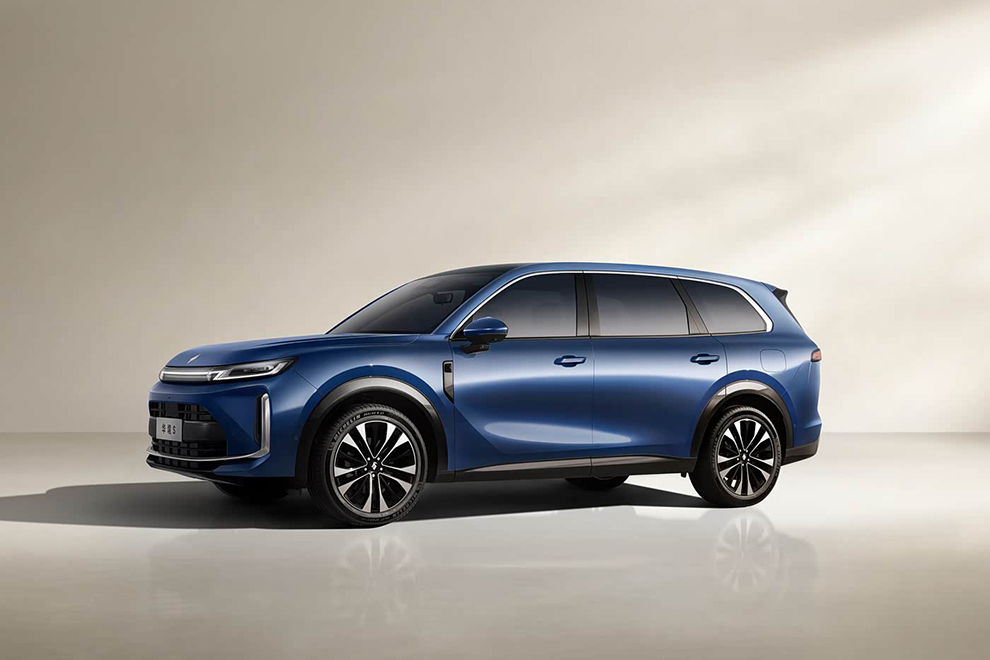
At a glance
- The Hongguang family combines compact people-carrying utility with petrol, battery-electric, and range-extended choices.
- Edition labels such as 200 km and 215 km help identify electric variants, but certified destination-market figures must be verified.
- Used Wuling Hongguang sourcing offers lower-entry-cost potential, making VIN-level inspection and maintenance history essential.
- Single-unit and multi-vehicle purchasing paths are available, but MOQ and payment terms must be confirmed on the selected offer.
- Live export pricing changes with trim, year, condition, battery or engine version, exchange rates, freight, and Incoterms.
- RHD supply, homologation, customs treatment, and local service support are destination-specific and should be checked before payment.
Why the Wuling Hongguang matters for export markets
The Wuling Hongguang matters in export markets because it combines a practical people-carrying layout with a cost-focused Chinese commercial-vehicle approach. Depending on the variant, it may function as a compact MPV, a five-seat commercial derivative, or an electric model. That makes it relevant to distributors, fleet operators, and importers seeking useful capacity without moving into a large premium SUV. The buying case is value for money, but it depends on matching the correct body, powertrain, and homologation package to the destination rather than treating every Hongguang listing as interchangeable in practice.
Global demand is strongest where buyers prioritize affordability, fuel choice, loading flexibility, and manageable dimensions over prestige. Distributors in Southeast Asia, Latin America, the Middle East, and other cost-sensitive markets can evaluate the Hongguang against locally familiar compact MPVs. Wuling is a mass-market Chinese marque, so its export proposition usually rests on configuration choice and operating cost rather than prestige. That is attractive for a first China import program, provided the importer has a realistic plan for parts, service, and destination compliance. A one-unit test can be more informative than a large speculative shipment.
The model family also creates a sourcing advantage for buyers who need several body or energy choices under one model name. A dealer can compare petrol, battery-electric, and extended-range options instead of committing to a single import program. However, the breadth creates a documentation risk: model years, edition names, battery chemistry, seating, and emissions descriptions may differ across sources. Before ordering, confirm the VIN-level specification, title documents, service history, and destination eligibility. A Wuling Hongguang for export decision should therefore rest on the exact vehicle, not the badge or a generic model photograph.
- Match body style to operating duty.
- Use model breadth for targeted sourcing.
- Validate every VIN against destination rules.
Model range, trims and powertrain variants: how the lineup is structured and how to choose
The combustion-engine branch includes Hongguang and Hongguang S derivatives with 1.2-litre, 1.4-litre, and 1.5-litre engines appearing in the range. Manual transmissions are evident on several petrol listings, while other versions must be checked individually rather than assigned the same gearbox. Buyers should not infer one standard drivetrain for the entire family; the live listing must confirm engine, transmission, seating, drive configuration, and emissions designation. For fleet use, compare the 1.5-litre versions separately from the smaller engines, but base the decision on actual load, route, maintenance capability, and local fuel availability.
The battery-electric branch is organized around named editions, including Macaron, Youth, Advanced, Freedom, Enjoyment, and GAMEBOY variants. Edition labels include 200 km and 215 km, while lithium iron phosphate chemistry is stated for many trims; some entries also identify nickel-manganese-cobalt batteries. These labels help narrow a search, but they do not replace the certified range, battery capacity, motor output, charging method, and warranty applicable to a destination market. Ask for the exact battery and homologation documents, especially when several legacy and current edition names appear within the same model family.
Buyers comparing Wuling Hongguang specs should treat range-extended versions as a separate decision layer: a listing may be titled as a 50KM extended-range hybrid, combining an electric driving mode with a combustion engine rather than a battery-electric vehicle. That arrangement can suit operators wanting electric travel with backup propulsion, but the meaning of the 50KM label must be verified against the test procedure and destination rules. The practical comparison should cover electric range, fuel consumption, charging access, payload, and serviceability. Do not treat the edition label as a promise of real-world range or compare it directly with a different cycle-rated BEV figure.
- Confirm exact powertrain and range.
- Verify 200 km and 215 km labels.
- Check chemistry, warranty, and homologation.
New vs used Wuling Hongguang: how export inventory is structured and how buyers choose
Export inventory for the Wuling Hongguang is structured around individual used vehicles spanning older petrol derivatives and newer electric or extended-range versions. New supply may be sourced separately from domestic dealer channels, so availability changes by trim and origin; buyers should not assume that a used listing and a factory-new unit follow the same commercial terms. Classify every candidate by model year, generation, body style, powertrain, trim, mileage, and condition. For Wuling Hongguang wholesale planning, group comparable vehicles rather than averaging unrelated editions, because their maintenance and depreciation profiles can differ.
For buyers searching used Wuling Hongguang stock, purchase price is only one part of a lower total-cost plan. Inspect body structure, paint, glass, welds, panel gaps, chassis points, and underbody corrosion; then verify the VIN, production date, title documents, odometer, and service records. For petrol cars, request a cold start and checks of fluids, belts, brakes, and emissions equipment. For battery models, ask for a state-of-health report, charge test, battery warranty history, and evidence of collision or water-ingress repair. Independent inspection is especially valuable because trim badges reveal little about condition.
Factory-new Hongguang units are easier to describe because configuration, warranty, and delivery history are clearer, but they expose the importer to immediate depreciation, specification uncertainty, and potentially longer sourcing negotiations. Used units may offer a lower entry cost and broader availability, yet require stronger inspection, maintenance planning, and residual-value assumptions. The right choice depends on the route: a high-utilization fleet can justify a newer vehicle when uptime matters, while a low-mileage distributor may prefer newer used stock. Compare total ownership cost covering purchase, freight, tax, insurance, energy, maintenance, downtime, and resale over the holding period.
- Separate petrol, BEV, and range-extended stock.
- Use independent inspection for used vehicles.
- Compare ownership cost, not entry price.
How export pricing works: the factors behind a live listing price, and how to read one
A Wuling Hongguang export price guide should begin with vehicle identity: model year, generation, body configuration, trim, engine or battery version, mileage, and condition. A late electric edition with a different battery chemistry is not directly comparable with an older petrol derivative, and a repaired used car should be priced differently from a documented one. Equipment, ownership history, paint condition, and the availability of original keys and service records can also affect a seller's expectation. Currency movements matter because the Chinese vehicle cost is converted into the buyer's currency before final transaction terms are settled.
After the vehicle price, logistics can move the total materially. Ocean freight, container or roll-on/roll-off handling, insurance, port charges, inland transport, destination duties, taxes, registration, and broker fees may sit outside the displayed listing. Incoterms determine where responsibility and cost transfer, but they do not remove the importer's need to budget destination charges. For electric vehicles, battery transport rules, charging restrictions, and carrier procedures may affect routing and acceptance. Read the listing scope carefully and ask whether the quote ends at the Chinese port, includes export clearance and ocean freight, or reflects a broader delivered arrangement.
To read a live listing fairly, record the unit identifier, VIN or chassis number when available, year, exact edition, powertrain, battery chemistry or engine, transmission, seat count, odometer, condition notes, and repair history. Then ask for a written quotation tied to that same unit, including currency, payment stages, validity period, documentation, inspection rights, and Incoterm. Compare only equivalent vehicles and maintain a landed-cost worksheet showing which costs the seller controls and which are imposed locally. Exact price and availability must come from current ChinaCarDirect live inventory rather than an old article or cached comparison.
- Compare equivalent year, trim, and condition.
- Separate vehicle cost from landed charges.
- Request a written unit-specific quotation.
MOQ, ordering and payment: single units vs consolidating a container
MOQ on a Wuling Hongguang offer depends on how the seller structures that particular transaction. A live vehicle listing may be available as a single-unit purchase, while a multi-vehicle or factory-fresh program can carry a different minimum. Confirm the quantity condition attached to the chosen SKU instead of assuming a catalogue-wide rule. For a distributor, a small pilot shipment can reveal demand and parts consumption before committing to a container. Consolidating compatible units may improve freight efficiency, but mixed body styles, powertrains, and destination requirements can complicate loading, customs, and onward distribution.
A sound ordering sequence starts with specification lock, then commercial terms, then payment. Ask the seller to repeat the exact vehicle configuration and attach photographs, documents, inspection evidence, and any promised repairs to the order summary. Agree the deposit, balance trigger, inspection window, documentary release conditions, and remedy for a material mismatch. For used units, the balance should remain linked to satisfactory inspection and verified documents. The buyer should also decide who arranges export declaration, terminal handling, booking, insurance, and destination clearance so responsibility does not sit between dealer, freight forwarder, and broker.
Payment risk is controlled through sequencing and evidence, not by assuming every transfer is equally secure. Confirm the legal seller, invoice, bank details, currency, and who bears banking or platform charges. International wires, letters of credit, and other methods carry different costs and control levels, so select one that reflects the transaction value and protections available in the written agreement. Record refund triggers for failed inspection, wrong specification, missing documents, or inability to export. For larger Wuling Hongguang wholesale orders, use staged payments tied to independently defined milestones rather than full prepayment without safeguards.
- Confirm MOQ for each offer.
- Link final payment to inspection and documents.
- Assign logistics duties in writing.
Shipping, homologation and market compliance caveats: LHD/RHD and import rules by country
Container versus roll-on/roll-off shipping is decided after confirming dimensions, weight, axle position, and cargo-safety requirements. A vehicle must be secured, protected from movement and moisture, and accompanied by the correct export and customs documents. For battery-electric or range-extended vehicles, battery chemistry, state of charge, dangerous-goods declaration, and carrier acceptance policy must be checked before booking; a maritime route can take longer than road or rail options. Dealers should also understand that battery equipment may require special handling, separate approvals, or restricted service at the destination, so the transport plan begins before payment is released.
Most Chinese-built vehicles are supplied in left-hand-drive form, so right-hand-drive availability is not automatic. A destination requiring RHD should be checked against the live listing before inspection, because converting an LHD vehicle can involve steering, controls, safety systems, wiring, and certification work that changes the vehicle from the one originally inspected. The safest route is a factory RHD example or a locally approved conversion by a competent workshop, followed by local type approval. Never assume that steering-wheel location alone makes a vehicle roadworthy; registration, insurance, lighting, emissions, and equipment rules must all be satisfied.
Import rules are country-specific and can determine whether a Hongguang is admissible before price becomes relevant. Check VIN and emissions descriptions, type approval, customs classification and value, duty or tax treatment, age restrictions, insurance, and local safety or environmental standards. Electric models may also require approval of charging connectors, battery documentation, software features, or road-use restrictions that differ from China's. Obtain a written local broker or authority view before contracting, then ensure the exporter provides consistent documents for the exact VIN. Certification is destination-specific, and a Chinese compliance label alone does not guarantee registration abroad.
- Verify RHD before inspection or deposit.
- Check carrier battery rules before booking.
- Confirm type approval and customs treatment.
Who should buy the Hongguang — and who should pick a different vehicle
The Hongguang best suits importers and fleet buyers who value packaging, purchase economy, and a choice of energy formats over premium refinement. It can suit last-mile operators, hotel and airport shuttles, small delivery fleets, and family-transport businesses that need flexible seating and cargo space. Petrol derivatives are a practical option where charging infrastructure is limited and workshops understand combustion vehicles. BEV or range-extended versions become more credible where electricity is accessible, duty treatment favors them, and the operator can manage battery warranty and charging requirements at the point of use.
It is a weaker fit for buyers whose priorities are premium cabin quality, high-speed motorway refinement, advanced driver assistance, or a plug-and-play RHD model supported by a mature local dealer network. An electric version also needs scrutiny if the route includes remote travel, extreme heat, cold, flooding, or unreliable charging and the operator cannot assess battery condition. Do not choose a commercial-derived Hongguang for premium executive transport without evaluating noise, finish, seating comfort, and luggage capacity. In those cases, a newer mainstream MPV or established local-market model may reduce operational and resale risk.
A disciplined buyer should pilot the proposition rather than infer demand from a catalogue alone. Start with the smallest practical order or one carefully selected vehicle, then monitor delivery preparation, parts delays, charging availability, fuel use, workshop hours, and uptime. Keep a second-source plan and avoid mixing too many trim families before demand is proven. For fleet procurement, calculate cost per seat or kilometre and include residual value only after checking local used-market evidence. The strongest case for the Hongguang is an operator who can exploit its configuration flexibility while actively managing compliance and after-sales execution.
- Prioritize acquisition cost and usable capacity.
- Match energy format to route and charging.
- Pilot before scaling a mixed fleet.
Main rivals and how the Hongguang compares
The Suzuki Ertiga is a useful benchmark because it is also a value-oriented compact MPV sold in several international markets. It benefits from stronger recognition in some destinations and, depending on the local market, may offer a more familiar parts and service proposition than a China-only Hongguang. The Hongguang can compete through direct China sourcing and a broader mix of petrol and electrified configurations in the family. For an importer, compare seating and cargo dimensions, engine or battery data, equipment, warranty, parts access, and landed cost rather than assuming badge or origin settles the decision.
The Mitsubishi Xpander competes from a crossover-leaning MPV position, with a design and market presence aimed at buyers wanting SUV-style presentation and flexible family use. It may be more reassuring for distributors with established Mitsubishi after-sales relationships, while the Wuling offers direct access to multiple Hongguang energy variants. That advantage is meaningful only if freight, homologation, spare-parts planning, and residual-value assumptions are included. In both cases, test the actual trim, because equipment and safety content can vary more than the model name suggests in each market.
The Baojun 730 is a close domestic Chinese comparison for a budget-minded compact MPV buyer, and it shares Wuling's manufacturing and distribution context. Its familiarity with Chinese fleet operators can make specification comparison straightforward, while the Hongguang export inventory includes petrol derivatives and newer electric or range-extended listings. That does not make one mechanically superior. Compare the vehicle's platform details, dimensions, seating flexibility, powertrain, parts interchange, certification, and local dealer coverage. In practice, the better choice is the model with the stronger compliant VIN and service plan, not the one with the newer-sounding trim.
- Suzuki Ertiga: familiar local benchmark.
- Mitsubishi Xpander: crossover-style rival.
- Baojun 730: close Chinese comparator.
Live Wuling Hongguang export inventory
View all listings →Real units currently on ChinaCarDirect with per-unit asking prices and MOQ. Availability updates live from the catalogue.
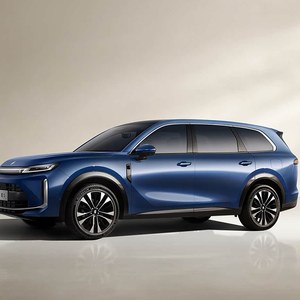
Used Wuling Rongguang Wuling Hongguang S 2022 1.2 Manual 5-Seater Version
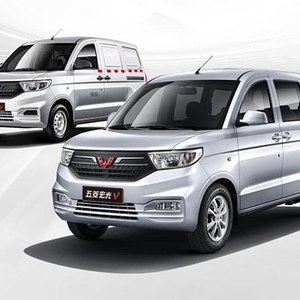
Used Wuling Hongguang V 2022 1.5L Jingqu Edition Electric-Assist LAR
How to buy a Wuling Hongguang from China
-
1
Define the operating requirement
Specify the destination, passenger or cargo duty, route, seating, fuel or charging access, and RHD requirement. This prevents unsuitable body and powertrain variants from entering the shortlist.
-
2
Shortlist live vehicles
Open the ChinaCarDirect live Hongguang inventory and compare equivalent vehicles by year, trim, body, powertrain, condition, and mileage. Record the identifier of every unit you intend to compare.
-
3
Request VIN-level evidence
Ask for photographs, title documents, service history, odometer evidence, inspection results, and battery reports where applicable. Confirm that the seller will supply documents matching the selected chassis or VIN.
-
4
Validate destination compliance
Have a local broker or compliance specialist check type approval, customs treatment, emissions, safety requirements, and charging or RHD rules. Do not rely solely on a Chinese compliance label.
-
5
Build the landed-cost quotation
Request a written quote that identifies the vehicle, Incoterm, freight, insurance, handling, documentation, and any excluded destination charges. Keep these costs separate so exchange-rate and market changes remain visible.
-
6
Lock commercial terms
Confirm MOQ, deposit, balance trigger, inspection period, document requirements, refund remedies, and shipment responsibility in writing. Use milestone-based payment terms, particularly for used vehicles or larger wholesale orders.
-
7
Inspect, release, and ship
Complete any agreed inspection, verify the VIN and documents, and release the balance only against the contractual conditions. Monitor pre-shipment preparation, secure loading, export clearance, and destination arrival.
Hongguang vs rivals
| Suzuki Ertiga | The Ertiga is a familiar compact-MPV benchmark in markets with a strong Suzuki dealer network. Hongguang offers direct China sourcing and multiple energy formats, while Ertiga may provide better local parts familiarity; compare dimensions, warranty, equipment, and landed cost. |
|---|---|
| Mitsubishi Xpander | The Xpander competes with a crossover-style MPV format and established Mitsubishi after-sales presence. Hongguang is relevant for buyers seeking a different sourcing model and configuration flexibility, but RHD availability and local service planning remain decisive. |
| Baojun 730 | The Baojun 730 is a close Chinese compact-MPV comparison with similar budget-market positioning. Choose according to the compliant VIN, powertrain, seating flexibility, parts plan, and service support rather than trim branding alone. |
Frequently asked questions
How is the Wuling Hongguang export price determined?
A live price is built around the exact unit's year, trim, powertrain or battery version, mileage, condition, equipment, and history. Exchange rates, freight, insurance, port handling, destination taxes, and the selected Incoterm can change the landed total. Check current ChinaCarDirect Hongguang listings for the per-unit asking price, then request a written, unit-specific landed quotation.
Which Wuling Hongguang powertrains and range figures are available?
The family includes petrol versions with 1.2L, 1.4L, or 1.5L engines, battery-electric editions labeled 200 km or 215 km, and a 50KM range-extended hybrid listing. These are edition or listing labels, not automatically destination-certified real-world ratings. Confirm battery capacity, motor output, charging, test cycle, and usable range for the exact vehicle.
Should I buy a new or used Wuling Hongguang?
Used vehicles can reduce entry cost while offering broader model-year choice, but they require stronger inspection and maintenance planning. Factory-new vehicles provide clearer configuration and delivery history but introduce depreciation and specification uncertainty. Compare purchase, freight, operating, downtime, and resale costs over the intended holding period.
What is the minimum order quantity for a Wuling Hongguang?
MOQ depends on the individual seller and offer rather than on the model name alone. A live vehicle listing may accept a single-unit purchase, while a multi-vehicle or factory program may have its own minimum. Confirm the quantity condition in the selected listing and written quotation before arranging payment.
How long does shipping take and what affects the cost?
No single delivery time or freight charge applies to every shipment. Vehicle dimensions and weight, battery rules, origin and destination ports, carrier capacity, documentation, customs clearance, insurance, and inland transport all affect the schedule and landed cost. The quotation should state the Incoterm and clearly identify included and excluded charges.
Are spare parts available for the Hongguang?
Parts availability depends on the destination, model generation, and whether a local dealer supports the imported configuration. A China-specific trim may require special-order components for switches, body panels, electronics, or battery-related items. Before a bulk order, obtain a parts list, local support commitment, and a stocking plan for the expected service volume.
Is a right-hand-drive Wuling Hongguang available for export?
RHD availability is not automatic because most Chinese-built vehicles are supplied in left-hand-drive form. Check the live listing before inspection or deposit, and prefer a factory RHD example where available. Converting an LHD vehicle can affect steering, controls, safety systems, wiring, and local approval, so it should be completed and inspected by a competent workshop.
How do I order a Wuling Hongguang from China?
Start with the live listings, shortlist an exact vehicle, and request its documents, photographs, inspection evidence, and a written landed quotation. Confirm destination compliance, MOQ, payment milestones, inspection rights, and shipping responsibilities before paying a deposit. Release the balance only after the contractual inspection and document conditions are satisfied.
Ready to source the Wuling Hongguang?
Send your destination, powertrain, quantity, and budget criteria to ChinaCarDirect for a current Wuling Hongguang export quote.
Request a quote