
Wuling Hongguang V Export Buying Guide for Dealers
Buy a Wuling Hongguang V from China with practical guidance on trims, 1.5L powertrains, used-unit checks, export pricing, MOQ, shipping, and homologation.
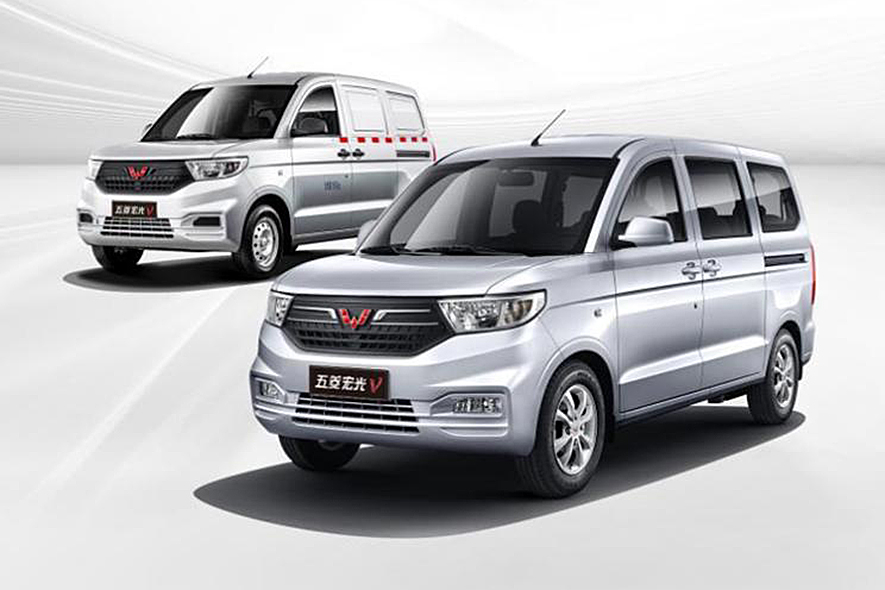
At a glance
- The Hongguang V is a 1.5L gasoline compact MPV and utility van suited to light passenger and cargo work.
- Five- and seven-seat derivatives and windowed commercial descriptions give buyers room to match local duties.
- Trim names combine equipment, steering, emissions, and body identifiers, so each unit needs document-level verification.
- Export pricing must be normalized for condition, preparation, freight, duties, taxes, insurance, and Incoterm.
- Homologation, steering configuration, and parts support should be confirmed before shipment.
Why the Wuling Hongguang V matters for export markets
The Wuling Hongguang V occupies a practical middle ground between a passenger MPV and a light commercial van. Its overseas relevance comes from useful capacity in a manageable package, rather than performance or advanced electrification. The range includes windowed and utilitarian body descriptions, allowing distributors and local converters to match a people-carrying derivative or cargo-oriented version to the job. That flexibility suits markets where one vehicle must cover several commercial roles without specialist infrastructure. It is better assessed as an adaptable light MPV platform than as a substitute for a large family van.
Demand for this segment is driven by operating economics: buyers need acceptable purchase cost, simple fuel service, adequate passenger or cargo room, and serviceability without a large specialist network. The Hongguang V’s compact-van positioning can meet those needs, although imported examples are not automatically cheaper after freight, duties, taxes, homologation, and local mark-up. Its strongest export case is in high-utility applications—airport shuttles, hotel runs, last-mile delivery, light trades, and mobile services—where utilization is high and capacity matters more than refinement. Test the business case against local registration and duty rules before committing.
For overseas procurement, the model’s importance is not that one specification works everywhere. It is that a buyer can start with a defined seating and body requirement, then match the closest Chinese-market derivative and adapt it for the destination market. The right decision depends on local fuel availability, road conditions, passenger rules, cargo security, and parts support. That makes disciplined listing review more valuable than chasing a headline configuration: confirm the actual vehicle, its documents, and its suitability before treating the Hongguang V as a fully road-ready fleet asset locally.
- Adaptable compact utility platform.
- Passenger and windowed-van variants.
- Utilization drives export demand.
Model range, trims and powertrain variants: how the lineup is structured and how to choose
For Wuling Hongguang V specs, start with the powertrain and seating choices that actually vary. The range represented here centers on 1.5-litre gasoline engines. Manual transmissions are shown, and the catalogue includes five-seat and seven-seat configurations, so the first selection decision is not battery range but capacity and drivetrain use. Buyers should treat engine output, tax class, fuel consumption, and service intervals as model-year and market-specific items to confirm. The useful comparison is between a smaller five-seat passenger derivative and a seven-seat or commercial derivative that can carry people, equipment, or mixed loads. Never assume Chinese domestic ratings translate directly into the destination market.
Trim labels require careful translation rather than a simple base-to-top hierarchy. Names such as Base, Standard, Enjoyment, Jingqu, Refreshed Enjoyment, and Commercial identify equipment and body packages, but they are not a universal international grade ladder. LAR designations appear across several records, as do enclosed-window configurations and versions with hydraulic or electric power steering. Some versions are marked China VI. Because a label may combine seating, body, steering, and emissions details, ask for a complete written specification and compare documents rather than ranking trims by translated name alone when shortlisting.
Choose by operating scenario. For fleet passenger work, prioritize the required seat count, visibility, ventilation, safety equipment, and whether enclosed windows are needed for local licensing. For cargo conversion, prioritize load-floor length, payload, tie-down provisions, and body access. For private or executive use, assess noise, ride, finish, air conditioning, and serviceability as more important than fleet-oriented simplicity. Exact dimensions, payload, equipment, emissions documentation, and axle details are not safely inferred from the trim name; request the vehicle specification sheet, measure against the loading equipment, and check it against local rules before ordering.
- Match seats to duty cycle.
- Verify steering and emissions.
- Request dimensions and payload.
New vs used Wuling Hongguang V: how export inventory is structured and how buyers choose
A used Hongguang V can suit a buyer whose priority is a known specification, availability of a basic derivative, or a lower entry point for fleet renewal. The trade-off is that condition, mileage, service history, and remaining life become central to valuation and residual risk. A new vehicle may offer a clearer warranty and delivery pathway where an approved factory variant is available, but it may require specification, homologation, and minimum-order decisions. Neither status is automatically cheaper on a landed basis. Compare the complete acquisition and operating cost before choosing.
ChinaCarDirect’s live search should be treated as a mix of vehicles, with each record carrying its model year, trim, condition, mileage, location, and seller terms. Export inventory can draw on Chinese-market vehicles whose equipment is familiar locally but whose paperwork and configuration may differ from the destination’s homologated version. Rather than infer availability from a broad model page, use the [live Hongguang V listings](https://chinacardirect.com/products?q=Hongguang%20V&brands%5B%5D=41) and filter down to the year, seating, body, steering, and transmission you need. The listing that matches the duty cycle deserves more weight than a generic new-versus-used label.
For a used unit, ask for exterior and interior photographs, odometer evidence, engine and gearbox condition, tyre age, accident or flood indicators, VIN, registration documents, and exact equipment. Compare body markings with the seller’s description, and confirm whether the vehicle is roadworthy in China or awaiting disposal, repair, or export preparation. For a new unit, check whether the seller is the manufacturer, authorised distributor, or exporter, what warranty travels with the vehicle, and whether the promised delivery specification is contractually binding. In both cases, make the description and inspection report part of the order record.
- Condition drives used value.
- Compare exact unit specifications.
- Contract the inspection record.
How export pricing works: the factors behind a live listing price, and how to read one
A Wuling Hongguang V export price guide should treat an export listing price as the starting figure for one vehicle, not the complete cost of importing and operating it. The asking amount can move with model year, trim, engine and transmission configuration, mileage, condition, ownership history, and whether the unit needs repair or preparation. Seller location also matters because domestic transport, storage, documentation, and consolidation can be included or charged separately. Exchange-rate movements affect the foreign-currency view, while destination taxes and tariffs usually remain outside the vehicle price. Compare like with like: condition, specification, and Incoterm must match before two prices are meaningful.
A buyer should read the listing’s price basis, currency, validity, documents, and shipping scope before drawing conclusions. Ask whether the figure covers export clearance, inland handling, loading, ocean or air freight, insurance, terminal charges, and destination charges, or only the vehicle at origin. The same model can have a lower headline amount but a higher preparation cost, so request an itemized pro forma invoice and a separate landed-cost estimate using the proposed Incoterm. Payment terms and the risk-transfer point should also be stated, because identical vehicle prices may carry different obligations.
The most reliable way to establish current figures is to open the [live Hongguang V inventory](https://chinacardirect.com/products?q=Hongguang%20V&brands%5B%5D=41) and request a binding quotation through the RFQ service. ChinaCarDirect shows the current per-unit price, availability, and MOQ on each live listing; use those fields and request an itemized quote for the selected vehicle. Read unit-specific details rather than a remembered average: year, condition, mileage, steering, seat count, and price all matter. Compare three shortlisted units—preferred, acceptable, and fallback—after adding the same freight, duty, tax, insurance, and preparation assumptions. Refresh figures before payment because exchange rates and shipping quotations can change.
- Vehicle price is not landed cost.
- Normalize every quote.
- Refresh figures before payment.
MOQ, ordering and payment: single units vs consolidating a container
MOQ is an ordering condition, not a fixed universal feature of the model. In a Wuling Hongguang V wholesale program, each live listing should state its own minimum, while the inquiry and contract process determines what can be negotiated for a particular unit. A single-vehicle purchase may suit a small importer, test fleet, or local reseller; a larger fleet or distributor may gain better freight economics by consolidating several units. Consolidation should be driven by verified demand and compatible specifications, not by filling a container with difficult-to-sell variants. Ask the supplier to confirm the applicable MOQ and whether mixed trims or years are allowed in one order.
The ordering sequence should be formal: shortlist from live inventory, request the vehicle file and inspection evidence, agree on specification and condition, obtain a pro forma quote, then confirm payment and shipping terms. Reserve the exact unit by SKU or listing reference so a deposit cannot be applied to another vehicle without consent. For a container order, identify each unit by listing ID and record the loading plan, preventing substitutions. The RFQ should specify destination, Incoterm, currency, documentation, inspection, and shipment deadline, allowing the seller to quote a transaction rather than a generic vehicle.
Payment risk increases when instructions change through informal messages or when a buyer is asked to fund a vehicle before ownership, export status, and documents are verified. Use the contract to define the deposit, balance trigger, accepted payment method, cancellation terms, refund conditions, title transfer, and release of documents. Confirm the seller entity, beneficiary name, and vehicle identities against the invoice and registration records. For a consolidation, consider staged payments tied to inspection and shipping documents, and obtain suitable marine cargo insurance for the full insured value. These controls protect both single-unit and container transactions.
- Confirm listing MOQ.
- Reference each unit by SKU.
- Tie payments to milestones.
Shipping, homologation and market compliance caveats: LHD/RHD and import rules by country
Import compliance starts with the destination country, not with the China VI label in the trim name. China VI identifies a Chinese emissions standard for domestic versions; it is not an automatic substitute for local type approval, emissions rules, safety certification, or registration. A commercial MPV may also be classified as a passenger car, van, or light goods vehicle depending on seats, windows, payload, and intended use. Those classifications affect duties, taxes, licensing, and driver or passenger requirements. Before contracting, obtain a homologation assessment from an importer or local authority, using the exact VIN, engine, body, and seating configuration.
Chinese-market examples are commonly configured for left-hand drive, but every unit must be checked. Where right-hand drive is required, ask whether an approved RHD example is available or whether a documented conversion and inspection are legally acceptable; steering conversion is not merely a matter of moving the wheel and can affect safety, warranty, and registration. Local rules may distinguish vehicles designed for private use from commercial transport, and may impose age, emissions, inspection, or equipment limits. Confirm steering position, speedometer units, lighting, mirrors, safety equipment, and language requirements before the vehicle is shipped.
Transport choice follows the commercial plan: enclosed-window passenger derivatives and cargo versions may suit container or specialist vehicle shipping, while roof height, securing needs, and cargo configuration affect vehicle-rack or container loading. Obtain the exact dimensions before booking equipment, and confirm whether the seller provides lashing, export clearance, and loading supervision. Freight cost varies with origin and destination ports, container availability, season, fuel surcharges, insurance, and the service level selected. At destination, plan customs inspection, duty and tax payment, port charges, inland delivery, and local registration. Photograph condition at loading and discharge, and specify the claim window for concealed transit damage.
- China VI is not local approval.
- Verify LHD or RHD.
- Check loading dimensions.
Who should buy the Hongguang V — and who should pick a different vehicle
The Hongguang V is a strong candidate for distributors, shuttle operators, small delivery fleets, hotel and airport transport businesses, and converters serving light commercial users. It is especially useful where a five-seat derivative is adequate, or where seven-seat and enclosed-window options create a better match than a full-size passenger van. The appeal lies in straightforward 1.5L mechanical content, manageable size, and a choice of passenger or utility configurations. A buyer should also have access to basic service capability and a realistic parts plan in the destination market before deployment begins.
It is less suitable for buyers requiring a factory-export version certified for their country, a battery-electric drivetrain, advanced driver-assistance systems, or a premium tourer. It may also be a poor choice where emissions rules exclude the vehicle’s year or configuration, where RHD supply is essential, or where maximum payload and load volume exceed the selected body. Do not buy on capacity alone: check gross vehicle weight, payload, axle limits, towing needs, and local licensing for the intended load. Where requirements are uncertain, a mainstream rival with clearer homologation may reduce operational risk.
A sound buying decision compares total cost per usable seat or tonne-kilometre rather than the vehicle’s headline purchase amount. Build the same operating model for the Hongguang V and each alternative: acquisition and preparation, registration, expected downtime, fuel, maintenance, parts, financing, and residual value. Then stress-test it against the worst realistic diesel price, exchange-rate movement, freight surcharge, or repair scenario. If the Hongguang V still fits the route, payload, and customer-service mission, its flexible body formats can justify the sourcing effort. If not, prioritize certified availability and support over configuration breadth.
- Strong for light fleets.
- Weak for premium EV needs.
- Compare usable capacity.
Main rivals and how the Hongguang V compares
Among the closest international alternatives is the Suzuki Ertiga, a compact seven-seat MPV with a longer-established presence in several export markets. It generally offers stronger brand recognition, more familiar parts and dealer support there, and a clearer expectation for homologated variants, but that position can command a higher acquisition cost. The Wuling Hongguang V competes through lower-cost sourcing potential, a 1.5L manual-centered range, and explicit light-commercial body choices. Ertiga is safer where certification, resale, and service convenience dominate; the Hongguang V is more interesting where operating cost and configurability come first.
JAC Refine M3 is another Chinese-built compact MPV that may compete on seven-seat utility, while DFSK Glory 580 offers a similar people-and-cargo proposition. Both require the same destination-specific checks on homologation, parts availability, and resale support, and trim naming should not be treated as internationally standardized. The Hongguang V’s clearest distinction is its range of base, equipment, windowed, and LAR-labelled derivatives within a familiar 1.5L manual family. A buyer should compare actual load dimensions, safety equipment, warranty, and service parts rather than infer superiority from badge or brochure language alone.
Comparison becomes useful when the buying brief is explicit. Choose the Hongguang V when a local converter needs adaptable body formats, a manual 1.5L vehicle is operationally acceptable, and ChinaCarDirect can provide the necessary documentation and inspection. Choose the Ertiga when established international support and homologated availability materially reduce risk. Compare the JAC Refine M3 or DFSK Glory 580 when their local specifications, approvals, and aftersales network better align with the route. None wins universally: the correct rival is the one that meets the destination’s legal, service, and payload requirements at a sustainable total cost.
- Ertiga: stronger support network.
- JAC M3: similar MPV alternative.
- DFSK Glory 580: direct utility rival.
Live Wuling Hongguang V export inventory
View all listings →Real units currently on ChinaCarDirect with per-unit asking prices and MOQ. Availability updates live from the catalogue.
Used Wuling Hongguang V 2022 1.5L Jingqu Edition Electric-Assist LAR
Used Wuling Hongguang V 2022 1.5L Enjoy Edition Electric-Powered LAR
Used Wuling Hongguang V 2022 1.5L Jingqu Edition Electric-Assist LAR
Used Wuling Hongguang V 2022 1.5L Enjoy Edition Electric-Powered LAR
How to buy a Wuling Hongguang V from China
-
1
Define the destination requirement
Specify the country, passenger or cargo use, seat count, body style, steering position, road conditions, and expected service life. This brief determines which homologation route and inspection process apply.
-
2
Filter the live inventory
Use the Hongguang V listings to identify vehicles matching the required year, trim, body, seating, transmission, condition, and mileage. Compare the exact unit fields rather than relying on the model name alone.
-
3
Request the complete vehicle file
Ask for the VIN, registration documents, equipment list, dimensions, emissions information, service history, condition photographs, and any available inspection report. Reconcile every item with the listing description.
-
4
Normalize the export quotation
Request an itemized pro forma invoice covering the vehicle, export preparation, inland transport, freight, insurance, and stated Incoterm. Separately calculate destination duties, taxes, port charges, registration, and inland delivery.
-
5
Confirm MOQ and reserve the units
Check the MOQ shown on each live listing and ask whether single units, mixed trims, or mixed years can be consolidated. Identify every selected vehicle by SKU or listing reference in the written order.
-
6
Complete the compliance review
Obtain an importer or authority assessment of local type approval, emissions rules, safety requirements, taxation, and passenger or cargo classification. Confirm whether an LHD or RHD configuration is legally acceptable.
-
7
Inspect, ship, and register
Use a pre-shipment inspection, record condition at loading, arrange suitable cargo insurance, and retain customs and shipping documents. Complete destination clearance, payment of applicable charges, registration, and final delivery inspection.
Hongguang V vs rivals
| Suzuki Ertiga | The Ertiga is the stronger choice where international homologation, brand recognition, resale, and established dealer support matter most. The Hongguang V can be more attractive for flexible light-commercial sourcing and operating-cost-focused buyers. |
|---|---|
| JAC Refine M3 | The JAC Refine M3 is a close Chinese-built compact MPV competitor with a similar people-and-cargo proposition. The Hongguang V differentiates through its broader mix of base, equipment, windowed, and LAR-labelled body derivatives. |
| DFSK Glory 580 | The DFSK Glory 580 is a direct budget alternative for buyers prioritizing seven-seat utility and load flexibility. The Hongguang V may offer a more varied commercial-body selection, but both require careful local approval and parts-support checks. |
Frequently asked questions
How is Wuling Hongguang V export pricing determined?
The live price reflects the specific vehicle and is affected by year, trim, configuration, mileage, condition, seller location, export preparation, and exchange-rate movements. It is not automatically the landed cost because freight, insurance, duties, taxes, and registration may be separate. Check the current per-unit price on ChinaCarDirect’s live listings and request an itemized quotation for the selected vehicle.
What engine, transmission, and range does the Hongguang V have?
The export range represented here centers on a 1.5-litre gasoline internal-combustion engine with a manual transmission, in five-seat or seven-seat configurations. Because this is a combustion-powered vehicle, electric battery range does not apply. Confirm the exact powertrain, emissions status, fuel consumption, and service details for each unit.
Is a used Wuling Hongguang V suitable for fleet buyers?
A used unit can offer a practical acquisition route, but condition, mileage, service history, and remaining operating life become central to the decision. A new unit may provide clearer warranty and delivery arrangements where an approved factory variant is available. Compare complete operating costs, not only the vehicle’s acquisition price.
How does MOQ work for a Wuling Hongguang V order?
MOQ is shown for the individual listing and is not a permanent model-wide rule. A small importer may be able to purchase one vehicle, while larger programs may consolidate compatible units for freight efficiency. Confirm the current minimum, mixed-unit rules, payment schedule, and delivery allocation in the written quotation.
What affects shipping time and cost?
Shipping time and cost depend on the origin and destination, transport mode, container or carrier availability, season, fuel surcharges, insurance, port charges, and customs clearance. Exact loading dimensions and lashing requirements also affect equipment selection. Obtain a destination-specific freight quote and include the expected documentary and port-handling stages in the delivery plan.
How are replacement parts sourced?
Parts should be matched by body configuration, engine, steering arrangement, seating, and trim rather than by the Hongguang V name alone. Before ordering, request a parts list and identify a local service partner or China-based supplier able to support common service items. This is especially important for windowed commercial variants and less common domestic trim combinations.
Is a right-hand-drive Hongguang V available for export?
RHD availability cannot be inferred from the model name or a general listing page. Ask whether an approved RHD vehicle is available or whether local rules permit a documented conversion and inspection. Confirm the steering position, safety equipment, lighting, and registration status before paying, because converting an LHD example can affect warranty and legality.
How do I order a Wuling Hongguang V from China?
Shortlist an exact vehicle from the live listings, request its documents and condition evidence, and submit an RFQ with the destination, Incoterm, payment currency, quantity, and compliance requirements. After agreeing on a written quote and MOQ, reserve the vehicle by SKU or listing reference, complete payment under the contract, arrange inspection and freight, then clear and register it locally.
Ready to source the Wuling Hongguang V?
Send your destination, seating and body requirements, and target quantity to ChinaCarDirect for a unit-specific Hongguang V export quote.
Request a quote