
Xiaomi Auto Xiaomi Su7 Ultra: Export Buying Guide
Compare the Xiaomi SU7 Ultra trims, performance, range and export pricing, then learn how overseas dealers verify MOQ, RHD and market compliance.
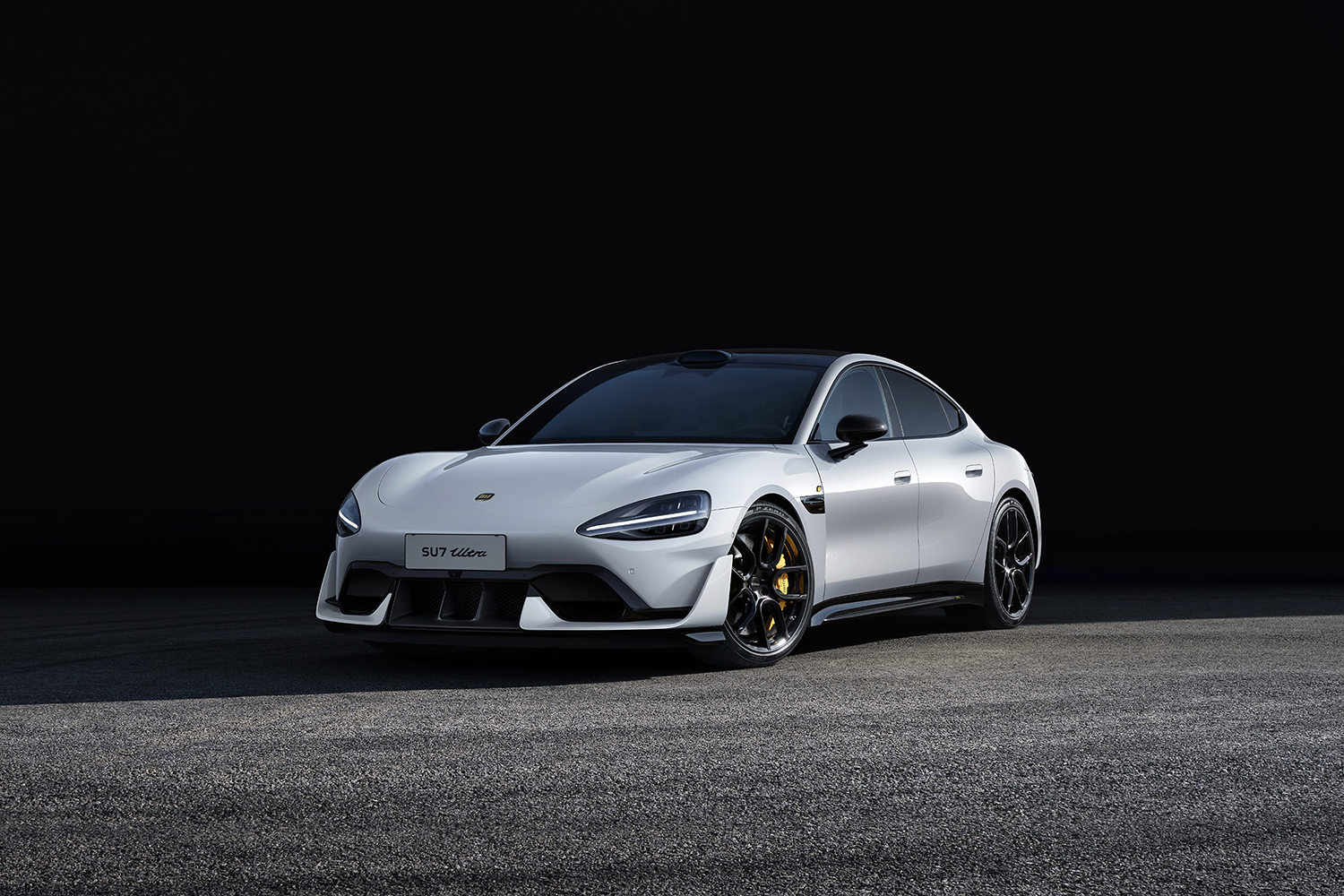
At a glance
- A four-door, dual-motor BEV performance sedan with 1,548 PS and all-wheel drive.
- The standard Model Ultra offers the practical choice; the Nürburgring Limited Edition adds track-focused hardware.
- The 93.7 kWh battery and roughly 630 km CLTC range require destination-specific validation.
- New cars simplify provenance; used examples require battery, accident and service-history scrutiny.
- Current per-unit price, MOQ and availability must be confirmed in live ChinaCarDirect listings.
- RHD configuration, homologation, freight and landed costs should be settled before payment.
Why the Xiaomi Auto Xiaomi Su7 Ultra matters for export markets
The Xiaomi SU7 Ultra sits at the sharp end of the electric performance-sedan market: a four-door car combining supercar-level acceleration with a usable family-car body. For overseas dealers, its value is not simply speed. It is a recognizable halo product from China’s prominent consumer-technology ecosystem, capable of attracting attention in premium showrooms and test-drive events. That distinction matters when a buyer is deciding whether an unfamiliar Chinese marque can support a credible premium position. It also gives importers a way to benchmark software, electric performance and charging claims against established European and American premium sedans.
For fleet and corporate buyers, however, the Ultra should be evaluated differently from a conventional executive EV. Its performance hardware, rear-seat practicality, ride tuning and likely running costs may be less important than duty-cycle suitability, charging access and the ability to service components across borders. The model can make more sense as an ambassador vehicle, executive demonstrator or limited company fleet than as a blanket replacement for every premium sedan. Tax treatment and availability of local charging support can outweigh acceleration in a business case where the buying mandate is efficiency rather than image.
Global interest should not be confused with universal market readiness. The SU7 Ultra is easy to understand as a product, but brand awareness, residual values, parts logistics and dealer support vary by destination. Importers should separate two questions: whether affluent enthusiasts will want the car, and whether the operator can support it responsibly after delivery. The strongest export case is therefore in markets with premium EV buyers, credible charging networks and an importer prepared to invest in after-sales capability rather than merely launch it as an isolated, unsupported showroom project.
- Halo product for premium showrooms.
- Strongest in enthusiast-led channels.
- Charging and service readiness are critical.
Model range, trims and powertrain variants: how the lineup is structured and how to choose
The export-facing lineup is straightforward: a Model Ultra carries the standard production configuration, while a Nürburgring Limited Edition adds a more track-focused package. Both are four-door, four-seat battery-electric performance sedans based on the same core architecture. The distinction is not a basic long-range model versus a smaller battery version; it is primarily standard performance car versus an edition with additional track-oriented equipment, aero work and chassis upgrades. For procurement, that makes the edition choice a mission and appearance decision rather than a routine drivetrain selection. That distinction should be confirmed before discussing commercial terms.
Both versions use a large-capacity battery, dual electric motors and all-wheel drive, with an 800-volt charging architecture. The standard Ultra is normally associated with a 93.7 kWh battery and a CLTC-rated range around 630 km, while published performance figures include 1,548 PS and a 0–100 km/h time of 1.97 seconds. These are stable technical reference points, but CLTC is a Chinese test cycle, so buyers should not treat it as a guaranteed real-world range in their destination climate. Ask for the exact battery, motor and range entries shown in the live listing before signing.
For most buyers, the Model Ultra is the more rational import: it preserves the headline performance while avoiding the cost and complexity associated with a limited, track-focused edition. The Nürburgring version may appeal to buyers with genuine track use or a desire for identifiable show-car hardware, but its aero package can add ownership, storage and insurance considerations. Decide first, then verify the exact trim, wheel, braking, suspension and appearance equipment in the listing and photographs. Do not infer those items from the model badge alone or from a generic photograph.
- Model Ultra: standard production choice.
- Nürburgring edition: track-focused hardware.
- Shared dual-motor, high-voltage architecture.
New vs used Xiaomi Auto Xiaomi Su7 Ultra: how export inventory is structured and how buyers choose
Export supply for the Xiaomi SU7 Ultra is likely to be centered on newer factory vehicles, which makes this model different from mature used-car segments such as sedans that have been exported for decades. A new listing should normally be assessed as a complete, current-production product rather than a depreciated vehicle. If a used listing appears, it represents a niche route and should be evaluated with the same discipline applied to any low-volume performance car. The distinction changes the inspection checklist, the warranty argument and the depreciation assumptions behind the purchase.
Buying new offers the clearest model-year alignment, factory warranty path and documented build history, provided the importer can inspect the car and verify its status before payment. It also reduces uncertainty around prior modifications, battery abuse or accident repair. The trade-off is depreciation and exposure to specification, colour and option changes between production and arrival. For an early-stage model, correct configuration at manufacture can matter more to a buyer than minor cosmetic discounts. That makes the build sheet and VIN-level checks central to any negotiated discount offered at resale abroad.
A used SU7 Ultra requires stronger inspection because the model has a limited ownership history and very little public used-market data may exist in the exporting country. Review the battery state of health, underbody and accident evidence, brake wear, tyre age, software history and every replaced or aftermarket part. Verify that any inspection is independent of the seller and that the warranty remains valid or transferable in the destination country. A lower sticker price does not compensate for unresolved provenance or incomplete service history and supporting documentation before shipment begins.
- New cars offer clearer provenance.
- Used cars require battery and accident checks.
- Depreciation must fit the holding period.
How export pricing works: the factors behind a live listing price, and how to read one
An export price is not a fixed market value for the model name. It is generated from the specific vehicle’s trim, production year, option content, battery specification, colour, mileage and condition, together with the seller’s wholesale terms. Dealer margin and the cost of sourcing, inspection, storage and documentation are also embedded. Because performance editions can differ sharply in specification, compare like with like; a visually similar Ultra may not be an equivalent purchase. Never rely on a search-result headline alone. Confirm the VIN, production year and every billed option before discussing terms.
The destination total changes after the vehicle leaves China. Freight, insurance, export handling, port or terminal charges, inland transport, exchange-rate movements, taxes, duties and registration fees all affect the landed budget. Incoterms decide where responsibility and cost pass from seller to buyer. A quote shown in the marketplace should therefore be separated from the estimate for getting the car roadworthy and registered locally. Ask for each charge to be identified rather than accepting one opaque landed figure, where possible, and state which exchange rate or validity period was used for it.
On ChinaCarDirect, use the live listing as the controlling source for the current asking price, MOQ, vehicle condition, trim description and seller terms. Confirm whether the displayed amount is an FOB-style vehicle price or a broader export package, and request a written quotation with the port, Incoterm and payment schedule attached. A live quote can change with exchange rates, freight inputs and seller updates, so budget approval should be based on a dated pro forma rather than a saved search result. Do not treat a catalogue-style price band as a promise.
MOQ, ordering and payment: single units vs consolidating a container
Some suppliers will quote a single vehicle, while others structure a minimum order around several units or a container plan. The correct MOQ is therefore a per-listing commercial term, not an assumption about the model. For a dealer testing demand, one unit can be appropriate because it limits capital and exposure. For a distributor, volume may improve supplier terms, but vehicle freight means a full container cannot be judged solely by the number of units: loading space, mix and securement all matter, and dealer-level resale speed remains crucial for success.
Consolidation can spread fixed charges such as origin handling, documentation and inland transport across more vehicles, but it does not turn the Ultra into a low-volume parcel. Assess realistic sell-through, working-capital cost and the effect of delayed stock on depreciation before committing. Ask whether the supplier has direct container space or uses a vehicle carrier, and request the loading plan, gross-weight details and vehicle-securing method. For mixed fleets, segregate high-value cars by loading sequence and agreed insurance conditions. This matters particularly when high-performance machinery is mixed with lower-value inventory for onward resale.
A sound order sequence starts with specification approval, a written pro forma invoice, seller verification and an inspection plan, followed by deposit and final-payment conditions tied to inspection and shipping documents. The buyer should know the refund mechanism if the vehicle does not match the agreed description. Payment methods, escrow availability and beneficiary identity must be checked independently. Do not release the balance solely because a photograph or loading notice has been sent; link it to the contractual inspection milestone. Keep every version of the documents and reconcile all amendments.
- MOQ is a per-listing term.
- Single units support cautious testing.
- Consolidation requires sell-through analysis.
Shipping, homologation and market compliance caveats: LHD/RHD and import rules by country
The SU7 Ultra is primarily encountered as a left-hand-drive Chinese-market car, while some export destinations require or strongly prefer right-hand drive. RHD conversion, where available, is not equivalent to factory RHD production because steering, dashboard, safety, controls and parts arrangements can differ. Ask the supplier to confirm the steering position in the VIN-level listing before ordering, and budget separately for any conversion, inspection and local approval. Never assume that changing the steering wheel creates a compliant RHD vehicle. Request evidence of the actual configuration, not merely a model-year inference from the seller.
Chinese type approval does not automatically confer approval in the destination market. Depending on the country, the importer may need local VIN or plate recognition, customs valuation, emissions and safety compliance, insurance, roadworthiness tests and proof of battery or charging-system conformity. The applicable process can also differ for commercial versus private use and for used imports. Buyers should involve a local customs broker or homologation specialist before paying, and obtain a written eligibility assessment rather than relying on a generic export statement. Country-specific advice should be refreshed at contract stage.
EV shipping planning must cover the battery as a regulated cargo item, dangerous-goods documentation, charger inclusion, software and immobilizer arrangements, and destination charging compatibility. Maritime vessel space, roll-on/roll-off handling and weather or port disruption can extend transit. Insurance should reflect the vehicle’s value during loading, voyage and discharge. Keep the charger, owner manuals, service records and any tools under the same shipment reference, and confirm who is responsible if the car arrives with damage or missing equipment. A pre-shipment condition report should also record mileage, tyres and installed options carefully.
- Confirm steering position before payment.
- Chinese approval does not ensure homologation.
- Use local compliance and battery-logistics advice.
Who should buy the Xiaomi Su7 Ultra — and who should pick a different vehicle
The SU7 Ultra makes the most sense for an enthusiast-led premium dealership, an executive demonstrator programme or a customer who values acceleration, design and technology more than low operating cost. It can act as a halo vehicle that brings attention to a broader Chinese EV range. For fleet duty cycles, assess range predictability, charging downtime, insurance and residual-value support alongside performance. A high-output car is valuable only if the surrounding operational and after-sales setup can sustain it. That makes a mixed, staged purchase approach sensible for many first-time importers considering local support.
It is a weaker choice where the brief prioritizes maximum range per dollar, simple serviceability, conservative styling or the lowest total cost of ownership. It may also be unsuitable for buyers wanting a mature resale market or dense local parts coverage. The extra power can increase consumable and tyre costs, while specialized components complicate repairs. If the primary requirement is efficient transport for a company fleet, a mainstream long-range EV or plug-in hybrid may deliver a more practical business case where duty cycles are predictable and utilization must be maximized.
Before buying, run a three-part test: commercial, technical and operational. Commercial asks whether the customer segment supports the positioning and the expected holding period. Technical asks whether charging, range, dimensions and service access meet local needs. Operational asks whether staff, spares, diagnostics and insurance are ready. A purchase becomes defensible when all three align. If one is weak, a lower-output derivative, a different brand with established local support or a mixed inventory strategy may be wiser than chasing the headline specification, and every promised service standard must be deliverable locally.
Main rivals and how the Xiaomi Su7 Ultra compares
The Porsche Taycan Turbo GT is the closest conceptual and market-tier rival: a low-slung electric performance sedan aimed at buyers who want extreme acceleration and repeatable high-speed capability. Porsche brings a more established international dealer and residual-value framework, which can reduce operational risk for an importer. Xiaomi counters with a more dramatic technology-led image and a highly focused performance package. The decision often turns less on acceleration than on local service access, brand acceptance and the value buyers assign to design and engineering. Neither is a purely specification purchase for overseas buyers.
Tesla Model S Plaid is the more pragmatic high-performance EV comparison. Its long-established model family, broad awareness and charging ecosystem make it easier for some buyers to evaluate and support, although fit, cabin preferences and local service arrangements still vary. The Xiaomi is more explicitly engineered around track imagery and extreme performance, while Tesla emphasizes its established platform and owner familiarity. Buyers should test expected resale, software, charging and service against the versions actually offered in their market. Avoid comparing headline power alone. The practical winner can differ by country and customer.
The Lucid Air Sapphire competes on the same rare, ultra-performance EV proposition, with long-range engineering central to its appeal. It may suit buyers seeking exclusivity and an emphasis on efficiency at speed, but specialist parts and a smaller service footprint can be important disadvantages in export markets. Xiaomi’s advantage is usually a broader Chinese manufacturing and export ecosystem; Lucid’s is a more focused engineering image. Availability, homologation and support should be checked locally before either is chosen. The best rival is the one you can actually maintain locally with ease.
- Taycan Turbo GT: closest direct alternative.
- Model S Plaid: familiar high-output EV.
- Air Sapphire: rarer long-range rival.
Live Xiaomi Auto Xiaomi Su7 Ultra export inventory
View all listings →Real units currently on ChinaCarDirect with per-unit asking prices and MOQ. Availability updates live from the catalogue.
How to buy a Xiaomi Auto Xiaomi Su7 Ultra from China
-
1
Define the destination and operating brief
State the destination country, port, steering requirement, charging setup, intended holding period and whether track-focused hardware is genuinely required. This filters out vehicles that can be bought but not supported or sold effectively.
-
2
Select the exact edition and specification
Compare the Model Ultra and Nürburgring Limited Edition in the live inventory. Verify the motor and battery entries, wheels, brakes, suspension, aero equipment, colour and factory options for the individual vehicle.
-
3
Review the live listing and request a pro forma
Use the current per-unit listing to check the asking price, MOQ, condition and seller terms. Ask for a written quotation identifying the port, Incoterm, freight basis, payment schedule and any export charges.
-
4
Validate RHD, homologation and import eligibility
Confirm the actual steering configuration and obtain a destination-specific assessment from a customs broker or homologation specialist. Complete this work before committing funds or arranging shipment.
-
5
Approve the vehicle and payment milestones
Agree on an independent inspection, the permitted discrepancy process and a clear refund mechanism. Link deposit and balance payments to the written contract, inspection outcome and required export documents.
-
6
Plan loading, freight and consolidation
Confirm whether the vehicle moves by container or purpose-built carrier, how high-value cars are secured and which party insures each stage. Review charger inclusion, battery cargo documents and the condition-report process.
-
7
Complete shipping and destination handover
Reconcile the VIN, factory options and shipment equipment with the signed records. Arrange local registration, insurance, charging setup and software support before releasing the vehicle for customer delivery.
Xiaomi Su7 Ultra vs rivals
| Porsche Taycan Turbo GT | Both are premium four-door electric performance sedans aimed at buyers seeking extreme acceleration and high-speed capability. The Taycan may offer greater familiarity for importers with established Porsche support, while the Xiaomi provides a more dramatic, technology-led halo proposition. |
|---|---|
| Tesla Model S Plaid | The Model S Plaid combines high-output EV performance with a more established model family and owner ecosystem. The SU7 Ultra emphasizes track-focused engineering and visual drama, so the better fit depends on local resale, service and charging expectations. |
| Lucid Air Sapphire | The Air Sapphire is a rarer ultra-performance EV with a strong long-range engineering identity. It can attract exclusivity-focused buyers, but Xiaomi may be easier to source and support through a broader Chinese export ecosystem; local parts access should decide the choice. |
Frequently asked questions
How is Xiaomi SU7 Ultra export pricing determined?
The live asking price reflects the specific trim, production year, options, colour, mileage, condition and seller's commercial terms. Freight, insurance, exchange rates, taxes, duties and the selected Incoterm then change the landed cost. Current binding price and MOQ figures should be checked per unit in the live ChinaCarDirect inventory and confirmed in a written quotation.
What powertrain and range does the Xiaomi SU7 Ultra use?
The core configuration uses a 93.7 kWh battery, dual electric motors, all-wheel drive and an 800-volt charging architecture, with 1,548 PS combined output. The standard Ultra is associated with approximately 630 km CLTC range and a published 0–100 km/h time of 1.97 seconds. Because CLTC is not a real-world guarantee, confirm the exact battery and range entries in the live listing.
Is a new or used Xiaomi SU7 Ultra better for export?
A new car generally offers clearer provenance, model-year alignment and fewer uncertainties about modifications or accident repair. A used example requires independent inspection of battery health, accident evidence, tyres, brakes, software and service records. Choose according to holding period and inspection confidence rather than sticker price alone.
Can I order one Xiaomi SU7 Ultra or is there a container MOQ?
MOQ is set by the supplier and individual live listing rather than by the model itself. Some commercial offers may accept a single vehicle, while others require several units or a container plan. Confirm the current condition in the listing or request it through the RFQ process before ordering.
What determines shipping time and cost for the Xiaomi SU7 Ultra?
Shipping time and cost depend on vessel space, route, origin and destination ports, handling, cargo documentation, insurance and disruption risks. Exchange rates, duties, taxes and inland transport also affect the landed budget. A written quotation should separate the vehicle price from each logistics and destination charge.
How are spare parts obtained for an exported Xiaomi SU7 Ultra?
Parts support depends on the seller’s channel and the buyer’s destination, so confirm access to the OEM parts catalogue and realistic body, braking, charging and high-voltage component lead times. Newer and lower-volume models may require more advance ordering than established global models. Include parts planning and diagnostic support in the dealer’s operating plan.
Is right-hand-drive Xiaomi SU7 Ultra availability confirmed?
The SU7 Ultra is primarily encountered as a left-hand-drive Chinese-market car, and RHD availability must be confirmed for each vehicle and destination. A conversion is not automatically equivalent to factory RHD production or local approval. Check the actual steering configuration, compliance status and related costs before paying.
How should an overseas buyer order from China?
Review the live listing, select the exact vehicle and send an RFQ stating the destination, quantity, Incoterm and preferred shipping route. Request a written pro forma, inspection standard, payment milestones and refund mechanism before paying. Then confirm freight, battery-related documentation, insurance, registration and after-sales support before handover.
Ready to source the Xiaomi Auto Xiaomi Su7 Ultra?
Send your destination, preferred trim, condition and quantity through the RFQ form for a current written export quotation.
Request a quote