
XPeng G6 Export Buying Guide for Dealers and Fleets
Buy XPeng G6 from China with guidance on trims, range choices, export pricing, MOQ, shipping, homologation and rival EVs for dealers and fleets.
At a glance
- The XPeng G6 is a mid-size, five-door battery-electric crossover suited to modern fleet and dealer portfolios.
- Its range-led trim structure serves buyers prioritizing efficiency, technology or all-wheel-drive performance.
- Range labels guide variant selection, but destination certification, charging access and real-world conditions determine usable value.
- Export pricing must be assessed on a landed-cost basis, including trim, condition, freight, Incoterms, duties and exchange-rate effects.
- A single-unit pilot or consolidated wholesale order can suit different buying strategies, subject to current seller and listing terms.
Why the XPeng G6 matters for export markets
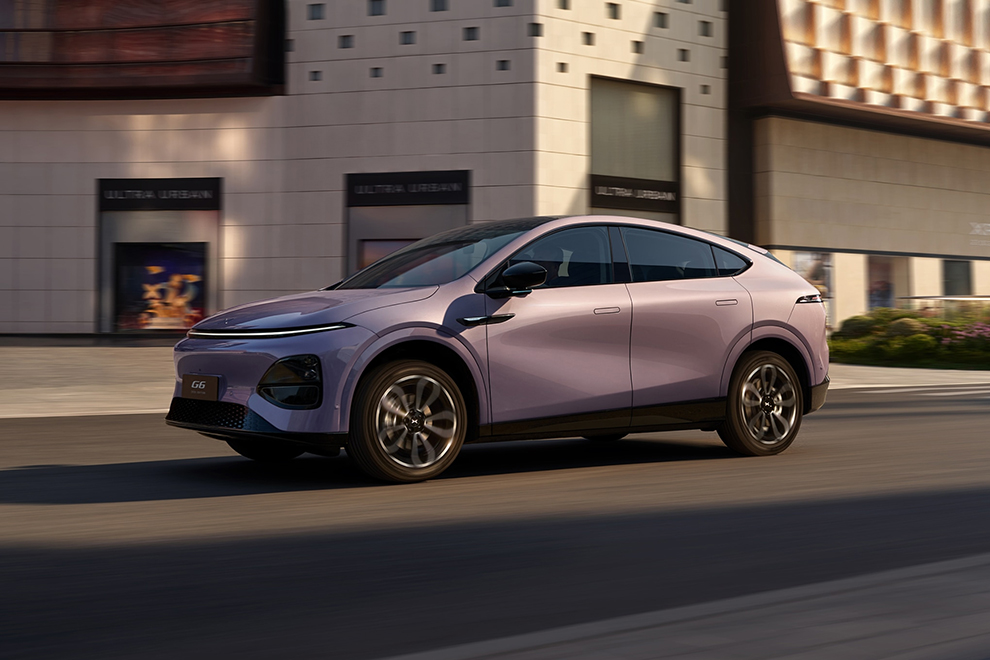
The XPeng G6 occupies a useful middle ground in the export market: a mid-size, five-door battery-electric crossover with more technology-led character than a conventional family SUV. Its appeal is not based on one headline specification, but on a coherent choice of range-led versions, including comfort, technology and all-wheel-drive performance grades. For overseas dealers, that gives a clearer proposition than a generic electric car: a modern vehicle aimed at private fleets, company-car programs and premium ride-hailing. It also suits distributors building a broader electrified portfolio without moving into larger, harder-to-ship premium SUVs.
Global demand for Chinese electric crossovers is shaped by local charging access, import policy and brand awareness rather than by Chinese domestic sales alone. The G6 is relevant in markets seeking a coupe-like crossover, strong in-cabin technology and a broad drivetrain ladder, yet its real-world usefulness depends on charging reliability and homologation. Buyers should therefore treat online range labels as a starting point for variant selection, then assess the destination market's certified range, connector arrangements, software support and service network before committing to any fleet volume or country-specific launch plan.
The strongest export case is where the G6 complements a dealer's existing EV range rather than replaces every powertrain category. A distributor can use the range-focused, long-range trims for fleet and family customers, reserve the AWD performance version for higher-spec fleets, and test the model through individual pilot units before scaling. That flexibility is commercially useful, but it depends on disciplined unit selection, landed-cost controls and a realistic service plan; attractive headline range alone cannot overcome poor residual-value confidence or unsupported software features in markets where after-sales support is still developing.
- Range-led trims serve varied fleets.
- Charging and service support determine viability.
- Pilot imports validate demand.
Model range, trims and powertrain variants: how the lineup is structured and how to choose
The G6 lineup is organized around range-denominated versions rather than a simple equipment ladder. Relevant trim naming includes 580 Long Range Pro, 580 Long Range Max, 625 Long Range Max Tech Edition, 700 AWD Performance Max and 755 Ultra Long Range Pro. These labels help buyers separate efficiency, feature level and performance intent, but they are not universal real-world range promises. The applicable battery, motor, certified range and charging specification must be verified against the exact vehicle and destination market in the vehicle documents, listing and homologation file before shipment.
For a fleet buyer, the 580 and 625-labelled long-range versions are the logical starting points when efficiency and operating distance matter more than outright acceleration. The 755-labelled ultra-long-range version may suit routes with limited charging opportunities, subject to its local certification and charging compatibility. The 700 AWD Performance Max is a different proposition: buyers pay for traction and performance rather than simply maximizing range. Compare those use cases before choosing a trim, because the cheapest-looking option is not necessarily the lowest operating cost for the intended duty cycle and charging plan.
Equipment names also matter. Tech Edition suggests a higher technology emphasis, while Pro, Max and Ultra labels should not be interpreted as universal grade definitions across export markets. Buyers should request a trim-equipment sheet covering infotainment, driver assistance, seating, climate control, audio, cameras and connected features, then verify whether software, language and functions work in the destination country. The drivetrain options generally pair rear-wheel-drive single-motor versions with dual-motor all-wheel-drive grades, but the exact motor output, battery capacity and charging figures must be checked per unit before signing the order documents.
- 580/625 prioritize range intent.
- 755 suits charging-sparse routes.
- 700 AWD emphasizes performance.
New vs used XPeng G6: how export inventory is structured and how buyers choose
Export inventory can include new vehicles and previously registered examples, but the right comparison depends on the buyer's objective. A new G6 is easier to align with a planned launch: the buyer can select trim, production period and equipment configuration before shipment, with lower uncertainty about wear and repair history. It may also carry a stronger new-vehicle warranty, subject to the exact supplier and destination terms. Those advantages should be weighed against the higher acquisition commitment generally required. A launch that cannot tolerate surprise defects may justify that clear premium.
A used G6 can make more sense for a dealer testing demand with limited capital, a buyer seeking a particular older configuration, or an operator comfortable with battery-state uncertainty. The discount, if any, should be evaluated against battery health evidence, remaining manufacturer coverage, software support, accident history and the cost of refreshing consumables. High mileage is not the only condition variable: an EV's battery and electronics can create repair exposure even when the body looks well maintained. Request battery reports, diagnostic scans and dated photographs before treating cosmetic condition as evidence.
Condition labels should be standardized rather than accepted loosely. For every used unit, check the production year, trim, battery version, odometer reading, charging history, accident or flood evidence, title status, keys, charging accessories, software region and warranty transfer. Ask whether the vehicle has been exported or re-registered and whether its prior use includes rental duty. For new units, confirm that the unit is genuinely new, roadworthy and delivered with the documents, accessories and local-market guarantees specified in the sales contract. A pre-delivery inspection is essential in either case for risk reduction.
- New units fit planned launches.
- Used units demand battery checks.
- Verify warranty and software.
How export pricing works: the factors behind a live listing price, and how to read one
Export pricing for an XPeng G6 is not one fixed number. The live vehicle quote starts with the seller's asking price for the exact unit, which can move with production year, trim, range or battery version, drivetrain, mileage, condition, equipment and the commercial terms attached to the listing. Market demand and exchange-rate movements can also affect how a seller revises that figure. A buyer should compare like with like: same year, trim, condition, battery specification and intended Incoterm, rather than relying on a headline vehicle price before adding logistics costs.
The landed cost may include charges that are not visible in the vehicle listing. Ocean freight, insurance, terminal handling, documentation, export inspection, domestic transport, port charges, taxes and duties all depend on origin, destination, route and Incoterm. If a seller quotes FOB, ask what is included up to loading and who owns the onward journey. If it quotes CIF or DDP, verify the precise scope, because responsibility for customs, duties or last-mile delivery can otherwise be misunderstood. The cheapest visible quote may not produce the cheapest compliant vehicle in practice.
To read a live ChinaCarDirect listing, begin with the unit identifier and photograph set, then confirm the declared year, trim, drivetrain, condition, mileage, battery version and included accessories. Scroll for the seller's price field and compare it with similar units rather than treating it as a universal model price. Next check the stated Incoterm, payment schedule, inspection terms, shipping estimate and documentation list. Current per-unit prices and availability are shown in the live inventory; request a written quotation for the selected vehicle before transferring funds because listings can change quickly.
- Match year, trim and condition.
- Separate price from landed cost.
- Check Incoterm before comparing.
MOQ, ordering and payment: single units vs consolidating a container
Minimum order quantity is a commercial term set by the seller or listing, not an inherent property of the G6, and the current MOQ must be checked on the live listing rather than assumed. Some offers are structured for individual pilot sales, while larger B2B wholesale orders may be consolidated across several units or trims. Buyers should ask whether the MOQ applies per model, per trim, per production batch or per order, and whether mixing configurations is allowed. That distinction matters when a distributor wants to test demand with one vehicle but later standardize a fleet. Ask for written confirmation before reserving production or freight space.
Ordering should run from specification to a signed sales contract, not from a photograph and an informal message. Freeze the unit or production specification, settle the inspection standard, document delivery terms and name the parties responsible for export, customs and inland transport. A pro forma invoice should identify each vehicle, the agreed price basis, payment milestones, Incoterm, port or place of handover, and the documents to be supplied. Keep every amendment in writing, especially if the seller proposes substituting a similar vehicle after deposit or changing the delivery timing schedule.
Payment structure should match risk and shipment control. Common mechanisms include a deposit followed by balance payment against inspection or shipping documents, while larger transactions may use a bank guarantee, documentary collection or letter of credit. The appropriate method depends on the buyer's capacity, the seller's identity and the transaction value; no method is automatically safer for every shipment. Verify that the receiving account is legitimate and contractually connected to the seller or authorized agent, and do not release the balance merely because a tracking number has been issued yet.
- Check current MOQ and scope.
- Use a detailed written contract.
- Verify accounts and inspection rights.
Shipping, homologation and market compliance caveats: LHD/RHD and import rules by country
Before ordering, establish the destination-market configuration. Confirm whether the G6 must be left-hand drive or right-hand drive, and whether the steering-wheel side, lighting, charging equipment and software are approved for that country. Do not assume that a later conversion will be lawful, practical or insurable. Import rules can include vehicle type approval, safety and emissions requirements, battery documentation, customs classification, duties, taxes, registration fees and local data or cybersecurity rules. A vehicle that is attractive in China may still need substantial homologation work before it can enter another market cleanly.
Shipping an EV also requires battery-aware handling. The carrier and freight forwarder should confirm the applicable dangerous-goods classification, packaging or containment requirements, charging-state limits, documentation and emergency procedures for the specific battery configuration. These details should be agreed before booking, because a vehicle that is acceptable on the assembly line may need different transport arrangements. Transit time depends on origin and destination ports, vessel schedules, customs clearance, terminal congestion and inland delivery; sea freight can reduce cost but add duration, while air or rail options may suit urgent, smaller shipments.
Budget for the compliance work as part of the vehicle, not as an afterthought. Depending on the country, this may include a Certificate of Conformity, type-approval records, local inspection, emissions and noise checks, software or cybersecurity adaptation, registration, insurance and modifications such as lighting or charging connectors. A dealer should appoint a local homologation specialist early and ask the seller for traceable factory documents. If RHD supply is uncertain, do not build the launch plan around a promised conversion; source a market-compliant vehicle or adjust the timetable and marketing promise.
- Confirm LHD or RHD first.
- Budget homologation and registration.
- Agree battery handling early.
Who should buy the G6 — and who should pick a different vehicle
The G6 is a strong fit for buyers who want a modern electric crossover, value a technology-rich cabin and can support a five-seat passenger vehicle through reliable charging. Dealers may find particular appeal among company-car customers, premium ride-hailing operators and urban fleets that want a distinctive alternative to the familiar global EV brands. Performance-oriented fleets can consider the AWD grade, while range-focused operations can prioritize the long-range trims. The decisive question is not simply whether the vehicle is electric, but whether charging, software and service fit the fleet's daily environment.
It is less suitable for buyers who require a plug-in hybrid, a combustion model, a seven-seat layout or a vehicle designed for heavy-duty commercial work. A PHEV can be easier where public charging is sparse and long journeys dominate; an ICE may fit fleets without charging infrastructure or with simple uptime expectations. Buyers with tight garage dimensions should verify dimensions rather than assume, and customers needing highly localized navigation, dealer service or software support should test those requirements before purchase. A lower purchase commitment does not remove the operating and compliance burden of importing an EV.
Residual value and fleet economics deserve particular attention because a Chinese EV brand may be less familiar to local consumers than established alternatives. Compare likely depreciation assumptions, insurance, financing, servicing access and resale channels before projecting total cost of ownership; do not use the purchase quote as the entire business case. For a dealer, the G6 can broaden an EV portfolio, but only if parts, technician training, software support and realistic warranty handling are secured. For an end user, local charging access and a credible service partner may matter more than the longest range label.
- Best for EV-ready fleets.
- Strong for technology-focused buyers.
- Choose AWD for performance.
Main rivals and how the G6 compares
The closest comparison depends on how the buyer defines the segment. The Hyundai Ioniq 5 is a family-oriented electric crossover with a distinctive design and charging-focused engineering; the Tesla Model Y occupies a similar premium-electric-crossover territory with a widely established brand and charging ecosystem in many export markets; and the BYD Seal U competes as a China-origin SUV sold internationally in battery-electric and plug-in-hybrid forms depending on market. These vehicles compete for similar buyers, but regulatory status, tax treatment, parts support and charging access can change the practical ranking locally.
Against the Ioniq 5, the G6's strongest argument is its range-led trim and technology-led product presentation, while the Ioniq 5 may appeal where brand familiarity and distinctive family-crossover design carry more weight. Against the Model Y, the G6 offers an alternative Chinese platform and a broader choice of range-oriented and performance grades, but local charging, software, resale and service support should be compared more carefully than headline specifications. The Seal U is the most direct China-export comparison, especially for buyers cross-shopping Chinese brands, but buyers needing plug-in-hybrid flexibility should consider its relevant market version rather than the battery-electric G6.
A specification-sheet comparison is only the first stage. Buyers should test seat and cargo practicality, thermal management, charging interface, driver-assistance functionality, software language, service access, warranty and parts availability. They should also compare the destination homologation of each rival, because a version available in China may not be offered or certified elsewhere. The G6 is most competitive when local support and charging are credible and the buyer values its technology character; established rivals may be safer choices where brand confidence and after-sales maturity dominate the decision for local fleet adoption.
- Ioniq 5: family crossover appeal.
- Model Y: established EV ecosystem.
- Seal U: PHEV flexibility in some markets.
Live XPeng G6 export inventory
View all listings →Real units currently on ChinaCarDirect with per-unit asking prices and MOQ. Availability updates live from the catalogue.
How to buy a XPeng G6 from China
-
1
Define the destination and duty cycle
Identify the destination country, required LHD or RHD configuration, daily routes, charging access, passenger requirements and expected annual utilization. This determines which G6 configurations are commercially relevant before evaluating a vehicle.
-
2
Select the trim from operating needs
Compare the range-focused trims with the 700 AWD Performance Max according to range priority, traction, equipment and local charging compatibility. Treat the range numbers as model labels until the homologated destination specification is confirmed.
-
3
Verify the live unit and seller
Review the live listing's photographs, vehicle identity, production year, trim, condition, mileage, battery version, accessories, seller history and included documentation. Ask for the original specification sheet and any available inspection or battery report.
-
4
Request a written, itemized quotation
Send an RFQ stating the selected unit or desired configuration, destination, quantity, Incoterm and delivery requirements. The quotation should separate the vehicle price, payment milestones, freight, insurance, documentation and any market-specific charges.
-
5
Clear homologation before production
Appoint a destination-market specialist to check type approval, safety, emissions, battery, charging, software, data, registration and local equipment requirements. Resolve LHD or RHD availability before placing a non-refundable production order.
-
6
Control inspection and payment
Use a written sales contract, verify the seller's identity and receiving account, and tie payment releases to the agreed inspection and shipping documents. Prohibit unapproved trim substitutions and require evidence of the exact vehicle's condition.
-
7
Book freight and close delivery
Instruct a battery-aware freight forwarder, confirm cargo documentation and insurance, and track the vehicle through loading, transit, customs and inland delivery. Complete port handling, registration and a final condition check before handover.
G6 vs rivals
| Hyundai Ioniq 5 | The Ioniq 5 is a close family-EV alternative with a distinctive design and charging-focused engineering. Choose it where Hyundai familiarity and family-crossover appeal outweigh the G6's range-led trim choice and technology-led character. |
|---|---|
| Tesla Model Y | The Model Y competes for premium EV crossover buyers and benefits from an established brand and charging ecosystem in many markets. The G6 may appeal more to buyers seeking a China-origin platform, varied range grades or AWD performance, but local service and resale support need careful assessment. |
| BYD Seal U | The Seal U is a particularly relevant China-export rival because it is offered internationally in BEV and PHEV forms depending on the market. The G6 is the cleaner fit for BEV-only charging plans, while Seal U may better serve buyers requiring plug-in-hybrid flexibility. |
Frequently asked questions
How is XPeng G6 export pricing determined?
The vehicle element of the quote reflects the exact unit's year, trim, range or battery version, drivetrain, mileage, condition and the seller's terms. Total landed cost can also change with exchange rates, freight route, insurance, port charges, customs duties, taxes and the selected Incoterm. Compare current per-unit prices in the live listings, then request a written quote for the selected vehicle and destination.
What powertrain and range should an overseas buyer expect?
The G6 is a battery-electric crossover. Export trims include 580-, 625-, 700- and 755-labelled range versions, with rear-wheel-drive and all-wheel-drive configurations depending on the grade; the 700 AWD Performance Max is the performance-focused variant. Exact battery capacity, motor output, charging system, certified range and usable range must be checked in the live listing and destination-market homologation documents.
Should I buy a new or used XPeng G6?
A new unit is easier to specify and generally reduces wear-history risk, while a used unit can suit a lower-commitment pilot or an older configuration. Compare battery condition, accident history, remaining warranty, software region, mileage and repair exposure rather than relying on price alone. Current new and used availability changes, so review the live inventory for the relevant unit.
How does MOQ work for wholesale orders?
MOQ is not a fixed property of the model; it is set in each seller's listing and can depend on trim or order type. Check the current MOQ shown with the live listing and ask whether mixed trims, a single pilot unit and staged deliveries are allowed. The answer should also appear in the pro forma invoice or sales contract.
What drives shipping time and cost?
Shipping time and cost are quotation variables because sea, rail, air and road combinations have different transit profiles. Route, vessel schedule, port, congestion, insurance, battery handling, customs and inland delivery all affect them. Ask the forwarder for a door-to-door or port-to-port breakdown and confirm that the EV battery's required documentation is included.
How are spare parts and service supported?
Confirm that diagnostic tools, software access and replacement parts can be supplied for the vehicle's exact production version before importing it. For fleet buyers, request a starter parts list covering common service items, charging accessories and model-specific components. Local technicians, parts stock and warranty procedures should be established before the vehicle enters service.
Is right-hand-drive XPeng G6 availability guaranteed?
RHD availability varies by seller, production configuration and destination market, so it must be confirmed for each candidate vehicle. Check the live listing and written quotation rather than assuming that a Chinese-market G6 can be converted lawfully or economically. If a compliant RHD unit cannot be secured, adjust the launch plan or source another specification.
How do I order an XPeng G6 from China?
Start with the live XPeng G6 listings, choose a candidate unit and send an RFQ stating the destination, trim, condition and required quantity. Confirm the unit identity, MOQ, Incoterm, inspection standard, payment milestones, shipping arrangements and export documents before paying. Do not rely on a screenshot or informal message when vehicle-specific commercial terms are material.
Ready to source the XPeng G6?
Request a current XPeng G6 export quotation with unit details, destination, Incoterm and compliance requirements.
Request a quote