
XPeng G7 Export Buying Guide for Overseas Dealers
Compare XPeng G7 trims, CLTC range, export pricing, MOQ, shipping and homologation, with a practical guide for overseas dealers and fleet buyers.
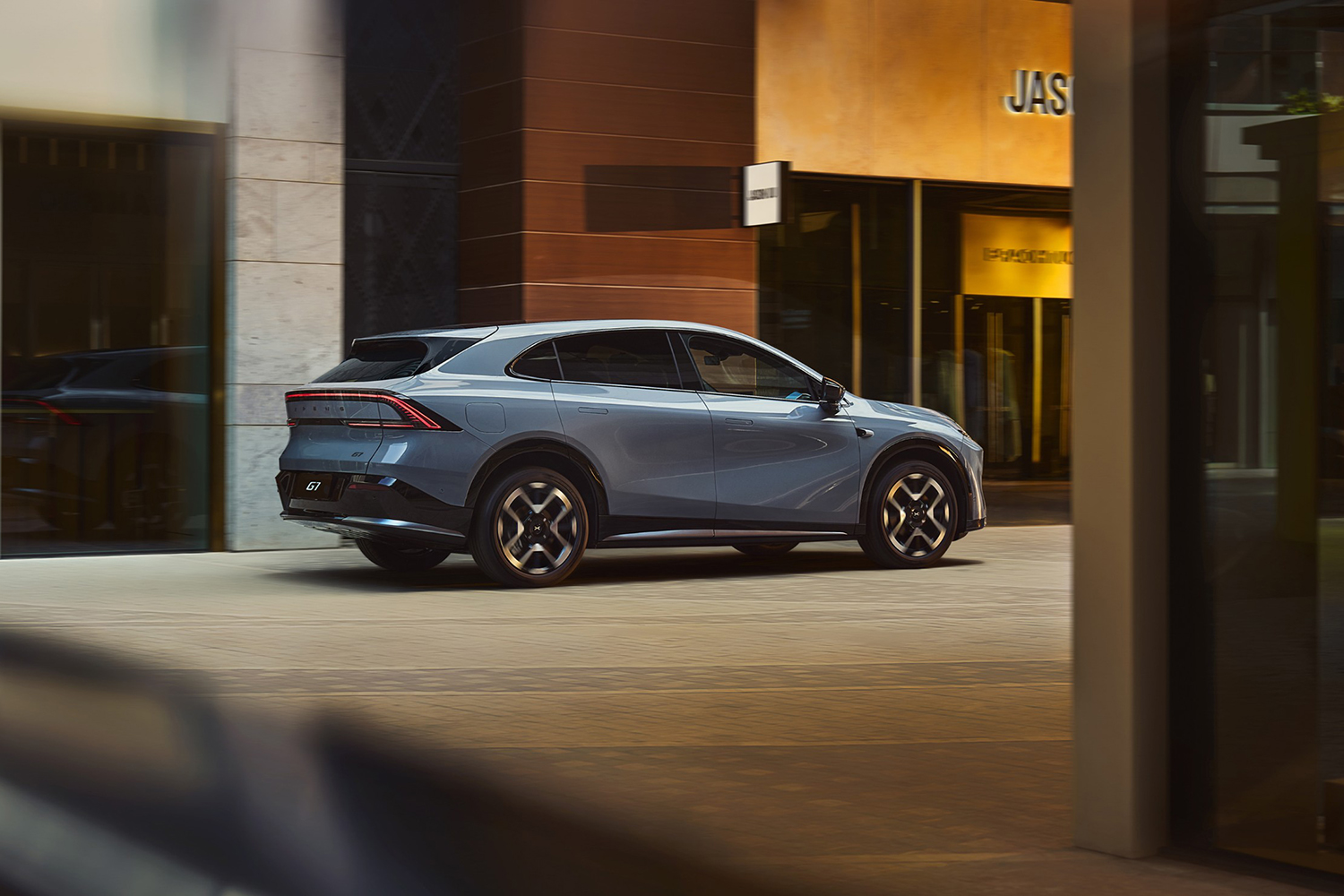
At a glance
- The XPeng G7 is a mid-size crossover offered in pure battery-electric and range-extended forms for international buyers.
- The lineup includes 602 km and 702 km CLTC BEV range variants and a 1,704 km combined-CLTC range-extender branch.
- A new G7 suits clean fleet standardization, while a used unit can suit a specific trim but requires battery, service and condition evidence.
- Export pricing and availability are unit-specific; the live G7 inventory supplies the current binding figures.
- LHD or RHD configuration, homologation, parts support and charging access must be confirmed before an overseas order.
Why the XPeng G7 matters for export markets
The XPeng G7 is a mid-size crossover positioned between mass-market EVs and premium imported models. Its export relevance comes from offering two energy architectures under one model family: a pure battery-electric version for buyers with dependable charging, and a range-extended version for markets where long travel or sparse charging networks hinder pure EV adoption. That flexibility lets an importer address more buyer needs without maintaining two nameplates. Fleet customers can compare cabin space, software, safety equipment and loading capacity on one platform before choosing a drivetrain for local duty cycles.
Export demand for the G7 reflects buyer priorities: overseas customers want long range, a five-seat cabin and rich equipment, but may need flexibility where charging networks are incomplete. The G7’s range options address that combination, and its crossover format suits dealer demos and fleet use better than a sedan. Buyers should not assume that a feature-rich Chinese-market vehicle will have the same residual value, parts support or homologation pathway as an established local model. The buying case depends on the importer’s ability to support the product after it arrives.
For markets with charger coverage and favourable electricity costs, the 702 km CLTC BEV is a long-distance-focused option, while the 602 km version may suit different equipment and charging needs; neither figure predicts real-world range after export. For regional dealers, the range-extended 1704 version can reduce range-planning anxiety, but it adds a fuel system and compliance questions. Buyers should compare operating requirements rather than select the largest badge. Driving conditions, payload, climate, route profile and charging access should determine the configuration, while local tax treatment may alter BEV and range-extended economics.
- Pure EV and range-extended options.
- CLTC figures are comparative.
- Fleet fit depends on local support.
Model range, trims and powertrain variants: how the lineup is structured and how to choose
The G7 range represented in export listings is structured around pure-electric and range-extended branches. Within the pure-electric family, listings may identify a 702 Ultra Long Range Ultra, a 702 Ultra Long Range Max, a 602 Max Flagship Edition or an EV Base. The range-extended branch includes 1704 Max Tech and 1704 Max Flagship editions. These names help define the initial shortlist but do not replace an equipment comparison or confirmation that a trim is approved for the destination market. Ask for a current trim sheet and chassis number before ordering.
The 602 and 702 labels distinguish the pure-EV range variants, while 1704 identifies the combined figure for the range-extended branch. In the Chinese test cycle, they should be read as comparative indicators, not guarantees of distance achievable after export. Local weather, speed limits, elevation, load, tyre choice and charging habits can change the outcome materially. For a dealer test, route planning is more useful than repeating the catalogue number: drive a representative route, record consumption and, where appropriate and safe, observe how the range-extender system behaves at low battery state.
The range-extended G7 is best evaluated as an electric-drive vehicle with an onboard combustion generator, not a conventional petrol SUV. Its advantage is operational flexibility where charging infrastructure is incomplete; its trade-offs include fuel-system servicing, generator use, exhaust compliance and a more complex resale proposition. Within each branch, Tech, Max, Flagship, Ultra and Base labels generally signal different equipment levels, but the exact driver-assistance, infotainment, audio, comfort and wheel content must be checked for the unit. A written specification avoids assuming that a flagship in one branch matches a flagship in another.
- 602 and 702 are BEV variants.
- 1704 is the range-extended branch.
- Verify trim and charging details.
New vs used XPeng G7: how export inventory is structured and how buyers choose
ChinaCarDirect’s G7 export listings can include both new vehicles and previously owned examples, sometimes across the same powertrain families. A new listing is generally the cleaner starting point for fleet standardization because wear history is absent and configuration can be matched more easily across units. A used listing may be more attractive when the buyer wants a particular trim or an established vehicle already positioned for export, but it introduces questions about mileage, service history, battery health, accident repair and remaining manufacturer coverage. Neither condition label alone proves roadworthiness or operational fitness.
For a used BEV, request a battery-state report, evidence of DC fast charging, a scan for faults and an inspection of tyres, suspension and bodywork. For a range-extended car, review generator start-stop behaviour, oil condition, coolant, fuel-system maintenance and any warning history. A mileage number alone is a weak proxy: an EV can show low distance travelled but still have experienced fast charging, towing loads or unsuitable storage. Compare the service record with the physical condition rather than treating age as a condition grade. Request objective evidence before agreeing any commercial adjustment.
Model-year labels separate production cycles but do not guarantee that every vehicle has the same software, option codes or charging hardware. New cars may carry the latest factory configuration but can sit in inventory before reaching a destination market; used cars may preserve an earlier specification. For fleet buyers, build a comparison sheet containing powertrain, range version, motor layout, charging interface, driver-assistance features, wheels, cabin options, service history and warranty status. Only then can depreciation, suitability and landed cost be assessed. A discount should not compensate for an unverified or unsuitable configuration.
- New units simplify fleet matching.
- Used BEVs need battery evidence.
- Used EREVs need generator scrutiny.
How export pricing works: the factors behind a live listing price, and how to read one
An XPeng G7 export price should be treated as a unit-specific commercial calculation, not a fixed model-wide amount. The starting vehicle price is shaped by model year, trim, pure-EV or range-extended configuration, the selected 602 or 702 range version and, on used vehicles, mileage, condition and history. Conversion from renminbi, freight, insurance, port handling, export documentation and the chosen Incoterm can change the final payable total. The cheapest catalogue badge is not necessarily the cheapest vehicle after it reaches the buyer. Compare like-for-like landed costs before selecting a supplier in that market.
When reading a live listing, establish whether the displayed amount is the vehicle sale price, a deposit, or a quote that includes export services. Check the stated Incoterm, destination or port, validity period and whether the seller is quoting one unit or a consolidated shipment. Ask what is included: export declaration, customs paperwork, battery documentation, pre-shipment inspection, charging equipment, spare wheel or tools, warranty and technical support. These items can matter more than a small trim difference because they affect cash requirement and the vehicle’s ability to be legally registered.
The most reliable method is a written pro forma quotation separating the vehicle, domestic charges, export fees, freight, insurance, taxes and buyer-side port costs. Ask how long the quote is valid and which exchange-rate or freight basis it uses, because both can change before payment. Confirm the current binding price, seller MOQ and availability for the selected vehicle in the live ChinaCarDirect G7 inventory, then treat that number as the start of a unit-specific negotiation, not a universal G7 price. A landed-cost worksheet makes dealer, trim and Incoterm differences comparable.
- Separate vehicle, freight and tax.
- Confirm Incoterm and inclusions.
- Check live per-unit figures.
MOQ, ordering and payment: single units vs consolidating a container
MOQ is not a universal property of the G7; it is set within each seller’s listing and quotation. Some export offers may be structured for a single vehicle, while distributors may ask for a larger batch to amortize inspection, documentation and freight. An importer should read the live listing’s MOQ field, then request written confirmation that the selected unit can be sold separately. For a container-scale order, establish how vehicles are allocated, whether the batch must share a trim or model year, and which unit becomes the contractual sample in advance.
A sound ordering sequence begins with a VIN or listing SKU, a trim and equipment specification, a condition report and a clear Incoterm. The seller should then issue a pro forma invoice showing the unit, identifiers, payment milestones, validity, bank charges, documentation scope and cancellation terms. A deposit reserves the vehicle, while the balance is linked to inspection or shipping readiness, but the schedule must be agreed in writing. Payment should never be made against an incomplete description such as only a G7 Flagship when the battery range and powertrain are material.
For a consolidated container, agree a representative inspection standard before the balance is released: paint and panel condition, cabin wear, tyre age, charging function, warning lights and, for a used BEV, battery diagnostics. Define how discrepancies are valued or corrected, and keep photographs tied to each vehicle identifier. Payment protection should be discussed for the route and counterparties; ask whether the seller accepts a letter of credit or another protected method and who bears banking and chargeback risk. This protects the batch more effectively than negotiating a headline price alone.
- Confirm single-unit eligibility.
- Match units to VIN or SKU.
- Set inspection and discrepancy rules.
Shipping, homologation and market compliance caveats: LHD/RHD and import rules by country
Most vehicles sourced from China are configured for left-hand drive, but the hand of drive must be confirmed on every listing rather than inferred from the model name. Some export suppliers may arrange a right-hand-drive conversion; treat the result as a separate specification with checks on steering, dashboard displays, controls, lighting, safety systems and wipers. Local registration rules may require a particular configuration or recognize only approved conversions. Buyers in right-hand-drive markets should settle this in the pro forma invoice, not after arrival at the destination.
Import requirements are national rather than universal. A buyer may need VIN and identity documents, customs valuation, proof of conformity, emissions approval, roadworthiness testing, local safety or cybersecurity review, and evidence that charging and battery systems meet local rules. Range-extended vehicles may be assessed differently from pure EVs because the generator burns gasoline and can affect tax, emissions or incentive treatment. Confirm the destination’s treatment of both powertrains, warranty, software, data processing and communications equipment before contracting. Local-language manuals and dealer support may also be required for resale in that market.
Transport planning must account for the traction battery as a dangerous-goods item. A compliant battery declaration, test documentation and vehicle-level preparation may be required, and the carrier must handle the route rather than treating the G7 as ordinary cargo. Ocean RoRo, container and specialist vehicle-carrier options have different handling, cost and timing profiles; the correct mode depends on origin, destination, urgency and cargo value. Before dispatch, agree the loading plan, securing method, inspection photographs, insurance scope and delivery terms, especially if the G7 will be driven out rather than unloaded as a static vehicle.
- Confirm LHD or RHD early.
- Check country approval and tax.
- Use a battery-qualified carrier.
Who should buy the G7 — and who should pick a different vehicle
The G7 is a strong candidate for overseas dealers serving company-car fleets, executive demonstrators, ride-hailing operations and customers who value a spacious, technology-oriented crossover. It lets buyers match the energy system to local infrastructure rather than accept one compromise across a market. The range-extended version can suit routes where charging gaps remain, while BEV versions suit fleets with controlled depot charging and planned routes. Buyers should account for software support, technician training and parts stocking before a broad rollout. A measured pilot program is more prudent than an abrupt volume launch.
It is less suitable for buyers whose main requirement is the lowest acquisition cost, a small urban footprint or commercial van-level carrying capacity. It is also a poor fit for an operator unwilling to support an unfamiliar export brand, software or imported parts. Fleets with overnight charging, predictable routes and an existing EV program may obtain better economics from a smaller model. Likewise, a buyer seeking mature resale markets and strong service coverage should compare the G7 with local rivals rather than assume extra equipment will offset weaker market support.
Before a full order, model the G7’s total operating proposition rather than its purchase invoice alone. For a BEV, include depot electrical capacity, charger installation, route losses and time spent waiting to charge. For the range-extended version, include fuel, generator servicing, exhaust inspection and the operating policy for using it. Compare those costs with a local rival and estimate resale assumptions conservatively. A small mixed-trim pilot can reveal charging reliability, software usability, parts lead times and customer acceptance, giving the importer evidence for scaling instead of relying on brochure specifications.
- Suited to mixed-infrastructure fleets.
- Unsuitable for budget city or van use.
- Pilot before scaling support.
Main rivals and how the G7 compares
Tesla Model Y is the clearest global benchmark for a mid-size electric crossover, so it deserves priority in any G7 shortlist. The Model Y’s brand recognition, charging ecosystem and resale visibility can outweigh specification value for fleets that value support over powertrain flexibility. The G7 can answer with both BEV and range-extended formats and equipment sourced from the Chinese market, but buyers should compare local warranty, software language, parts supply and total cost rather than assume range extension is automatically more useful. Overseas range labels are not directly comparable across test cycles.
The BYD Sealion 7 is a closer size-and-price alternative for buyers seeking a Chinese-brand electric crossover rather than a Tesla benchmark. It allows direct comparison of range versions, charging, cabin equipment, software and dealer support within the same sourcing ecosystem. Depending on the market, BYD may be easier to support because its vehicles are more widely established, while the G7 may offer a more distinctive technology package and the option of a range-extended version. Test that distinction with a hands-on drive and written service plan, not badge pricing alone before ordering.
The Volkswagen ID.4 is a relevant fleet alternative where an established manufacturer relationship, familiar charging interface and broad service expectation outweigh newer-market software features. It is primarily a battery-electric offering, so the G7’s range-extended branch can differentiate it for buyers who need longer routes without constant charging. Conversely, the G7’s export proposition carries more work around local certification, technician training and parts stocking. For any of these rivals, compare the same route, payload, test cycle, warranty assumptions and landed cost; comparing catalogue range numbers from different markets rarely gives a complete purchasing answer.
- Model Y: global support benchmark.
- Sealion 7: closest Chinese EV peer.
- ID.4: fleet-service alternative.
Live XPeng G7 export inventory
View all listings →Real units currently on ChinaCarDirect with per-unit asking prices and MOQ. Availability updates live from the catalogue.
How to buy a XPeng G7 from China
-
1
Define the operating requirement
Map routes, charging access, fuel availability, payload and expected residual value before choosing between the 602, 702 and range-extended branches.
-
2
Shortlist live G7 inventory
Review the live ChinaCarDirect G7 listings by condition, powertrain, range version, model year and trim. Confirm the current per-unit price, MOQ and availability directly on each listing.
-
3
Verify the individual vehicle
Request the VIN or listing SKU, factory specification, software information, charging data and a condition report. For a used vehicle, add battery-health and service evidence.
-
4
Request a written landed-cost quotation
Ask for a pro forma invoice separating vehicle charges, documentation, freight, insurance, taxes, delivery terms and any charging equipment included.
-
5
Confirm MOQ and payment terms
Establish whether the selected listing supports a single-unit order or requires consolidation. Record deposit and balance milestones, validity, cancellation terms and who bears payment-related risk.
-
6
Arrange compliance and shipping
Confirm LHD or RHD requirements, destination approval, insurance and battery-transport documentation. Select a carrier and Incoterm suited to the route and delivery schedule.
-
7
Approve inspection before dispatch
Agree objective inspection standards, photograph the vehicle against its identifier and define how discrepancies are corrected before final payment and release.
G7 vs rivals
| Tesla Model Y | Tesla Model Y is the most direct global benchmark for electric crossover buyers. It may carry stronger brand familiarity and service visibility in many markets, while the G7 offers a range-extended option not generally offered by Model Y; compare local support and landed cost before deciding. |
|---|---|
| BYD Sealion 7 | BYD Sealion 7 is a close Chinese-brand electric SUV peer for importers comparing equipment and market coverage. It is battery-electric, whereas the G7 can cover range-extended demand; compare software support, dealer coverage and operating requirements by market. |
| Volkswagen ID.4 | Volkswagen ID.4 is a relevant fleet alternative where an established brand and service network matter. The G7 offers more powertrain choice and a newer China-market feature set, but may require more importer effort for homologation, parts and technician training. |
Frequently asked questions
How is XPeng G7 export pricing determined?
Export pricing starts with the exact vehicle: model year, trim, BEV or range-extended configuration, 602 or 702 range version and, for used cars, mileage and condition. Exchange rates, freight, insurance, port handling, documentation and the Incoterm then affect the landed total. The current binding price, seller MOQ and availability for each vehicle are shown in the live ChinaCarDirect G7 inventory; request a written quotation for confirmation.
Which XPeng G7 powertrain and range variants are available?
The lineup includes pure-EV versions designated 602 km and 702 km CLTC, plus 1704 Max range-extender versions with 1,704 km combined CLTC range. Actual driving range will differ with climate, speed, load, terrain and charging or fuel use. Confirm the exact powertrain, battery version and applicable range standard in the unit listing.
Is a new or used XPeng G7 better for export?
A new G7 is usually easier to standardize across a fleet and provides a clearer condition history. A used G7 can suit buyers seeking a specific trim or equipment set, but requires battery-state, charging, service, accident-repair and physical-condition evidence. The better choice depends on budget, configuration availability and the importer’s ability to inspect and support used vehicles.
What is the MOQ for an XPeng G7 order?
MOQ is set by the individual seller, listing and quotation rather than by the model itself. Check the MOQ field on the live listing and ask whether the selected vehicle can be sold separately. For a consolidated order, clarify allocation, trim consistency, inspection standards and payment release in writing.
What determines XPeng G7 shipping time and cost?
Shipping time and cost depend on origin and destination ports, transport mode, vehicle value, battery handling, documentation, insurance, carrier capacity, customs clearance and the agreed Incoterm. Secure a carrier experienced in vehicles with traction batteries and request a quotation for the complete route rather than freight alone.
How are spare parts supplied for an exported XPeng G7?
Parts should be matched using the VIN, model year, trim and production configuration. Ask the supplier for a parts list, compatibility check and lead-time estimate before shipment, and identify any software or calibration requirements. Importer support is especially important when a China-market vehicle uses equipment or components that differ from the destination-market version.
Is a right-hand-drive XPeng G7 available for export?
Do not assume right-hand-drive availability from the model name; Chinese-market vehicles are commonly left-hand-drive, so each listing must be checked. Some suppliers may arrange a right-hand-drive conversion, subject to local recognition and registration rules. Confirm the final configuration, conversion documents and inspection scope before dispatch.
How do I order an XPeng G7 from China?
Start with the live G7 inventory, select a vehicle and request its VIN or SKU, factory specification, condition report and written pro forma quotation. Confirm MOQ, payment milestones, export documents, inspection, Incoterm, insurance and freight before paying. The final release should follow the agreed inspection and compliance checks.
Ready to source the XPeng G7?
Request a unit-specific XPeng G7 quotation with trim, condition, Incoterm, documentation and shipping options confirmed in writing.
Request a quote