
XPeng G9 Export Buying Guide for Dealers and Fleet Buyers
Buy an XPeng G9 from China with expert guidance on trims, range, pricing, MOQ, new versus used cars, compliance, shipping and rivals for overseas dealers.
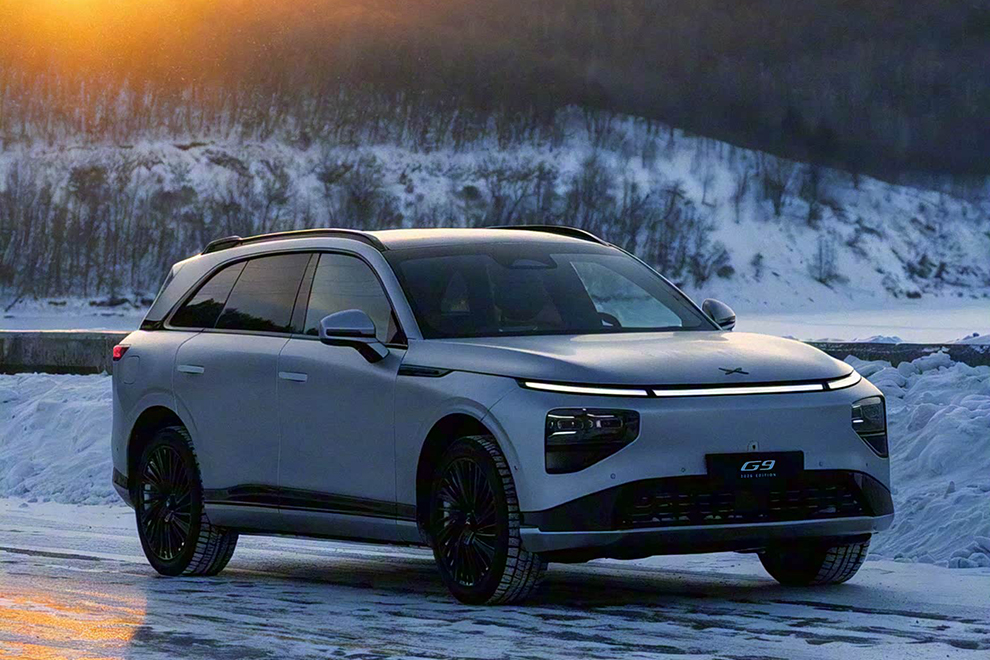
At a glance
- The G9 is a five-door battery-electric SUV positioned between mainstream EVs and premium alternatives.
- The lineup spans 570, 650, 680 and 702 range-oriented labels, with rear-drive and designated AWD variants.
- New vehicles offer clearer factory specification, while used vehicles require battery-health and provenance checks.
- Export pricing moves with trim, year, condition, freight, exchange rates and Incoterm, so live listings control.
- MOQ is set per listing, and container consolidation requires clear allocation, inspection and damage-claim terms.
- LHD or RHD, local type approval and aftersales support must be confirmed before ordering.
Why the XPeng G9 matters for export markets
The XPeng G9 is a battery-electric SUV for buyers who want a sizeable, comfortable five-door vehicle without moving into the price and ownership conventions of a traditional luxury marque. Its appeal comes from a high-tech cabin, strong electric-road-carrier proposition and a lineup that separates range, performance and equipment. For overseas markets, that combination makes it a useful alternative when a dealer wants a distinctive premium-adjacent model rather than another small urban EV. It also gives fleet buyers a platform that can support executive, hospitality and company-car use cases, subject to local charging and service arrangements.
Demand for Chinese electric SUVs in export markets is driven by several practical needs: competitive equipment levels, longer-range options and the possibility of sourcing directly from the manufacturer’s home market. The G9 sits above compact crossovers in size and refinement, yet it is generally positioned below established premium European brands. That middle position can suit importers seeking a feature-rich showroom model, while private buyers should compare the whole ownership package rather than assume an electric badge automatically lowers running costs. Local insurance, taxation, depreciation and servicing can materially change the result.
International interest should nevertheless be treated as market-specific rather than automatic. Chinese-market vehicles can differ from export approvals in steering position, software, connected services, charging equipment and regional safety equipment. Language support and over-the-air service access may also vary after import. Buyers should therefore treat the G9 as a strong product candidate only after confirming that a specific unit is suitable for registration, daily charging and aftersales support in the destination country. A local inspection and written compliance check are more valuable than an attractive catalogue description before funds are committed.
- Five-door battery-electric SUV positioning
- Range, equipment and AWD choices
- Destination-country compliance remains essential
Model range, trims and powertrain variants: how the lineup is structured and how to choose
The G9 range is easiest to read as a hierarchy rather than a single model. Names such as 570 Pro, 570 Max, 650 Performance Max, 680 AWD Max, 680 Ultra Long Range AWD Max and 702 Pro appear in export-facing descriptions, alongside a Model Long Range Ultra designation. The numerical labels broadly distinguish the range-oriented variants, while Pro, Max, Performance, Ultra and AWD indicate differing equipment, performance or drivetrain priorities. Because names have changed across model years, buyers should not infer equivalence from the badge alone without checking the specification sheet.
Most G9 versions use a single electric motor and rear-wheel drive, while designated AWD versions use a dual-motor layout. That distinction changes the buyer’s priorities: rear-drive variants can suit buyers focused on efficiency and range, whereas AWD models add traction and stronger delivery, but place greater demand on battery energy and tyres. The Model Long Range Ultra label should be treated as a trim name, not as a universal range guarantee. Request the motor output, battery capacity, curb weight and certified consumption for the exact vehicle before comparing running-cost assumptions.
A disciplined choice starts with the duty cycle. A buyer with dependable home or depot charging can prioritise the variant with the strongest homologated range, while a buyer facing frequent cold weather, steep routes or payload demands may give AWD capability more weight. Performance-oriented labels need to be separated from practical range. Compare usable battery capacity, real-world consumption, charging curve, luggage capacity and local warranty cover for the exact trim rather than selecting by badge or appearance. Then check whether the chosen specification can actually be imported and supported in the destination market.
- 570, 650, 680 and 702 range labels
- Rear-drive versus designated AWD trims
- Verify battery, motor and homologated range
New vs used XPeng G9: how export inventory is structured and how buyers choose
Export inventory for the G9 should be understood as a moving mix of model years, trims, options and production specifications rather than a uniform batch of identical cars. New vehicles may represent factory production or current-market examples, while used examples can enter export channels through different ownership routes. Their documentation and condition histories will not be equivalent. Availability therefore has to be assessed unit by unit on the live inventory, with production date and market origin treated as separate checks. A trim name alone cannot reveal all of those variables.
A new G9 offers the clearest chain between factory specification, warranty and delivery, although the warranty’s usefulness abroad still depends on its territorial terms and the seller’s ability to support a claim. A used example can reduce acquisition cost, but it introduces battery state of health, tyre age, suspension wear, software history, accident repair and replacement-part questions. Treat any attractive used price as an inspection lead, not proof of value. For fleet use, request a battery-health report, charging-performance test, diagnostic scan and evidence of service before including it in a bid.
The right choice depends on how quickly the vehicle must enter service and how much uncertainty the buyer can absorb. A company replacing a small number of executive cars may favour a current new unit with known configuration and handover support. A dealer seeking a broader display mix can evaluate used examples only after establishing their provenance. In either case, compare the VIN or chassis identity, registration documents, production and delivery dates, service records, recall completion and the exact equipment list. That evidence should form part of the purchase file.
How export pricing works: the factors behind a live listing price, and how to read one
An export price varies by vehicle and transaction. Model year and trim establish the starting point; battery version, motor configuration, range target, factory options, paint and interior can move it further. For used vehicles, mileage, condition, ownership history and repair quality matter. At the transaction level, exchange rates, origin handling, insurance, freight, port charges, financing and the chosen Incoterm can alter the commercial position. Taxes and registration charges may sit outside the vehicle quote, depending on the contract and destination, so the buyer should insist on a written landed-cost estimate.
Read every live listing as a set of commercial terms rather than a headline number. Confirm whether the displayed amount is for one vehicle, which currency is used, whether local taxes are included, and whether the named Incoterm defines the seller’s obligation up to the port, terminal or another point. Check included items such as documentation, loading, insurance or inland delivery. The current [XPeng G9 listings](https://chinacardirect.com/products?q=G9&brands%5B%5D=83) provide the live per-unit terms that must be checked at quotation stage. Request a written quotation if the page leaves any material term unclear.
To compare two offers, normalise them. Put the same year, trim, drivetrain, battery version, options and condition on both sides; identify the currency; then add the same freight, insurance, port, tax and registration assumptions. Separate the vehicle’s commercial value from the cost of getting it roadworthy. For a fleet purchase, also model payment timing and currency exposure. This method reveals which quote is genuinely cheaper without relying on a temporary catalogue figure that may not match the final invoice. A larger vehicle price may still lose after operating-cost assumptions are added.
- Trim, year, battery and option effects
- Incoterm, freight, tax and FX effects
- Use live listing terms, not snapshots
MOQ, ordering and payment: single units vs consolidating a container
Minimum order quantity is a listing-level commercial term, not a fixed characteristic of the G9 model. Some sellers may release a single vehicle; others may set a higher lot requirement for a particular allocation or colour. A dealer testing demand can request one unit and ask for a written MOQ before paying, while a fleet buying for a branch network may be able to consolidate several units. Always read the MOQ displayed against the specific live unit and confirm it in the RFQ and pro forma invoice. That prevents ambiguity at contract stage.
For buyers ready to buy an XPeng G9 from China, begin with a precise vehicle brief: trim, steering position, colour, interior, options, destination and delivery term. The seller confirms the matching SKU, availability, MOQ, price and payment milestones. After technical and commercial review, the buyer pays through the agreed channel, receives sales documents and approves the vehicle or production specification before shipment. Platform workflows vary, so use the RFQ to establish which documents and approvals are binding; do not rely on an informal message alone as the binding order record.
Container consolidation can improve freight efficiency, but it creates a second layer of planning. Vehicles must be sufficiently similar in specification to serve the receiving dealer, and every unit needs an individual identity, condition record and allocation. Agree who pays storage, insurance, handling, inspection and damage claims if one vehicle is rejected. Freight quotations should state the loading and discharge locations, shipment mode, vehicle count, securing requirements and chargeable weight or other applicable basis. The goal is a lower cost per unit without hiding delays or condition risk or commercial terms.
- Confirm listing-level MOQ in writing
- Single-unit pilots before fleet consolidation
- Consolidation adds allocation and claim risk
Shipping, homologation and market compliance caveats: LHD/RHD and import rules by country
Steering configuration is the first export-specific check. Most Chinese-market examples are left-hand drive, but an overseas requirement for right-hand drive cannot be met safely by assuming a production slot exists. Ask the seller to confirm the VIN-level hand of drive, then verify whether that configuration is approved for the destination. Converting steering, pedals, lighting or controls after shipment can add cost and may affect safety, warranty and inspection. A buyer needing an immediate right-hand-drive delivery should treat written availability as a condition of purchase. Otherwise, leave delivery timing open in the purchase brief.
Import compliance is country-specific and vehicle-specific. The importer may need a Certificate of Conformity, type approval, customs declarations, proof of ownership, a bill of lading, and evidence that the battery and vehicle satisfy local transport and safety rules. Electric-vehicle batteries also require transport documentation and handling aligned with the carrier’s dangerous-goods procedures. Confirm the tariff classification, import VAT or tax treatment, emissions or charging requirements, and any local inspection with a customs broker and the competent authority before committing funds. A local specialist can identify gaps that a generic export checklist misses.
Finished EVs are commonly shipped by sea on vehicle carriers, and the freight method can affect cost, transit time and handling risk. Before booking, confirm the nominated port and destination, carrier experience with EVs, battery state-of-charge instructions, lashing and security arrangements, marine insurance, and responsibility for customs clearance and terminal charges. Arrange a pre-shipment inspection covering exterior panels, tyres, glass, interior, warning equipment and charging function. On arrival, use a fresh condition report before release, because the importer remains responsible for any discrepancy not properly documented at every handover point.
- Confirm LHD or RHD by VIN
- Check local type approval and customs
- Match battery documents to carrier rules
Who should buy the G9 — and who should pick a different vehicle
The G9 fits buyers who want a spacious, technology-led electric SUV for executive transport, company fleets, hotel or executive mobility, and premium dealer showrooms. It is particularly logical where dependable charging is available and long-distance comfort matters more than minimum purchase cost. For a fleet, the large five-door layout can serve senior passengers and daily road travel while providing a more distinctive alternative to the compact EVs many importers already stock. The business case should still include charging installation, insurance, residual-value assumptions and service support in the operating plan.
Some buyers should choose a different vehicle. A tight city budget may be better served by a smaller EV with lower purchase and charging requirements. A business that cannot rely on public or depot charging may need a plug-in hybrid rather than a pure EV. Maximum open-cargo flexibility points to a van, while a buyer prioritising a global service network and simple resale should test the G9’s local support before committing. Extreme climate, severe-duty use or a requirement for immediate right-hand-drive availability can also outweigh the G9’s equipment and comfort advantages.
The best way to decide is to pilot rather than guess. For a commercial fleet, place a carefully controlled evaluation unit through representative routes, measure charging downtime and energy consumption, and test local technicians with common service scenarios. For a dealer, compare the G9 against the models already selling in the segment, including expected finance, insurance and aftersales work, not only customer appeal. If the vehicle passes those operational tests and the compliance route is clear, it can be a strong choice; if not, step down in size or change powertrain before scaling.
Main rivals and how the G9 compares
Tesla Model Y is the clearest benchmark because both are five-door electric SUVs with strong range appeal, though their strengths differ. The Model Y benefits from broad brand recognition, a mature international service and charging ecosystem, and resale in many markets. The G9 counters with a more elaborate passenger-cabin presentation, a broad upper-range and AWD lineup, and a China-sourced value proposition. A buyer should compare the exact versions on usable space, charging, software, warranty and delivered cost rather than assume one wins every market. Local service evidence deserves equal weight.
BYD Seal U EV, sold under different names in some countries, is a more directly comparable China-sourced electric SUV for value-focused importers. It can offer a simpler, smaller and typically less expensive package than the G9, which may suit high-volume retail. The G9’s advantages are its more substantial executive-car character, richer specification logic and larger range-oriented trim hierarchy. BYD’s wider brand footprint may simplify sourcing in some markets, so the comparison must consider local sales coverage, homologation, parts and resale before treating the badge as a decisive advantage for the buyer.
Mercedes-Benz EQE SUV represents the established premium-SUV alternative, but its cost and ownership structure may be less favourable for buyers entering the Chinese EV market. It benefits from a recognised luxury badge, established aftersales channels and a familiar vehicle class. The G9 can offer comparable or richer perceived equipment with a different sourcing and support profile, yet that advantage depends on local parts access, software support and residual demand. A final comparison should be built from actual destination-market quotations, insurance and registration data, not brochure positioning alone and servicing evidence.
- Model Y: global brand and service strength
- BYD Seal U: value-focused alternative
- EQE SUV: established luxury alternative
Live XPeng G9 export inventory
View all listings →Real units currently on ChinaCarDirect with per-unit asking prices and MOQ. Availability updates live from the catalogue.
How to buy a XPeng G9 from China
-
1
Define the operating brief
Set the passenger count, routes, charging access, cargo needs, budget framework and destination before choosing a trim. Include the required steering position and expected delivery date in the written brief.
-
2
Select the right G9 variant
Compare the available 570, 650, 680 or 702 designations, Long Range Ultra and AWD options against the duty cycle. Verify the exact battery, motor, charging system, equipment and homologated range.
-
3
Review the live unit
Check each current [XPeng G9 listing](https://chinacardirect.com/products?q=G9&brands%5B%5D=83) for model year, condition, options, MOQ and seller terms. Use the displayed per-unit price as the starting point for a formal quotation.
-
4
Request a landed quotation
Ask the seller to define the currency, Incoterm, freight route, insurance, taxes, documentation, payment milestones and quotation validity. Request an all-in delivered estimate where the destination and Incoterm are known.
-
5
Validate import compliance
Confirm LHD or RHD, local type approval, tariff treatment and registration requirements with the relevant authority or a specialist broker. Ensure battery-transport and customs documentation match the selected freight method.
-
6
Place the order with written controls
Have the seller confirm the exact SKU, vehicle identity, production specification, MOQ, price and payment schedule in the sales documents. Make sure the balance and shipment-approval conditions are agreed before paying.
-
7
Inspect, ship and complete handover
Approve a pre-shipment condition inspection and charging-function test, then confirm carrier, port, insurance and loading responsibilities. Reinspect the vehicle on arrival and complete local registration within the agreed process.
G9 vs rivals
| Tesla Model Y | The Model Y offers stronger global brand familiarity and a more established service ecosystem in many markets. The G9 provides a more elaborate cabin and a broader range-oriented trim structure, making it attractive to importers seeking Chinese EV technology and equipment value. |
|---|---|
| BYD Seal U EV | The Seal U is generally smaller and more focused on value-conscious buyers, while the G9 offers greater executive-car character and a more extensive hierarchy of range and performance trims. BYD may have broader market coverage, so buyers should compare local parts access and resale support. |
| Mercedes-Benz EQE SUV | The EQE SUV serves buyers who prioritise an established luxury badge, familiar aftersales network and established residual-value proposition. The G9 may deliver richer equipment through a different sourcing profile, but its business case depends on local service, software support and insurance costs. |
Frequently asked questions
How is XPeng G9 export pricing determined?
Price reflects the vehicle’s year, trim, battery and drivetrain, options, condition, exchange rates, freight, insurance and Incoterm. Current binding figures and per-unit terms are shown on the [live XPeng G9 listings](https://chinacardirect.com/products?q=G9&brands%5B%5D=83). Request a written quotation because the landed total may include costs not shown in the vehicle price.
What powertrain and range options are available?
The G9 is a battery-electric SUV offered with rear-drive single-motor and designated dual-motor AWD configurations. Trim names include 570, 650, 680 and 702 range-oriented variants, but exact battery capacity, homologated range and charging rates must be checked against the selected listing and destination.
Should I buy a new or used XPeng G9?
A new vehicle provides clearer factory specification and a more direct warranty chain, although overseas warranty coverage may be limited. A used vehicle can reduce acquisition cost but requires checks of battery health, mileage, service history, accident repair, software and replacement parts.
What is the MOQ for an XPeng G9 wholesale order?
MOQ is set by the seller or individual listing rather than being a permanent model-wide rule. Some allocations may be available as single vehicles, while others may require a lot. Read the live listing’s MOQ and confirm it in the RFQ, sales contract and pro forma invoice.
How long does XPeng G9 shipping take and what affects the cost?
Transit time and freight cost depend on origin and destination ports, carrier schedule, vessel or vehicle-carrier space, route, insurance, handling, customs and terminal charges. Shipment method also affects damage exposure. A binding freight quotation should identify the loading point, discharge point, vehicle count, mode and chargeable basis.
Can spare parts be ordered for an exported XPeng G9?
Ask the seller whether parts can be ordered through its network and whether a destination-market service partner supports the required components. Compatibility should be confirmed by VIN or chassis identity, and buyers should establish lead time, shipping cost and return procedures before relying on spare-part support for fleet operations.
Is a right-hand-drive XPeng G9 available for export?
Availability is market- and production-specific, so it should never be assumed from a general model listing. Ask for the steering configuration of the exact unit and confirm that it is approved for the destination. If no suitable factory RHD vehicle is confirmed, leave that requirement open or consider a locally supported alternative.
How do I order an XPeng G9 from China?
Start with the [live G9 listings](https://chinacardirect.com/products?q=G9&brands%5B%5D=83), shortlist the correct trim and submit an RFQ with your destination and required specifications. Confirm the SKU, current price, MOQ, payment milestones, compliance documents and Incoterm in writing before paying, then complete inspection, freight booking and arrival handover.
Ready to source the XPeng G9?
Submit an RFQ with your required G9 trim, steering position and destination to compare the live per-unit price and landed-cost terms before ordering.
Request a quote