
XPeng Mona M03 Export Buying Guide for Overseas Buyers
Buy XPeng Mona M03 from China with clear guidance on trims, powertrains, export pricing, MOQ, shipping, compliance and rival comparisons for importers.
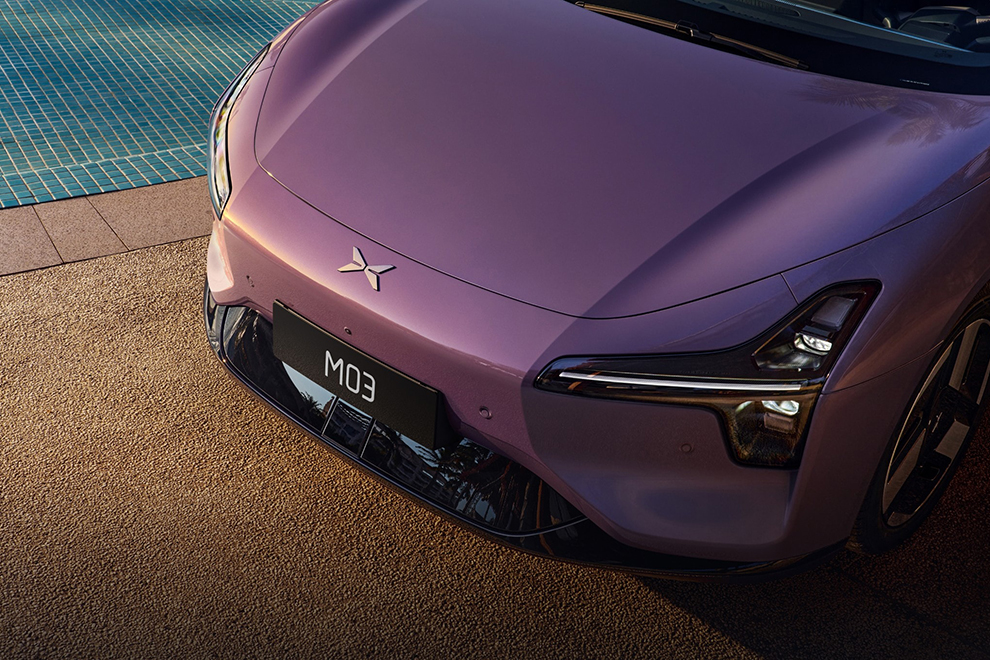
At a glance
- Offers BEV and EREV options in a compact liftback package.
- Named trims span 515 Long Range, 620 Ultra Long Range and 620 Extended Range Plus.
- Treat 515 and 620 as model designations, not destination-certified range guarantees.
- New vehicles emphasize factory traceability; used vehicles require condition and battery-health evidence.
- Live export cost depends on trim, condition, logistics, Incoterm, duties, taxes and currency.
- Current unit price, MOQ and availability belong to the live listing, not a fixed market range.
Why the XPeng Mona M03 matters for export markets
The XPeng Mona M03 matters to export buyers because it combines a compact liftback format with two electric operating concepts: a battery-electric car for buyers with dependable charging and an extended-range version for mixed charging access. Its 515 and 620 model designations also make it relevant to fleet and dealer discussions where range, efficiency and acquisition cost must be balanced. The model therefore competes on packaging and powertrain choice rather than on a single configuration, giving importers room to match it to different charging markets without changing the underlying platform or brand proposition.
In its segment, the M03 is attractive because a relatively sleek, five-door body can serve both private buyers and company fleets. The Long Range and Ultra Long Range labels focus on battery-electric distance, while Extended Range Plus adds a different use case for routes that combine electric driving with occasional longer journeys. That flexibility is useful where charging networks are uneven, but it should not be confused with a conventional hybrid: an extended-range electric vehicle still depends on correct charging habits and a fully understood local fuel and tax framework.
For overseas demand, the practical question is whether the M03 can be supported after sale, not merely whether it can reach the destination port. Buyers should compare local charging access, service capability, spare-parts channels, software and interface support, and the availability of the exact trim they need. The model can be especially persuasive where an importer wants a compact Chinese-made EV with a broader powertrain choice than a single-battery offering. It is less persuasive where factory-backed RHD supply, mature warranty coverage, or established residual-value data is the overriding requirement for the market.
- BEV and EREV options.
- Compact liftback positioning.
- Market-specific after-sales support.
Model range, trims and powertrain variants: how the lineup is structured and how to choose
When comparing XPeng Mona M03 specs, the named export trims are Model 515 Long Range, Model 620 Ultra Long Range, and Model 620 Extended Range Plus. The first two represent the battery-electric side, while Extended Range Plus uses an extended-range electric powertrain for drivers who want electric operation plus a combustion-engine range extender. A key buying trap is assuming that two trims carrying 620 are equivalent: one is a battery-electric Long Range derivative, while the other is an extended-range model. Compare the energy source, test-cycle basis, and certification rather than the badge alone.
Choose a 515 Long Range when the priority is the simpler battery-electric proposition, predictable charging workflow, and the lowest model designation in the named lineup. The 620 Ultra Long Range is the battery-electric comparison when greater range potential requires checking the exact battery specification. Extended Range Plus makes sense for mixed-duty routes where drivers can charge regularly but need additional range assurance. Because the catalogue does not establish a buyer’s charging pattern, the best choice comes from mapping daily mileage, overnight depot charging, and route coverage before selecting a trim.
Equipment, software, and warranty terms can also separate trims, so do not make the decision on range naming alone. Ask each seller for the exact battery version, electric range and range-extender details, motor output, charging interface, standard equipment, production period, and destination documents. Confirm whether quoted figures follow CLTC, WLTP, or another cycle; an overseas buyer needs a figure that is comparable with local homologation and real-route expectations. If a listing omits these details, treat it as incomplete and request the configuration sheet before placing funds or accepting a non-binding estimate.
- 515 Long Range: BEV.
- 620 Ultra Long Range: range-focused BEV.
- 620 Extended Range Plus: EREV.
- Verify range basis.
New vs used XPeng Mona M03: how export inventory is structured and how buyers choose
Chinese export inventory is structured through different channels: new vehicles sourced from manufacturers or their distribution networks, and used vehicles sourced from fleet, dealer, or private-owner markets. These channels create different evidence, documentation, and pricing logic. A new M03 can offer a clearer factory history, but the buyer must still confirm production date, specification, warranty, and any dealer preparation. A used example may offer a different acquisition profile, yet its condition, battery state of health, service history, and legal documents become central to the decision before any binding order is placed.
For a new M03, the strongest case is a buyer who values traceable factory configuration, the technology specified for its model year, and the strongest possible route to manufacturer or seller warranty support. Check that the VIN, build plate, trim name, color, battery version, and option list agree, and ask whether the vehicle has been prepared for export. Dealers should also establish how storage, charging, or demonstration use has affected tires, fluids, and cosmetic condition. For fleet procurement, repeatable configuration and documented handover procedures can matter more than small cosmetic differences between otherwise equivalent units.
A used XPeng Mona M03 can suit a buyer who values a configuration, lower outlay, or an operating history, but these benefits must survive a rigorous inspection. Obtain the VIN, registration and title documents, service records, battery state-of-health report, charging history where available, and evidence of accident repair. Inspect body geometry, panel gaps, tires, brakes, suspension, cabin wear, software status, and warning messages, and verify that keys, tools, charging cables, and recovery equipment are present. Also confirm that the used vehicle is eligible for export and that any remaining warranty is transferable.
- New: verify traceability.
- Used: inspect battery health.
- Reconcile VIN and records.
How export pricing works: the factors behind a live listing price, and how to read one
An XPeng Mona M03 export price guide should separate the vehicle’s asking price from the landed cost of importing it. The vehicle amount is driven by exact trim, model year, battery or range-extender version, production period, mileage if used, condition, options, and negotiation terms. Between the vehicle and delivery, currency movements, payment fees, inland transport, export handling, insurance, freight, port charges, documentation, and the chosen Incoterm can change the commercial result. A cheaper listing is therefore not automatically cheaper after arrival unless every comparable cost sits on the same basis.
Read each live listing line by line, not just the headline model name. Confirm the VIN or stock reference, production year, exact trim, energy version, mileage and condition for used units, color, options, seller location, and whether the displayed amount includes domestic charges or export preparation. Look for a stated Incoterm, named loading and destination ports, document scope, inspection period, payment schedule, and validity date. If those fields are absent, ask the seller to put the missing terms in a written quotation. A listing image or model badge alone is not enough to establish a binding specification.
For a landed comparison, build a worksheet that starts with the live vehicle amount and adds or assigns every logistics cost. Decide who is responsible for export customs, sea or Ro-Ro freight, marine insurance, destination charges, duties, taxes, registration, delivery, and commissioning. EXW, FOB, CIF, and DDP describe different responsibility boundaries; the label alone does not guarantee a predictable total. Request a quote tied to the Mona M03 trim and destination port, with exclusions named, and reconfirm the total when payment and vessel schedules are agreed in a written record.
- Compare equivalent trims and years.
- Separate vehicle and landed costs.
- Use live written quotes.
MOQ, ordering and payment: single units vs consolidating a container
For XPeng Mona M03 wholesale ordering, MOQ is a term, and the correct question is not whether a marketplace category has a universal minimum but what the seller will accept for that vehicle and shipment plan. A dealer buying to test demand may request one unit if the seller supports it; a fleet or distributor may ask for a mixed-model consolidation. Confirm the minimum per model, trim, color, or container, and whether different minimums apply to new and used vehicles. The live listing and a written RFQ should state the order quantity required before a booking or production allocation can be made.
Single-unit purchasing gives an importer flexibility to test fit, branding, and local demand, but it may not produce the best freight efficiency and can leave the buyer exposed to market movement before the next order. Container consolidation can spread freight and handling costs across more units and improve purchasing control, yet it introduces coordination risk: units may have different model years, trims, colors, mileage bands, document readiness, and pickup windows. Ask the consolidator for a unit-by-unit allocation list and reserve inspection and storage time. If deadlines cannot be synchronized, secure space or warehousing before committing to vehicles that may sit at the origin.
Payment terms should follow the risk sequence. A structure is a deposit to reserve the unit, documentary or inspection-based payment before release, and a balance before loading or against shipping documents; the sequence is seller-specific. Buyers should define the currency, bank charges, refund conditions, title-transfer requirements, inspection standard, and what happens if the vehicle does not match the agreed trim or condition. Keep every approval written, and never rely on a chat message alone for cancellation rights. For higher-value or consolidated purchases, consider payment milestones tied to verified inspection and document checks rather than a single early transfer.
- Confirm order-specific MOQ.
- Use consolidation allocation sheets.
- Link payment to inspection.
Shipping, homologation and market compliance caveats: LHD/RHD and import rules by country
Vehicle shipping method, route, and documentation affect both cost and delivery risk. Depending on the vehicle and carrier, an M03 may move in a specialist vehicle carrier or a roll-on/roll-off service, and the battery must be handled under the carrier’s lithium-battery rules. Ask for the transport plan, loading location, carrier, port pair, insurance coverage, expected sailing and customs stages, and every document the buyer or freight forwarder needs. Transit duration is not fixed: vessel schedules, port congestion, customs inspections, weather, terminal handling, and document corrections can all change the timetable.
Steering configuration is a sourcing decision, not a last-minute detail. China-origin examples are commonly supplied as left-hand-drive vehicles, while some destination markets require right-hand drive. A conversion can involve more than changing the steering assembly: instrument and control layout, lighting, warning systems, parking equipment, charging access, and safety documentation may all be affected. Ask whether a factory RHD M03 is available for the destination and whether any converted vehicle retains the original warranty. Never accept “RHD ready” without a configuration sheet, inspection record, and written description of which components were changed.
Import compliance must be handled before the vehicle is treated as road-ready. The importer of record should confirm type approval or registration requirements, VIN and customs paperwork, emissions rules for any range extender, charging and electrical standards, radio or software rules, cybersecurity and data requirements where applicable, recall obligations, insurance, and the treatment of used vehicles. Incentives or tax treatment can depend on the exact powertrain, ownership, and rules. Responsibility for these checks should be written into the purchase contract, with the licensed importer or compliance adviser identifying what must happen after arrival.
- Verify battery transport documents.
- Document RHD provenance.
- Assign homologation duties.
Who should buy the Mona M03 — and who should pick a different vehicle
The Mona M03 fits importers and fleet buyers that need a compact liftback, a choice between pure electric and extended-range operations, and a vehicle sized for urban or regional duty rather than heavy commercial work. It is a strong candidate for company-car programs, shared-mobility fleets, destination-charging operations, and dealer launches aimed at technology-focused customers. The strongest business case appears where the charging plan is controlled, maintenance can be handled locally, and the selected trim can be supported with parts and software. Total cost should include energy, insurance, maintenance, depreciation, and downtime rather than vehicle acquisition alone.
An extended-range M03 may suit a mixed fleet in which vehicles return to a depot regularly but occasionally travel beyond dependable charging coverage. It can reduce range anxiety while preserving an electric operating mode for routine journeys, but fuel consumption, maintenance, exhaust-emissions rules, and total operating cost must be included in the business case. A battery-electric M03 is more straightforward where overnight charging is reliable and routes are stable. Before ordering either, analyze route length, weather, driver behavior, depot power capacity, and replacement planning; a brochure range is less important than the duty cycle the vehicle will actually perform.
Buyers should choose a different vehicle if they need large-cargo capacity, heavy towing, rugged off-road use, guaranteed factory RHD supply, international service coverage, or a charging and software ecosystem standardized in their market. A compact liftback may also be unsuitable for fleet routes that leave remote areas for periods without planned charging or fuel support. In established markets, a homologated model with residual values and mature parts supply may reduce risk even if its acquisition cost is less attractive. The correct comparison is whole-life suitability: energy, compliance, uptime, support, and resale—not badge value or the largest range label.
- Best for managed charging.
- Include fuel and uptime.
- Alternatives suit heavier duty.
Main rivals and how the Mona M03 compares
Rival selection should reflect the M03’s format and buyer set: a compact electric liftback that competes partly on powertrain choice, technology, packaging, and export value. The BYD Dolphin is a close size-and-price hatchback benchmark, while Changan’s Deepal SL03 is a particularly relevant liftback alternative because it is also offered with battery-electric and extended-range powertrains. The Tesla Model 3 sits higher as a premium, globally familiar benchmark, but it is useful for buyers who prioritize brand assurance and established service support. These comparisons should be made on homologated specification, not brochure positioning.
Against the BYD Dolphin, the M03 generally offers a larger, more upscale liftback shape and, in the named export range, a choice that includes an extended-range powertrain. The Dolphin is a direct alternative for buyers who prioritize a simpler BEV-only purchase decision, but the final choice depends on local certification, service provision, and the exact price-and-equipment package. Against the Deepal SL03, the M03 competes in the same liftback and extended-range territory; the deciding factors become dimensions, range methodology, equipment, and after-sales coverage rather than powertrain format alone in the destination market.
Against the Tesla Model 3, the M03 may appeal more to value-oriented importers and those seeking EREV flexibility, whereas the Model 3 can carry an advantage in brand familiarity and established global service infrastructure. Neither comparison should assume equal charging, range, or residual-value outcomes. For all three rivals, compare the destination-approved version, battery and range basis, real-world charging or fuel needs, warranty, parts lead time, safety and driver-assistance equipment, and total landed cost. The best rival is the one that solves the buyer’s duty cycle with fewer operational compromises overall.
- BYD Dolphin: hatchback benchmark.
- Deepal SL03: closest powertrain-format rival.
- Tesla Model 3: global-service benchmark.
Live XPeng Mona M03 export inventory
View all listings →Real units currently on ChinaCarDirect with per-unit asking prices and MOQ. Availability updates live from the catalogue.
How to buy a XPeng Mona M03 from China
-
1
Map the operating requirement
Record daily mileage, route length, overnight charging access, fuel availability, payload, local charging standards and expected annual utilization. Use these inputs to decide whether a BEV or EREV is more suitable.
-
2
Shortlist the exact vehicle
Review the live listings and identify the trim, model year, energy version, VIN or stock reference, condition, options and equipment. Do not rely on the model badge alone.
-
3
Request a written quotation
Send an RFQ stating the destination, desired trim, Incoterm, quantity and delivery requirements. Ask for the vehicle price, freight scope, documentation, payment schedule, lead time and all exclusions.
-
4
Confirm MOQ and payment milestones
Ask whether the order can be single-unit or consolidated and which minimum applies to the selected model and shipment plan. Tie payment stages to reservation, document checks, inspection and final release.
-
5
Approve inspection and documents
Verify the VIN, build records, title, export eligibility, condition, battery report for used vehicles, equipment list and transport paperwork before authorizing the balance.
-
6
Book freight and local compliance
Choose the transport method and Incoterm with a forwarder, then assign local customs, homologation, registration, insurance and delivery responsibilities. Keep the final inspection and shipping documents in the order record.
Mona M03 vs rivals
| BYD Dolphin | The Dolphin is a close compact hatchback and BEV-focused benchmark for buyers prioritizing a simpler purchase and established BYD recognition. The M03’s larger liftback format and EREV option broaden its use case, while local homologation, service coverage and price-and-equipment differences decide the fit. |
|---|---|
| Changan Deepal SL03 | Deepal SL03 is a particularly close liftback competitor because it is also offered in BEV and extended-range forms. Compare dimensions, range methodology, equipment and destination service support; the M03 may suit buyers prioritizing its specific trim and export proposition. |
| Tesla Model 3 | Model 3 is a premium, globally familiar benchmark with an established service ecosystem. The M03 may appeal to value-oriented importers and buyers wanting EREV flexibility, while Model 3 buyers may prioritize brand familiarity, charging integration and established resale markets. |
Frequently asked questions
How is the XPeng Mona M03 export price determined?
Export pricing starts with the exact vehicle specification and condition, then reflects currency, payment fees, freight, insurance, customs, duties, taxes, port handling and delivery according to the Incoterm. Current per-unit prices, MOQ and availability are shown in the live XPeng Mona M03 listings on ChinaCarDirect. Request a written landed quotation for the chosen trim and destination because a vehicle amount alone is not a complete import budget.
What powertrain and range options are available in the XPeng Mona M03?
The named lineup includes Model 515 Long Range and Model 620 Ultra Long Range for BEV, plus Model 620 Extended Range Plus for EREV. Ask for battery capacity, electric-only or combined range basis, test cycle, motor output, charging details and range-extender information on the exact listing. The 515 and 620 designations are not automatically destination-certified WLTP range figures.
Should an overseas buyer choose a new or used XPeng Mona M03?
A new M03 is generally easier to match to a defined factory configuration and warranty route. A used XPeng Mona M03 may suit a buyer seeking a particular configuration or lower acquisition outlay, but it requires close inspection of condition, battery health, service records, title documents and export eligibility.
What is the MOQ for buying an XPeng Mona M03 from China?
There is no safe blanket MOQ for an overseas purchase because terms can differ by seller, trim, condition and shipment plan. Request a single unit if suitable, or ask whether several units can be consolidated, and have the seller confirm the binding minimum in the live listing and RFQ.
How long does shipping take and what does it cost?
Freight cost and transit time depend on transport mode, route, ports, vessel schedule, terminal handling, congestion, customs inspections, insurance and battery-compliance documentation. Obtain a destination-specific freight quote rather than relying on a general shipping estimate, and confirm which charges are included in the selected Incoterm.
How are spare parts sourced for the Mona M03?
Chinese-origin vehicles may require parts to be ordered through XPeng or regional channels rather than a mature local dealer network. Before purchase, request the VIN-based parts and service process, confirm lead times, shipping cost, warranty treatment and compatibility for the exact trim, and identify commonly needed consumables for stocking.
Is a right-hand-drive XPeng Mona M03 available for export?
Factory RHD availability must be verified for each listing and destination; it should not be inferred from the model name. If only an LHD vehicle is available, ask whether conversion is permitted and exactly which components, safety checks, software settings and warranty terms are affected before accepting the vehicle.
How do I order an XPeng Mona M03 from China?
Begin with the live listings, shortlist an exact vehicle and submit an RFQ with your destination and required Incoterm. Confirm the current unit price, MOQ, availability, payment milestones, inspection standard and document set in writing before paying. Release the balance only after the vehicle and paperwork meet the agreed conditions, then coordinate freight and local compliance.
Ready to source the XPeng Mona M03?
Request a ChinaCarDirect RFQ for your chosen trim and destination, with current unit price, MOQ, availability, Incoterm and document scope confirmed in writing.
Request a quote