
XPeng X9 Export Buying Guide for Dealers and Fleets
Plan an XPeng X9 export purchase with practical guidance on trims, range, pricing, MOQ, shipping, homologation, inspection and rival alternatives.
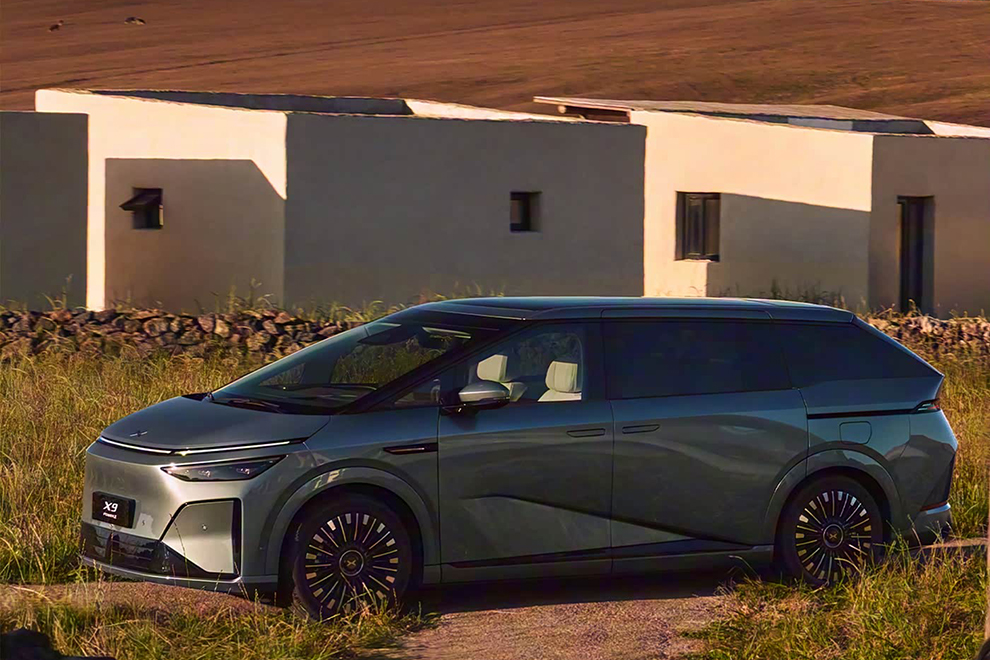
At a glance
- The XPeng X9 is a large premium MPV offered in battery-electric and range-extended forms.
- The 610, 702 and 750 labels denote CLTC range variants, while 1602 identifies a range-extended combined-range derivative.
- Select a trim around homologated range, drivetrain, charging needs, seating and after-sales support rather than the badge alone.
- New vehicles reduce configuration and battery-age risk, while used vehicles require ownership, condition and battery-health checks.
- Live export quotes move with trim, year, condition, exchange rates, freight, insurance and the selected Incoterm.
- Confirm steering side, homologation, local charging compatibility, parts supply and warranty before issuing a purchase order.
Why the XPeng X9 matters for export markets
The XPeng X9 sits in the large premium MPV segment, combining the cabin packaging of a people carrier with the low-floor, equipment-rich character of a Chinese electric vehicle. For overseas dealers, it is more relevant as a demonstrable premium product than as a low-cost commodity. Its long wheelbase and three-row layout suit executive transport, hotel and premium ride services, while electric versions can appeal to fleet operators seeking a distinctive vehicle with strong on-board technology. It also gives importers a platform to test EV demand without moving outside the MPV category.
Export interest is driven by the relative scarcity of well-equipped electric MPVs in many markets, particularly where local premium vans carry high purchase costs or limited powertrain choice. The X9 gives buyers a modern alternative with Chinese software, driver-assistance hardware and a broad range of battery-electric and extended-range configurations. Demand is not automatic, however: buyers must have confidence in homologation, charging access, repair capability and residual values before committing a meaningful volume. Its appeal is strongest where policy and infrastructure support electrified commercial or executive use rather than markets focused only on lowest-cost transport.
Treat the X9 as a segment specialist rather than a universal fleet answer. It can command attention in urban showrooms, airport transfers, premium hospitality and executive leasing, yet its size can be awkward in congested cities or where parking standards are compact. An importer should compare total operating cost, not only acquisition cost: energy availability, insurance classification, servicing, tyre and parts supply, battery warranty, and expected resale demand all influence whether the model is commercially sustainable in the target country. A small pilot is usually more informative than a speculative container.
- Premium MPV positioning with executive and family appeal.
- BEV and range-extended choices address different duty cycles.
- Charging, homologation and residual value decide viability.
Model range, trims and powertrain variants: how the lineup is structured and how to choose
XPeng structures the X9 around two energy families and several range or equipment classes: the 610 Long Range Max, 702 Ultra Long Range Max and 702 AWD High Performance Max, plus a Pure Electric Version and a Pure Electric 750 Ultra. Extended-range derivatives add 1602 Ultra, 1602 Max and 1602 UltraSE names, alongside an Extended Range Edition. For procurement, that means the correct starting point is the powertrain family and range class, not merely the model badge. The AWD label is the clearest performance differentiator among the BEV range variants.
The numbers need careful interpretation. The 610, 702 and 750 designations are CLTC-labelled range variants, not motor power outputs; the 1602 designation for the range-extended versions represents the headline combined range rather than an electric-only driving range. Local type approval may publish different usable figures because the test cycle and standard differ. Compare electric range, combined range, fuel consumption and charging data as separate fields, and ask the supplier for the exact homologated values applicable to the VIN being offered, rather than relying on the model designation alone or catalogue artwork.
Choose according to operating pattern. The 610 class can suit buyers who prioritise everyday efficiency and cost; the 702 and 750 variants provide more stated range but usually sit at a different price and equipment level. The AWD High Performance Max is for buyers who value traction and performance over minimum purchase cost. Range-extended models make sense where long journeys cross charging gaps, although they add a fuel engine, maintenance items and regulatory questions. Battery capacity, motor output, seating and charging rates must be confirmed per live listing because they vary by version.
- 610, 702 and 750 are range labels.
- 1602 denotes combined range for EREV versions.
- Compare homologated range, not CLTC headline alone.
New vs used XPeng X9: how export inventory is structured and how buyers choose
A new X9 is the cleaner choice when the importer wants current production specification, a defined factory warranty and a battery whose age and operating history are known from delivery. It also gives the buyer more scope to specify seats, paint, infotainment and driver-assistance packages before production. The trade-off is a higher vehicle acquisition commitment and less flexibility if demand for a premium MPV proves slower than expected. New inventory also needs a delivery plan, not just a purchase order, because factory-to-port timing and destination preparation must be aligned in advance.
Used X9 inventory can make the model more accessible for a test fleet or a price-sensitive dealer. Savings depend on model year, mileage, trim, battery condition, accident history and warranty transfer. A low purchase price can be offset by near-term tyres, suspension refurbishment, software uncertainty, depleted warranty or a weaker resale position. Used vehicles also need clearer ownership documents and a more rigorous export-eligibility check, particularly if the vehicle was already registered or used commercially. Ask whether the unit is road-ready, recently inspected and exportable in its current form and documentation.
For a used unit, treat the inspection as a technical and legal gate. Verify the VIN against the body, registration, service and payment records; review independent accident and paintwork evidence; confirm battery state of health, charging performance and any warning history; and inspect tyres, brakes, suspension, cabin wear and software updates. Where practical, use a pre-purchase inspection, request a cold start and road test, and include battery condition, repair history and warranty in the purchase contract. These checks are more revealing than the model-year badge alone or a generic condition grade.
How export pricing works: the factors behind a live listing price, and how to read one
An XPeng X9 export price is the sum of several decisions, not a fixed model-level number. The vehicle side starts with trim, model year, BEV or range-extended configuration, battery or motor version, options, mileage and condition. The transaction side adds currency movement, payment terms, inland transport, export documentation, marine insurance, freight, port or terminal charges and the selected Incoterm. Import duty, tax, registration and local delivery are separate unless the seller expressly includes them. A quotation can therefore look attractive at the vehicle level but not at the landed level.
When reading a live listing, verify the exact vehicle identity, year, trim, drivetrain, range class, odometer, condition, seller location, stated MOQ and quote validity. Check whether the displayed amount is the vehicle-only price, whether domestic tax or export charges are included, and which Incoterm governs risk transfer. Also establish whether the seller can provide matching VIN documents, inspection evidence, battery records and a warranty. A live per-unit listing shows the current ask, while a written quotation establishes binding price and availability. Do not infer a range-wide band from one unit or another unit.
The soundest comparison method is normalization. Compare like with like: same powertrain and range class, model year, condition, equipment level, currency, tax treatment, freight route, Incoterm, payment schedule and warranty scope. Ask for both vehicle-only and delivered-port or delivered-destination figures, then list excluded costs separately. A lower quote can still be better after freight, compliance work and expected maintenance are considered. Review the live XPeng X9 inventory for the current numbers, then use the RFQ process to obtain a written, unit-specific offer before budgeting. This prevents a misleading comparison between different vehicle scopes.
- Price follows trim, year, condition and configuration.
- Compare vehicle-only and landed cost separately.
- Only live listings provide current unit pricing.
MOQ, ordering and payment: single units vs consolidating a container
MOQ should be confirmed at the listing and quotation stage, not inferred from the model name. Some ChinaCarDirect listings may be available to individual professional buyers, while a supplier may impose a batch requirement for a particular allocation or colour. For an importer testing the X9, a single-vehicle order can reduce market risk and create a reference vehicle for local marketing. For a wholesale or container programme, ask whether the seller can consolidate the X9 with other models, what minimum volume applies to each line, and how unit prices change with volume.
The ordering sequence is straightforward but must be controlled. Select a VIN or specification, request the seller’s quotation and commercial terms, reserve the unit, complete the agreed deposit, verify inspection and shipping documents, pay the balance against the stated milestone, and authorize release for export. Keep the contract explicit about the vehicle, price currency, Incoterm, delivery window, documentation, inspection rights, warranty and what happens if the unit fails pre-shipment inspection. The buyer, beneficiary and title details should match across the listing, invoice and payment instructions before any funds are transferred.
Single-unit and container purchasing differ mainly in risk allocation. A pilot unit concentrates the cost of homologation, shipping and parts stocking on fewer vehicles, while a consolidated container may improve freight efficiency but locks more capital into one market assumption. An irreversible bank transfer increases exposure; escrow or an independently verified milestone reduces it where available. Compare all-in cost per vehicle, not just freight per unit, and confirm cancellation, storage and demurrage responsibilities before paying. Customs delays can turn a quoted saving into a carrying-cost loss at the destination port.
- Confirm MOQ for each seller and allocation.
- Pilot one unit before scaling inventory.
- Consolidation requires a written volume quote.
Shipping, homologation and market compliance caveats: LHD/RHD and import rules by country
X9 shipments are normally discussed as complete vehicles, with container or specialist roll-on/roll-off options depending on origin, port, carrier and vehicle dimensions. High-roof or flat-rack equipment may be needed where standard containers or vessel capacity are unsuitable. Because an EV MPV is tall and heavy, confirm loading clearances, lashing requirements, battery-related carrier rules, voyage insurance and discharge equipment at destination. Quote door-to-door and port-to-port separately so handling, customs, storage and inland haulage do not hide inside a low freight line. Avoid relying on a carrier's generic vehicle estimate for this model.
Steering configuration is a sourcing issue, not a conversion afterthought. Chinese-market X9 examples are commonly left-hand drive, while right-hand-drive availability depends on production batch, factory specification and importer commitments. A steering conversion changes parts, software, safety labeling and inspection requirements, and is not automatically lawful for road use. State the required side in the RFQ and require the seller to confirm it against the VIN, dashboard, certification and build sheet before shipment. Never accept 'RHD' based only on a photograph or translation. Verify the underlying build documents.
Import compliance must be assessed market by market. Buyers may need local type approval, VIN and registration checks, emissions approval for range-extender variants, charging and connector verification, cybersecurity or connected-car requirements, local data treatment, recall completion, insurance and proof of roadworthiness. Software, driver-assistance functions, map services and display language can also differ from China even when the hardware appears identical. Confirm which systems work in the destination country and whether remote updates or mobile connectivity remain available after import. Duties, VAT or GST, emissions charges and battery levies should be modelled separately from the vehicle quote.
- Confirm LHD or RHD against VIN and build sheet.
- Approve charging, software and safety locally.
- Price duties, VAT and port delays separately.
Who should buy the X9 — and who should pick a different vehicle
The X9 is a strong candidate for premium business transport, executive fleet, hotel chauffeur services, premium ride-hailing and family retailing where buyers value cabin space, comfort and technology. For a company, the three-row layout can carry passengers in multiple configurations, while BEV operating costs and charging strategy may support a lower-emission fleet policy. Range-extended versions broaden the addressable route network for operators that cannot rely on rapid charging every day. The case is strongest in cities with credible charging access and a customer segment willing to pay for a distinctive premium MPV.
It is a weaker fit where the brief is primarily low purchase cost, high cargo volume or operation in remote areas without dependable charging. Large dimensions can raise parking, garage and route-planning costs, while imported parts, software support and insurance may be less predictable than for an established local brand. Executive operators should also test chauffeur policies, luggage capacity, rear-seat access and uptime. A buyer without local workshop capability should require remote diagnostics, access to body and electrical parts, and a realistic warranty-spares plan before taking delivery. A smaller van or locally supported SUV may lower operational risk.
Choose the X9 when the value of cabin experience, design and powertrain choice offsets ownership complexity. Compare financing, insurance class, energy contracts, maintenance, tyre replacement, software subscriptions and expected residual value over the intended holding period. Fleet buyers should model both vehicle and depot infrastructure rather than assuming depot charging is free or instantaneous. For a first-time importer, a staged approach—one or more pilot units, market validation, then consolidation—usually exposes compliance and demand issues before a larger commitment. It also creates data for a better second-order specification request.
Main rivals and how the X9 compares
The closest functional rival is the BYD Denza D9, which competes in the large premium MPV class with electric and plug-in hybrid offerings. Both products target chauffeur, family and executive buyers, so the decision should focus on the exact powertrain, local homologation, software support, interior execution and aftersales network rather than body shape alone. D9 may have different charging or range characteristics under local testing, and brand familiarity can differ materially by country. Compare delivered cost and local support, not brochure range alone. Neither vehicle should be assumed compliant before local approval.
The SAIC Maxus MIFA 9 is another Chinese-built large MPV that can compete for family and executive-fleet buyers with an electric drivetrain. It is a useful benchmark for packaging, pricing discipline and the availability of simpler equipment packages. The X9’s own buying case may rest on its premium technology positioning, while the MIFA 9 may appeal where cost control or a more conventional brand proposition is more important. Availability, service coverage and residual-value evidence in the destination market should carry more weight than factory-option lists. Ask each seller for a like-for-like delivered quotation.
For buyers requiring a premium badge and established European support, the Mercedes-Benz EQV is a credible fleet alternative, particularly for passenger transport rather than private retail. It can reduce perceived resale and service risk in markets with a strong Mercedes network, although acquisition and operating costs may be less favourable than a value-oriented Chinese import. The X9 offers a newer high-technology MPV proposition and broader powertrain choice, but carries more import and after-sales execution risk. Decide which risk profile the fleet can support. Local service evidence should be checked for both.
- Match powertrain, homologation and support.
- Compare delivered cost and residual outlook.
- Treat brand familiarity as a market variable.
Live XPeng X9 export inventory
View all listings →Real units currently on ChinaCarDirect with per-unit asking prices and MOQ. Availability updates live from the catalogue.
How to buy a XPeng X9 from China
-
1
Define the market and duty cycle
Identify the destination country, steering side, passenger or cargo priority, charging access and local registration route before selecting a vehicle.
-
2
Shortlist the powertrain and range class
Compare 610, 702 and 750 BEV variants with the 1602 range-extended derivatives, using homologated range and charging data rather than badge alone.
-
3
Review unit-level live listings
Check the exact VIN, year, trim, drivetrain, odometer, condition, seller location, MOQ and current asking price for each candidate.
-
4
Request a written quotation
Send an RFQ with the destination, required configuration, Incoterm, inspection requirement and expected volume. Require exclusions, payment milestones and quote validity in writing.
-
5
Complete technical and legal due diligence
Verify ownership, export eligibility, VIN records, service history, battery condition, accident history and local type-approval requirements. Use independent inspection for a used unit.
-
6
Lock the order and payment terms
Ensure the contract matches the selected vehicle, price currency, Incoterm, documentation, warranty and pre-shipment inspection rights. Confirm beneficiary details before transferring funds.
-
7
Arrange freight, homologation and delivery
Book suitable transport with insurance, prepare shipping and customs documents, complete destination approval and retain inspection evidence through registration and handover.
X9 vs rivals
| BYD Denza D9 | The D9 is the closest direct competitor, offering large premium MPV packaging with electric and plug-in hybrid choices. Compare it with the X9 on the exact powertrain, delivered cost, local service network, homologation and destination-market residual outlook. |
|---|---|
| SAIC Maxus MIFA 9 | The MIFA 9 is a relevant Chinese-built electric MPV alternative for family and executive buyers. It may appeal where equipment simplicity and cost control take priority, while the X9 is stronger as a premium technology proposition. |
| Mercedes-Benz EQV | The EQV is a credible premium passenger-MPV option where Mercedes-Benz service and resale recognition reduce perceived risk. It can suit established fleets, while the X9 offers newer technology and more powertrain choice but requires stronger import and after-sales execution. |
Frequently asked questions
How is the XPeng X9 export price determined?
Export pricing starts with vehicle-specific factors such as trim, model year, BEV or EREV configuration, battery or motor version, options, mileage and condition. It then reflects payment terms, exchange rates, export documentation, insurance, freight, port charges and the selected Incoterm; review the live listing and request a written delivered quote for current binding figures.
What powertrain and range options does the XPeng X9 have?
The export-facing lineup includes BEV and range-extended electric versions. The 610, 702 and 750 names identify CLTC-labelled BEV range classes, while 1602 denotes the headline combined range for EREV derivatives; request homologated range, battery capacity, motor output and charging specifications for the exact listing.
Should an overseas buyer choose a new or used XPeng X9?
A new X9 offers clearer specification, warranty and battery-age history, while a used unit can reduce acquisition cost and provide immediate fleet availability. For a used vehicle, prioritize VIN and title verification, independent inspection, battery-health evidence, accident history, remaining warranty and export eligibility.
Can I buy one XPeng X9 or must I order a container?
MOQ varies by listing and seller allocation, so it should be confirmed for the selected unit rather than assumed from the model name. Some offers may support single-unit professional purchases, while container or mixed-model consolidation normally requires a separate written volume quotation.
What determines XPeng X9 shipping time and cost?
Origin and destination ports, carrier schedules, vessel or container space, port congestion, customs clearance, inland haulage, insurance, handling and the Incoterm all affect the result. Obtain separate vehicle, freight, documentation and destination-charge estimates because a low freight line does not include every landed cost.
How will I source XPeng X9 spare parts?
Confirm body, glass, lighting, wheel, interior, charging and electronic-module support before purchase, along with diagnostic access and workshop procedures. For EREV versions, confirm engine-related service parts as well; request indicative lead times and an aftersales escalation contact for the destination market.
Is right-hand-drive XPeng X9 availability guaranteed?
No. Right-hand-drive availability depends on production batch, factory specification and importer requirements. State the required steering side in the RFQ and have the seller confirm it against the VIN, build sheet, certification and local approval; a later conversion is not an automatic substitute.
How do I order an XPeng X9 from China?
Review the live inventory, identify a suitable unit or configuration and submit an RFQ with the destination, steering requirement, Incoterm and expected volume. After receiving a written quotation, complete due diligence, sign the vehicle contract, pay by agreed milestones, complete inspection and release the vehicle with the required export documentation.
Ready to source the XPeng X9?
Request an RFQ for a specific XPeng X9 configuration with a unit-level price, MOQ, Incoterm, documentation package and delivery estimate.
Request a quote