
ZEEKR 001 Export Buying Guide for Overseas Buyers
Choose the right ZEEKR 001 for export with clear guidance on trims, battery options, pricing logic, MOQ, compliance, rivals and shipping for dealers.
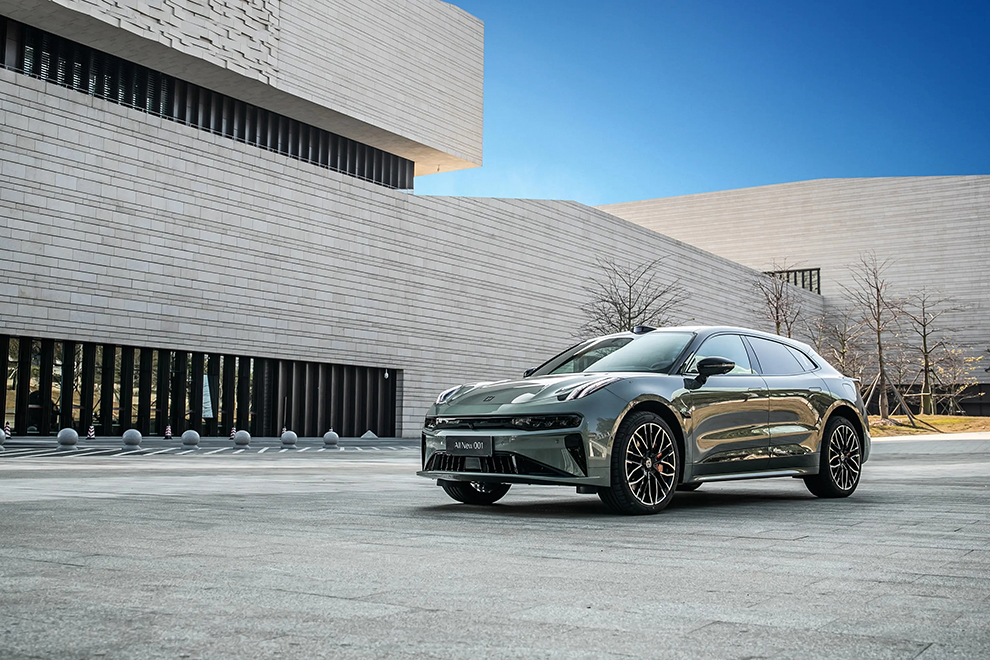
At a glance
- The ZEEKR 001 is a premium battery-electric shooting brake that gives importers a more distinctive alternative to executive sedans and crossovers.
- Listings identify 86, 95, 100 and 103 kWh battery labels with RWD or AWD configurations, subject to exact unit verification.
- WE, YOU and ME names organize the range, but buyers should compare model year, equipment and motor details rather than infer them from the badge.
- New units reduce condition uncertainty; used units require battery-health, mileage, accident, service and recall verification.
- Export price must be assessed as a landed-cost calculation, with current per-unit terms shown in live listings and confirmed in writing before ordering.
Why the ZEEKR 001 matters for export markets
The ZEEKR 001 occupies an unusual place in the premium electric segment: it combines a shooting-brake/liftback silhouette with the long-range, high-performance positioning associated with ZEEKR. That shape appeals to overseas buyers who want more visual distinction and rear practicality than a conventional executive sedan without moving into a full-size SUV. For a buyer sourcing from China, the attraction is not simply a new badge, but a premium body style, multiple battery and axle configurations, and a vehicle that can be compared directly with established premium EVs in the destination market.
Interest in Chinese electric vehicles creates a logical opening for the 001, particularly with importers seeking a model that is more visibly premium than a standard fleet EV. The 001 can serve as a showroom halo car for a dealer, a premium executive option for a company fleet or a design-led choice for private buyers. Its rear-oriented body also helps distinguish it in markets where many electric newcomers are sedans or crossovers. Export demand should nevertheless be tested against local charging habits and after-sales expectations before a larger order is committed.
For overseas buyers, the commercial case is strongest where the vehicle's design, range options and performance can be supported by adequate charging infrastructure and a credible service plan. Premium software, driver-assistance systems and high-voltage components can make specialist training and parts planning more important than for a mass-market EV. The 001 is therefore most attractive to distributors that can handle complex products and develop a clear proposition, rather than to buyers who prioritize the lowest purchase cost or the most standardized support network in the destination market from day one.
- Premium electric shooting-brake format.
- Multiple battery and axle choices.
- Service capability affects fleet fit.
Model range, trims and powertrain variants: how the lineup is structured and how to choose
The live ZEEKR 001 catalogue is structured around named editions, including WE, YOU and ME, combined with battery and drivetrain identifiers. Relevant battery labels include 86 kWh, 95 kWh, 100 kWh and 103 kWh, while axle configurations are shown as RWD or AWD. Some names also identify Long Range or Ultra Long Range packages. These labels are the safest starting point for comparison because equipment can be bundled differently by model year and market. Buyers should not assume that a shared edition name means identical standard equipment across model years.
Battery choice should follow the duty cycle rather than the largest label available. A smaller-pack car may suit urban use, frequent depot charging and buyers who prioritize purchase efficiency, while a larger pack can add scheduling flexibility for long intercity routes or limited charging access. The 95, 100 and 103 kWh options are closely grouped, so the meaningful comparison is their homologated range, usable charging performance, curb weight and local price—not capacity alone. For fleet planning, ask the supplier for the exact range rating and charging curve, and confirm both before delivery.
RWD and AWD versions serve different priorities. A rear-wheel-drive unit may be the logical choice where efficiency, lower-complexity deployment or a price-sensitive brief matters more, while all-wheel drive can suit buyers who prioritize traction, performance or operation in variable conditions. The 001 range includes single-motor and dual-motor descriptions, but motor outputs are not stated in the listing titles. Do not infer acceleration or output from 'AWD' alone; request the motor rating, top speed and axle details, then compare them with the rival vehicles shortlisted for the same operating brief and market.
- WE, YOU and ME edition names.
- 86, 95, 100 and 103 kWh labels.
- RWD and AWD layouts require comparison.
- Confirm motor output and charging curve.
New vs used ZEEKR 001: how export inventory is structured and how buyers choose
A new ZEEKR 001 is generally the cleaner route for an importer that values consistent specification, known delivery condition and simpler initial presentation. Export inventory can be organized at unit level: new cars arrive through dealer channels, while used or demonstrator examples may enter through used-EV, fleet-disposal or specialist channels. A new vehicle avoids uncertainty over battery degradation, prior accident repair and accumulated use, although the buyer must still confirm the exact year, trim and options. Availability and condition should be assessed vehicle by vehicle, with the key distinction being how much technical and administrative risk the importer is prepared to manage.
For a used ZEEKR 001, the battery becomes the central due-diligence item. Ask for a state-of-health report, the battery pack identifier and evidence of the reported remaining capacity, rather than relying only on dashboard range. Also verify mileage, service history, accident and flood records, tire condition, charging hardware, software version and whether all recall or campaign work has been completed. A physical or independent inspection is particularly valuable for a vehicle that will be exported, because local repair records may not be visible or independently verifiable from the Chinese supplier's summary.
Dealers serving corporate fleets often prefer new vehicles for warranty administration, predictable residual-value planning and a uniform handover process. Used units can make sense for a buyer seeking a particular battery-and-drivetrain combination, accepting depreciation in exchange for a known acquisition route, or entering a market where a lower initial outlay matters more. The practical method is to compare total cost over the planned holding period, including any battery-health warranty, expected software support, parts and certification work, then inspect the exact unit rather than judging a generic used model before contracting.
- New vehicles simplify handover and warranty.
- Used vehicles require battery-health evidence.
- Inspect each unit before contracting.
How export pricing works: the factors behind a live listing price, and how to read one
Export pricing for a ZEEKR 001 is not one fixed market value. The vehicle's model year, edition, battery capacity, RWD or AWD layout, mileage, condition and visible equipment all affect the live asking price. Beyond the vehicle itself, exchange-rate movement, freight, marine insurance, port charges, taxes, homologation and the selected Incoterm can change the landed cost. Consequently, a listing price should be treated as a transparent reference for the described unit, while the final procurement number is built from a written quote with delivery assumptions clearly stated. Keep both in writing.
Read each live listing from left to right and match the title, battery, axle configuration, model year, condition and asking price. Check what is included: documentation, charging equipment, basic accessories, export handling, warranty scope or dealer preparation. A quote for one vehicle is not automatically equivalent to a quote for several units, even if the trims look similar or the model year differs. Use the [live ZEEKR 001 listings](https://chinacardirect.com/products?q=001&brands%5B%5D=82) for the current per-unit price, minimum order quantity and availability, then request a written quote for the precise configuration before placing an order.
For a wholesale comparison, separate vehicle cost from landed cost and compare like with like. Two 001s can differ materially in battery, drive layout, specification and production year, so their prices are not directly comparable without normalization. Ask for the quote validity period, payment milestones, allocation status and any condition-based adjustment. The same discipline applies when using the 001 for fleet bids: ask the supplier to show the base vehicle price, optional equipment, logistics allowance and the Incoterm, then reproduce the calculation in your own destination-country model before final approval.
- Separate vehicle price from landed cost.
- Check exact listing, condition and MOQ.
- Normalize quotes by Incoterm and scope.
MOQ, ordering and payment: single units vs consolidating a container
Minimum order quantity is a listing-level commercial term, not a permanent property of the ZEEKR 001. Some unit offers can be bought individually, while a seller may set a higher MOQ for a particular batch or mix. Buyers should open the current listing and read the stated MOQ before treating a single vehicle or a container-sized purchase as available. If a distributor needs several vehicles, request both an all-in single-unit quote and a volume quote so the savings, fees and obligations can be compared without relying on a generic catalogue assumption. Confirm both in writing.
Consolidating a container can improve freight efficiency, but it should not be confused with a better vehicle deal. Mixed editions and battery configurations can complicate homologation, documentation, resale stock and customer handover, while mixed specifications may also limit the ability to standardize fleet training. A disciplined importer first defines the target mix, confirms each VIN and trim, checks whether the loading plan can accommodate the dimensions and securing requirements, and only then compares FOB, CIF or another Incoterm on the same basis with the appointed freight forwarder before any space is booked.
A sound ordering workflow separates commercial approval, vehicle verification and payment. Confirm the specification, total quote, accepted currency and bank charges; request clear photographs, a VIN, title or ownership documents and warranty terms; then agree a deposit, balance trigger, refund mechanism and release process. Payment should be tied to verifiable documents and contract terms rather than informal assurances. For a container order, identify the responsible party for pre-shipment inspection, damage claims, spare-parts packing and export-record handover, so responsibility does not become blurred between dealer, supplier and forwarder in the sales contract.
- MOQ belongs to the individual listing.
- Compare single-unit and volume economics.
- Tie payments to verified documents.
Shipping, homologation and market compliance caveats: LHD/RHD and import rules by country
Shipping a ZEEKR 001 begins with confirming the vehicle's approval status for the destination, not simply arranging a vessel. Import rules vary by country and may cover VIN or type approval, emissions and safety standards, electrical and charging compatibility, software, cybersecurity, local-language materials and proof of roadworthiness. EU/UNECE type approval, UK individual approval, US import and manufacturer requirements, and Gulf-state or GCC procedures do not create one automatic pathway. A vehicle built for China may require documentary work or modification, and approval should be confirmed before committing to an import plan or binding payment.
Steering configuration is another early check. The 001 is offered in export contexts with market-dependent equipment, so buyers must confirm whether the unit is left-hand-drive or right-hand-drive rather than assume from the photo or listing title. A right-hand-drive conversion can affect homologation, parts planning and insurance, while a left-hand-drive vehicle may not satisfy local registration expectations. If RHD supply is essential, ask for a confirmed vehicle or a documented conversion route before payment. Never treat 'export vehicle' as proof of a particular steering configuration or compliance for the destination market.
Freight cost and transit time depend on origin and destination ports, carrier schedule, vessel space, vehicle capacity, battery-related handling rules, insurance, documentation and whether the vehicle travels as a complete unit or requires special handling. Electric vehicles may be carried under battery-specific safety and stowage requirements that vary by carrier and route. Compare an all-in delivered quote with the vehicle's condition on arrival, then clarify who bears customs delay, damage, missing-accessory and storage risk. For fleet programs, build a delivery buffer for the dealer rather than promising dates from an estimate alone.
- Confirm destination approval before freight.
- Verify LHD or RHD from documents.
- Assign transit, delay and customs risk.
Who should buy the 001 — and who should pick a different vehicle
The 001 is a strong fit for an importer or fleet buyer that wants a premium electric vehicle with a distinctive shooting-brake body, broad battery choice and both RWD and AWD options. It can work well for executive fleets, premium ride-hailing, hospitality operations or a distributor seeking a high-impact showroom model, provided charging and service support are ready. The strongest case is a market that values design, technology and long-range potential and where the operator can maintain a specialist EV after-sales capability. It is less convincing as an unplanned volume purchase.
It may be the wrong choice where the priority is the lowest total cost, minimal technical complexity or immediate access to generic parts and body panels. Complex premium EV software, battery work and model-specific components can make downtime more consequential than the vehicle's purchase terms suggest. Buyers needing a rugged off-road platform, a small urban runabout or a vehicle with a long-established local service network should consider alternatives in those categories. The right comparison is not whether the 001 is desirable; it is whether its ownership burden fits the fleet's operating reality and uptime targets.
Before scaling, run a disciplined pilot: verify the target configuration, obtain local compliance advice, arrange charging and service plans, source parts, inspect the first vehicle closely and monitor real utilization. Compare total cost per kilometre or mile, energy consumption, uptime, residual assumptions and customer acceptance rather than focusing only on acquisition cost. If the 001 meets those operating thresholds, it can become a credible premium offering. If it does not, a simpler EV platform or a locally serviced model may protect margin and reputation more effectively for the importing business over the full ownership cycle.
- Strong fit for managed premium fleets.
- Weak fit for minimal-support operations.
- Pilot before fleet expansion.
Main rivals and how the 001 compares
The NIO ET5 Touring is the closest conceptual rival because it combines a premium Chinese-brand electric car with a touring-car body aimed at buyers who want sedan-like handling and extra cargo practicality. The ET5 Touring may appeal where NIO's local sales and service or battery-swap ecosystem is established; the ZEEKR 001 may be more attractive where that ecosystem is absent and a conventional charging-and-service model is preferred. Compare exact battery, range, output, software, warranty and local support instead of assuming equivalent ownership and after-sales support are available in that market.
The XPeng P7 is another useful benchmark because it is a Chinese premium performance liftback with a strong technology-led image. It can be a closer fit for buyers focused on driver assistance and a conventional four-door fastback, whereas the 001's shooting-brake format emphasizes a more distinctive cargo-car silhouette. Availability, software features and support quality vary by country, so an overseas buyer should compare the exact exported specification. The P7 may offer a more familiar sedan proposition; the 001 may make a stronger design statement in showrooms, advertising and dealer lots.
The Mercedes-Benz EQE represents the established luxury-electric alternative, usually appealing to buyers who prioritize a globally recognized premium marque and a more conventional luxury-car service proposition. Its local network and resale expectations may reduce perceived operational risk, although vehicle cost and specification should be compared on a like-for-like basis. The ZEEKR 001 can offer a more distinctive body and a different China-origin value proposition, but that advantage should not obscure import, warranty, parts and compliance work. In practice, the EQE suits brand-confidence buyers, while the 001 suits informed EV buyers seeking differentiation at import.
- ET5 Touring: closest body benchmark.
- P7: technology-led liftback alternative.
- EQE: established luxury alternative.
Live ZEEKR 001 export inventory
View all listings →Real units currently on ChinaCarDirect with per-unit asking prices and MOQ. Availability updates live from the catalogue.
How to buy a ZEEKR 001 from China
-
1
Define the operating brief
Set route length, payload, charging pattern, LHD/RHD requirement and service coverage before choosing a trim. This prevents a larger battery or AWD package from being selected without a business case.
-
2
Compare exact configurations
Use the [live ZEEKR 001 listings](https://chinacardirect.com/products?q=001&brands%5B%5D=82) to compare year, WE/YOU/ME edition, battery label and RWD/AWD layout. Treat the listing title as the start, then request the full vehicle specification for the selected unit.
-
3
Verify documents and condition
Check VIN, ownership or title documents, service history, recall completion and, for used vehicles, battery state of health, mileage and accident records. Use an independent inspection when the unit is outside the buyer's physical market.
-
4
Request a landed quote
Ask for vehicle price, documentation, warranty, freight, insurance, port charges, taxes, homologation and Incoterm separately. Confirm the quote validity, current price, MOQ and availability for each selected listing.
-
5
Clear compliance and logistics
Verify destination-country approval, charging compatibility, software and language requirements, and steering configuration with an experienced homologation adviser or local authority. Then appoint a forwarder and define inspection, damage and customs-delay responsibilities.
-
6
Contract, pay, inspect and release
Use a written contract covering specification, payment milestones, refund terms, document handover and delivery conditions. Pay against verifiable documents, inspect before shipment or release, and retain a complete file for registration and after-sales support.
001 vs rivals
| NIO ET5 Touring (ET5T) | The ET5 Touring is the closest body-style benchmark, combining premium EV positioning with touring-car cargo utility. It suits buyers in markets with established NIO service or battery-swap infrastructure, while the ZEEKR 001 may better suit those wanting its specific design and conventional charging model. |
|---|---|
| XPeng P7 | The P7 is a technology-led premium liftback with a more conventional four-door fastback format. It is the stronger fit for sedan-oriented buyers, while the ZEEKR 001 offers a more distinctive shooting-brake silhouette for design-conscious importers. |
| Mercedes-Benz EQE | The EQE is the established luxury-EV alternative for buyers prioritizing a recognized marque and conventional local service proposition. The ZEEKR 001 offers a more distinctive China-origin package, but buyers must account carefully for homologation, parts and warranty support. |
Frequently asked questions
How is ZEEKR 001 export pricing determined?
Vehicle price is driven by model year, edition, battery, drivetrain, mileage, condition and equipment; landed cost also includes exchange rates, freight, insurance, port charges, taxes, homologation and Incoterm. Current per-unit price, MOQ and availability appear in the [live ZEEKR 001 listings](https://chinacardirect.com/products?q=001&brands%5B%5D=82), but they are not a universal landed quote. Request a written quote for the exact vehicle and destination.
What powertrain and range options does the ZEEKR 001 have?
The 001 is a battery-electric shooting brake. Export listings identify 86, 95, 100 and 103 kWh packs, RWD or AWD layouts, and single- or dual-motor descriptions. Range and charging figures vary with configuration and homologation, so check the live listing and request the exact rated figures for the vehicle being bought.
Should an overseas buyer choose a new or used ZEEKR 001?
New examples generally provide the most consistent delivery condition and a clearer warranty and handover path. Used examples can suit a targeted configuration, but require battery state-of-health, mileage, accident, service, recall, tire and charging-equipment checks. Inspect the individual unit and price the remaining ownership risk.
How does MOQ work when ordering a ZEEKR 001?
MOQ is a seller-set, listing-level term and can differ by batch or mix. The current requirement is shown on each live listing and should be accepted in the written quote. A distributor can request separate single-unit and volume scenarios, but should not assume either is available until confirmed.
What affects ZEEKR 001 shipping time and cost?
Time and cost depend on the port pair, carrier schedule, vessel space, vehicle handling, battery rules, insurance, documentation, customs and storage. Compare quotes under the same Incoterm and state whether they cover the vehicle, freight, insurance, duties, port charges and delivery. Build schedule contingency for customs or sailing disruption.
How should an importer plan spare-parts supply?
Ask the supplier for a VIN- or model-year-specific parts list, software compatibility details, lead times, packaging and warranty process. Identify critical stock such as charging cables, tires, lamps and service consumables, and confirm whether parts can ship with a vehicle order or must be sourced locally. Model-specific premium parts should be included in downtime planning.
Is right-hand-drive ZEEKR 001 availability guaranteed?
RHD availability depends on the specific source vehicle, conversion route and destination approval; it should not be inferred from 'export' wording. Confirm steering configuration from the VIN, photographs and documents before payment. A conversion may affect homologation, insurance, parts planning and warranty coverage.
How do I buy a ZEEKR 001 from China?
Start with the live listings, choose the exact configuration and request a written quote that includes the current price, MOQ and availability. Verify documents, condition, destination compliance, freight terms and payment milestones before contracting. Pay only under agreed terms, inspect before release and retain the complete file for registration and after-sales support.
Ready to source the ZEEKR 001?
Submit your target trim, battery, quantity, destination and Incoterm through the [ChinaCarDirect RFQ page](https://chinacardirect.com/contact) for a current export quote.
Request a quote