
ZEEKR 007 Export Buying Guide for Overseas Buyers
Buy a ZEEKR 007 from China with clear guidance on battery and trim selection, export pricing, MOQ, shipping, homologation and compliance for overseas dealers.
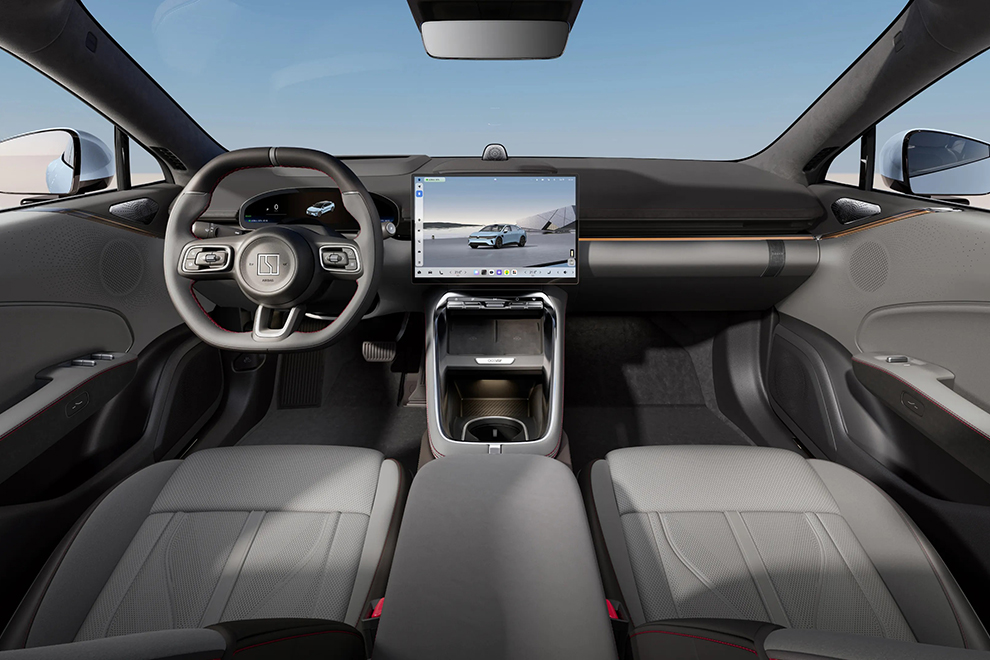
At a glance
- The ZEEKR 007 is a premium, technology-focused electric sedan suited to overseas dealer and fleet evaluation.
- Export configurations include 75 kWh and 100 kWh batteries, with both RWD and AWD drivetrains represented.
- Trim names indicate equipment tier, but exact hardware, software and destination-market functionality must be verified.
- Export pricing is shaped by specification, condition, exchange rate, freight, Incoterm and destination charges.
- Current per-unit prices, MOQ and availability are shown in live ChinaCarDirect listings.
Why the ZEEKR 007 matters for export markets
The ZEEKR 007 is a battery-electric sedan aimed at buyers who want a premium-looking, technology-focused vehicle without moving into a large luxury saloon. Its export relevance comes from a practical proposition rather than a single headline specification: buyers can choose 75 kWh or 100 kWh battery versions, with rear-wheel-drive and all-wheel-drive configurations represented across the range. For distributors, that creates room to match a vehicle to different markets instead of forcing one specification into every showroom or fleet program. The decision still depends on local charging access, homologation, service capability and realistic residual values.
For overseas demand, the 007 is most relevant in markets where Chinese electric sedans can compete on equipment and value while still meeting local approval requirements. Its digital-cabin and driver-assistance positioning can make it attractive to technology-oriented company fleets and premium dealer programs, but those benefits translate into demand only when software, charging standards and ownership support are understood before shipment. Export buyers should therefore treat the 007 as a market-specific product: a strong-looking catalogue entry is not the same as a compliant, supportable vehicle in the destination country. Local service readiness can be as decisive as the vehicle itself.
The model's strongest export use case is likely a controlled launch rather than an untested mass rollout. A distributor can begin with a representative RWD unit for route planning and charging assessment, then evaluate an AWD or longer-battery derivative for premium or all-weather requirements. Before committing, compare the 007 with locally homologated alternatives on usable range, cabin usability, insurance, parts supply and resale prospects. Use ChinaCarDirect's live inventory to confirm the exact vehicle, while the brand hub is useful for reviewing the wider ZEEKR portfolio and identifying sensible alternatives if supply or configuration changes.
- Validate charging access.
- Compare usable range.
- Assess service readiness.
Model range, trims and powertrain variants: how the lineup is structured and how to choose
The export lineup is structured around three useful axes: battery capacity, drivetrain and equipment tier. Buyers will encounter names such as RWD Enhanced, RWD Smart Driving, Long Range RWD Smart Driving and AWD Smart Drive or AWD Edition, generally paired with either the 75 kWh or 100 kWh battery. These labels describe the broad hierarchy, but they are not a substitute for the exact listing. A unit labelled 100 kWh, for example, may differ in motor output, suspension, cabin equipment, wheels or assistance hardware from another 100 kWh car. Verify every line against the VIN and photographs.
Start with the battery rather than the trim badge. The 75 kWh version may suit fleets with predictable daily routes and dependable charging, while the 100 kWh option can make more sense where long intercity legs, heavier climate-control load or infrequent charging create range anxiety. Do not convert a China-labelled range figure directly into an overseas range promise. Temperature, speed, elevation, payload, wheel choice and driving style all matter, and the applicable certification range may differ in the destination market. Compare the live specification with the destination's charging connector and voltage before making the choice.
RWD versus AWD is the second decision. Rear-wheel drive generally serves buyers seeking the simpler drivetrain layout and lower component complexity, while all-wheel drive adds a second driven axle and is normally chosen for traction, performance or adverse-weather confidence. The exact power figures are not uniform across the export range, so they must be checked rather than inferred from the badge. Smart Driving and Intelligent Driving names identify higher equipment positions, but overseas buyers should verify sensor coverage, software functions, language support and whether any feature depends on a local subscription or map service.
- Match battery to duty.
- Verify motor outputs.
- Check assistance configuration.
New vs used ZEEKR 007: how export inventory is structured and how buyers choose
New export vehicles are the cleanest starting point for buyers who need predictable condition, consistent specification and a straightforward handover process. A factory-new 007 should be evaluated for build date, VIN, paint, delivery mileage, factory warranty coverage and any damage recorded during transport; the absence of use does not remove the need for a pre-delivery inspection. It is also important to establish whether the quoted warranty is a China-market warranty, whether it transfers with export, and which party handles claims after the vehicle reaches the importer. Ask for the relevant policy documents before dispatch.
Used ZEEKR 007 units can suit a different commercial objective: reducing acquisition cost, obtaining a specific body and battery configuration quickly, or entering a market where fleet history is already documented. The price logic should then reflect model year, mileage, condition, battery and drivetrain, service records and remaining transferable support. Ask for battery-state diagnostic evidence, accident and repair history, tire condition, software status and inspection photographs. A lower acquisition price is not automatically economical if battery condition or unplanned repairs are uncertain. Treat any odometer reading without supporting documents as an incomplete procurement file.
The best structure is often a mixed buying strategy. Dealers can use a new unit as the demonstrator and benchmark for resale preparation, while a carefully documented used vehicle serves a price-sensitive fleet. Before mixing them, align software features, battery capacity and charging arrangements so customers do not receive two substantially different propositions under the same model name. Exact new and used units are not interchangeable: review the live listing for seller identity, vehicle condition and the availability shown for that individual record, rather than assuming a uniform export inventory structure.
- Inspect new units carefully.
- Document used-unit condition.
- Align mixed-fleet specifications.
How export pricing works: the factors behind a live listing price, and how to read one
A ZEEKR 007 export price is a combination of the vehicle's baseline value and the transaction structure around it. Model year, trim, battery capacity, drivetrain, motor specification, paint or option choices, mileage and condition affect the vehicle side. The commercial side can move with the renminbi exchange rate, Chinese factory terms, buyer volume, inspection, insurance, inland transport, port charges, ocean freight and the selected Incoterm. Duties, taxes and registration are often additional, so the amount shown in an inventory listing may not equal the buyer's final landed cost in the destination market.
Read each live listing line by line rather than comparing only headline amounts. Confirm the full model designation, 75 kWh or 100 kWh battery, RWD or AWD layout, edition, model year, mileage, condition, VIN, included accessories and whether duplicate seller records represent genuinely separate vehicles. Check the stated currency, price basis, payment schedule, warranty and whether the seller can quote the same vehicle after a formal RFQ. Ask for photographs of the nameplate and battery information where a listing does not make the configuration clear. A clean title alone does not prove that the vehicle has not been damaged or repaired.
For comparison, build a like-for-like worksheet: the same year, battery, drivetrain, equipment tier, condition and delivery term. Separate the vehicle price, inland logistics, international freight, insurance, destination charges and expected taxes into visible lines. A lower vehicle figure can still be more expensive after freight or compliance work, especially when a small order carries a higher cost per vehicle. Live prices on ChinaCarDirect are the binding source for current per-unit numbers; request a written quote with a validity period because exchange rates, freight allocations and available units can change. Do not budget from an old enquiry or cached catalogue page.
- Compare like-for-like specifications.
- Separate vehicle and landed costs.
- Use current written quotes.
MOQ, ordering and payment: single units vs consolidating a container
MOQ is a commercial rule attached to a seller's offer, not a permanent property of the ZEEKR 007 model. Some export listings may accept a single vehicle, while a factory, distributor or promotional programme may require a batch. Buyers should therefore read the MOQ displayed for each live record and confirm it in the RFQ before paying a deposit. One-unit ordering offers the greatest flexibility for a test market, importer or company fleet, but the seller may quote a different freight method, lead time or payment condition from a consolidated order. That distinction should be explicit in the pro forma invoice.
Container consolidation can improve shipment economics in a wholesale program when several dealers or fleet clients combine compatible orders. The buyer may be able to mix an RWD and AWD vehicle, or different battery versions, provided export documentation, destination approvals, charger equipment and retail specifications all remain coherent. Consolidation also creates allocation risk: one delayed or mismatched vehicle can affect the container plan. Confirm who is the importer of record, how units are allocated, whether the buyer or consolidator owns the cargo at each stage, and how claims for missing or damaged vehicles are handled before the container is sealed.
A sound ordering workflow separates commercial commitment from vehicle release. First agree the specification, price basis, MOQ, deposit, balance trigger and cancellation terms in writing. Next link payment to the correct VIN or unit allocation, inspection results and required export documents. After shipment, align the balance and release schedule with the bill of lading or transport document and maintain cargo insurance appropriate to the route. Because payment and logistics arrangements differ by seller and destination, obtain the pro forma invoice and shipping instructions together rather than relying on a general catalogue page.
Shipping, homologation and market compliance caveats: LHD/RHD and import rules by country
The first compliance question is not the battery size but the exact vehicle configuration. Left-hand-drive and right-hand-drive markets may require different steering positions, driver displays, lighting, warning equipment, controls and software settings. Some ZEEKR 007 export units may be configured for the intended market, but a listing's title alone should not be treated as proof. Request photographs of the cockpit and a written configuration statement. Any steering conversion should be assessed as a local modification: it can affect homologation, warranty, safety systems, the value of the vehicle and insurance.
Import rules differ by country and can cover road approval, emissions, battery safety, radio and communications, cybersecurity or vehicle-data requirements, software updates, insurance, duties, VAT or sales tax, and local registration incentives. Driver-assistance naming can also attract buyer assumptions that exceed what the imported configuration or local regulations allow. The importing dealer or its local compliance adviser should verify the exact variant with the relevant authority before committing. ChinaCarDirect can provide vehicle and transaction information, but it cannot replace destination-country certification or a binding local approval. Do not assume approval for one Chinese city or vehicle series applies automatically elsewhere.
EV shipping adds a second layer of planning. The exporter should provide the battery transport documentation required for the route, while the buyer confirms packing, securing and any restrictions selected by the carrier or destination port. Sea freight is often the economic choice for full vehicle programs, with RoRo, rail or grouped consolidation serving different routes and order sizes. Freight time and cost depend on origin and destination ports, sailing frequency, container availability, seasonality, insurance, cargo dimensions and local handling. Build a delivery window with contingency rather than treating a port-to-port estimate as the vehicle's final arrival date.
- Confirm steering configuration.
- Validate destination homologation.
- Check cargo documentation.
Who should buy the 007 — and who should pick a different vehicle
The 007 is a strong candidate for overseas dealers serving premium EV sedan customers and for company fleets that can control charging and routing. Its 75 kWh and 100 kWh battery choices make it possible to segment the offer by duty cycle, while RWD and AWD options broaden the appeal to buyers with different performance and traction priorities. Smart Driving equipment can suit technology-oriented fleets, provided the buyer understands which functions work after import and treats the driver-assistance system as an aid rather than unsupervised autonomy. It is less compelling when utilization cannot be matched to charging.
It is a weaker fit for buyers whose priority is the lowest possible acquisition cost, minimal technology complexity or immediate access to mature local service. Importing a Chinese premium EV into a market with limited high-voltage training, sparse parts coverage or uncertain residual values can weaken its operational advantage. Heavy-duty users should also confirm towing, payload, charging and warranty needs against the exact specification rather than borrowing assumptions from another 007 variant. A used unit may offer better acquisition economics, but only if battery and mechanical condition are supported by evidence.
Use a decision matrix before ordering. Rank the destination's charging access, climate, typical route length, vehicle uptime requirement, homologation burden, service capability, parts lead time, insurance and resale channel. Then test whether the selected RWD or AWD version and 75 kWh or 100 kWh battery match those conditions. For a cautious market entry, order a pilot configuration that reflects the likely best seller, not merely the most visually attractive derivative. If local charging is weak, if fleet uptime dominates, or if a mainstream combustion alternative is easier to support, another vehicle may deliver the lower total cost.
Main rivals and how the 007 compares
The closest segment references are the Tesla Model 3, BYD Seal and XPeng P7, but each emphasizes a different part of the purchase decision. The Model 3 is a familiar global benchmark for electric sedans, making it easier for buyers to frame charging, software and resale expectations. The BYD Seal competes as a premium BEV sedan with a broader market familiarity in many regions. The XPeng P7 overlaps most closely in Chinese technology-sedan positioning, including an emphasis on assisted driving and a digitally oriented cabin. None should be dismissed on badge alone.
Against these rivals, the 007's clearest differentiators to investigate are its battery-choice breadth, the availability of both RWD and AWD configurations, and the equipment hierarchy represented by Enhanced, Smart Driving and Long Range labels. Those advantages matter only if the destination homologation package preserves the expected comfort, charging and assistance features. Compare each rival on the same basis: certified range in the destination, usable cabin and boot space, motor output, thermal strategy, driver aids, local service, parts, software support and expected resale—not on Chinese-market headline figures alone. Ask for a like-for-like written comparison.
For procurement, the best rival is the one that fits the operating market, not necessarily the one with the longest specification list. A fleet with controlled depot charging may value predictable total cost and uptime, while a dealer launching a premium EV range may prioritize equipment differentiation and brand appeal. Include freight, duties, compliance work, expected energy consumption, insurance, servicing and residual-value assumptions in the comparison. The 007 should advance when its selected battery, drivetrain and support package create a measurable advantage in that specific market; otherwise, a more familiar rival may carry lower execution risk for the importer.
- Compare certified range.
- Assess service and software.
- Include residual value.
Live ZEEKR 007 export inventory
View all listings →Real units currently on ChinaCarDirect with per-unit asking prices and MOQ. Availability updates live from the catalogue.
How to buy a ZEEKR 007 from China
-
1
Define the destination and operating duty
Record the destination country, expected routes, charging locations, climate and fleet or retail use. This determines which approvals and configuration checks matter before comparing vehicles.
-
2
Shortlist the battery and drivetrain
Choose between 75 kWh and 100 kWh based on real energy demand, then select RWD or AWD according to performance, traction and fleet requirements. Review the exact trim rather than relying on the model name alone.
-
3
Review live unit records
Open the live ZEEKR 007 listings and confirm model year, edition, battery, drivetrain, mileage, condition, VIN, photographs and seller information. Check the current per-unit price and displayed MOQ.
-
4
Request a written vehicle quote
Ask the seller to confirm the specification, currency, price basis, payment schedule, warranty, documentation and quote validity. Request a separate landed-cost estimate covering freight, insurance and destination charges.
-
5
Complete compliance and payment review
Confirm LHD or RHD configuration, charging compatibility, local homologation requirements and importer responsibilities. Agree the deposit, balance trigger, cancellation terms and unit allocation before payment.
-
6
Arrange inspection and shipping
Complete a pre-shipment inspection and verify battery transport, export and cargo documents. Book the appropriate transport method, nominate the receiving party and maintain insurance through delivery.
007 vs rivals
| Tesla Model 3 | The Model 3 is the more globally familiar benchmark, with buyer recognition that can simplify comparisons of charging, software and resale expectations. The ZEEKR 007 may appeal to distributors seeking broader battery and drivetrain choice, but the final decision should follow destination-specific range, service and homologation checks. |
|---|---|
| BYD Seal | The Seal is a direct premium BEV sedan rival and may carry the advantage of stronger brand recognition in some markets. The 007 differentiates through its battery-capacity, RWD/AWD and equipment choices; compare certified range, cabin, assistance and landed cost rather than assuming either is superior. |
| XPeng P7 | The P7 is the closest home-market technology-sedan comparison, particularly for buyers focused on assisted driving and digital-cabin experience. The 007 should win only where its selected configuration, local support and import economics create a clear operating advantage. |
Frequently asked questions
How is the ZEEKR 007 export price determined?
The live price reflects factors such as model year, trim, battery capacity, drivetrain, condition, exchange rate, seller terms and freight allocation. It may be a vehicle-only price depending on the Incoterm, so ask for a written breakdown of inland transport, international freight, insurance, duties and other landed charges. Current per-unit prices and quote validity must be confirmed in the live ChinaCarDirect listings.
Which powertrain and battery options does the ZEEKR 007 have?
The 007 is a battery-electric sedan available in the export range with 75 kWh or 100 kWh battery versions and RWD or AWD drivetrains. Exact motor output, charging details and certified range vary by trim and destination, so they should be checked against the individual listing rather than inferred from the model name.
Should an overseas buyer choose a new or used ZEEKR 007?
A new vehicle offers more predictable condition and specification, while a used unit may reduce acquisition cost or provide a particular configuration more quickly. For a used vehicle, request battery-state evidence, service and repair records, mileage support and inspection photographs. For either condition, confirm warranty transfer and local service capability.
What is the MOQ for a ZEEKR 007 export order?
MOQ depends on the seller's current offer and can differ between individual listings, distributors and container programs. A buyer may be able to order one vehicle from some offers, while others require a batch or consolidated shipment. Read the displayed MOQ for each live unit and confirm it in the RFQ and pro forma invoice.
How long does shipping take and what drives the cost?
There is no fixed delivery period or freight charge for every ZEEKR 007 order. Timing and cost depend on origin and destination ports, sailing or transport frequency, container availability, route, seasonality, cargo handling, insurance and the selected Incoterm. The seller should provide a route-specific schedule and freight estimate with the vehicle quote.
Can spare parts be supplied for an imported ZEEKR 007?
Parts availability depends on the seller, vehicle specification and the importer's local support arrangements, so no automatic availability should be assumed. Before ordering, request confirmation of the parts process, catalogue identification, expected lead times and responsibility for warranty claims. High-voltage components, software support and crash-repair capability deserve particular attention.
Is a right-hand-drive ZEEKR 007 available?
Availability depends on the individual export unit, seller and destination market. A listing title may mention a drive configuration without confirming the steering position, so request cockpit photographs and a written market-configuration statement. Never assume that a left-hand-drive unit can be converted without cost, homologation review and renewed safety-system checks.
How do I order a ZEEKR 007 from China?
Start with the live listings, shortlist the required battery, drivetrain and equipment tier, and send an RFQ with the destination and quantity. Obtain a written specification, price, MOQ, payment schedule, warranty and landed-cost estimate, then complete local compliance review before paying a deposit. The order should identify the allocated VIN or listing and link final payment or release to inspection and shipping documents.
Ready to source the ZEEKR 007?
Send a ZEEKR 007 RFQ with your destination, trim, battery and quantity, and request a written per-unit quote and landed-cost breakdown.
Request a quote