
ZEEKR 009 Export Buying Guide for Overseas Buyers
Buy a ZEEKR 009 from China with practical guidance on specs, trims, export pricing, MOQ, shipping, compliance and live availability for overseas dealers.
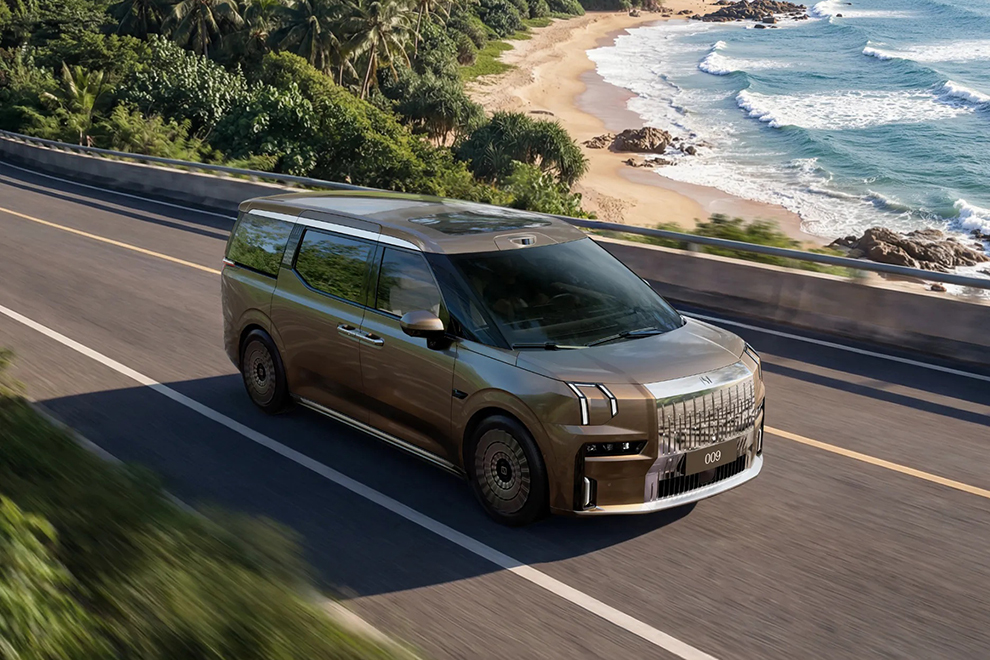
At a glance
- The ZEEKR 009 is a full-size premium electric MPV designed around executive, VIP and chauffeured transport.
- Six- and seven-seat layouts, 108 kWh and 140 kWh versions, and rear- or all-wheel-drive configurations shape the range.
- Battery choice should follow homologated range, charging access and operating routes rather than the battery label alone.
- New and used purchases require different checks: configuration alignment for new vehicles and condition history for used vehicles.
- Live export pricing depends on specification, condition, freight, Incoterms and currency, with current figures shown per listing.
- Steering configuration, homologation, import duties and aftersales support should be resolved before dispatch.
Why the ZEEKR 009 matters for export markets
For overseas buyers, the ZEEKR 009 for export occupies a distinctive position: a full-size, premium electric multi-purpose vehicle designed around executive transport rather than budget family mobility. Its long body, high roof and six- or seven-seat configurations suit chauffeur services, corporate reception, airport transfers and VIP hotel fleets. For overseas dealers, the appeal is not simply electric drivetrain technology; it is a high-specification alternative to combustion-engine luxury MPVs. That combination gives import programs an identity, especially where private-company buyers want a prestigious vehicle that can also serve luggage-heavy business travel needs.
Global demand for large electric MPVs is shaped by two overlapping needs: urban operators want a comfortable, low-emissions passenger vehicle, while private buyers increasingly compare Chinese premium models on design, technology and equipment. The 009 can attract buyers who value a formal cabin and electric smoothness, provided local charging infrastructure and service support are adequate. Its business case depends on utilization, charging availability and expected resale rather than on headline specifications alone. Longer duty cycles and conservative depreciation assumptions should be tested before a fleet order is committed in writing.
The model is especially relevant to buyers creating an electric chauffeur or premium fleet category in markets where large MPVs already have cultural acceptance. Because it is a battery-electric vehicle, it avoids tailpipe emissions during local operation and can suit properties with managed charging. That does not remove import friction: buyers still need to confirm steering configuration, certification, duties, battery transport documents and workshop capability before treating the 009 as an immediately deployable asset. The strongest programs therefore combine commercial urgency with early attention to aftersales planning and parts stocking.
- Premium electric MPV format
- Six- or seven-seat layouts
- Charging-dependent fleet fit
- Pre-launch homologation checks
Model range, trims and powertrain variants: how the lineup is structured and how to choose
ZEEKR 009 specs are organized around a battery-electric architecture, with the export-facing names showing 108 kWh and 140 kWh battery versions. Configuration labels add another layer: six-seat Executive, seven-seat Aisle and AWD versions appear alongside WE, ME, facelift and collector designations. These names help identify the starting point, but they are not a substitute for the VIN-specific option sheet. Model-year changes can alter equipment even when the marketing label looks similar. For fleet buyers, request the exact equipment, homologated range and charging data attached to each unit before comparing quotations.
The seating decision is practical. Six-seat Executive versions prioritize a more spacious second row and are attractive for chauffeured clients, VIP transfers and executive reception vehicles. Seven-seat Aisle versions add a third row for broader group transport, although luggage capacity and rear-seat comfort become more important. Buyers should test the operating scenario: passenger count, luggage volume, frequent loading and the balance between occasional VIP use and everyday shuttle duty. A layout that looks premium at handover can still be wrong if every trip demands maximum seating and unrestricted luggage space.
Powertrain choice should be matched to operating geography and charging patterns. The 009 is offered in rear-drive and all-wheel-drive forms in the broader model family, while the export inventory labels specifically include AWD 108 kWh and 140 kWh configurations. AWD can be useful where traction, payload confidence or performance matters, but it normally brings additional cost and energy use. The decisive specification is not the label; it is certified range, charging curve and suitability for the buyer's routes. Compare those figures across destinations rather than importing a laboratory result unchanged.
New vs used ZEEKR 009: how export inventory is structured and how buyers choose
The new and used ZEEKR 009 export market should be read as a structure, not as a promise that one category is cheaper or easier to source. New units can represent different production years, editions and battery configurations, while a used ZEEKR 009 may carry a different service history. The approach is to compare equivalent vehicles: model year, trim name, battery, drivetrain, seating, options, mileage, condition and documented ownership. A low listing figure can conceal a different specification, so the VIN and condition report should accompany any comparison before purchase.
Used ZEEKR 009 vehicles can make sense when an importer wants a recognized premium model at a lower acquisition cost than an equivalent new car, accepts depreciation uncertainty and has the capability to inspect the battery and high-voltage systems thoroughly. They may also help buyers enter a niche market without overcommitting to a large fleet. The trade-off is uncertainty: wear, accident repair quality, battery health, software updates and remaining factory warranty support must be verified rather than inferred from appearance. Ask for evidence, photographs and a qualified technical inspection report.
New units offer the clearest route to model-year alignment, factory configuration and warranty planning, although “new” does not mean identical across the catalogue. A buyer commissioning a fleet should standardize the trim, seating, battery and options to simplify training, charging planning, parts and resale. A used vehicle may better suit a test program or a customer seeking a particular edition. For either route, verify production date, VIN, export status, service records and whether the unit is road-ready or still subject to preparation. Those checks prevent avoidable procurement and registration delays.
- Match year, trim and battery
- Inspect used battery condition
- Verify service and export status
- Standardize fleet configurations
How export pricing works: the factors behind a live listing price, and how to read one
A ZEEKR 009 export price guide should explain the variables behind a quote, not publish a fixed number that can age quickly. Vehicle year, edition, seating, battery capacity, drivetrain and fitted options establish the commercial baseline. For a used car, mileage, condition, accident history and service records can change value. The final export figure may also reflect currency movements, freight, insurance, port handling, documentation and the selected Incoterm. Separate the vehicle's quoted amount from destination charges and taxes, because only the landed total supports a sound purchase decision across markets.
Read each ChinaCarDirect listing as a unit-specific commercial record. Confirm whether the displayed amount covers the vehicle alone or includes particular export services, whether it is FOB, CIF or another term, and which documents are included. Look for the model year, exact trim, battery version, seating, drivetrain, mileage, condition and option list. Also check quote validity and any conditions attached to payment. A label such as “Executive AWD” is not enough to assume equivalence between listings. Exact price, MOQ and current availability are shown per unit in the live ChinaCarDirect inventory. Current binding prices and availability must be checked on the live ZEEKR 009 listings for each quoted unit.
Buyers should build a like-for-like comparison sheet rather than chase the listing amount. Put vehicle attributes in one column, logistics in another and destination obligations in a third. Add payment terms, delivery timing, commission structure and the treatment of customs or conformity costs. Where a quotation changes, request a written revision identifying the changed assumption rather than assuming the vehicle itself has appreciated or depreciated. This method remains useful across currencies, freight cycles and changing market conditions. It also makes competing offers easier to audit before a purchase order is issued.
- Compare equivalent vehicles
- Separate vehicle and landed costs
- Verify Incoterms and validity
- Check current live listings
MOQ, ordering and payment: single units vs consolidating a container
When an overseas buyer plans to buy a ZEEKR 009 from China, MOQ should be treated as a transaction parameter, not a universal model rule. A marketplace listing may accept a single-unit inquiry, while a factory or consolidated shipment may impose lot, configuration or container requirements. ChinaCarDirect shows current terms in live inventory, so do not infer a blanket ZEEKR 009 wholesale MOQ from one enquiry. Ask the supplier to confirm minimum order quantity, acceptable configuration mix and whether the unit can be allocated from stock. That clarity prevents costly assumptions at the contract stage.
Single-unit purchasing is rational for dealers testing demand, importers establishing a local service benchmark or fleet operators piloting one vehicle before committing to scale. It reduces exposure to an unfamiliar model and lets the buyer learn about charging, parts, software and residual demand in practice. Consolidation can improve shipment efficiency and simplify fleet standardization, but it locks in more capital, requires tighter specification control and may leave no flexibility if local conditions change. Neither route is inherently better. The right choice follows fleet size, delivery timing, budget and the seller's release mechanism.
A sound order file should connect commercial terms with vehicle identity. It should name the exact model year, trim, battery, drivetrain, seating and options; state the price basis and Incoterm; set the payment schedule, inspection point, document list and delivery expectations. Clarify who arranges export declaration, marine insurance, loading and destination clearance. For a multi-unit order, attach a VIN or production allocation schedule to each line and define how substitutions, damages or delayed releases are handled before any balance payment. Signed acceptance records help protect both importer and seller throughout.
Shipping, homologation and market compliance caveats: LHD/RHD and import rules by country
Steering configuration is one of the earliest checks when exporting a China-built MPV. A left-hand-drive vehicle may suit many markets, while right-hand-drive demand requires the correct factory configuration or a controlled conversion. Steering changes can affect safety documentation, warranty, software settings and local inspection, so informal conversion should never be assumed acceptable. Ask for the VIN, hand-of-drive, connector and equipment specification before payment, then have the destination broker confirm whether that version can be registered. Rules vary by jurisdiction, so the responsible route is market-specific approval rather than a generic export checklist.
Homologation may require evidence that the vehicle meets local type-approval, emissions, safety, noise and technical rules. Charged vehicles also need attention to battery safety documentation and maritime dangerous-goods compliance, including the appropriate UN38.3 and transport records. Importers should establish whether local rules require a Certificate of Conformity, individual or batch approval, registration taxes, emissions-zone access or modifications. These requirements change, so a customs broker and relevant authority should confirm them for the exact configuration. Do not assume that Chinese-market equipment approval automatically transfers to an overseas registration without formal review.
Shipping planning begins with vehicle preparation, securement and the correct transport method, followed by booking, export handling, loading, transit and destination clearance. Ro-ro, container and vehicle-carrier options have different cost structures, and the safest method depends on dimensions, weight, port handling and available equipment. Freight quotes must state origin, destination, terminal charges and insurance coverage. Buffers should allow for customs inspection, damage claims, port congestion and documentation corrections rather than promising a fixed delivery window. Inspect vehicles at the origin and document condition before they leave your control with dated photographs.
- Verify steering before contracting
- Confirm market homologation
- Check battery transport documents
- Price origin and destination charges
Who should buy the 009 — and who should pick a different vehicle
The 009 is best suited to organizations that need a prestigious passenger environment, space and a quiet electric powertrain for business or executive work. Chauffeur companies, luxury hotels, airports, embassies, corporate reception fleets and high-end tour operators can all justify the format if utilization is high. The vehicle's presence supports a premium service, but profitability still depends on daily mileage, charging windows, driver familiarity and the ability to maintain a body of this size. It should be sold and deployed as a specialist service asset, not judged as a low-cost shuttle.
Conversely, a buyer with limited charging access, short urban duty cycles and a strong need for low acquisition cost may find a smaller electric MPV or a mainstream plug-in hybrid more rational. Those alternatives can offer simpler charging assumptions, lower operating costs or wider service coverage, although they may not provide the same premium cabin or visual identity. If the priority is maximum cargo volume, commercial payload or use on poor roads, a van-based derivative or SUV should be considered before the 009. Compare the mission, not merely the badge.
A used ZEEKR 009 may be appropriate for a buyer willing to accept condition and depreciation uncertainty in exchange for access to a premium platform. That makes due diligence central: independent inspection, battery diagnostics, title and history checks, verification of accident repairs and confirmation of software or warranty status. It is less suitable when uptime is critical and no equivalent replacement is locally supported. For fleet standardization, choose a configuration that your technician can learn, your charger can support and your parts plan can sustain. Availability should be proved locally.
- Executive and VIP transport
- Reliable charging access
- Alternatives for cargo or budgets
- Used purchases need inspection
Main rivals and how the 009 compares
The Volkswagen ID. Buzz is a close rival because it also places a large electric MPV at the center of family and executive use. It benefits from a dedicated electric-platform design and a stronger established brand presence in several Western markets. The ZEEKR 009 differentiates through its luxury positioning, multiple battery versions and AWD-focused configurations, but international buyers should compare local service access, charging compatibility and approved equipment rather than assume equivalent suitability. Its appeal is strongest where the importing dealer can support the vehicle confidently over the long term.
The Mercedes-Benz EQV is a premium alternative for buyers who prioritize established luxury-brand service, familiar vehicle controls and a conservative executive image. Its van-derived packaging and market-specific battery offerings can meet the same core need for electric passenger transport, although charging range, equipment and running economics should be checked for the exact version. The ZEEKR 009 may offer a more distinctive high-end cabin concept and broader battery choice, but that advantage carries a greater duty to establish local parts and workshop support. Neither brand makes service planning optional for importers.
The BYD Denza D9 is perhaps the most direct Chinese-market rival because it competes in the premium MPV segment with electric and plug-in-hybrid routes, six- and seven-seat packaging and a similarly technology-focused buyer proposition. It may be compelling where a buyer wants broader powertrain choice or a different cost position. The ZEEKR 009 stands out for its explicit 108 kWh and 140 kWh versions, Executive and Aisle positioning and strong all-wheel-drive representation. The right choice depends on homologated range, price, aftersales and exportability in the destination after local homologation.
- ID. Buzz: European alternative
- EQV: service-led luxury choice
- Denza D9: direct Chinese rival
- Compare homologated versions
Live ZEEKR 009 export inventory
View all listings →Real units currently on ChinaCarDirect with per-unit asking prices and MOQ. Availability updates live from the catalogue.
How to buy a ZEEKR 009 from China
-
1
Set the operating brief
Fix passenger count, daily route, charging assumptions, luggage needs and service objective. This determines whether a six-seat Executive, seven-seat Aisle or another vehicle is the better foundation.
-
2
Match the exact configuration
Compare the 108 kWh or 140 kWh version, drivetrain, model year, edition and options against homologated range and charging requirements. Do not treat two vehicles with the same model name as identical.
-
3
Review live inventory
Open ChinaCarDirect's live ZEEKR 009 listings and confirm the current unit price, MOQ and availability. Request a written quote identifying the exact vehicle and every commercial condition.
-
4
Verify identity and compliance
Check the VIN, production date, condition, service records, steering configuration, market homologation and battery transport documents with the seller and destination broker. Resolve any conversion or conformity requirement in writing.
-
5
Set trade and payment terms
Agree the price basis, Incoterm, deposit and balance triggers, inspection point, document list, allocation and policies for damage, substitution or delayed release. Keep the signed order file aligned with the selected unit.
-
6
Arrange inspection and transport
Use a pre-shipment inspection, record vehicle condition, confirm securement and marine insurance, and book the appropriate vehicle carrier. Ensure the freight quote separates origin handling, carrier charges, destination fees and customs costs.
-
7
Complete clearance and handover
Coordinate export declaration, destination clearance, duties and taxes, registration and delivery inspection with licensed partners. Retain the VIN-linked documents and establish a parts and service plan before the vehicles enter service.
009 vs rivals
| Volkswagen ID. Buzz | The ID. Buzz is a strong large-electric-MPV alternative with an established European identity and purpose-built electric architecture. The 009 offers a more luxury-focused proposition, multiple battery versions and AWD configurations, but local service and charging compatibility should be decisive. |
|---|---|
| Mercedes-Benz EQV | The EQV appeals to buyers who prioritize established luxury-brand service and conservative executive styling. The ZEEKR 009 presents a more distinctive premium MPV concept and broader battery choice, while placing more responsibility on the importer to arrange parts and workshop support. |
| BYD Denza D9 | The Denza D9 is a direct premium-MPV competitor with electric and plug-in-hybrid routes, six- and seven-seat choices and a strong Chinese-market proposition. The 009 differentiates through its 108 kWh and 140 kWh versions, Executive and Aisle positioning and all-wheel-drive options. |
Frequently asked questions
How is the export price of a ZEEKR 009 determined?
A live quote is built from the unit's year, edition, seating, battery, drivetrain, options and condition, then adjusted for currency, freight, insurance, port charges and Incoterm. Used vehicles also carry mileage and service-history considerations. Exact current price, MOQ and availability are shown per unit in ChinaCarDirect's live ZEEKR 009 listings, and a written quote should remain the binding commercial reference.
What powertrain and range options does the ZEEKR 009 have?
The 009 is a battery-electric MPV, and the model names represented for export include 108 kWh and 140 kWh battery versions with rear- or all-wheel-drive configurations. Battery capacity alone does not establish driving range: certification, trim, speed, temperature, wheels and charging losses affect the usable figure. Use the range and charging data attached to the exact homologated listing rather than transferring a China-market figure unchanged.
Is a used ZEEKR 009 better value than a new one?
A used ZEEKR 009 can reduce acquisition cost and help a buyer enter the segment, but it adds uncertainty about depreciation, wear, battery condition, repairs, software and warranty. A new vehicle is easier to align with a chosen model year and factory configuration, though configuration still varies. Select on operating need, inspection evidence and resale plan, not the broad new-versus-used label.
What is the MOQ for a ZEEKR 009 wholesale order?
MOQ is not a fixed property of the model; it depends on the supplier, unit, configuration and shipment arrangement. A live listing may support a single-unit inquiry, while a factory allocation or consolidated container can carry additional quantity or configuration conditions. Confirm the applicable MOQ, acceptable mix and release schedule in the current listing and quotation before ordering.
How long does export shipping take, and what drives the cost?
Transit time and cost depend on origin and destination ports, transport method, vessel or carrier availability, vehicle dimensions and weight, terminal handling, insurance and customs clearance. Ro-ro, container and vehicle-carrier routes have different structures, while inspections or documentation corrections can extend the schedule. Request an origin-to-destination quote with surcharges and a realistic delivery window rather than relying on a generic lead time.
Can spare parts be sourced for an exported ZEEKR 009?
Parts support depends on the destination and the importing dealer's relationship with the supply chain, so availability should be verified before committing vehicles. Use the VIN to identify parts and distinguish planned stock from emergency orders, and include high-voltage, body and long-lead items in the initial stocking plan. An aftersales agreement should specify lead times, substitution rules and escalation contacts.
Is a right-hand-drive ZEEKR 009 available for export?
Factory right-hand-drive availability varies by model year and market, so it must be confirmed in the live listing or with the factory allocation team; an LHD vehicle should not be assumed convertible. A conversion can affect registration, safety documentation, software and warranty. Obtain the steering configuration in writing and have the destination broker confirm acceptance before paying.
How do I buy a ZEEKR 009 from China?
Start with the live inventory, choose a close specification match and request a unit-level quotation with the price basis, Incoterm, MOQ, payment schedule, documents and delivery terms. Before the balance payment, verify the VIN, production date, condition, service history, homologation route and inspection evidence. Then coordinate export declaration, secure transport, marine insurance, customs clearance, registration and handover records.
Ready to source the ZEEKR 009?
Request a current ZEEKR 009 export quote with unit-level specifications, Incoterm, MOQ, compliance documents and shipping options.
Request a quote