
ZEEKR 7x Export Buying Guide for Dealers and Fleets
Buy a ZEEKR 7x from China with clear guidance on battery, trim, drivetrain, export pricing, compliance, shipping and ordering for dealers and importers.
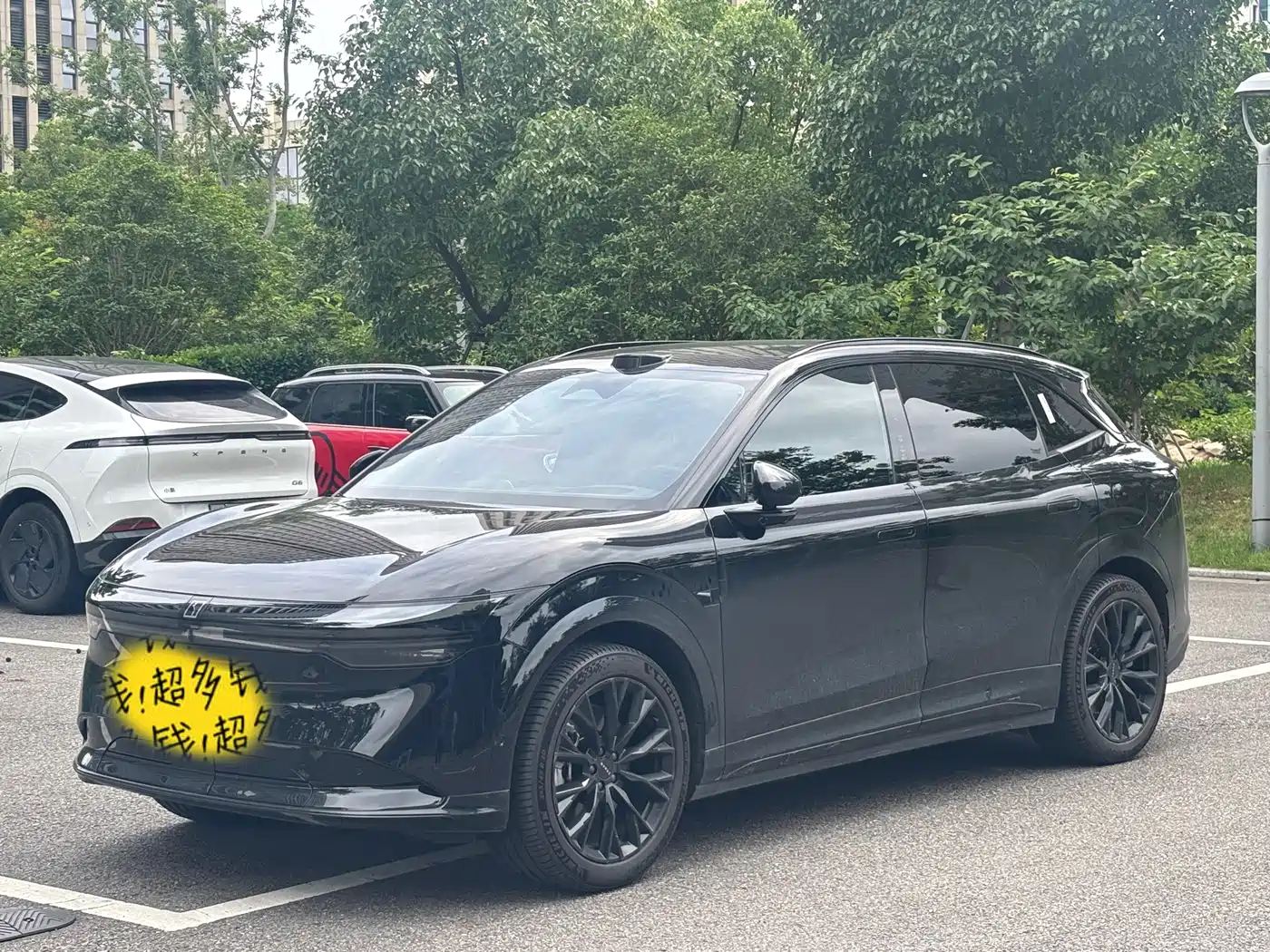
At a glance
- The 7x is a battery-electric family SUV with 75, 100 and 103 kWh battery variants.
- Rear-wheel-drive and all-wheel-drive editions support different fleet and customer priorities.
- Smart Driving and Intelligent Driving identify editions, but equipment and local approval must be verified.
- New vehicles simplify configuration and warranty planning; used vehicles require battery and history checks.
- Export quotes must separate vehicle price from freight, insurance, duties and other landed costs.
- MOQ, exact price and availability depend on the seller and the current live unit.
Why the ZEEKR 7x matters for export markets
The ZEEKR 7x is a battery-electric family SUV positioned for buyers who want a large, technology-focused vehicle without a conventional powertrain. Its export appeal comes from the combination of several battery labels, rear- or all-wheel-drive layouts, and Smart Driving or Intelligent Driving edition names. That mix gives overseas dealers room to match the vehicle to private customers, company fleets and performance-led trims rather than offering one generic configuration. It is especially relevant in markets where EV adoption, charging investment and demand for imported premium equipment are moving at the same time.
The model sits in a segment where buyers compare cabin space, software, range confidence and ownership support rather than engine output alone. The 7x can attract interest because its Long Range variants are explicitly offered in 100 kWh and 103 kWh battery versions, while the 75 kWh rear-drive version provides a different acquisition proposition. A dealer should present these as separate use cases, because homologated range, charging performance and equipment can change the value of the cheapest-looking option. Verify each market's figures instead of transferring Chinese test-cycle data directly to importers.
Global demand should not be treated as uniform. Fleet operators may prioritize usable range, charging compatibility and serviceability, while private buyers may place greater weight on rear-seat comfort, infotainment and driver assistance. Export success therefore depends on local readiness: a strong home-charging base for private users, dependable depot or public charging for fleets, and an importer able to support software, parts and warranty work. The vehicle creates opportunities, but it does not remove the work of building a viable ownership proposition. That makes product selection and market preparation equally important.
- 75, 100 and 103 kWh options.
- RWD and AWD layouts.
- Charging and service affect fit.
Model range, trims and powertrain variants: how the lineup is structured and how to choose
The 7x range is organized around battery capacity, drive layout and the Smart Driving or Intelligent Driving edition label. Buyers can compare a 75 kWh rear-drive Smart Driving edition with 100 kWh Long Range rear- and all-wheel-drive versions, plus 103 kWh Long Range rear- and all-wheel-drive versions. The naming helps identify a vehicle, but it does not by itself tell an importer every homologated specification. Output, charging details and market equipment should be confirmed against the individual listing. Never infer local certification, connector standards or software functions from the trim name alone.
For a fleet buyer, the 75 kWh rear-drive version is the logical starting point to evaluate when daily routes are predictable, payload is modest and acquisition efficiency matters. The 100 kWh rear-drive Long Range version adds a larger battery label and may better suit longer routes, although the certified range in the destination market is the number that counts. A business should model charging downtime, electricity costs and replacement vehicles rather than selecting a battery solely from the catalogue label. This approach clearly exposes operating costs hidden by headline specifications.
The all-wheel-drive editions suit buyers who put greater value on traction, payload stability or all-weather confidence than on minimizing the purchase outlay. The lineup includes 100 kWh AWD Intelligent Driving and 103 kWh AWD Smart Driving configurations, so edition naming and drive layout must be considered together. Do not assume one driving-assistance label is universally richer than the other: request the equipment list, test the relevant functions where possible and check local regulatory approval. Wheel size, towing limits, roof equipment and option packages can also affect real fleet suitability significantly.
- 75 kWh RWD suits shorter routes.
- 100 and 103 kWh extend choices.
- AWD prioritizes traction.
- Edition labels need verification.
New vs used ZEEKR 7x: how export inventory is structured and how buyers choose
Chinese export inventory can reach a buyer through different channels: factory-new vehicles, demonstration or parallel-import cars, and used vehicles returning from earlier ownership. These categories should not be treated as interchangeable. A new car generally offers the cleanest ownership history and the most straightforward warranty path, while a used example can reduce acquisition cost but requires closer scrutiny of battery health, accident history and wear. The relevant question is whether the vehicle's condition and documents match the buyer's resale or fleet model. That assessment comes before negotiating any headline discount.
For a used 7x, request a battery state-of-health report and evidence of the vehicle's high-voltage maintenance history. Ask whether the battery has been operated extensively at high charge levels, whether rapid charging has been frequent, and whether any modules have been replaced. Inspect body structure, wheels, cabin condition and software functions, and verify the VIN against service and insurance records. A lower acquisition figure can still be unattractive if warranty transfer, parts support or battery uncertainty increases residual risk. The assessment should be completed by a technically competent inspector or specialist.
New vehicles make more sense for fleet uniformity, predictable delivery schedules and buyers that need every unit configured alike. Used vehicles can make sense for a buyer with firm knowledge of the model, a limited replacement budget, or an acceptance of refurbishment work. Availability also changes by trim and year, so an importer should avoid waiting for a theoretically better configuration if the current vehicle meets the duty cycle. Confirm production year, specification consistency and expected resale demand before committing. A written acceptance checklist prevents a rushed decision from becoming a costly mismatch.
- New units aid fleet standardization.
- Used units need battery inspection.
- History and warranty decide value.
How export pricing works: the factors behind a live listing price, and how to read one
A ZEEKR 7x export price is not one fixed national price. The amount attached to a live unit can change with production year, trim, battery version, drivetrain, mileage, exterior condition and whether the vehicle is new or used. Currency movements also matter when a Chinese supplier quotes in one currency and an importer settles in another. A serious comparison therefore starts with exact vehicle identity, not with the most eye-catching number displayed in a search result. Confirm whether the shown amount is the vehicle price, a deposit, or an indicative starting point.
Read the Incoterm as carefully as the vehicle description. FOB, CIF and DAP place different combinations of cost, risk and responsibility on the buyer, while port charges, marine insurance, export documentation, terminal handling and destination taxes may sit outside the listed vehicle amount. Obtain a written landed-cost worksheet showing what is included, where title or risk transfers, and which party arranges each movement. This prevents a low listing amount from becoming an unexpectedly expensive delivered vehicle. Ask the seller to identify every exclusion and any assumption built into the quotation.
Use the live listing as the starting point, not the conclusion. Confirm whether equivalent units in the same trim carry different prices because of condition, year, source market or negotiation, then compare like with like. For a fleet, ask for an all-in quote covering units, transport, insurance, duties, taxes, port handling and documentation, and request the validity period. ChinaCarDirect's live ZEEKR 7x listings are the place to check the current per-unit figure and MOQ for the vehicle actually being considered. Exact availability must also be reconfirmed before placing a deposit.
- Compare like-for-like units.
- Confirm Incoterm inclusions.
- Check live price and MOQ.
MOQ, ordering and payment: single units vs consolidating a container
ZEEKR 7x sourcing can begin with a single vehicle or a wholesale batch, but the seller's commercial terms control. Some offers are structured for one-unit purchasers, while factory or stock-clearance arrangements may be tied to several units. Do not assume either model from the product name: check the MOQ shown on each live listing and ask whether quantity discounts change the unit price, allocation priority or payment schedule. For a first market-entry order, a small mixed batch may reduce concentration risk. It can also reveal which trim and specification an importer can support.
Consolidating several units can improve purchasing control if the vehicles share a configuration, but it raises working-capital and inventory risk. Mixing trims may complicate common spare parts, charger training and resale positioning, while a large order ties up cash before the vehicles are registered and sold. Model the landed cost per unit, the time to turnover and the downside if one configuration moves slowly. A container-level commitment should follow demand evidence rather than a temporary supplier discount. Start with clear acceptance criteria for every unit before increasing the commitment overall.
The ordering sequence should be controlled rather than improvised. Identify the unit and trim, agree the Incoterm and total quotation, place the deposit through a verified business channel, complete an independent inspection, and pay the balance only after the vehicle and required documents meet the contract. Confirm who signs the sales contract, how the payment receipt is issued, and what triggers dispatch. ChinaCarDirect can be used to review matching units and submit an RFQ, but the buyer remains responsible for verifying the seller, contract and payment terms before money is transferred.
- Check each listing's MOQ.
- Match configurations to demand.
- Inspect before final payment.
Shipping, homologation and market compliance caveats: LHD/RHD and import rules by country
Shipping and compliance are linked, because the configuration that leaves China may not be the configuration permitted for registration in the destination. Left-hand-drive and right-hand-drive availability can depend on production source, trim and importer demand, so RHD buyers should request a physical confirmation of steering position and relevant equipment rather than infer it from images. Each country also applies its own vehicle type approval, safety, emissions, cybersecurity and import rules. A vehicle's Chinese-market approval does not automatically satisfy local registration. The importer should map every requirement before paying the balance.
Ask the supplier for the identity and homologation documents that will accompany the exact vehicle, not generic brand literature. Depending on the route and market, the file may need to support VIN consistency, customs clearance, roadworthiness, battery transport safety and local charging or communications requirements. Request evidence of battery safety compliance where the destination or carrier requires it, but do not assume a document from the factory automatically covers a modified or later-spec vehicle. A qualified customs broker and local vehicle-compliance specialist should review the file before the booking is confirmed.
Shipping cost is driven by the transport method, vehicle dimensions, routing, origin and destination ports, fuel or carrier surcharges, insurance, handling and customs workload. Sea transport is generally relevant for standard vehicle consignments, while air or other specialist solutions may suit urgent, low-volume movements. The Incoterm determines who arranges the main carriage, but it does not remove the need to specify loading, protection and destination charges. Obtain a freight proposal using the actual vehicle configuration and confirm whether the rate includes terminal handling, documentation and insurance and who bears each charge.
- Confirm physical LHD or RHD.
- Local approval is market-specific.
- Freight depends on route and terms.
Who should buy the 7x — and who should pick a different vehicle
The 7x is most suitable for an overseas buyer that has done the market work to support a large electric SUV program. It fits a fleet or company-car buyer seeking a long-range-oriented BEV, a dealer able to certify and service connected vehicles, or a private customer who values cabin technology and the option of rear- or all-wheel drive. It is particularly credible where charging infrastructure is expanding and customers accept a China-origin product. The business case should rest on demand evidence, not on the novelty of a smart-driving label alone.
Choose a different vehicle if the market lacks reliable charging, if the importer cannot support connected-car software and high-voltage repairs, or if customers require a model with a more established local dealer and residual-value network. A smaller battery may also make more commercial sense where routes are short, replacement charging is costly and the 7x's size creates a parking or logistics disadvantage. Do not force a flagship-like import into a price-sensitive segment if demand, certification and aftersales economics do not line up. A smaller import may offer a more resilient business case.
Before buying, create a weighted scorecard covering verified range, charging access, service capability, parts lead time, safety approval, software support, residual value and delivered cost. Give the highest weight to factors that can stop the vehicle from being used or registered. For fleets, include downtime and training in the calculation; for dealers, include warranty handling and the ability to source a common set of parts. The right model is the one whose total operating proposition survives local scrutiny, not necessarily the one with the longest specification list on paper alone.
- Choose where support exists.
- Skip where homologation is weak.
- Score operating cost beyond range.
Main rivals and how the 7x compares
The closest global alternatives to the ZEEKR 7x fall into two groups: electric crossovers with established distribution in major markets and premium electric SUVs sold on software and range. The Hyundai Ioniq 5 and Kia EV6 are direct shopping comparables for family use, while the Tesla Model Y is a strong benchmark for brand awareness, charging convenience and resale expectations. The 7x differentiates with 75, 100 and 103 kWh battery labels, rear- or all-wheel-drive choices and China-focused smart-cockpit positioning. Those distinctions matter only if the importer can deliver supported, homologated vehicles reliably.
Compared with the Ioniq 5, the 7x can offer a different balance for buyers seeking a larger SUV format, a broader battery-label choice and China-origin smart-cockpit technology. The Ioniq 5 may be the safer commercial choice where an importer values an established after-sales network and deeply understood residual values, because those service advantages can outweigh unfamiliarity with another software ecosystem. Neither vehicle should be judged on brochure range alone; charging access, warranty work and local parts support should be compared at equivalent operating standards. The final choice is market-specific, not universal.
The Kia EV6 competes on a sportier electric-crossover proposition, while the Model Y benefits from very broad brand recognition and an established charging ecosystem in many markets. The 7x can appeal to buyers who want more configuration choice around battery capacity and all-wheel drive, or who prefer its particular smart-cabin experience. However, global recognition and easier consumer explanation are commercial advantages for the alternatives. An importer should value total supportability and return on inventory, not assume an unusual product automatically earns a premium. A test drive and service audit should inform that choice.
- Ioniq 5: established service alternative.
- EV6: sportier crossover alternative.
- Model Y: global brand benchmark.
Live ZEEKR 7x export inventory
View all listings →Real units currently on ChinaCarDirect with per-unit asking prices and MOQ. Availability updates live from the catalogue.
How to buy a ZEEKR 7x from China
-
1
Define the destination market
Confirm the required steering position, vehicle type approval, charging standard, import rules and expected aftersales support before selecting a configuration.
-
2
Select battery and drivetrain
Choose among 75, 100 and 103 kWh battery labels and RWD or AWD layouts based on routes, payload, charging access and traction needs.
-
3
Compare matching live units
Review the live ZEEKR 7x listings by year, trim, battery, drivetrain, condition and documented equipment, then shortlist units that meet the same specification.
-
4
Request a written quotation
Ask for the vehicle price, MOQ, payment milestones, quote validity and Incoterm in one document, followed by a landed-cost estimate showing all exclusions.
-
5
Verify and inspect the vehicle
Check the VIN, production specification, service history and physical condition through an independent inspection, including a battery-health review for used vehicles.
-
6
Agree the order terms
Confirm the seller, sales contract, deposit channel, allocation, acceptance criteria, document list and balance-payment trigger before committing funds.
-
7
Arrange shipping and registration
Have a freight forwarder and customs broker confirm the route, cargo protection, insurance, documents and destination charges, while a local specialist checks registration compliance.
7x vs rivals
| Hyundai Ioniq 5 | The Ioniq 5 is a close family-EV alternative with strong brand recognition and established service support in many markets. It may be the lower-risk commercial choice where residual values are proven, while the 7x offers different SUV proportions, battery-label choices and China-focused smart-cockpit appeal. |
|---|---|
| Kia EV6 | The EV6 is a sportier electric-crossover alternative that may appeal where a lower, more dynamic style is important. The 7x competes through its larger family-SUV format, RWD and AWD choice and China-origin technology positioning, but buyers should compare local service and parts support. |
| Tesla Model Y | The Model Y is a high-consideration benchmark for charging familiarity, brand recognition and resale expectations. The 7x can differentiate with its battery-label and drivetrain choices plus a more China-focused feature set, but the Tesla generally carries greater familiarity in many export markets. |
Frequently asked questions
How is ZEEKR 7x export pricing determined?
A live ZEEKR 7x price is determined for the specific unit by factors such as production year, trim, battery, drivetrain, mileage, condition, currency conditions and the agreed Incoterm. The displayed vehicle amount may not include freight, insurance, duties, taxes or port handling, so ask for a written landed-cost breakdown. Check the live ZEEKR 7x listings for the current per-unit figure, MOQ and quote validity.
What powertrain and range does the ZEEKR 7x use?
The 7x is a battery-electric SUV offered in 75 kWh rear-wheel-drive, 100 kWh Long Range and 103 kWh Long Range configurations across Smart Driving and Intelligent Driving editions with the applicable RWD or AWD layout. Exact motor output, charging rates and certified range must be checked against the destination-market listing rather than inferred from the edition name. A Chinese test-cycle figure should not be treated as guaranteed real-world fleet range.
Is a new or used ZEEKR 7x better for an importer?
New examples are generally easier to standardize and arrange warranty support around, while used examples may cost less but require battery state-of-health, fast-charge history, damage, VIN and document checks. The right choice depends on fleet uptime, residual value and aftersales capability rather than acquisition outlay alone. Verify the condition and history of the actual unit being purchased.
Does the MOQ require a full container?
MOQ is set by the seller and listing; an offer may permit a single unit while another requires a batch. A larger order may improve unit commercial terms but ties up more capital and increases configuration risk. Ask about quantity breaks, allocation, mixed-trim rules and payment milestones before confirming.
What affects ZEEKR 7x shipping time and cost?
Shipping time and cost depend on the transport mode, route, ports, carrier capacity, fuel surcharges, insurance, handling, customs workload and documentation. Ocean transport is normally the economical option for standard vehicle consignments, while urgent low-volume movements may require specialist logistics. Request a freight quote tied to the actual vehicle, route and Incoterm, and state who bears each charge.
Will spare parts and software support be available after import?
Do not assume every ZEEKR 7x part will be available through a local dealer. Before ordering, request a commitment for high-voltage components, body parts, software support, diagnostic access, warranty handling and expected lead times. The importer should also confirm how the vehicle's China-market configuration and electronic systems will be supported after delivery.
Is a right-hand-drive ZEEKR 7x available for export?
Right-hand-drive availability can depend on the production source, trim and destination-market program. Confirm the steering position from the exact vehicle and production source, and ask whether an RHD example must be ordered or allocated separately. Never assume a left-hand-drive listing can be converted without homologation and engineering review.
How do I order a ZEEKR 7x from China?
Start with the live ZEEKR 7x listings, shortlist the matching trim and request an RFQ stating the destination, quantity and preferred Incoterm. Verify the seller and contract, place a deposit through a verified business channel, inspect the actual vehicle and release the balance when the agreed documents are supplied. Your freight forwarder or customs broker should then confirm the booking, cargo requirements and destination steps.
Ready to source the ZEEKR 7x?
Request a ZEEKR 7x quote with your destination, preferred trims, quantity and Incoterm, then review the matching live listings before placing a deposit.
Request a quote