
Zhijie R7 Export Buying Guide for Overseas Dealers
Compare Zhijie R7 trims, range variants, export pricing logic and compliance steps, then source vehicles through live ChinaCarDirect listings.
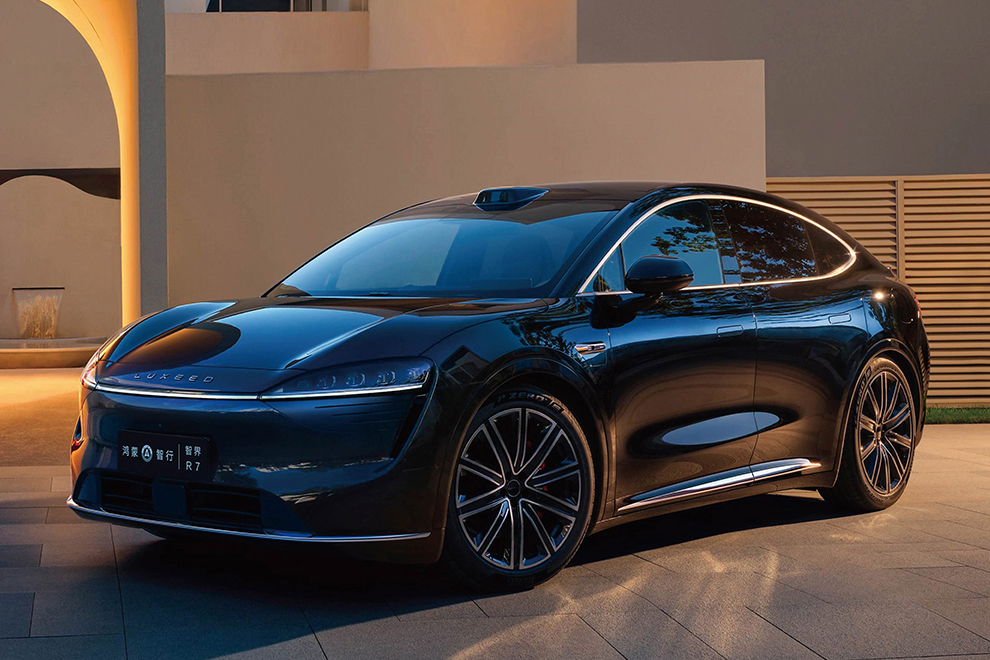
At a glance
- The R7 is a pure-electric SUV with 667 km, 736 km and 802 km range-labelled variants.
- Chinese-market range labels must be translated into real-world range expectations for local routes.
- New vehicles offer predictable build specification; used vehicles require battery and repair-history evidence.
- Live export prices move with trim, year, condition, exchange rates, freight and Incoterms.
- LHD/RHD configuration, homologation, charging, parts and technician support must be confirmed before ordering.
Why the Zhijie R7 matters for export markets
The Zhijie R7 matters to export buyers because it combines an SUV format with a pure-electric drivetrain and several differentiated range-labelled versions. The export-facing lineup includes the 667 km Pro, 667 km Max, 736 km Ultra, 802 km Max and Max+, allowing distributors to match specification with market expectations. For overseas dealers, the attraction is not merely electric powertrain appeal: it is the combination of long-range options, SUV utility and a model positioned above more utilitarian electric crossovers. That makes the R7 relevant for premium fleets and discerning private buyers as well as importers.
Global demand should be evaluated against infrastructure rather than inferred from range figures alone. Markets with growing SUV ownership, credible charging networks and urban congestion can reward the R7’s combination of usable size and electric efficiency, while remote operations without dependable charging may not. Electricity tariffs, route length, climate, parking constraints and residual-value assumptions all change the business case. An R7 that fits Chinese travel patterns may need different hardware, software support or charging arrangements in Europe, the Middle East, Southeast Asia or Latin America without local adaptation and verified service provision.
Brand recognition and after-sales reach are equally important to the R7’s export proposition. Marketplace listings may use Zhijie, Luxeed or combined naming, so importers should confirm the exact exterior badge, homologation identity and parts catalogue linked to the unit being quoted. For fleet buyers, a common platform does not remove the need for technician training, diagnostic access, software support and a credible resale plan. The model is most compelling where those capabilities can be established before stock is committed, rather than treated as afterthoughts after delivery by the local operation.
Model range, trims and powertrain variants: how the lineup is structured and how to choose
Zhijie R7 specs should be read by exact trim, model year and VIN-linked equipment, not by the marketing name alone. The catalogue identifies Pure Electric 667 km Pro, 667 km Max, 736 km Ultra, 802 km Max and Max+ versions, along with an all-electric Ultra listing. These labels establish a hierarchy, but they do not disclose every battery, motor, charging or assistance-system detail. A serious buyer should request a build sheet that reconciles the trim badge, range label, axle layout and installed options for the exact vehicle being considered before payment.
Range selection should reflect the buyer’s duty cycle rather than simply taking the highest number. The 667 km-labelled Pro and Max versions may suit fleets prioritising purchase efficiency, predictable specification and budget control; buyers should still verify usable range under local temperature and load. The 736 km Ultra and 802 km Max labels point toward buyers who place more value on longer-distance capability between charging opportunities. Because these are Chinese-market labels, translate them into an energy-consumption assumption and compare against the destination’s charging intervals before committing to a wholesale order.
Performance, drivetrain and charging configuration require a separate comparison. Depending on model year and market, the R7 family has been offered with single-motor rear-drive and dual-motor all-wheel-drive arrangements, so the Ultra or Max+ name should not be treated as proof of a specific motor output. Confirm battery capacity, rated and peak charging power, connector standard, charge time, payload, towing limits and whether any accessory is physically fitted or advertised. These checks are especially important when a vehicle will be registered, insured and charged under rules outside China for local use.
- Match trim, year and VIN.
- Compare real charging intervals.
- Verify battery, motor and towing.
New vs used Zhijie R7: how export inventory is structured and how buyers choose
Buyers seeking a used Zhijie R7 should treat new and used sourcing as different buying routes. A factory-new unit should come with an agreed build specification, delivery condition and warranty framework, making it easier to plan fleet configuration and residual value. A used vehicle can offer a more attractive acquisition basis, but its value depends on age, mileage, battery condition and evidence of care. Availability also changes, so the live inventory must be reviewed rather than assuming either category will be present when needed for a specific destination or trim.
For any used EV, battery health should be the first technical gate, not an afterthought. Request a battery state-of-health report, charging and energy-consumption history, warning-light scan, diagnostic results and evidence of software updates. Inspect bodywork for accident repair, check underbody condition and compare odometer records with service documents. Also verify whether the vehicle was used as a demonstrator, fleet car or private vehicle, because duty cycle can expose weaknesses that a short road test will not reveal. A clean title is necessary, but it is not a substitute for inspection.
New versus used should ultimately be decided on total operating risk. A buyer with reliable charging, a stable fleet specification and access to authorised support may prefer new for predictable uptime and simpler warranty management. A value-focused importer may accept a used R7 if battery condition, software parity and repair history are documented and the saving survives freight, tax, refurbishment and resale costs. Model-year changes can alter range labels, charging equipment and electronic features, so compare like with like and obtain a vehicle-specific condition report before placing a wholesale order.
- New means predictable specification.
- Used means condition-dependent value.
- Inspect battery, records and repairs.
How export pricing works: the factors behind a live listing price, and how to read one
Zhijie R7 export price guide logic begins with the vehicle itself. Model year, trim, range and battery version, motor configuration, mileage or condition, production status and included options all influence what a seller can ask. Exchange-rate movement affects the local-currency equivalent, while destination taxes, registration work and warranty support can change the landed cost. For a wholesale buyer, the trim and condition differences matter more than the headline category: two units carrying similar badges may not be commercially equivalent, especially once freight and Incoterms are added to the comparison sheet.
When reading a live listing, separate the displayed vehicle price from the cost of importing it. Check whether the quoted Incoterm identifies the point at which responsibility and risk transfer, and whether transport, insurance, export handling, destination clearance, taxes and commissioning are included. Look for the model year, exact trim, range label, battery specification, steering position, exterior condition and stated warranty in the detail fields. Ask the supplier to identify every charge or condition that is not included, because an apparently complete line item can still leave logistics costs open.
The most reliable number is therefore a current, written quotation tied to a specific unit and destination. Review the live ChinaCarDirect inventory for the current per-vehicle price, then request a refreshed quote because freight, exchange rates and seller terms can move before a contract is signed. Compare like-for-like quotations that state the Incoterm, payment milestones, document set, insurance responsibility and validity period. Do not base a container budget on one teaser listing; build a landed-cost sheet for each trim and condition, then retain a contingency for compliance or rectification work.
- Compare equivalent vehicles.
- Confirm Incoterm and exclusions.
- Check live prices; request refreshes.
MOQ, ordering and payment: single units vs consolidating a container
MOQ for a Zhijie R7 should be established per seller and per transaction, not treated as a model-wide rule. Some listings may be sold to buyers in small quantities, while other suppliers, freight consolidators or programme orders may impose a minimum. Ask what quantity is required for the quoted price, whether mixed trims are allowed and whether a reservation or allocation is needed. If a listing advertises a quantity condition, have it confirmed in the pro forma invoice; the live listing is the place to check the seller’s current terms.
Buying one unit is useful as a pilot, particularly for a dealer testing demand, service capability and charging compatibility before committing to a container. Consolidating several R7s can improve shipment organisation, but it raises specification and allocation risk: one contract may include different model years, trims, batteries or steering configurations that complicate homologation, insurance and resale. Decide whether each vehicle must be identical or whether mixed units are acceptable. Allow for loading constraints and battery transport rules rather than assuming every EV occupies the same amount of space or weight.
Ordering and payment should follow a documented sequence: select the unit, freeze its specification in writing, complete due diligence, agree a pro forma invoice and payment schedule, inspect against the contract, pay the balance against agreed documents, and arrange release only after ownership and logistics documents are verified. The contract should state the VIN or agreed identification, trim, condition, warranty, delivery scope, Incoterm and remedies for mismatch. Use protected payment methods and confirm who holds title; a marketplace message alone is weaker evidence than an invoice and transport document set.
- MOQ varies by seller.
- Pilot one vehicle before scaling.
- Link payment release to documents.
Shipping, homologation and market compliance caveats: LHD/RHD and import rules by country
Shipping method should match battery size, route, urgency and consolidation plans. A vehicle may move by roll-on/roll-off vessel, container or vehicle carrier, with the battery treated as regulated dangerous goods for sea transport. Forwarders must plan secure stowage, isolation requirements, temperature control where necessary, lashing and discharge procedures. Because loading, securing and unloading can cause damage, inspect the vehicle before shipment and at arrival, documenting exterior panels, glass, wheels, interior and high-voltage areas with time-stamped evidence as part of the handover record and reconcile any discrepancy with delivery documentation immediately.
Steering configuration and market compliance require confirmation for each destination. A left-hand-drive R7 cannot simply be registered as right-hand-drive, and a right-hand-drive conversion may affect homologation, software, safety systems, warranty and parts. Ask whether the vehicle was produced for the steering side and whether the seller can provide documents. Buyers must then check local type approval, VIN and documentation rules, battery safety, charging connector and voltage requirements, cybersecurity and data rules, emissions requirements for EVs, local-language materials and insurance acceptance with the relevant authority before shipment or payment is released.
Treat homologation as a buyer responsibility, not a badge on the listing. Local rules, enforcement practices and charging infrastructure can differ, so an importer should engage a destination compliance specialist before committing to volume stock. The pre-shipment file should reconcile the VIN, model designation, battery declaration, charging equipment, steering position, warranty coverage and any required modifications. It should also establish a support plan for diagnostics, replacement parts, software updates and high-voltage repairs. If approval or service readiness cannot be demonstrated, postpone the order even if the vehicle itself appears attractive.
- Confirm factory steering side.
- Check approval and charging rules.
- Inspect before shipment and arrival.
Who should buy the R7 — and who should pick a different vehicle
The Zhijie R7 is a strong candidate for an overseas buyer who wants a modern, range-oriented electric SUV and can support it properly. It fits dealers seeking a premium halo model, company fleets with controlled charging, and regional operators whose routes are compatible with the verified real-world range. A pilot vehicle can demonstrate charging times, software usability, technician requirements and customer acceptance before larger procurement. The decision is strongest when the importer already has EV sales experience and the destination has a service and parts network for the particular trim.
The R7 may be a poor fit for a buyer whose priority is the acquisition cost, ubiquitous parts availability or operation in areas with sparse charging. It may be unsuitable where towing, payload, extreme-temperature performance or long remote routes are central, unless the configuration has been tested and documented. A buyer without charging access should compare the R7 with a hybrid or combustion vehicle rather than assume its headline range solves the problem. Likewise, a fleet purchase is premature if the company cannot support high-voltage diagnostics or manage warranty issues.
Use a staged decision rather than a yes or no. First, test one vehicle against a defined route and charging plan; second, compare its operating cost with local alternatives; third, validate parts, warranty and residual-value assumptions; and fourth, scale only if utilization supports the investment. This approach suits a cautious distributor better than ordering a container to secure a lower unit cost. It also lets the importer learn how customers respond to the R7’s size, range labels, technology package and service experience before committing to a Zhijie R7 wholesale programme.
- Best for EV-ready fleets.
- Needs charging and service support.
- Pilot, validate, then scale.
Main rivals and how the R7 compares
The Tesla Model Y is the global benchmark because it competes for the same premium electric-SUV buyer, often with strong brand recognition and an established charging and service ecosystem in some markets. The R7 can appeal to distributors seeking a broader set of range-labelled trims and a more dealer-led product comparison. Conversely, Model Y buyers may prioritize familiar software, charging access and resale confidence. The practical choice should follow verified local support, connector compatibility and total cost rather than online range headlines or badge recognition alone in the destination country.
BYD’s Sealion 7 is a China-export rival because it also occupies the premium electric SUV segment and offers a comparable premium-SUV proposition. Comparing the two requires an apples-to-apples view of body size, battery, range protocol, drivetrain, charging, equipment and warranty. BYD may benefit from broader international recognition and a larger export presence, while the R7 provides a distinct 667 km, 736 km and 802 km-labelled range hierarchy for buyers who want more granular trim choice. Local parts coverage and homologation support may ultimately decide the order for a particular importer.
XPeng G6 is another Chinese premium EV alternative for buyers comparing size, feature set and software proposition, particularly where a different vehicle format is acceptable. The R7 may offer a more upmarket SUV presentation and a choice of long-range-labelled versions, while the G6 may appeal to importers already familiar with that brand’s product positioning. That does not make one cheaper or better. Compare tested consumption, charging times, driver-assistance functions, software support, insurance, warranty and parts supply using identical destination assumptions. A dealer should test each vehicle against its own customer and route profile.
Live Zhijie R7 export inventory
View all listings →Real units currently on ChinaCarDirect with per-unit asking prices and MOQ. Availability updates live from the catalogue.
How to buy a Zhijie R7 from China
-
1
Define the destination and duty cycle
Specify the destination, charging standard and route profile before selecting a vehicle. Include payload, towing and service expectations, because these requirements can eliminate otherwise attractive trims.
-
2
Shortlist the live R7 inventory
Review live Zhijie R7 listings and compare exact trim, model year, range label, steering side and condition. Treat a range number as a starting point, not proof of destination homologation or real-world performance.
-
3
Request a vehicle-specific quotation
Send an RFQ for each shortlisted unit. Ask for a quote stating the price basis, Incoterm, battery and motor details, warranty, lead time, shipping scope and all additional charges.
-
4
Complete a compliance pre-check
Engage a destination compliance specialist to assess type approval, VIN documentation, charging compatibility, cybersecurity, data, safety and insurance requirements. Resolve any steering-side or homologation issue before paying a balance.
-
5
Verify the vehicle and documents
Confirm the VIN, trim, battery, motor, production status, ownership, warranty and condition against the agreed specification. For a used vehicle, obtain battery-health, diagnostic and repair-history evidence.
-
6
Freeze the commercial terms
Use a pro forma invoice that identifies the vehicle or allocation, quantity, MOQ, payment milestones, Incoterm, documentation, warranty, inspection standard and remedies for mismatch.
-
7
Ship, inspect and complete clearance
Book freight through a forwarder familiar with EV battery transport, arrange pre-shipment inspection and use protected payment against verified documents. Inspect again at arrival, reconcile damage with the handover record and complete destination clearance.
R7 vs rivals
| Tesla Model Y | Model Y often has stronger brand familiarity and, in some markets, a more established charging and service network. The R7’s differentiator for distributors is its wider selection of range-labelled trims, but local support, connector fit and resale confidence may favour Model Y. |
|---|---|
| BYD Sealion 7 | The Sealion 7 is a close China-export premium electric SUV peer, so compare body, battery, range protocol, drivetrain and equipment on like-for-like terms. BYD may have greater international recognition, while the R7 offers a distinct 667, 736 and 802 km range hierarchy; parts and homologation reach should decide. |
| XPeng G6 | The G6 is a relevant Chinese premium EV alternative, though its size and feature proposition differ. The R7 may suit buyers seeking a larger, range-focused SUV presentation, while G6 familiarity and software positioning can favour importers already active with that brand. |
Frequently asked questions
How is the Zhijie R7 export price determined?
The live price reflects the selected vehicle’s year, trim, range and battery version, condition or mileage, options, seller terms and currency movement. Freight, insurance, export handling, destination taxes, registration and Incoterms determine the landed cost, so a teaser price is not automatically a delivered price. Current per-unit prices and availability are shown in the live ChinaCarDirect listings, and buyers should request a refreshed written quote for their destination.
What powertrain and range options does the Zhijie R7 have?
The R7 in this export line-up is a pure-electric SUV. Trim names include 667 km, 736 km and 802 km-labelled versions, while some Max+ listings do not state range in the name. Ask for battery capacity, applicable test protocol, motor layout and vehicle-specific range information before choosing a trim.
Should an overseas buyer choose a new or used Zhijie R7?
New vehicles provide a more predictable build specification, delivery condition and warranty basis. A used Zhijie R7 can make economic sense only after battery health, mileage, diagnostic history, accident repair, software status and ownership documents are reviewed. Compare the remaining cost after freight, tax, refurbishment and residual-value assumptions rather than using purchase price alone.
How does MOQ work when buying Zhijie R7 wholesale?
MOQ is established by the seller, model specification and shipment arrangement rather than being a permanent rule for every R7 listing. Ask whether one unit is permitted, whether mixed trims qualify and how the minimum affects the quoted price and allocation. The quantity condition should appear in the written pro forma invoice.
How long does shipping take and what determines cost?
Transit time and cost depend on origin and destination ports, carrier schedule, sailing or road route, vehicle and battery handling, insurance, customs work and the agreed Incoterm. RoRo, container and specialist-carrier options each have different capacity and cost structures, so request a destination-specific logistics quote. Build contingency around port congestion, documentation issues and inspection rather than relying on a generic transit estimate.
Can spare parts and technical support be obtained?
Parts support depends on the exact model identity, destination, local distributor coverage and access to Zhijie or Luxeed service channels. Confirm that diagnostic software, high-voltage training, warranty procedures and common wear parts are available before scaling sales. A verified parts and support plan is more important than a large initial shipment when the brand is new to the market.
Is a right-hand-drive R7 available for export?
RHD availability must be confirmed for each live listing and production batch; do not infer it from the Zhijie R7 model name. A left-hand-drive vehicle normally cannot simply be registered as right-hand-drive, and conversion can affect homologation, safety systems, warranty and parts. Check the factory steering configuration, then obtain destination approval and written supplier confirmation before ordering.
How do I buy a Zhijie R7 from China for export?
Start with the live inventory, compare exact trims and request a vehicle-specific RFQ that states the price basis, Incoterm, specification, warranty, lead time and shipping exclusions. Verify documents, battery and motor details, homologation and local charging compatibility, then freeze the terms in a pro forma invoice. Inspect against that agreement, use protected payment and release the balance only when identity, condition and transport documents match.
Ready to source the Zhijie R7?
Request a vehicle-specific Zhijie R7 export quote through ChinaCarDirect.
Request a quote